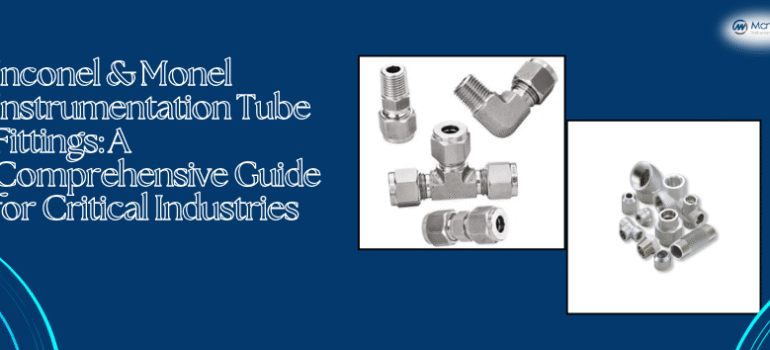
Inconel & Monel Instrumentation Tube Fittings: A Comprehensive Guide for Critical Industries

Introduction: The Backbone of Reliable Fluid and Gas Control

In industries where safety, precision, and durability are non-negotiable, the choice of material for tube fittings becomes critical. From oil refineries to aerospace and marine applications, instrumentation tube fittings ensure leak-proof connections that withstand extreme pressures, temperatures, and corrosive environments. Among the wide range of alloys, Inconel and Monel tube fittings have earned a global reputation for their outstanding performance in aggressive industrial settings.

With global sourcing and complex supply chains, engineers and procurement specialists often face challenges in selecting fittings that meet both international standards and project-specific requirements. This blog explores Inconel and Monel instrumentation tube fittings, their unique properties, technical specifications, industrial applications, and how Mcneil Instruments stands out as a trusted manufacturer, supplier, and exporter in India.

What are Inconel and Monel Instrumentation Tube Fittings?

Inconel Tube Fittings: Inconel is a family of nickel-chromium-based alloys known for their resistance to oxidation and corrosion, even in extreme environments such as jet engines, chemical plants, and marine systems. They maintain structural integrity at elevated temperatures and are commonly used in aerospace and high-temperature energy systems.

Monel Tube Fittings: Monel is primarily a nickel-copper alloy offering exceptional resistance to seawater, hydrofluoric acid, and alkalis. Its toughness and strength at sub-zero and elevated temperatures make it highly suitable for marine, chemical, and oil & gas applications.

Both materials are widely used for instrumentation tube fittings such as ferrule fittings, compression fittings, unions, elbows, tees, and adapters that form the foundation of secure and efficient fluid systems.

Key Features of Inconel & Monel Tube Fittings

  • High resistance to oxidation and corrosion in extreme chemical environments
  • Excellent tensile strength and toughness, even under thermal stress
  • Leak-proof performance with double ferrule and compression designs
  • Compatibility with high-pressure and high-temperature service
  • Available in seamless, forged, and machined forms for diverse applications

Importance of Standards in Instrumentation Tube Fittings

Just as ball valves follow ASTM, ASME, and ISO standards, tube fittings must comply with stringent norms to ensure safety, compatibility, and reliability in global projects.

Why standards matter:

  • Consistency: Assures that fittings match across different systems and suppliers.
  • Safety: Prevents leaks that could cause accidents in critical environments.
  • Global compliance: Ensures acceptance in international projects.
  • Reliability: Guarantees long-term performance in harsh conditions.

Technical Specifications of Inconel & Monel Tube Fittings

SpecificationInconel Tube FittingsMonel Tube Fittings
Standards ComplianceASTM B564, ASME SB564, ISO, DINASTM B366, ASME SB564, ISO, DIN
Size Range1/8″ to 2″ OD1/8″ to 2″ OD
Pressure RatingUp to 6000 psiUp to 5000 psi
Temperature Range-196°C to +982°C-200°C to +550°C
Forms AvailableFerrule fittings, compression fittings, unions, elbows, tees, adaptersFerrule fittings, compression fittings, unions, elbows, tees, adapters

Mechanical Properties

PropertyInconel FittingsMonel Fittings
Tensile Strength≥ 655 MPa≥ 480 MPa
Yield Strength≥ 310 MPa≥ 170 MPa
Hardness≤ 95 HRB≤ 85 HRB
Corrosion ResistanceExceptional in oxidizing and reducing mediaSuperior in marine and alkaline conditions

Common Applications

  • Inconel Tube Fittings:
    • Aerospace engines and exhaust systems
    • Chemical processing plants
    • Power generation (gas turbines, heat exchangers)
    • Oil & gas refining at high pressure and temperature
  • Monel Tube Fittings:
    • Marine engineering and desalination plants
    • Offshore oil drilling platforms
    • Heat exchangers and pump shafts
    • Hydrofluoric acid and alkali handling systems

How to Choose Between Inconel and Monel Tube Fittings

  • For high-temperature applications: Inconel is the preferred choice due to its ability to withstand extreme thermal stress.
  • For marine and seawater applications: Monel stands out with its resistance to chloride-induced corrosion.
  • For cost-sensitive projects: Monel offers a more economical alternative while still delivering robust performance in corrosion-prone environments.
  • For critical aerospace and energy projects: Inconel ensures unmatched reliability at elevated pressures and temperatures.

Global Reach of Mcneil Instruments: Inconel & Monel Tube Fittings

Mcneil Instruments is a globally trusted manufacturer, supplier, and exporter of Inconel and Monel instrumentation tube fittings. Our products are widely used across continents:

  • In Saudi Arabia and UAE, trusted for petrochemical refineries and offshore drilling.
  • In Qatar and Kuwait, exported for chemical plants and desalination projects.
  • In Nigeria and Ghana, supplied for mining and water treatment industries.
  • In the USA (Texas, Chicago), preferred in oil & gas and aerospace sectors.
  • In Brazil, Malaysia, and Singapore, integrated into marine engineering, pulp & paper, and industrial fabrication systems.

Certifications and Testing

Mcneil Instruments ensures every product meets the highest quality benchmarks:

  • Material Test Certificates (EN 10204 3.1/3.2)
  • Hydrostatic and Pneumatic Pressure Testing
  • Non-Destructive Testing (Ultrasonic, Radiography)
  • Compliance with ASTM, ASME, and ISO standards
  • ISO 9001:2015 Certified Facilities

Future Trends in Alloy Tube Fittings

With industries moving toward automation, energy efficiency, and renewable systems, Inconel and Monel tube fittings will continue to dominate in extreme environments. Innovations in machining and surface finishing are expected to enhance their performance and extend lifecycle even further.

Conclusion: Reliable Alloy Tube Fittings for Demanding Applications

Inconel and Monel tube fittings offer unmatched performance in extreme environments, from corrosive seas to high-temperature turbines. By combining international standards with advanced manufacturing, Mcneil Instruments ensures leak-proof, durable, and high-performance fittings trusted by industries worldwide.

As one of the leading Inconel and Monel instrumentation tube fittings manufacturers, suppliers, and exporters in India,  Mcneil Instruments provides engineers and procurement managers with globally certified solutions designed for precision and safety.

Read More

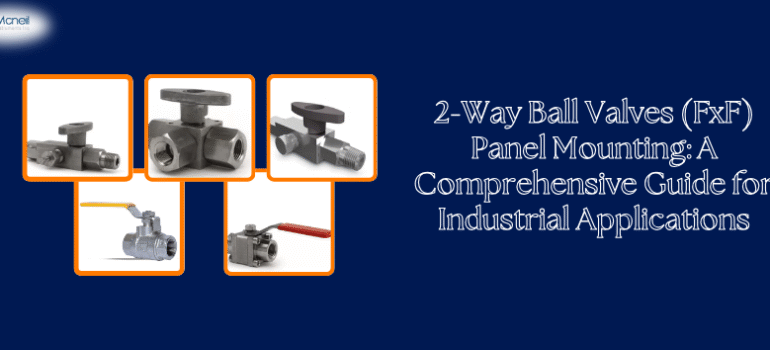
2-Way Ball Valves (FxF) Panel Mounting: A Comprehensive Guide for Industrial Applications

In any industrial piping or process control system, precise regulation of fluids or gases is critical. Whether in chemical plants, refineries, or manufacturing units, valves act as the foundation for reliable operations. Among various valve types, the 2-way ball valve (FxF) with panel mounting has become a standard for its compact design, ease of installation, and high-performance sealing capabilities.

However, with industries sourcing components globally, engineers and procurement teams often face challenges in selecting the right valve type, materials, and standards for their specific applications. This blog provides a detailed understanding of 2-way ball valves (FxF), their standards, applications, and how Mcneil Instruments stands as a trusted manufacturer, supplier, and exporter in India.

What is a 2-Way Ball Valve (FxF) with Panel Mounting?

A 2-way ball valve is a quarter-turn valve used to control the flow of liquids or gases. The term “2-way” refers to two ports: inlet and outlet. The “FxF” indicates female-to-female connections, making them versatile for direct pipeline connections.

Panel mounting refers to a design where the valve can be securely fixed to a control panel or flat surface. This feature ensures better accessibility for operation and maintenance, especially in compact or high-density piping arrangements.

Key Features of 2-Way FxF Ball Valves

  • Quick quarter-turn operation for instant shut-off or flow initiation

  • Female-to-female threaded ends for secure connections

  • Panel mounting design for efficient system integration

  • High-pressure and high-temperature resistance depending on material grade

Importance of Standards in Ball Valves

Just as nuts and fasteners are governed by standards like ASTM and DIN, ball valves also follow stringent global norms to ensure consistency, safety, and compatibility.

Role of Standards in Industrial Valves

  • Quality Assurance: Standards ensure that the valve’s material and mechanical properties meet the necessary benchmarks.

  • International Trade Compliance: Valves adhering to ASTM, ASME, and ISO standards can be freely used in global projects.

  • Reliability in Operation: Properly standardized valves prevent leakage, ensure tight sealing, and withstand operational pressures.

Technical Specifications of Mcneil’s 2-Way Ball Valve (FxF)

SpecificationDetails
Connection TypeFemale-to-Female (FxF)
Mounting TypePanel Mounting
Pressure RatingUp to 6000 psi
Temperature Range-40°C to 230°C
Size Range1/4″ to 2″
Material OptionsStainless Steel, Brass, Carbon Steel
Standards ComplianceASME, ASTM, ISO, API


Mechanical Properties of 2-Way Ball Valves

PropertyValue
Tensile Strength≥ 485 MPa (SS grade)
Yield Strength≥ 250 MPa
Hardness80 – 95 HRB
Corrosion ResistanceHigh (depending on material)

Common Types of 2-Way Ball Valves

Mcneil Instruments offers a wide range of 2-way ball valves suited for diverse industries.

  • Standard 2-Way FxF Ball Valve: For general industrial use.

  • High-Pressure Panel Mount Ball Valve: For up to 6000 psi systems.

  • Low-Temperature Service Valves: Designed for cryogenic applications.

  • Customized Valves: Tailored for chemical, oil & gas, or power generation projects.

How to Choose the Right 2-Way Ball Valve?

Selecting the correct ball valve is essential for long-term reliability. Consider these factors:

  1. Application: Is it for on/off service, throttling, or diversion?

  2. Operating Conditions: Pressure and temperature ranges must match the valve rating.

  3. Material Selection: Stainless steel for corrosive media, brass for standard water service, carbon steel for high-pressure gas systems.

  4. Maintenance Needs: Three-piece valves allow easy in-line maintenance.

  5. Standards Compliance: Ensure compatibility with ASTM, ASME, or API norms.

Global Reach of Mcneil Instruments: 2-Way Ball Valves (FxF)

Mcneil Instruments serves as a leading manufacturer, supplier, and exporter of panel-mounted 2-way ball valves across global markets.

  • In Saudi Arabia and UAE, used in petrochemical plants and refineries.

  • In Qatar and Kuwait, integrated into high-pressure steam and chemical systems.

  • In Nigeria and Ghana, applied in water treatment and mining sectors.

  • In USA (Texas, Chicago), trusted for energy, oil & gas, and industrial automation systems.

  • Across Brazil, Malaysia, and Singapore, used in large-scale process industries and marine applications.

Certification and Testing

Each valve manufactured by Mcneil Instruments undergoes rigorous quality checks to ensure compliance:

  • Material Test Certificates (EN 10204 3.1/3.2)

  • Hydrostatic and Pneumatic Testing

  • Non-Destructive Testing (Ultrasonic & Radiography)

  • API 598 / ASME B16.34 Pressure Testing Standards

  • ISO 9001:2015 Certified Manufacturing

Future Trends in Ball Valve Design

With industries moving toward automation and energy efficiency, panel-mount 2-way ball valves are increasingly being integrated with actuators, sensors, and digital monitoring systems. Materials are evolving to withstand higher pressures, corrosive chemicals, and extreme temperatures while maintaining compactness.

Conclusion: A Compact Solution with Global Impact

2-way ball valves (FxF) with panel mounting offer a perfect combination of space-saving design, reliable flow control, and international compliance. Their role in maintaining the safety, efficiency, and continuity of industrial processes cannot be understated.

As a leading 2-way ball valve manufacturer, supplier, and exporter in India, Mcneil Instruments ensures its products meet global standards and project-specific requirements. Whether for a refinery in Saudi Arabia, a power plant in Texas, or a chemical unit in Singapore, our valves deliver precision and durability.

Read More

ASTM vs DIN Standards for Nuts

Introduction:

Nuts are the unsung heroes of modern engineering, holding together everything from household machinery to massive industrial structures. Their reliability determines the safety and longevity of entire systems. However, in a globalized market where components are sourced internationally, engineers and procurement teams often face the challenge of navigating different standards. Among the most common are ASTM (American Society for Testing and Materials) and DIN (Deutsches Institut für Normung) standards, which dictate specifications for materials and dimensions.

This guide explores the differences between ASTM and DIN standards for nuts, explains why they matter, and provides actionable insights for selecting the right standard for your project.

What Are ASTM and DIN Standards?

ASTM (American Society for Testing and Materials)

ASTM is a globally recognized body that develops voluntary technical standards for a wide range of materials, products, systems, and services. In the fastener industry, ASTM standards primarily focus on chemical composition and mechanical properties, ensuring the material meets strict performance criteria. They are widely used in industries such as oil & gas, petrochemicals, and power generation.
Example: ASTM A194 – widely used for carbon and alloy steel nuts in high-pressure or high-temperature applications.

DIN (Deutsches Institut für Normung)

DIN is the German Institute for Standardization, known for its emphasis on dimensional accuracy and tolerances. DIN standards specify exact sizes, shapes, and manufacturing details, ensuring consistency across components. They are prevalent in European manufacturing and machinery.
Example: DIN 934 – a common hex nut standard for general applications.

Importance of Standards in the Fastener Industry

Standards form the backbone of reliable engineering. They ensure that nuts and fasteners:

  • Maintain consistent quality and performance.
  • Meet international compliance requirements.
  • Provide interchangeability between manufacturers and systems.
  • Enhance safety, particularly in high-stress environments.
  • Facilitate global trade, reducing compatibility issues between suppliers and buyers.

Without standardization, even minor mismatches in nut and bolt specifications could result in catastrophic failures or costly project delays.

Key Differences: ASTM vs DIN Nuts

While both standards aim to ensure high-quality fasteners, they differ in focus and approach. Below is a clear comparison:

FeatureASTM (American)DIN (German)
FocusMechanical properties and chemical compositionPrecise dimensions and tolerances
PhilosophyPerformance-based – meets properties if compliantDesign-based – must match specific dimensions
MarkingGrade markings are essentialDimensional markings are primary identifiers
Naming ConventionStarts with a letter and number (e.g., A194)Starts with DIN followed by a number (e.g., DIN 934)
InterchangeabilityMay not always match DIN due to dimensional gapsMay not always match ASTM due to dimensional gaps

Common ASTM Standards for Nuts

ASTM provides a variety of standards suited for different industrial needs:

  • ASTM A194: Carbon and alloy steel nuts for high-pressure and high-temperature services. Common grades include Grade 2H (carbon steel) and Grade 8 (stainless steel).
  • ASTM F594: Stainless steel nuts for general industrial use.
  • ASTM A563: Carbon and alloy steel nuts for structural applications.

Common DIN Standards for Nuts

DIN standards are commonly adopted in European systems and general-purpose machinery:

  • DIN 934: Hex nuts for general engineering use.
  • DIN 985: Prevailing torque type hex nuts with a non-metallic insert.
  • DIN 6923: Hex flange nuts with serrated flanges for improved grip.

Choosing the Right Standard: Practical Advice

When selecting nuts for your project, several factors influence the choice between ASTM and DIN standards:

  • Choose ASTM When:
    • Operating in high-pressure or high-temperature environments.
    • Working with American-designed systems or industries like oil & gas, petrochemicals, or power generation.
    • Performance characteristics (tensile strength, yield strength) are a priority.
  • Choose DIN When:
    • Precision dimensions and uniformity are critical.
    • Working with European machinery or consumer goods manufacturing.
    • Consistent appearance and fitment take precedence.

Tip: Always ensure the nut matches the bolt standard (e.g., pair ASTM A194 nuts with ASTM A193 bolts).

The Role of Certification and Testing

Certification ensures that nuts meet the specified standards before reaching the market. For both ASTM and DIN:

  • Third-party testing is often employed to verify material properties.
  • Mill Test Certificates (MTC) are issued for traceability.
  • Standards like ISO 9001:2015 reinforce quality management across production lines.
  • Compliance builds consumer trust and prevents failures in critical systems.

Future Trends in Fastener Standards

As industries evolve, so do fastener standards. Key trends include:

  • Greater harmonization of standards between ASTM, DIN, and ISO for global compatibility.
  • Use of smart labeling and digital certifications for traceability.
  • Development of high-performance alloys to meet rising demands in aerospace, renewable energy, and high-pressure systems.

Conclusion:

ASTM and DIN standards may share a common goal of ensuring reliability, but their approaches differ: one prioritizes performance properties, while the other emphasizes dimensional precision. Understanding these differences is crucial for engineers, buyers, and manufacturers to ensure compatibility, safety, and efficiency.

At Mcneil Instruments, we provide a wide range of ASTM and DIN-compliant nuts, ensuring every project meets its design and safety requirements. Whether your application demands high-pressure performance or strict dimensional accuracy, our team can guide you in selecting the right fasteners for seamless operations.

Read More

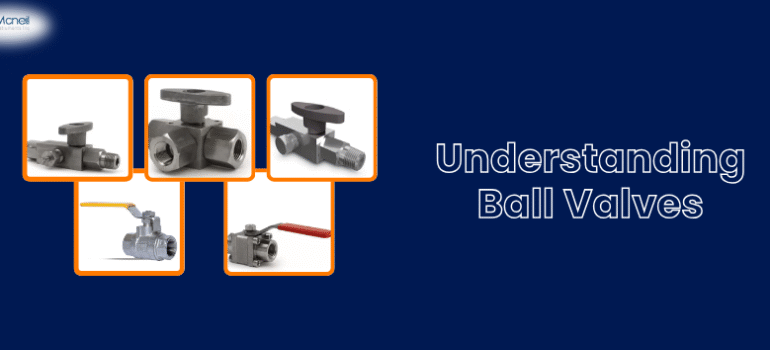
Understanding Ball Valves

Introduction: The Simplicity of a Perfect Seal

Think of the simple act of turning a tap at home instant control over water flow with a slight twist. In industries, this same concept is scaled up, often involving extremely high pressures, corrosive fluids, or gases critical to operations. This is where ball valves prove indispensable. They are among the most widely used flow control devices in modern piping systems due to their ability to offer quick shut-off, minimal leakage, and exceptional durability.

Mcneil Instruments, one of the most trusted ball valve manufacturers, suppliers, and exporters in India, specializes in creating high-performance valves designed for industries that demand precision and reliability. This blog will help you understand what ball valves are, how they function, their key components, types, and how to select the right one for your application.

What is a Ball Valve?

A ball valve is a quarter-turn device designed to regulate the flow of liquids or gases. At its core, it consists of a spherical ball with a hollow bore. When the handle is rotated 90 degrees, the ball aligns its bore with the flow path to allow passage, or turns perpendicular to stop it completely.

Ball valves are preferred for their simplicity, tight shut-off capability, and low pressure drop compared to many other valve types. They are especially useful in high-pressure and high-temperature systems, offering longevity even in harsh conditions.

Key Benefits of Ball Valves include:

  • Quick quarter-turn operation for instant on/off control
  • Superior sealing properties that minimize leakage
  • Simple structure with fewer moving parts, reducing wear
  • Unrestricted flow in full-port designs

Key Components of a Ball Valve

Ball valves achieve their performance through a combination of essential components, each engineered to withstand industrial stresses.

The body houses the internal elements and is available in materials like stainless steel, brass, or special alloys for corrosive environments. The ball itself may come in full port, reduced port, or V-port designs, affecting flow capacity and control precision. Around this ball lies the seat, commonly made from PTFE or PEEK, creating a leak-proof seal.

The stem connects the ball to the handle, transferring torque for rotation. The handle, a simple lever or actuator, allows operators to open or close the valve quickly even under demanding conditions.

Types of Ball Valves Available

Mcneil Instruments offers a wide range of ball valves tailored to different applications and industries. Each type varies in design, pressure rating, temperature capability, and mounting style.

Key Types of Ball Valves
  • Type A: Low to medium pressure ball valve, 1/4″–2″, up to 2000 psi, -40°C to 230°C
  • Type B: Three-piece screw-together, 1/2″–2″, 1000–3000 psi, -40°C to 150°C
  • Type PB: High-pressure valve, up to 6000 psi, for demanding industrial use
  • Type S: Bolt-together design, interchangeable and actuator-friendly
  • Type UE & UB: Compact, high-pressure valves, up to 10,000 psi
  • Type 3-Way & 4-Way Diverter Valves: For safe high-pressure line diversion
  • Type Centurion™: Engineered for natural gas vehicle loading
  • Type 3T: High-pressure diverting valves for liquid and gas media

How to Choose the Right Ball Valve

Selecting the correct ball valve requires assessing several factors. First, define the application type whether on/off, throttling, or diversion. Determine the operating pressure and temperature limits to ensure compatibility with system demands. For media that is corrosive, abrasive, or hazardous, material choice becomes critical, stainless steel and exotic alloys offer superior resistance.

Flow capacity also matters: full-port ball valves ensure minimal pressure loss, while reduced-port types provide cost efficiency where flow is not critical. Maintenance considerations are essential for industries requiring continuous operation; three-piece ball valves allow quick servicing without removing the entire assembly.

Ball Valve Specifications

Below are the typical specifications of ball valves offered by Mcneil Instruments:

ParameterDetails
Connection Sizes1/4″ to 2 1/2″
Pressure RatingUp to 10,000 psi
Temperature Range-40°C to 230°C (depending on series)
End ConnectionsThreaded, Socket Weld, Butt Weld, Panel Mount
Standards ComplianceASTM, ASME, ISO

Mechanical Properties of Ball Valves

PropertyValue
Tensile Strength485 MPa (min)
Yield Strength275 MPa (min)
Elongation≥ 30%
Hardness≤ 90 HRB

Applications of Ball Valves

Ball valves are widely used across industries due to their reliability and ease of integration:

  • Oil & gas pipelines for high-pressure isolation
  • Petrochemical plants managing corrosive fluids
  • Power generation systems handling steam and boiler feed lines
  • Food and pharmaceutical processing with hygienic designs
  • Water treatment and desalination plants requiring durable flow control

Global Reach of Mcneil Instruments

As a leading manufacturer, supplier, and exporter of ball valves in India, Mcneil Instruments delivers to industries across the globe. Our valves are widely utilized in Saudi Arabia, Qatar, Kuwait, Nigeria, Ghana, Texas, Chicago, Malaysia, Singapore, and Brazil, meeting international standards such as ASTM, ASME, and ISO.

Conclusion: 

A ball valve may seem like a small component in a complex system, but its role in ensuring operational safety, efficiency, and continuity cannot be overstated. By choosing the right type, material, and configuration, industries can minimize downtime and enhance performance.Mcneil Instruments stands as a reliable partner, offering precision-engineered, certified ball valves designed to meet global demands. For expert guidance, custom solutions, or a complete product range, connect with our team today.

Read More

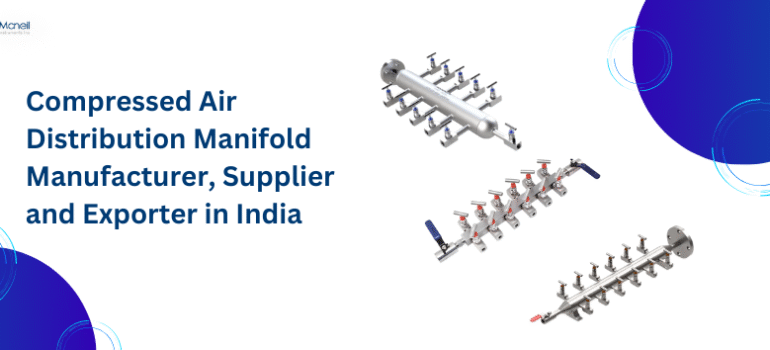
Compressed Air Distribution Manifold Manufacturer, Supplier and Exporter in India

Compressed air is often called the “fourth utility” after electricity, water, and gas. In industries where efficiency, reliability, and safety are paramount, managing compressed air properly is essential. One of the most effective tools for this purpose is the Compressed Air Distribution Manifold

At Mcneil Instruments, we design and manufacture precision-engineered air manifolds that streamline compressed air distribution while ensuring performance, safety, and durability. 

What Is a Compressed Air Distribution Manifold?

A compressed air manifold is a centralized distribution unit that takes compressed air from a single supply source and channels it into multiple output lines. By consolidating air distribution, manifolds eliminate the need for separate compressors or multiple piping setups, thereby saving space, reducing costs, and improving efficiency.

Key Functions of Air Manifolds:

  • Uniform Distribution: Ensures stable air supply across multiple tools, equipment, or processes.
  • Leak Prevention: Reduces the chance of air loss compared to conventional piping systems.
  • Space Optimization: Replaces complex piping networks with a compact and efficient solution.
  • Improved Control: Allows easier isolation, monitoring, and maintenance of individual lines.

Applications of Compressed Air Manifolds

Compressed air manifolds are used wherever controlled distribution of compressed air is required. Some major applications include:

  • Manufacturing Plants: For powering pneumatic tools, actuators, and automation systems.
  • Food & Beverage Industry: Clean and regulated compressed air for packaging and processing lines.
  • Pharmaceuticals: In sterile environments for cleanroom operations and precision equipment.
  • Automotive: Assembly lines and painting systems rely on stable compressed air distribution.
  • Oil & Gas: For instrumentation, valve actuation, and pneumatic control systems.

Technical Specifications of Compressed Air Distribution Manifolds

SpecificationDetails
Material of ConstructionStainless Steel, Brass, Aluminum, Carbon Steel
Pressure RatingUp to 6000 PSI (depending on material & design)
Number of Outlets2-way to 20-way configurations available
Connection TypesNPT, BSP, Compression Fittings
Mounting OptionsWall-mounted, Panel-mounted, Portable
Standards ComplianceASME, ASTM, ISO, CE Certified

Benefits of Using Mcneil Instruments’ Compressed Air Manifolds

  • Durability: Built with high-grade stainless steel and corrosion-resistant materials.
  • Customization: Available in multiple outlet configurations and pressure ratings.
  • Safety Assurance: Each manifold undergoes stringent quality checks, including hydrostatic and leak testing.
  • Versatility: Suitable for diverse industries like petrochemicals, pharmaceuticals, energy, and food processing.
  • Compliance: Meets global quality standards (ASTM, ASME, ISO) for guaranteed reliability.

Global Reach of Mcneil Instruments: Compressed Air Manifolds

As a leading manufacturer, supplier, and exporter of compressed air manifolds, Mcneil Instruments serves industries worldwide.

  • In Saudi Arabia and Qatar, we are trusted suppliers of air manifolds for petrochemical plants and energy sectors.
  • In Nigeria and Ghana, our manifolds support industrial automation and compressed air tool systems.
  • In Texas and Chicago, we are recognized exporters delivering manifolds for automotive and pharmaceutical industries.
  • In Malaysia and Singapore, our air manifolds are widely used in cleanroom facilities and process plants.
  • Across Brazil, we act as a key supplier for food, beverage, and chemical industries requiring reliable compressed air distribution.

Conclusion

A Compressed Air Distribution Manifold is more than just a connector it is a crucial component that enhances efficiency, safety, and reliability in industrial air systems. By choosing Mcneil Instruments, industries gain access to manifolds that are precision-engineered, tested to international standards, and designed for long-term performance.

Partner with Mcneil Instruments today to get high-quality compressed air distribution manifolds tailored to your industrial needs.

Read More
Condensate Pots

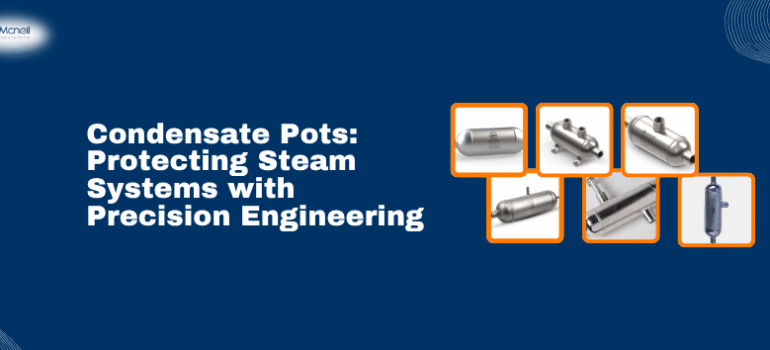
Condensate Pots: Protecting Steam Systems with Precision Engineering

Steam systems are critical to many industrial processes: power  generation, chemical plants, food processing, pharmaceuticals, and more. One frequently underestimated component is the condensate pot, also called a steam trap pot or dirt pocket. Far from a trivial accessory, a well‑designed condensate pot can dramatically improve system efficiency, reliability, and safety.

Mcneil Instruments, a trusted manufacturer, supplier, and exporter in India, offers precision-engineered condensate pots and accessories designed for harsh industrial conditions and informed steam system design.

What Is a Condensate Pot and Why Does It Matter?

A condensate pot is a small vessel installed just upstream of steam-using equipment (like pressure-reducing valves, steam traps, or control valves) to collect condensate, dirt, and moisture before the steam enters sensitive components. Its primary functions include:

  • Slowing steam velocity to allow condensate and particulates to drop out of the steam stream
  • Preventing water or debris from entering valves or instrumentation, avoiding water hammer, erosion, or damage
  • Acting as a buffer during startup and process fluctuations

Without a condensate pot, steam quality degrades leading to scale buildup, mechanical wear, inaccurate pressure readings, and costly downtime.

How Condensate Pots Work

A condensate pot functions as a low-point sump in the steam line. Here’s a simplified breakdown:

  1. Steam enters the pot, carrying moisture and solid particles.
  2. Flow slows down as the cross-section increases.
  3. Water droplets condense and fall to the bottom; solids settle.
  4. The steam outlet at the top allows dry steam to continue to downstream equipment.
  5. Periodic blowdown (manual or automated) removes accumulated water and debris.

Many systems include a blowdown valve, a manual drain, or a continuous blowdown arrangement, ensuring that the pot doesn’t overflow. This maintenance reduces risks of system damage or process inefficiencies.

Types of Condensate Pots

TypeApplicationTypical Use
Basic Barrel PotGeneral steam systems with moderate flow ratesIdeal for refineries, HVAC, and low-pressure steam loops
Safety Pot (with Gauge)Systems needing rapid diagnosis and pressure controlPetrochemical, high-temperature steam systems
Instrument PotProtection of pressure transmitters and sensorsInstrumentation isolation and consistent readings
High-Capacity PotHigh condensate load, fluctuating flow regimesUtilities, large process plants, boiler feed lines

Material & Design Considerations

  • Material Selection: Mcneil Instruments offers condensate pots in carbon steel, stainless steel (316/304), or exotic alloys (e.g., Inconel) for corrosive or high-temperature environments.
  • Pressure and Class Rating: Design to ASME or ASTM pressure class aligned with the main steam line Class 150, 300, 600, etc.
  • Drain Options: Support for manual valve, automatic float-type drain, or continuous blowdown packages.
  • Dimensions & Installation: Vertical orientation with adequate height below the lowest instrumentation connection to allow full drainage.
  • Surface Finishes: Internal polishing to prevent scaling; external finish to resist corrosion in outdoor or harsh plant conditions.

Applications Where Condensate Pots Are Critical

  1. Pressure-Reducing Stations: Dry steam improves valve control and longevity.
  2. Steam Traps and Tracer Lines: Prevents condensate return from large or distant headers.
  3. Instrumentation Protection: Ensures sensors and transmitters receive dry, clean steam.
  4. Heat Exchangers & Traps: Improves heat transfer efficiency and avoids thermal shock.

Why Mcneil Instruments for Condensate Pots

Mcneil Instruments brings engineering rigor and product reliability to condensate pot design and delivery:

  • Engineering Expertise: We collaborate with plant engineering teams to size and configure condensate pots correctly aligning with pressure classes, condensate volumes, and instrumentation layout.
  • Custom Fabrication: From small instrument pots (small bore) to high-flow pots for major lines, each unit is built to spec.
  • Quality Assurance: Each condensate pot is pressure-tested, blowdown-tested, and supplied with mill test certificates, IBR approval, and optional third-party inspection documentation.
  • Global Reach & Support: With export services to Saudi Arabia, Qatar, Nigeria, Singapore, Malaysia, Brazil, Ghana, and the US, Mcneil ensures timely delivery and compliance.
  • Technical Support: Pre‑sales process design support, blowdown interval recommendations, material selection advice, and after-sales inspection guidelines are part of our offering.

Installation & Maintenance Best Practices

  • Install permanently in a vertical orientation, at a low point in the line, with clean access to drains.
  • Use a blowdown valve that is sized to allow rapid dumping but prevents steam loss.
  • Match instrumentation taps carefully ensure they’re above the 80% fluid‑level mark inside the pot.
  • Schedule regular blowdown intervals, based on load and condensate formation.
  • Consider insulating pots in cold environments to prevent external condensation.

Impact on System Efficiency and Safety

A properly designed condensate pot enhances overall system reliability:

  • Extends lifetime of control valves and steam isolation devices
  • Prevents water hammer and associated damage
  • Maintains accurate instrumentation readings
  • Helps sustain process efficiency in heat exchange and condensation systems

Investing in condensate pots is a low-cost but high-impact decision in steam efficiency management.

Conclusion

For engineers and procurement teams seeking reliability in steam infrastructure, condensate pots are essential but often under-specified. At Mcneil Instruments, we provide a complete portfolio of high-quality condensate pots tailored to variable industrial needs combining precise engineering, certified manufacturing, and global delivery.

To minimize downtime, improve efficiency, and protect critical components, reach out to Mcneil Instruments today. We can help design the ideal condensate solution for your steam system needs.

Read More

Custom Needle Valve Solutions for Unique Industrial Challenges in India

In high-pressure industrial environments, even the smallest components can have the largest impact. Needle valves, known for their precision flow control in critical applications, are one such component. However, standard off-the-shelf valves often fall short when used in specialized systems. That’s where custom needle valve solutions come in  addressing unique pressure, flow, material, and dimensional requirements across industries.

Mcneil Instruments has emerged as one of India’s top custom needle valve manufacturers and suppliers, with a strong track record of designing precision-engineered valves tailored to the complexities of different industrial sectors.

What Is a Needle Valve and Why Customization Matters?

A needle valve is a type of valve with a slender, tapered point at the end of a valve stem. When turned, this needle-like plunger moves in and out of a small seat, enabling extremely precise regulation of flow  especially ideal for small volume systems or high-pressure applications.

While standard needle valves cater to general-purpose needs, many industries face non-standard operating conditions that require:

  • Unusual pressure or temperature ranges
  • Corrosive or abrasive media
  • Space constraints in assemblies
  • Industry-specific compliance standards
  • Unique end connections or thread types

This is where custom-manufactured needle valves become indispensable.

Common Challenges Solved by Custom Needle Valves

Industrial ChallengeCustom Solution from Mcneil Instruments
High-pressure fluid systems (above 6000 psi)Needle valves with high-strength alloys like SS 316, Inconel
Exposure to aggressive chemicalsMonel, Hastelloy, or PTFE-lined needle valves
Ultra-precise flow regulation requiredValves with fine-pitch threads and low-tolerance needle profiles
Compact or restricted space installationsMiniature and low-profile valve body designs
Extreme temperatures (cryogenic or elevated)Custom seals, stem packing, and materials tested for temperature
Offshore, marine, or explosive environmentsATEX-rated or IP-certified needle valves

Key Industries That Rely on Mcneil’s Custom Needle Valves

  • Oil & Gas: For controlling flow in instrumentation lines, sampling systems, and gas skids
  • Petrochemical Plants: Handling corrosive chemicals at high temperature/pressure
  • Pharmaceuticals: Valves with sanitary-grade finishes and zero-dead-leg designs
  • Power & Energy: In supercritical boilers, cooling water systems, and pressure gauges
  • Hydrogen & Green Energy: Custom needle valves rated for hydrogen permeability and sealing
  • Water Treatment & Desalination: Chloride-resistant valves made of duplex/super duplex steel

Material Options for Custom Needle Valves

MaterialProperties & Use-Case
Stainless Steel 316General-purpose, corrosion-resistant, high-strength
InconelExcellent resistance to oxidation, ideal for high-temp use
MonelOutstanding for marine applications and saltwater exposure
Hastelloy C22/C276Acid-resistant; used in chemical and pharmaceutical industries
BrassEconomical option for low-pressure, non-corrosive systems
Super Duplex 2507Exceptional strength and corrosion resistance in harsh media

Design Features Available with Mcneil Custom Needle Valves

  • Body Types: Straight, angle, block & bleed, manifold
  • End Connections: NPT, BSPT, BSPP, compression tube, flange, welded ends
  • Pressure Ratings: Up to 10,000 psi
  • Sealing Options: Metal-to-metal, PTFE, Grafoil, Viton
  • Handle Types: T-handle, bar handle, anti-tamper
  • Compliance: Available with IBR, NACE MR0175, PED, ATEX certifications

Why Choose Mcneil Instruments for Custom Needle Valves in India?

As an established needle valve manufacturer, supplier, and exporter in India, Mcneil Instruments brings decades of engineering and industrial insight into every project.

What Sets Us Apart:
  • Design-to-Application Customization: From concept to prototype to bulk supply
  • Material Sourcing Excellence: All raw materials comply with ASTM and ASME standards
  • Testing & Quality Control: Each valve is tested for leak-proof performance, dimensional accuracy, and pressure compliance
  • Global Export Capability: Serving clients in Saudi Arabia, Qatar, Nigeria, Brazil, Singapore, Texas, and Malaysia
  • Responsive Engineering Support: Consultative approach to understand and solve client-specific problems

Certifications & Quality Assurance

Certification / StandardPurpose
EN 10204 3.1 / 3.2Mill test certificates and third-party inspections
IBR CertificationBoiler and pressure system approval in India
NACE MR0175Compliance for sour gas environments
ISO 9001:2015Quality Management Systems
ATEX / IP Rated OptionsExplosive environment safety

Conclusion: 

In today’s demanding industrial ecosystems, there’s no room for generic components. A custom needle valve solution can be the difference between consistent uptime and costly system failure. From extreme pressure ratings to corrosive media and compact layouts, Mcneil Instruments delivers precision-built needle valves tailored for your application.

Partner with Mcneil Instruments  the trusted name for custom needle valves in India  and experience a synergy of durability, performance, and engineering expertise.

Read More

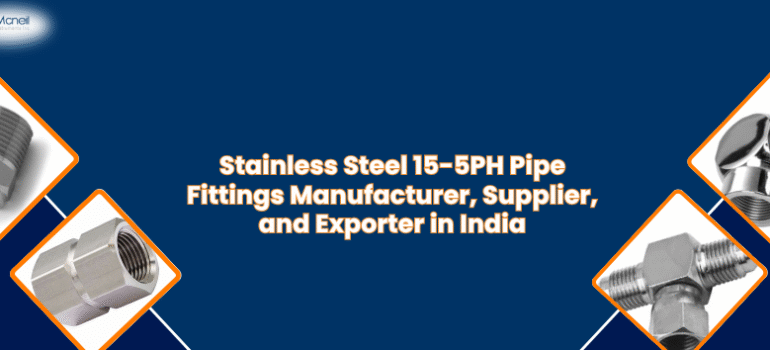
Stainless Steel 15-5PH Pipe Fittings Manufacturer, Supplier, and Exporter in India

Introduction

Stainless Steel 15-5PH pipe fittings are a premium-grade solution for industries requiring a combination of strength, corrosion resistance, and toughness. As a precipitation-hardening stainless steel, 15-5PH offers a unique balance of properties that make it ideal for aerospace, marine, petrochemical, and nuclear applications.

At Mcneil Instruments, we are proud to be a leading manufacturer, supplier, and exporter of 15-5PH stainless steel pipe fittings in India, offering unmatched quality, technical compliance, and global delivery across sectors.

What is 15-5PH Stainless Steel?

15-5PH (UNS S15500) is a martensitic, precipitation-hardening stainless steel. It is derived from the more common 17-4PH stainless steel, but with improved toughness, weldability, and superior transverse properties. Thanks to its low carbon content and balanced chemistry, 15-5PH delivers:

  • Excellent corrosion resistance in marine and chemical environments.
  • High strength with exceptional mechanical properties up to 600°F (316°C).
  • Good machinability and weldability, even in the hardened condition.
  • Low distortion during heat treatment, making it ideal for precision fittings.

15-5PH Stainless Steel Pipe Fittings Technical Specifications & Mechanical Properties 

PropertyDetails
StandardASTM A182 / ASME SA182
Grade15-5PH (UNS S15500)
FormElbow, Tee, Reducer, Cap, Stub End
Manufacturing ProcessForged / Machined / Heat Treated
Heat Treatment ConditionH900, H1025, H1075, H1150, H1150M
TypeSeamless / Welded
Surface FinishPickled / Polished / Shot Blasted

15-5PH Stainless Steel Pipe Fittings Mechanical Properties (H900 Condition)

Mechanical PropertyValue
Tensile Strength1310 MPa min
Yield Strength (0.2%)1170 MPa min
Elongation≥ 10%
Hardness (HRC)38–42
Density7.8 g/cm³
Operating Temp. LimitUp to 600°F (316°C)

Note: Mechanical properties vary with heat treatment conditions.

Why Choose 15-5PH Over 17-4PH?

While both 15-5PH and 17-4PH are PH stainless steels, 15-5PH is preferred where:

  • Higher transverse toughness is critical.
  • Better weldability and formability is required.
  • Superior metallurgical consistency and minimized delta ferrite are needed.

Dimensions & Wall Thickness Chart of 15-5PH Stainless Steel Pipe Fittings

Nominal Pipe Size (NPS)Standard Wall Thickness (mm)
½″ – 24″SCH 10 to SCH 160, XXS
Customized DimensionsOn request

15-5PH Stainless Steel Pipe Fittings Certifications

CertificationDetails
ASTM A182 / ASME SA182Material and manufacturing compliance
ISO 9001:2015Quality Management System
EN 10204 3.1 / 3.2Mill Test Certificate
PED 2014/68/EUPressure Equipment Directive (EU)
NACE MR0175Sour Service (optional on request)

Available Sizes & Specifications of 15-5PH Stainless Steel Pipe Fittings

FormSize RangeConnection Type
Elbow, Tee½″ to 24″Butt Weld / Socket Weld
Reducer, Stub End½″ to 24″Seamless / Welded
Cap½″ to 24″SCH 10 to SCH XXS
Custom OrdersAvailable on requestBased on project specifications

Global Reach of Mcneil Instruments: Stainless Steel 15-5PH Pipe Fittings

Mcneil Instruments proudly exports high-performance 15-5PH stainless steel pipe fittings to some of the world’s most demanding industrial sectors:

  • In Saudi Arabia, our 15-5PH fittings are trusted in offshore platforms and high-pressure gas transmission systems, where corrosion resistance is critical.
  • In Qatar, we supply to aerospace and desalination facilities, where 15-5PH’s strength and reliability under extreme conditions are highly valued.
  • In Nigeria, we are a preferred exporter for oil refineries and drilling infrastructure, offering pipe fittings with durability and high yield strength.
  • Across Ghana, our 15-5PH pipe fittings support chemical processing and water treatment facilities requiring metallurgical consistency.
  • In Texas, Mcneil serves nuclear power plants and aerospace assembly zones, fulfilling stringent ASME and ASTM specifications with 15-5PH components.
  • In Chicago, we are a leading exporter of precision-engineered 15-5PH elbows, tees, and reducers for defense and industrial machinery applications.
  • In Malaysia, we provide corrosion-resistant 15-5PH fittings to food processing units and pressure vessel manufacturing facilities.
  • In Singapore, Mcneil is a reliable supplier for marine engineering and offshore structural projects, where resistance to saltwater and pressure cycles is crucial.
  • In Brazil, our 15-5PH fittings are exported for use in energy plants and pharmaceutical process lines, meeting international certifications and quality standards.

Conclusion

If your industry demands superior mechanical performance, excellent corrosion resistance, and dimensional accuracy, Stainless Steel 15-5PH pipe fittings are your best fit. Backed by certification, expert engineering, and a robust global presence, Mcneil Instruments stands out as a trusted manufacturer, supplier, and exporter in India.

Get in touch today to request a quote or technical datasheet for your next project.

Read More

Stainless Steel 17-4PH Pipe Fittings Manufacturer, Supplier, and Exporter in India

Introduction

Stainless Steel 17-4PH pipe fittings are widely recognized for their exceptional combination of strength, corrosion resistance, and heat treatment capabilities. These fittings are ideal for aerospace, petrochemical, marine, and high-pressure industries where reliability under stress is critical.

Mcneil Instruments is a leading manufacturer, supplier, and exporter of Stainless Steel 17-4PH pipe fittings in India. With advanced production capabilities and international certifications, we cater to clients seeking durable and high-performance stainless steel fitting solutions.

What Makes Stainless Steel 17-4PH Unique?

17-4PH (UNS S17400) is a precipitation-hardening martensitic stainless steel. It combines the corrosion resistance of stainless steel with the high strength of hardened alloys.

Key Characteristics:
  • High tensile and yield strength after heat treatment (H900 to H1150)
  • Excellent mechanical properties up to 600°F (316°C)
  • Good corrosion resistance in marine and chemical environments
  • Ideal for welding, machining, and heat treatment

Properties of 17-4PH Material

17-4PH stainless steel is a precipitation-hardening martensitic alloy, known for its high strength, excellent corrosion resistance, and good mechanical properties at elevated temperatures.

  • Corrosion Resistance: Performs well in chemical, marine, and atmospheric conditions; better than many martensitic grades.
  • High Strength: Can achieve tensile strength above 1300 MPa after heat treatment (e.g., H900 condition).
  • Heat Treatable: Offers flexibility with heat treatments (H900–H1150) to balance hardness and toughness.
  • Good Weldability: Can be welded using standard procedures, with post-weld heat treatment improving properties.
  • Dimensional Stability: Minimal distortion during hardening makes it ideal for precision-engineered parts.

These properties make 17-4PH ideal for industries requiring a combination of strength, corrosion resistance, and heat resistance, such as aerospace, oil & gas, nuclear, and marine applications.

Difference Between 17-7PH and 17-4PH Stainless Steel (Comparison Table)

Property17-4PH Stainless Steel17-7PH Stainless Steel
UNS DesignationS17400S17700
Primary Alloying ElementsChromium (17%), Nickel (4%), CopperChromium (17%), Nickel (7%), Aluminum
Heat Treatment ResponsePrecipitation hardenable with H900–H1150 conditionsRequires cold working before aging
Corrosion ResistanceExcellent, similar to 304/316 in many environmentsModerate, less than 17-4PH
Hardness Range (HRC)35–44 (depending on heat treatment)35–50 (depending on aging condition)
FormabilityGood machinability and weldabilityLimited; less weldable and harder to form
Typical ApplicationsAerospace, nuclear, marine, petrochemicalsSprings, diaphragms, washers, aerospace parts

Technical Specifications & Mechanical Properties of Stainless Steel 17-4PH Pipe Fittings

PropertyDetails
StandardASTM A182 / ASME SA182 F564
GradeStainless Steel 17-4PH (UNS S17400)
FormElbows, Tees, Reducers, Couplings, Caps
Heat TreatmentSolution Annealed & Aged (H900–H1150)
Manufacturing MethodForged / Machined / Seamless
ApplicationAerospace, Power, Petrochemical, Marine

Stainless Steel 17-4PH Pipe Fittings Mechanical Properties

PropertyValue (at H900 condition)
Tensile Strength≥ 1310 MPa
Yield Strength≥ 1170 MPa
Elongation≥ 10%
Hardness38–44 HRC
Service TemperatureUp to 600°F (316°C)

Dimensions & Wall Thickness Chart Stainless Steel 17-4PH Pipe Fittings

Nominal Pipe Size (NPS)Wall Thickness (Schedule)
½″ – 24″SCH 10S, SCH 40S, SCH 80S
Fittings StandardASME B16.11 / B16.9
Dimensional ToleranceAs per MSS-SP-43 / ANSI B16.9

Stainless Steel 17-4PH Pipe Fittings Certifications

CertificationDetails
ASTM A182 / ASME SA182Grade and material compliance
EN 10204 3.1 / 3.2Mill Test Certificates (MTCs)
ISO 9001:2015Quality Management System
NACE MR0175Suitable for Sour Service Environments
PED 2014/68/EUEuropean Pressure Equipment Directive Approval

Available Sizes & Specifications Stainless Steel 17-4PH Pipe Fittings

FormSize Range (NPS)Schedule
Elbows, Tees½″ to 24″SCH 10S to SCH 160
Couplings, Caps½″ to 6″SCH 40 to SCH 160
Custom FittingsOn RequestBased on Project Specs

Global Reach of Mcneil Instruments: Stainless Steel 17-4PH Pipe Fittings

  • In Saudi Arabia, Mcneil Instruments is a leading manufacturer of 17-4PH pipe fittings used in desalination and offshore drilling applications.
  • In Qatar, we are a reliable exporter, supplying 17-4PH fittings for aerospace and gas processing projects.
  • In Nigeria, industries benefit from our expertise as a trusted supplier, using our high-strength 17-4PH fittings in chemical processing plants.
  • As a dedicated exporter in Ghana, Mcneil delivers 17-4PH stainless fittings for corrosion-prone environments in marine and mining operations.
  • In Texas, Mcneil is a prominent manufacturer and supplier of 17-4PH pipe fittings, serving the oil & gas, and defense industries.
  • From Chicago, we are a known exporter, delivering 17-4PH pipe fittings for industrial automation and clean energy sectors.
  • In Malaysia, we serve as a dependable supplier and exporter for 17-4PH fittings used in shipbuilding and petrochemical engineering.
  • In Singapore, Mcneil Instruments is recognized as a high-quality manufacturer and exporter, supporting offshore platforms and subsea equipment.
  • Across Brazil, we are a trusted supplier, providing 17-4PH pipe fittings to paper mills, refinery units, and energy plants.

Conclusion

Stainless Steel 17-4PH pipe fittings offer unmatched strength and corrosion resistance, especially in harsh industrial environments. Mcneil Instruments ensures top-grade, heat-treated 17-4PH fittings tailored to global quality standards. As a manufacturer, supplier, and exporter, we deliver robust solutions for mission-critical applications.

People Also Searched for

stainless steel 3d elbow grade 17-4PH price list, ss 17-4PH buttweld elbow supplier in mumbai, 17-4PH stainless steel pipe fittings price list, stainless steel 17-4PH pipe fittings manufacturers in india, stainless steel 17-4PH seamless buttweld elbow price list in india, stainless steel 17-4PH pipe fittings suppliers, stainless steel 17-4PH long radius bend, stainless steel 17-4PH pipe fittings manufacturer, stainless steel 17-4PH pipe elbow supplier, austenitic stainless steel 17-4PH butt weld fittings, stainless steel 17-4PH piggable bend supplier, stainless steel 17-4PH pipe fittings catalogue, astm a403 17-4PH two joint fittings, stainless steel 17-4PH pipe nipple supplier, ss 17-4PH buttweld fittings price list, stainless steel 17-4PH pipe fittings suppliers in chennai, stainless steel 17-4PH butt weld fittings supplier in india, austenitic stainless steel 17-4PH pipe fittings, stainless steel 17-4PH pipe fittings manufacturers in india, stainless steel 17-4PH pipe elbow price, asme sa403 17-4PH stainless steel pipe fittings, stainless steel 17-4PH pipe reducer price, ss 17-4PH buttweld fittings manufacturer in mumbai, stainless steel 17-4PH long radius elbow, price of stainless steel buttweld fittings 17-4PH, ss 17-4PH buttweld fittings price list, stanless steel 17-4PH 5d elbow, ss 17-4PH pipe fittings manufacturer in mumbai, stainless steel 17-4PH seamless pipe fittings, stainless steel 17-4PH two halve fittings supplier, stainless steel 17-4PH reducing elbow supplier, stainless steel 45 degree elbow, stainless steel 17-4PH 90 deg buttweld elbow supplier, ss 17-4PH butt weld fittings supplier in india, stainless steel 17-4PH eual cross, ss 17-4PH short radius elbow supplier.

Read More

Stainless Steel Super Duplex 2507 Pipe Fittings Manufacturer, Supplier, and Exporter in India

Introduction

Stainless Steel Super Duplex 2507 pipe fittings are engineered for highly corrosive and high-pressure environments. With excellent mechanical strength, outstanding resistance to chloride stress corrosion, and superior weldability, these fittings are ideal for chemical processing, offshore oil rigs, desalination plants, and marine systems.

Mcneil Instruments stands as a trusted manufacturer, supplier, and exporter of Super Duplex 2507 pipe fittings in India. Our products are precision-engineered to meet global standards, ensuring long-term durability and safety in harsh environments.

What is Stainless Steel Super Duplex 2507 Pipe Fittings

Stainless Steel Super Duplex 2507 pipe fittings are components made from a high-performance duplex stainless steel alloy, known for its exceptional strength and corrosion resistance, especially in chloride-containing environments. Specifically, “2507” refers to the UNS designation (S32750), indicating a super duplex stainless steel with a high proportion of chromium, molybdenum, and nitrogen. These fittings are used to join, regulate, or terminate piping systems, and are designed to withstand harsh conditions in industries like petrochemical, chemical processing, and marine applications. 

What Makes Super Duplex 2507 Exceptional

Super Duplex 2507 combines the benefits of both austenitic and ferritic stainless steels. It contains 25% chromium, 4% molybdenum, and 7% nickel, which enhances its resistance to pitting, crevice corrosion, and stress corrosion cracking—especially in chloride-rich environments.

Key Features:

  • High yield strength (almost double that of austenitic grades)
  • Excellent corrosion resistance in seawater and aggressive media
  • Superior mechanical strength and fatigue resistance
  • Good weldability and thermal conductivity

Stainless Steel Super Duplex 2507 Pipe Fittings Technical Specifications & Mechanical Properties

PropertyDetails
StandardASTM A815 / ASME SA815
GradeSuper Duplex 2507 (UNS S32750)
FormElbows, Tees, Reducers, Caps, Stub Ends
Manufacturing ProcessSeamless / Welded / Forged
Surface FinishPickled, Polished
Heat TreatmentSolution Annealed
End ConnectionsBeveled, Plain, Threaded

Mechanical Properties of Stainless Steel Super Duplex 2507 Pipe Fittings

PropertyValue
Tensile Strength≥ 800 MPa
Yield Strength≥ 550 MPa
Elongation≥ 15%
Hardness≤ 32 HRC
Operating TempUp to 300°C (continuous)
Impact ToughnessExcellent, even at -50°C

Stainless Steel Super Duplex 2507 Pipe Fittings Dimensions & Wall Thickness Chart

Nominal Pipe Size (NPS)Wall Thickness Range (SCH)
½″ – 24″SCH 10S, SCH 40S, SCH 80S, XXS
Dimensional StandardASME B16.9 / B16.11
ToleranceAs per ANSI B16.9 / MSS-SP-43

Stainless Steel Super Duplex 2507 Pipe Fittings Certifications

CertificationDetails
ASTM A815 / ASME SA815Material and manufacturing compliance
EN 10204 3.1 / 3.2Mill Test Certificates
ISO 9001:2015Quality Management System Certification
NACE MR0175Sour service corrosion resistance
IBR CertifiedBoiler and pressure application suitability

Available Sizes & Specifications for Stainless Steel Super Duplex 2507 Pipe Fittings

FormSize Range (NPS)Schedule / Class
Elbows, Tees½″ to 24″SCH 10S – XXS
Reducers, Caps½″ to 24″SCH 10S – XXS
Unions, Stub Ends½″ to 4″Class 150 – Class 3000
Custom SizesOn RequestBased on project requirements

Global Reach of Mcneil Instruments: Super Duplex 2507 Pipe Fittings

  • In Saudi Arabia, Mcneil Instruments is a leading manufacturer of Super Duplex 2507 pipe fittings for desalination and petrochemical infrastructure.
  • In Qatar, we are a reliable exporter, providing 2507 fittings to offshore drilling and gas separation units.
  • Across Nigeria, industries depend on us as a trusted supplier for high-strength, corrosion-resistant 2507 fittings used in process plants and marine pipelines.
  • As an experienced exporter in Ghana, Mcneil delivers fittings tailored for energy plants and refineries.
  • In Texas, we are a reputed manufacturer and supplier of Super Duplex fittings used in subsea systems and chemical facilities.
  • From Chicago, we operate as a reliable exporter, delivering to HVAC, oil refining, and wastewater systems.
  • In Malaysia, Mcneil is known as a top supplier and exporter, meeting demand from fabrication yards and industrial clients.
  • In Singapore, we serve as a recognized manufacturer and exporter of Super Duplex 2507 fittings, especially for shipbuilding and chemical sectors.
  • Across Brazil, Mcneil is a long-term supplier of Super Duplex fittings to pulp, paper, and ethanol plants.

Conclusion

Stainless Steel Super Duplex 2507 pipe fittings offer unparalleled performance in harsh, high-pressure, and chloride-rich environments. As your dedicated manufacturer, supplier, and exporter, Mcneil Instruments delivers globally certified, corrosion-resistant, and durable Super Duplex 2507 fittings tailored for critical industrial applications.

Read More

Stainless Steel Duplex 2205 Pipe Fittings Manufacturer, Supplier, and Exporter in India

Introduction

Stainless Steel Duplex 2205 pipe fittings combine a dual-phase microstructure—roughly equal parts austenite and ferrite—to deliver remarkable strength, corrosion resistance, and stress corrosion cracking resistance. These features make them ideal for demanding applications in chemical processing, oil & gas, marine environments, and desalination plants.

Mcneil Instruments is a leading manufacturer, supplier, and exporter of Stainless Steel Duplex 2205 pipe fittings in India. With advanced manufacturing facilities and full compliance with international standards, Mcneil delivers reliable and high-performance fittings to clients worldwide.

What Makes SS Duplex 2205 Unique

Duplex 2205 has an alloy structure with 22% chromium, 5–6% nickel, and 3% molybdenum, along with nitrogen added for enhanced strength and corrosion resistance. This results in:

  • Superior resistance to pitting, crevice, chloride stress corrosion, and chloride-induced stress cracking.
  • High mechanical strength, approximately double that of standard austenitic stainless steels.
  • Cost-effective designs due to reduced material thickness requirements without compromising performance.

Manufacturing & Quality Control

  • Raw Materials: Procured in accordance with ASTM A815 standards.
  • Forming: Produced into fittings such as elbows, tees, reducers, and caps using forging or seamless forming techniques.
  • Heat Treatment: Solution annealed and quenched to stabilize the duplex microstructure.
  • Finishing: Includes machining, threading, and pickling to ensure professional delivery.
  • Testing & Inspection: Includes dimensional checks, hardness testing, tensile testing, NDT (UT/RT), and PMI. All products include Mill Test Certificates (EN 10204) and IBR approval as needed.

Technical Specifications & Mechanical Properties

PropertyDetails
StandardASTM A815 / ASME SA815 for Duplex 2205 fittings
GradeDuplex Stainless Steel 2205 (UNS S32205 / S31803)
FormsElbow, Tee, Reducer, Cap, Stub End, Cross, Union
Manufacturing MethodSeamless / Welded / Forged
Heat TreatmentSolution Annealed (1040–1105 °C)
Surface FinishPickled, Polished, Bead-blasted
End Connection TypesBeveled, Plain, Threaded

Mechanical Properties

PropertyValue
Tensile Strength620–850 MPa
Yield Strength≥ 450 MPa
Elongation≥ 25%
Hardness≤ 35 HRC
Impact ToughnessExcellent ductility even at −50 °C

Dimensions & Wall Thickness Chart

Nominal Size (NPS)Wall Thickness (SCH 10S to SCH XXS)
½″ – 24″SCH 10S, 40S, 80S, 160, XXS
Fittings StandardASME B16.9 / B16.11
Dimensional ToleranceAs per ANSI B16.9 and MSS-SP-43

Certifications

CertificationDetails
ASTM A815 / ASME SA815Duplex 2205 material standard
EN 10204 3.1 / 3.2Third-party approved mill test certificates
ISO 9001:2015Quality management assurance
IBR CertifiedBoiler & pressure vessel suitability
PED (Optional)EU Pressure Equipment Directive
NACE MR0175Sour service stress corrosion resistance

Available Sizes & Specifications

FormSize Range (NPS)Schedule/Class
Elbows, Tees½″ to 24″SCH 10S to SCH XXS
Reducers, Caps½″ to 24″SCH 10S to SCH XXS
Unions, Stub Ends½″ to 4″Class 150 – Class 3000
Custom SizesOn RequestAs per Project Requirements

Global Reach of Mcneil Instruments: Stainless Steel Duplex 2205 Pipe Fittings

  • In Saudi Arabia, Mcneil Instruments is a recognized manufacturer of Duplex 2205 fittings used in oil & gas and petrochemical projects.
  • In Qatar, we act as a trusted exporter, supplying corrosion-resistant fittings for water treatment and petrochemical facilities.
  • Industries in Nigeria rely on us as a dependable supplier for Duplex fittings in desalination plants and power generation.
  • As a committed exporter in Ghana, Mcneil provides fittings used in coastal power and desalination projects.
  • In Texas, MCneil is known as a leading manufacturer and supplier, delivering Duplex 2205 fittings to the oil & gas and chemical industries.
  • From Chicago, we serve as a reliable exporter, providing high-strength fittings for refinery and industrial piping networks.
  • In Malaysia, we are a reputable supplier and exporter, offering fittings for offshore installation and marine fabrication.
  • In Singapore, Mcneil Instruments is considered a premium manufacturer and exporter, supporting shipbuilding and petrochemical facilities.
  • Across Brazil, we operate as a dedicated supplier, delivering Duplex 2205 pipe fittings for pulp & paper, mining, and chemical sectors.

Conclusion

Stainless Steel Duplex 2205 pipe fittings deliver unmatched corrosion resistance, high mechanical strength, and temperature resilience—ideal for critical industrial applications. Mcneil Instruments offers certified, precise, and durable fittings designed to serve global demands reliably.

Read More

Stainless Steel 347 Pipe Fittings Manufacturer, Supplier, and Exporter in India

Introduction

Stainless Steel 347 pipe fittings are stabilized with columbium (niobium), offering excellent resistance to intergranular corrosion even after welding and exposure to high temperatures. These fittings are ideal for use in aerospace, refinery, and chemical processing industries.

Mcneil Instruments is a trusted manufacturer, supplier, and exporter of Stainless Steel 347 pipe fittings in India, known for delivering components that meet stringent industrial and international standards.

What Sets SS 347 Apart

Stainless Steel 347 contains 17–19% Chromium, 9–13% Nickel, and is stabilized with columbium (Nb) to prevent chromium carbide precipitation.

It offers:

  • Excellent weldability and mechanical strength in high-heat service.
  • Resistance to intergranular corrosion in post-welded applications.
  • Suitability for pressure vessels, heat exchangers, and furnace components.

Manufacturing & Quality Control

  • Raw Materials: Sourced as per ASTM A403 WP347 standard.
  • Forming: Fittings like elbows, tees, reducers, and stub ends are forged or formed seamlessly.
  • Heat Treatment: Solution annealed to ensure resistance to sensitization.
  • Finishing: Includes polishing, beveling, and threading.
  • Testing & Inspection: PMI, NDT (UT/RT), tensile testing, hardness, and dimensional checks.
  • Certifications: MTCs, IBR, EN 10204 compliance ensure transparency and traceability.

Technical Specifications & Mechanical Properties of Stainless Steel 347 Pipe Fittings

PropertyDetails
StandardASTM A403 WP347 / ASME B16.9 / B16.11
GradeStainless Steel 347 (UNS S34700)
FormElbows, Tees, Reducers, Caps, Stub Ends
Manufacturing MethodSeamless / Welded / Forged
Heat TreatmentSolution annealed
Surface FinishPickled, Polished, Bead-blasted
End ConnectionsBeveled, Plain, Threaded

Mechanical Properties of Stainless Steel 347 Pipe Fittings

PropertyValue
Tensile Strength≥ 515 MPa
Yield Strength≥ 205 MPa
Elongation≥ 35%
Hardness≤ 95 HRB
Operating TempUp to 870°C

Dimensions & Wall Thickness Chart of Stainless Steel 347 Pipe Fittings

Nominal Size (NPS)Wall Thickness (SCH 10S – XXS)
½″ – 24″SCH 10S, SCH 40S, SCH 80S, XXS
Fittings StandardASME B16.9 / B16.11
Dimensional ToleranceAs per ANSI B16.9 / MSS-SP-43

Stainless Steel 347 Pipe Fittings Certifications

CertificationDetails
ASTM A403Material and manufacturing compliance
ASME B16.9 / B16.11Fitting dimensions
EN 10204 3.1 / 3.2Mill Test Certificates
ISO 9001:2015Quality Management
IBR CertifiedBoiler application suitability
NACE MR0175 (Optional)Sour service corrosion resistance

Stainless Steel 347 Pipe Fittings Available Sizes & Specifications

FormSize Range (NPS)Schedule/Class
Elbows, Tees½″ to 24″SCH 10S to SCH XXS
Reducers, Caps½″ to 24″SCH 10S to SCH XXS
Unions, Stub Ends½″ to 4″Class 150 – Class 3000
Custom SizesOn RequestBased on Project Specs

Global Reach of Mcneil Instruments: Stainless Steel 347 Pipe Fittings

  • In Saudi Arabia, Mcneil Instruments is a reliable manufacturer of SS 347 pipe fittings used in petrochemical plants and high-temperature steam services.
  • In Qatar, we operate as a trusted exporter, supplying SS 347 pipe fittings for high-pressure chemical processing pipelines.
  • Industries in Nigeria rely on us as a dependable supplier, using our fittings in boiler systems and heat-treatment lines.
  • As a committed exporter in Ghana, we support infrastructure and industrial piping needs with corrosion-resistant 347 fittings.
  • In Texas, Mcneil is a renowned manufacturer and supplier, delivering 347 pipe fittings for aerospace, heat exchanger, and refineries.
  • From Chicago, we act as a consistent exporter, serving HVAC, welding-intensive piping, and cleanroom applications.
  • In Malaysia, Mcneil is a dedicated supplier and exporter of 347 pipe fittings for chemical tank fabrication and offshore services.
  • In Singapore, we’re known as a premium manufacturer and exporter of SS 347 fittings for use in marine and energy industries.
  • Across Brazil, we support industries as a long-standing supplier, offering 347 pipe fittings trusted in food processing and heat-sensitive environments.

Conclusion

Stainless Steel 347 pipe fittings are the ideal choice for demanding thermal applications requiring both weldability and resistance to sensitization. As your trusted manufacturer, supplier, and exporter, Mcneil Instruments offers world-class products, expert support, and dependable delivery.

Read More

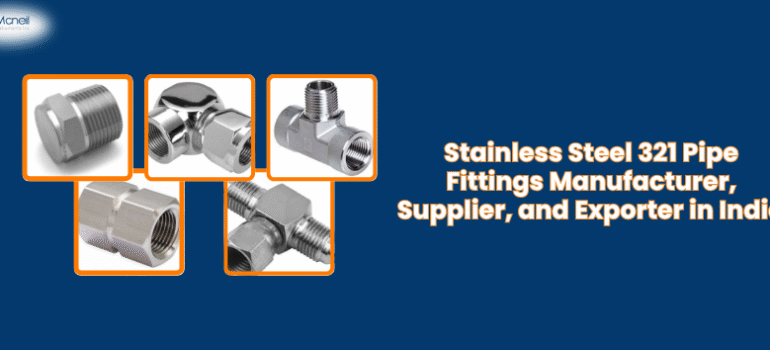
Stainless Steel 321 Pipe Fittings Manufacturer, Supplier, and Exporter in India

Introduction

Stainless Steel 321 pipe fittings are celebrated for their excellent resistance to intergranular corrosion and high-temperature stability, thanks to titanium stabilization. Widely used in burners, exhaust systems, and chemical processing, SS 321 fittings endure challenging conditions without compromising integrity.

Mcneil Instruments is a trusted manufacturer, supplier, and exporter of stainless steel 321 pipe fittings in India, delivering precision-engineered components that meet global standards and diverse industrial applications.

Why Stainless Steel 321 Stands Apart

  • Contains 17–19% Chromium, 9–12% Nickel, and Titanium (Ti) to stabilize against carbide precipitates.
  • Ideal for welding services up to 870 °C where creep resistance is needed.
  • Provides strong oxidation and corrosion resistance in high-heat environments.

Manufacturing & Testing Process

  • Raw Material from certified mills conforming to ASTM A403 WP321.
  • Forming: Forged or formed to produce elbows, tees, reducers, and caps.
  • Heat Treatment: Solution annealed and quenched per specifications.
  • Finishing: Deburring, threading, and passivation for clean finish.
  • Quality Checks: Dimensional inspections, NDT (UT or RT), mechanical testing, and PMI. Certified via MTCs, EN 10204, and IBR optional.

Technical Specifications & Mechanical Properties of Stainless Steel 321 Pipe Fittings

SpecificationDetails
StandardASTM A403 WP321 / ASME B16.9 / B16.11
Material GradeStainless Steel 321 (Titanium-stabilized Austenitic)
UNS DesignationS32100
TypeSeamless / Welded / Fabricated
FormElbow, Tee, Reducer, Cap, Cross, Stub End, Union
Manufacturing StandardsASTM, ASME, ANSI, MSS-SP
Stabilizing ElementTitanium (Ti)
ApplicationsHeat exchangers, refineries, chemical plants, power plants

Mechanical Properties of Stainless Steel 321 Pipe Fittings

PropertyValue
Tensile Strength≥ 515 MPa (75 ksi)
Yield Strength≥ 205 MPa (30 ksi)
Elongation≥ 35%
Hardness (HRB)≤ 95
Impact ResistanceExcellent, especially at high temperatures

Stainless Steel 321 Pipe Fittings Dimensions & Wall Thickness Chart

Size (NPS)Outside Diameter (mm)Wall Thickness (mm) (SCH 10S–SCH XXS)
½″21.31.65 – 5.54
1″33.42.77 – 9.09
2″60.33.91 – 15.09
4″114.36.02 – 21.44
6″168.37.11 – 28.58
8″219.18.18 – 33.32
10″273.09.27 – 38.89

Note: Custom wall thickness and dimensions available on request.

Certifications for Stainless Steel 321 Pipe Fittings

CertificationDetails
ASTM A403 / ASME B16.9Material and dimensional standards
EN 10204 3.1 / 3.2Mill Test Certificates / Third-party inspection available
IBR CertifiedFor boiler and pressure vessel applications
NACE MR0175 / MR0103For sour service (if applicable)
PED CertifiedFor EU-compliant pressure systems
ISO 9001:2015Quality Management System Compliance

Available Sizes & Specifications of Stainless Steel 321 Pipe Fittings

SpecificationDetails
Size Range½″ NB to 24″ NB (and custom sizes on request)
TypeSeamless, Welded, Buttweld, Forged
Wall ThicknessSCH 10S, SCH 40, SCH 80, SCH 160, SCH XXS
End TypesBeveled End (BE), Plain End (PE), Threaded End (TE)
Forms Available90° / 45° Elbow, Tee, Concentric/Eccentric Reducer, Cap, Stub End
FinishPickled, Annealed, Polished, Bead-blasted
Heat TreatmentSolution Annealed as per standard

Global Reach of Mcneil Instruments: SS 321 Pipe Fittings

  • In Saudi Arabia, Mcneil is a trusted manufacturer of SS 321 pipe fittings, serving high-temp petrochemical units.
  • From Qatar, we act as a key exporter, supplying corrosion-resistant fittings for exhaust and boiler systems.
  • In Nigeria, Mcneil serves as a reliable supplier of SS 321 fittings for chemical and power plants.
  • As an exporter in Ghana, Mcneil provides fittings for thermal installations and industrial kitchens.
  • Mcneil functions as a leading manufacturer and supplier in Texas, providing SS 321 fittings for aerospace and refinery projects.
  • In Chicago, we are a noted exporter of SS 321 pipe fittings for HVAC and fire protection systems.
  • Our presence in Malaysia includes roles as supplier and exporter, delivering fittings for marine and industrial applications.
  • In Singapore, Mcneil is recognized as a manufacturer and exporter, catering to shipbuilding and petrochemical industries.In Brazil, our company is a distinguished supplier, providing sustainably sourced SS 321 fittings for food and beverage plants.

Conclusion

Stainless Steel 321 pipe fittings offer exceptional performance in high-temperature applications thanks to their titanium-stabilized construction. With Mcneil Instruments as your manufacturer, supplier, and exporter, you gain access to expertly engineered, certified fittings backed by global reach.

Read More

Stainless Steel 316L Pipe Fittings Manufacturer, Supplier, and Exporter in India

Introduction

In demanding industrial environments, where corrosion resistance, hygiene, and strength are non-negotiable, Stainless Steel 316L pipe fittings have become a preferred choice. Known for their low carbon content and enhanced weldability, SS 316L fittings are critical to the performance and safety of piping systems across sectors such as pharmaceuticals, marine, food processing, and chemical industries.

Mcneil Instruments is a trusted manufacturer, supplier, and exporter of stainless steel 316L pipe fittings in India, offering high-quality fittings that comply with global standards and meet diverse application requirements across both domestic and international markets.

Understanding Stainless Steel 316L Pipe Fittings

What Makes 316L Different from 316?

Stainless Steel 316L is the low-carbon version of SS 316. The “L” stands for “low carbon,” meaning the carbon content is limited to 0.03% max. This reduction significantly improves resistance to intergranular corrosion after welding, eliminating the need for post-weld heat treatment in many applications.

Key Characteristics of SS 316L Pipe Fittings
  • Low Carbon Content: Prevents carbide precipitation during welding, enhancing corrosion resistance.
  • Superior Corrosion Resistance: Excellent in chloride-rich environments such as marine and chemical plants.
  • High Strength and Durability: Retains mechanical strength even at high temperatures.
  • Hygienic Finish: Smooth, non-porous surface ideal for sanitary applications.
  • Good Weldability and Fabrication: Suitable for all standard welding techniques without pre-heating.
  • Compliance with International Standards: Meets ASTM A403 WP316L, ASME B16.9, and B16.11.

Manufacturing Process of SS 316L Pipe Fittings

  • Raw Material Sourcing: Selection of high-purity 316L stainless steel billets and bars, conforming to ASTM A403 standards.
  • Forming Processes:
    • Buttweld Fittings: Produced using hot working and cold forming methods.
    • Forged Fittings: Created via forging and machining for socket weld and threaded types.
  • Heat Treatment: Solution annealing at specific temperatures to optimize corrosion resistance and mechanical integrity.
  • Finishing Operations: Beveling, polishing, and precision machining to ensure dimensional accuracy.
  • Testing and Inspection:
    • Mechanical properties testing (tensile, hardness)
    • Chemical composition analysis
    • Hydrostatic and pneumatic pressure testing
    • NDT (Ultrasonic, Radiographic, PMI)
  • Certifications Provided: MTCs with EN 10204 3.1 / 3.2, IBR, NACE, and PED compliance.

Technical Specifications of Stainless Steel 316L Pipe Fittings

SpecificationDetails
GradeStainless Steel 316L
StandardASTM A403 WP316L
DimensionsASME B16.9, B16.11, B16.28
Sizes½” NB to 48” NB
Wall ThicknessSCH 10S, 40S, 80S, 160S, XXS
TypesElbows, Tees, Reducers, Caps, Stub Ends, Couplings
Pressure RatingsClass 150, 300, 600, 900, 1500
FinishPickled, Polished, Annealed

Stainless Steel 316L Pipe Fittings Certifications Table 

CertificationStandard / Description
Material Test Certificate (MTC)EN 10204 3.1 / 3.2
ASTM / ASME ComplianceASTM A403 WP316L / ASME B16.9
Indian Boiler Regulation (IBR)Approved for high-pressure usage
NACE ComplianceMR0175 for sour service applications
Positive Material Identification (PMI)Confirming chemical composition
Radiography & Ultrasonic TestingOptional upon request

Available Sizes & Specifications of Stainless Steel 316L Pipe Fittings

TypeSize Range (NB)Schedule / Rating
Buttweld Fittings½” – 48”SCH 10S, SCH 40S, SCH 80S, XXS
Forged Fittings½” – 4”3000#, 6000#, 9000#
Threaded Fittings½” – 4”BSP / NPT Threads
Socket Weld Fittings½” – 4”ANSI B16.11

Mcneil Instruments: Global Supplier & Exporter of SS 316L Pipe Fittings

As a trusted name in stainless steel solutions, Mcneil Instruments serves diverse industrial sectors worldwide as a manufacturer, supplier, and exporter of Stainless Steel 316L pipe fittings.

  • In Saudi Arabia, Mcneil Instruments is recognized as a reliable manufacturer of stainless steel 316L pipe fittings for petrochemical and desalination projects, where chloride resistance is crucial.
  • In Qatar, we act as a leading exporter of 316L pipe fittings, delivering hygienic and corrosion-resistant solutions to oil & gas processing and infrastructure developments.
  • In Nigeria, industries benefit from our role as a trusted supplier of SS 316L pipe fittings, meeting the needs of water treatment, mining, and energy sectors.
  • As an established pipe fittings exporter in Ghana, Mcneil Instruments supports industrial growth with fittings suited for high-moisture, high-corrosion environments.
  • In Texas, Mcneil serves as a reputed manufacturer and supplier of stainless steel 316L pipe fittings, particularly for pharmaceutical, energy, and food processing facilities adhering to ASTM/ASME standards.
  • In Chicago, we are known as a reliable exporter of stainless steel 316L fittings, catering to HVAC, cleanroom, and process piping installations.
  • Our presence in Malaysia is marked by being a committed exporter and supplier of SS 316L pipe fittings, commonly used in marine fabrication and industrial kitchen applications.
  • In Singapore, Mcneil Instruments is regarded as a premium manufacturer and exporter of stainless steel 316L pipe fittings, particularly for shipbuilding and chemical industries.
  • Across Brazil, Mcneil supports industries as a dedicated supplier of 316L pipe fittings, trusted for chemical plant pipelines and high-acidity environments like pulp and paper mills.

Mcneil Instruments: Your Strategic Partner for SS 316L Fittings in India 

As a leading Stainless Steel 316L Pipe Fittings manufacturer, supplier, and exporter in India, Mcneil Instruments distinguishes itself through an unwavering commitment to excellence:

  • Manufacturing Prowess: Our advanced manufacturing facilities, equipped with cutting-edge technology and staffed by skilled professionals, ensure the consistent production of ASTM A403 WP316L fittings that meet or exceed global quality benchmarks.
  • Extensive & Ready Inventory: We maintain a vast stock of SS 316L pipe fittings in all critical types (elbows, tees, reducers, caps, crosses, stub ends, bends) and a comprehensive range of sizes (1/8″ NB to 48″ NB) and schedules (SCH 5S, 10S, 40S, 80S, STD, XS, XXS). This ready availability facilitates rapid dispatch and ensures project timelines are met.
  • Proven Global Export Capabilities: With extensive experience in international trade, we efficiently export Stainless Steel 316L fittings to clients across all continents, guaranteeing smooth logistics, precise documentation, and reliable, on-time global deliveries.
  • Uncompromising Quality Assurance: Our dedication to quality is absolute. Every fitting undergoes stringent multi-stage inspection and testing, backed by full certifications (e.g., EN 10204 3.1/3.2, NACE MR0175, HIC, PMI), offering complete material traceability and peace of mind.
  • Customer-Centric Approach: We provide tailored solutions, maintain competitive pricing, and offer unparalleled technical support. Our expert team guides clients from initial inquiry through material selection and post-delivery satisfaction.

Conclusion

Stainless Steel 316L pipe fittings are indispensable in industries that demand hygienic, corrosion-resistant, and high-strength components. As a reputed manufacturer, supplier, and exporter in India, Mcneil Instruments ensures that every product meets rigorous quality standards and customer expectations.

If you’re sourcing SS 316L pipe fittings for critical applications, connect with Mcneil Instruments for expert guidance, certified products, and dependable service across the globe.

Read More

Stainless Steel 316 Pipe Fittings Manufacturer, Supplier, and Exporter in India

Introduction

Stainless steel 316 pipe fittings play a vital role in the integrity and reliability of industrial piping systems, especially in environments exposed to high corrosion and chemical exposure. Known for their excellent corrosion resistance and high performance under pressure and temperature variations, SS 316 fittings are a trusted choice across sectors like chemical, marine, food processing, and pharmaceutical industries.

Mcneil Instruments stands out as a leading manufacturer, supplier, and exporter of stainless steel 316 pipe fittings in India, offering a wide range of products engineered to meet global quality and compliance standards. With an emphasis on precision, durability, and timely delivery, Mcneil serves domestic and international markets alike with superior piping solutions.

Understanding Stainless Steel 316 Pipe Fittings

What Makes SS 316 Unique?

Stainless Steel 316 is an austenitic alloy containing 16-18% Chromium, 10-14% Nickel, and 2-3% Molybdenum, which provides exceptional resistance to chlorides and other industrial solvents. It is especially preferred for applications exposed to saltwater, acids, and elevated temperatures.

Key Characteristics of SS 316 Pipe Fittings
  • Superior Corrosion Resistance: Excellent resistance to pitting and crevice corrosion in chloride environments.
  • High Strength and Durability: Withstands pressure and mechanical stress over long-term use.
  • Enhanced Weldability: Suitable for welding without the need for post-weld annealing.
  • Hygienic Surface: Smooth and easy-to-clean surfaces make it ideal for food and pharmaceutical industries.
  • Temperature Resistance: Retains mechanical properties at both cryogenic and elevated temperatures.

Manufacturing Process of SS 316 Pipe Fittings

At Mcneil Instruments, stainless steel 316 pipe fittings are manufactured under stringent quality controls using advanced processes and certified raw materials.

Key Stages in the Manufacturing Process

  • Raw Material Selection: High-grade SS 316 billets and bars conforming to ASTM A403.
  • Forming Techniques:
    • Hot Forging & Extrusion for elbows, tees, reducers, and caps.
    • Cold Forming for precise and seamless constructions.
  • Heat Treatment: Solution annealing to restore corrosion resistance and relieve internal stress.
  • Machining & Finishing: Accurate threading, beveling, and polishing as per international standards.
  • Quality Testing:
    • Mechanical Testing: Tensile, yield, elongation, and hardness tests.
    • NDT: Ultrasonic, radiographic, and hydrostatic testing.
    • Chemical Composition Analysis and PMI (Positive Material Identification).
  • Certifications Provided: MTCs with EN 10204 3.1/3.2, NACE compliance, and IBR approval.

Technical Specifications of Stainless Steel 316 Pipe Fittings

SpecificationDetails
GradeStainless Steel 316
StandardASTM A403 WP316
DimensionsASME B16.9, B16.11, B16.28
Sizes½” NB to 48” NB
Wall ThicknessSCH 10S, 40S, 80S, 160S, XXS
TypesElbows, Tees, Reducers, Caps, Couplings, Stub Ends
Pressure RatingsClass 150, 300, 600, 900, 1500
FinishPickled, Annealed, Polished

Certifications Table

CertificationStandard/Authority
Material Test Certificate (MTC)EN 10204 3.1 / 3.2
International ComplianceASTM A403, ASME B16.9
Indian Boiler Regulation (IBR)Approved for high-pressure use
Corrosion StandardsNACE MR0175, ISO standards
Inspection ReportsThird-party and internal QC records

Available Sizes & Specifications of SS 316 Fittings

TypeSize Range (NB)Schedules Available
Buttweld Fittings½” to 48”SCH 10S, 40S, 80S, 160, XXS
Socket Weld½” to 4”3000#, 6000#, 9000#
Threaded½” to 4”BSP/NPT
Forged Fittings½” to 4”ANSI B16.11

Mcneil Instruments: A Trusted Exporter of SS 316 Pipe Fittings

  • Middle East & Africa (Saudi Arabia, Qatar, Nigeria, Ghana): In oil & gas, desalination, and infrastructure projects, Mcneil’s SS 316 fittings offer unmatched resistance to corrosive media and high-pressure environments.
  • North America (Texas, Chicago): Supplying stainless steel 316 pipe fittings that meet ASTM and ASME standards for industries such as chemical, food, and biotech sectors requiring hygienic, corrosion-resistant systems.
  • Asia-Pacific (Malaysia, Singapore): Serving industrial giants in Malaysia and Singapore with SS 316 pipe fittings engineered for performance in marine, petrochemical, and pharmaceutical sectors.
  • South America (Brazil): Mcneil Instruments exports durable SS 316 pipe fittings for use in pulp & paper, marine engineering, and processing industries across Brazil.

Conclusion

Stainless Steel 316 pipe fittings are essential for systems where reliability under corrosion, pressure, and heat is non-negotiable. As a leading manufacturer, supplier, and exporter in India, Mcneil Instruments delivers fittings that meet global benchmarks in quality, safety, and performance.

For technical queries, orders, or custom fitting requirements, contact Mcneil Instruments to source SS 316 pipe fittings backed by excellence, certifications, and service.

Read More

Stainless Steel 304L Pipe Fittings Manufacturer, Supplier, and Exporter in India

Introduction

Pipe fittings are crucial components that ensure leak-proof connections, maintain pipeline integrity, and support system reliability. They enable fluid transfer, pressure control, and system adaptability in industries like food processing, pharmaceuticals, oil and gas, and water treatment.

Introduction to Stainless Steel 304L Pipe Fittings

Stainless Steel 304L pipe fittings including elbows, tees, reducers, caps, couplings, and unions are recognized for their low-carbon formulation, excellent corrosion resistance, and superior weldability. These characteristics make them ideal for welding-intensive installations and systems exposed to corrosive environments.

Mcneil Instruments is a leading manufacturer, supplier, and exporter of stainless steel 304L pipe fittings in India. With modern facilities and adherence to international standards, Mcneil delivers high-quality products to both domestic and global markets.

Understanding Stainless Steel 304L Pipe Fittings

Definition and Composition of Stainless Steel 304L

Stainless Steel 304L is an austenitic grade that mirrors the properties of 304 but contains lower carbon content (≤ 0.03%). This low-carbon design significantly reduces the risk of intergranular corrosion, especially in welded assemblies.

Key Characteristics:
  1. Low Carbon Content – Ensures superior weldability without needing post-weld annealing.
  2. Chemical Composition – 18–20% Chromium, 8–10.5% Nickel, ≤ 0.03% Carbon.
  3. Corrosion Resistance – Effective against acids, chlorides, and oxidative environments; excellent intergranular resistance after welding.
  4. Enhanced Weldability – Ideal for welded pipe systems; reduced risk of sensitization.
  5. Mechanical Properties – Yields ≥ 170 MPa, tensile ≥ 485 MPa, elongation ≥ 40%.
  6. Hygienic Properties – Smooth, non-porous surface, easy to clean and sterilize.
Comparison with Stainless Steel 304

While both grades share chromium and nickel content, 304L’s reduced carbon content enhances weld integrity and corrosion resistance in welded environments, giving it a clear advantage over SS 304 pipe fittings.

Manufacturing Process of SS 304L Pipe Fittings

A. Raw Material Sourcing

Mcneil Instruments sources premium-grade SS 304L billets, bars, and plates in compliance with ASTM A403 standards for fittings.

B. Forming Methods
  • Buttweld Fittings: Formed by hot forging or pressing; available in seamless or welded variants.
  • Forged Fittings: Precision forging is used for socket weld and threaded fittings, ensuring dimensional accuracy and strength.
C. Finishing Operations

Machining ensures precise dimensions; fittings undergo beveling, threading, and polishing to meet specifications.

D. Heat Treatment

Solution Annealing performed at approximately 1030–1140°C followed by rapid cooling restores corrosion resistance and ductility.

E. Rigorous Quality Control & Testing

Mcneil Instruments adheres to strict testing protocols, including:

TestPurpose
Dimensional InspectionEnsures compliance with ASME/ANSI B16.9 and B16.28
Chemical AnalysisConfirms 304L composition
Mechanical TestingValidates tensile, yield, elongation, and hardness
Non-Destructive Testing (NDT)Detects internal/external defects via UT or RT
Positive Material IdentificationConfirms material grade using PMI tools
Hydrostatic TestingEnsures leak-free performance under pressure
CertificationsProvides MTCs, EN 10204 3.1/3.2, IBR, and NACE as needed

Technical Specifications of SS 304L Pipe Fittings

PropertyValue / Standard
MaterialStainless Steel 304L
StandardASTM A403 WP304L
Pressure RatingASME Class 150–600, PN16–PN100
Wall ThicknessAs per schedule (5–12.7 mm typical)
DimensionsAs per ASME/ANSI B16.9 & B16.11
Mechanical StrengthTensile ≥ 485 MPa; Yield ≥ 170 MPa
Corrosion ResistanceExcellent against chlorides and acids

Certifications Table for SS 304L Pipe Fittings

CertificationDescription
ASTM / ASME StandardsASTM A403 WP304L, ASME B16.9, B16.11
ISO 9001:2015Quality Management System
EN 10204 3.1 / 3.2Third-party material test certification
IBR ApprovalCompliance with Indian Boiler Regulations
NACE MR0175/ISO 15156Sour service suitability

Available Sizes & Specifications

Fitting TypeSize RangeDimensions
Buttweld Fittings½″ to 24″ (15–600 mm)ASME B16.9
Socket Weld / Threaded½″ to 4″ (15–100 mm)ASME B16.11
SchedulesSch 10–160, custom variants
Material FormsSeamless, Welded, Forged

Conclusion

Stainless Steel 304L pipe fittings are essential for welded, corrosive environments that require structural integrity, hygiene, and ease of fabrication. Choosing a reputable supplier ensures product reliability and compliance.

Mcneil Instruments, a recognized manufacturer, supplier, and exporter of 304L pipe fittings in India, delivers precision-engineered products backed by rigorous testing and certifications. Their technical expertise and global logistics capabilities make them an ideal partner for industrial projects.

Contact Mcneil Instruments today for a comprehensive range of ASTM A403 WP304L fittings tailored to your specific requirements.

Read More

Stainless Steel 304 Pipe Fittings Manufacturer, Supplier, and Exporter in India

Introduction

Stainless Steel 304 pipe fittings are essential components used in piping systems across diverse industries such as food processing, pharmaceuticals, water treatment, and construction. With its excellent corrosion resistance and mechanical properties, Grade 304 has become a staple for reliable and hygienic connections.

Mcneil Instruments is a leading manufacturer, supplier, and exporter of stainless steel 304 pipe fittings in India. With a commitment to quality, precision, and performance, Mcneil offers a complete range of SS 304 fittings designed to meet both domestic and international demand.

Understanding Stainless Steel 304: The “18/8” Advantage

Stainless Steel 304 gets its “18/8” nickname from its chemistry: approximately 18% chromium and 8% nickel. This balanced composition offers a combination of corrosion resistance, strength, durability, and hygiene, ideal for demanding environments.

  • Excellent Corrosion Resistance: The chromium content forms a protective oxide film on the surface, shielding the material against humidity, acids, and chlorides.
  • Good Formability and Weldability: SS 304 can be readily shaped into elbows, tees, reducers, and other connection types, and it welds cleanly with minimal post-processing.
  • High Strength and Durability: Capable of withstanding moderate pressures and temperatures, SS 304 fittings are reliable for long-term use.
  • Hygienic Properties: The non-porous surface makes it easy to clean and sterilize, making it a preferred choice for sanitary applications.

What Is a 304 Pipe Grade?

The term 304 pipe grade refers to pipes and fittings made of stainless steel conforming to international standards (e.g., ASTM A403 WP304) and designed to precise dimensions, mechanical properties, and performance criteria. Below are key specifications and charts related to SS 304 fittings.

Stainless Steel 304 Pipe Fittings Sizes & Dimensions

Fitting TypeRangeSchedule
Elbows, Tees½″ to 12″ (15 to 300 mm)Sch 10–160
Reducers, CapsSame rangeSch 10–160
Couplings, Unions½″ to 4″ (15 to 100 mm)Sch 10–160

Stainless Steel 304 Chemical Composition

ElementMinMax
Chromium18.0%20.0%
Nickel8.0%10.5%
Carbon0.08%
Manganese2.0%
Phosphorus0.045%
Sulfur0.03%

ASTM A403 WP304 Mechanical Properties

PropertyMin. Value
Tensile Strength515 MPa
Yield Strength205 MPa
Elongation (in 50 mm)40%
Hardness (Rockwell B)92

Pressure Rating for SS 304 Fittings

Fitting SizeSchedule 40 RatingSchedule 80 Rating
½″1,480 psi (10.2 MPa)2,540 psi (17.5 MPa)
1″1,220 psi (8.4 MPa)2,020 psi (13.9 MPa)
2″1,130 psi (7.8 MPa)2,000 psi (13.8 MPa)

SS 304 vs SS 304L Fittings

FeatureSS 304SS 304L
Carbon ContentUp to 0.08%Up to 0.03% (lower)
WeldabilityGoodExcellent
Intergranular CorrosionModerateVery Low (better)

Manufacturing Process

Stainless steel 304 pipe fittings undergo a multi-stage manufacturing process:

  1. Raw Material Sourcing: Precision-grade SS 304 is sourced from reputable mills with full traceability.
  2. Forging / Casting: Fittings are hammered or cast into blanks based on the required shape—elbows, tees, caps, etc.
  3. Machining & Forming: CNC machining and forming processes refine the fittings to precise dimensions and wall thickness.
  4. Heat Treatment: Annealing is performed to restore ductility and corrosion resistance after forming.
  5. Quality Assurance: Every batch is tested for chemical composition, dimensional accuracy, surface finish, and pressure integrity.
  6. Final Inspection & Packaging: Fittings are checked, individually marked, cleaned, and packed for export-ready condition.

Mcneil Instruments: Your Trusted SS 304 Pipe Fittings Solution

When you choose Mcneil Instruments, you gain access to:

  • ASTM A403 WP304 certified fittings
  • A comprehensive product range of elbows, tees, reducers, caps, couplings, and unions
  • Strict quality control protocols, including hydrostatic testing and dimensional accuracy
  • Robust supply chain management for timely delivery in India and abroad
  • Technical support to assist with material selection and application requirements
  • Competitive pricing with consistent quality and after-sales service

Our commitment is to excellence from sourcing raw materials to shipping the final product.

Ensuring Quality and Compliance

Before selecting a supplier, verify that they offer:

  • Certifications: ASTM, ASME, ISO
  • Material Traceability through Mill Test Certificates (MTCs)
  • Pressure Ratings and mechanical test results
  • Packaging Standards for safe transit and storage
  • Reputation & References from previous clients

Conclusion

Stainless steel 304 pipe fittings are trusted for their corrosion resistance, strength, and hygiene. However, not all fittings are manufactured to the same standards. Choosing a supplier like Mcneil Instruments ensures that you receive authentic, certified, and high-performance SS 304 fittings backed by technical expertise.

Contact Mcneil Instruments today to explore a wide selection of ASTM A403 WP304 fittings tailored to your project needs.

Read More

Different Grades of Pipe Fittings and Their Industrial Uses

Introduction

When it comes to industrial piping systems, not all pipe fittings are created equal. Each fitting is defined by its material grade, which determines its strength, corrosion resistance, temperature tolerance, and overall durability. These material differences are not just technicalities—they directly impact the performance, safety, and longevity of the systems they’re part of.

As a leading manufacturer, supplier, and exporter of pipe fittings in India, Mcneil Instruments specializes in delivering high-quality fittings across a wide spectrum of grades and alloys. From stainless steel and carbon steel to exotic metals like Inconel, Hastelloy, and Titanium, Mcneil Instruments offers tailored solutions for industries ranging from petrochemicals and power plants to pharmaceuticals and marine applications.

Selecting the right grade of pipe fittings is crucial—not only for ensuring compliance with international standards, but also for optimizing efficiency, minimizing maintenance, and avoiding costly failures.

This blog is designed to guide engineers, project managers, and procurement specialists through the most common grades of pipe fittings and their industrial uses, helping you make informed choices based on application-specific requirements.

Understanding Pipe Fitting Grades by Material Type

Carbon Steel Pipe Fittings

Carbon steel fittings are cost-effective and widely used in industrial pipelines. Common grades include ASTM A105, ideal for moderate pressure and non-corrosive environments, while ASTM A234 WPB/WP11/WP22/WP91 are designed for varying pressure and temperature service in high-pressure systems.

Key grades:

  • ASTM A105 – Forged fittings, suitable for general industrial use
  • ASTM A234 WPB/WP11/WP22/WP91 – Welded fittings qualified for steam, oil, and power industries

Stainless Steel Fittings
  • SS 304 & 304L: SS 304 is the most common stainless steel, offering good corrosion resistance and formability. The 304L variant has lower carbon content, enhancing its weldability and reducing intergranular corrosion in welded systems.
  • SS 316 & 316L: With added molybdenum, SS 316 provides better resistance to chlorides and acids—making it ideal for marine and chemical processing. 316L further improves on this by offering enhanced post-weld corrosion resistance due to its lower carbon.
  • SS 321 & 347: SS 321 includes titanium for stability in high-temperature welding, preventing carbide precipitation. SS 347 uses niobium (columbium) for similar stabilization, offering excellent performance in annealing, heat exchangers, and boiler systems.
  • Duplex & Super Duplex: Duplex 2205 and Super Duplex 2507 offer a balance of strength and corrosion resistance, outperforming 316L in harsh environments like seawater or chemical processing. These alloys are favored in offshore oil, gas, and desalination systems.
  • PH Stainless Steels: 17-4PH and 15-5PH are precipitation-hardening grades combining high strength and moderate corrosion resistance, common in aerospace, petrochemical, and high-pressure instrumentation.
Nickel alloys & Superalloys
  • Inconel Series: Inconel 600, 625, 718, 725, 800, 800H are nickel-chromium alloys known for exceptional high-temperature strength and corrosion resistance. Widely used in gas turbines, nuclear power, and chemical processing.
  • Monel: Monel 400 and K500 are nickel-copper alloys, resistant to seawater and acids—common in marine, desalination, and chemical plant applications.
  • Hastelloy: C276, C22, B2, B3, X are nickel-molybdenum-chromium alloys that stand up to difficult chemical exposures, including chlorides and strong acids, used in specialty chemical, pollution control, and nuclear industries.
  • Incoloy: 800, 800H, 825, 925 combine nickel, iron, and chromium to resist oxidation and corrosion. These grades are preferred for heat exchangers, chemical reactors, and petroleum refinery coils.
Specialty Alloy & Non-Ferrous Fittings
  • Titanium (Grades 1–4): These provide the best strength-to-weight ratio and excellent corrosion resistance to seawater, chlorides, and oxidizing acids—frequently applied in aerospace, desalination, and medical equipment.
  • Tantalum (Ta-1, Ta-2, Ta-10W, Ta-2.5W): Tantalum excels in resisting sulfuric and phosphoric acids and is used in harsh chemical processing, semiconductor manufacturing, and nuclear waste handling.
  • Bronzes & Phosphor Bronzes: Alloys like C22000, C23000, C51000, C54400 offer corrosion resistance and good machinability for use in valves, pumps, marine hardware, and low-pressure systems.
  • Brass (C26000, C23000): Brass fittings are ductile and corrosion-resistant, perfect for water plumbing, HVAC, and low-pressure hydraulic systems.
  • Stainless Fittings (ASTM A403 WP Grades): ASTM A403 WP304, WP316, WP317 are seamless and welded stainless steel fittings designed to meet ASME piping requirements in sanitary, chemical, and pharmaceutical industries.

Choosing the Right Grade

Selecting pipe fitting material is a function of:

  • Pressure and temperature conditions
  • Chemical compatibility with the transferred media
  • Weldability, fabrication requirements
  • Industry and regulatory standards (ASTM, ASME, NACE)

Consulting experienced suppliers like Mcneil Instruments, with material experts across grades from Duplex 2205 fittings to Incoloy 800H valves, helps ensure optimal and compliant material selection.

Mcneil Instruments: Your Partner for Precision Pipe Fittings

At Mcneil Instruments, we offer a broad portfolio of pipe fitting grades including ASTM A234 WP5/9/11/22/91, Duplex/Super Duplex, Inconel, Hastelloy, Titanium, Tantalum, Bronze, and Brass. With certifications to ASTM, ASME, ISO, and NACE, and robust material testing, we help engineers in India and globally select the right grade for critical projects—supporting everything from oil & gas to desalination and pharmaceutical applications.

Conclusion

Not all pipe fittings are created equal—materials and grades matter. Understanding material properties and industry needs helps ensure safety, integrity, and compliance. Explore Mcneil Instruments’ comprehensive range of grades—partner with us to select pipe fittings tailored for your specific industry applications.

Contact us for grade recommendations, datasheets, and expert assistance in material selection for your next critical infrastructure project!

Read More

Tube Fittings Manufacturers, Suppliers, and Exporters for Global Industrial Needs

Introduction

Tube fittings play a crucial role in ensuring leak-proof and secure connections in piping systems, especially in industries that demand precision and durability. Whether it’s oil and gas, chemical processing, pharmaceuticals, or hydraulics, the right tube fittings enhance safety, efficiency, and long-term performance.

As one of the leading tube fittings manufacturers, suppliers, and exporters, Mcneil Instruments delivers premium-quality tube fittings that meet global standards and application requirements. Our reach extends across critical industrial hubs like Texas, Houston, Chicago, Nigeria, Ghana, Malaysia, Brazil, Singapore, Saudi Arabia, Qatar, and Kuwait.

What Are Tube Fittings?

Tube fittings are connectors used to join tubing sections in fluid or gas systems without leakage. They are designed to handle high-pressure and high-temperature conditions while resisting corrosion and wear.

Common Types of Tube Fittings:

  • Compression Tube Fittings
  • Ferrule Fittings (Single and Double)
  • Male and Female Connectors
  • Union Elbows and Tee Fittings
  • Bulkhead Unions
  • Adapters and Couplings

These fittings are manufactured in various materials including Stainless Steel, Brass, Alloy Steel, and Nickel Alloys.

Tube Fittings Dimension Chart

Tube OD (Outer Diameter)Thread Size (Inch)Length (L)Hex Size (H1)Hex Size (H2)Male Thread Length (M)Female Thread Length (F)
1/8″ (3.18 mm)1/8-27 NPT1.10″ (28 mm)0.44″ (11 mm)0.44″ (11 mm)0.41″ (10.4 mm)0.30″ (7.6 mm)
1/4″ (6.35 mm)1/4-18 NPT1.30″ (33 mm)0.56″ (14 mm)0.56″ (14 mm)0.48″ (12.2 mm)0.37″ (9.4 mm)
3/8″ (9.52 mm)3/8-18 NPT1.50″ (38 mm)0.69″ (17.5 mm)0.69″ (17.5 mm)0.53″ (13.5 mm)0.39″ (9.9 mm)
1/2″ (12.7 mm)1/2-14 NPT1.75″ (44 mm)0.88″ (22 mm)0.88″ (22 mm)0.67″ (17 mm)0.46″ (11.7 mm)
3/4″ (19.05 mm)3/4-14 NPT2.00″ (51 mm)1.06″ (27 mm)1.06″ (27 mm)0.75″ (19.1 mm)0.54″ (13.7 mm)
1″ (25.4 mm)1-11.5 NPT2.38″ (60 mm)1.31″ (33 mm)1.31″ (33 mm)0.88″ (22.2 mm)0.61″ (15.5 mm)
  • Tube OD (Outer Diameter): The outer diameter of the tube in inches or millimeters.
  • Thread Size (Inch): The size of the thread for the fitting, usually in NPT (National Pipe Thread) or other standards.
  • Length (L): The overall length of the fitting.
  • Hex Size (H1 & H2): The size across the flats of the hexagonal sections of the fitting.
  • Male Thread Length (M): The length of the male threaded portion.
  • Female Thread Length (F): The depth of the female threaded portion.

Global Presence of Mcneil Instruments’ Tube Fittings

United States – Houston,TX & Chicago

Mcneil Instruments supplies high-performance tube fittings to refineries, petrochemical units, and HVAC industries in major U.S. industrial zones. With strict adherence to ASME/ANSI standards, our fittings ensure leak-proof systems even under extreme pressure.

West Africa – Nigeria & Ghana

In regions like Lagos and Accra, where oil exploration and water treatment plants are booming, our tube fittings are known for their durability in corrosive environments and cost-effective performance.

Southeast Asia – Malaysia & Singapore

Malaysia and Singapore’s pharmaceutical, semiconductor, and food processing industries demand ultra-clean piping systems. Our SS tube fittings meet these hygienic and regulatory standards effortlessly.

South America – Brazil

Brazil’s mining, chemical, and power sectors rely on robust tube fittings to handle aggressive media. Mcneil provides high-strength, pressure-rated fittings that support safe and sustainable operations.

Middle East – Saudi Arabia, Qatar & Kuwait

We are a trusted exporter to the Middle East’s oil & gas, desalination, and thermal power sectors, supplying tube fittings that resist chloride stress cracking, oxidation, and thermal fatigue—all vital for desert and offshore conditions.

How to Choose the Right Tube Fittings Supplier

When selecting a tube fittings manufacturer or supplier, consider:

  • Compliance with international standards
  • Availability in a range of sizes and pressure ratings
  • Material quality and traceability
  • Export readiness and logistics support
  • Experience with your specific industry and application

Why Choose Mcneil Instruments for Tube Fittings?

  • Wide Product Range: From single ferrule to double ferrule tube fittings, we cover all connection types.
  • Global Certifications: All fittings conform to ASTM, DIN, and ISO standards.
  • Precision Engineering: Manufactured using CNC machines for high dimensional accuracy.
  • Material Traceability: Complete documentation and material test certificates (MTCs) provided.
  • Corrosion Resistance: Ideal for marine, chemical, and high-temperature environments.

Conclusion

For businesses in Texas, Houston, Chicago, Nigeria, Ghana, Malaysia, Brazil, Singapore, Saudi Arabia, Qatar, and Kuwait, partnering with a reliable tube fittings manufacturer, supplier, and exporter like Mcneil Instruments ensures high performance, reliability, and global compliance.

We provide customized solutions, bulk export support, and technical assistance to meet your piping system needs—no matter the scale or complexity.

Get in touch today to request a quote or discuss your project requirements!

Read More

Best Quick Release Coupling Manufacturer, Supplier, and Exporter in India

Introduction

Quick release couplings are vital components in fluid and pneumatic systems, allowing for swift, secure connections and disconnections without fluid leakage or system depressurization. These couplings enhance productivity, safety, and efficiency across various industrial applications.

Mcneil Instruments stands out as a trusted manufacturer, supplier, and exporter of premium-quality quick release couplings in India. This blog aims to help you understand the types of couplings available, their applications, and why Mcneil Instruments is the ideal partner for your quick coupling needs.

Understanding the Versatility of Quick Release Couplings: Types and Applications

Quick release couplings operate on a male plug and female socket mechanism with built-in locking systems for ease of operation. Here’s a breakdown of the key types:

  • Hydraulic Quick Release Couplings: Used in high-pressure applications like construction, agriculture, and heavy machinery.
  • Pneumatic Quick Release Couplings: Ideal for air tools, compressors, and automation systems.
  • Flat Face Quick Release Couplings: Designed to minimize fluid loss and contamination, especially in cleanroom and hydraulic systems.
  • Threaded Quick Release Couplings: Perfect for vibration-heavy and high-pressure environments, ensuring secure fittings.
  • Ball and Sleeve Quick Release Couplings: Common in both hydraulic and pneumatic setups, known for ease of use.
  • Single Shut-Off Quick Release Couplings: Prevent leakage from one side upon disconnection.
  • Double Shut-Off Quick Release Couplings: Ensures no fluid loss from either side when disconnected.

Additional specialized variants cater to chemical, food processing, and marine industries.

Why Choose Mcneil Instruments for Your Quick Release Coupling Needs?

Mcneil Instruments is a reliable name for high-performance industrial coupling solutions. Here’s why industries trust them:

  • High-grade materials and precise manufacturing processes.
  • A comprehensive range to suit diverse applications.
  • Focused on durability, leak-proof performance, and safety.
  • Custom-engineered solutions tailored to client specifications.
  • Efficient global supply capabilities and compliance with international standards.

Key Benefits of Using High-Quality Quick Release Couplings

Choosing the right coupling brings long-term advantages:

  • Boosted efficiency via rapid connection/disconnection.
  • Improved safety by avoiding leaks and exposure.
  • Reduced downtime and fluid loss, lowering maintenance costs.
  • Broad compatibility across multiple industries.
  • Enhanced flexibility in operational settings.

Selecting the Right Quick Release Coupling: Factors to Consider

Before choosing a coupling, evaluate:

  • Application type – hydraulic, pneumatic, or chemical.
  • Pressure and temperature requirements.
  • Media compatibility – air, oil, gas, chemicals, etc.
  • Connection size and style – push-pull, threaded, or quick twist.
  • Material – stainless steel, brass, carbon steel, etc.
  • Seal type – based on temperature, pressure, and chemical exposure.
  • Frequency of engagement/disengagement.

Quick Release Coupling Certifications and Industry Standards

StandardDescription
ISO 7241Hydraulic quick couplings – general standard
ISO 6150Pneumatic couplings – international standard
SAE J2044Automotive fluid connection standard
RoHS & REACH CompliantEnsures material safety and environmental care

Working Principle and Operational Conditions of Quick Release Coupling

ComponentFunction
Male & Female EndsConnect to each other to form a secure seal
Locking MechanismHolds the connection in place
Seals/O-ringsPrevent leakage and maintain pressure
Working PressureUp to 400 bar (type-dependent)
Temperature Range-20°C to 250°C (based on material/seal type)

Exploring the Different Types of Quick Release Couplings

TypeBest Used In
Hydraulic CouplingsConstruction equipment, oil & gas rigs
Pneumatic CouplingsAir tools, automation systems
Flat Face CouplingsCleanrooms, food & beverage
Threaded CouplingsVibrational environments, oil rigs
Double Shut-Off CouplingsMobile hydraulic systems, chemical lines
Single Shut-Off CouplingsFluid return lines

Key Factors to Consider When Choosing a Quick Release Coupling

  • Operational pressure and environment
  • Contamination control needs
  • Media type and temperature range
  • Interchangeability and maintenance access
  • Installation and connection frequency

Mcneil Instruments: Your Reliable Partner for Quick Release Couplings in India and Beyond

Mcneil Instruments is a leading manufacturer, supplier, and exporter of industrial-grade quick release couplings in India. With decades of experience, the company delivers:

  • Internationally certified products
  • Robust technical support
  • Custom solutions with fast turnaround
  • Proven export capabilities to meet global demand


Global Reach of Quick Release Coupling by Mcneil Instruments

Middle East and North Africa (MENA)
Mcneil’s quick release couplings are widely used in oil & gas, firefighting, and irrigation systems—offering fast, leak-proof connections under extreme pressure and heat.

North America
Our couplings are preferred in hydraulic tools, medical equipment, and food-grade applications, thanks to their precision engineering and compliance with ANSI and SAE standards.

Europe
Meeting ISO and CE requirements, Mcneil’s quick release couplings are used in automation systems, compressed air tools, and manufacturing plants for efficient and safe fluid control.

Asia-Pacific
With booming sectors like agriculture, construction, and industrial automation, the demand for our quick couplings continues to rise—Mcneil delivers reliability with every unit.

South America
Mcneil’s quick release couplings ensure operational efficiency in chemical handling, mining, and mobile hydraulics—providing rugged design and ease of maintenance in tough conditions.

Conclusion

For businesses looking to enhance efficiency, safety, and reliability, quick release couplings are essential. Selecting the right product and supplier can make all the difference.

Mcneil Instruments offers the perfect combination of quality engineering, industry standards, and global trust, making it your go-to source in India.

Explore the range or get in touch with the Mcneil team today for your quick release coupling requirements.

Read More