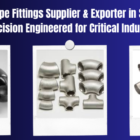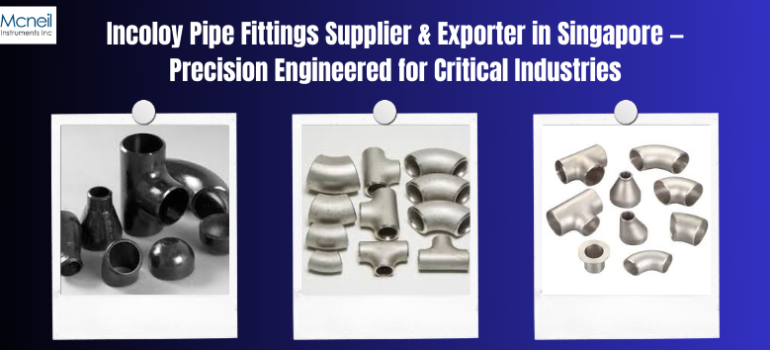
Incoloy Pipe Fittings Supplier & Exporter in Singapore — Precision Engineered for Critical Industries

Introduction: Building Resilient and High-Performance Piping Systems in Singapore

In rapidly evolving industrial environments like Singapore, where precision, safety, and durability are essential, the choice of pipe fittings can make or break system performance. Industries such as oil and gas, petrochemical processing, marine engineering, power generation, semiconductor fabrication, and food & beverage production demand piping components that resist corrosion, withstand high temperatures, and maintain mechanical strength under constant stress.

That’s where Incoloy pipe fittings come into play. Manufactured from premium nickel-based alloys, Incoloy fittings exhibit outstanding corrosion resistance, excellent thermal stability, and superior mechanical properties — addressing the challenges of demanding industrial conditions. Mcneil Instruments  , a reputed manufacturer, supplier, and exporter, supplies Incoloy pipe fittings engineered to international standards and optimized for Singapore’s industrial requirements.

In this blog, we’ll break down the features, specifications, materials, applications, and certifications that make Incoloy pipe fittings an ideal choice for Singaporean industries.

What Are Incoloy Pipe Fittings?

Incoloy pipe fittings are specialized components fabricated from high-performance nickel-iron-chromium alloys. These fittings connect, redirect, or terminate piping systems while ensuring leak-proof performance at high pressures and temperatures.

Incoloy alloys are engineered to perform in corrosive, oxidizing, and high-temperature environments, giving them a distinct advantage over standard carbon steel and many stainless steels. Their applications span industries that require long service life and minimal maintenance in challenging service conditions.

Incoloy Materials and Their Key Properties

Mcneil Instruments   supplies Incoloy pipe fittings in multiple grades that address different industrial challenges. The most widely used Incoloy alloys for pipe fittings include:

Incoloy 800 Pipe Fittings

  • Composition: Nickel-iron-chromium alloy with moderate chromium content.
  • Strengths: Excellent resistance to oxidation and carburization in high-temperature environments.
  • Applications in Singapore: Heat exchangers, furnace piping, refinery regenerators, steam systems.

Incoloy 800H Pipe Fittings

  • Composition: Thermally stabilized variant of Incoloy 800.
  • Strengths: Superior creep resistance and tensile strength at elevated temperatures.
  • Applications in Singapore: High-temperature process lines, thermal processing equipment.

Incoloy 825 Pipe Fittings

  • Composition: Nickel-iron-chromium alloy fortified with molybdenum and copper.
  • Strengths: Exceptional resistance to reducing acids, pitting, and crevice corrosion.
  • Applications in Singapore: Chemical processing plants, sour gas environments, offshore installations.

Incoloy 925 Pipe Fittings

  • Composition: A high-strength alloy combining Nickel, Chromium, Molybdenum, and Copper.
  • Strengths: Outstanding resistance to stress corrosion cracking, high mechanical strength under load.
  • Applications in Singapore: Marine engineering, drilling platforms, high-pressure piping systems.

Types of Incoloy Pipe Fittings Available

Mcneil Instruments   provides a wide range of Incoloy pipe fittings to meet diverse industrial needs:

  • Elbows (45°, 90°, 180°): For directional changes in piping runs.
  • Tees & Crosses: For branching connections.
  • Reducers (Concentric & Eccentric): For transitions between pipe sizes.
  • Caps & Plugs: To close off pipe ends securely.
  • Adapters & Couplings: For joining dissimilar pipe types or sizes.
  • Stub Ends & Flange Adaptors: For welding and flange assembly systems.
  • Custom Machined Fittings: Tailored solutions for specific applications.

Each fitting is precisely machined and tested to ensure a secure, leak-resistant joint.

Standards, Specifications & Compliance for Singapore Projects

Incoloy pipe fittings supplied by Mcneil Instruments   adhere to internationally recognized standards, ensuring compatibility with global piping systems deployed in Singapore:

StandardDescription
ASTM B366Standard specification for Incoloy fittings
ASME SB366ASME designation for nickel alloy pipe fittings
ISO / API StandardsApplicable as per project or industry requirements
ASME B16.11Forged fittings, socket weld & threaded fittings
ASME B16.9Factory-made wrought butt weld fittings

These standards ensure that the fittings are produced with consistent metallurgy, mechanical performance, and dimensional accuracy suitable for industrial service.

Technical Specifications of Incoloy Pipe Fittings

SpecificationDetails
Material GradesIncoloy 800, 800H, 825, 925
End ConnectionsButt Weld, Socket Weld, Threaded
Size Range1/8″ NB to 24″ NB (custom sizes available)
Pressure ClassUp to 6000 psi
Temperature Range–196°C to +982°C (depending on alloy)
Test & InspectionHydrostatic, Pneumatic, NDT (Ultrasonic / Radiographic), PMI
CertificationsEN 10204 3.1/3.2 Material Test Certificates

These specifications ensure that the fittings perform reliably in high-temperature, corrosive, and high-pressure systems often found in Singapore’s industrial sector.

Why Incoloy Pipe Fittings Are Suited for Singapore’s Industrial Sector

Corrosion Resistance in Aggressive Environments

Singapore’s chemical processing and marine industries expose pipe systems to corrosive and chlorinated environments. Incoloy alloys resist pitting, crevice corrosion, and stress corrosion cracking — outperforming many stainless steel grades in such conditions.

Outstanding Thermal Performance

In applications such as petrochemical heaters, furnaces, and heat exchangers, Incoloy fittings maintain mechanical integrity at temperatures where other alloys might weaken or deform.

Strength and Durability

Incoloy alloys exhibit high tensile strength and toughness, ensuring long service life even under cyclic load and thermal stress.

Compatibility with Diverse Media

Whether gases, steam, acids, or saline water, Incoloy pipe fittings handle a wide spectrum of media with reduced risk of corrosion or material attack.

Applications Across Singaporean Industries

Incoloy pipe fittings find extensive use in Singapore’s industrial landscape:

Oil & Gas and Petrochemical Plants

Used in process lines, sour gas environments, and high-temperature feed systems.

Power Generation Facilities

Steam and fluid handling in turbines, boilers, and auxiliary utility systems.

Marine Engineering

Piping systems on ships, offshore platforms, and coastal installations where chloride exposure is significant.

Chemical Processing

Corro­sive media conveyance, chemical dosing systems, and reactor feed lines.

Semiconductor and Electronics Manufacturing

Ultra-clean, high-temperature systems require corrosion-resistant alloys to maintain quality standards.

Food & Beverage and Pharmaceutical

Sanitary and corrosion-resistant systems for processing and utilities.

Quality Assurance, Inspection & Testing

Mcneil Instruments   ensures that every Incoloy pipe fitting meets or exceeds quality expectations through rigorous procedures:

  • Material Certification (EN 10204 3.1/3.2)
  • Positive Material Identification (PMI)
  • Chemical and Mechanical Testing
  • Hydrostatic and Pneumatic Pressure Testing
  • Non-Destructive Examinations (Ultrasonic / Radiographic)
  • Dimensional and Visual Inspection

These steps guarantee compliance with project specifications and ensure that the fittings perform reliably in operation.

Why Choose Mcneil Instruments   — Manufacturer, Supplier, and Exporter

Comprehensive Material Expertise

Mcneil Instruments  ’s team understands material metallurgy, service conditions, and industry requirements — advising on the right Incoloy grade for specific applications.

ISO-Certified Manufacturing

Production facilities follow strict quality management systems backed by ISO 9001:2015 certification.

Global Supply Chain with Local Support

As an exporter with a worldwide logistics footprint, the company ensures delivery to Singapore’s project sites with full documentation support.

Custom Engineering Solutions

Beyond standard offerings, Mcneil Instruments   provides tailor-made fittings that meet unique project specifications.

End-to-End Traceability

From raw material batch to final inspection, every Incoloy fitting is fully traceable — critical for audit and compliance requirements.

Conclusion: High-Performance Fittings for Singapore’s Industrial Growth

Incoloy pipe fittings are engineered components that deliver exceptional corrosion resistance, high-temperature performance, and mechanical strength — qualities essential for Singapore’s industrial infrastructure.

Whether deployed in marine, offshore, petrochemical, power generation, or precision manufacturing sectors, these fittings ensure stable, long-lasting performance when standards and safety cannot be compromised.

As a trusted manufacturer, supplier, and exporter, Mcneil Instruments   provides globally certified Incoloy pipe fittings that meet Singapore’s rigorous industrial demands — empowering engineers and procurement teams with quality, reliability, and peace of mind.
Read More

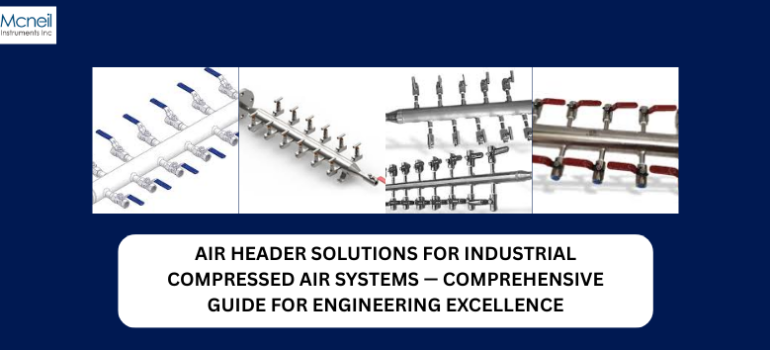
Air Header Solutions for Industrial Compressed Air Systems — Comprehensive Guide for Engineering Excellence

Introduction: The Heart of Efficient Compressed Air Distribution

In modern industrial environments, compressed air is a critical utility — powering pneumatic tools, control systems, instrumentation, automation lines, and process machines. However, compressed air systems are only as efficient as their distribution networks. One component stands out for ensuring smooth, balanced airflow across multiple branch lines: the Air Header.

An air header is more than just a manifold. It is an engineered distribution assembly that consolidates compressed air from a compressor or storage vessel and delivers it to various downstream points with controlled pressure, minimized drop, and balanced flow. Whether in manufacturing plants, chemical processing units, power generation facilities, or food and beverage operations, air headers play a vital role in operational efficiency.

As a trusted manufacturer, supplier, and exporter, Mcneil Instruments  offers high-quality air headers engineered for industrial precision, pressure stability, and long-term reliability. This blog provides a detailed look at what air headers are, how they are specified, where they are used, and why they are essential for industrial compressed air systems.

What Is an Air Header?

An air header is a pipe or manifold assembly designed to distribute compressed air from a central source to multiple points of use. It acts as a central junction where:

  • Compressed air lines are joined
  • Flow is balanced across branches
  • Pressure drop is minimized
  • Moisture and condensate can be managed

Unlike simple tees or manifolds, industrial air headers are engineered assemblies often incorporating:

  • Pressure gauges
  • Drain valves
  • Isolation valves
  • Flow control elements
  • Properly sized headers to prevent shock, noise, or turbulence

By consolidating flows in a stable and predictable way, air headers enhance system performance and protect downstream equipment.

Why Air Headers Are Critical in Industrial Systems

Compressed air underpins many industrial processes, but misuse or poorly designed distribution can lead to:

  • Pressure imbalances across workstations
  • Higher energy costs due to inefficient flow
  • Increased wear on pneumatic tools
  • Moisture and condensate buildup
  • Unplanned downtime

Air headers address these challenges by:

Balancing Pressure and Flow

In systems where multiple users draw air simultaneously, pressure fluctuations can cause inconsistencies in tool performance, control systems, and instrument accuracy. An air header stabilizes pressure by acting as a reservoir and distribution node.

Reducing Pressure Drop

Correctly sized headers limit excessive pressure drop across distances, ensuring that the delivered pressure at the point of use is as intended.

Managing Condensate

Moisture carried with compressed air can damage downstream components. Headers often integrate drip legs and drain valves to collect and remove condensate effectively.

Improving Equipment Life

Balanced, clean, and dry air reduces stress on actuators, valves, instruments, air motors, and other pneumatic devices — extending their service life.

Key Features of Mcneil Instruments  Air Headers

Mcneil Instruments ’s air headers are engineered for industrial environments with the following design and performance considerations:

Precision Machining

Headers are fabricated with high dimensional accuracy to ensure consistent airflow and pressure stability.

Robust Material Selection

Constructed from carbon steel or stainless steel depending on application and corrosion resistance needs.

High Pressure Ratings

Designed to withstand industrial compressed air pressures with safety margins.

Iso and ANSI Compliance

Manufactured per international standards ensuring compatibility and safety in global applications.

Drain and Control Integration

Provision for automatic or manual drains, pressure gauges, and isolation valves for maintenance and control.

Technical Specifications — Industrial Air Header

SpecificationDetails
MaterialCarbon Steel / Stainless Steel
StandardISO, ANSI / ASME
End ConnectionsButt Weld, Socket Weld, Threaded
Size RangeCustom — typically 1/2″ to 12″ OD
Pressure RatingUp to 6000 psi (grade dependent)
Temperature Range-20°C to +200°C (depending on material)
Surface FinishPainted, Pickled, Passivated
TestingHydrostatic / Pneumatic / NDT

These specifications can be tailored to project requirements — whether for manufacturing lines, offshore facilities, or energy systems.

How Air Headers Are Designed

Designing an air header is not simply a matter of joining pipes. It considers:

Flow Requirements

Determining the total compressed air demand in cubic feet per minute (CFM) or equivalent metric units.

Pressure Levels

Specifying maximum working pressure and ensuring headers maintain target pressure at all outlets.

Condensate Management

Inclusion of drain points at low spots to remove moisture and prevent water hammer or corrosion.

Line Balancing

Ensuring uniform flow distribution to all downstream branches to avoid bottlenecks.

Safety Standards

Adhering to industrial codes for pressure vessel design, wall thickness, and safety valves where required.

Mcneil Instruments ’s expert engineering teams assist with design validation and specification optimization based on plant needs.

Advantages of Using Engineered Air Headers

Industrial customers choose engineered air headers over ad-hoc piping assemblies due to:

Operational Efficiency

Balanced distribution leads to consistent tool performance and process control.

Energy Savings

Reduced pressure drop means compressors work less hard to maintain required pressure — lowering energy costs.

Lower Maintenance

Integration of drains and control valves reduces water-related wear and pneumatic line blockages.

Safety and Compliance

Manufacturing per standards ensures compliance with safety norms and reduces the risk of failures.

Modular Scalability

Header systems can be expanded or modified as plant demand grows or changes.

Applications Across Industries

Air headers find use in a broad range of industrial sectors:

Manufacturing & Assembly Lines

Automotive assembly, stamping, packaging, and tooling operations with multiple pneumatic zones.

Chemical and Petrochemical Plants

Compressors feed multiple control valves, actuators, and instrumentation requiring consistent air quality and pressure.

Oil & Gas & Offshore Platforms

Header systems distribute air for instrumentation, valve actuation, and maintenance tools on rigs and plants.

Power Generation

Compressed air headers are used for turbine control systems, valve actuation, instrumentation, and maintenance services.

Food & Beverage Processing

Air headers support pneumatic filling, cleaning systems, control valves, and automation while maintaining hygiene standards.

Pharmaceutical & Electronics

Ultra-clean air headers integration with dryers and filters deliver controlled air quality for sensitive processes.

Installation, Maintenance, and Best Practices

Installing and maintaining air headers ensures system longevity and performance:

Proper Sizing

Ensure header diameter and length are sized to handle peak flow without excessive pressure drop.

Positioning of Drains

Locate drains at the lowest points to effectively capture condensate and prevent accumulation.

Isolation Valves

Include isolation valves on each outlet for ease of maintenance without disrupting the entire system.

Regular Inspection

Periodic checks for leaks, corrosion, and valve operation will sustain performance.

Integration with Filtration and Drying

Combine headers with filters and dryers upstream to improve air quality and remove moisture before distribution.

Why Choose Mcneil Instruments  as Your Air Header Partner

Manufacturing Excellence

Headers are precision-engineered using quality materials and tight tolerances, ensuring performance in demanding industrial environments.

Comprehensive Product Range

From standard headers for shop floors to customized solutions for specialized systems, options are available for diverse requirements.

Global Supply and Documentation

As a manufacturer, supplier, and exporter, Mcneil Instruments  supports global projects with complete documentation — including test certificates, material traceability, and export compliance.

Technical Support

Expert guidance is provided during specification, design review, installation, and maintenance planning — helping engineering teams make informed decisions.

Certified Quality

Adherence to ISO 9001:2015 and other relevant industrial standards strengthens reliability and reduces audit risk.

Conclusion: A Smart Investment for Industrial Pneumatic Systems

Air headers are essential components of industrial compressed air distribution systems. When engineered correctly, they stabilize pressure, balance flow, manage condensate, and extend the life of pneumatic systems. For manufacturing plants, oil & gas facilities, power stations, and process industries, the right air header plays a key role in operational uptime and efficiency.

As a leading air header manufacturer, supplier, and exporter, Mcneil Instruments  combines engineering expertise with a commitment to quality and standards compliance — delivering solutions that support performance, safety, and long-term reliability across industrial applications.

Read More

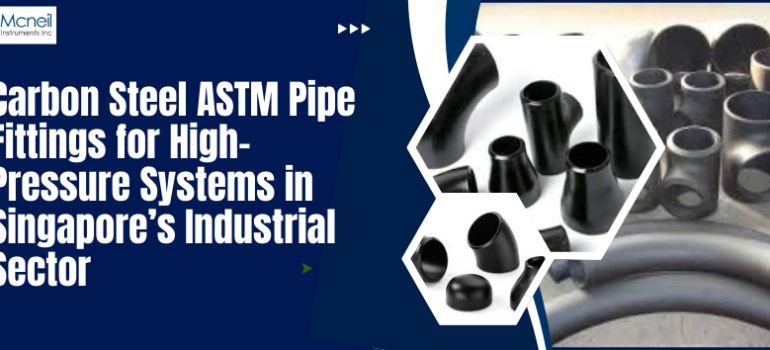
Carbon Steel ASTM Pipe Fittings for High-Pressure Systems in Singapore’s Industrial Sector

Introduction: Building Reliable Industrial Piping Systems in Singapore

Singapore stands at the heart of Southeast Asia’s industrial and energy ecosystem. From oil refineries on Jurong Island to petrochemical complexes, power plants, shipyards, and large-scale infrastructure projects, the country relies heavily on piping systems that can operate safely under high pressure, temperature, and mechanical stress. In such environments, Carbon Steel ASTM Pipe Fittings form the backbone of reliable fluid and gas transportation.

Carbon steel fittings manufactured as per ASTM standards are widely used across Singapore due to their strength, weldability, pressure-handling capability, and cost efficiency. As a trusted manufacturer, supplier, and exporter, Mcneil Instruments delivers ASTM-compliant carbon steel pipe fittings that meet the stringent technical and regulatory expectations of industries operating in Singapore.

This blog provides a detailed overview of Carbon Steel ASTM pipe fittings, their grades, specifications, applications, and why Mcneil Instruments is a preferred supply partner for projects across Singapore.

What Are Carbon Steel ASTM Pipe Fittings?

Carbon steel ASTM pipe fittings are components used to connect, divert, reduce, or terminate pipelines carrying fluids, gases, or steam. Manufactured according to ASTM standards, these fittings ensure consistent chemical composition, mechanical strength, and dimensional accuracy.

The presence of carbon as the primary alloying element gives these fittings excellent tensile strength and toughness, making them ideal for high-pressure and high-temperature applications commonly found in refineries, power plants, marine systems, and chemical facilities throughout Singapore.

Key ASTM Grades of Carbon Steel Pipe Fittings Supplied to Singapore

Mcneil Instruments manufactures and exports a complete range of ASTM carbon steel pipe fittings used across Singaporean industries.

Carbon Steel ASTM A105 Pipe Fittings

ASTM A105 fittings are forged carbon steel fittings designed for high-pressure and elevated-temperature service. They are commonly used where strength and pressure integrity are critical.

Typical applications in Singapore include refinery piping, valve connections, pressure vessels, and power plant equipment.

Carbon Steel ASTM A234 WPB Pipe Fittings

ASTM A234 WPB fittings are wrought carbon steel butt-weld fittings suitable for moderate and high-temperature service. They offer excellent weldability and structural strength.

These fittings are widely used in petrochemical plants, LNG facilities, shipbuilding yards, and industrial process piping across Singapore.

Carbon Steel ASTM A234 WP11 Pipe Fittings

WP11 fittings contain chromium and molybdenum, improving their oxidation resistance and high-temperature performance.

In Singapore, WP11 fittings are often used in steam lines, heat exchangers, and power generation systems where thermal stability is essential.

Carbon Steel ASTM A234 WP22 Pipe Fittings

WP22 pipe fittings offer enhanced creep resistance and mechanical strength at elevated temperatures.

They are commonly specified for boilers, superheaters, and high-pressure piping systems in power and energy projects throughout Singapore.

Carbon Steel ASTM A234 WP91 Pipe Fittings

WP91 is a high-performance alloy grade designed for extreme pressure and temperature conditions.

In Singapore, WP91 fittings are used in advanced power plants, high-efficiency thermal systems, and critical process units requiring long service life and superior reliability.

Technical Specifications of Carbon Steel ASTM Pipe Fittings

SpecificationDetails
StandardsASTM A105, ASTM A234 WPB, WP11, WP22, WP91
Manufacturing TypeForged, Seamless, Welded
Connection TypesButt-weld, Socket Weld, Threaded
Size Range1/8″ NB to 48″ NB
ThicknessSCH 10 to SCH XXS
Pressure RatingUp to 6000 psi
Temperature Range-20°C to 650°C (grade dependent)

Mechanical Properties (Typical)

PropertyA105 / WPBWP11 / WP22WP91
Tensile Strength≥ 415 MPa≥ 415 MPa≥ 585 MPa
Yield Strength≥ 205 MPa≥ 205 MPa≥ 415 MPa
Elongation≥ 22%≥ 20%≥ 20%
Hardness≤ 197 HBW≤ 200 HBW≤ 250 HBW

Why Carbon Steel ASTM Pipe Fittings Are Preferred in Singapore

Singapore’s industrial environment demands materials that perform consistently under stress while meeting international compliance norms.

Carbon steel ASTM pipe fittings offer:

  • High strength and pressure-handling capability for refinery and power applications
  • Excellent weldability for complex piping layouts
  • Cost-effective performance compared to exotic alloys
  • Compatibility with global ASTM and ASME standards
  • Long service life with minimal maintenance

These advantages make them ideal for petrochemical plants, offshore modules, marine engineering, and infrastructure projects across Singapore.

Applications Across Singaporean Industries

Carbon Steel ASTM pipe fittings supplied by Mcneil Instruments are widely used in:

  • Oil and gas refineries and petrochemical complexes
  • Power generation and utility plants
  • Shipbuilding and offshore fabrication yards
  • Chemical processing and storage facilities
  • Water treatment and industrial utilities
  • LNG terminals and pipeline infrastructure

Quality Testing and Certifications

Every carbon steel ASTM pipe fitting supplied to Singapore undergoes rigorous inspection and testing to ensure safety and performance.

  • Chemical composition analysis
  • Tensile, yield, and hardness testing
  • Hydrostatic and pneumatic pressure testing
  • Ultrasonic and radiographic examination
  • PMI (Positive Material Identification)
  • EN 10204 3.1 / 3.2 Material Test Certificates
  • ISO 9001:2015 certified manufacturing processes

Mcneil Instruments: Manufacturer, Supplier, and Exporter for Singapore

Mcneil Instruments has established itself as a reliable manufacturer, supplier, and exporter of Carbon Steel ASTM Pipe Fittings for projects across Singapore. With a strong export network, strict quality control, and technical expertise, the company supports EPC contractors, refineries, shipyards, and industrial operators with consistent supply and documentation.

From standard fittings to project-specific custom requirements, Mcneil Instruments ensures timely delivery, full traceability, and compliance with international standards demanded by Singapore’s industries.

Conclusion: Trusted Carbon Steel Pipe Fittings for Singapore’s Industrial Growth

Carbon Steel ASTM Pipe Fittings remain essential for building safe, efficient, and long-lasting piping systems in Singapore’s industrial landscape. With grades ranging from A105 and WPB to advanced WP91, these fittings deliver the strength, reliability, and compliance required for demanding applications.

As a trusted manufacturer, supplier, and exporter, Mcneil Instruments continues to support Singapore’s energy, marine, chemical, and infrastructure sectors with high-quality carbon steel ASTM pipe fittings engineered for performance and durability.

Read More

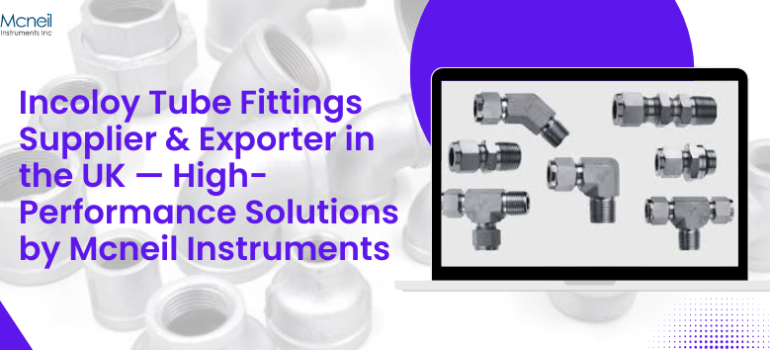
Incoloy Tube Fittings Supplier & Exporter in the UK — High-Performance Solutions by Mcneil Instruments

Introduction: Precision Components for Critical UK Industries

The United Kingdom’s industrial landscape encompasses oil and gas, petrochemicals, power generation, marine engineering, offshore operations, chemical processing, pharmaceuticals, and food & beverage industries. In these sectors, high-integrity fluid control systems are a must. Whether the application involves extreme temperatures, corrosive chemicals, or high pressures, the right tube fittings ensure leak-proof connections that support efficiency, safety, and reliability.

Incoloy tube fittings have become a top choice where standard stainless steels fall short. These high-performance fittings are engineered from specialized Incoloy alloys — nickel-iron-chromium compounds enriched with molybdenum and other elements — delivering exceptional resistance to corrosion, oxidation, thermal stress, and mechanical wear.

As a trusted manufacturer, supplier, and exporter, Mcneil Instruments  provides a complete range of Incoloy tube fittings designed to meet demanding industrial requirements in the UK, backed by rigorous testing, international standards compliance, and technical support.

In this blog, you will learn:

  • What Incoloy alloys are and why they’re used
  • Key material grades and their properties
  • Technical specifications and standards
  • Industrial applications in the UK
  • Why Mcneil Instruments  is the preferred choice

What Are Incoloy Tube Fittings?

Incoloy tube fittings are mechanical connectors manufactured from engineered nickel-based alloys (commonly Incoloy 800, 800H, 825, and 925). These materials exhibit a unique blend of oxidation and carburization resistance, strength at high temperatures, and superior corrosion resistance in aggressive environments.

Tube fittings — including compression fittings, ferrule fittings, unions, elbows, tees, adapters, reducers, and plugs — are essential for joining tubing systems in instrumentation, process controls, hydraulic lines, and fluid delivery applications without welding.

Why Incoloy Materials Are Critical in UK Industries

In the UK, many industrial processes expose components to:

  • High temperatures (e.g., steam pipes, heat exchangers)
  • Corrosive media (e.g., chlorides, acids, sulfides)
  • Marine environments (saltwater exposure on platforms and ports)
  • High pressure instrumentation
  • Chemical process loops

Standard stainless steels such as 304 or 316 may not withstand such environments, especially at elevated temperatures or in the presence of aggressive chemicals. Incoloy alloys, with their advanced metallurgy, maintain structural integrity and corrosion resistance under these extremes.

Incoloy Tube Fitting Grades Offered

Mcneil Instruments  supplies Incoloy tube fittings in the following key grades suited for UK applications:

Incoloy 800 Tube Fittings

  • Nickel-iron-chromium alloy with excellent resistance to oxidation and carburization
  • Performs well at high temperatures in controlled atmospheres

Applications: petrochemical heaters, heat exchangers, furnace components, steam lines

Incoloy 800H Tube Fittings

  • A thermally stabilized variant of Incoloy 800
  • Better creep resistance at elevated temperatures

Applications: high-temperature fluid distribution, thermal processing lines

Incoloy 825 Tube Fittings

  • Enhanced corrosion resistance due to molybdenum and copper additions
  • Resists reducing environments and chloride ion stress corrosion cracking

Applications: chemical processing, sour gas environments, refinery systems

Incoloy 925 Tube Fittings

  • High strength combined with excellent corrosion resistance
  • Ideal where both mechanical load and aggressive media are present

Applications: offshore systems, marine piping, high-pressure chemical lines

Types of Incoloy Tube Fittings Supplied

Mcneil Instruments  offers a complete portfolio of Incoloy tube fittings to support complex industrial fluid systems:

  • Ferrule Tube Fittings – double ferrule designs ensure robust sealing
  • Compression Fittings – precision sealing for high-pressure tube connections
  • Union Fittings – easy disassembly and maintenance
  • Elbows (45°, 90°, 180°) – direction changes in tubing runs
  • Tees & Crosses – branching flow lines
  • Reducers – transition between different tube diameters
  • Adapters & Couplings – convert between thread types or sizes
  • Caps & Plugs – seal tube ends securely

Standards & Specifications for UK Projects

Incoloy tube fittings supplied to the UK market are manufactured and certified according to the following standards:

Material & Manufacturing Standards

StandardDescription
ASTM B564 / ASME SB564Tube fittings in nickel alloys and stainless steels
ISO 8434Metallic tube fittings — general industrial use
BS EN StandardsUK/EU harmonized material quality and safety norms
ASME B31.3Process piping compliance standard

Technical Specifications Table

Incoloy Tube Fittings — Key Specifications

FeatureIncoloy Tube Fittings
Material GradesIncoloy 800, 800H, 825, 925
Tube OD Sizes1/8″ to 2″ (standard), extended sizes on request
Pressure RatingsUp to 6000 psi (application dependent)
Temperature Range-196°C to +982°C (depends on alloy)
Connection StylesFerrule, Compression, Threaded
ComplianceASTM, ASME, ISO, BS EN
Form FactorForged, Machined, Precision CNC-finished
Surface FinishPolished / Pickled

Mechanical Properties by Grade (Typical)

Material GradeTensile StrengthYield StrengthCorrosion ResistanceOperating Temp Range
Incoloy 800≥ 515 MPa≥ 205 MPaExcellent moderate environmentsUp to ~1100°F
Incoloy 800H≥ 550 MPa≥ 240 MPaExcellent at high tempUp to ~1150°F
Incoloy 825≥ 655 MPa≥ 310 MPaExceptional against reducing acids-196 to +982°C
Incoloy 925≥ 760 MPa≥ 455 MPaSuperior in marine & sulfide stress-196 to +650°C

Actual values vary by specific alloy processing and testing. Full Mill Test Certificates (MTCs) accompany each shipment.

Benefits of Incoloy Tube Fittings

Incoloy tube fittings provide several advantages in UK industrial applications:

  • Superior corrosion resistance in acidic, chloride-rich, and reducing environments
  • High temperature strength and oxidation resistance
  • Excellent mechanical properties under cyclical loading and thermal stress
  • Reliable sealing in high-pressure tubing systems
  • Compatibility with high-purity and high-temperature fluids
  • Ease of installation and maintenance without welding

These benefits make Incoloy fittings ideal for industries where both performance and safety are paramount.

Applications in the UK Industrial Sector

Oil & Gas and Petrochemicals

Incoloy fittings are used in downstream processing units, sour gas handling lines, and refining process controls where corrosion resistance is crucial.

Power Generation

Steam lines, turbine feed circuits, heat exchange systems, and auxiliary facilities require high-temperature capable fittings.

Marine & Offshore Engineering

Saltwater environments, shipboard fluid systems, and offshore platforms demand alloys that resist chloride stress corrosion.

Chemical Processing

Pipelines handling aggressive acids, reducing media, and process chemicals benefit from Incoloy’s corrosion resistance.

Pharmaceutical & Food Processing

Sanitary and corrosion-resistant fittings are pivotal in high-purity fluid systems.

Quality Assurance, Inspection & Certification

Mcneil Instruments  ensures rigorous quality control across all stages of manufacturing:

  • Material Test Certificates (EN 10204 3.1 / 3.2)
  • Hydrostatic testing for pressure reliability
  • Nondestructive testing (NDT) — including ultrasonic and radiographic inspection
  • Positive Material Identification (PMI)
  • Dimensional & visual inspection per ASME and ISO standards

Each batch is traceable with batch IDs and certificates, providing confidence in performance and compliance for UK projects.

Why UK Buyers Choose Mcneil Instruments 

Global Manufacturer with Local Compliance

Mcneil Instruments ’s production processes adhere to global standards while ensuring compatibility with UK and European piping norms.

Technical Support

Material selection, specification assistance, and engineering support are available to ensure correct fitting choice for specific applications.

Diverse Material Portfolio

From standard to specialized Incoloy grades, fittings are offered for multiple environments and operating conditions.

Export-Ready Supply Chain

Efficient logistics, documentation, and global compliance support delivery to UK ports and industrial sites.

Consistent Quality & Traceability

Certified manufacturing, rigorous testing, and full traceability give UK buyers confidence in product performance.

Conclusion: Durable Tube Fittings for Challenging UK Applications

Incoloy tube fittings are engineered to excel where ordinary materials fail. With their combination of corrosion resistance, high temperature performance, and mechanical strength, they play a crucial role in the integrity of fluid and gas systems across critical UK industries.

As a trusted manufacturer, supplier, and exporter, Mcneil Instruments  delivers high-performance Incoloy tube fittings backed by certified quality and international compliance. For projects in oil & gas, chemical processing, power generation, marine engineering, or high-temperature systems, Mcneil Instruments  offers solutions that ensure reliability, durability, and long-term operational success.

Read More

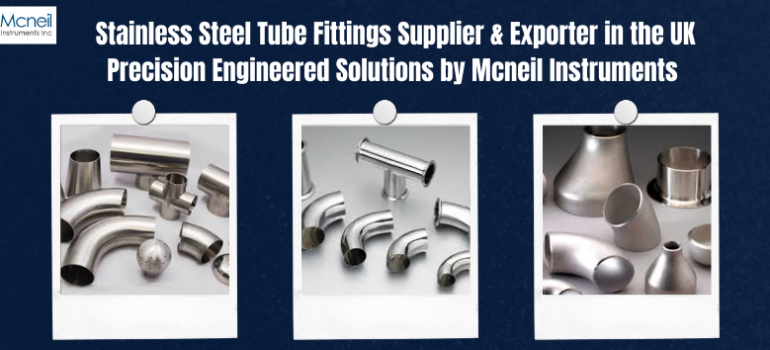
Stainless Steel Tube Fittings Supplier & Exporter in the UK — Precision Engineered Solutions by Mcneil Instruments

Introduction: Tube Fittings for Critical UK Industries

In the United Kingdom’s advanced industrial ecosystem — spanning oil and gas processing, offshore engineering, chemical and pharmaceutical production, power generation, water treatment, and manufacturing — precision components are vital to system performance. One such component is the tube fitting: a critical connector that ensures secure, leak-proof joins in fluid and gas systems.

Stainless steel tube fittings are specifically engineered to maintain integrity under high pressures, temperature variations, and corrosive conditions. They are widely used in instrumentation lines, process control systems, hydraulic circuits, offshore platforms, and industrial automation applications, where reliability and safety cannot be compromised.

As a trusted manufacturer, supplier, and exporter, Mcneil Instruments  delivers a comprehensive range of stainless steel tube fittings tailored to meet the exacting standards of the UK market, with compliance to international norms and full technical support for UK industrial projects.

What Are Stainless Steel Tube Fittings?

Tube fittings are mechanical connectors used to join tubing systems without welding. They feature precise manufacturing that allows:

  • Secure compression or ferrule sealing
  • High-pressure service
  • Repeated assembly and disassembly
  • Minimal leakage risk
  • Resistance to corrosion and temperature stress

In the UK, these fittings are commonly used for instrument tubing, sampling lines, pressure transmitters, process analyzers, and control systems. They also support stringent regulatory requirements in sectors such as chemical, pharmaceutical, and food processing.

Material Grades Supplied by Mcneil Instruments 

Mcneil Instruments  supplies stainless steel tube fittings in a broad selection of material grades to match the specific demands of UK industries:

Stainless Steel 304 Tube Fittings

  • General purpose grade
  • Excellent corrosion resistance in mild environments
  • Easy fabrication and formability

Stainless Steel 304L Tube Fittings

  • Low carbon variant of 304
  • Enhanced weldability and reduced sensitization
  • Ideal for fabricated assemblies

Stainless Steel 316 Tube Fittings

  • Contains molybdenum for improved chloride corrosion resistance
  • Widely used in chemical and marine applications

Stainless Steel 316L Tube Fittings

  • Low carbon variant optimized for welding and post-weld performance
  • Suitable for high-purity and hygienic installations

Stainless Steel 321 Tube Fittings

  • Stabilized with titanium
  • Enhanced resistance to intergranular corrosion
  • Ideal for high-temperature service

Stainless Steel 347 Tube Fittings

  • Stabilized with niobium
  • Excellent mechanical stability at elevated temperatures

Stainless Steel Duplex 2205 Tube Fittings

  • Mixed austenitic-ferritic structure
  • High strength and excellent chloride stress corrosion resistance
  • Ideal for offshore and harsh chemical applications

Stainless Steel Super Duplex 2507 Tube Fittings

  • Extremely high strength and corrosion resistance
  • Suitable for seawater, marine, and aggressive process environments

Stainless Steel 17-4PH Tube Fittings

  • Precipitation hardened grade
  • High strength and hardness, combined with corrosion resistance

Stainless Steel 15-5PH Tube Fittings

  • Another precipitation hardened grade
  • Offers improved toughness and strength in demanding service conditions

These materials are chosen based on service environment, corrosion exposure, pressure and temperature conditions, and regulatory compliance requirements within the UK.

Types of Tube Fittings Offered

Mcneil Instruments  provides a full suite of tube fitting types to support diverse UK industrial systems:

  • Compression Fittings
  • Ferrule Fittings
  • Union Fittings
  • Elbows (90°, 45°, 180°)
  • Tees & Crosses
  • Reducers
  • Adapters
  • Caps & Plugs
  • Specialty Machined Fittings

Each fitting is precision-machined and inspected to ensure consistent and reliable performance.


Specifications — Technical Details for UK Applications

Material Standards & Industry Compliance

StandardDescription
ASTM A312 / A269 / A213Stainless steel tubing standards
ISO 8434Metallic tube fittings for general industrial use
ASME B31.3Process piping compliance
BS EN StandardsEuropean and UK harmonized standards
API / ANSIApplicable where required (oil & gas and utilities)

Mcneil Instruments ’s fittings are manufactured in strict adherence to these recognized standards, ensuring compatibility and quality for UK project requirements.

Size & Connection Specifications

SpecificationDetails
Tube Outside Diameter (O.D.)1/8″ to 2″ (extended sizes on request)
Pressure RatingsUp to 6000 psi (depending on material and size)
Temperature RangeCryogenic to +982°C (depending on alloy)
Connection TypesCompression, Ferrule, Threaded
End FinishesPolypropylene caps, protective packaging

Mechanical Properties (Typical)

The table below provides representative mechanical properties of popular stainless steel tube fitting grades:

Material GradeTensile StrengthYield StrengthCorrosion Resistance
304≥ 515 MPa≥ 205 MPaGood
316≥ 515 MPa≥ 205 MPaVery High
Duplex 2205≥ 620 MPa≥ 450 MPaExcellent
Super Duplex 2507≥ 850 MPa≥ 620 MPaSuperior
17-4PH≥ 930 MPa≥ 720 MPaHigh
15-5PH≥ 860 MPa≥ 655 MPaHigh

Note: Exact values vary by grade and manufacturing tolerances; full Mill Test Certificates (MTCs) and detailed reports are supplied with each order.

Advantages of Stainless Steel Tube Fittings

Stainless steel tube fittings are preferred in UK projects for multiple reasons:

  • Excellent corrosion resistance, especially in marine, chemical, and offshore environments
  • High mechanical strength and durability
  • Reliable performance under high pressure and temperature conditions
  • Good weldability and fabrication adaptability
  • Reusability and ease of maintenance
  • Compatibility with instrumentation and process piping standards

These advantages make stainless steel fittings indispensable in industries requiring precision fluid control and process reliability.

Industrial Applications in the UK

Oil & Gas and Petrochemical Sector

Used in sampling lines, control instrumentation, and gas distribution networks where corrosion resistance and pressure performance are critical.

Power Generation

Supporting high-temperature and high-pressure loops such as steam probes, condensate return, and auxiliary systems.

Chemical and Process Plants

Used where aggressive media, acids, or chlorides are present.

Pharmaceutical and Food Processing

Hygienic and sterile systems depend on high-quality stainless steel tube fittings for contamination-free fluid delivery.

Marine and Offshore Engineering

Duplex and super duplex fittings are used in seawater cooling, platform process lines, and offshore support systems.

Quality Assurance, Testing & Certification

Mcneil Instruments ’s tube fittings undergo rigorous quality checks to ensure performance and compliance:

  • Material Test Certificates (EN 10204 3.1 / 3.2)
  • Positive Material Identification (PMI)
  • Hydrostatic and Leak Testing
  • Ultrasonic & Radiographic Non-Destructive Testing (NDT)
  • Dimensional and Visual Inspection
  • ISO 9001:2015 Certified Manufacturing

These certifications ensure reliability, traceability, and peace of mind for UK engineers, buyers, and project managers.

Why UK Buyers Choose Mcneil Instruments 

Global Manufacturer, Local Compliance

Mcneil Instruments  combines global production scale with full compliance to UK and European standards, ensuring products are suitable for UK infrastructure requirements.

Wide Material and Product Range

From standard stainless grades like 304 and 316 to premium alloys like duplex, super duplex, and precipitation-hardened grades, the range addresses diverse applications.

Custom Engineering Support

Technical assistance is available for designing custom fittings, selecting material grades, and aligning with project specifications.

Export Ready Supply

As a trusted exporter, Mcneil Instruments  handles documentation, logistics, and delivery to UK ports and job sites with reliability.

Quality and Traceability

Manufacturing transparency, certified quality control, and detailed test reports support project compliance and audit readiness.

Conclusion: High-Performance Tube Fittings for the UK Industrial Sector

Stainless steel tube fittings are more than connectors; they are essential components that support precision fluid delivery, safety, and reliability in critical industrial systems. Whether deployed in oil and gas, chemical processing, offshore engineering, power plants, or hygienic processing systems, these fittings must meet exacting standards.

By choosing Mcneil Instruments  as your manufacturer, supplier, and exporter of stainless steel tube fittings, UK businesses gain access to globally compliant, high-quality solutions engineered for performance, longevity, and safety.

Partner with Mcneil Instruments  for tube fittings that meet the demands of today’s industrial challenges and support the UK’s robust engineering landscape.

Read More
pipe fittings South Africa, pipe fittings manufacturer South Africa

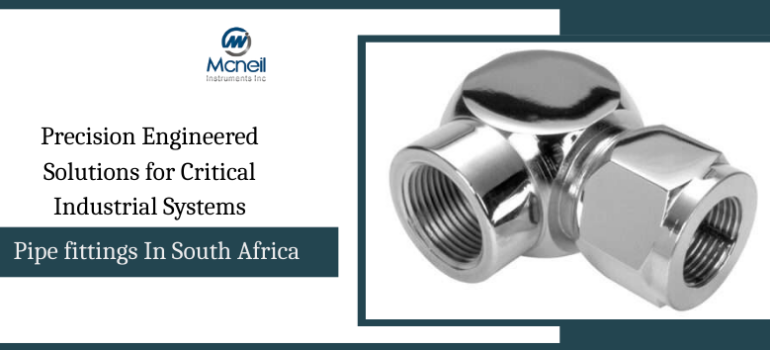
Pipe Fittings in South Africa: Engineered Strength for Demanding Industrial Environments

Supporting South Africa’s Industrial & Infrastructure Growth

South Africa stands as one of Africa’s most industrially advanced economies. From deep-level mining and oil & gas operations to power generation, water infrastructure, chemical processing, and heavy manufacturing—every sector depends on piping systems that can perform reliably under extreme conditions.

High pressure, abrasive slurry, corrosive chemicals, temperature fluctuations, and continuous operation are part of everyday industrial life in South Africa. In such environments, pipe fittings are not just connectors—they are pressure-retaining, load-bearing components that directly impact plant safety, operational efficiency, and uptime. Even a single fitting failure can result in costly shutdowns, production losses, and serious safety risks.

That’s why industries across the country rely on Mcneil Instruments, a globally trusted manufacturer, supplier, and exporter of ASTM, ASME, and ISO-compliant pipe fittings engineered to meet South Africa’s demanding industrial requirements.

This guide explains pipe fittings, their types, materials, standards, applications, and why Mcneil Instruments is a preferred partner for South African projects.


What Are Pipe Fittings?

Pipe fittings are engineered components used to connect, redirect, control, or terminate flow within piping systems. They allow changes in direction, pipe diameter, pressure flow, and system branching—while maintaining mechanical strength and leak-free performance.

In South Africa, pipe fittings are critical across:

  • Mining slurry and mineral processing lines
  • Oil & gas refineries and fuel terminals
  • Power plants and boiler systems
  • Water treatment and desalination facilities
  • Chemical and petrochemical plants

Mcneil Instruments designs pipe fittings with dimensional accuracy, pressure integrity, and long service life, even in harsh African operating environments.


Types of Pipe Fittings for South African Applications

Elbows (45°, 90°, 180°)

Used to change flow direction while minimizing turbulence and pressure loss.
Common applications:

  • Mining process pipelines
  • Petrochemical and refinery units
  • Power plant auxiliary piping

Tees & Crosses

Enable flow splitting or combining in multi-line systems.
Common applications:

  • Process distribution networks
  • Water and wastewater treatment plants
  • Chemical dosing systems

Reducers (Concentric & Eccentric)

Ensure smooth flow transition between different pipe diameters.
Common applications:

  • Pump suction and discharge lines
  • Slurry handling systems
  • Industrial utility pipelines

Caps & Plugs

Safely close pipe ends during operation, testing, or future expansion.
Common applications:

  • Pipeline termination points
  • Maintenance shutdowns
  • Pressure testing systems

Stub Ends & Flanged Fittings

Allow easy dismantling and maintenance of high-pressure piping.
Common applications:

  • Refineries and power stations
  • Large-diameter industrial pipelines
  • Offshore and coastal installations

Materials & Grades for Pipe Fittings in South Africa

South African industries face abrasion, corrosion, high pressure, and temperature extremes, making material selection a critical decision.

Mcneil Instruments supplies pipe fittings in:

  • Carbon Steel (ASTM A234 WPB) – cost-effective strength for oil, gas, water, and mining
  • Stainless Steel (ASTM A403 WP304, WP316, WP316L) – corrosion resistance for chemical, coastal, and hygienic applications
  • Alloy Steel (ASTM A234 WP5, WP9, WP11, WP22, WP91) – ideal for high-temperature and high-pressure service
  • Special Alloys – for aggressive chemical and extreme operating conditions

These materials ensure reliable performance across onshore, offshore, coastal, and inland installations in South Africa.


Standards & Compliance You Can Trust

All pipe fittings supplied by Mcneil Instruments are manufactured and tested according to internationally accepted standards.

Specification Overview

  • Manufacturing: Hot formed / Machined
  • Standards: ASTM, ASME, ISO
  • Size Range: ½″ to 48″
  • Pressure Class: As per ASME B16 standards
  • End Connections: Butt weld, socket weld, threaded
  • Surface Finish: Black, pickled, passivated, coated

Why Standards Matter in South African Projects

Strict compliance is essential for mining companies, EPC contractors, and energy operators because it ensures:

  • Safe operation under high pressure and temperature
  • Compatibility with international engineering codes
  • Long-term durability in abrasive and corrosive environments
  • Acceptance by global consultants, inspectors, and insurers

Every shipment from Mcneil Instruments includes full traceability, inspection reports, and certification.


Key Applications of Pipe Fittings in South Africa

  • Mining & Minerals: slurry pipelines, concentrators, processing plants
  • Oil & Gas: refineries, terminals, fuel distribution systems
  • Power Generation: boilers, steam lines, auxiliary piping
  • Water & Wastewater: treatment plants, pumping stations
  • Chemical & Petrochemical: corrosive and high-pressure process lines

Quality Assurance: Testing & Certification

Each pipe fitting is thoroughly inspected before dispatch.

Testing Procedures

  • Dimensional and visual inspection
  • Hydrostatic or pressure testing
  • PMI (Positive Material Identification)
  • Weld and surface finish inspection

Certifications Provided

  • EN 10204 3.1 / 3.2
  • ASTM & ASME compliance certificates
  • ISO 9001:2015 Quality Management

Mcneil Instruments: A Reliable Pipe Fittings Supplier to South Africa

With extensive export experience across Africa, Mcneil Instruments supports South African projects with:

  • Custom sizes and project-specific fittings
  • Secure export packaging for long-distance transport
  • Timely delivery to South African ports and sites
  • Technical assistance for material and grade selection

Future Outlook: Growing Demand for Pipe Fittings in South Africa

As South Africa continues to invest in mining expansion, energy transition projects, water infrastructure upgrades, and industrial modernization, demand for durable, standards-compliant pipe fittings will keep rising.

High-strength, corrosion-resistant fittings will remain essential for ensuring plant safety, efficiency, and long-term operational reliability.


Conclusion: Pipe Fittings Built for South African Industry

From deep underground mines to refineries, power plants, and water treatment facilities, industrial pipe fittings play a vital role in keeping South Africa’s industries running safely and efficiently.

By combining global standards, strict quality control, and proven export expertise, Mcneil Instruments delivers precision-engineered pipe fittings that meet the real-world challenges of South African industrial environments—today and into the future.

Read More
From offshore platforms and power stations to chemical plants and water treatment facilities, pipe fittings are fundamental to the UK’s industrial performance. By combining global manufacturing standards, rigorous quality control, and proven export expertise, Mcneil Instruments delivers pipe fittings engineered to meet the real-world challenges of UK industrial environments—today and for the future.

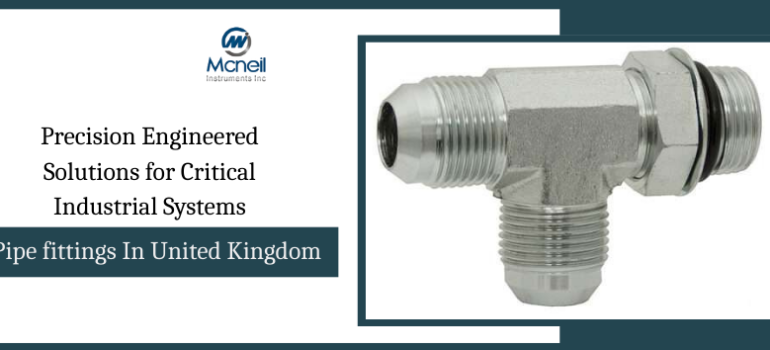
Pipe Fittings in the UK: Precision-Engineered Solutions for High-Performance Industrial Systems

Supporting the United Kingdom’s Industrial & Infrastructure Excellence

The United Kingdom remains one of Europe’s most advanced industrial hubs, with strong foundations in oil & gas, power generation, chemicals, pharmaceuticals, water treatment, renewable energy, and heavy manufacturing. These industries operate under strict regulatory oversight and demanding operating conditions—where safety, precision, and long-term reliability are non-negotiable.

High internal pressure, aggressive chemicals, temperature cycling, offshore exposure, and continuous duty cycles place extreme stress on piping systems. In such environments, pipe fittings are not passive components—they are critical pressure-retaining and load-bearing elements that directly affect system integrity, compliance, and plant uptime.

To meet these expectations, industries across the UK rely on Mcneil Instruments, a globally trusted manufacturer, supplier, and exporter of ASTM, ASME, and ISO-compliant pipe fittings engineered for the UK’s high-performance industrial requirements.

This guide provides a refined overview of pipe fittings in the UK—covering types, materials, standards, applications, and why Mcneil Instruments is a preferred partner for British engineering and EPC projects.


What Are Pipe Fittings?

Pipe fittings are precision-engineered components used to connect, control, redirect, or terminate flow within piping systems. They allow controlled changes in direction, diameter, pressure, and flow distribution while maintaining mechanical strength, dimensional accuracy, and leak-free performance.

In the UK, pipe fittings are essential across:

  • Oil & gas processing and offshore platforms
  • Power stations and combined cycle plants
  • Water treatment and desalination facilities
  • Chemical, pharmaceutical, and specialty process plants
  • Industrial manufacturing and utility networks

Mcneil Instruments designs fittings that deliver repeatable quality, code compliance, and long service life, even in the UK’s most regulated and technically demanding environments.


Types of Pipe Fittings Used in UK Industries

Elbows (45°, 90°, 180°)

Used to change flow direction while minimizing turbulence and pressure loss.
Typical UK applications:

  • Power plant auxiliary and steam lines
  • Offshore and onshore oil & gas piping
  • Chemical and process industries

Tees & Crosses

Enable flow splitting or combining in multi-line systems.
Typical UK applications:

  • Process distribution networks
  • Water and wastewater treatment plants
  • Instrumentation and utility lines

Reducers (Concentric & Eccentric)

Provide smooth transition between different pipe diameters.
Typical UK applications:

  • Pump suction and discharge systems
  • Process pipelines
  • Industrial utilities

Caps & Plugs

Safely close pipe ends during operation, testing, or future expansion.
Typical UK applications:

  • Pipeline termination points
  • Pressure testing and maintenance shutdowns

Stub Ends & Flanged Fittings

Allow easy dismantling, inspection, and maintenance of high-pressure systems.
Typical UK applications:

  • Refineries and power stations
  • Large-diameter industrial pipelines
  • Offshore and coastal installations

Materials & Grades for Pipe Fittings in the UK

UK industries demand materials that perform under corrosion, high pressure, thermal stress, and strict compliance requirements. Material selection is therefore a critical engineering decision.

Mcneil Instruments supplies pipe fittings in:

  • Carbon Steel (ASTM A234 WPB) – cost-effective strength for oil, gas, water, and industrial services
  • Stainless Steel (ASTM A403 WP304, WP316, WP316L) – excellent corrosion resistance for chemical, coastal, pharmaceutical, and hygienic applications
  • Alloy Steel (ASTM A234 WP5, WP9, WP11, WP22, WP91) – designed for high-temperature and high-pressure power and process systems
  • Special Alloys – for aggressive chemical media and extreme operating conditions

These materials ensure dependable performance across onshore, offshore, coastal, and inland UK installations.


Standards & Compliance for UK Projects

All pipe fittings from Mcneil Instruments are manufactured and tested in accordance with internationally accepted standards required by UK consultants, inspectors, and operators.

Specification Overview

  • Manufacturing: Hot formed / Machined
  • Standards: ASTM, ASME, ISO
  • Size Range: ½″ to 48″
  • Pressure Class: As per ASME B16 standards
  • End Connections: Butt weld, socket weld, threaded
  • Surface Finish: Black, pickled, passivated, coated

Why Standards Matter in the UK

Strict compliance ensures:

  • Safe operation under high pressure and temperature
  • Compatibility with UK and international engineering codes
  • Long-term durability and reduced maintenance
  • Acceptance by third-party inspectors and insurers

Every shipment includes full material traceability, inspection reports, and certification.


Key Applications of Pipe Fittings in the UK

  • Oil & Gas: refineries, offshore platforms, fuel terminals
  • Power Generation: boilers, steam lines, combined cycle plants
  • Water & Wastewater: treatment plants, pumping stations
  • Chemical & Pharmaceutical: corrosive and precision process lines
  • Industrial Manufacturing: utilities, compressed air, process piping

Quality Assurance: Testing & Certification

Each pipe fitting is thoroughly inspected before dispatch.

Testing Procedures

  • Dimensional and visual inspection
  • Hydrostatic or pressure testing
  • PMI (Positive Material Identification)
  • Weld integrity and surface finish inspection

Certifications Provided

  • EN 10204 3.1 / 3.2
  • ASTM & ASME compliance certificates
  • ISO 9001:2015 Quality Management

Mcneil Instruments: A Trusted Pipe Fittings Supplier to the UK

With extensive export experience across Europe, Mcneil Instruments supports UK projects with:

  • Project-specific and custom-engineered fittings
  • Secure export packaging for international logistics
  • On-time delivery to UK ports and project sites
  • Technical support for material and grade selection

Future Outlook: Pipe Fittings Demand in the UK

As the UK advances energy transition projects, renewable power, hydrogen infrastructure, water upgrades, and industrial modernization, demand for high-integrity, standards-compliant pipe fittings will continue to rise.

Fittings that offer strength, corrosion resistance, and long-term reliability will remain essential for safe and efficient operations.


Conclusion: Precision Pipe Fittings for UK Industry

From offshore platforms and power stations to chemical plants and water treatment facilities, pipe fittings are fundamental to the UK’s industrial performance.

By combining global manufacturing standards, rigorous quality control, and proven export expertise, Mcneil Instruments delivers pipe fittings engineered to meet the real-world challenges of UK industrial environments—today and for the future.

Read More
Industrial tube fittings are critical components that contribute directly to system safety, uptime, and efficiency across UK industries. From hydrocarbon processing plants to power stations, water utilities, and instrumentation systems, quality tube fittings ensure leak-free performance and reliable operation. As a trusted manufacturer, supplier, and exporter, Mcneil Instruments delivers precision tube fittings engineered for UK industrial demands—backed by global quality assurance, standards compliance, and dependable supply

Tube Fittings in the UK: Precision Solutions for High-Performance Industrial Systems

Introduction: Strengthening the UK’s Industrial Backbone

The United Kingdom’s industrial ecosystem includes oil & gas, petrochemicals, power generation, water treatment, pharmaceutical production, and manufacturing sectors. These industries rely on precision, safety, and long-lasting performance from every component—especially in fluid control and instrumentation systems where even a tiny leak can cause inefficiency, downtime, or safety risks.

In such critical environments, industrial tube fittings are more than just connectors—they are trusted components that ensure leak-free joints, operational reliability, and ease of maintenance.

Mcneil Instruments, a renowned manufacturer, supplier, and exporter, delivers a comprehensive range of high-quality tube fittings engineered for the UK market and compliant with international standards.

This blog provides a detailed overview of industrial tube fittings, their types and materials, key applications in the UK, and why Mcneil Instruments is a preferred partner for UK projects.


What Are Tube Fittings?

Tube fittings are mechanical connectors used to join lengths of tubing or pipe, adapt tube ends to equipment, or route flow in complex systems. Unlike welded connections, tube fittings allow simple, rapid installation and maintenance with minimal tools—without sacrificing performance under high pressure or temperature.

In the UK, tube fittings are widely utilized in:

  • Oil & gas process systems

  • Petrochemical plants

  • Power generation facilities

  • Water treatment and distribution

  • Industrial instrumentation and automation systems

Mcneil Instruments’ tube fittings deliver high sealing integrity, corrosion resistance, and precise fit, making them ideal for diverse UK industrial applications.


Types of Tube Fittings for UK Applications

Double Ferrule Tube Fittings

Double ferrule designs offer a robust mechanical grip with excellent resistance to vibration and thermal cycling, ensuring long-lasting, leak-tight connections.

Common UK applications

  • Instrumentation and control lines

  • Hydraulic systems

  • Sampling systems in oil & gas plants


Single Ferrule Tube Fittings

Single ferrule fittings are elegant in design and easy to install, suitable for moderate pressure systems where simplicity and reliability are key.

Common UK applications

  • Industrial utility lines

  • Pneumatic control systems

  • Low to medium pressure fluid lines


Tube Elbows, Tees & Crosses

These fittings allow engineers to change direction or split flow while maintaining system pressure integrity.

Common UK applications

  • Industrial process piping

  • Chemical lines

  • Steam and condensate distribution


Tube Unions & Adapters

Unions and adapter fittings help connect tubes with different sizes, threads, or connection standards—important when integrating instruments or equipment sourced from multiple vendors.

Common UK applications

  • Retrofit projects

  • Multi-equipment integrations

  • Maintenance-friendly installations


Materials & Specifications for Tube Fittings in the UK

Material selection is a key factor in performance due to pressure, corrosion, and temperature considerations in UK industrial environments.

Mcneil Instruments supplies fittings in a range of industry-proven materials, including:

  • Stainless Steel (SS 304, SS 316, SS 316L) – excellent corrosion resistance for coastal and chemical plants

  • Carbon Steel – economical solution for general industrial systems

  • Alloy Steels & Special Alloys – for high temperature and high pressure service

These materials ensure dependable performance in UK coastal, offshore, and chemical process environments.


Standards and Compliance

All tube fittings supplied by Mcneil Instruments comply with rigorous international standards to ensure quality and global acceptability.

SpecificationDetails
ManufacturingPrecision Machined
Pressure RatingAs per ASTM / ASME standards
Tube Size Range1/8″ to 2″
End ConnectionsNPT, BSP, Compression
Surface FinishPickled, Passivated, Coated
Quality StandardsASTM, ASME, ISO

Why Standards Matter in UK Industrial Projects

UK industrial projects—especially those involving oil & gas, power, and critical utilities—require strict adherence to global quality standards. Compliance ensures:

  • Zero leaks in critical gas and fluid lines

  • Compatibility with international engineering designs

  • Acceptance by UK EPCs and asset owners

  • Safety in high-pressure, high-temperature environments

With every supply, Mcneil Instruments provides full material traceability, inspection reports, and compliance documentation to support UK project specifications.


Key Applications of Tube Fittings in the UK

  • Oil & Gas: Instrumentation, sampling lines, control systems

  • Petrochemicals: Corrosive process fluids and high pressure lines

  • Power Generation: Steam auxiliary lines and instrumentation tubing

  • Water & Waste Treatment: Dosing, control, and monitoring lines

  • Pharmaceutical & Food Processing: Clean line tubing with hygienic fittings


Quality Assurance: Testing & Certification

Every tube fitting delivered to UK customers undergoes strict quality checks and testing procedures.

Testing includes

  • Dimensional and visual inspection

  • Pressure and leak checks

  • PMI (Positive Material Identification)

  • Surface finish inspection

Certifications

  • EN 10204 3.1 / 3.2

  • ASTM & ASME compliance

  • ISO 9001:2015 manufacturing standards

These checks ensure every component performs safely in UK industrial environments.


Mcneil Instruments: Trusted Supplier to the UK

Mcneil Instruments offers a robust supply chain and export experience for the UK market.

UK-focused supply advantages

  • Experience with British & European industrial standards

  • Export-ready documentation and packaging

  • Custom sizes and configurations

  • Reliable delivery to UK ports and project sites

  • Technical support for product selection


Future Outlook: Tube Fittings in UK Industry

With continued investment in energy refurbishment, petrochemical capacity expansion, infrastructure modernization, and clean energy projects, demand for precision, high-performance tube fittings in the UK is poised to grow.

Leak-proof connections that can withstand pressure, temperature swings, and corrosion remain vital to system safety and performance.


Conclusion: Precision Tube Fittings for UK Industrial Integrity

Industrial tube fittings are critical components that contribute directly to system safety, uptime, and efficiency across UK industries.

From hydrocarbon processing plants to power stations, water utilities, and instrumentation systems, quality tube fittings ensure leak-free performance and reliable operation.

As a trusted manufacturer, supplier, and exporter, Mcneil Instruments delivers precision tube fittings engineered for UK industrial demands—backed by global quality assurance, standards compliance, and dependable supply.

Read More
Industrial tube fittings play a critical role in maintaining safe, efficient, and durable tubing systems across South Africa’s key industries. Their performance directly impacts operational reliability and lifecycle costs. As a trusted manufacturer, supplier, and exporter, Mcneil Instruments delivers precision tube fittings engineered to meet South Africa’s demanding industrial environments—ensuring dependable performance, global compliance, and long-term value.

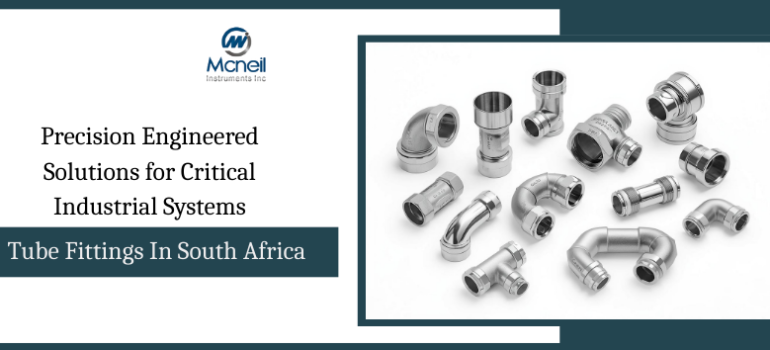
Tube Fittings in South Africa: Precision Connections for High-Performance Industrial Systems

Introduction: Supporting South Africa’s Industrial & Energy Growth

South Africa’s industrial landscape is driven by mining, oil & gas, petrochemicals, power generation, water treatment, and heavy manufacturing. These sectors operate under high pressure, temperature fluctuations, vibration, and corrosive environments—where even a minor leak can lead to safety risks, downtime, and financial loss.

In such critical systems, tube fittings are not simple accessories. They are precision-engineered components that ensure leak-tight connections, system integrity, and long-term operational reliability.

Mcneil Instruments, a trusted manufacturer, supplier, and exporter, delivers high-performance industrial tube fittings engineered to meet South African project requirements and international standards.

This blog provides a comprehensive overview of industrial tube fittings for South Africa, their types, materials, applications, and why Mcneil Instruments is a preferred global supply partner.


What Are Industrial Tube Fittings?

Tube fittings are mechanical components used to connect straight tubing sections, adapt tubing to threaded equipment, control flow direction, or terminate lines safely. Unlike welded joints, tube fittings allow easy installation, maintenance, and system modification without compromising performance.

In South Africa, industrial tube fittings are widely used in:

  • Oil & gas processing facilities

  • Mining slurry and hydraulic systems

  • Power plants and boiler auxiliaries

  • Chemical and petrochemical plants

  • Water treatment and desalination units

Mcneil Instruments manufactures tube fittings designed for high pressure, vibration resistance, and corrosion protection, ensuring dependable service across South African industries.


Types of Tube Fittings Supplied to South Africa

Each fitting type serves a specific functional role within tubing systems.

Double Ferrule Tube Fittings

Double ferrule fittings provide a strong mechanical grip and leak-proof seal, even under vibration and thermal cycling.

Typical applications in South Africa

  • Instrumentation lines

  • Hydraulic and pneumatic systems

  • Oil & gas control panels


Single Ferrule Tube Fittings

Single ferrule fittings offer simple installation and reliable sealing for moderate pressure systems.

Typical applications

  • Process tubing

  • Utility and auxiliary lines

  • Industrial fluid transfer systems


Tube Elbows, Tees & Crosses

These fittings help change flow direction or split lines while maintaining pressure integrity.

Typical applications

  • Process plants

  • Chemical distribution networks

  • Power station piping layouts


Tube Unions & Adapters

Used for connecting or transitioning between different tube sizes, threads, or systems.

Typical applications

  • Maintenance-friendly installations

  • Equipment connections

  • Retrofitting existing systems


Materials of Tube Fittings for South African Conditions

Material selection is critical due to corrosion, pressure, and temperature demands.

Mcneil Instruments supplies tube fittings in:

  • Stainless Steel (SS 304, 316, 316L) – corrosion resistance and strength

  • Alloy Steel – high pressure and temperature service

  • Carbon Steel – cost-effective industrial applications

  • Special Alloys – for aggressive chemical environments

These materials ensure long service life in coastal, mining, and high-temperature environments common across South Africa.


Key Standards & Specifications

All tube fittings supplied comply with international quality and performance benchmarks.

SpecificationDetails
Manufacturing TypePrecision Machined
Pressure RatingAs per ASTM / ASME standards
Tube Size Range1/8” to 2”
End ConnectionsCompression, NPT, BSP
FinishPickled, passivated, coated
StandardsASTM, ASME, ISO

Why Standards Matter in South African Projects

South African EPC contractors and industrial operators demand strict compliance to ensure safety and global acceptance.

Standards ensure:

  • Leak-free performance under pressure

  • Compatibility with international designs

  • Long-term system reliability

  • Acceptance in mining, oil & gas, and power projects

Mcneil Instruments provides full traceability, MTCs, and compliance documentation with every supply.


Applications of Tube Fittings in South Africa

  • Oil & Gas: instrumentation, sampling lines, control systems

  • Mining: hydraulic lines, slurry handling systems

  • Power Generation: auxiliary steam and fuel lines

  • Chemical & Petrochemical: high-pressure process tubing

  • Water Treatment: dosing and control tubing


Quality Control, Testing & Certification

Every tube fitting supplied undergoes stringent quality checks.

Testing includes

  • Dimensional inspection

  • Pressure and leak testing

  • PMI (Positive Material Identification)

  • Visual and surface finish inspection

Certifications

  • EN 10204 3.1 / 3.2

  • ASTM & ASME compliance

  • ISO 9001:2015 manufacturing standards


Mcneil Instruments: Tube Fittings Manufacturer, Supplier & Exporter to South Africa

Mcneil Instruments has built a reliable export network serving South African industries, EPC contractors, and distributors.

South Africa-focused supply advantages

  • Experience with African industrial standards

  • Export-ready packaging & documentation

  • Custom sizes and configurations

  • Consistent quality and timely delivery

  • Technical support for fitting selection


Future Outlook: Tube Fittings Demand in South Africa

With continued investment in mining expansion, energy projects, petrochemicals, and water infrastructure, demand for high-quality industrial tube fittings in South Africa will continue to rise. Leak-proof, precision-engineered fittings will remain essential for improving safety, efficiency, and plant uptime.


Conclusion: Precision Tube Fittings for South Africa’s Industrial Reliability

Industrial tube fittings play a critical role in maintaining safe, efficient, and durable tubing systems across South Africa’s key industries. Their performance directly impacts operational reliability and lifecycle costs.

As a trusted manufacturer, supplier, and exporter, Mcneil Instruments delivers precision tube fittings engineered to meet South Africa’s demanding industrial environments—ensuring dependable performance, global compliance, and long-term value.

Read More

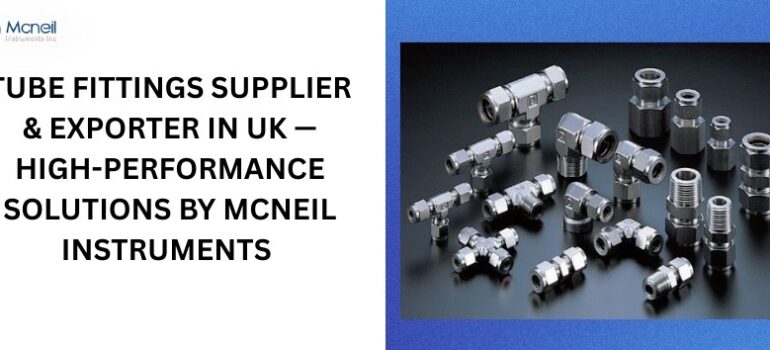
Tube Fittings Supplier & Exporter in UK — High-Performance Solutions by Mcneil Instruments

Introduction: Why Tube Fittings Matter in the UK Industrial Landscape

In the United Kingdom’s advanced industrial sectors — from oil and gas, petrochemical plants, and power generation to pharmaceutical manufacturing, marine engineering, and water treatment — precision and reliability are non-negotiable. At the heart of every high-integrity fluid system are tube fittings — the components that ensure a secure, leak-free, and corrosion-resistant connection in piping and tubing systems.

Whether it is instruments for process control, high-pressure hydraulic lines, offshore piping, or instrumentation loops, choosing the right tube fittings directly impacts operational reliability, safety, and long-term maintenance costs. That is why companies across the UK depend on Mcneil Instruments  as a leading tube fittings manufacturer, supplier, and exporter — providing engineered solutions designed for demanding industrial environments.

In this blog, we explore the key features, material grades, specifications, and applications of tube fittings supplied to the UK market, along with practical insights for engineers and procurement professionals.

What Are Tube Fittings and Where Are They Used?

Tube fittings are mechanical connectors that join tubes to other tubes, valves, or instrumentation. They provide secure connections capable of handling high pressures, dynamic loads, and corrosive media. Unlike pipe fittings, tube fittings are typically used where precise internal diameters and tubing systems are common — for example:

● Instrumentation lines

● High-pressure gas manifolds

● Chemical dosing systems

● Hydraulic systems

● Instrument control loops

● Offshore platforms and FPSO applications

Tube fittings offer reliable sealing without the need for welding, soldering, or brazing, enabling rapid installation and reduced downtime.

Material Grades Supplied to the UK

Mcneil Instruments offers tube fittings in a wide range of materials, each selected for specific industrial environments:

Stainless Steel Grades

● ASTM A213 / A269 Grades 304 & 304L
Used for general industrial applications with good corrosion resistance.

● ASTM A213 / A269 Grades 316 & 316L
Higher corrosion resistance, ideal for marine, chemical, and offshore service.

● ASTM A213 / A269 Grades 321 & 347
Stabilized stainless steels for improved high-temperature performance.

Duplex & Super Duplex Stainless Steel

● Duplex 2205

● Super Duplex 2507
Excellent strength and chloride stress-corrosion resistance — ideal for UK offshore and chemical applications.

Nickel Alloys & Exotic Metals

● Inconel 600 / 625 / 718 — high temperature stability and oxidation resistance.

● Monel 400 / K500 — superior performance in seawater and acidic environments.

● Hastelloy C276 / C22 / B2 / B3 — exceptional corrosion resistance in aggressive chemical media.

Other Alloys

● Incoloy 800 / 825 / 925 — heat-resistant and corrosion-resistant alloys for industrial process lines.

● Titanium Grades 1–4 — lightweight, high corrosion resistance for specialized applications.

Each material grade has been engineered to meet international standards, including ASTM, ASME, ISO, and DIN, ensuring compliance in UK industrial projects.

Types of Tube Fittings Supplied

Mcneil Instruments supplies an extensive range of tube fittings suited to various applications:

● Compression Tube Fittings
Provide a reliable mechanical seal for high-pressure instrumentation lines.

● Ferrule Fittings
Designed for accurate, leak-free connections using single or double ferrule designs.

● Union Fittings
Used to connect tubes end-to-end without disassembly of adjoining components.

● Adapters & Connectors
Convert between different tube sizes or connect tube to threaded connections.

● Elbows, Tees & Crosses
Enable changes in direction or branching in instrumentation networks.

● Reducers & Bushings
Used where changes in tube diameter are required.

● Caps & Plugs
Seal off tube ends for maintenance or isolation.

Specifications — Technical Details for UK Projects

Tube fittings supplied by Mcneil Instruments  to the UK market meet robust technical standards and manufacturing tolerances.

Manufacturing Standards

StandardDescription
ASTM B564 / ASME SB564Standard for nickel alloy and stainless steel tube fittings
ISO 8434Metallic tube fittings for general industrial use
DIN/EN StandardsEuropean standard compliance where required
ASME B31.3Process piping compliance for industrial use

Size & Pressure Ratings

SpecificationDetails
Tube O.D. Sizes1/8″ to 2″ (can be extended by request)
Pressure RangeUp to 6000 psi dependent on material and size
Temperature RangeCryogenic to +982°C depending on alloy
ConnectionsCompression, Ferrule, Threaded

Mechanical Properties (Typical)

The mechanical properties vary based on material, but below are representative values for common stainless tube fitting grades:

Material GradeTensile StrengthYield StrengthCorrosion Resistance
Stainless 304≥ 515 MPa≥ 205 MPaGood
Stainless 316≥ 515 MPa≥ 205 MPaExcellent
Duplex 2205≥ 620 MPa≥ 450 MPaVery High
Super Duplex 2507≥ 850 MPa≥ 620 MPaSuperior
Inconel 625≥ 655 MPa≥ 310 MPaExceptional

Exact values are provided with Mill Test Certificates (MTCs) for traceability and project compliance.

Why UK Industries Prefer Mcneil Instruments Tube Fittings

1. High-Quality Manufacturing

Mcneil Instruments employs precision machining, strict quality control, and advanced testing methods to ensure fittings meet global standards with minimal tolerance deviation.

2. Global Supplier with Local Impact

Although a global manufacturer and exporter, Mcneil Instruments  understands UK market expectations, including adherence to European and British standards where applicable, and provides documentation that helps smooth project approvals.

3. Comprehensive Material Range

Whether the requirement is pressure instrumentation, marine service, chemical resistance, or high-temperature process lines, the wide spectrum of materials ensures the right fit for every application.

4. Full Technical Support

From material selection and engineering guidance to test documentation and logistics support, Mcneil Instruments  supports UK clients through every stage of procurement and implementation.

5. Export-Ready Logistics & Documentation

As a proven exporter, Mcneil Instruments  handles packaging, export documentation, compliance certificates, and freight logistics — ensuring reliable shipment to UK ports and industrial locations.

Applications in the UK Market

Tube fittings supplied to UK industries are used in:

Oil & Gas Sector

Instrumentation lines, pressure control systems, and flow metering where safe and leak-proof connections are essential.

Chemical & Petrochemical Plants

Corrosion resistant fittings for aggressive chemical handling systems.

Marine & Offshore Engineering

Duplex and Super Duplex tube fittings for seawater systems, FPSO instrumentation, and offshore production platforms.

Power Generation

High temperature and high pressure lines in thermal and nuclear power plants.

Pharmaceutical and Food Industries

Hygienic and corrosion-resistant fittings for clean environments.

Water Treatment and Utilities

Leak-free connections for water distribution networks, filtration systems, and utility lines.

Quality Assurance & Testing

All tube fittings shipped by Mcneil Instruments  undergo rigorous testing before dispatch:

● Material Test Certificates (EN 10204 3.1 / 3.2)

● Positive Material Identification (PMI)

● Hydrostatic and Leak Testing

● Ultrasonic and Radiographic Examination

● Dimensional & Visual Inspection

Certifications are provided with every batch, ensuring traceability, safety, and quality for critical UK projects.

Conclusion: Reliable Tube Fittings for UK Industrial Excellence

In industries where precision, safety, and long-term performance matter, tube fittings play a pivotal role. Mcneil Instruments  stands out as a trusted manufacturer, supplier, and exporteroffering a broad range of stainless steel, duplex, super duplex, and alloy tube fittings engineered to meet stringent industrial demands.

Whether for offshore marine systems, refinery instrumentation, power plant piping, or hygienic process lines, Mcneil Instruments  delivers certified, high-performance tube fittingsthat are ready for the most challenging applications across the United Kingdom.

Partner with a supplier that combines global manufacturing excellence with UK market readiness — Mcneil Instruments .

Read More

Stainless Steel ASTM Pipe Fittings Supplier, Manufacturer & Exporter: Premium Piping Solutions by Mcneil Instruments

Introduction: The Role of Stainless Steel ASTM Pipe Fittings in Modern Industry

In industrial piping systems that handle critical fluids and gases, the quality and performance of pipe fittings can make the difference between safe, reliable operation and costly downtime or failure. Whether in chemical plants, oil and gas facilities, pharmaceuticals, power generation, water treatment, or food and beverage processing, piping components must meet stringent standards for strength, corrosion resistance, and dimensional accuracy.

Stainless steel ASTM pipe fittings are engineered to meet these challenges. They are precision-manufactured components designed to connect, redirect, branch, or terminate stainless pipes in systems that demand durability and safety. As a leading manufacturer, supplier, and exporter, Mcneil Instruments delivers comprehensive stainless steel ASTM pipe fittings that conform to international standards and perform reliably in the most demanding environments.

This blog explores what stainless steel ASTM pipe fittings are, their key material grades and applications, technical specifications, benefits, and why industries around the world — including those in the USA, Europe, Africa, and Asia — choose Mcneil Instruments as their trusted provider.

Understanding Stainless Steel ASTM Pipe Fittings

Stainless steel ASTM pipe fittings are components designed to join sections of pipe, change flow direction, adapt pipe sizes, or cap pipe ends, while providing a secure and leak-proof connection. These fittings are manufactured according to ASTM (American Society for Testing and Materials) standards, ensuring conformity with internationally recognized material and performance criteria.

These fittings are usually supplied in seamless or welded form, depending on the grade and application, and are commonly used in high-purity and high-pressure systems where corrosion resistance and mechanical strength are priorities.

Key Stainless Steel Grades for ASTM Pipe Fittings

Mcneil Instruments supplies pipe fittings in a wide range of stainless steel grades to meet diverse industrial requirements. Some of the most popular grades include:

1. Stainless Steel ASTM A403 WP304 Pipe Fittings

304 stainless steel is the most widely used general-purpose austenitic grade. It provides excellent corrosion resistance, formability, and weldability.

Applications:

  • Water treatment lines
  • Food and beverage systems
  • General industrial piping

Key Characteristics:

  • Excellent resistance to rust and corrosion
  • Good weldability and ductility
  • Suitable for a wide range of temperatures

2. Stainless Steel ASTM A403 WP316 Pipe Fittings

316 stainless steel enhances corrosion resistance with the addition of molybdenum, making it suitable for chloride-rich or aggressive environments.

Applications:

  • Petrochemical piping
  • Marine environments
  • Chemical processing

Key Characteristics:

  • Better pitting and crevice corrosion resistance, especially in chloride environments
  • High strength at elevated temperatures

3. Stainless Steel ASTM A403 WP316L Pipe Fittings

316L is a low-carbon variant of 316, optimized for enhanced weldability and reduced carbide precipitation during welding.

Applications:

  • Pharmaceutical and sanitary systems
  • High-temperature welding applications

Key Characteristics:

  • Improved weldability
  • Reduced risk of sensitization in welded components

4. Stainless Steel ASTM A403 WP321 Pipe Fittings

WP321 is stabilized with titanium to resist intergranular corrosion, especially in high-temperature environments.

Applications:

  • Heat exchangers
  • Exhaust systems
  • Chemical processing

Key Characteristics:

  • Enhanced high-temperature performance
  • Excellent resistance to intergranular corrosion

5. Stainless Steel ASTM A403 WP347 Pipe Fittings

WP347 is stabilized with niobium and offers similar benefits to WP321, with improved mechanical stability.

Applications:

  • High-temperature steam systems
  • Refineries and petrochemical units

Key Characteristics:

  • Superior stabilization at high temperatures
  • Reliable corrosion resistance under thermal cycling

Types of Stainless Steel ASTM Pipe Fittings Offered

Mcneil Instruments manufactures the following types of stainless steel ASTM pipe fittings:

  • Elbows (45°, 90°, 180°) — change direction in piping systems
  • Tees & Crosses — enable branching and distribution
  • Reducers (Concentric & Eccentric) — adapt between different pipe sizes
  • Caps & Plugs — terminate pipe ends securely
  • Stub Ends & Lap Joint Fittings — for easy flange connections
  • Custom Machined Fittings — engineered to project-specific dimensions

Each fitting is precision manufactured, inspected, and tested for dimensional accuracy and mechanical performance.

Technical Specifications and Standards

Below is an overview of typical technical specifications for Mcneil Instruments’ stainless steel ASTM pipe fittings.

Material & Standards Compliance

StandardDescription
ASTM A403Standard Specification for Wrought Austenitic Stainless Steel Pipe Fittings
ASME B16.9Factory-Made Wrought Buttwelding Fittings
ASME B16.11Forged Fittings, Socket-Welding and Threaded
ISO & DINAdditional standards supported upon request

Dimensions & Size Range

ParameterDetails
Size Range1/2″ NB to 48″ NB (custom sizes available)
Wall ThicknessSCH 10S to SCH XXS (depending on grade and application)
Connection TypeButtweld, Socket Weld, Threaded (as required)
EndsBeveled, Plain, Threaded

Mcneil Instruments supports tailored sizing for specific engineer designs or unique industrial applications.

Mechanical Properties (Typical by Grade)

GradeTensile StrengthYield StrengthElongationCorrosion Resistance
WP304515 MPa205 MPa≥ 40%Excellent
WP316515 MPa205 MPa≥ 40%Very High
WP316L485 MPa170 MPa≥ 40%Very High
WP321515 MPa205 MPa≥ 35%High (High Temp)
WP347515 MPa205 MPa≥ 35%High (Thermal Cycling)

Note: Actual property values may vary slightly depending on manufacturing processes and certifications; full testing reports are supplied with each batch.

Benefits of Stainless Steel ASTM Pipe Fittings

Stainless steel ASTM pipe fittings offer distinct advantages:

  • Superior corrosion resistance — ideal for aggressive or marine environments
  • Long service life — minimal maintenance and replacement costs
  • High strength and durability — withstand pressure and temperature variation
  • Excellent hygiene properties — ideal for food, pharmaceutical, and sanitary systems
  • Thermal stability — suitable for steam, hot water, and industrial utilities
  • Compatibility with global standards — simplifies compliance for international projects

These benefits make stainless steel ASTM fittings a preferred choice for industries seeking reliability and regulatory alignment.

Applications Across Industries

Stainless steel ASTM pipe fittings from Mcneil Instruments are used across a wide range of industrial sectors:

Oil & Gas and Petrochemical

Corrosion-resistant fittings are critical in sour gas, hydrocarbon processing, and marine terminal pipelines.

Chemical and Process Industries

Resistant to acidic or alkaline environments; ideal for chemical feeds and process piping.

Water Treatment and Utilities

Used in clean water systems, desalination plants, wastewater treatment, and municipal supply lines.

Food, Beverage & Pharmaceuticals

Sanitary standards make stainless steel essential for sanitary and high-purity systems.

Power Generation

Steam distribution lines, cooling systems and high-temperature circuits require dependable fittings with thermal endurance.

Construction & HVAC

Used in heating, ventilation, air conditioning systems that demand corrosion resistance and long life.

Quality Assurance and Testing

Mcneil Instruments ensures that every stainless steel ASTM pipe fitting undergoes rigorous testing and quality control:

  • Material Test Certificates (MTCs) compliant with EN 10204 3.1 / 3.2
  • Positive Material Identification (PMI)
  • Hydrostatic & Pneumatic Pressure Testing
  • Non-Destructive Testing (NDT) — Radiography / Ultrasonic
  • Dimensional Inspection (ASME B16.9 / B16.11)

These protocols guarantee that fittings meet the mechanical and chemical specifications required by global industries.

Why Choose Mcneil Instruments — Manufacturer, Supplier & Exporter

Global Quality Standards

Mcneil Instruments adheres to ASTM, ASME, ISO, and international specifications — ensuring products meet rigorous compliance.

Diverse Product Range

From standard stainless steel grades (304, 316) to stabilized and specialty grades (321, 347), the range addresses diverse industrial environments.

Custom Engineering Support

Mcneil Instruments offers tailored solutions based on project specifications, including non-standard sizes and complex configurations.

Reliable Supply Chain

As a trusted supplier and exporter, Mcneil Instruments manages logistics, documentation, export compliance, and on-time delivery to global destinations.

Technical Assistance

Engineering support, material selection guidance, and compliance documentation help buyers make informed decisions and streamline procurement.

Conclusion: Stainless Steel ASTM Pipe Fittings for Reliable Flow Systems

Stainless steel ASTM pipe fittings are foundational components for industrial piping systems that demand durability, corrosion resistance, and compliance with global standards. Whether for oil and gas infrastructure in Houston, chemical plants in Europe, water treatment systems in Africa, or pharmaceutical facilities in Asia, these fittings ensure reliable, long-term performance.

As a seasoned manufacturer, supplier, and exporter, Mcneil Instruments delivers premium stainless steel ASTM pipe fittings that withstand challenging service environments, meet technical requirements, and support operational excellence.

Read More

Stainless Steel Buttweld Pipe Fittings Manufacturer, Distributor, Wholesaler, Supplier & Exporter in Houston — Precision Solutions by Mcneil Instruments 

Introduction: Houston’s Industrial Piping Demands High-Quality Fittings

Houston sits at the heart of the U.S. energy and industrial landscape. With its extensive network of oil refineries, petrochemical plants, LNG terminals, pharmaceutical facilities, food processing hubs, and large-scale infrastructure projects, the city’s industries depend on piping systems that provide safe, reliable, and long-lasting performance.

At the center of these fluid handling systems are buttweld pipe fittings — components critical for joining pipes in high-pressure or high-temperature service. Houston industries cannot afford failures due to poor-quality joints, especially when dealing with corrosive media or critical steam distribution systems.

Mcneil Instruments  is a globally recognized manufacturer, supplier, wholesaler, distributor  and exporter of stainless steel buttweld pipe fittings engineered to meet the rigorous demands of Houston’s industrial sectors. This blog explains what these fittings are, their technical characteristics, applications, and why Houston buyers prefer globally certified supplies.

What Are Stainless Steel Buttweld Pipe Fittings?

Stainless steel buttweld pipe fittings are forged or formed components designed to be welded to pipes at both ends, creating smooth internal flow paths and seamless transitions. These fittings are essential where joint strength, leak-proofing, and long-term integrity are required.

Buttweld fittings are typically used in:

  • Oil & gas pipelines
  • Chemical process lines
  • High-temperature steam systems
  • Corrosive environments
  • Food and pharmaceutical piping
  • Water and wastewater treatment

Unlike threaded or mechanical fittings, buttweld fittings create permanent welded joints that eliminate stress concentrations, minimize turbulence, and reduce the risk of leakage.

Why Stainless Steel for Buttweld Fittings?

Stainless steel offers a combination of properties that make it ideal for demanding Houston applications:

  • Corrosion resistance — ideal for saltwater environments, chemical plants, marine terminals, and refinery feed lines.
  • High strength and temperature resistance — critical for steam, hydrocarbon, and power plant piping.
  • Hygienic properties — essential for food, beverage, and pharmaceutical applications requiring easy cleaning and sterilization.
  • Durability and low maintenance — reduces downtime and long-term operating cost.

Mcneil Instruments  supplies buttweld fittings in a variety of stainless grades to match application needs and service conditions.

Types of Stainless Steel Buttweld Pipe Fittings Supplied in Houston

The fittings provided by Mcneil Instruments  cover a full range of buttweld configurations that industrial projects in Houston typically require:

Elbows

Used to change direction in piping systems (45°, 90°, 180°).

Tees & Crosses

Used to branch or distribute flow.

Reducers

Concentric and eccentric reducers to adapt different pipe sizes.

Caps

Close the ends of pipes securely.

Stub Ends

Used with lap joint flanges for easier alignment.

Custom Fittings

Engineered solutions for project-specific requirements.

Each of these fittings is produced to comply with recognized international dimensions and quality standards.

Material Grades & Specifications

Mcneil Instruments  supplies buttweld fittings in common stainless steel grades including:

  • ASTM A403 WP304 — general corrosion resistance, ideal for mild environments.
  • ASTM A403 WP316 / WP316L — enhanced resistance to chlorides, acids, and corrosive media.
  • ASTM A403 WP321 / WP347 — stabilized grades for higher temperatures and improved creep resistance.
  • Duplex & Super Duplex Stainless Steels — higher strength and superior chloride stress-corrosion resistance.
  • Other specialty stainless alloys — as per specific project demands.

All fittings are manufactured to ASTM A403 standards and, where applicable, to corresponding ASME B16.9 dimensional standards.

Technical Specifications

Here is an overview of how Mcneil Instruments ’s stainless steel buttweld pipe fittings are specified:

SpecificationDetails
Material StandardsASTM A403 / ASME B16.9
Size Range1/2″ NB to 48″ NB (as required)
ScheduleSCH 10S to SCH XXS
ConnectionButtweld
ManufacturingForged / Seamless / Formed
Surface FinishPolished / Pickled / Bead Blasted
Pressure RatingPer ASME/ANSI Classes

Mechanical Properties (Typical for WP316 / WP316L)

PropertyTypical Value
Tensile Strength≥ 515 MPa
Yield Strength≥ 205 MPa
Elongation≥ 35%
Hardness≤ 95 HRB
Operating Temp RangeCryogenic to 400-700°C depending on grade

Actual mechanical properties vary by grade and testing standards; full mill test certificates are provided with every shipment.

Houston Industrial Sectors That Rely on Stainless Steel Buttweld Fittings

Oil & Gas

Refinery process lines, hydrocarbon transport, FPSO connections, and pipeline networks use buttweld fittings for reliability under pressure and corrosion.

Chemical & Petrochemical Plants

Media handling systems require high corrosion resistance, particularly in chlorides and acids.

Power Generation

Steam and condensate systems demand fittings that can withstand high temperature and pressure fluctuations.

Water & Wastewater Treatment

Treatment plants need corrosion-resistant materials for long service life in aggressive environments.

Food, Beverage & Pharma

Hygienic systems employ stainless steel fittings for cleanability and contamination control.

Quality Control, Testing & Certification

Mcneil Instruments ’s buttweld fittings undergo rigorous quality checks to ensure reliability:

  • Material Test Certificates (MTCs) — EN 10204 3.1 / 3.2
  • Chemical & Mechanical Analysis
  • Non-Destructive Testing (NDT) — Radiography, Ultrasonic
  • Dimensional Inspection (ASME B16.9)
  • Hydrostatic and Leak Resistance Testing

These protocols ensure every fitting can be confidently deployed in critical Houston projects, meeting both U.S. and international compliance.

Why Houston Companies Choose Mcneil Instruments 

Houston engineers, plant managers, and procurement teams choose Mcneil Instruments  because:

  • Proven Manufacturer, Supplier & Exporter: A trusted global source for certified buttweld fittings.
  • Wide Material Range: From standard grades to Duplex and Super Duplex.
  • Custom Solutions: Tailored fittings for unique project specifications.
  • Global Standards Compliance: ASTM, ASME, ISO adherence.
  • Export Ready: Professional handling of logistics, documentation, and delivery to Houston and surrounding industrial zones.

When downtime costs money and safety is paramount, quality fittings become mission-critical.

Conclusion: Precision Fittings for Houston’s Industrial Needs

Stainless steel buttweld pipe fittings are fundamental to the integrity of piping systems in Houston’s most demanding sectors. With Mcneil Instruments ’s certified, quality-tested fittings, companies can ensure safe fluid handling, longer system life, and compliance with global standards.

Whether it’s a petrochemical complex in Baytown, a refinery expansion, a power plant upgrade, or a food processing facility requiring hygienic piping, stainless steel buttweld pipe fittings from Mcneil Instruments  deliver performance, reliability, and peace of mind.
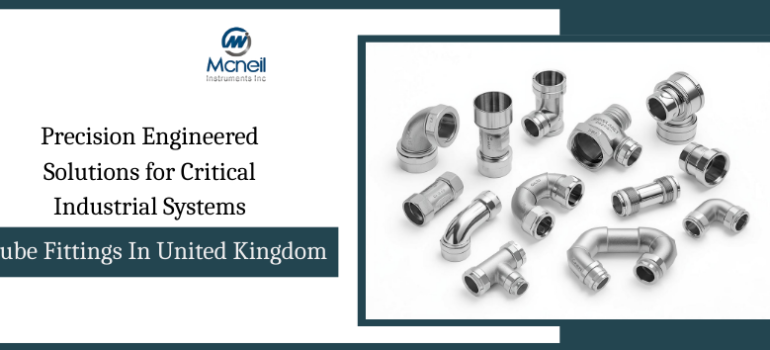
Read More

Pipe Fittings Manufacturer, Supplier, Exporter, Distributor and Wholesaler in Chicago: Reliable Industrial Flow Solutions by Mcneil Instruments

Introduction: Supporting Chicago’s Industrial Backbone

Chicago is more than a logistics hub. It is a city powered by manufacturing, energy infrastructure, chemical processing, water treatment, and large-scale construction. At the core of these industries lies one critical component that often goes unnoticed until it fails: pipe fittings.

From refineries and power plants to industrial fabrication units and commercial infrastructure, pipe fittings determine the safety, efficiency, and lifespan of piping systems. This is where Mcneil Instruments plays a vital role. As a trusted pipe fittings manufacturer, supplier, Distributor, Wholesaler and exporter, Mcneil Instruments delivers globally certified fittings to industrial projects across Chicago and the greater Illinois region.

This blog explores the importance of high-quality pipe fittings, the types and materials supplied by Mcneil Instruments, their technical capabilities, and why Chicago-based industries rely on globally sourced, ASTM and ASME compliant solutions.

Why Pipe Fittings Matter in Chicago’s Industrial Environment

Chicago’s industries operate under demanding conditions. Seasonal temperature variations, high-pressure systems, corrosive media, and continuous operations require pipe fittings that do more than just connect pipes.

High-quality pipe fittings ensure:

  • Leak-free flow of liquids and gases
  • Resistance to pressure, temperature, and corrosion
  • Compliance with US and international engineering standards
  • Reduced maintenance and long service life
  • Safe operation in critical environments

Poor-quality fittings can lead to shutdowns, safety hazards, and costly downtime. This is why Chicago industries increasingly source fittings from proven global manufacturers rather than generic local stock.

Mcneil Instruments: Manufacturer, Supplier, Distributor, Wholesaler and Exporter of Pipe Fittings for Chicago

Mcneil Instruments is an internationally trusted pipe fittings manufacturer, supplier, and exporter serving industrial clients in Chicago. With advanced manufacturing facilities in India and a strong export network, Mcneil delivers precision-engineered fittings that meet US project requirements.

Our fittings are widely used in:

  • Oil and gas terminals
  • Chemical and petrochemical plants
  • Power generation facilities
  • Food and pharmaceutical plants
  • Water treatment and utility systems
  • Industrial fabrication and EPC projects

Every product is manufactured with strict quality control, tested to international standards, and supplied with full documentation.

Types of Pipe Fittings Supplied to Chicago

Mcneil Instruments offers a complete range of pipe fittings suitable for diverse industrial applications.

Butt Weld Pipe Fittings

Used in high-pressure and high-temperature systems where strength and leak-free joints are critical.

  • Elbows (45°, 90°, 180°)
  • Tees and Crosses
  • Reducers (Concentric and Eccentric)
  • Caps and Stub Ends

Forged Pipe Fittings

Ideal for compact systems and high-pressure instrumentation lines.

  • Socket Weld Fittings
  • Threaded Fittings
  • Couplings, Unions, Plugs, Bushings

Instrumentation and Precision Fittings

Designed for control systems, automation lines, and process instrumentation.

  • Compression fittings
  • Tube adapters
  • Ferrule fittings

Materials Offered for Pipe Fittings in Chicago

Different industries require different materials based on pressure, temperature, and media. Mcneil Instruments supplies pipe fittings in a wide range of materials.

Carbon Steel Pipe Fittings

Commonly used in power plants, refineries, and construction.

  • ASTM A105
  • ASTM A234 WPB

Alloy Steel Pipe Fittings

Used in high-temperature and high-pressure applications.

  • ASTM A234 WP11
  • ASTM A234 WP22
  • ASTM A234 WP91

Stainless Steel Pipe Fittings

Ideal for corrosion resistance and hygienic environments.

  • ASTM A403 WP304
  • ASTM A403 WP316 / WP316L
  • ASTM A403 WP321 / WP347

Nickel and Exotic Alloy Fittings

Used in aggressive chemical and extreme service conditions.

  • Inconel
  • Monel
  • Hastelloy
  • Duplex and Super Duplex
  • Titanium and Tantalum (on request)

Technical Specifications Overview

SpecificationDetails
Manufacturing StandardsASTM, ASME, ANSI, MSS
Size Range1/8″ NB to 48″ NB
ScheduleSCH 10 to SCH XXS
Pressure RatingUp to 6000 psi
Temperature RangeCryogenic to above 650°C
Manufacturing TypeSeamless, Welded, Forged
End ConnectionsButt Weld, Socket Weld, Threaded

Mechanical Properties (Typical)

PropertyCarbon SteelAlloy SteelStainless Steel
Tensile Strength≥ 415 MPa≥ 415–585 MPa≥ 485 MPa
Yield Strength≥ 205 MPa≥ 205–415 MPa≥ 170 MPa
Elongation20–30%20–30%30%
Corrosion ResistanceModerateHighExcellent

Actual values vary by grade and application, with full test reports provided.

Industries Served in Chicago

Mcneil Instruments supplies pipe fittings to a wide range of industries across Chicago and surrounding regions.

  • Oil and Gas Refineries
  • Power Generation and Utilities
  • Chemical and Petrochemical Plants
  • Food Processing and Pharmaceuticals
  • HVAC and Building Services
  • Water Treatment and Infrastructure
  • OEM and Fabrication Units

Quality Testing and Certification

Every fitting supplied to Chicago undergoes strict inspection and testing.

  • Hydrostatic and Pneumatic Pressure Testing
  • Ultrasonic and Radiographic Testing
  • PMI (Positive Material Identification)
  • Dimensional and Visual Inspection
  • Hardness and Mechanical Testing

Certifications include:

  • EN 10204 3.1 / 3.2
  • ISO 9001:2015
  • ASTM and ASME Compliance
  • Project-specific third-party inspection on request

Why Chicago Industries Choose Mcneil Instruments

  • Proven manufacturer, supplier, and exporter
  • Global manufacturing with US-compliant standards
  • Consistent quality across large volumes
  • Custom sizes and project-specific solutions
  • Reliable export logistics to Chicago ports
  • Complete documentation and traceability

Mcneil Instruments is not just a supplier. It is a long-term partner for industrial piping projects that demand reliability.

Conclusion: Reliable Pipe Fittings for Chicago’s Industrial Growth

Pipe fittings are small components with massive responsibility. In a city like Chicago, where industrial performance and safety go hand in hand, selecting the right pipe fittings manufacturer, supplier, Distributor, Wholesaler  and exporter is critical.

Mcneil Instruments delivers precision-engineered pipe fittings that meet international standards, perform under pressure, and support long-term operational efficiency. From carbon steel and alloy steel to stainless steel and exotic materials, our fittings power industries across Chicago with confidence.

Read More

Carbon Steel ASTM Tube Fittings: A Complete Guide to A105, A234 WPB, WP11, WP22 & WP91 Grades

Introduction — Critical Connectors for Industrial Piping Systems

In any industrial piping network, whether it’s transporting steam in power plants, chemical feeds in petrochemical plants, water in treatment facilities, or hydrocarbons in oil and gas refineries, tube fittings are essential. They join sections of pipe and tubing, adapt changes in direction or diameter, and provide secure, leak-proof connections in demanding environments.

Carbon steel ASTM tube fittings — manufactured under stringent industry standards — provide a robust and reliable solution for medium and high pressure, elevated temperature, and corrosive conditions. As a leading manufacturer, supplier, and exporter, Mcneil Instruments  offers a complete range of these fittings in different grades, each engineered to support specific industrial requirements.

This guide covers the most commonly used carbon steel tube fitting grades:

  • ASTM A105
  • ASTM A234 WPB
  • ASTM A234 WP11
  • ASTM A234 WP22
  • ASTM A234 WP91

We will explore their chemical and mechanical properties, applications, specifications, and differences — helping engineers and buyers make informed decisions.

Standard Overview — What Is ASTM Tube Fitting Material?

Carbon steel tube fittings covered in this guide adhere to recognized ASTM and ASME specifications. These standards define acceptable chemical compositions, mechanical properties, and performance criteria. The most relevant standards include:

  • ASTM A105 – Forged carbon steel for moderate and high-temperature service.
  • ASTM A234 WPB / WP11 / WP22 / WP91 – Carbon and alloy steel buttweld tube fittings designed for elevated temperature and pressure services.

These fittings are typically produced via forging and machining to achieve uniform strength and dimensional accuracy.

Types of Carbon Steel Tube Fittings

Before diving into grades, here are the common tube fittings typically offered by Mcneil Instruments :

  • Elbows (45°, 90°) – change direction of flow.
  • Tees & Crosses – branch flows or connect three/four lines.
  • Reducers (Concentric & Eccentric) – join two sizes of piping.
  • Caps & Plugs – close pipe ends.
  • Couplings & Adapters – join sections in different configurations.
  • Custom Machined Fittings – for special application requirements.

Each fitting type is produced to match the required grade, wall thickness, and dimensional tolerance.

Grade Profiles

1. ASTM A105 Tube Fittings

ASTM A105 is a forged carbon steel grade commonly used for moderate and high-temperature applications. These fittings offer good weldability and mechanical strength.

Chemical Composition (Typical)

ElementComposition (%)
Carbon (C)0.35 max
Manganese (Mn)0.60–1.05
Phosphorus (P)0.035 max
Sulfur (S)0.040 max
Silicon (Si)0.10–0.35

Applications:

  • Pressure and high-temperature services
  • Refining and petrochemical plants
  • Boiler systems

2. ASTM A234 WPB Tube Fittings

ASTM A234 WPB represents the most widely used grade of carbon steel buttweld fittings. These are suitable for moderate temperature and standard industrial applications.

Key Features:

  • Excellent weldability
  • Reliable performance in conventional process systems
  • Cost-effective for standard applications

Applications:

  • Pipeline connections in general plant services
  • Low/medium temperature fluid lines
  • HVAC systems

3. ASTM A234 WP11 Tube Fittings

ASTM A234 WP11 fittings are made from carbon steel alloyed with chromium and molybdenum, giving them better resistance in higher temperature environments compared to WPB.

Applications:

  • High temperature steam lines
  • Industrial boilers
  • Medium-pressure systems requiring oxidation resistance

4. ASTM A234 WP22 Tube Fittings

ASTM A234 WP22 is a higher alloy grade than WP11, with improved creep and oxidation resistance. These tube fittings perform better under sustained high temperatures and pressures.

Applications:

  • Superheaters and reheaters
  • High-pressure steam piping
  • Chemical processing lines

5. ASTM A234 WP91 Tube Fittings

ASTM A234 WP91 fittings represent one of the most advanced carbon steel grades. They are engineered for extreme conditions involving both high temperature and pressure.

Key Advantages:

  • Superior creep strength
  • High mechanical toughness
  • Reliability in prolonged elevated temperature service

Applications:

  • High-pressure boiler systems
  • Thermal power plant piping
  • Heavy industrial applications

Mechanical Properties Comparison

The following table summarizes typical mechanical properties for these carbon steel fitting grades:

PropertyA105A234 WPBA234 WP11A234 WP22A234 WP91
Tensile Strength (min)≥ 485 MPa≥ 415 MPa≥ 415 MPa≥ 520 MPa≥ 620 MPa
Yield Strength (min)≥ 240 MPa≥ 240 MPa≥ 205 MPa≥ 310 MPa≥ 415 MPa
Elongation (%)~20–25~22~22~22~20

Note: Actual mechanical values depend on manufacturing process, heat treatment, and test outcomes.

Chemical Composition Overview

Different grades are alloyed with varying levels of chromium, molybdenum and other elements to enhance high-temperature strength and corrosion resistance.

GradeKey Alloying Elements
A105Carbon, Manganese
WPBCarbon, Manganese
WP11Cr, Mo
WP22Higher Cr, Mo
WP91Cr, Mo with added elements for creep strength

Dimensions & Wall Thickness Standards

Carbon steel ASTM tube fittings are typically produced according to ASME B16.9 and/or ASME B16.11 dimensional standards. These define fitting geometry based on Nominal Pipe Size (NPS) and Schedule (SCH) designations.

Typical Size Range

  • 1/2″ NB to 48″ NB or larger (depending on product)
  • Wall thicknesses: SCH 10 to SCH XXS
  • Fittings manufactured for both buttweld and socket-weld connections

Certifications & Quality Assurance

Mcneil Instruments  ensures that all carbon steel ASTM tube fittings meet rigorous quality parameters. Each product undergoes:

  • Material Test Certificates (MTCs) (EN 10204 3.1 / 3.2)
  • Positive Material Identification (PMI)
  • Hydrostatic Pressure Testing
  • Dimensional Inspection
  • Weld Integrity & Hardness Tests

This makes them suitable for critical industrial services where safety and reliability are non-negotiable.

Applications Across Industries

Carbon steel ASTM tube fittings are used in:

  • Oil & Gas Production & Refining
    Fittings in crude handling, steam systems, gas lines
  • Power Plants & Boilers
    High temperature steam lines, superheated fluid circuits
  • Petrochemical & Chemical Processing
    Process piping with elevated temperature and pressure
  • Industrial Manufacturing
    Heavy equipment cooling lines, process fluid transportation
  • Water Treatment & Infrastructure
    Main lines, distribution systems, plant utilities

Each grade has its niche depending on operational temperature, pressure, and fluid characteristics.

Why Choose Mcneil Instruments  — Manufacturer, Supplier & Exporter

Mcneil Instruments  stands out due to:

  • Broad Product Range: Comprehensive offering covering all major ASTM carbon steel grades from A105 to WP91.
  • Global Standards Compliance: Manufacturing to ASTM, ASME, and international norms.
  • Quality Tracking & Documentation: Full traceability with certified test reports.
  • Custom Solutions: Machined fittings tailored to unique project needs.
  • Export Capability: Serving global markets with expertise in packaging, logistics, and export documentation.

This combination makes Mcneil Instruments  a reliable partner for global EPC contractors, industrial end-users, and procurement teams.

Conclusion — Fit for Purpose and Built to Last

Choosing the right carbon steel ASTM tube fitting is a key engineering decision. Each grade — from A105 through A234 WPB, WP11, WP22, and WP91 — is designed for specific use cases ranging from general service to high temperature and high pressure.

As industries in oil & gas, power, petrochemical, and manufacturing continue to evolve, having a supplier that delivers quality, consistency, and certified performance is essential. Mcneil Instruments  meets these expectations as a trusted manufacturer, supplier, and exporter, offering tube fittings designed for performance, longevity, and project success.

Read More

Alloy Steel ASTM A182 Pipe Fittings: High-Performance Connectors for Demanding Industrial Systems

Across industries such as oil & gas, power generation, petrochemicals, chemical processing, water treatment, and heavy engineering, pipelines act as the lifelines of production. These pipelines carry high-temperature steam, corrosive chemicals, crude oil, gas, and other critical fluids — and their reliability depends heavily on the quality of fittings installed.

Among all piping components, Alloy Steel ASTM A182 Pipe Fittings stand out as essential connectors that ensure leak-proof flow, structural strength, and long-term durability — especially in high-pressure, high-temperature, and corrosive environments.

For industries operating under extreme conditions, choosing the right fittings is not just a performance decision, but a safety imperative.

Mcneil Instruments, a trusted manufacturer, supplier, and exporter, delivers ASTM A182 alloy steel fittings engineered to global standards — making them a strong choice for projects that demand toughness, corrosion resistance, and lifecycle reliability.

What Are ASTM A182 Alloy Steel Pipe Fittings — and Why Do They Matter?

ASTM A182 is the international specification that covers forged or rolled alloy steel materials used in high-temperature service. Fittings such as elbows, tees, reducers, caps, unions, and couplings manufactured under this standard are designed to handle:

✔ High pressure
✔ Elevated temperatures
✔ Corrosive or chemically aggressive media
✔ Mechanical stress and thermal cycling

These fittings are installed to change the direction of flow, branch piping lines, reduce diameter, or seal pipe ends — all while maintaining mechanical integrity under harsh conditions.

Key Advantages of Using Alloy Steel ASTM A182 Pipe Fittings

1. High Strength Under Pressure

Forged alloy steel provides excellent tensile strength, making these fittings ideal for pipelines handling steam, hydrocarbons, or high-pressure process fluids.

2. Superior Temperature Resistance

Alloy steel grades under ASTM A182 retain their mechanical properties even when exposed to extreme temperatures, preventing deformation or failure.

3. Excellent Corrosion & Oxidation Resistance

Chromium-molybdenum alloy steels resist corrosion in chemical plants, refineries, offshore units, boilers, and heat-intensive systems.

4. Longer Lifecycle & Lower Maintenance

Due to better metallurgical stability, these fittings last significantly longer than standard carbon steel fittings — reducing plant downtime and maintenance costs.

5. Dimensional Accuracy & Leak-Proof Performance

Forged fittings offer tight tolerances and reliable sealing, which is critical for safety in high-risk industrial environments.

Types of ASTM A182 Alloy Steel Pipe Fittings (and Where They Are Used)

Mcneil Instrument offers a complete range of forged and butt-weld fittings compliant with ASTM A182. Below is an overview of the most commonly used fittings:

Fitting TypeKey CharacteristicsBest-Suited Applications
Elbows (45° / 90°)Change direction of flow; smooth radius minimizes pressure dropSteam lines, refinery heaters, high-pressure chemical lines
Tees (Equal / Unequal)Allow branching of pipelinesPetrochemical grids, boiler systems, power generation
Reducers (Concentric / Eccentric)Connect pipes of different diametersPump discharge lines, process piping, compressed air systems
CapsSeal the pipe endTesting lines, isolation points, shutdown maintenance
Couplings & UnionsJoin two pipes; allow easy disassemblyInstrumentation, small bore piping, maintenance-heavy systems
Socket-Weld & Threaded FittingsProvide strong mechanical joints for small-diameter linesHydraulic lines, high-pressure chemical service

These fittings are used extensively in industries where temperature, pressure, and corrosion challenges demand superior material performance.

Why ASTM A182 Material Grade Selection Matters

Different alloy steel grades (such as F1, F5, F9, F11, F22, F91) offer varying levels of:

  • temperature stability
  • creep resistance
  • corrosion protection
  • pressure-handling capability

For example:

  • F11 / F22 → widely used in refineries, boilers, and petrochemical plants
  • F5 / F9 → preferred in power generation and high-temperature steam systems
  • F91 → used in ultra-supercritical systems due to exceptional high-temperature strength

Selecting the correct grade ensures safe operation, longer life, and compliance with engineering standards.

Why Quality Matters — Especially in High-Performance Piping

Using substandard fittings can lead to:

⚠ Leaks and pressure drops
⚠ Corrosion failures
⚠ Pipeline shutdowns
⚠ Safety hazards
⚠ Expensive downtime

High-pressure and high-temperature industries cannot afford these risks.

Mcneil Instrument manufactures fittings using advanced forging, heat treatment, and machining processes to ensure:

  • Uniform grain structure
  • Dimensional precision
  • Mechanical strength
  • Compliance with ASTM / ASME / ISO standards

Each batch is supplied with Material Test Certificates (MTCs) for full traceability.

Mcneil Instruments: Trusted Supplier of ASTM A182 Alloy Steel Fittings

Here’s what sets Mcneil Instrument apart as a global supplier:

✔ Complete Range of Fittings

Butt-weld, forged socket weld, threaded fittings — all available in ASTM A182 alloy grades.

✔ Engineering-Grade Quality

Fittings manufactured using controlled forging, machining, and heat-treatment processes to ensure durability.

✔ Wide Grade Selection

Includes F1, F5, F9, F11, F22, F91 — covering all major industrial needs.

✔ Global Export Readiness

Well-versed in handling packaging, documentation, and logistics — making procurement smooth for international buyers.

✔ Application Expertise

Serving oil & gas, power plants, steam systems, chemical processing, water treatment, and infrastructure projects.

What Engineers Should Consider When Ordering Alloy Steel Fittings

Before specifying ASTM A182 fittings, engineers should check:

  1. Required grade (F11, F22, etc.) based on temperature + pressure.
  2. Fitting type according to pipeline design (elbows, tees, reducers, etc.).
  3. Pressure rating for socket-weld/threaded fittings.
  4. Welding or assembly requirements (butt weld vs forged).
  5. Corrosion resistance requirements depending on media.
  6. Documentation needs — MTCs, compliance certificates.
  7. Supplier capability for bulk supply and timely delivery.

Mcneil Instrument supports clients across all stages — from selection to delivery.

Conclusion — High-Quality Alloy Steel Fittings are Vital for Safe, Efficient Piping Systems

ASTM A182 Alloy Steel Pipe Fittings play a central role in maintaining the safety, reliability, and performance of industrial pipelines. Their ability to handle heat, pressure, corrosion, and mechanical stress makes them indispensable in today’s demanding industrial environments.

Choosing a reliable manufacturer like Mcneil Instruments ensures:

  • Verified material quality
  • Precision manufacturing
  • Global compliance
  • Long-term durability

When industrial integrity and performance matter, high-quality alloy steel fittings are not optional — they are essential.

Read More

Stainless Steel Tube Fittings in Ghana: Complete Guide to Grades 304, 304L, 316, 316L, 321 & 347

Ghana’s expanding industrial, manufacturing, energy, and infrastructure sectors increasingly rely on durable, high-performance piping solutions. Among these, stainless steel tube fittings are essential components that ensure leak-free connections, corrosion resistance, and long service life in systems carrying fluids, gases, and chemicals.

This comprehensive blog explains the most commonly used stainless steel tube fittings — Grades 304, 304L, 316, 316L, 321 & 347 — their properties, applications, and relevance to Ghana’s engineering and industrial needs.

What Are Stainless Steel Tube Fittings?

Stainless steel tube fittings are connectors used to join, redirect, or terminate tubing in various piping assemblies. They include:

● Elbows

● Tees

● Reducers

● Couplings

● Caps

● Adapters

These fittings must withstand pressure, resist corrosion, and maintain integrity across fluid systems — especially in harsh industrial conditions. Stainless steel’s superior resistance to rust, pitting, and chemical attack makes it a top choice for Ghana’s piping infrastructure.

Why Choose Stainless Steel Fittings in Ghana?

1. Corrosion Resistance

Ghana’s coastal, humid, and industrial environments expose piping to moisture and corrosive agents. Stainless steel resists:

● Salt spray corrosion

● Chemical attack

● Microbial corrosion

This makes it ideal for marine, refinery, chemical, and food processing environments.

2. Durability & Long Life

These fittings sustain performance under:

● High pressure

● Thermal cycling

● Vibration and mechanical load

3. Clean & Hygienic

Stainless steel’s non-porous surface is perfect for:

● Food and beverage processing

● Pharmaceutical utilities

● Water treatment systems

Overview of Stainless Steel Tube Fitting Grades

Below is a detailed look at the six major stainless grades used in tube fittings supplied to Ghana:

1. Stainless Steel 304 Tube Fittings

Material Overview

Grade 304 is one of the most widely used austenitic stainless steels. It contains:

● 18% Chromium (Cr)

● 8% Nickel (Ni)

Key Features

● Excellent corrosion resistance

● Good weldability and formability

● Strong performance in most general environments

Applications in Ghana

● Food and beverage processing equipment

● General industrial piping

● Water lines and municipal utilities

● HVAC systems

2. Stainless Steel 304L Tube Fittings

Material Overview

Grade 304L is the low-carbon version of 304. Lower carbon minimizes carbide precipitation during welding.

Key Features

● Enhanced weldability

● Lower risk of intergranular corrosion

● Ideal for fabrication-intensive applications

Applications in Ghana

● Welding-intensive industries

● Chemical handling systems

● Infrastructure where post-weld corrosion resistance is crucial

3. Stainless Steel 316 Tube Fittings

Material Overview

Grade 316 includes molybdenum (Mo), improving corrosion resistance.

Key Features

● Better resistance to chloride environments

● Higher overall corrosion resistance than 304

● Suitable where chemical exposure is heavy

Applications in Ghana

● Coastal infrastructure

● Marine piping systems

● Chemical and petrochemical plants

4. Stainless Steel 316L Tube Fittings

Material Overview

316L is the low-carbon counterpart of 316, offering better post-weld performance.

Key Features

● Excellent weldability

● Reduced carbide precipitation

● Strong corrosion resistance after welding

Applications in Ghana

● Welding-critical industrial piping

● Offshore and marine construction

● Water desalination and treatment systems

5. Stainless Steel 321 Tube Fittings

Material Overview

Grade 321 is a titanium-stabilized austenitic stainless steel. It resists sensitization (grain boundary corrosion) at elevated temperatures.

Key Features

● Good heat resistance

● Stable mechanical properties at high temperature

● Ideal where thermal cycling is common

Applications in Ghana

● Heat exchangers

● Boiler feed lines

● Thermal process piping in manufacturing

6. Stainless Steel 347 Tube Fittings

Material Overview

Grade 347 uses niobium (Nb) stabilization, providing similar benefits to 321 but with higher creep resistance.

Key Features

● Excellent stability in high-temperature environments

● Less susceptibility to intergranular corrosion

● Good mechanical strength at elevated temperatures

Applications in Ghana

● Power plant piping

● High-temperature chemical processing

● Steam distribution systems

Comparative Benefits of These Grades

GradeCorrosion ResistanceWeldabilityHigh Temp CapabilitiesBest Overall Use
304GoodGoodModerateGeneral industrial use
304LBetter after weldingExcellentModerateFabricated systems
316Very GoodGoodModerate-HighMarine/chemical
316LExcellent after weldExcellentModerate-HighOffshore/chemical
321GoodGoodHighHeat/thermal service
347GoodGoodVery HighHigh-temperature / steam

Key Industrial Uses in Ghana

Stainless steel tube fittings are widely used across:

1. Oil & Gas Sector

● Pipeline systems

● Control instrumentation

● Offshore drilling platforms

2. Power Generation

● Cooling systems

● Steam and feedwater piping

● Thermal plant infrastructure

3. Food & Beverage Processing

● Hygienic fluid transport

● Brewery, dairy, and edible oils

4. Chemical Manufacturing

● Acid and alkaline fluid lines

● Corrosive service applications

5. Water Treatment & Distribution

● Municipal systems

● Industrial wastewater handling

Why Choose Stainless Steel Tube Fittings for Ghana Projects

Corrosion Protection in Coastal Regions

Ghana’s coastal humidity and salt exposure accelerate corrosion in mild steel systems. Stainless steel avoids premature failure.

Low Maintenance & Longer Life

Stainless steel reduces downtime and maintenance costs — a major advantage in industrial operations.

Safety & Hygiene

For potable water and food processing, stainless steel meets sanitary and regulatory standards without compromising strength.

High-Temperature & Pressure Resilience

Grades like 321 and 347 handle thermal load and repeated temperature cycling with stable mechanical performance.

Choosing the Right Fitting Grade in Ghana

Industry / EnvironmentRecommended Stainless Grade
General Industrial304
Fabrication & Welding-Intensive304L, 316L
Marine & Coastal316, 316L
High Temp / Thermal Cycling321, 347
Chemical Processing316 / 316L

Choose based on environmental corrosion factors, thermal exposure, and fabrication needs.

Conclusion

Stainless steel tube fittings in Grades 304, 304L, 316, 316L, 321 & 347 provide Ghana’s industrial infrastructure with reliable performance, superior corrosion resistance, and long-term durability. Whether used in oil & gas, power plants, chemical processing, food production, or water treatment systems, these fittings ensure secure and long-lasting piping systems.

Investing in the right stainless steel tube fittings grade not only improves operational efficiency but also enhances safety, longevity, and cost savings over the life of the project.

Read More

Carbon Steel Pipe Fittings in Ghana — Complete Guide to ASTM A105, A234 WPB, WP11, WP22 & WP91 Standards

In Ghana’s expanding industrial landscape — including power generation, oil & gas, petrochemical, mining, manufacturing, and construction sectors — reliable piping systems are essential. Carbon steel pipe fittings play a crucial role in creating safe, efficient, and durable pipeline networks for conveying steam, oil, gas, water, and process fluids.

This comprehensive guide explains the key ASTM specifications used for carbon steel pipe fittings, helping engineers, procurement specialists, and project managers in Ghana choose the right materials for their applications.

What Are Carbon Steel Pipe Fittings?

Pipe fittings are components used to connect, branch, or adapt sections of piping, ensuring flow direction, size transitions, or sealing ends. Carbon steel fittings are widely used in industrial piping due to their high strength, weldability, and cost-effectiveness in moderate to high-temperature environments. Hnssd+1

Common fittings include:

● Elbows — change direction

● Tees — create branch lines

● Reducers — connect different pipe sizes

● Caps & Plugs — close pipe ends

● Couplings & Unions — join or disconnect piping segments

Key ASTM Standards for Carbon Steel Pipe Fittings

In the piping industry, several specifications define material properties, manufacturing processes, and acceptable applications for carbon steel fittings. Let’s examine the five major standards relevant for fittings supplied to Ghana’s industrial market:

1. ASTM A105 — Forged Carbon Steel Fittings

ASTM A105 is the standard specification for forged carbon steel components used in pressure systems. cnkpipefitting.com

Overview

● Covers forged pipe fittings and flanges manufactured from carbon steel

● Designed for ambient to elevated temperature service

● Used mainly in pressure-containing components (like forged elbows, threaded fittings) rather than butt-weld fittings

Applications in Ghana

● High-pressure steam lines in power plants

● Oil & gas facility piping systems

● Chemical processing units

● Infrastructure requiring forged components with high mechanical strength

ASTM A105 fittings are known for excellent strength, ductility, and toughness, making them suitable where internal pressure is high. cnkpipefitting.com

2. ASTM A234 WPB — General Carbon Steel Buttweld Fittings

ASTM A234 WPB is one of the most widely used specifications for carbon steel butt-weld pipe fittings. Hnssd+1

Overview

● Covers butt-weld elbows, tees, reducers, and caps for moderate to high-temperature service

● Material is weldable carbon steel suitable for pressure pipelines and pressure vessel connections

● Available in seamless or welded construction

● Manufactured in compliance with standards such as ASME B16.9, B16.11, MSS-SP-79/83/95/97 and more Hnssd

Why A234 WPB Matters

● High strength and durability

● Good weldability and long service life

● Suitable for a wide range of applications

Common Uses in Ghana

● Refineries and oil storage facilities

● Power plant piping networks

● High-pressure steam systems

● Industrial fluid transportation lines

A234 WPB fittings are versatile, cost-effective, and widely used in Ghana’s energy, industrial, and infrastructure projects. rpfindia.com

3. ASTM A234 WP11 — Alloy Carbon Steel Buttweld Fittings

ASTM A234 WP11 extends the ASTM A234 specification to include chrome-moly alloy fittings with higher alloy content. Octalsteel

Overview

● Similar fitting types as WPB (elbows, tees, reducers)

● Designed for higher temperature and pressure applications

● Includes various classes (CL1/CL2/CL3) with varying mechanical properties

Applications in Ghana

● High-temperature steam lines in energy plants

● Petrochemical process piping

● Heat exchangers and boilers

● Pipelines operating at elevated temperatures

ASTM A234 WP11 fittings provide enhanced thermal resistance compared to plain carbon steel. Octalsteel

4. ASTM A234 WP22 — Advanced Alloy Carbon Steel Fittings

ASTM A234 WP22 further increases chromium and molybdenum content for greater creep strength and oxidation resistance. These alloy butt-weld fittings are ideal where thermal stress is significant. Octalsteel

Overview

● Alloy grade superior to WP11 for high-temperature and high-stress use

● Provides extended service life under severe conditions

Applications in Ghana

● Superheated steam distribution

● Heavy-duty industrial piping

● Petrochemical processing infrastructure

A234 WP22 fittings are chosen when longevity under extreme thermal environments is key. Octalsteel

5. ASTM A234 WP91 — Premium Chrome-Moly Alloy Fittings

ASTM A234 WP91 represents the highest performance among these carbon and alloy steel fittings. rcmetal.co.in

Overview

● Alloy steel with high chromium, molybdenum, and heat-treated properties

● Excellent resistance to high temperatures and pressures

● Superior creep and fatigue strength

Applications in Ghana

● Supercritical and ultra-high-temperature steam lines

● Advanced power plant infrastructure

● Chemical industries requiring high integrity connections

A234 WP91 fittings are ideal where extended durability in aggressive conditions is required. rcmetal.co.in

Why Carbon Steel Pipe Fittings Matter in Ghana’s Industries

1. Strong Mechanical Performance

Carbon steel fittings offer excellent strength, making them suitable for pressure piping systems used widely across Ghana’s industrial sectors. Hnssd

2. Weldability and Fabrication Ease

Standards like ASTM A234 WPB and alloy grades support reliable butt weld joints, essential for long piping runs and large-scale installations. American Piping Products

3. Temperature and Pressure Resistance

Alloy grades such as WP11, WP22, and WP91 deliver enhanced performance in elevated temperature applications, such as steam generation and heat transfer. Octalsteel

4. Broad Industrial Use

From power plants and mining operations to oil & gas refineries and manufacturing facilities, carbon steel fittings are foundational to robust pipeline infrastructure.

Typical Applications Across Ghana

Carbon steel pipe fittings are used in:

● Thermal and Hydropower Plants — steam, feedwater, and condensate lines

● Oil & Gas Facilities — refinery piping and distribution systems

● Mining Processing Plants — slurry and fluid transport

● Chemical & Petrochemical Plants — heat exchangers and process piping

● Water Treatment and Distribution — municipal and industrial systems

Their adaptability and strength make them a go-to choice in many sectors.

Choosing the Right Fitting for Your Project

Grade/SpecTypeBest Use Case in Ghana
ASTM A105Forged fittingsHigh-pressure flange & threaded connections
ASTM A234 WPBStandard buttweld fittingsGeneral piping, moderate temp/pressure
ASTM A234 WP11Alloy buttweldElevated temp/medium pressure
ASTM A234 WP22Advanced alloyHigh thermal stress systems
ASTM A234 WP91Premium alloyUltra-high temp/pressure systems

Selecting the correct grade ensures safety, longevity, and optimal cost performance.

Conclusion

For Ghana’s industrial piping systems, choosing the right carbon steel pipe fitting standard — from ASTM A105 forged components to advanced A234 WP91 alloy fittings — is crucial for delivering performance, safety, and reliability. These standards support a wide range of applications in power generation, petrochemical, oil & gas, mining, manufacturing, and infrastructure projects across the country.

Whether you are building new pipeline systems or upgrading existing ones, understanding the differences, strengths, and applications of these carbon steel fitting grades empowers better engineering decisions and enhances long-term operational success.

Read More

Alloy Steel ASTM A182 Pipe Fittings: High-Performance Connectors for Demanding Industrial Systems

Across industries such as oil & gas, power generation, petrochemicals, chemical processing, water treatment, and heavy engineering, pipelines act as the lifelines of production. These pipelines carry high-temperature steam, corrosive chemicals, crude oil, gas, and other critical fluids — and their reliability depends heavily on the quality of fittings installed.

Among all piping components, Alloy Steel ASTM A182 Pipe Fittings stand out as essential connectors that ensure leak-proof flow, structural strength, and long-term durability — especially in high-pressure, high-temperature, and corrosive environments.

For industries operating under extreme conditions, choosing the right fittings is not just a performance decision, but a safety imperative.

Mcneil Instrument, a trusted manufacturer, supplier, and exporter, delivers ASTM A182 alloy steel fittings engineered to global standards — making them a strong choice for projects that demand toughness, corrosion resistance, and lifecycle reliability.

What Are ASTM A182 Alloy Steel Pipe Fittings — and Why Do They Matter?

ASTM A182 is the international specification that covers forged or rolled alloy steel materials used in high-temperature service. Fittings such as elbows, tees, reducers, caps, unions, and couplings manufactured under this standard are designed to handle:

✔ High pressure
✔ Elevated temperatures
✔ Corrosive or chemically aggressive media
✔ Mechanical stress and thermal cycling

These fittings are installed to change the direction of flow, branch piping lines, reduce diameter, or seal pipe ends — all while maintaining mechanical integrity under harsh conditions.

Key Advantages of Using Alloy Steel ASTM A182 Pipe Fittings

1. High Strength Under Pressure

Forged alloy steel provides excellent tensile strength, making these fittings ideal for pipelines handling steam, hydrocarbons, or high-pressure process fluids.

2. Superior Temperature Resistance

Alloy steel grades under ASTM A182 retain their mechanical properties even when exposed to extreme temperatures, preventing deformation or failure.

3. Excellent Corrosion & Oxidation Resistance

Chromium-molybdenum alloy steels resist corrosion in chemical plants, refineries, offshore units, boilers, and heat-intensive systems.

4. Longer Lifecycle & Lower Maintenance

Due to better metallurgical stability, these fittings last significantly longer than standard carbon steel fittings — reducing plant downtime and maintenance costs.

5. Dimensional Accuracy & Leak-Proof Performance

Forged fittings offer tight tolerances and reliable sealing, which is critical for safety in high-risk industrial environments.

Types of ASTM A182 Alloy Steel Pipe Fittings (and Where They Are Used)

Mcneil Instrument offers a complete range of forged and butt-weld fittings compliant with ASTM A182. Below is an overview of the most commonly used fittings:

Fitting TypeKey CharacteristicsBest-Suited Applications
Elbows (45° / 90°)Change direction of flow; smooth radius minimizes pressure dropSteam lines, refinery heaters, high-pressure chemical lines
Tees (Equal / Unequal)Allow branching of pipelinesPetrochemical grids, boiler systems, power generation
Reducers (Concentric / Eccentric)Connect pipes of different diametersPump discharge lines, process piping, compressed air systems
CapsSeal the pipe endTesting lines, isolation points, shutdown maintenance
Couplings & UnionsJoin two pipes; allow easy disassemblyInstrumentation, small bore piping, maintenance-heavy systems
Socket-Weld & Threaded FittingsProvide strong mechanical joints for small-diameter linesHydraulic lines, high-pressure chemical service

These fittings are used extensively in industries where temperature, pressure, and corrosion challenges demand superior material performance.

Why ASTM A182 Material Grade Selection Matters

Different alloy steel grades (such as F1, F5, F9, F11, F22, F91) offer varying levels of:

● temperature stability

● creep resistance

● corrosion protection

● pressure-handling capability

For example:

● F11 / F22 → widely used in refineries, boilers, and petrochemical plants

● F5 / F9 → preferred in power generation and high-temperature steam systems

● F91 → used in ultra-supercritical systems due to exceptional high-temperature strength

Selecting the correct grade ensures safe operation, longer life, and compliance with engineering standards.

Why Quality Matters — Especially in High-Performance Piping

Using substandard fittings can lead to:

⚠ Leaks and pressure drops
⚠ Corrosion failures
⚠ Pipeline shutdowns
⚠ Safety hazards
⚠ Expensive downtime

High-pressure and high-temperature industries cannot afford these risks.

Mcneil Instrument manufactures fittings using advanced forging, heat treatment, and machining processes to ensure:

● Uniform grain structure

● Dimensional precision

● Mechanical strength

● Compliance with ASTM / ASME / ISO standards

Each batch is supplied with Material Test Certificates (MTCs)for full traceability.

Mcneil Instrument: Trusted Supplier of ASTM A182 Alloy Steel Fittings

Here’s what sets Mcneil Instrument apart as a global supplier:

✔ Complete Range of Fittings

Butt-weld, forged socket weld, threaded fittings — all available in ASTM A182 alloy grades.

✔ Engineering-Grade Quality

Fittings manufactured using controlled forging, machining, and heat-treatment processes to ensure durability.

✔ Wide Grade Selection

Includes F1, F5, F9, F11, F22, F91 — covering all major industrial needs.

✔ Global Export Readiness

Well-versed in handling packaging, documentation, and logistics — making procurement smooth for international buyers.

✔ Application Expertise

Serving oil & gas, power plants, steam systems, chemical processing, water treatment, and infrastructure projects.

What Engineers Should Consider When Ordering Alloy Steel Fittings

Before specifying ASTM A182 fittings, engineers should check:

1. Required grade (F11, F22, etc.) based on temperature + pressure.

2. Fitting type according to pipeline design (elbows, tees, reducers, etc.).

3. Pressure rating for socket-weld/threaded fittings.

4. Welding or assembly requirements (butt weld vs forged).

5. Corrosion resistance requirements depending on media.

6. Documentation needs — MTCs, compliance certificates.

7. Supplier capability for bulk supply and timely delivery.

Mcneil Instrument supports clients across all stages — from selection to delivery.

Conclusion — High-Quality Alloy Steel Fittings are Vital for Safe, Efficient Piping Systems

ASTM A182 Alloy Steel Pipe Fittings play a central role in maintaining the safety, reliability, and performance of industrial pipelines. Their ability to handle heat, pressure, corrosion, and mechanical stress makes them indispensable in today’s demanding industrial environments.

Choosing a reliable manufacturer like Mcneil Instrumentensures:

● Verified material quality

● Precision manufacturing

● Global compliance

● Long-term durability

When industrial integrity and performance matter, high-quality alloy steel fittings are not optional — they are essential.

Read More

Alloy Steel ASTM Tube Fittings: A Definitive Guide for Global Industries

Introduction — When Precision Meets Performance

In piping and fluid-transport systems, the choice of fittings can make or break long-term reliability. While pipes carry the flow, tube fittings are the critical junctions that ensure leak-free performance, proper alignment, and durability under pressure, temperature changes, and corrosive media.

Alloy steel ASTM-rated tube fittings are designed for demanding environments — from oil & gas pipelines, petrochemical plants, boilers, and refineries to heavy-duty industrial process lines. With enhanced mechanical strength, high-temperature resilience, and robust corrosion resistance, these fittings offer a trusted solution where ordinary stainless or carbon steel might fail.

As a seasoned manufacturer, supplier, and exporter, Mcneil Instruments  delivers high-quality Alloy Steel ASTM Tube Fittings built to international standards and engineered for global projects. This blog dives deep into what makes these fittings essential, explores their specifications and advantages, and illustrates their applications across industries worldwide.

What Are Alloy Steel ASTM Tube Fittings?

Alloy Steel ASTM Tube Fittings are connection components designed to join, branch, or terminate alloy steel tubes. They conform to internationally accepted ASTM (and often ASME) specifications, ensuring consistent material composition, mechanical properties, and quality standards.

Unlike generic fittings, these are engineered for high-pressure, high-temperature, and chemically aggressive environments — making them ideal for critical industrial applications.

Common types of fittings include: elbows, tees, reducers, couplings, unions, caps, stubs, and custom adapters or transitions.

Why Choose Alloy Steel, Not Ordinary Steel or Stainless

Alloy steel offers a valuable balance of properties that make it superior under demanding conditions:

  • High Strength & Creep Resistance: Alloying elements such as chromium and molybdenum improve tensile and yield strength, and ensure structural integrity under prolonged thermal stress.
  • Temperature Stability: Alloy fittings maintain mechanical properties at elevated temperatures, making them suitable for boilers, steam lines, and thermal processing.
  • Good Corrosion & Oxidation Resistance: Compared to plain carbon steel, alloy steel resists oxidation and scaling better under high temperature — important for steam, chemical, or refinery environments.
  • Durability under Pressure: The fittings withstand high internal pressures and thermal cycling, reducing risk of leaks, fatigue, or failure over time.
  • Global Standards Compliance: Fittings manufactured per ASTM/ASME standards are widely accepted across international projects and meet rigorous testing and certification requirements.

This makes Alloy Steel ASTM Tube Fittings from Mcneil Instruments  a preferred choice for industries that demand reliability, safety, and longevity.

Product Range – What Mcneil Instruments  Offers

Mcneil Instruments  manufactures a wide variety of alloy steel tube fittings to meet different project requirements:

  • Elbows (45°, 90°, 180°) — for directional flow change
  • Tees & Branch Tees — for branching pipelines and complex flow paths
  • Reducers (Concentric & Eccentric) — to adapt different pipe/tube diameters
  • Couplings, Unions & Adapters — for connection flexibility and maintenance ease
  • Caps & Plugs — for sealing or temporarily blocking lines
  • Stub Ends & Flange Weld Preparations — for flanged connections and customized installations
  • Custom Machined Fittings — tailored to special requirements, specifications, or exotic alloys

Whether for small-bore instrumentation lines or heavy-duty process pipelines, Mcneil Instruments  provides compatible fittings with precise tolerances and finish quality.

Typical Specifications and Standards

Although exact specifications vary by material grade and project requirements, typical Alloy Steel ASTM Tube Fittings from Mcneil Instruments  follow these guidelines:

  • Material & Standards Compliance: ASTM / ASME standards for alloy steel tube fittings
  • Size Range: From small-diameter instrumentation tubes to large process piping (varied OD and wall thickness)
  • Pressure Ratings: Suitable for moderate to high-pressure services (depending on alloy grade and wall thickness)
  • Temperature Range: Designed for ambient up to elevated temperatures (depending on alloy)
  • Testing & Quality Assurance: Each fitting batch undergoes chemical & mechanical tests, PMI (Positive Material Identification), dimensional inspection, and when needed, non-destructive testing (NDT) for weld-fittings

Mcneil Instruments  issues full Material Test Certificates (MTCs) and provides traceability — critical for projects in petrochemical, power, and offshore sectors.

Where Alloy Steel Tube Fittings Excel: Key Industries & Applications

Oil & Gas and Petrochemical Plants

Used for high-pressure fluid transport, chemical lines, steam injection, refinery units, and process piping — where alloy steel’s strength and corrosion resistance matter.

Power Generation and Thermal Plants

For boilers, superheaters, reheaters, high-pressure steam lines, and large-scale thermal systems — alloy fittings ensure long-term integrity under heat and pressure.

Chemical Processing and Fertilizer Plants

Chemical reactors, acid or alkaline transport systems, heat exchangers — alloy steel fittings resist corrosion and thermal stress better than standard steels.

Refineries and Petrochemical Utilities

In atmospheric distillation, catalytic cracking, and hydro-processing units, fittings need to handle heat, pressure, and corrosive chemicals — a domain where alloy steel shines.

Marine, Offshore and Subsea Installations

Under high saltwater corrosion risk and cyclic loading, properly certified alloy fittings ensure reliable performance for platforms, rigs, and marine processing units.

Industrial Manufacturing & Heavy Engineering

Heat exchangers, industrial boilers, process lines, manufacturing plants — whenever reliability under stress and time is essential, alloy tube fittings deliver.

Why Global Buyers Rely on Mcneil Instruments  — Manufacturer, Supplier & Exporter

1. Manufacturing Expertise

Mcneil Instruments  has the technical capability to produce high-grade alloy steel tube fittings, adhering to global standards and project specifications.

2. Diverse Product Range

From small instrumentation fittings to large process line components, various alloy grades and customized fittings — all managed under one roof.

3. Quality Assurance & Certification

Strict QC protocols — PMI, MTCs, NDT, dimensional checks, material traceability — ensure each batch is fit for critical industrial applications.

4. Export & Logistics Capability

As an exporter, Mcneil Instruments  supports global clients — handling documentation, packaging, export compliance — making them suitable for projects across Africa, Middle East, Southeast Asia, and beyond.

5. Custom Solutions & Client Support

For specialized projects requiring custom alloys, non-standard dimensions or urgent delivery, Mcneil Instruments  provides tailored solutions as supplier and exporter.

Considerations Before Specification — What Customers Should Check

While Alloy Steel ASTM Tube Fittings offer high performance, buyers should ensure:

  • Correct alloy grade selection based on temperature, pressure, and media (steam, chemical, saline, etc.)
  • Proper pipe-fitting compatibility (tube OD and fitting ID must match precisely)
  • Compliance with project standards and documentation requirements (MTCs, traceability)
  • Suitability of end connections (butt-weld, socket-weld, threaded, etc.) as per application
  • Adequate inspection and testing regimes especially if weld-fittings are used

Mcneil Instruments  assists clients with technical guidance to ensure correct specification and selection.

Conclusion: Why Alloy Steel ASTM Tube Fittings Are Critical — And Why Mcneil Instruments  Is the Go-To Exporter

When industrial systems operate under extreme conditions — high temperature, pressure, corrosive fluids — ordinary materials may not last. Alloy Steel ASTM Tube Fittings offer the reliability, strength, and longevity such systems demand.

As an experienced manufacturer, supplier, and exporter, Mcneil Instruments  brings together global-standard manufacturing, wide product range, certified quality, and export readiness. Whether you are building a refinery in West Africa, a chemical plant in Southeast Asia, or a thermal power station in the Middle East, choosing the right alloy tube fittings can define your system’s success.

With Mcneil Instruments , you get access to top-quality Alloy Steel ASTM Tube Fittings that stand the test of pressure, temperature, and time.

Read More
In industries where precision, safety, and reliability define operational success, the quality of the tube fittings used in a system becomes critical. From petrochemical plants to aerospace lines, from hydraulic systems to marine engineering — even the smallest fitting must perform flawlessly under pressure.

Mcneil Instruments – Leading Tube Fittings Manufacturer, Supplier & Exporter in the USA

Introduction

In industries where precision, safety, and reliability define operational success, the quality of the tube fittings used in a system becomes critical. From petrochemical plants to aerospace lines, from hydraulic systems to marine engineering — even the smallest fitting must perform flawlessly under pressure.

At Mcneil Instruments, we manufacture and export premium tube fittings engineered to meet the demanding performance standards required across multiple industrial sectors in the United States. Our fittings deliver exceptional sealing performance, corrosion resistance, dimensional accuracy, and mechanical strength — ensuring long-term system integrity even under high pressure and fluctuating temperature conditions.

Designed to meet ASTM, ASME, ANSI, and international specifications, our precision-engineered tube fittings are trusted across America for their reliability, versatility, and industry-leading performance.

Whether you operate in refining, chemical processing, power generation, pharmaceuticals, or heavy engineering, Mcneil Instruments provides tube fittings engineered for durability, safety, and long-term efficiency.


What Are Tube Fittings?

Tube fittings are precision components used to:

  • Connect tube-to-tube
  • Connect tube-to-pipe
  • Provide a leak-proof, pressure-tight sealing
  • Enable controlled flow of liquids or gases
  • Maintain structural stability under vibration, pressure, and temperature variations

High-quality tube fittings must offer:

✔ Leak-proof joints
✔ High-pressure tolerance
✔ Excellent corrosion resistance
✔ Easy assembly and disassembly
✔ Compatibility with multiple tubing materials
✔ Long service life in harsh working environments

At Mcneil Instruments, we manufacture tube fittings with meticulous attention to material purity, machining accuracy, and sealing technology — ensuring flawless performance throughout the system’s lifecycle.


Types of Tube Fittings We Manufacture and Export to the USA

We offer a complete range of industrial and instrumentation tube fittings including:

Elbows (45° & 90°)

For directional flow changes in compact piping systems.

Tees (Equal & Reducing)

Used for branching off process lines in industrial setups.

Reducers

Allows connection of tubes with different diameters while maintaining flow efficiency.

Couplings & Unions

Enable easy joining, maintenance, and system disassembly.

Caps & Plugs

Provide secure closure for tube ends during storage, testing, or shutdown.

Crosses, Nipples & Custom Fittings

Designed for complex piping geometries and project-specific requirements.

Each fitting undergoes rigorous machining, heat treatment where required, and finishing processes to ensure perfect sealing and superior performance in demanding US industrial conditions.


Material Grades Available

Our tube fittings are available in a variety of materials based on application requirements:

Stainless Steel (SS 304, SS 316, SS 316L)

✔ Excellent corrosion resistance
✔ Ideal for marine, oil & gas, chemical, pharmaceutical, and food industries

Carbon Steel

✔ High strength
✔ Economical solution for hydraulic and industrial systems

Alloy Steel

✔ Superior performance in high-pressure and high-temperature environments

Brass

✔ Highly machinable
✔ Used in low-pressure and general utility applications

Duplex & Super Duplex Steel (optional)

✔ Excellent chloride stress cracking resistance
✔ Suitable for offshore, desalination, and subsea systems

All materials comply with ASTM, ASME, and international quality standards.


Key Features and Advantages of Mcneil Instruments Tube Fittings

1. Leak-Proof Performance

Our fittings use precision sealing technology to ensure zero leakage under pressure, vibration, and temperature variations.

2. Corrosion Resistance

Suitable for aggressive chemicals, seawater exposure, and industrial atmospheres found across refineries, offshore rigs, and chemical plants.

3. High Pressure Strength

Engineered for hydraulic, pneumatic, and high-pressure fluid systems used across American industries.

4. Dimensional Accuracy

Advanced CNC machining ensures tight tolerances and compatibility with major tubing standards.

5. Easy Assembly & Maintenance

Designed for effortless installation, repeat use, and minimal downtime.

6. High-Temperature Stability

Withstands operational extremes in power plants, oil & gas units, and thermal processing lines.

7. Smooth Internal Surface

Provides unobstructed flow and reduces wear, friction, and contamination risks.


Manufacturing Process at Mcneil Instruments

Our manufacturing process integrates advanced metallurgy, precision engineering, and strict quality control:

1. Raw Material Selection

We source certified steel and alloys from globally trusted mills with full traceability.

2. Precision Machining

Advanced CNC turning and milling deliver uniformity, tolerance accuracy, and perfect sealing geometry.

3. Heat Treatment (as required)

Enhances strength, hardness, and stress resistance for high-pressure applications.

4. Deburring & Surface Finishing

Ensures smooth sealing surfaces and corrosion protection during long-term service.

5. Non-Destructive Testing (NDT)

Includes ultrasonic testing, visual inspection, dimensional checks, hydrostatic tests, and pressure integrity tests.

6. Final Coating & Packaging

Each fitting is protected with anti-corrosion coating and shipped in export-grade packaging for safe transit to the USA.


Technical Specifications

  • Standards: ASTM, ASME, ANSI, DIN, JIS
  • Sizes: 1/8” to 2” OD or custom
  • Pressure Rating: Low, medium, and high pressure
  • Thread Types: NPT, BSP, BSPT, UNF, Metric
  • Finishing: Electro-polished, passivated, or custom coating
  • Temperature Range: Suitable for cryogenic to high-temperature applications

Applications of Tube Fittings Across USA Industries

Tube fittings from Mcneil Instruments are widely used in:

Oil & Gas (Upstream, Midstream & Downstream)

Refineries, pipelines, FPSO units, drilling rigs, and processing units.

Chemical & Petrochemical Plants

Handling corrosive fluids, hydrocarbons, and pressurized gas systems.

Power Generation Plants

Steam lines, cooling systems, turbine instrumentation, and control lines.

Marine & Offshore Engineering

Saltwater-resistant fittings for ships, offshore rigs, subsea pipelines, and dock systems.

Pharmaceutical & Biotechnology

Hygienic-grade fittings for sterile fluid transfer.

Food & Beverage Manufacturing

Sanitary tube fittings for contamination-free transport.

Water Treatment & Desalination

Corrosion-resistant components for chloride-rich environments.

HVAC, Aerospace & Industrial Automation

High-precision components for pneumatic, hydraulic, and robotic systems.


Testing & Quality Assurance

We follow ISO 9001:2015 quality standards, offering comprehensive testing that includes:

  • Hydrostatic Pressure Test
  • Pneumatic Leak Test
  • Ultrasonic Testing (UT)
  • Eddy Current Test (ECT)
  • Dimensional Measurement
  • Hardness & Tensile Testing
  • PMI (Positive Material Identification)
  • Visual and Microscopic Inspection

Each fitting is delivered with a Mill Test Certificate (MTC) according to EN 10204 3.1 / 3.2.


Why Choose Mcneil Instruments for Tube Fittings in the USA

🔹 Global Manufacturing Expertise

Supplying to over 40 countries with strong export logistics for the United States.

🔹 Complete Range Under One Roof

From elbows and tees to custom-machined fittings.

🔹 High Standards Compliance

Meets ASTM, ASME, DIN, and ANSI requirements.

🔹 Custom Engineering & Special Orders

We manufacture made-to-order fittings based on drawings and specifications.

🔹 Competitive Pricing with Premium Quality

High-value solutions without compromising materials or testing.

🔹 Fast Delivery to All US States

Including Texas, Louisiana, California, New York, New Jersey, Illinois & more.

Mcneil Instruments provides true value by combining engineering excellence with reliable service and customer support.


Maintenance & Handling Guidelines

  • Store fittings in dry environments to prevent corrosion.
  • Use correct torque during installation to avoid thread damage.
  • Ensure compatibility of tubes and fittings to prevent leaks.
  • Clean regularly in sanitary applications to prevent contamination.
  • Inspect threads and sealing surfaces for wear before re-use.

When maintained correctly, Mcneil Instruments fittings deliver decades of reliable service.


Conclusion

Tube fittings may be small, but they play a massive role in keeping industrial systems safe, efficient, and leak-free. At Mcneil Instruments, we are proud to be a trusted manufacturer, supplier, and exporter of tube fittings to the USA, offering precision-engineered products that perform reliably under extreme pressures, temperatures, and environmental conditions.

From designing fittings that handle corrosive chemicals to manufacturing components for high-pressure hydraulic lines, we deliver durability, accuracy, and long-term stability — engineered for American industry.


Frequently Asked Questions (FAQ)

1. What industries in the USA use Mcneil Instruments tube fittings?

Oil & gas, chemical processing, pharmaceutical, power generation, marine, and more.

2. What materials are available for tube fittings?

Stainless steel, carbon steel, alloy steel, brass, duplex steel, and custom alloys.

3. Can you manufacture custom-designed tube fittings?

Yes, we offer custom engineering based on drawings and technical requirements.

4. What standards do your tube fittings comply with?

ASTM, ASME, ANSI, DIN, and other international norms.

5. Do you export tube fittings across all US states?

Absolutely — we deliver nationwide with export-grade packaging.

Read More