Your Trusted Source for Hastelloy B3 Tube Fittings

Introduction

In industries where corrosive chemicals and demanding operating conditions are common, selecting the right material for piping components is essential. Hastelloy B3 tube fittings are designed to provide excellent resistance to corrosion, particularly in environments containing hydrochloric acid and other aggressive chemicals.

Mcneil Instruments offers reliable Hastelloy B3 tube fittings designed to meet the requirements of chemical processing, petrochemical, pharmaceutical, and other industrial applications.

What Are Hastelloy B3 Tube Fittings?

Hastelloy B3 is a nickel-molybdenum alloy known for its excellent resistance to hydrochloric acid and other reducing chemicals. It offers improved thermal stability and resistance to corrosion compared with several conventional nickel-based alloys.

Hastelloy B3 tube fittings are used to connect, control, and maintain the integrity of tubing systems in corrosive environments. These fittings help create secure connections while supporting reliable fluid transportation in critical industrial processes.

Key Properties of Hastelloy B3 Tube Fittings

Excellent Corrosion Resistance: Hastelloy B3 provides outstanding resistance to hydrochloric acid across a wide range of concentrations and temperatures.
Improved Thermal Stability: Its chemical composition helps maintain structural stability during thermal exposure and demanding operating conditions.
Resistance to Pitting and Stress Corrosion: The alloy offers resistance to localized corrosion and stress corrosion cracking in suitable chemical environments.
High Mechanical Strength: Hastelloy B3 tube fittings provide dependable mechanical performance for demanding industrial applications.
Reliable Connections: Properly selected and installed fittings help maintain secure tubing connections and reduce the risk of leakage.

Applications of Hastelloy B3 Tube Fittings

Hastelloy B3 tube fittings are widely used in industries that handle aggressive chemicals and corrosive fluids.

Common applications include:
Chemical processing plants
Pharmaceutical manufacturing facilities
Petrochemical industries
Acid handling and processing systems
Industrial instrumentation systems
Chemical storage and transfer applications
Their corrosion resistance makes them particularly suitable for tubing systems exposed to hydrochloric acid and other reducing chemical environments.

Why Choose Hastelloy B3 Tube Fittings?

Selecting Hastelloy B3 tube fittings can help improve the reliability and service life of tubing systems operating in corrosive environments.

Their resistance to aggressive chemicals helps reduce corrosion-related maintenance, minimize the risk of premature component failure, and support dependable industrial operations.

However, the suitability of Hastelloy B3 depends on the chemical composition, concentration, temperature, and operating conditions of the application. Proper material selection is essential to achieve the desired performance.

Why Choose Mcneil Instruments?

Mcneil Instruments provides industrial instrumentation and piping solutions designed to meet demanding application requirements.

With a focus on quality, reliability, and customer satisfaction, Mcneil Instruments supports industries that require dependable tube fittings for critical operations.

Whether you need Hastelloy B3 tube fittings for chemical processing, instrumentation, or other industrial applications, choosing a reliable supplier is essential for maintaining system performance and operational efficiency.

Looking for reliable Hastelloy B3 tube fittings for your industrial applications? Contact Mcneil Instruments today for quality instrumentation solutions designed to meet your project requirements.

Frequently Asked Questions (FAQs)

  1. What are Hastelloy B3 tube fittings?
    Hastelloy B3 tube fittings are tubing connection components manufactured from a nickel-molybdenum alloy known for its excellent resistance to hydrochloric acid and other corrosive chemicals.
  2. What are the main benefits of Hastelloy B3 tube fittings?
    They offer excellent corrosion resistance, improved thermal stability, good mechanical strength, and reliable performance in demanding chemical environments.
  3. Which industries use Hastelloy B3 tube fittings?
    These fittings are commonly used in chemical processing, petrochemical, pharmaceutical, and industrial instrumentation applications.
  4. Are Hastelloy B3 tube fittings suitable for hydrochloric acid applications?
    Yes, Hastelloy B3 offers excellent resistance to hydrochloric acid under suitable operating conditions. The specific concentration and temperature should be evaluated before selecting the material.
  5. How do I select the right Hastelloy B3 tube fittings?
    Consider the operating pressure, temperature, chemical composition, tubing dimensions, connection type, and material compatibility before selecting the fittings.
Read More
Stainless steel tube fittings by Mcneil Instruments Inc., manufacturer, supplier and exporter of industrial instrumentation fittings in Nigeria.

Stainless Steel Tube Fittings Manufacturer, Supplier & Exporter in Nigeria

Stainless Steel Tube Fittings are essential components in industrial instrumentation, hydraulic, pneumatic, and fluid-handling systems. Designed to connect tubing securely, these fittings help maintain reliable flow paths for liquids and gases across demanding industrial applications. Their corrosion resistance, mechanical strength, and precision-engineered connections make them suitable for environments where dependable performance and leak prevention are important.


Mcneil Instruments offers Stainless Steel Tube Fittings in multiple grades, including SS 304, SS 304L, SS 316, SS 316L, SS 321, SS 347, Duplex 2205, Super Duplex 2507, 17-4PH, and 15-5PH. These fittings support industrial requirements across oil and gas, petrochemical processing, marine engineering, pharmaceuticals, food processing, power generation, and instrumentation systems.
For Nigerian industries, choosing the appropriate tube fitting requires careful consideration of material grade, tube dimensions, connection type, pressure requirements, and operating conditions. Mcneil Instruments supplies tube fitting solutions for projects requiring precision, durability, and compliance with applicable technical specifications.

What Are Stainless Steel Tube Fittings?

Stainless Steel Tube Fittings are precision-engineered connectors used to join, redirect, branch, or terminate tubing in industrial systems. They are commonly installed in instrumentation panels, hydraulic circuits, pneumatic systems, process control equipment, and fluid distribution networks.


Depending on the design, tube fittings may use compression ferrules, threaded connections, or other specified connection arrangements. Compression fittings are particularly useful in instrumentation systems because they can provide secure tubing connections without requiring the tube to be welded directly to the fitting.


Stainless steel construction offers a combination of mechanical strength and corrosion resistance. The suitability of a fitting depends on the grade, pressure rating, tube material, fluid compatibility, temperature, and installation procedure.

Key Functions of Stainless Steel Tube Fittings

Connect stainless steel tubing to instruments, valves, and other equipment.
Provide connections for liquid and gas transmission systems.
Support pressure-containing instrumentation applications.
Enable branching, direction changes, and transitions between connection types.
Simplify installation and maintenance of tubing networks.
Help reduce leakage risks when correctly selected and installed.

Stainless Steel Tube Fitting Grades Available

Mcneil Instruments lists several stainless steel and specialty alloy options for industrial tube fitting applications. Each grade has different properties, making material selection dependent on the intended service environment.

  1. Stainless Steel 304 Tube Fittings
    SS 304 is a widely used austenitic stainless steel grade that offers good general corrosion resistance, strength, and fabrication characteristics.
    Typical applications:
    General industrial instrumentation
    Manufacturing equipment
    Food and beverage processing systems
    Utility lines
    Suitable fluid and gas handling applications
    SS 304 is a practical option for many general-purpose applications where the environment does not require the additional corrosion resistance of a higher-alloy grade.
  2. Stainless Steel 304L Tube Fittings
    SS 304L is the low-carbon version of SS 304. Its lower carbon content helps reduce the risk of sensitization during welding under appropriate fabrication conditions.
    Typical applications:
    Fabricated instrumentation assemblies
    Industrial process equipment
    Chemical processing systems
    Applications requiring welded stainless steel components
    The choice between SS 304 and SS 304L should reflect the fabrication method, service environment, and applicable material specification.
  3. Stainless Steel 316 Tube Fittings
    SS 316 contains molybdenum, which improves resistance to pitting and crevice corrosion in many chloride-containing environments compared with SS 304.
    Typical applications:
    Marine and offshore equipment
    Oil and gas instrumentation
    Chemical processing plants
    Petrochemical facilities
    Water treatment systems
    SS 316 is commonly considered for applications where moisture, chlorides, or corrosive process conditions make enhanced corrosion resistance important.
  4. Stainless Steel 316L Tube Fittings
    SS 316L combines the corrosion-resistance characteristics of SS 316 with a lower carbon content. It is frequently selected for applications involving welded assemblies and demanding industrial environments.
    Typical applications:
    Offshore instrumentation systems
    Chemical processing equipment
    Pharmaceutical production systems
    Marine installations
    Selected water treatment applications
  5. Stainless Steel 321 Tube Fittings
    SS 321 is a titanium-stabilized austenitic stainless steel grade. It is used in selected applications where elevated-temperature service and resistance to intergranular corrosion are relevant considerations.
    Typical applications:
    Industrial heating systems
    Selected high-temperature process equipment
    Thermal processing installations
    Applications specified for stabilized stainless steel
  6. Stainless Steel 347 Tube Fittings
    SS 347 is a niobium-stabilized stainless steel grade used in applications where elevated-temperature properties and resistance to intergranular corrosion are important.
    Typical applications:
    Selected high-temperature process systems
    Power generation equipment
    Industrial thermal systems
    Applications requiring a stabilized stainless steel grade
  7. Duplex 2205 Tube Fittings
    Duplex 2205 combines austenitic and ferritic microstructures. It offers higher strength than many conventional austenitic stainless steels and enhanced resistance to several forms of corrosion.
    Typical applications:
    Oil and gas processing
    Offshore installations
    Chemical processing systems
    Water treatment facilities
    Selected marine applications
  8. Super Duplex 2507 Tube Fittings
    Super Duplex 2507 is a high-alloy duplex stainless steel developed for demanding environments requiring high strength and enhanced corrosion resistance, particularly in suitable chloride-containing services.
    Typical applications:
    Offshore oil and gas systems
    Seawater handling equipment
    Desalination installations
    Marine engineering
    Aggressive industrial process environments
  9. 17-4PH and 15-5PH Tube Fittings
    These precipitation-hardening stainless steel grades are associated with applications requiring high strength and specific mechanical properties. Their suitability depends on the required material condition, corrosion exposure, and engineering specification.

  10. For all grades, the final selection should be based on actual operating conditions rather than the grade name alone.

Types of Stainless Steel Tube Fittings

Different fitting configurations support different tubing layouts and equipment connections.
Stainless Steel Compression Tube Fittings
Compression fittings use components such as a fitting body, nut, and ferrule system to create a connection around the tube. Correct tube preparation, dimensional compatibility, and installation procedure are essential to achieve reliable sealing.
They are widely used in instrumentation, pneumatic, and fluid handling systems.
Stainless Steel Double Ferrule Tube Fittings
Double ferrule fittings use two ferrules designed to perform different functions within the connection assembly. The front ferrule helps establish the seal, while the back ferrule provides gripping and support according to the fitting design.
These fittings are commonly selected for instrumentation applications that require dependable tube connections. Their performance depends on compatibility between the fitting, tubing dimensions, material, and installation method.
Stainless Steel Male Connectors
Male connectors connect tubing to female-threaded ports on valves, instruments, manifolds, and other equipment.
Connection options may include NPT, BSPT, BSPP, or metric threads, depending on the specified configuration.
Stainless Steel Male Elbows
Male elbows allow tubing to connect to threaded ports while changing the direction of the flow path. They can help reduce the space required for tubing arrangements in compact instrumentation installations.
Stainless Steel Tees
Tube fitting tees create branch connections within a tubing network. Different configurations are available according to the required run and branch connections.
Stainless Steel Bulkhead Connectors
Bulkhead connectors provide tubing connections through panels, enclosures, or equipment walls. They are useful in instrumentation cabinets and process control assemblies where tubing must pass through a mounting surface.
Stainless Steel Reducing Connectors
Reducing connectors accommodate specified transitions between different tube sizes or connection dimensions. The fitting must be compatible with both connected components and the intended operating pressure.

Technical Specifications of Stainless Steel Tube Fittings

Mcneil Instruments publishes the following specifications for its tube fitting range. Confirm the exact grade, dimensions, pressure rating, and connection configuration for the specific product before ordering.


Parameter Published details
Product Stainless Steel Tube Fittings
Material grades SS 304, 304L, 316, 316L, 321, 347, Duplex 2205, Super Duplex 2507, 17-4PH and 15-5PH
Tube size range 1/16 inch OD to 2 inches OD, with metric sizes up to 50 mm OD listed for the broader tube fitting range
Stainless steel pressure rating Up to 6,000 PSI for the broader tube fitting range
Thread types NPT/NPTF, BSP, JIS PT, SAE and metric tapered or parallel threads
Fitting configurations Compression fittings, connectors, elbows, tees, bulkhead fittings and adapters
Applications Instrumentation, hydraulic, pneumatic and fluid handling systems
Pressure ratings vary according to the fitting design, material, tube dimensions, temperature, and connection configuration. The published maximum should not be interpreted as the allowable working pressure of every fitting.

Stainless Steel Tube Fittings for Nigerian Industries

Nigeria has industrial requirements across oil and gas, petrochemicals, power generation, marine operations, manufacturing, and water treatment. Stainless Steel Tube Fittings can support these sectors when the selected material and connection are appropriate for the operating environment.


Oil and Gas Industry
Instrumentation tubing systems are used to connect pressure instruments, control equipment, sampling systems, and process monitoring devices. Stainless steel tube fittings may be specified for suitable liquid and gas services in onshore and offshore facilities.
Material selection should account for pressure, temperature, process media, corrosion exposure, and project-specific requirements.


Petrochemical and Chemical Processing
Chemical plants require tubing connections compatible with the fluids and operating conditions involved. SS 316, SS 316L, Duplex 2205, and Super Duplex 2507 may be considered for suitable applications where enhanced corrosion resistance is required.
The process fluid and possible corrosion mechanisms must be evaluated before selecting the material.


Marine and Offshore Engineering
Coastal and offshore facilities may expose fittings to salt-laden atmospheres and chloride-containing environments. SS 316 and suitable duplex grades may provide advantages over general-purpose stainless steel in some applications.
The required grade should be determined by the actual exposure conditions and engineering specification.


Power Generation
Power plants use instrumentation systems to monitor pressure, temperature, and other operating parameters. Stainless steel tube fittings help connect instruments and tubing assemblies used in these systems.
The fitting’s pressure and temperature limits must match the intended service.


Pharmaceutical and Food Processing

Stainless steel components are used in suitable pharmaceutical and food processing systems because of their corrosion resistance and cleanability characteristics. The required grade, surface finish, and cleaning compatibility depend on the particular application.


Water Treatment and Desalination
Water treatment facilities use tubing and instrumentation connections throughout process monitoring and control systems. For seawater and chloride-rich environments, higher-alloy materials may be considered where justified by the service conditions.

Benefits of Stainless Steel Tube Fittings

Corrosion Resistance
Suitable stainless steel grades resist corrosion in a range of industrial environments. Higher-alloy grades may be required where chloride exposure or aggressive process media are present.


Secure Connections
Correctly selected and installed tube fittings provide reliable connections for instrumentation and fluid handling systems. Proper installation is critical to sealing performance.


Mechanical Strength
Stainless steel fittings offer useful strength for industrial service. The allowable pressure depends on the fitting design, material, dimensions, temperature, and connected tubing.


Installation Flexibility
Threaded, compression, and other connection configurations allow tubing to be integrated with instruments, valves, manifolds, and equipment ports.


Maintenance Convenience
Suitable fitting designs can simplify tubing assembly, inspection, and replacement during planned maintenance.


Material Versatility
The availability of multiple stainless steel and duplex grades allows engineers to select materials according to corrosion exposure, mechanical requirements, and operating conditions.

How to Select the Right Stainless Steel Tube Fittings

Selecting the correct fitting is essential for maintaining the integrity of an instrumentation or fluid handling system.

  1. Confirm the tube outside diameter
    Specify the tube outside diameter accurately. A fitting designed for a different tube dimension may not seal or grip correctly.
  2. Select the material grade
    Choose SS 304, SS 316, a suitable stabilized grade, or a duplex alloy according to corrosion conditions, process media, and mechanical requirements.
  3. Determine operating pressure and temperature
    Confirm normal and maximum design conditions. Check the fitting’s allowable pressure at the intended operating temperature.
  4. Specify the connection type
    Identify the required thread standard, compression connection, adapter, or other configuration. Do not assume that different thread standards are interchangeable.
  5. Check fluid compatibility
    Consider the chemical composition, concentration, temperature, and other characteristics of the process fluid or gas.
  6. Confirm tubing compatibility
    The tubing material, hardness, wall thickness, outside diameter, and surface condition must be compatible with the fitting design.
  7. Review testing and documentation
    Define material certification, inspection, traceability, and any required pressure or leak testing before placing the order.

Quality Assurance and Inspection

Quality verification helps ensure that Stainless Steel Tube Fittings conform to the specified material and dimensional requirements.


Depending on the product and project specification, relevant checks may include:
Material verification: Confirms the specified grade and material identification.
Dimensional inspection: Verifies tube connection dimensions, thread details, and fitting geometry.
Thread inspection: Checks thread type, dimensions, and conformity with the specified connection standard.
Chemical analysis: Verifies material chemistry where required.
Mechanical testing: Confirms specified mechanical properties where applicable.
Positive Material Identification (PMI): Helps verify alloy composition when required by the project.
Pressure or leak testing: Conducted according to the fitting design and applicable inspection requirements.
Material Test Certificates: Provide relevant material and test information as specified.
Traceability documentation: Helps link supplied products to their material and inspection records.


Not every test applies to every fitting. Testing and acceptance criteria should be agreed upon according to the applicable standard and purchase order.

Why Choose Mcneil Instruments for Stainless Steel Tube Fittings in Nigeria?

Mcneil Instruments offers a range of stainless steel and specialty alloy tube fittings for industrial applications. Its product range includes SS 304, SS 304L, SS 316, SS 316L, SS 321, SS 347, Duplex 2205, Super Duplex 2507, 17-4PH, and 15-5PH.


For Nigerian procurement teams, specifying the complete technical requirements helps identify the appropriate fitting for each application.


When requesting a quotation, provide:
Required material grade
Tube outside diameter and wall thickness
Fitting type and configuration
Thread type and size
Design pressure and operating temperature
Process fluid or gas
Applicable standards
Testing and certification requirements
Required quantity and delivery location


Mcneil Instruments supports industrial supply and export enquiries for customers seeking stainless steel tube fittings for Nigerian projects. Product availability, delivery schedules, and documentation should be confirmed for each order.

Frequently Asked Questions

What are Stainless Steel Tube Fittings used for?
Stainless Steel Tube Fittings connect tubing to other tubes, instruments, valves, manifolds, and equipment. They are used in instrumentation, hydraulic, pneumatic, and industrial fluid handling systems.
Which stainless steel tube fitting grades are available?
Mcneil Instruments lists SS 304, SS 304L, SS 316, SS 316L, SS 321, SS 347, Duplex 2205, Super Duplex 2507, 17-4PH, and 15-5PH for its tube fitting range. Confirm the required grade and product availability when enquiring.
What is the difference between SS 304 and SS 316 tube fittings?
SS 304 is widely used for general industrial applications. SS 316 contains molybdenum, which generally improves resistance to pitting and crevice corrosion in chloride-containing environments. The suitable grade depends on the service conditions.
What are double ferrule tube fittings?
Double ferrule tube fittings use two ferrules within the connection assembly to provide sealing and gripping functions. They are commonly used in instrumentation tubing systems where reliable connections are required.
What sizes are available?
The broader Mcneil Instruments tube fitting range lists sizes from 1/16 inch OD to 2 inches OD, with metric sizes up to 50 mm OD. Confirm availability for the specific fitting design and material.
What pressure rating can Stainless Steel Tube Fittings support?
Mcneil Instruments lists pressure ratings up to 6,000 PSI for its broader stainless steel tube fitting range. The applicable working pressure must be verified for the specific fitting, tube dimensions, temperature, and connection configuration.
Are Stainless Steel Tube Fittings suitable for Nigerian oil and gas projects?
They can be suitable for oil and gas instrumentation systems when the selected grade, connection, pressure rating, and material documentation meet the project’s requirements. Offshore and chloride-rich applications may require more corrosion-resistant materials.
Which thread types can be specified?
The broader tube fitting range lists NPT/NPTF, BSP, JIS PT, SAE, and metric tapered or parallel threads. Confirm the exact thread standard and dimensions before ordering.
What information is required to order tube fittings?
Provide the material grade, tube outside diameter, wall thickness, fitting configuration, thread type, pressure and temperature requirements, process medium, inspection requirements, quantity, and delivery location.

Conclusion

Stainless Steel Tube Fittings are important components in industrial instrumentation and fluid handling systems, where secure connections, material compatibility, and dependable performance are essential. Grades such as SS 304, SS 316, SS 316L, Duplex 2205, and Super Duplex 2507 serve different operating environments and should be selected according to the project’s technical requirements.


Mcneil Instruments offers stainless steel tube fitting options for industrial buyers seeking a Stainless Steel Tube Fittings Manufacturer, Supplier & Exporter in Nigeria. By confirming tube dimensions, material grade, connection type, pressure rating, and inspection requirements, procurement teams can make more informed decisions for their industrial projects.

Read More
Stainless Steel ASTM A403 WP Tube Fittings banner by Mcneil Instruments featuring stainless steel elbows, reducers, caps, and fittings in grades 304, 316, 304L, 316L, 321, and 347.

Stainless Steel ASTM A403 WP Tube Fittings: Guide to 304, 316, 304L, 316L, 321 & 347 Grades

Introduction


Stainless Steel ASTM A403 WP Tube Fittings are widely used in piping systems across industries such as oil & gas, petrochemical, chemical processing, power generation, food processing, pharmaceuticals, and marine applications. These fittings are manufactured according to ASTM A403 standards and are designed to provide secure, leak-proof connections while maintaining excellent corrosion resistance, durability, and strength under demanding operating conditions.
Available in various grades including Stainless Steel ASTM A403 WP 304 Tube Fittings, Stainless Steel ASTM A403 WP 316 Tube Fittings, Stainless Steel ASTM A403 WP 304L Tube Fittings, Stainless Steel ASTM A403 WP 316L Tube Fittings, Stainless Steel ASTM A403 WP 321 Tube Fittings, and Stainless-Steel ASTM A403 WP 347 Tube Fittings, these fittings meet diverse industrial requirements and operating environments.


What Are ASTM A403 WP Tube Fittings?


ASTM A403 is a standard specification covering wrought austenitic stainless-steel fittings intended for pressure piping applications. The designation “WP” indicates that the fittings are suitable for pressure service and are manufactured through forging, machining, or forming processes.
These fittings include:
⦁ Elbows
⦁ Tees
⦁ Reducers
⦁ Crosses
⦁ Couplings
⦁ Stub Ends
⦁ Caps
⦁ Unions
⦁ Nipples
They are available in seamless and welded constructions, ensuring flexibility for different industrial applications.


Stainless Steel ASTM A403 WP 304 Tube Fittings


Stainless Steel ASTM A403 WP 304 Tube Fittings are among the most commonly used stainless steel fittings due to their excellent corrosion resistance, high strength, and cost-effectiveness. Grade 304 contains approximately 18% chromium and 8% nickel, providing superior resistance against oxidation and atmospheric corrosion.
Key Features
⦁ Excellent corrosion resistance
⦁ High mechanical strength
⦁ Easy fabrication and welding
⦁ Suitable for food processing applications
⦁ Good performance at elevated temperatures
Applications
⦁ Food and beverage industries
⦁ Chemical processing plants
⦁ Water treatment systems
⦁ Architectural piping systems


Stainless Steel ASTM A403 WP 316 Tube Fittings


Stainless Steel ASTM A403 WP 316 Tube Fittings contain molybdenum, which enhances resistance to chlorides and corrosive chemicals. These fittings are ideal for harsh industrial and marine environments.
Key Features
⦁ Superior pitting resistance
⦁ Enhanced corrosion protection
⦁ Excellent weldability
⦁ High-temperature performance
⦁ Suitable for aggressive media
Applications
⦁ Marine equipment
⦁ Petrochemical plants
⦁ Offshore platforms
⦁ Pharmaceutical industries
⦁ Chemical processing units


Stainless Steel ASTM A403 WP 304L Tube Fittings


Stainless Steel ASTM A403 WP 304L Tube Fittings are low-carbon variants of grade 304, designed to minimize carbide precipitation during welding. They offer improved corrosion resistance in welded structures.
Benefits
⦁ Reduced risk of intergranular corrosion
⦁ Excellent weldability
⦁ High durability
⦁ Good formability
Industries Served
⦁ Food processing
⦁ Dairy plants
⦁ Water treatment facilities
⦁ Process piping systems


Stainless Steel ASTM A403 WP 316L Tube Fittings


Stainless Steel ASTM A403 WP 316L Tube Fittings provide superior corrosion resistance combined with low carbon content, making them ideal for highly corrosive environments and extensive welding applications.
Advantages
⦁ Outstanding resistance to chlorides
⦁ Excellent corrosion protection
⦁ Improved weld integrity
⦁ Long service life
Applications
⦁ Pharmaceutical manufacturing
⦁ Biotechnology facilities
⦁ Chemical processing plants
⦁ Marine environments


Stainless Steel ASTM A403 WP 321 Tube Fittings


Stainless Steel ASTM A403 WP 321 Tube Fittings are titanium-stabilized stainless steel fittings designed for high-temperature applications. The addition of titanium prevents carbide precipitation during welding and prolonged exposure to elevated temperatures.
Features
⦁ Excellent heat resistance
⦁ Superior oxidation resistance
⦁ Good mechanical strength
⦁ Enhanced weldability
Applications
⦁ Aerospace industries
⦁ Heat exchangers
⦁ Refinery equipment
⦁ Power generation plants


Stainless Steel ASTM A403 WP 347 Tube Fittings


Stainless Steel ASTM A403 WP 347 Tube Fittings contain niobium (columbium), which enhances resistance to intergranular corrosion and improves performance at elevated temperatures.
Key Benefits
⦁ Excellent high-temperature strength
⦁ Superior corrosion resistance
⦁ Enhanced creep resistance
⦁ Reliable performance under thermal cycling
Applications
⦁ Power plants
⦁ Petrochemical industries
⦁ Heat recovery systems
⦁ Pressure piping systems
Benefits of Stainless Steel ASTM A403 WP Tube Fittings
⦁ Exceptional corrosion resistance
⦁ High pressure handling capability
⦁ Long service life
⦁ Leak-proof connections
⦁ Excellent dimensional accuracy
⦁ Easy installation and maintenance
⦁ Suitable for extreme temperatures
⦁ Compliance with international standards


Industries Using ASTM A403 WP Tube Fittings


These fittings are extensively used in:
⦁ Oil & Gas Industry
⦁ Petrochemical Plants
⦁ Chemical Processing
⦁ Marine Applications
⦁ Pharmaceutical Industry
⦁ Food & Beverage Processing
⦁ Power Generation
⦁ Water Treatment Plants
⦁ Pulp & Paper Industry

Supplying Stainless Steel ASTM A403 Tube Fittings Across Global Markets


Looking for a trusted exporter of Stainless Steel ASTM A403 WP 304, 304L, 316, 316L, 321 & 347 Tube Fittings? Mcneil Instruments delivers high-quality tube fittings to industries across the USA, UAE, Saudi Arabia, Qatar, Oman, Kuwait, South Africa, Nigeria, Egypt, Canada, Australia, Singapore, Malaysia, and many other international markets. Our products are manufactured to ASTM and ASME standards and are trusted in oil & gas, petrochemical, pharmaceutical, marine, and process industries worldwide.

Why Choose Mcneil Instruments?


✔ Global Export Network
✔ ASTM & ASME Compliant Products
✔ Custom Sizes & Configurations Available
✔ Fast Worldwide Shipping
✔ Mill Test Certificates & Quality Documentation
✔ Competitive Export Pricing

Exporting To


USA • Houston • Canada • UAE • Dubai • Abu Dhabi • Saudi Arabia • Qatar • Oman • Kuwait • Bahrain • South Africa • Nigeria • Egypt • Kenya • Australia • Singapore • Malaysia • Indonesia • Vietnam • UK • Europe and many more international destinations.
Conclusion
Stainless Steel ASTM A403 WP Tube Fittings offer unmatched reliability, durability, and corrosion resistance for critical piping applications. Whether you require Stainless Steel ASTM A403 WP 304 Tube Fittings, Stainless Steel ASTM A403 WP 316 Tube Fittings, Stainless Steel ASTM A403 WP 304L Tube Fittings, Stainless Steel ASTM A403 WP 316L Tube Fittings, Stainless Steel ASTM A403 WP 321 Tube Fittings, or Stainless-Steel ASTM A403 WP 347 Tube Fittings, these fittings provide excellent performance across a wide range of industrial environments. Their superior mechanical properties, resistance to corrosion, and compliance with ASTM standards make them a preferred choice for modern piping systems worldwide.


FAQs

  1. What are Stainless Steel ASTM A403 WP Tube Fittings?
    Stainless Steel ASTM A403 WP Tube Fittings are wrought austenitic stainless-steel fittings manufactured according to ASTM A403 standards for pressure piping systems. They are used to connect, redirect, or terminate piping and tubing in various industrial applications.
  2. What grades are available in ASTM A403 WP Tube Fittings?
    Common grades include:
    ⦁ Stainless Steel ASTM A403 WP 304 Tube Fittings
    ⦁ Stainless Steel ASTM A403 WP 316 Tube Fittings
    ⦁ Stainless Steel ASTM A403 WP 304L Tube Fittings
    ⦁ Stainless Steel ASTM A403 WP 316L Tube Fittings
    ⦁ Stainless Steel ASTM A403 WP 321 Tube Fittings
    ⦁ Stainless Steel ASTM A403 WP 347 Tube Fittings
  3. What is the difference between ASTM A403 WP 304 and WP 316 Tube Fittings?
    ASTM A403 WP 316 Tube Fittings contain molybdenum, which provides better resistance to chlorides, chemicals, and marine environments compared to ASTM A403 WP 304 Tube Fittings.
  4. Why choose ASTM A403 WP 304L and 316L Tube Fittings?
    The “L” grades have lower carbon content, reducing the risk of carbide precipitation during welding and improving corrosion resistance in welded applications.
  5. What are the advantages of Stainless Steel ASTM A403 WP 321 Tube Fittings?
    ASTM A403 WP 321 Tube Fittings contain titanium, offering excellent resistance to high temperatures and preventing intergranular corrosion during prolonged heat exposure.
Read More

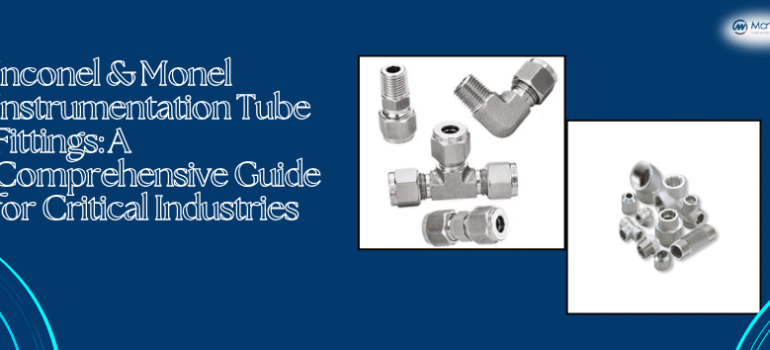
Inconel & Monel Instrumentation Tube Fittings: A Comprehensive Guide for Critical Industries

Introduction: The Backbone of Reliable Fluid and Gas Control

In industries where safety, precision, and durability are non-negotiable, the choice of material for tube fittings becomes critical. From oil refineries to aerospace and marine applications, instrumentation tube fittings ensure leak-proof connections that withstand extreme pressures, temperatures, and corrosive environments. Among the wide range of alloys, Inconel and Monel tube fittings have earned a global reputation for their outstanding performance in aggressive industrial settings.

With global sourcing and complex supply chains, engineers and procurement specialists often face challenges in selecting fittings that meet both international standards and project-specific requirements. This blog explores Inconel and Monel instrumentation tube fittings, their unique properties, technical specifications, industrial applications, and how Mcneil Instruments stands out as a trusted manufacturer, supplier, and exporter in India.

What are Inconel and Monel Instrumentation Tube Fittings?

Inconel Tube Fittings: Inconel is a family of nickel-chromium-based alloys known for their resistance to oxidation and corrosion, even in extreme environments such as jet engines, chemical plants, and marine systems. They maintain structural integrity at elevated temperatures and are commonly used in aerospace and high-temperature energy systems.

Monel Tube Fittings: Monel is primarily a nickel-copper alloy offering exceptional resistance to seawater, hydrofluoric acid, and alkalis. Its toughness and strength at sub-zero and elevated temperatures make it highly suitable for marine, chemical, and oil & gas applications.

Both materials are widely used for instrumentation tube fittings such as ferrule fittings, compression fittings, unions, elbows, tees, and adapters that form the foundation of secure and efficient fluid systems.

Key Features of Inconel & Monel Tube Fittings

  • High resistance to oxidation and corrosion in extreme chemical environments
  • Excellent tensile strength and toughness, even under thermal stress
  • Leak-proof performance with double ferrule and compression designs
  • Compatibility with high-pressure and high-temperature service
  • Available in seamless, forged, and machined forms for diverse applications

Importance of Standards in Instrumentation Tube Fittings

Just as ball valves follow ASTM, ASME, and ISO standards, tube fittings must comply with stringent norms to ensure safety, compatibility, and reliability in global projects.

Why standards matter:

  • Consistency: Assures that fittings match across different systems and suppliers.
  • Safety: Prevents leaks that could cause accidents in critical environments.
  • Global compliance: Ensures acceptance in international projects.
  • Reliability: Guarantees long-term performance in harsh conditions.

Technical Specifications of Inconel & Monel Tube Fittings

SpecificationInconel Tube FittingsMonel Tube Fittings
Standards ComplianceASTM B564, ASME SB564, ISO, DINASTM B366, ASME SB564, ISO, DIN
Size Range1/8″ to 2″ OD1/8″ to 2″ OD
Pressure RatingUp to 6000 psiUp to 5000 psi
Temperature Range-196°C to +982°C-200°C to +550°C
Forms AvailableFerrule fittings, compression fittings, unions, elbows, tees, adaptersFerrule fittings, compression fittings, unions, elbows, tees, adapters

Mechanical Properties

PropertyInconel FittingsMonel Fittings
Tensile Strength≥ 655 MPa≥ 480 MPa
Yield Strength≥ 310 MPa≥ 170 MPa
Hardness≤ 95 HRB≤ 85 HRB
Corrosion ResistanceExceptional in oxidizing and reducing mediaSuperior in marine and alkaline conditions

Common Applications

  • Inconel Tube Fittings:
    • Aerospace engines and exhaust systems
    • Chemical processing plants
    • Power generation (gas turbines, heat exchangers)
    • Oil & gas refining at high pressure and temperature
  • Monel Tube Fittings:
    • Marine engineering and desalination plants
    • Offshore oil drilling platforms
    • Heat exchangers and pump shafts
    • Hydrofluoric acid and alkali handling systems

How to Choose Between Inconel and Monel Tube Fittings

  • For high-temperature applications: Inconel is the preferred choice due to its ability to withstand extreme thermal stress.
  • For marine and seawater applications: Monel stands out with its resistance to chloride-induced corrosion.
  • For cost-sensitive projects: Monel offers a more economical alternative while still delivering robust performance in corrosion-prone environments.
  • For critical aerospace and energy projects: Inconel ensures unmatched reliability at elevated pressures and temperatures.

Global Reach of Mcneil Instruments: Inconel & Monel Tube Fittings

Mcneil Instruments is a globally trusted manufacturer, supplier, and exporter of Inconel and Monel instrumentation tube fittings. Our products are widely used across continents:

  • In Saudi Arabia and UAE, trusted for petrochemical refineries and offshore drilling.
  • In Qatar and Kuwait, exported for chemical plants and desalination projects.
  • In Nigeria and Ghana, supplied for mining and water treatment industries.
  • In the USA (Texas, Chicago), preferred in oil & gas and aerospace sectors.
  • In Brazil, Malaysia, and Singapore, integrated into marine engineering, pulp & paper, and industrial fabrication systems.

Certifications and Testing

Mcneil Instruments ensures every product meets the highest quality benchmarks:

  • Material Test Certificates (EN 10204 3.1/3.2)
  • Hydrostatic and Pneumatic Pressure Testing
  • Non-Destructive Testing (Ultrasonic, Radiography)
  • Compliance with ASTM, ASME, and ISO standards
  • ISO 9001:2015 Certified Facilities

Future Trends in Alloy Tube Fittings

With industries moving toward automation, energy efficiency, and renewable systems, Inconel and Monel tube fittings will continue to dominate in extreme environments. Innovations in machining and surface finishing are expected to enhance their performance and extend lifecycle even further.

Conclusion: Reliable Alloy Tube Fittings for Demanding Applications

Inconel and Monel tube fittings offer unmatched performance in extreme environments, from corrosive seas to high-temperature turbines. By combining international standards with advanced manufacturing, Mcneil Instruments ensures leak-proof, durable, and high-performance fittings trusted by industries worldwide.

As one of the leading Inconel and Monel instrumentation tube fittings manufacturers, suppliers, and exporters in India,  Mcneil Instruments provides engineers and procurement managers with globally certified solutions designed for precision and safety.

Read More

Tube Fittings Manufacturer, Supplier and Exporter in USA

Mcneil Instruments brings to you the best range of tube fittings that are used for connecting runs of in-line, multi-port, and in-line configurations. There are many uses for these tube fittings in vital parts of systems. Hence it is important to use only the best tube fitting made only by the Best Tube Fittings Manufacturers across the USA.

Introduction to Tube Fittings

Tube fittings are connectors used to join two or more pipes or tubes within a piping system. They ensure smooth flow and prevent leaks, making them indispensable in industries like instrumentation, oil and gas, plumbing, and chemical processing. Designed to meet specific application needs, tube fittings are available in a wide range of shapes, sizes, and materials.

Whether you’re assembling a high-pressure pipeline or a low-pressure residential system, selecting the correct tube fitting is critical to achieving a reliable and efficient connection. This blog will serve as your comprehensive guide to tube fittings, providing insights into their types, features, and uses.

What Are Tube Fittings?

Tube fittings are essential components that provide a secure and reliable connection in piping systems. They are designed to:

  • Prevent fluid or gas leaks by creating tight seals.
  • Facilitate connections in straight, angled, or multi-directional pathways.
  • Withstanding high-pressure and high-temperature environments, ensuring durability and performance.

Manufactured from materials like stainless steel, brass, and specialized alloys, tube fittings are built for strength, corrosion resistance, and long-lasting functionality. Their applications range from industrial instrumentation systems to household plumbing, making them versatile tools for engineers and contractors.

Types of Tube Fittings

Understanding the different types of tube fittings is vital for selecting the right one for your system. Here are the top tube fittings you should know:

Tube Fitting TypeDescription
Straight UnionConnects two pipes in a straight line, ensuring precision and reliability in alignment.
Union ElbowJoins pipes at a 90-degree angle, ideal for tight spaces or where direction changes are needed.
Union CrossLinks four pipes in a cross configuration, perfect for creating complex fluid pathways.
Union TeeConnects three pipes in a T-shape, allowing for multiple flow directions.
Reducing UnionConnects pipes of different diameters, facilitating smooth transitions without pressure loss.
Reducing TeeA T-shaped fitting that accommodates pipes of varying sizes, ensuring versatility in connections.
Bulkhead UnionProvides a sealed connection through walls or panels for secure installations in structural setups.
Bulkhead Union ElbowCombines bulkhead functionality with a 90-degree angle, ideal for angled connections through panels.
Connector NPTEnsures a secure and tight connection with National Pipe Threads (NPT), commonly used in industries.
Male Connector NPTFeatures male threads for a secure connection with NPT female threads, commonly used for high-pressure systems.
Male Elbow NPTA 90-degree elbow with male NPT threads on both ends, ideal for making directional changes in piping systems.
Male Bulkhead ConnectorAllows a male-threaded connection through a panel or wall, providing a leak-proof seal for secure installations.
Male Branch TeeConnects a main line with a branch pipe, featuring male threads for secure attachment in systems that require a Y-shape

Each fitting serves a unique purpose, making it essential to choose the right type based on your application requirements.

Materials Used in Tube Fittings

The choice of material impacts the performance and durability of tube fittings. Mcneil Instruments manufactures fittings using:

  1. Stainless Steel: Known for its corrosion resistance, this material is ideal for high-pressure and high-temperature applications. It is commonly used in industries like petrochemical, marine, and instrumentation.
  2. Brass: Brass fittings are highly durable and resistant to wear and tear, making them suitable for low-pressure plumbing and water systems.
  3. Alloys: Alloy-based fittings provide strength and stability in extreme environments. They are often used in aerospace and chemical processing industries.

These materials ensure that Mcneil Instruments’ fittings meet international standards for durability and reliability.

Specifications and Characteristics

Key Features of Tube Fittings:

Tube Fitting TypeMaterialPressure RatingTemperature RangeKey Characteristics
Straight UnionStainless Steel, Brass, AlloysHigh-pressure up to 6000 PSI-100°C to 400°CEnsures precise alignment and reliable straight connections between two pipes.
Union ElbowStainless Steel, Brass, AlloysModerate to High Pressure-100°C to 350°CProvides a secure 90-degree connection, ideal for tight spaces or directional changes.
Union CrossStainless Steel, Brass, AlloysHigh-pressure systems-100°C to 400°CLinks four pipes securely, enabling complex and multidirectional flow pathways.
Union TeeStainless Steel, Brass, AlloysModerate to High Pressure-100°C to 350°CFacilitates T-shaped connections, allowing branching flow directions.
Reducing UnionStainless Steel, Brass, AlloysHigh-pressure systems-100°C to 400°CSeamlessly connects pipes of varying diameters for smooth transitions.
Reducing TeeStainless Steel, Brass, AlloysModerate to High Pressure-100°C to 350°CAccommodates connections of different pipe sizes in T-shaped configurations.
Bulkhead UnionStainless Steel, Brass, AlloysHigh-pressure systems-100°C to 400°CProvides a leak-proof connection through walls or panels, ensuring durability.
Bulkhead Union ElbowStainless Steel, Brass, AlloysModerate to High Pressure-100°C to 350°CCombines bulkhead functionality with a 90-degree angle for angled connections.
Connector NPTStainless Steel, Brass, AlloysHigh-pressure systems-100°C to 400°COffers secure, threaded connections using National Pipe Thread (NPT) standards.
Male Run TeeStainless Steel, Brass, AlloysHigh-pressure systems-100°C to 400°CEnsures efficient distribution of flow with male-threaded T-shaped connections.
Key Features:
  1. Material Options: Stainless steel for corrosion resistance, brass for durability in low-pressure systems, and alloys for extreme conditions.
  2. Pressure Handling: Suitable for applications ranging from moderate to high pressures.
  3. Temperature Tolerance: Designed to perform under varying temperature conditions without compromising integrity.
  4. ISO Certified: Adherence to international quality standards, ensuring reliability and safety.

Tube Fitting Sizes and Threads

Tube fittings come in various sizes to accommodate diverse piping requirements. Common sizes include small diameters for instrumentation systems and larger sizes for industrial pipelines.

Tube Fitting TypeAvailable Sizes (OD)Thread TypeThread SizesKey Applications
Straight Union1/8” to 2”NPT, BSP, UNF1/8” to 2”Connects pipes of the same size in a straight line for uninterrupted flow.
Union Elbow1/4” to 1-1/2”NPT, BSPT1/8” to 1-1/2”Provides 90-degree directional changes, suitable for compact piping systems.
Union Cross1/8” to 1”NPT, BSP1/8” to 1”Multi-directional flow management in complex piping systems.
Union Tee1/4” to 2”NPT, BSP1/8” to 2”Diverts flow into T-shaped configurations for branching pipelines.
Reducing Union1/8” to 1” (Reducer Ends)NPT, BSP1/8” to 1”Connects pipes with varying diameters for efficient transitions.
Reducing Tee1/4” to 1” (Reducer Ends)NPT, BSP1/4” to 1”Joins pipes of different sizes in T-shaped configurations for diverse flow paths.
Bulkhead Union1/8” to 1-1/2”NPT, BSP1/8” to 1-1/2”Passes securely through walls or panels, maintaining flow integrity.
Bulkhead Union Elbow1/4” to 1”NPT, BSPT1/8” to 1”Combines wall-mount capability with angled connections for space-efficient piping.
Connector NPT1/8” to 2”NPT1/8” to 2”Provides reliable threaded connections adhering to NPT standards.
Male Connector NPT1/4” to 2”NPT1/8” to 2”Male-threaded connectors for high-strength, secure connections.
Male Elbow NPT1/4” to 1-1/2”NPT1/8” to 1-1/2”Provides 90-degree changes in direction with male NPT threads.
Male Bulkhead Connector1/4” to 1”NPT, BSP1/8” to 1”Male-threaded bulkhead connectors for secure wall or panel connections.
Male Branch Tee1/4” to 1-1/2”NPT, BSP1/8” to 1-1/2”Male-threaded T-shaped connectors, used for branch pipelines in systems.

Key Features of Tube Fitting Sizes and Threads:

  1. Size Variability: Accommodates a wide range of outer diameters (OD) for diverse piping needs.
  2. Thread Compatibility: Includes NPT (National Pipe Thread), BSP (British Standard Pipe), and BSPT (British Standard Pipe Tapered) standards.
  3. Custom Solutions: Available in reducing and standard configurations to meet specific project requirements.
  4. Leak-Proof Connections: Threads are designed for secure and reliable performance under pressure.

Mcneil Instruments: Global Exporter of Approved Tube Fittings – Region-Wise Coverage

I. Middle East: Comprehensive Supply of Tube Fittings
Region: UAE, Oman, Kuwait, Qatar, Bahrain, Saudi Arabia
Industries Served: Oil & Gas, Petrochemicals, Construction, Marine

At Mcneil Instruments, a top tube fittings global exporter, we provide high-quality tube fittings that adhere to both regional and international standards, ensuring durability and performance in high-demand industries. We are trusted globally for our ability to support critical infrastructure and industrial projects with reliable and compliant tube fittings.

  • UAE: Delivering premium tube fittings for key sectors like oil refineries, offshore drilling, and energy projects.
  • Oman: Supplying Petroleum Development Oman (PDO) and supporting major oil exploration and infrastructure developments with top-quality fittings.
  • Kuwait: Meeting the rigorous demands of Kuwait National Petroleum Company (KNPC) and Kuwait Oil Company (KOC) with highly durable tube fittings.
  • Qatar: Supplying reliable tube fittings for LNG processing facilities, petrochemical plants, and key industries, ensuring performance under demanding conditions.
  • Bahrain: Providing tube fittings for marine, energy, and manufacturing industries, maintaining high standards for every application.
  • Saudi Arabia: Complying with Saudi Aramco’s stringent standards to supply tube fittings for large-scale pipeline projects and petrochemical industries.

II. North America: High-Grade Tube Fittings for Canadian Industries
Region: Canada
Industries Served: Mining, Energy, Construction, Water Treatment

As a top tube fittings supplier in the North America region, Mcneil Instruments provides certified tube fittings that meet Canadian industry standards for pressure resistance and corrosion prevention. Our products are specifically designed for the harsh conditions of the oil sands, natural gas extraction, and other industrial sectors in Canada.

  • Product Standards: Our tube fittings are pressure-resistant, corrosion-proof, and comply with Canadian regulations to ensure safe and efficient operations.
  • Application Focus: We support critical infrastructure and industrial projects in Canada, including oil sands extraction, natural gas operations, and large-scale construction initiatives.

Conclusion

Tube fittings are indispensable for creating efficient and reliable piping systems. By selecting the right type of fitting, material, and configuration, you can ensure system integrity and performance across a wide range of applications. With its ISO-certified fittings, Mcneil Instruments offers solutions that combine quality, durability, and precision.

Tube fittings are an essential part of piping systems. They make sure that all tubes and pipes stay in place without any disturbances. Hence it is important to get the right tube fittings made by the Best Instrumentation Tube Fittings Manufacturers like Mcneil Instruments.

Call to Action

Looking for high-quality tube fittings to enhance your piping system? Trust Mcneil Instruments for industry-leading solutions. Contact us today to explore our range of fittings and find the perfect match for your needs!

Read More

Tube Fittings Manufacturer, Supplier and Exporter in Canada

Mcneil Instruments brings to you the best range of tube fittings that are used for connecting runs of in-line, multi-port, and in-line configurations. There are many uses for these tube fittings in vital parts of systems. Hence it is important to use only the best tube fitting made only by the Best Tube Fittings Manufacturers across Canada.

Introduction to Tube Fittings

Tube fittings are connectors used to join two or more pipes or tubes within a piping system. They ensure smooth flow and prevent leaks, making them indispensable in industries like instrumentation, oil and gas, plumbing, and chemical processing. Designed to meet specific application needs, tube fittings are available in a wide range of shapes, sizes, and materials.

Whether you’re assembling a high-pressure pipeline or a low-pressure residential system, selecting the correct tube fitting is critical to achieving a reliable and efficient connection. This blog will serve as your comprehensive guide to tube fittings, providing insights into their types, features, and uses.

What Are Tube Fittings?

Tube fittings are essential components that provide a secure and reliable connection in piping systems. They are designed to:

  • Prevent fluid or gas leaks by creating tight seals.
  • Facilitate connections in straight, angled, or multi-directional pathways.
  • Withstanding high-pressure and high-temperature environments, ensuring durability and performance.

Manufactured from materials like stainless steel, brass, and specialized alloys, tube fittings are built for strength, corrosion resistance, and long-lasting functionality. Their applications range from industrial instrumentation systems to household plumbing, making them versatile tools for engineers and contractors.

Types of Tube Fittings

Understanding the different types of tube fittings is vital for selecting the right one for your system. Here are the top tube fittings you should know:

Tube Fitting TypeDescription
Straight UnionConnects two pipes in a straight line, ensuring precision and reliability in alignment.
Union ElbowJoins pipes at a 90-degree angle, ideal for tight spaces or where direction changes are needed.
Union CrossLinks four pipes in a cross configuration, perfect for creating complex fluid pathways.
Union TeeConnects three pipes in a T-shape, allowing for multiple flow directions.
Reducing UnionConnects pipes of different diameters, facilitating smooth transitions without pressure loss.
Reducing TeeA T-shaped fitting that accommodates pipes of varying sizes, ensuring versatility in connections.
Bulkhead UnionProvides a sealed connection through walls or panels for secure installations in structural setups.
Bulkhead Union ElbowCombines bulkhead functionality with a 90-degree angle, ideal for angled connections through panels.
Connector NPTEnsures a secure and tight connection with National Pipe Threads (NPT), commonly used in industries.
Male Connector NPTFeatures male threads for a secure connection with NPT female threads, commonly used for high-pressure systems.
Male Elbow NPTA 90-degree elbow with male NPT threads on both ends, ideal for making directional changes in piping systems.
Male Bulkhead ConnectorAllows a male-threaded connection through a panel or wall, providing a leak-proof seal for secure installations.
Male Branch TeeConnects a main line with a branch pipe, featuring male threads for secure attachment in systems that require a Y-shape

Each fitting serves a unique purpose, making it essential to choose the right type based on your application requirements.

Materials Used in Tube Fittings

The choice of material impacts the performance and durability of tube fittings. Mcneil Instruments manufactures fittings using:

  1. Stainless Steel: Known for its corrosion resistance, this material is ideal for high-pressure and high-temperature applications. It is commonly used in industries like petrochemical, marine, and instrumentation.
  2. Brass: Brass fittings are highly durable and resistant to wear and tear, making them suitable for low-pressure plumbing and water systems.
  3. Alloys: Alloy-based fittings provide strength and stability in extreme environments. They are often used in aerospace and chemical processing industries.

These materials ensure that Mcneil Instruments’ fittings meet international standards for durability and reliability.

Specifications and Characteristics

Key Features of Tube Fittings:

Tube Fitting TypeMaterialPressure RatingTemperature RangeKey Characteristics
Straight UnionStainless Steel, Brass, AlloysHigh-pressure up to 6000 PSI-100°C to 400°CEnsures precise alignment and reliable straight connections between two pipes.
Union ElbowStainless Steel, Brass, AlloysModerate to High Pressure-100°C to 350°CProvides a secure 90-degree connection, ideal for tight spaces or directional changes.
Union CrossStainless Steel, Brass, AlloysHigh-pressure systems-100°C to 400°CLinks four pipes securely, enabling complex and multidirectional flow pathways.
Union TeeStainless Steel, Brass, AlloysModerate to High Pressure-100°C to 350°CFacilitates T-shaped connections, allowing branching flow directions.
Reducing UnionStainless Steel, Brass, AlloysHigh-pressure systems-100°C to 400°CSeamlessly connects pipes of varying diameters for smooth transitions.
Reducing TeeStainless Steel, Brass, AlloysModerate to High Pressure-100°C to 350°CAccommodates connections of different pipe sizes in T-shaped configurations.
Bulkhead UnionStainless Steel, Brass, AlloysHigh-pressure systems-100°C to 400°CProvides a leak-proof connection through walls or panels, ensuring durability.
Bulkhead Union ElbowStainless Steel, Brass, AlloysModerate to High Pressure-100°C to 350°CCombines bulkhead functionality with a 90-degree angle for angled connections.
Connector NPTStainless Steel, Brass, AlloysHigh-pressure systems-100°C to 400°COffers secure, threaded connections using National Pipe Thread (NPT) standards.
Male Run TeeStainless Steel, Brass, AlloysHigh-pressure systems-100°C to 400°CEnsures efficient distribution of flow with male-threaded T-shaped connections.

Key Features:

  1. Material Options: Stainless steel for corrosion resistance, brass for durability in low-pressure systems, and alloys for extreme conditions.
  2. Pressure Handling: Suitable for applications ranging from moderate to high pressures.
  3. Temperature Tolerance: Designed to perform under varying temperature conditions without compromising integrity.
  4. ISO Certified: Adherence to international quality standards, ensuring reliability and safety.

Tube Fitting Sizes and Threads

Tube fittings come in various sizes to accommodate diverse piping requirements. Common sizes include small diameters for instrumentation systems and larger sizes for industrial pipelines.

Tube Fitting TypeAvailable Sizes (OD)Thread TypeThread SizesKey Applications
Straight Union1/8” to 2”NPT, BSP, UNF1/8” to 2”Connects pipes of the same size in a straight line for uninterrupted flow.
Union Elbow1/4” to 1-1/2”NPT, BSPT1/8” to 1-1/2”Provides 90-degree directional changes, suitable for compact piping systems.
Union Cross1/8” to 1”NPT, BSP1/8” to 1”Multi-directional flow management in complex piping systems.
Union Tee1/4” to 2”NPT, BSP1/8” to 2”Diverts flow into T-shaped configurations for branching pipelines.
Reducing Union1/8” to 1” (Reducer Ends)NPT, BSP1/8” to 1”Connects pipes with varying diameters for efficient transitions.
Reducing Tee1/4” to 1” (Reducer Ends)NPT, BSP1/4” to 1”Joins pipes of different sizes in T-shaped configurations for diverse flow paths.
Bulkhead Union1/8” to 1-1/2”NPT, BSP1/8” to 1-1/2”Passes securely through walls or panels, maintaining flow integrity.
Bulkhead Union Elbow1/4” to 1”NPT, BSPT1/8” to 1”Combines wall-mount capability with angled connections for space-efficient piping.
Connector NPT1/8” to 2”NPT1/8” to 2”Provides reliable threaded connections adhering to NPT standards.
Male Connector NPT1/4” to 2”NPT1/8” to 2”Male-threaded connectors for high-strength, secure connections.
Male Elbow NPT1/4” to 1-1/2”NPT1/8” to 1-1/2”Provides 90-degree changes in direction with male NPT threads.
Male Bulkhead Connector1/4” to 1”NPT, BSP1/8” to 1”Male-threaded bulkhead connectors for secure wall or panel connections.
Male Branch Tee1/4” to 1-1/2”NPT, BSP1/8” to 1-1/2”Male-threaded T-shaped connectors, used for branch pipelines in systems.

Key Features of Tube Fitting Sizes and Threads:

  1. Size Variability: Accommodates a wide range of outer diameters (OD) for diverse piping needs.
  2. Thread Compatibility: Includes NPT (National Pipe Thread), BSP (British Standard Pipe), and BSPT (British Standard Pipe Tapered) standards.
  3. Custom Solutions: Available in reducing and standard configurations to meet specific project requirements.
  4. Leak-Proof Connections: Threads are designed for secure and reliable performance under pressure.

Mcneil Instruments: Global Exporter of Approved Tube Fittings – Region-Wise Coverage

I. Middle East: Comprehensive Supply of Tube Fittings
Region: UAE, Oman, Kuwait, Qatar, Bahrain, Saudi Arabia
Industries Served: Oil & Gas, Petrochemicals, Construction, Marine

At Mcneil Instruments, a top tube fittings global exporter, we provide high-quality tube fittings that adhere to both regional and international standards, ensuring durability and performance in high-demand industries. We are trusted globally for our ability to support critical infrastructure and industrial projects with reliable and compliant tube fittings.

  • UAE: Delivering premium tube fittings for key sectors like oil refineries, offshore drilling, and energy projects.
  • Oman: Supplying Petroleum Development Oman (PDO) and supporting major oil exploration and infrastructure developments with top-quality fittings.
  • Kuwait: Meeting the rigorous demands of Kuwait National Petroleum Company (KNPC) and Kuwait Oil Company (KOC) with highly durable tube fittings.
  • Qatar: Supplying reliable tube fittings for LNG processing facilities, petrochemical plants, and key industries, ensuring performance under demanding conditions.
  • Bahrain: Providing tube fittings for marine, energy, and manufacturing industries, maintaining high standards for every application.
  • Saudi Arabia: Complying with Saudi Aramco’s stringent standards to supply tube fittings for large-scale pipeline projects and petrochemical industries.

II. North America: High-Grade Tube Fittings for Canadian Industries
Region: Canada
Industries Served: Mining, Energy, Construction, Water Treatment

As a top tube fittings supplier in the North America region, Mcneil Instruments provides certified tube fittings that meet Canadian industry standards for pressure resistance and corrosion prevention. Our products are specifically designed for the harsh conditions of the oil sands, natural gas extraction, and other industrial sectors in Canada.

  • Product Standards: Our tube fittings are pressure-resistant, corrosion-proof, and comply with Canadian regulations to ensure safe and efficient operations.
  • Application Focus: We support critical infrastructure and industrial projects in Canada, including oil sands extraction, natural gas operations, and large-scale construction initiatives.

Conclusion

Tube fittings are indispensable for creating efficient and reliable piping systems. By selecting the right type of fitting, material, and configuration, you can ensure system integrity and performance across a wide range of applications. With its ISO-certified fittings, Mcneil Instruments offers solutions that combine quality, durability, and precision.

Tube fittings are an essential part of piping systems. They make sure that all tubes and pipes stay in place without any disturbances. Hence it is important to get the right tube fittings made by the Best Instrumentation Tube Fittings Manufacturers like Mcneil Instruments.

Call to Action

Looking for high-quality tube fittings to enhance your piping system? Trust Mcneil Instruments for industry-leading solutions. Contact us today to explore our range of fittings and find the perfect match for your needs!

Read More

Tube Fittings Manufacturer, Supplier and Exporter in Bahrain

Mcneil Instruments brings to you the best range of tube fittings that are used for connecting runs of in-line, multi-port, and in-line configurations. There are many uses for these tube fittings in vital parts of systems. Hence it is important to use only the best tube fitting made only by the Best Tube Fittings Manufacturers across Bahrain.

Introduction to Tube Fittings

Tube fittings are connectors used to join two or more pipes or tubes within a piping system. They ensure smooth flow and prevent leaks, making them indispensable in industries like instrumentation, oil and gas, plumbing, and chemical processing. Designed to meet specific application needs, tube fittings are available in a wide range of shapes, sizes, and materials.

Whether you’re assembling a high-pressure pipeline or a low-pressure residential system, selecting the correct tube fitting is critical to achieving a reliable and efficient connection. This blog will serve as your comprehensive guide to tube fittings, providing insights into their types, features, and uses.

What Are Tube Fittings?

Tube fittings are essential components that provide a secure and reliable connection in piping systems. They are designed to:

  • Prevent fluid or gas leaks by creating tight seals.
  • Facilitate connections in straight, angled, or multi-directional pathways.
  • Withstanding high-pressure and high-temperature environments, ensuring durability and performance.

Manufactured from materials like stainless steel, brass, and specialized alloys, tube fittings are built for strength, corrosion resistance, and long-lasting functionality. Their applications range from industrial instrumentation systems to household plumbing, making them versatile tools for engineers and contractors.

Types of Tube Fittings

Understanding the different types of tube fittings is vital for selecting the right one for your system. Here are the top tube fittings you should know:

Tube Fitting TypeDescription
Straight UnionConnects two pipes in a straight line, ensuring precision and reliability in alignment.
Union ElbowJoins pipes at a 90-degree angle, ideal for tight spaces or where direction changes are needed.
Union CrossLinks four pipes in a cross configuration, perfect for creating complex fluid pathways.
Union TeeConnects three pipes in a T-shape, allowing for multiple flow directions.
Reducing UnionConnects pipes of different diameters, facilitating smooth transitions without pressure loss.
Reducing TeeA T-shaped fitting that accommodates pipes of varying sizes, ensuring versatility in connections.
Bulkhead UnionProvides a sealed connection through walls or panels for secure installations in structural setups.
Bulkhead Union ElbowCombines bulkhead functionality with a 90-degree angle, ideal for angled connections through panels.
Connector NPTEnsures a secure and tight connection with National Pipe Threads (NPT), commonly used in industries.
Male Connector NPTFeatures male threads for a secure connection with NPT female threads, commonly used for high-pressure systems.
Male Elbow NPTA 90-degree elbow with male NPT threads on both ends, ideal for making directional changes in piping systems.
Male Bulkhead ConnectorAllows a male-threaded connection through a panel or wall, providing a leak-proof seal for secure installations.
Male Branch TeeConnects a main line with a branch pipe, featuring male threads for secure attachment in systems that require a Y-shape

Each fitting serves a unique purpose, making it essential to choose the right type based on your application requirements.

Materials Used in Tube Fittings

The choice of material impacts the performance and durability of tube fittings. Mcneil Instruments manufactures fittings using:

  1. Stainless Steel: Known for its corrosion resistance, this material is ideal for high-pressure and high-temperature applications. It is commonly used in industries like petrochemical, marine, and instrumentation.
  2. Brass: Brass fittings are highly durable and resistant to wear and tear, making them suitable for low-pressure plumbing and water systems.
  3. Alloys: Alloy-based fittings provide strength and stability in extreme environments. They are often used in aerospace and chemical processing industries.

These materials ensure that Mcneil Instruments’ fittings meet international standards for durability and reliability.

Specifications and Characteristics

Key Features of Tube Fittings:

Tube Fitting TypeMaterialPressure RatingTemperature RangeKey Characteristics
Straight UnionStainless Steel, Brass, AlloysHigh-pressure up to 6000 PSI-100°C to 400°CEnsures precise alignment and reliable straight connections between two pipes.
Union ElbowStainless Steel, Brass, AlloysModerate to High Pressure-100°C to 350°CProvides a secure 90-degree connection, ideal for tight spaces or directional changes.
Union CrossStainless Steel, Brass, AlloysHigh-pressure systems-100°C to 400°CLinks four pipes securely, enabling complex and multidirectional flow pathways.
Union TeeStainless Steel, Brass, AlloysModerate to High Pressure-100°C to 350°CFacilitates T-shaped connections, allowing branching flow directions.
Reducing UnionStainless Steel, Brass, AlloysHigh-pressure systems-100°C to 400°CSeamlessly connects pipes of varying diameters for smooth transitions.
Reducing TeeStainless Steel, Brass, AlloysModerate to High Pressure-100°C to 350°CAccommodates connections of different pipe sizes in T-shaped configurations.
Bulkhead UnionStainless Steel, Brass, AlloysHigh-pressure systems-100°C to 400°CProvides a leak-proof connection through walls or panels, ensuring durability.
Bulkhead Union ElbowStainless Steel, Brass, AlloysModerate to High Pressure-100°C to 350°CCombines bulkhead functionality with a 90-degree angle for angled connections.
Connector NPTStainless Steel, Brass, AlloysHigh-pressure systems-100°C to 400°COffers secure, threaded connections using National Pipe Thread (NPT) standards.
Male Run TeeStainless Steel, Brass, AlloysHigh-pressure systems-100°C to 400°CEnsures efficient distribution of flow with male-threaded T-shaped connections.

Key Features:

  1. Material Options: Stainless steel for corrosion resistance, brass for durability in low-pressure systems, and alloys for extreme conditions.
  2. Pressure Handling: Suitable for applications ranging from moderate to high pressures.
  3. Temperature Tolerance: Designed to perform under varying temperature conditions without compromising integrity.
  4. ISO Certified: Adherence to international quality standards, ensuring reliability and safety.

Tube Fitting Sizes and Threads

Tube fittings come in various sizes to accommodate diverse piping requirements. Common sizes include small diameters for instrumentation systems and larger sizes for industrial pipelines.

Tube Fitting TypeAvailable Sizes (OD)Thread TypeThread SizesKey Applications
Straight Union1/8” to 2”NPT, BSP, UNF1/8” to 2”Connects pipes of the same size in a straight line for uninterrupted flow.
Union Elbow1/4” to 1-1/2”NPT, BSPT1/8” to 1-1/2”Provides 90-degree directional changes, suitable for compact piping systems.
Union Cross1/8” to 1”NPT, BSP1/8” to 1”Multi-directional flow management in complex piping systems.
Union Tee1/4” to 2”NPT, BSP1/8” to 2”Diverts flow into T-shaped configurations for branching pipelines.
Reducing Union1/8” to 1” (Reducer Ends)NPT, BSP1/8” to 1”Connects pipes with varying diameters for efficient transitions.
Reducing Tee1/4” to 1” (Reducer Ends)NPT, BSP1/4” to 1”Joins pipes of different sizes in T-shaped configurations for diverse flow paths.
Bulkhead Union1/8” to 1-1/2”NPT, BSP1/8” to 1-1/2”Passes securely through walls or panels, maintaining flow integrity.
Bulkhead Union Elbow1/4” to 1”NPT, BSPT1/8” to 1”Combines wall-mount capability with angled connections for space-efficient piping.
Connector NPT1/8” to 2”NPT1/8” to 2”Provides reliable threaded connections adhering to NPT standards.
Male Connector NPT1/4” to 2”NPT1/8” to 2”Male-threaded connectors for high-strength, secure connections.
Male Elbow NPT1/4” to 1-1/2”NPT1/8” to 1-1/2”Provides 90-degree changes in direction with male NPT threads.
Male Bulkhead Connector1/4” to 1”NPT, BSP1/8” to 1”Male-threaded bulkhead connectors for secure wall or panel connections.
Male Branch Tee1/4” to 1-1/2”NPT, BSP1/8” to 1-1/2”Male-threaded T-shaped connectors, used for branch pipelines in systems.

Key Features of Tube Fitting Sizes and Threads:

  1. Size Variability: Accommodates a wide range of outer diameters (OD) for diverse piping needs.
  2. Thread Compatibility: Includes NPT (National Pipe Thread), BSP (British Standard Pipe), and BSPT (British Standard Pipe Tapered) standards.
  3. Custom Solutions: Available in reducing and standard configurations to meet specific project requirements.
  4. Leak-Proof Connections: Threads are designed for secure and reliable performance under pressure.

Mcneil Instruments: Global Exporter of Approved Tube Fittings – Region-Wise Coverage

I. Middle East: Comprehensive Supply of Tube Fittings
Region: UAE, Oman, Kuwait, Qatar, Bahrain, Saudi Arabia
Industries Served: Oil & Gas, Petrochemicals, Construction, Marine

At Mcneil Instruments, a top tube fittings global exporter, we provide high-quality tube fittings that adhere to both regional and international standards, ensuring durability and performance in high-demand industries. We are trusted globally for our ability to support critical infrastructure and industrial projects with reliable and compliant tube fittings.

  • UAE: Delivering premium tube fittings for key sectors like oil refineries, offshore drilling, and energy projects.
  • Oman: Supplying Petroleum Development Oman (PDO) and supporting major oil exploration and infrastructure developments with top-quality fittings.
  • Kuwait: Meeting the rigorous demands of Kuwait National Petroleum Company (KNPC) and Kuwait Oil Company (KOC) with highly durable tube fittings.
  • Qatar: Supplying reliable tube fittings for LNG processing facilities, petrochemical plants, and key industries, ensuring performance under demanding conditions.
  • Bahrain: Providing tube fittings for marine, energy, and manufacturing industries, maintaining high standards for every application.
  • Saudi Arabia: Complying with Saudi Aramco’s stringent standards to supply tube fittings for large-scale pipeline projects and petrochemical industries.

II. North America: High-Grade Tube Fittings for Canadian Industries
Region: Canada
Industries Served: Mining, Energy, Construction, Water Treatment

As a top tube fittings supplier in the North America region, Mcneil Instruments provides certified tube fittings that meet Canadian industry standards for pressure resistance and corrosion prevention. Our products are specifically designed for the harsh conditions of the oil sands, natural gas extraction, and other industrial sectors in Canada.

  • Product Standards: Our tube fittings are pressure-resistant, corrosion-proof, and comply with Canadian regulations to ensure safe and efficient operations.
  • Application Focus: We support critical infrastructure and industrial projects in Canada, including oil sands extraction, natural gas operations, and large-scale construction initiatives.

Conclusion

Tube fittings are indispensable for creating efficient and reliable piping systems. By selecting the right type of fitting, material, and configuration, you can ensure system integrity and performance across a wide range of applications. With its ISO-certified fittings, Mcneil Instruments offers solutions that combine quality, durability, and precision.

Tube fittings are an essential part of piping systems. They make sure that all tubes and pipes stay in place without any disturbances. Hence it is important to get the right tube fittings made by the Best Instrumentation Tube Fittings Manufacturers like Mcneil Instruments.

Call to Action

Looking for high-quality tube fittings to enhance your piping system? Trust Mcneil Instruments for industry-leading solutions. Contact us today to explore our range of fittings and find the perfect match for your needs!

Read More

Tube Fittings Manufacturer, Supplier and Exporter in Qatar

Mcneil Instruments brings to you the best range of tube fittings that are used for connecting runs of in-line, multi-port, and in-line configurations. There are many uses for these tube fittings in vital parts of systems. Hence it is important to use only the best tube fitting made only by the Best Tube Fittings Manufacturers across Qatar.

Introduction to Tube Fittings

Tube fittings are connectors used to join two or more pipes or tubes within a piping system. They ensure smooth flow and prevent leaks, making them indispensable in industries like instrumentation, oil and gas, plumbing, and chemical processing. Designed to meet specific application needs, tube fittings are available in a wide range of shapes, sizes, and materials.

Whether you’re assembling a high-pressure pipeline or a low-pressure residential system, selecting the correct tube fitting is critical to achieving a reliable and efficient connection. This blog will serve as your comprehensive guide to tube fittings, providing insights into their types, features, and uses.

What Are Tube Fittings?

Tube fittings are essential components that provide a secure and reliable connection in piping systems. They are designed to:

  • Prevent fluid or gas leaks by creating tight seals.
  • Facilitate connections in straight, angled, or multi-directional pathways.
  • Withstanding high-pressure and high-temperature environments, ensuring durability and performance.

Manufactured from materials like stainless steel, brass, and specialized alloys, tube fittings are built for strength, corrosion resistance, and long-lasting functionality. Their applications range from industrial instrumentation systems to household plumbing, making them versatile tools for engineers and contractors.

Types of Tube Fittings

Understanding the different types of tube fittings is vital for selecting the right one for your system. Here are the top tube fittings you should know:

Tube Fitting TypeDescription
Straight UnionConnects two pipes in a straight line, ensuring precision and reliability in alignment.
Union ElbowJoins pipes at a 90-degree angle, ideal for tight spaces or where direction changes are needed.
Union CrossLinks four pipes in a cross configuration, perfect for creating complex fluid pathways.
Union TeeConnects three pipes in a T-shape, allowing for multiple flow directions.
Reducing UnionConnects pipes of different diameters, facilitating smooth transitions without pressure loss.
Reducing TeeA T-shaped fitting that accommodates pipes of varying sizes, ensuring versatility in connections.
Bulkhead UnionProvides a sealed connection through walls or panels for secure installations in structural setups.
Bulkhead Union ElbowCombines bulkhead functionality with a 90-degree angle, ideal for angled connections through panels.
Connector NPTEnsures a secure and tight connection with National Pipe Threads (NPT), commonly used in industries.
Male Connector NPTFeatures male threads for a secure connection with NPT female threads, commonly used for high-pressure systems.
Male Elbow NPTA 90-degree elbow with male NPT threads on both ends, ideal for making directional changes in piping systems.
Male Bulkhead ConnectorAllows a male-threaded connection through a panel or wall, providing a leak-proof seal for secure installations.
Male Branch TeeConnects a main line with a branch pipe, featuring male threads for secure attachment in systems that require a Y-shape

Each fitting serves a unique purpose, making it essential to choose the right type based on your application requirements.

Materials Used in Tube Fittings

The choice of material impacts the performance and durability of tube fittings. Mcneil Instruments manufactures fittings using:

  1. Stainless Steel: Known for its corrosion resistance, this material is ideal for high-pressure and high-temperature applications. It is commonly used in industries like petrochemical, marine, and instrumentation.
  2. Brass: Brass fittings are highly durable and resistant to wear and tear, making them suitable for low-pressure plumbing and water systems.
  3. Alloys: Alloy-based fittings provide strength and stability in extreme environments. They are often used in aerospace and chemical processing industries.

These materials ensure that Mcneil Instruments’ fittings meet international standards for durability and reliability.

Specifications and Characteristics

Key Features of Tube Fittings:

Tube Fitting TypeMaterialPressure RatingTemperature RangeKey Characteristics
Straight UnionStainless Steel, Brass, AlloysHigh-pressure up to 6000 PSI-100°C to 400°CEnsures precise alignment and reliable straight connections between two pipes.
Union ElbowStainless Steel, Brass, AlloysModerate to High Pressure-100°C to 350°CProvides a secure 90-degree connection, ideal for tight spaces or directional changes.
Union CrossStainless Steel, Brass, AlloysHigh-pressure systems-100°C to 400°CLinks four pipes securely, enabling complex and multidirectional flow pathways.
Union TeeStainless Steel, Brass, AlloysModerate to High Pressure-100°C to 350°CFacilitates T-shaped connections, allowing branching flow directions.
Reducing UnionStainless Steel, Brass, AlloysHigh-pressure systems-100°C to 400°CSeamlessly connects pipes of varying diameters for smooth transitions.
Reducing TeeStainless Steel, Brass, AlloysModerate to High Pressure-100°C to 350°CAccommodates connections of different pipe sizes in T-shaped configurations.
Bulkhead UnionStainless Steel, Brass, AlloysHigh-pressure systems-100°C to 400°CProvides a leak-proof connection through walls or panels, ensuring durability.
Bulkhead Union ElbowStainless Steel, Brass, AlloysModerate to High Pressure-100°C to 350°CCombines bulkhead functionality with a 90-degree angle for angled connections.
Connector NPTStainless Steel, Brass, AlloysHigh-pressure systems-100°C to 400°COffers secure, threaded connections using National Pipe Thread (NPT) standards.
Male Run TeeStainless Steel, Brass, AlloysHigh-pressure systems-100°C to 400°CEnsures efficient distribution of flow with male-threaded T-shaped connections.

Key Features:

  1. Material Options: Stainless steel for corrosion resistance, brass for durability in low-pressure systems, and alloys for extreme conditions.
  2. Pressure Handling: Suitable for applications ranging from moderate to high pressures.
  3. Temperature Tolerance: Designed to perform under varying temperature conditions without compromising integrity.
  4. ISO Certified: Adherence to international quality standards, ensuring reliability and safety.

Tube Fitting Sizes and Threads

Tube fittings come in various sizes to accommodate diverse piping requirements. Common sizes include small diameters for instrumentation systems and larger sizes for industrial pipelines.

Tube Fitting TypeAvailable Sizes (OD)Thread TypeThread SizesKey Applications
Straight Union1/8” to 2”NPT, BSP, UNF1/8” to 2”Connects pipes of the same size in a straight line for uninterrupted flow.
Union Elbow1/4” to 1-1/2”NPT, BSPT1/8” to 1-1/2”Provides 90-degree directional changes, suitable for compact piping systems.
Union Cross1/8” to 1”NPT, BSP1/8” to 1”Multi-directional flow management in complex piping systems.
Union Tee1/4” to 2”NPT, BSP1/8” to 2”Diverts flow into T-shaped configurations for branching pipelines.
Reducing Union1/8” to 1” (Reducer Ends)NPT, BSP1/8” to 1”Connects pipes with varying diameters for efficient transitions.
Reducing Tee1/4” to 1” (Reducer Ends)NPT, BSP1/4” to 1”Joins pipes of different sizes in T-shaped configurations for diverse flow paths.
Bulkhead Union1/8” to 1-1/2”NPT, BSP1/8” to 1-1/2”Passes securely through walls or panels, maintaining flow integrity.
Bulkhead Union Elbow1/4” to 1”NPT, BSPT1/8” to 1”Combines wall-mount capability with angled connections for space-efficient piping.
Connector NPT1/8” to 2”NPT1/8” to 2”Provides reliable threaded connections adhering to NPT standards.
Male Connector NPT1/4” to 2”NPT1/8” to 2”Male-threaded connectors for high-strength, secure connections.
Male Elbow NPT1/4” to 1-1/2”NPT1/8” to 1-1/2”Provides 90-degree changes in direction with male NPT threads.
Male Bulkhead Connector1/4” to 1”NPT, BSP1/8” to 1”Male-threaded bulkhead connectors for secure wall or panel connections.
Male Branch Tee1/4” to 1-1/2”NPT, BSP1/8” to 1-1/2”Male-threaded T-shaped connectors, used for branch pipelines in systems.

Key Features of Tube Fitting Sizes and Threads:

  1. Size Variability: Accommodates a wide range of outer diameters (OD) for diverse piping needs.
  2. Thread Compatibility: Includes NPT (National Pipe Thread), BSP (British Standard Pipe), and BSPT (British Standard Pipe Tapered) standards.
  3. Custom Solutions: Available in reducing and standard configurations to meet specific project requirements.
  4. Leak-Proof Connections: Threads are designed for secure and reliable performance under pressure.

Mcneil Instruments: Global Exporter of Approved Tube Fittings – Region-Wise Coverage

I. Middle East: Comprehensive Supply of Tube Fittings
Region: UAE, Oman, Kuwait, Qatar, Bahrain, Saudi Arabia
Industries Served: Oil & Gas, Petrochemicals, Construction, Marine

At McNeil Instruments, a top tube fittings global exporter, we provide high-quality tube fittings that adhere to both regional and international standards, ensuring durability and performance in high-demand industries. We are trusted globally for our ability to support critical infrastructure and industrial projects with reliable and compliant tube fittings.

  • UAE: Delivering premium tube fittings for key sectors like oil refineries, offshore drilling, and energy projects.
  • Oman: Supplying Petroleum Development Oman (PDO) and supporting major oil exploration and infrastructure developments with top-quality fittings.
  • Kuwait: Meeting the rigorous demands of Kuwait National Petroleum Company (KNPC) and Kuwait Oil Company (KOC) with highly durable tube fittings.
  • Qatar: Supplying reliable tube fittings for LNG processing facilities, petrochemical plants, and key industries, ensuring performance under demanding conditions.
  • Bahrain: Providing tube fittings for marine, energy, and manufacturing industries, maintaining high standards for every application.
  • Saudi Arabia: Complying with Saudi Aramco’s stringent standards to supply tube fittings for large-scale pipeline projects and petrochemical industries.

II. North America: High-Grade Tube Fittings for Canadian Industries
Region
: Canada
Industries Served: Mining, Energy, Construction, Water Treatment

As a top tube fittings supplier in the North America region, Mcneil Instruments provides certified tube fittings that meet Canadian industry standards for pressure resistance and corrosion prevention. Our products are specifically designed for the harsh conditions of the oil sands, natural gas extraction, and other industrial sectors in Canada.

  • Product Standards: Our tube fittings are pressure-resistant, corrosion-proof, and comply with Canadian regulations to ensure safe and efficient operations.
  • Application Focus: We support critical infrastructure and industrial projects in Canada, including oil sands extraction, natural gas operations, and large-scale construction initiatives.

Conclusion

Tube fittings are indispensable for creating efficient and reliable piping systems. By selecting the right type of fitting, material, and configuration, you can ensure system integrity and performance across a wide range of applications. With its ISO-certified fittings, Mcneil Instruments offers solutions that combine quality, durability, and precision.

Tube fittings are an essential part of piping systems. They make sure that all tubes and pipes stay in place without any disturbances. Hence it is important to get the right tube fittings made by the Best Instrumentation Tube Fittings Manufacturers like Mcneil Instruments.

Call to Action

Looking for high-quality tube fittings to enhance your piping system? Trust Mcneil Instruments for industry-leading solutions. Contact us today to explore our range of fittings and find the perfect match for your needs!

Read More

Tube Fittings Manufacturer, Supplier and Exporter in Kuwait

Mcneil Instruments brings to you the best range of tube fittings that are used for connecting runs of in-line, multi-port, and in-line configurations. There are many uses for these tube fittings in vital parts of systems. Hence it is important to use only the best tube fitting made only by the Best Tube Fittings Manufacturers across Kuwait.

Introduction to Tube Fittings

Tube fittings are connectors used to join two or more pipes or tubes within a piping system. They ensure smooth flow and prevent leaks, making them indispensable in industries like instrumentation, oil and gas, plumbing, and chemical processing. Designed to meet specific application needs, tube fittings are available in a wide range of shapes, sizes, and materials.

Whether you’re assembling a high-pressure pipeline or a low-pressure residential system, selecting the correct tube fitting is critical to achieving a reliable and efficient connection. This blog will serve as your comprehensive guide to tube fittings, providing insights into their types, features, and uses.

What Are Tube Fittings?

Tube fittings are essential components that provide a secure and reliable connection in piping systems. They are designed to:

  • Prevent fluid or gas leaks by creating tight seals.
  • Facilitate connections in straight, angled, or multi-directional pathways.
  • Withstanding high-pressure and high-temperature environments, ensuring durability and performance.

Manufactured from materials like stainless steel, brass, and specialized alloys, tube fittings are built for strength, corrosion resistance, and long-lasting functionality. Their applications range from industrial instrumentation systems to household plumbing, making them versatile tools for engineers and contractors.

Types of Tube Fittings

Understanding the different types of tube fittings is vital for selecting the right one for your system. Here are the top tube fittings you should know:

Tube Fitting TypeDescription
Straight UnionConnects two pipes in a straight line, ensuring precision and reliability in alignment.
Union ElbowJoins pipes at a 90-degree angle, ideal for tight spaces or where direction changes are needed.
Union CrossLinks four pipes in a cross configuration, perfect for creating complex fluid pathways.
Union TeeConnects three pipes in a T-shape, allowing for multiple flow directions.
Reducing UnionConnects pipes of different diameters, facilitating smooth transitions without pressure loss.
Reducing TeeA T-shaped fitting that accommodates pipes of varying sizes, ensuring versatility in connections.
Bulkhead UnionProvides a sealed connection through walls or panels for secure installations in structural setups.
Bulkhead Union ElbowCombines bulkhead functionality with a 90-degree angle, ideal for angled connections through panels.
Connector NPTEnsures a secure and tight connection with National Pipe Threads (NPT), commonly used in industries.
Male Connector NPTFeatures male threads for a secure connection with NPT female threads, commonly used for high-pressure systems.
Male Elbow NPTA 90-degree elbow with male NPT threads on both ends, ideal for making directional changes in piping systems.
Male Bulkhead ConnectorAllows a male-threaded connection through a panel or wall, providing a leak-proof seal for secure installations.
Male Branch TeeConnects a main line with a branch pipe, featuring male threads for secure attachment in systems that require a Y-shape

Each fitting serves a unique purpose, making it essential to choose the right type based on your application requirements.

Materials Used in Tube Fittings

The choice of material impacts the performance and durability of tube fittings. Mcneil Instruments manufactures fittings using:

  1. Stainless Steel: Known for its corrosion resistance, this material is ideal for high-pressure and high-temperature applications. It is commonly used in industries like petrochemical, marine, and instrumentation.
  2. Brass: Brass fittings are highly durable and resistant to wear and tear, making them suitable for low-pressure plumbing and water systems.
  3. Alloys: Alloy-based fittings provide strength and stability in extreme environments. They are often used in aerospace and chemical processing industries.

These materials ensure that Mcneil Instruments’ fittings meet international standards for durability and reliability.

Specifications and Characteristics

Key Features of Tube Fittings:

Tube Fitting TypeMaterialPressure RatingTemperature RangeKey Characteristics
Straight UnionStainless Steel, Brass, AlloysHigh-pressure up to 6000 PSI-100°C to 400°CEnsures precise alignment and reliable straight connections between two pipes.
Union ElbowStainless Steel, Brass, AlloysModerate to High Pressure-100°C to 350°CProvides a secure 90-degree connection, ideal for tight spaces or directional changes.
Union CrossStainless Steel, Brass, AlloysHigh-pressure systems-100°C to 400°CLinks four pipes securely, enabling complex and multidirectional flow pathways.
Union TeeStainless Steel, Brass, AlloysModerate to High Pressure-100°C to 350°CFacilitates T-shaped connections, allowing branching flow directions.
Reducing UnionStainless Steel, Brass, AlloysHigh-pressure systems-100°C to 400°CSeamlessly connects pipes of varying diameters for smooth transitions.
Reducing TeeStainless Steel, Brass, AlloysModerate to High Pressure-100°C to 350°CAccommodates connections of different pipe sizes in T-shaped configurations.
Bulkhead UnionStainless Steel, Brass, AlloysHigh-pressure systems-100°C to 400°CProvides a leak-proof connection through walls or panels, ensuring durability.
Bulkhead Union ElbowStainless Steel, Brass, AlloysModerate to High Pressure-100°C to 350°CCombines bulkhead functionality with a 90-degree angle for angled connections.
Connector NPTStainless Steel, Brass, AlloysHigh-pressure systems-100°C to 400°COffers secure, threaded connections using National Pipe Thread (NPT) standards.
Male Run TeeStainless Steel, Brass, AlloysHigh-pressure systems-100°C to 400°CEnsures efficient distribution of flow with male-threaded T-shaped connections.

Key Features:

  1. Material Options: Stainless steel for corrosion resistance, brass for durability in low-pressure systems, and alloys for extreme conditions.
  2. Pressure Handling: Suitable for applications ranging from moderate to high pressures.
  3. Temperature Tolerance: Designed to perform under varying temperature conditions without compromising integrity.
  4. ISO Certified: Adherence to international quality standards, ensuring reliability and safety.

Tube Fitting Sizes and Threads

Tube fittings come in various sizes to accommodate diverse piping requirements. Common sizes include small diameters for instrumentation systems and larger sizes for industrial pipelines.

Tube Fitting TypeAvailable Sizes (OD)Thread TypeThread SizesKey Applications
Straight Union1/8” to 2”NPT, BSP, UNF1/8” to 2”Connects pipes of the same size in a straight line for uninterrupted flow.
Union Elbow1/4” to 1-1/2”NPT, BSPT1/8” to 1-1/2”Provides 90-degree directional changes, suitable for compact piping systems.
Union Cross1/8” to 1”NPT, BSP1/8” to 1”Multi-directional flow management in complex piping systems.
Union Tee1/4” to 2”NPT, BSP1/8” to 2”Diverts flow into T-shaped configurations for branching pipelines.
Reducing Union1/8” to 1” (Reducer Ends)NPT, BSP1/8” to 1”Connects pipes with varying diameters for efficient transitions.
Reducing Tee1/4” to 1” (Reducer Ends)NPT, BSP1/4” to 1”Joins pipes of different sizes in T-shaped configurations for diverse flow paths.
Bulkhead Union1/8” to 1-1/2”NPT, BSP1/8” to 1-1/2”Passes securely through walls or panels, maintaining flow integrity.
Bulkhead Union Elbow1/4” to 1”NPT, BSPT1/8” to 1”Combines wall-mount capability with angled connections for space-efficient piping.
Connector NPT1/8” to 2”NPT1/8” to 2”Provides reliable threaded connections adhering to NPT standards.
Male Connector NPT1/4” to 2”NPT1/8” to 2”Male-threaded connectors for high-strength, secure connections.
Male Elbow NPT1/4” to 1-1/2”NPT1/8” to 1-1/2”Provides 90-degree changes in direction with male NPT threads.
Male Bulkhead Connector1/4” to 1”NPT, BSP1/8” to 1”Male-threaded bulkhead connectors for secure wall or panel connections.
Male Branch Tee1/4” to 1-1/2”NPT, BSP1/8” to 1-1/2”Male-threaded T-shaped connectors, used for branch pipelines in systems.

Key Features of Tube Fitting Sizes and Threads:

  1. Size Variability: Accommodates a wide range of outer diameters (OD) for diverse piping needs.
  2. Thread Compatibility: Includes NPT (National Pipe Thread), BSP (British Standard Pipe), and BSPT (British Standard Pipe Tapered) standards.
  3. Custom Solutions: Available in reducing and standard configurations to meet specific project requirements.
  4. Leak-Proof Connections: Threads are designed for secure and reliable performance under pressure.

Mcneil Instruments: Global Exporter of Approved Tube Fittings – Region-Wise Coverage

I. Middle East: Comprehensive Supply of Tube Fittings
Region
: UAE, Oman, Kuwait, Qatar, Bahrain, Saudi Arabia
Industries Served: Oil & Gas, Petrochemicals, Construction, Marine

At Mcneil Instruments, a top tube fittings global exporter, we provide high-quality tube fittings that adhere to both regional and international standards, ensuring durability and performance in high-demand industries. We are trusted globally for our ability to support critical infrastructure and industrial projects with reliable and compliant tube fittings.

  • UAE: Delivering premium tube fittings for key sectors like oil refineries, offshore drilling, and energy projects.
  • Oman: Supplying Petroleum Development Oman (PDO) and supporting major oil exploration and infrastructure developments with top-quality fittings.
  • Kuwait: Meeting the rigorous demands of Kuwait National Petroleum Company (KNPC) and Kuwait Oil Company (KOC) with highly durable tube fittings.
  • Qatar: Supplying reliable tube fittings for LNG processing facilities, petrochemical plants, and key industries, ensuring performance under demanding conditions.
  • Bahrain: Providing tube fittings for marine, energy, and manufacturing industries, maintaining high standards for every application.
  • Saudi Arabia: Complying with Saudi Aramco’s stringent standards to supply tube fittings for large-scale pipeline projects and petrochemical industries.

II. North America: High-Grade Tube Fittings for Canadian Industries
Region
: Canada
Industries Served: Mining, Energy, Construction, Water Treatment

As a top tube fittings supplier in the North America region, Mcneil Instruments provides certified tube fittings that meet Canadian industry standards for pressure resistance and corrosion prevention. Our products are specifically designed for the harsh conditions of the oil sands, natural gas extraction, and other industrial sectors in Canada.

  • Product Standards: Our tube fittings are pressure-resistant, corrosion-proof, and comply with Canadian regulations to ensure safe and efficient operations.
  • Application Focus: We support critical infrastructure and industrial projects in Canada, including oil sands extraction, natural gas operations, and large-scale construction initiatives.

Conclusion

Tube fittings are indispensable for creating efficient and reliable piping systems. By selecting the right type of fitting, material, and configuration, you can ensure system integrity and performance across a wide range of applications. With its ISO-certified fittings, Mcneil Instruments offers solutions that combine quality, durability, and precision.

Tube fittings are an essential part of piping systems. They make sure that all tubes and pipes stay in place without any disturbances. Hence it is important to get the right tube fittings made by the Best Instrumentation Tube Fittings Manufacturers like Mcneil Instruments.

Call to Action

Looking for high-quality tube fittings to enhance your piping system? Trust Mcneil Instruments for industry-leading solutions. Contact us today to explore our range of fittings and find the perfect match for your needs!

Read More

Tube Fittings Manufacturer, Supplier and Exporter in UAE

Mcneil Instruments brings to you the best range of tube fittings that are used for connecting runs of in-line, multi-port, and in-line configurations. There are many uses for these tube fittings in vital parts of systems. Hence it is important to use only the best tube fitting made only by the Best Tube Fittings Manufacturers across UAE.

Introduction to Tube Fittings

Tube fittings are connectors used to join two or more pipes or tubes within a piping system. They ensure smooth flow and prevent leaks, making them indispensable in industries like instrumentation, oil and gas, plumbing, and chemical processing. Designed to meet specific application needs, tube fittings are available in a wide range of shapes, sizes, and materials.

Whether you’re assembling a high-pressure pipeline or a low-pressure residential system, selecting the correct tube fitting is critical to achieving a reliable and efficient connection. This blog will serve as your comprehensive guide to tube fittings, providing insights into their types, features, and uses.

What Are Tube Fittings?

Tube fittings are essential components that provide a secure and reliable connection in piping systems. They are designed to:

  • Prevent fluid or gas leaks by creating tight seals.
  • Facilitate connections in straight, angled, or multi-directional pathways.
  • Withstanding high-pressure and high-temperature environments, ensuring durability and performance.

Manufactured from materials like stainless steel, brass, and specialized alloys, tube fittings are built for strength, corrosion resistance, and long-lasting functionality. Their applications range from industrial instrumentation systems to household plumbing, making them versatile tools for engineers and contractors.

Types of Tube Fittings

Understanding the different types of tube fittings is vital for selecting the right one for your system. Here are the top tube fittings you should know:

Tube Fitting TypeDescription
Straight UnionConnects two pipes in a straight line, ensuring precision and reliability in alignment.
Union ElbowJoins pipes at a 90-degree angle, ideal for tight spaces or where direction changes are needed.
Union CrossLinks four pipes in a cross configuration, perfect for creating complex fluid pathways.
Union TeeConnects three pipes in a T-shape, allowing for multiple flow directions.
Reducing UnionConnects pipes of different diameters, facilitating smooth transitions without pressure loss.
Reducing TeeA T-shaped fitting that accommodates pipes of varying sizes, ensuring versatility in connections.
Bulkhead UnionProvides a sealed connection through walls or panels for secure installations in structural setups.
Bulkhead Union ElbowCombines bulkhead functionality with a 90-degree angle, ideal for angled connections through panels.
Connector NPTEnsures a secure and tight connection with National Pipe Threads (NPT), commonly used in industries.
Male Connector NPTFeatures male threads for a secure connection with NPT female threads, commonly used for high-pressure systems.
Male Elbow NPTA 90-degree elbow with male NPT threads on both ends, ideal for making directional changes in piping systems.
Male Bulkhead ConnectorAllows a male-threaded connection through a panel or wall, providing a leak-proof seal for secure installations.
Male Branch TeeConnects a main line with a branch pipe, featuring male threads for secure attachment in systems that require a Y-shape

Each fitting serves a unique purpose, making it essential to choose the right type based on your application requirements.

Materials Used in Tube Fittings

The choice of material impacts the performance and durability of tube fittings. Mcneil Instruments manufactures fittings using:

  1. Stainless Steel: Known for its corrosion resistance, this material is ideal for high-pressure and high-temperature applications. It is commonly used in industries like petrochemical, marine, and instrumentation.
  2. Brass: Brass fittings are highly durable and resistant to wear and tear, making them suitable for low-pressure plumbing and water systems.
  3. Alloys: Alloy-based fittings provide strength and stability in extreme environments. They are often used in aerospace and chemical processing industries.

These materials ensure that Mcneil Instruments’ fittings meet international standards for durability and reliability.

Specifications and Characteristics

Key Features of Tube Fittings:

Tube Fitting TypeMaterialPressure RatingTemperature RangeKey Characteristics
Straight UnionStainless Steel, Brass, AlloysHigh-pressure up to 6000 PSI-100°C to 400°CEnsures precise alignment and reliable straight connections between two pipes.
Union ElbowStainless Steel, Brass, AlloysModerate to High Pressure-100°C to 350°CProvides a secure 90-degree connection, ideal for tight spaces or directional changes.
Union CrossStainless Steel, Brass, AlloysHigh-pressure systems-100°C to 400°CLinks four pipes securely, enabling complex and multidirectional flow pathways.
Union TeeStainless Steel, Brass, AlloysModerate to High Pressure-100°C to 350°CFacilitates T-shaped connections, allowing branching flow directions.
Reducing UnionStainless Steel, Brass, AlloysHigh-pressure systems-100°C to 400°CSeamlessly connects pipes of varying diameters for smooth transitions.
Reducing TeeStainless Steel, Brass, AlloysModerate to High Pressure-100°C to 350°CAccommodates connections of different pipe sizes in T-shaped configurations.
Bulkhead UnionStainless Steel, Brass, AlloysHigh-pressure systems-100°C to 400°CProvides a leak-proof connection through walls or panels, ensuring durability.
Bulkhead Union ElbowStainless Steel, Brass, AlloysModerate to High Pressure-100°C to 350°CCombines bulkhead functionality with a 90-degree angle for angled connections.
Connector NPTStainless Steel, Brass, AlloysHigh-pressure systems-100°C to 400°COffers secure, threaded connections using National Pipe Thread (NPT) standards.
Male Run TeeStainless Steel, Brass, AlloysHigh-pressure systems-100°C to 400°CEnsures efficient distribution of flow with male-threaded T-shaped connections.

Key Features:

  1. Material Options: Stainless steel for corrosion resistance, brass for durability in low-pressure systems, and alloys for extreme conditions.
  2. Pressure Handling: Suitable for applications ranging from moderate to high pressures.
  3. Temperature Tolerance: Designed to perform under varying temperature conditions without compromising integrity.
  4. ISO Certified: Adherence to international quality standards, ensuring reliability and safety.

Tube Fitting Sizes and Threads

Tube fittings come in various sizes to accommodate diverse piping requirements. Common sizes include small diameters for instrumentation systems and larger sizes for industrial pipelines.

Tube Fitting TypeAvailable Sizes (OD)Thread TypeThread SizesKey Applications
Straight Union1/8” to 2”NPT, BSP, UNF1/8” to 2”Connects pipes of the same size in a straight line for uninterrupted flow.
Union Elbow1/4” to 1-1/2”NPT, BSPT1/8” to 1-1/2”Provides 90-degree directional changes, suitable for compact piping systems.
Union Cross1/8” to 1”NPT, BSP1/8” to 1”Multi-directional flow management in complex piping systems.
Union Tee1/4” to 2”NPT, BSP1/8” to 2”Diverts flow into T-shaped configurations for branching pipelines.
Reducing Union1/8” to 1” (Reducer Ends)NPT, BSP1/8” to 1”Connects pipes with varying diameters for efficient transitions.
Reducing Tee1/4” to 1” (Reducer Ends)NPT, BSP1/4” to 1”Joins pipes of different sizes in T-shaped configurations for diverse flow paths.
Bulkhead Union1/8” to 1-1/2”NPT, BSP1/8” to 1-1/2”Passes securely through walls or panels, maintaining flow integrity.
Bulkhead Union Elbow1/4” to 1”NPT, BSPT1/8” to 1”Combines wall-mount capability with angled connections for space-efficient piping.
Connector NPT1/8” to 2”NPT1/8” to 2”Provides reliable threaded connections adhering to NPT standards.
Male Connector NPT1/4” to 2”NPT1/8” to 2”Male-threaded connectors for high-strength, secure connections.
Male Elbow NPT1/4” to 1-1/2”NPT1/8” to 1-1/2”Provides 90-degree changes in direction with male NPT threads.
Male Bulkhead Connector1/4” to 1”NPT, BSP1/8” to 1”Male-threaded bulkhead connectors for secure wall or panel connections.
Male Branch Tee1/4” to 1-1/2”NPT, BSP1/8” to 1-1/2”Male-threaded T-shaped connectors, used for branch pipelines in systems.

Key Features of Tube Fitting Sizes and Threads:

  1. Size Variability: Accommodates a wide range of outer diameters (OD) for diverse piping needs.
  2. Thread Compatibility: Includes NPT (National Pipe Thread), BSP (British Standard Pipe), and BSPT (British Standard Pipe Tapered) standards.
  3. Custom Solutions: Available in reducing and standard configurations to meet specific project requirements.
  4. Leak-Proof Connections: Threads are designed for secure and reliable performance under pressure.

Mcneil Instruments: Global Exporter of Approved Tube Fittings – Region-Wise Coverage

I. Middle East: Comprehensive Supply of Tube Fittings
Region: UAE, Oman, Kuwait, Qatar, Bahrain, Saudi Arabia
Industries Served: Oil & Gas, Petrochemicals, Construction, Marine

At McNeil Instruments, a top tube fittings global exporter, we provide high-quality tube fittings that adhere to both regional and international standards, ensuring durability and performance in high-demand industries. We are trusted globally for our ability to support critical infrastructure and industrial projects with reliable and compliant tube fittings.

  • UAE: Delivering premium tube fittings for key sectors like oil refineries, offshore drilling, and energy projects.
  • Oman: Supplying Petroleum Development Oman (PDO) and supporting major oil exploration and infrastructure developments with top-quality fittings.
  • Kuwait: Meeting the rigorous demands of Kuwait National Petroleum Company (KNPC) and Kuwait Oil Company (KOC) with highly durable tube fittings.
  • Qatar: Supplying reliable tube fittings for LNG processing facilities, petrochemical plants, and key industries, ensuring performance under demanding conditions.
  • Bahrain: Providing tube fittings for marine, energy, and manufacturing industries, maintaining high standards for every application.
  • Saudi Arabia: Complying with Saudi Aramco’s stringent standards to supply tube fittings for large-scale pipeline projects and petrochemical industries.

II. North America: High-Grade Tube Fittings for Canadian Industries
Region: Canada
Industries Served: Mining, Energy, Construction, Water Treatment

As a top tube fittings supplier in the North America region, Mcneil Instruments provides certified tube fittings that meet Canadian industry standards for pressure resistance and corrosion prevention. Our products are specifically designed for the harsh conditions of the oil sands, natural gas extraction, and other industrial sectors in Canada.

  • Product Standards: Our tube fittings are pressure-resistant, corrosion-proof, and comply with Canadian regulations to ensure safe and efficient operations.
  • Application Focus: We support critical infrastructure and industrial projects in Canada, including oil sands extraction, natural gas operations, and large-scale construction initiatives.

Conclusion

Tube fittings are indispensable for creating efficient and reliable piping systems. By selecting the right type of fitting, material, and configuration, you can ensure system integrity and performance across a wide range of applications. With its ISO-certified fittings, Mcneil Instruments offers solutions that combine quality, durability, and precision.

Tube fittings are an essential part of piping systems. They make sure that all tubes and pipes stay in place without any disturbances. Hence it is important to get the right tube fittings made by the Best Instrumentation Tube Fittings Manufacturers like Mcneil Instruments.

Call to Action

Looking for high-quality tube fittings to enhance your piping system? Trust Mcneil Instruments for industry-leading solutions. Contact us today to explore our range of fittings and find the perfect match for your needs!

Read More

Tube Fittings Manufacturer, Supplier and Exporter in Saudi Arabia

Mcneil Instruments brings to you the best range of tube fittings that are used for connecting runs of in-line, multi-port, and in-line configurations. There are many uses for these tube fittings in vital parts of systems. Hence it is important to use only the best tube fitting made only by the Best Tube Fittings Manufacturers across Saudi Arabia.

Introduction to Tube Fittings

Tube fittings are connectors used to join two or more pipes or tubes within a piping system. They ensure smooth flow and prevent leaks, making them indispensable in industries like instrumentation, oil and gas, plumbing, and chemical processing. Designed to meet specific application needs, tube fittings are available in a wide range of shapes, sizes, and materials.

Whether you’re assembling a high-pressure pipeline or a low-pressure residential system, selecting the correct tube fitting is critical to achieving a reliable and efficient connection. This blog will serve as your comprehensive guide to tube fittings, providing insights into their types, features, and uses.

What Are Tube Fittings?

Tube fittings are essential components that provide a secure and reliable connection in piping systems. They are designed to:

  • Prevent fluid or gas leaks by creating tight seals.
  • Facilitate connections in straight, angled, or multi-directional pathways.
  • Withstanding high-pressure and high-temperature environments, ensuring durability and performance.

Manufactured from materials like stainless steel, brass, and specialized alloys, tube fittings are built for strength, corrosion resistance, and long-lasting functionality. Their applications range from industrial instrumentation systems to household plumbing, making them versatile tools for engineers and contractors.

Types of Tube Fittings

Understanding the different types of tube fittings is vital for selecting the right one for your system. Here are the top tube fittings you should know:

Tube Fitting TypeDescription
Straight UnionConnects two pipes in a straight line, ensuring precision and reliability in alignment.
Union ElbowJoins pipes at a 90-degree angle, ideal for tight spaces or where direction changes are needed.
Union CrossLinks four pipes in a cross configuration, perfect for creating complex fluid pathways.
Union TeeConnects three pipes in a T-shape, allowing for multiple flow directions.
Reducing UnionConnects pipes of different diameters, facilitating smooth transitions without pressure loss.
Reducing TeeA T-shaped fitting that accommodates pipes of varying sizes, ensuring versatility in connections.
Bulkhead UnionProvides a sealed connection through walls or panels for secure installations in structural setups.
Bulkhead Union ElbowCombines bulkhead functionality with a 90-degree angle, ideal for angled connections through panels.
Connector NPTEnsures a secure and tight connection with National Pipe Threads (NPT), commonly used in industries.
Male Connector NPTFeatures male threads for a secure connection with NPT female threads, commonly used for high-pressure systems.
Male Elbow NPTA 90-degree elbow with male NPT threads on both ends, ideal for making directional changes in piping systems.
Male Bulkhead ConnectorAllows a male-threaded connection through a panel or wall, providing a leak-proof seal for secure installations.
Male Branch TeeConnects a main line with a branch pipe, featuring male threads for secure attachment in systems that require a Y-shape

Each fitting serves a unique purpose, making it essential to choose the right type based on your application requirements.

Materials Used in Tube Fittings

The choice of material impacts the performance and durability of tube fittings. Mcneil Instruments manufactures fittings using:

  1. Stainless Steel: Known for its corrosion resistance, this material is ideal for high-pressure and high-temperature applications. It is commonly used in industries like petrochemical, marine, and instrumentation.
  2. Brass: Brass fittings are highly durable and resistant to wear and tear, making them suitable for low-pressure plumbing and water systems.
  3. Alloys: Alloy-based fittings provide strength and stability in extreme environments. They are often used in aerospace and chemical processing industries.

These materials ensure that Mcneil Instruments’ fittings meet international standards for durability and reliability.

Specifications and Characteristics

Key Features of Tube Fittings:

Tube Fitting TypeMaterialPressure RatingTemperature RangeKey Characteristics
Straight UnionStainless Steel, Brass, AlloysHigh-pressure up to 6000 PSI-100°C to 400°CEnsures precise alignment and reliable straight connections between two pipes.
Union ElbowStainless Steel, Brass, AlloysModerate to High Pressure-100°C to 350°CProvides a secure 90-degree connection, ideal for tight spaces or directional changes.
Union CrossStainless Steel, Brass, AlloysHigh-pressure systems-100°C to 400°CLinks four pipes securely, enabling complex and multidirectional flow pathways.
Union TeeStainless Steel, Brass, AlloysModerate to High Pressure-100°C to 350°CFacilitates T-shaped connections, allowing branching flow directions.
Reducing UnionStainless Steel, Brass, AlloysHigh-pressure systems-100°C to 400°CSeamlessly connects pipes of varying diameters for smooth transitions.
Reducing TeeStainless Steel, Brass, AlloysModerate to High Pressure-100°C to 350°CAccommodates connections of different pipe sizes in T-shaped configurations.
Bulkhead UnionStainless Steel, Brass, AlloysHigh-pressure systems-100°C to 400°CProvides a leak-proof connection through walls or panels, ensuring durability.
Bulkhead Union ElbowStainless Steel, Brass, AlloysModerate to High Pressure-100°C to 350°CCombines bulkhead functionality with a 90-degree angle for angled connections.
Connector NPTStainless Steel, Brass, AlloysHigh-pressure systems-100°C to 400°COffers secure, threaded connections using National Pipe Thread (NPT) standards.
Male Run TeeStainless Steel, Brass, AlloysHigh-pressure systems-100°C to 400°CEnsures efficient distribution of flow with male-threaded T-shaped connections.

Key Features:

  1. Material Options: Stainless steel for corrosion resistance, brass for durability in low-pressure systems, and alloys for extreme conditions.
  2. Pressure Handling: Suitable for applications ranging from moderate to high pressures.
  3. Temperature Tolerance: Designed to perform under varying temperature conditions without compromising integrity.
  4. ISO Certified: Adherence to international quality standards, ensuring reliability and safety.

Tube Fitting Sizes and Threads

Tube fittings come in various sizes to accommodate diverse piping requirements. Common sizes include small diameters for instrumentation systems and larger sizes for industrial pipelines.

Tube Fitting TypeAvailable Sizes (OD)Thread TypeThread SizesKey Applications
Straight Union1/8” to 2”NPT, BSP, UNF1/8” to 2”Connects pipes of the same size in a straight line for uninterrupted flow.
Union Elbow1/4” to 1-1/2”NPT, BSPT1/8” to 1-1/2”Provides 90-degree directional changes, suitable for compact piping systems.
Union Cross1/8” to 1”NPT, BSP1/8” to 1”Multi-directional flow management in complex piping systems.
Union Tee1/4” to 2”NPT, BSP1/8” to 2”Diverts flow into T-shaped configurations for branching pipelines.
Reducing Union1/8” to 1” (Reducer Ends)NPT, BSP1/8” to 1”Connects pipes with varying diameters for efficient transitions.
Reducing Tee1/4” to 1” (Reducer Ends)NPT, BSP1/4” to 1”Joins pipes of different sizes in T-shaped configurations for diverse flow paths.
Bulkhead Union1/8” to 1-1/2”NPT, BSP1/8” to 1-1/2”Passes securely through walls or panels, maintaining flow integrity.
Bulkhead Union Elbow1/4” to 1”NPT, BSPT1/8” to 1”Combines wall-mount capability with angled connections for space-efficient piping.
Connector NPT1/8” to 2”NPT1/8” to 2”Provides reliable threaded connections adhering to NPT standards.
Male Connector NPT1/4” to 2”NPT1/8” to 2”Male-threaded connectors for high-strength, secure connections.
Male Elbow NPT1/4” to 1-1/2”NPT1/8” to 1-1/2”Provides 90-degree changes in direction with male NPT threads.
Male Bulkhead Connector1/4” to 1”NPT, BSP1/8” to 1”Male-threaded bulkhead connectors for secure wall or panel connections.
Male Branch Tee1/4” to 1-1/2”NPT, BSP1/8” to 1-1/2”Male-threaded T-shaped connectors, used for branch pipelines in systems.

Key Features of Tube Fitting Sizes and Threads:

  1. Size Variability: Accommodates a wide range of outer diameters (OD) for diverse piping needs.
  2. Thread Compatibility: Includes NPT (National Pipe Thread), BSP (British Standard Pipe), and BSPT (British Standard Pipe Tapered) standards.
  3. Custom Solutions: Available in reducing and standard configurations to meet specific project requirements.
  4. Leak-Proof Connections: Threads are designed for secure and reliable performance under pressure.

Mcneil Instruments: Global Exporter of Approved Tube Fittings – Region-Wise Coverage

I. Middle East: Comprehensive Supply of Tube Fittings
Region
: UAE, Oman, Kuwait, Qatar, Bahrain, Saudi Arabiadi Arabia
Industries Served: Oil & Gas, Petrochemicals, Construction, Marine

At McNeil Instruments, a top tube fittings global exporter, we provide high-quality tube fittings that adhere to both regional and international standards, ensuring durability and performance in high-demand industries. We are trusted globally for our ability to support critical infrastructure and industrial projects with reliable and compliant tube fittings.

  • UAE: Delivering premium tube fittings for key sectors like oil refineries, offshore drilling, and energy projects.
  • Oman: Supplying Petroleum Development Oman (PDO) and supporting major oil exploration and infrastructure developments with top-quality fittings.
  • Kuwait: Meeting the rigorous demands of Kuwait National Petroleum Company (KNPC) and Kuwait Oil Company (KOC) with highly durable tube fittings.
  • Qatar: Supplying reliable tube fittings for LNG processing facilities, petrochemical plants, and key industries, ensuring performance under demanding conditions.
  • Bahrain: Providing tube fittings for marine, energy, and manufacturing industries, maintaining high standards for every application.
  • Saudi Arabiadi Arabia: Complying with Saudi Arabiadi Aramco’s stringent standards to supply tube fittings for large-scale pipeline projects and petrochemical industries.

II. North America: High-Grade Tube Fittings for Canadian Industries
Region
: Canada
Industries Served: Mining, Energy, Construction, Water Treatment

As a top tube fittings supplier in the North America region, Mcneil Instruments provides certified tube fittings that meet Canadian industry standards for pressure resistance and corrosion prevention. Our products are specifically designed for the harsh conditions of the oil sands, natural gas extraction, and other industrial sectors in Canada.

  • Product Standards: Our tube fittings are pressure-resistant, corrosion-proof, and comply with Canadian regulations to ensure safe and efficient operations.
  • Application Focus: We support critical infrastructure and industrial projects in Canada, including oil sands extraction, natural gas operations, and large-scale construction initiatives.

Conclusion

Tube fittings are indispensable for creating efficient and reliable piping systems. By selecting the right type of fitting, material, and configuration, you can ensure system integrity and performance across a wide range of applications. With its ISO-certified fittings, Mcneil Instruments offers solutions that combine quality, durability, and precision.

Tube fittings are an essential part of piping systems. They make sure that all tubes and pipes stay in place without any disturbances. Hence it is important to get the right tube fittings made by the Best Instrumentation Tube Fittings Manufacturers like Mcneil Instruments.

Call to Action

Looking for high-quality tube fittings to enhance your piping system? Trust Mcneil Instruments for industry-leading solutions. Contact us today to explore our range of fittings and find the perfect match for your needs!

Read More

Tube Fittings Manufacturer, Supplier and Exporter in India

Mcneil Instruments, a leading manufacturer, supplier and exporter of Instrumentation Tube Fittings in India, provides top solutions across various industries. Mcneil Instruments brings to you the best range of tube fittings that are used for connecting runs of in-line, multi-port, and in-line configurations. There are many uses for these tube fittings in vital parts of systems. Hence it is important to use only the best tube fitting made only by the Best Tube Fittings Manufacturers across India.

Introduction to Tube Fittings

Tube fittings are connectors used to join two or more pipes or tubes within a piping system. They ensure smooth flow and prevent leaks, making them indispensable in industries like instrumentation, oil and gas, plumbing, and chemical processing. Designed to meet specific application needs, tube fittings are available in a wide range of shapes, sizes, and materials.

Whether you’re assembling a high-pressure pipeline or a low-pressure residential system, selecting the correct tube fitting is critical to achieving a reliable and efficient connection. This blog will serve as your comprehensive guide to tube fittings, providing insights into their types, features, and uses.

What Are Tube Fittings?

Tube fittings are essential components that provide a secure and reliable connection in piping systems. They are designed to:

  • Prevent fluid or gas leaks by creating tight seals.
  • Facilitate connections in straight, angled, or multi-directional pathways.
  • Withstanding high-pressure and high-temperature environments, ensuring durability and performance.

Manufactured from materials like stainless steel, brass, and specialized alloys, tube fittings are built for strength, corrosion resistance, and long-lasting functionality. Their applications range from industrial instrumentation systems to household plumbing, making them versatile tools for engineers and contractors.

Types of Tube Fittings

Understanding the different types of tube fittings is vital for selecting the right one for your system. Here are the top tube fittings you should know:

Tube Fitting TypeDescription
Straight UnionConnects two pipes in a straight line, ensuring precision and reliability in alignment.
Union ElbowJoins pipes at a 90-degree angle, ideal for tight spaces or where direction changes are needed.
Union CrossLinks four pipes in a cross configuration, perfect for creating complex fluid pathways.
Union TeeConnects three pipes in a T-shape, allowing for multiple flow directions.
Reducing UnionConnects pipes of different diameters, facilitating smooth transitions without pressure loss.
Reducing TeeA T-shaped fitting that accommodates pipes of varying sizes, ensuring versatility in connections.
Bulkhead UnionProvides a sealed connection through walls or panels for secure installations in structural setups.
Bulkhead Union ElbowCombines bulkhead functionality with a 90-degree angle, ideal for angled connections through panels.
Connector NPTEnsures a secure and tight connection with National Pipe Threads (NPT), commonly used in industries.
Male Connector NPTFeatures male threads for a secure connection with NPT female threads, commonly used for high-pressure systems.
Male Elbow NPTA 90-degree elbow with male NPT threads on both ends, ideal for making directional changes in piping systems.
Male Bulkhead ConnectorAllows a male-threaded connection through a panel or wall, providing a leak-proof seal for secure installations.
Male Branch TeeConnects a main line with a branch pipe, featuring male threads for secure attachment in systems that require a Y-shape

Each fitting serves a unique purpose, making it essential to choose the right type based on your application requirements.

Materials Used in Tube Fittings

The choice of material impacts the performance and durability of tube fittings. Mcneil Instruments manufactures fittings using:

  1. Stainless Steel: Known for its corrosion resistance, this material is ideal for high-pressure and high-temperature applications. It is commonly used in industries like petrochemical, marine, and instrumentation.
  2. Brass: Brass fittings are highly durable and resistant to wear and tear, making them suitable for low-pressure plumbing and water systems.
  3. Alloys: Alloy-based fittings provide strength and stability in extreme environments. They are often used in aerospace and chemical processing industries.

These materials ensure that Mcneil Instruments’ fittings meet international standards for durability and reliability.

Specifications and Characteristics

Key Features of Tube Fittings:
Tube Fitting TypeMaterialPressure RatingTemperature RangeKey Characteristics
Straight UnionStainless Steel, Brass, AlloysHigh-pressure up to 6000 PSI-100°C to 400°CEnsures precise alignment and reliable straight connections between two pipes.
Union ElbowStainless Steel, Brass, AlloysModerate to High Pressure-100°C to 350°CProvides a secure 90-degree connection, ideal for tight spaces or directional changes.
Union CrossStainless Steel, Brass, AlloysHigh-pressure systems-100°C to 400°CLinks four pipes securely, enabling complex and multidirectional flow pathways.
Union TeeStainless Steel, Brass, AlloysModerate to High Pressure-100°C to 350°CFacilitates T-shaped connections, allowing branching flow directions.
Reducing UnionStainless Steel, Brass, AlloysHigh-pressure systems-100°C to 400°CSeamlessly connects pipes of varying diameters for smooth transitions.
Reducing TeeStainless Steel, Brass, AlloysModerate to High Pressure-100°C to 350°CAccommodates connections of different pipe sizes in T-shaped configurations.
Bulkhead UnionStainless Steel, Brass, AlloysHigh-pressure systems-100°C to 400°CProvides a leak-proof connection through walls or panels, ensuring durability.
Bulkhead Union ElbowStainless Steel, Brass, AlloysModerate to High Pressure-100°C to 350°CCombines bulkhead functionality with a 90-degree angle for angled connections.
Connector NPTStainless Steel, Brass, AlloysHigh-pressure systems-100°C to 400°COffers secure, threaded connections using National Pipe Thread (NPT) standards.
Male Run TeeStainless Steel, Brass, AlloysHigh-pressure systems-100°C to 400°CEnsures efficient distribution of flow with male-threaded T-shaped connections.
Key Features:
  1. Material Options: Stainless steel for corrosion resistance, brass for durability in low-pressure systems, and alloys for extreme conditions.
  2. Pressure Handling: Suitable for applications ranging from moderate to high pressures.
  3. Temperature Tolerance: Designed to perform under varying temperature conditions without compromising integrity.
  4. ISO Certified: Adherence to international quality standards, ensuring reliability and safety.

Tube Fitting Sizes and Threads

Tube fittings come in various sizes to accommodate diverse piping requirements. Common sizes include small diameters for instrumentation systems and larger sizes for industrial pipelines.

Tube Fitting TypeAvailable Sizes (OD)Thread TypeThread SizesKey Applications
Straight Union1/8” to 2”NPT, BSP, UNF1/8” to 2”Connects pipes of the same size in a straight line for uninterrupted flow.
Union Elbow1/4” to 1-1/2”NPT, BSPT1/8” to 1-1/2”Provides 90-degree directional changes, suitable for compact piping systems.
Union Cross1/8” to 1”NPT, BSP1/8” to 1”Multi-directional flow management in complex piping systems.
Union Tee1/4” to 2”NPT, BSP1/8” to 2”Diverts flow into T-shaped configurations for branching pipelines.
Reducing Union1/8” to 1” (Reducer Ends)NPT, BSP1/8” to 1”Connects pipes with varying diameters for efficient transitions.
Reducing Tee1/4” to 1” (Reducer Ends)NPT, BSP1/4” to 1”Joins pipes of different sizes in T-shaped configurations for diverse flow paths.
Bulkhead Union1/8” to 1-1/2”NPT, BSP1/8” to 1-1/2”Passes securely through walls or panels, maintaining flow integrity.
Bulkhead Union Elbow1/4” to 1”NPT, BSPT1/8” to 1”Combines wall-mount capability with angled connections for space-efficient piping.
Connector NPT1/8” to 2”NPT1/8” to 2”Provides reliable threaded connections adhering to NPT standards.
Male Connector NPT1/4” to 2”NPT1/8” to 2”Male-threaded connectors for high-strength, secure connections.
Male Elbow NPT1/4” to 1-1/2”NPT1/8” to 1-1/2”Provides 90-degree changes in direction with male NPT threads.
Male Bulkhead Connector1/4” to 1”NPT, BSP1/8” to 1”Male-threaded bulkhead connectors for secure wall or panel connections.
Male Branch Tee1/4” to 1-1/2”NPT, BSP1/8” to 1-1/2”Male-threaded T-shaped connectors, used for branch pipelines in systems.

Key Features of Tube Fitting Sizes and Threads:

  1. Size Variability: Accommodates a wide range of outer diameters (OD) for diverse piping needs.
  2. Thread Compatibility: Includes NPT (National Pipe Thread), BSP (British Standard Pipe), and BSPT (British Standard Pipe Tapered) standards.
  3. Custom Solutions: Available in reducing and standard configurations to meet specific project requirements.
  4. Leak-Proof Connections: Threads are designed for secure and reliable performance under pressure.

Mcneil Instruments: Global Exporter of Approved Tube Fittings – Region-Wise Coverage

I. Middle East: Comprehensive Supply of Tube Fittings
  • Region: UAE, Oman, Kuwait, Qatar, Bahrain, Saudi Arabia
  • Industries Served: Oil & Gas, Petrochemicals, Construction, Marine

At McNeil Instruments, a top tube fittings global exporter, we provide high-quality tube fittings that adhere to both regional and international standards, ensuring durability and performance in high-demand industries. We are trusted globally for our ability to support critical infrastructure and industrial projects with reliable and compliant tube fittings.

  • UAE: Delivering premium tube fittings for key sectors like oil refineries, offshore drilling, and energy projects.
  • Oman: Supplying Petroleum Development Oman (PDO) and supporting major oil exploration and infrastructure developments with top-quality fittings.
  • Kuwait: Meeting the rigorous demands of Kuwait National Petroleum Company (KNPC) and Kuwait Oil Company (KOC) with highly durable tube fittings.
  • Qatar: Supplying reliable tube fittings for LNG processing facilities, petrochemical plants, and key industries, ensuring performance under demanding conditions.
  • Bahrain: Providing tube fittings for marine, energy, and manufacturing industries, maintaining high standards for every application.
  • Saudi Arabia: Complying with Saudi Aramco’s stringent standards to supply tube fittings for large-scale pipeline projects and petrochemical industries.
II. North America: High-Grade Tube Fittings for Canadian Industries
  • Region: Canada
  • Industries Served: Mining, Energy, Construction, Water Treatment

As a top tube fittings supplier in the North America region, Mcneil Instruments provides certified tube fittings that meet Canadian industry standards for pressure resistance and corrosion prevention. Our products are specifically designed for the harsh conditions of the oil sands, natural gas extraction, and other industrial sectors in Canada.

  • Product Standards: Our tube fittings are pressure-resistant, corrosion-proof, and comply with Canadian regulations to ensure safe and efficient operations.
  • Application Focus: We support critical infrastructure and industrial projects in Canada, including oil sands extraction, natural gas operations, and large-scale construction initiatives.

Conclusion

Tube fittings are indispensable for creating efficient and reliable piping systems. By selecting the right type of fitting, material, and configuration, you can ensure system integrity and performance across a wide range of applications. With its ISO-certified fittings, Mcneil Instruments offers solutions that combine quality, durability, and precision.

Tube fittings are an essential part of piping systems. They make sure that all tubes and pipes stay in place without any disturbances. Hence it is important to get the right tube fittings made by the Best Instrumentation Tube Fittings Manufacturers like Mcneil Instruments.

Call to Action

Looking for high-quality tube fittings to enhance your piping system? Trust Mcneil Instruments for industry-leading solutions. Contact us today to explore our range of fittings and find the perfect match for your needs!

Read More

Global Reach and Excellence of Mcneil Instruments’ Tube Fittings

Introduction

In industries around the world, tube fittings play a crucial role in creating secure, leak-free connections within systems. From oil and gas to pharmaceuticals, these fittings ensure fluid, gas, and material transfer remains consistent and safe. With expertise spanning various sectors and countries, Mcneil Instruments has established a robust reputation in producing high-quality tube fittings for industries globally. This blog dives into Mcneil Instruments’ role in the global tube fittings market and explores their diverse product offerings, applications, and presence in major markets like Saudi Arabia, the USA, UAE, Bahrain, and Oman.

Mcneil Instruments is a leading Tube Fittings Manufacturer, Supplier, and Exporter in India. We specialize in producing high-quality tube fittings that meet the stringent demands of various industries. Our products are designed to ensure reliable, leak-free connections, enhancing the efficiency and safety of your operations.

What Are Tube Fittings?

Tube fittings are essential components that securely connect, guide, and seal tubes in fluid and gas systems. Typically used in industries where high precision and leak prevention are vital, these fittings must withstand extreme pressures and environmental conditions. Mcneil Instruments produces a wide array of tube fittings suited for various applications, offering durability, reliability, and corrosion resistance.

Importance of Tube Fittings in Various Industries

Industries like oil and gas, petrochemicals, pharmaceuticals, and manufacturing heavily rely on tube fittings for safe and efficient operations. Leak-free connections are vital to maintain process integrity, ensure safety, and prevent downtime. Mcneil Instruments’s high-quality tube fittings meet the stringent requirements of these sectors, ensuring seamless connectivity in even the most challenging environments.

Types of Tube Fittings by Mcneil Instruments

Mcneil Instruments offers a comprehensive range of tube fittings that cater to various needs. Here is an overview of the main types:

  • Straight Unions: Used to connect two tubes of the same size.
  • Elbows: Used to change the direction of a tube.
  • Tees: Used to create a branch in a tube line.
  • Reducing Unions: Used to connect tubes of different sizes.
  • Reducing Tees: Used to create a branch in a tube line with different sizes.
  • Bulkhead Unions and Elbows: Used to connect tubes to a bulkhead or wall.
  • Connectors: Used to connect tubes to other components, such as valves or gauges.

Global Market Presence of Mcneil Instruments Tube Fittings

Mcneil Instruments is recognized globally, with a strong market presence in regions like the USA, Saudi Arabia, UAE, Bahrain, and Oman. Their reputation as one of the best tube fittings manufacturers is built on high-quality materials, strict quality standards, and a commitment to customer satisfaction.

Applications of Tube Fittings in Different Countries

Mcneil Instruments’s tube fittings find application across various industries worldwide:

  • USA: Common in the oil, gas, and pharmaceutical sectors, Mcneil Instruments’s tube fittings ensure secure connections under extreme pressures.
  • Saudi Arabia: Primarily used in petrochemical plants, where they handle high-temperature, high-pressure conditions.
  • UAE: Widely used in construction and water treatment plants for their durability and corrosion resistance.
  • Bahrain and Oman: Mcneil Instruments’s fittings support power generation and oil extraction sectors, where reliability and safety are paramount.

Installation and Maintenance of Tube Fittings

To maximize the lifespan of Mcneil Instruments tube fittings, proper installation and maintenance are crucial. Following the recommended procedures, such as using the correct torque and checking for leaks, ensures lasting performance. Routine inspection, especially in high-stress applications, helps detect wear and prevent breakdowns.

  • Correct Torque Application: Prevents over-tightening
  • Routine Inspections: Detects early signs of wear
  • Leak Prevention: Ensures safe operations

FAQs about Mcneil Instruments Tube Fittings

  1. Why choose Mcneil Instruments for tube fittings?
    • Mcneil Instruments offers top-quality tube fittings known for durability and reliability in extreme conditions.
  2. What are the key industries using Mcneil Instruments tube fittings?
    • Oil & gas, pharmaceuticals, construction, and power generation are major industries that rely on Mcneil Instruments fittings.
  3. Are Mcneil Instruments’s tube fittings corrosion-resistant?
    • Yes, Mcneil Instruments’s fittings are made from high-quality, corrosion-resistant materials suitable for various environments.

Conclusion

Mcneil Instruments stands as a leader in the global tube fittings market, offering a wide range of reliable, high-strength fittings for industries worldwide. With a commitment to quality and customer satisfaction, Mcneil Instruments’s tube fittings meet the highest industry standards, providing unmatched durability and performance. Whether you’re looking for best tube fittings manufacturers in the USA, instrumental tube fittings in Saudi Arabia, or reliable suppliers in the UAE, Bahrain, and Oman, Mcneil Instruments has you covered. Our extensive product range and global reach make them a trusted choice for industries across borders.

Read More
An In-Depth Look at Seamless Connections of Tube Fittings

An In-Depth Look at Seamless Connections of Tube Fittings

In the world of fluid dynamics and industrial piping, tube fittings are crucial components that ensure the seamless connection, direction, and control of fluid flow. These fittings, often overlooked, play a significant role in the efficiency, safety, and reliability of various systems. Whether in aerospace, pharmaceuticals, or food processing, understanding tube fittings is essential for engineers, technicians, and industry professionals. This blog will delve into every detail about tube fittings, including their types, materials, applications, and benefits.

What Are Tube Fittings?

Tube fittings are components used to connect, control, and terminate tubing systems. They are designed to provide a leak-proof seal and are essential in applications where precision and reliability are paramount. Unlike pipe fittings, which are typically used for larger diameters and higher pressures, tube fittings are used for smaller diameters and in applications requiring precise control over fluid or gas flow.

How Do Tube Fittings Work?

Here’s a simplified breakdown of how these tiny titans achieve their task:

  1. Preparation: The tube end is cut squarely and deburred to ensure a smooth surface.
  2. Fitting Selection: The appropriate fitting type and size is chosen based on the tube diameter and desired function.
  3. Insertion: The tube is inserted into the fitting body until it reaches a designated stop.
  4. Compression: A nut or sleeve is tightened, compressing a ferrule (a ring) around the tube, creating a tight seal.

Types of Tube Fittings

Tube fittings come in a variety of configurations to cater to different needs. Here are some of the most common ones:

  • Straight Connectors: These connect two tubes in a straight line for a seamless flow path.
  • Elbows: Similar to pipe elbows, they facilitate changes in direction at various angles (90°, 45°, etc.).
  • Tees: These enable branching out the system, connecting three tubes at a single point.
  • Bulkheads: Designed for mounting tubes through panels or walls, ensuring a secure connection from outside the system.
  • Reducers/Expanders: These adapt the tube diameter for smooth transitions between different sized tubes.
  • Check Valves: Allow flow in one direction only, preventing backflow within the system.
  • Restrictor Valves: Regulate flow rate by creating a controlled restriction within the tube.

Applications of Tube Fittings

  1. Aerospace: Used in fuel, hydraulic, and pneumatic systems, requiring high precision and reliability.
  2. Pharmaceuticals: Essential in cleanroom environments for fluid and gas transport, requiring materials that resist corrosion and contamination.
  3. Food and Beverage: Used in processing and packaging systems, requiring fittings that meet stringent sanitary standards.
  4. Chemical Processing: Used in systems that transport corrosive chemicals, requiring materials that can withstand harsh substances.
  5. Automotive: Used in fuel, brake, and hydraulic systems, requiring durable and reliable fittings.
  6. Oil and Gas: Essential in upstream, midstream, and downstream applications, requiring fittings that can withstand high pressures and corrosive environments.

Choosing the Right Tube Fitting:

Selecting the perfect tube fitting requires careful consideration of several factors:

  • Tube Material: Different tubing materials (metal, plastic, etc.) require compatible fitting materials to avoid corrosion or damage.
  • Tube Diameter: The fitting size needs to perfectly match the tube diameter for a leak-proof seal.
  • Pressure Rating: The fitting should be able to withstand the system’s pressure to prevent failure.
  • Application: Consider the specific function (flow direction, pressure control, etc.) for the optimal fitting type.
  • Material Compatibility: Ensure the fitting material is compatible with the fluid being carried to avoid unwanted reactions.

The Importance of Quality and Standards

Using high-quality tube fittings that meet industry standards is crucial for ensuring the integrity and performance of fluid systems. Standards such as ASTM (American Society for Testing and Materials), ISO (International Organization for Standardization), and SAE (Society of Automotive Engineers) provide specifications for materials, dimensions, and performance, ensuring consistent quality and safety.

Conclusion

Tube fittings are indispensable components in fluid and gas transport systems, providing the necessary connections, control, and sealing to ensure efficient and reliable operation. Understanding the different types, materials, and applications of tube fittings enables industry professionals to design and maintain robust systems that meet their specific needs. Whether in aerospace, pharmaceuticals, or food processing, selecting the right tube fittings is crucial for optimal performance and safety.

Why Choose Mcneil Instrument for The Best Pipe Fittings Manufacturers, Suppliers and Exporters Services in India

We are one of the best and leading manufacturers, suppliers, and exporters in India for instrumentation pipe fittings in India, We 37 year old trusted brand. From instruments as small as a bolt to as significant as a pipe, we at Mcneil Instruments only deliver the best of the best to our customers. All of our products are thoroughly tested on various parameters to ensure durability, resistance to impact, and strength. For several years, we have been one of the best Pipe Fittings Manufacturers in the market. Pipe fittings are an essential part of piping systems and other machines that involve various types of pipes. Hence, we bring to you an extensive range of quality pipe fittings that will ensure the utmost durability and secure connection for your piping systems.

Read More