Stainless steel tube fittings by Mcneil Instruments Inc., manufacturer, supplier and exporter of industrial instrumentation fittings in Nigeria.

Stainless Steel Tube Fittings Manufacturer, Supplier & Exporter in Nigeria

Stainless Steel Tube Fittings are essential components in industrial instrumentation, hydraulic, pneumatic, and fluid-handling systems. Designed to connect tubing securely, these fittings help maintain reliable flow paths for liquids and gases across demanding industrial applications. Their corrosion resistance, mechanical strength, and precision-engineered connections make them suitable for environments where dependable performance and leak prevention are important.


Mcneil Instruments offers Stainless Steel Tube Fittings in multiple grades, including SS 304, SS 304L, SS 316, SS 316L, SS 321, SS 347, Duplex 2205, Super Duplex 2507, 17-4PH, and 15-5PH. These fittings support industrial requirements across oil and gas, petrochemical processing, marine engineering, pharmaceuticals, food processing, power generation, and instrumentation systems.
For Nigerian industries, choosing the appropriate tube fitting requires careful consideration of material grade, tube dimensions, connection type, pressure requirements, and operating conditions. Mcneil Instruments supplies tube fitting solutions for projects requiring precision, durability, and compliance with applicable technical specifications.

What Are Stainless Steel Tube Fittings?

Stainless Steel Tube Fittings are precision-engineered connectors used to join, redirect, branch, or terminate tubing in industrial systems. They are commonly installed in instrumentation panels, hydraulic circuits, pneumatic systems, process control equipment, and fluid distribution networks.


Depending on the design, tube fittings may use compression ferrules, threaded connections, or other specified connection arrangements. Compression fittings are particularly useful in instrumentation systems because they can provide secure tubing connections without requiring the tube to be welded directly to the fitting.


Stainless steel construction offers a combination of mechanical strength and corrosion resistance. The suitability of a fitting depends on the grade, pressure rating, tube material, fluid compatibility, temperature, and installation procedure.

Key Functions of Stainless Steel Tube Fittings

Connect stainless steel tubing to instruments, valves, and other equipment.
Provide connections for liquid and gas transmission systems.
Support pressure-containing instrumentation applications.
Enable branching, direction changes, and transitions between connection types.
Simplify installation and maintenance of tubing networks.
Help reduce leakage risks when correctly selected and installed.

Stainless Steel Tube Fitting Grades Available

Mcneil Instruments lists several stainless steel and specialty alloy options for industrial tube fitting applications. Each grade has different properties, making material selection dependent on the intended service environment.

  1. Stainless Steel 304 Tube Fittings
    SS 304 is a widely used austenitic stainless steel grade that offers good general corrosion resistance, strength, and fabrication characteristics.
    Typical applications:
    General industrial instrumentation
    Manufacturing equipment
    Food and beverage processing systems
    Utility lines
    Suitable fluid and gas handling applications
    SS 304 is a practical option for many general-purpose applications where the environment does not require the additional corrosion resistance of a higher-alloy grade.
  2. Stainless Steel 304L Tube Fittings
    SS 304L is the low-carbon version of SS 304. Its lower carbon content helps reduce the risk of sensitization during welding under appropriate fabrication conditions.
    Typical applications:
    Fabricated instrumentation assemblies
    Industrial process equipment
    Chemical processing systems
    Applications requiring welded stainless steel components
    The choice between SS 304 and SS 304L should reflect the fabrication method, service environment, and applicable material specification.
  3. Stainless Steel 316 Tube Fittings
    SS 316 contains molybdenum, which improves resistance to pitting and crevice corrosion in many chloride-containing environments compared with SS 304.
    Typical applications:
    Marine and offshore equipment
    Oil and gas instrumentation
    Chemical processing plants
    Petrochemical facilities
    Water treatment systems
    SS 316 is commonly considered for applications where moisture, chlorides, or corrosive process conditions make enhanced corrosion resistance important.
  4. Stainless Steel 316L Tube Fittings
    SS 316L combines the corrosion-resistance characteristics of SS 316 with a lower carbon content. It is frequently selected for applications involving welded assemblies and demanding industrial environments.
    Typical applications:
    Offshore instrumentation systems
    Chemical processing equipment
    Pharmaceutical production systems
    Marine installations
    Selected water treatment applications
  5. Stainless Steel 321 Tube Fittings
    SS 321 is a titanium-stabilized austenitic stainless steel grade. It is used in selected applications where elevated-temperature service and resistance to intergranular corrosion are relevant considerations.
    Typical applications:
    Industrial heating systems
    Selected high-temperature process equipment
    Thermal processing installations
    Applications specified for stabilized stainless steel
  6. Stainless Steel 347 Tube Fittings
    SS 347 is a niobium-stabilized stainless steel grade used in applications where elevated-temperature properties and resistance to intergranular corrosion are important.
    Typical applications:
    Selected high-temperature process systems
    Power generation equipment
    Industrial thermal systems
    Applications requiring a stabilized stainless steel grade
  7. Duplex 2205 Tube Fittings
    Duplex 2205 combines austenitic and ferritic microstructures. It offers higher strength than many conventional austenitic stainless steels and enhanced resistance to several forms of corrosion.
    Typical applications:
    Oil and gas processing
    Offshore installations
    Chemical processing systems
    Water treatment facilities
    Selected marine applications
  8. Super Duplex 2507 Tube Fittings
    Super Duplex 2507 is a high-alloy duplex stainless steel developed for demanding environments requiring high strength and enhanced corrosion resistance, particularly in suitable chloride-containing services.
    Typical applications:
    Offshore oil and gas systems
    Seawater handling equipment
    Desalination installations
    Marine engineering
    Aggressive industrial process environments
  9. 17-4PH and 15-5PH Tube Fittings
    These precipitation-hardening stainless steel grades are associated with applications requiring high strength and specific mechanical properties. Their suitability depends on the required material condition, corrosion exposure, and engineering specification.

  10. For all grades, the final selection should be based on actual operating conditions rather than the grade name alone.

Types of Stainless Steel Tube Fittings

Different fitting configurations support different tubing layouts and equipment connections.
Stainless Steel Compression Tube Fittings
Compression fittings use components such as a fitting body, nut, and ferrule system to create a connection around the tube. Correct tube preparation, dimensional compatibility, and installation procedure are essential to achieve reliable sealing.
They are widely used in instrumentation, pneumatic, and fluid handling systems.
Stainless Steel Double Ferrule Tube Fittings
Double ferrule fittings use two ferrules designed to perform different functions within the connection assembly. The front ferrule helps establish the seal, while the back ferrule provides gripping and support according to the fitting design.
These fittings are commonly selected for instrumentation applications that require dependable tube connections. Their performance depends on compatibility between the fitting, tubing dimensions, material, and installation method.
Stainless Steel Male Connectors
Male connectors connect tubing to female-threaded ports on valves, instruments, manifolds, and other equipment.
Connection options may include NPT, BSPT, BSPP, or metric threads, depending on the specified configuration.
Stainless Steel Male Elbows
Male elbows allow tubing to connect to threaded ports while changing the direction of the flow path. They can help reduce the space required for tubing arrangements in compact instrumentation installations.
Stainless Steel Tees
Tube fitting tees create branch connections within a tubing network. Different configurations are available according to the required run and branch connections.
Stainless Steel Bulkhead Connectors
Bulkhead connectors provide tubing connections through panels, enclosures, or equipment walls. They are useful in instrumentation cabinets and process control assemblies where tubing must pass through a mounting surface.
Stainless Steel Reducing Connectors
Reducing connectors accommodate specified transitions between different tube sizes or connection dimensions. The fitting must be compatible with both connected components and the intended operating pressure.

Technical Specifications of Stainless Steel Tube Fittings

Mcneil Instruments publishes the following specifications for its tube fitting range. Confirm the exact grade, dimensions, pressure rating, and connection configuration for the specific product before ordering.


Parameter Published details
Product Stainless Steel Tube Fittings
Material grades SS 304, 304L, 316, 316L, 321, 347, Duplex 2205, Super Duplex 2507, 17-4PH and 15-5PH
Tube size range 1/16 inch OD to 2 inches OD, with metric sizes up to 50 mm OD listed for the broader tube fitting range
Stainless steel pressure rating Up to 6,000 PSI for the broader tube fitting range
Thread types NPT/NPTF, BSP, JIS PT, SAE and metric tapered or parallel threads
Fitting configurations Compression fittings, connectors, elbows, tees, bulkhead fittings and adapters
Applications Instrumentation, hydraulic, pneumatic and fluid handling systems
Pressure ratings vary according to the fitting design, material, tube dimensions, temperature, and connection configuration. The published maximum should not be interpreted as the allowable working pressure of every fitting.

Stainless Steel Tube Fittings for Nigerian Industries

Nigeria has industrial requirements across oil and gas, petrochemicals, power generation, marine operations, manufacturing, and water treatment. Stainless Steel Tube Fittings can support these sectors when the selected material and connection are appropriate for the operating environment.


Oil and Gas Industry
Instrumentation tubing systems are used to connect pressure instruments, control equipment, sampling systems, and process monitoring devices. Stainless steel tube fittings may be specified for suitable liquid and gas services in onshore and offshore facilities.
Material selection should account for pressure, temperature, process media, corrosion exposure, and project-specific requirements.


Petrochemical and Chemical Processing
Chemical plants require tubing connections compatible with the fluids and operating conditions involved. SS 316, SS 316L, Duplex 2205, and Super Duplex 2507 may be considered for suitable applications where enhanced corrosion resistance is required.
The process fluid and possible corrosion mechanisms must be evaluated before selecting the material.


Marine and Offshore Engineering
Coastal and offshore facilities may expose fittings to salt-laden atmospheres and chloride-containing environments. SS 316 and suitable duplex grades may provide advantages over general-purpose stainless steel in some applications.
The required grade should be determined by the actual exposure conditions and engineering specification.


Power Generation
Power plants use instrumentation systems to monitor pressure, temperature, and other operating parameters. Stainless steel tube fittings help connect instruments and tubing assemblies used in these systems.
The fitting’s pressure and temperature limits must match the intended service.


Pharmaceutical and Food Processing

Stainless steel components are used in suitable pharmaceutical and food processing systems because of their corrosion resistance and cleanability characteristics. The required grade, surface finish, and cleaning compatibility depend on the particular application.


Water Treatment and Desalination
Water treatment facilities use tubing and instrumentation connections throughout process monitoring and control systems. For seawater and chloride-rich environments, higher-alloy materials may be considered where justified by the service conditions.

Benefits of Stainless Steel Tube Fittings

Corrosion Resistance
Suitable stainless steel grades resist corrosion in a range of industrial environments. Higher-alloy grades may be required where chloride exposure or aggressive process media are present.


Secure Connections
Correctly selected and installed tube fittings provide reliable connections for instrumentation and fluid handling systems. Proper installation is critical to sealing performance.


Mechanical Strength
Stainless steel fittings offer useful strength for industrial service. The allowable pressure depends on the fitting design, material, dimensions, temperature, and connected tubing.


Installation Flexibility
Threaded, compression, and other connection configurations allow tubing to be integrated with instruments, valves, manifolds, and equipment ports.


Maintenance Convenience
Suitable fitting designs can simplify tubing assembly, inspection, and replacement during planned maintenance.


Material Versatility
The availability of multiple stainless steel and duplex grades allows engineers to select materials according to corrosion exposure, mechanical requirements, and operating conditions.

How to Select the Right Stainless Steel Tube Fittings

Selecting the correct fitting is essential for maintaining the integrity of an instrumentation or fluid handling system.

  1. Confirm the tube outside diameter
    Specify the tube outside diameter accurately. A fitting designed for a different tube dimension may not seal or grip correctly.
  2. Select the material grade
    Choose SS 304, SS 316, a suitable stabilized grade, or a duplex alloy according to corrosion conditions, process media, and mechanical requirements.
  3. Determine operating pressure and temperature
    Confirm normal and maximum design conditions. Check the fitting’s allowable pressure at the intended operating temperature.
  4. Specify the connection type
    Identify the required thread standard, compression connection, adapter, or other configuration. Do not assume that different thread standards are interchangeable.
  5. Check fluid compatibility
    Consider the chemical composition, concentration, temperature, and other characteristics of the process fluid or gas.
  6. Confirm tubing compatibility
    The tubing material, hardness, wall thickness, outside diameter, and surface condition must be compatible with the fitting design.
  7. Review testing and documentation
    Define material certification, inspection, traceability, and any required pressure or leak testing before placing the order.

Quality Assurance and Inspection

Quality verification helps ensure that Stainless Steel Tube Fittings conform to the specified material and dimensional requirements.


Depending on the product and project specification, relevant checks may include:
Material verification: Confirms the specified grade and material identification.
Dimensional inspection: Verifies tube connection dimensions, thread details, and fitting geometry.
Thread inspection: Checks thread type, dimensions, and conformity with the specified connection standard.
Chemical analysis: Verifies material chemistry where required.
Mechanical testing: Confirms specified mechanical properties where applicable.
Positive Material Identification (PMI): Helps verify alloy composition when required by the project.
Pressure or leak testing: Conducted according to the fitting design and applicable inspection requirements.
Material Test Certificates: Provide relevant material and test information as specified.
Traceability documentation: Helps link supplied products to their material and inspection records.


Not every test applies to every fitting. Testing and acceptance criteria should be agreed upon according to the applicable standard and purchase order.

Why Choose Mcneil Instruments for Stainless Steel Tube Fittings in Nigeria?

Mcneil Instruments offers a range of stainless steel and specialty alloy tube fittings for industrial applications. Its product range includes SS 304, SS 304L, SS 316, SS 316L, SS 321, SS 347, Duplex 2205, Super Duplex 2507, 17-4PH, and 15-5PH.


For Nigerian procurement teams, specifying the complete technical requirements helps identify the appropriate fitting for each application.


When requesting a quotation, provide:
Required material grade
Tube outside diameter and wall thickness
Fitting type and configuration
Thread type and size
Design pressure and operating temperature
Process fluid or gas
Applicable standards
Testing and certification requirements
Required quantity and delivery location


Mcneil Instruments supports industrial supply and export enquiries for customers seeking stainless steel tube fittings for Nigerian projects. Product availability, delivery schedules, and documentation should be confirmed for each order.

Frequently Asked Questions

What are Stainless Steel Tube Fittings used for?
Stainless Steel Tube Fittings connect tubing to other tubes, instruments, valves, manifolds, and equipment. They are used in instrumentation, hydraulic, pneumatic, and industrial fluid handling systems.
Which stainless steel tube fitting grades are available?
Mcneil Instruments lists SS 304, SS 304L, SS 316, SS 316L, SS 321, SS 347, Duplex 2205, Super Duplex 2507, 17-4PH, and 15-5PH for its tube fitting range. Confirm the required grade and product availability when enquiring.
What is the difference between SS 304 and SS 316 tube fittings?
SS 304 is widely used for general industrial applications. SS 316 contains molybdenum, which generally improves resistance to pitting and crevice corrosion in chloride-containing environments. The suitable grade depends on the service conditions.
What are double ferrule tube fittings?
Double ferrule tube fittings use two ferrules within the connection assembly to provide sealing and gripping functions. They are commonly used in instrumentation tubing systems where reliable connections are required.
What sizes are available?
The broader Mcneil Instruments tube fitting range lists sizes from 1/16 inch OD to 2 inches OD, with metric sizes up to 50 mm OD. Confirm availability for the specific fitting design and material.
What pressure rating can Stainless Steel Tube Fittings support?
Mcneil Instruments lists pressure ratings up to 6,000 PSI for its broader stainless steel tube fitting range. The applicable working pressure must be verified for the specific fitting, tube dimensions, temperature, and connection configuration.
Are Stainless Steel Tube Fittings suitable for Nigerian oil and gas projects?
They can be suitable for oil and gas instrumentation systems when the selected grade, connection, pressure rating, and material documentation meet the project’s requirements. Offshore and chloride-rich applications may require more corrosion-resistant materials.
Which thread types can be specified?
The broader tube fitting range lists NPT/NPTF, BSP, JIS PT, SAE, and metric tapered or parallel threads. Confirm the exact thread standard and dimensions before ordering.
What information is required to order tube fittings?
Provide the material grade, tube outside diameter, wall thickness, fitting configuration, thread type, pressure and temperature requirements, process medium, inspection requirements, quantity, and delivery location.

Conclusion

Stainless Steel Tube Fittings are important components in industrial instrumentation and fluid handling systems, where secure connections, material compatibility, and dependable performance are essential. Grades such as SS 304, SS 316, SS 316L, Duplex 2205, and Super Duplex 2507 serve different operating environments and should be selected according to the project’s technical requirements.


Mcneil Instruments offers stainless steel tube fitting options for industrial buyers seeking a Stainless Steel Tube Fittings Manufacturer, Supplier & Exporter in Nigeria. By confirming tube dimensions, material grade, connection type, pressure rating, and inspection requirements, procurement teams can make more informed decisions for their industrial projects.

Read More
Stainless steel instrumentation tube fittings for high-pressure industrial systems

How to Prevent Instrumentation Tube Fitting Failures in High-Pressure Systems

Instrumentation tube fittings are small components, but they perform a critical function in high-pressure fluid and gas systems. A fitting must maintain a secure mechanical grip and leak-tight connection while handling pressure, temperature changes, vibration, corrosion, and repeated maintenance.


Failure of an instrumentation tube fitting can result in leakage, pressure loss, inaccurate instrument readings, contamination, equipment damage, production downtime, and serious safety risks. In high-pressure applications, even a small installation error can become a significant reliability issue.


The good news is that many tube fitting failures can be prevented through correct tube selection, fitting selection, preparation, installation, system design, inspection, and maintenance.


Mcneil Instruments manufactures and supplies instrumentation tube fittings in materials including stainless steel, alloy steel, Monel, Inconel, Hastelloy, brass, titanium and other engineering alloys. Its instrumentation tube fitting range covers applications involving high-pressure gases, liquids and vacuum systems.

What Causes Instrumentation Tube Fitting Failures?

Tube fitting failures rarely occur because of one factor alone. The most common causes include:
Incorrect tube material or wall thickness
Improper tube preparation
Incorrect fitting size
Under-tightening
Over-tightening
Poor tube alignment
Excessive vibration
Incorrect pressure or temperature selection
Corrosion or material incompatibility
Damaged tube surfaces
Improper thread assembly
Mixing components from different manufacturers
Insufficient inspection and maintenance
Improper installation and poor tubing selection are widely identified as major causes of leakage in industrial fluid systems.

  1. Select the Correct Tube for the Application
    The fitting cannot compensate for an incorrectly selected tube.
    Before installing an instrumentation fitting, evaluate:
    Tube outside diameter
    Wall thickness
    Tube material
    Hardness
    Pressure rating
    Temperature range
    Corrosion resistance
    Fluid compatibility
    Surface finish
    Application environment
    Tubing must have the appropriate mechanical properties for the fitting to grip it correctly. Surface defects such as scratches, dents, raised sections or ovality can interfere with sealing and gripping, particularly in gas applications.
    For high-pressure systems, tube wall thickness is particularly important because the tube itself must safely withstand the system pressure.
    Why Tube Hardness Matters
    The relationship between tube and ferrule hardness affects the ability of the fitting to create a reliable mechanical connection.
    If the tube is unsuitable for the fitting design, the ferrule may not grip the tube correctly. Therefore, tubing should always be selected according to the fitting manufacturer’s technical requirements and the application’s pressure and temperature conditions.
  2. Match the Fitting Size to the Tube
    A surprisingly common source of failure is incorrect sizing.
    The fitting and tube should match in:
    Outside diameter
    Thread configuration
    Connection type
    Material
    Pressure class
    Application requirements
    Mcneil Instruments lists instrumentation tube fittings from 1/16-inch OD to 2-inch OD, with metric sizes available up to 50 mm OD. Its published pressure range includes 300, 1000 and 3000 psi ratings for brass configurations and up to 6000 psi for stainless-steel configurations.
    The actual pressure rating should always be verified against the specific fitting, tube, material, temperature and configuration being used.
  3. Prepare the Tube Correctly Before Installation
    A high-quality fitting can still fail if the tube is poorly prepared.
    Before assembly:
    Measure and cut the tube accurately.
    Make a clean, square cut.
    Remove burrs from the tube end.
    Clean the tube thoroughly.
    Inspect the outside surface.
    Check for dents, scratches and ovality.
    Ensure the tube is free from contamination.
    Burrs can interfere with fitting assembly and may also enter the fluid system, potentially damaging sensitive components such as valve seats or seals.
    Avoid Damaged Tube Ends
    Never install a fitting over a tube end that has:
    Deep scratches
    Severe dents
    Cracks
    Excessive corrosion
    Distortion
    Heavy burrs
    The sealing and gripping surfaces need to be in suitable condition before assembly.
  4. Avoid Under-Tightening
    Under-tightening is one of the most common installation problems.
    If the fitting nut is not tightened according to the manufacturer’s specified procedure, the ferrules may not properly grip and seal against the tubing.
    Potential consequences include:
    Leakage
    Tube pullout
    Pressure loss
    Vibration-related loosening
    Gas leakage
    Reduced service life
    Installers should not rely only on “feel” when tightening a fitting. Tube diameter, wall thickness, material and hardness can change how a fitting feels during assembly.
    Always follow the installation procedure supplied by the fitting manufacturer.
  5. Avoid Over-Tightening
    More tightening does not necessarily mean a better connection.
    Excessive tightening can damage:
    Tube walls
    Ferrules
    Threads
    Fitting bodies
    Sealing surfaces
    It can also make future maintenance difficult.
    For this reason, manufacturers provide specific installation procedures rather than recommending unlimited tightening. Installation instructions may specify a defined number of turns, a torque value, a gap measurement or another controlled assembly method.
    For example, Swagelok’s published installation guidance uses a defined nut rotation and a gap inspection method rather than relying solely on installer judgment.
    Important: Installation procedures are manufacturer-specific. Do not apply the installation turns or torque of one manufacturer’s fitting to another manufacturer’s fitting.
  6. Use the Correct Double-Ferrule Configuration
    Double-ferrule instrumentation fittings are widely used where reliable gripping and sealing are required.
    Mcneil Instruments specifically lists double-ferrule tube fittings as a product feature for demanding applications involving impulse, vibration, high-pressure gases and vacuum service.
    A properly engineered double-ferrule design can provide:
    Mechanical tube grip
    Leak-tight sealing
    Vibration resistance
    Reliable connection integrity
    Easier assembly compared with welded connections
    However, the benefits depend on using the correct fitting, compatible tubing and proper installation.
  7. Never Mix Tube Fitting Components From Different Manufacturers
    Intermixing and interchange can create an untested connection.
    For example, combining:
    Body from Manufacturer A
    Nut from Manufacturer B
    Ferrules from Manufacturer C
    may produce a connection that was never designed or validated as a complete assembly.
    Tube fitting geometries, tolerances, ferrule designs and materials can vary between manufacturers. Swagelok similarly cautions that interchange and intermixing can result in unpredictable performance because there is no universal commercial design standard covering these components.
    For critical high-pressure applications, use the complete fitting assembly from one approved manufacturer.
  8. Control Vibration in High-Pressure Systems
    Vibration can gradually affect tubing and fittings, particularly in:
    Compressors
    Pumps
    Gas systems
    Hydraulic systems
    Offshore equipment
    Process machinery
    Power-generation equipment
    Poorly supported tubing can experience repeated mechanical movement at the fitting connection.
    To reduce vibration-related failures:
    Support long tubing runs.
    Avoid unnecessary unsupported spans.
    Keep tubing properly aligned.
    Avoid forcing tubing into position.
    Provide suitable support near connections.
    Consider vibration-resistant fitting designs for severe service.
    Proper tubing support is an important part of system design because it can reduce vibration and help extend tubing and fitting service life.
  9. Maintain Proper Tube Alignment
    Never use the fitting to correct badly misaligned tubing.
    Forcing a tube into alignment can place unnecessary mechanical stress on the fitting and connection.
    A reliable installation should allow the tube to enter the fitting naturally without:
    Bending the tube excessively
    Applying side loads
    Twisting the fitting
    Pulling the tube into position
    Creating permanent stress at the connection
    The tube should be properly routed and supported before the final fitting connection is made.
  10. Consider Pressure and Temperature Together
    Pressure rating cannot always be considered independently from temperature.
    Material strength, sealing performance and component ratings can change as operating temperature changes.
    When selecting instrumentation tube fittings, verify:
    Parameter What to Check
    Pressure Normal and maximum system pressure
    Temperature Minimum and maximum operating temperature
    Tube OD Exact outside diameter
    Wall thickness Suitable for pressure service
    Material Tube and fitting compatibility
    Fluid Gas, liquid, steam or chemical media
    Connection NPT, BSP, metric or other specified thread
    Environment Indoor, offshore, marine, corrosive, etc.
    Vibration Static or dynamic service
    Safety factor Project or engineering requirements
    The fitting should be selected based on the complete operating envelope rather than pressure alone.
  11. Select Materials for Corrosion Resistance
    Material compatibility is especially important in chemical, marine, offshore and oil & gas applications.
    Mcneil Instruments offers instrumentation tube fittings in several material families, including:
    Stainless Steel
    Alloy Steel
    Monel
    Inconel
    Hastelloy
    Nickel
    Titanium
    Brass
    Bronze
    Carbon Steel
    Stainless Steel
    Stainless steel fittings such as 304 and 316/316L are commonly selected for corrosion-resistant instrumentation systems.
    Monel
    Monel can be considered where nickel-copper alloy performance is required, particularly in demanding marine and chemical environments.
    Inconel
    Inconel grades can be selected for applications requiring high-temperature strength and corrosion resistance.
    Hastelloy
    Hastelloy is used where highly aggressive chemical environments demand specialized corrosion resistance.
    The correct material should always be selected according to the actual process medium, temperature, pressure and environmental conditions.
  12. Choose the Correct Thread Type
    Thread configuration is another important factor in preventing leaks.
    Mcneil Instruments lists several thread options for its instrumentation tube fittings, including:
    NPT
    NPTF
    BSP
    JIS PT
    SAE
    Metric tapered
    Metric parallel
    Do not assume that visually similar threads are interchangeable.
    Before assembly, confirm:
    Thread standard
    Thread size
    Male/female configuration
    Taper or parallel geometry
    Sealing method
    Required thread sealant, where applicable
    Incorrect thread selection can result in leakage, thread damage or connection failure.
  13. Protect the Fitting From External Corrosion
    Even corrosion-resistant fittings can be affected by the surrounding environment.
    External corrosion can become a concern in:
    Coastal installations
    Offshore platforms
    Marine environments
    Chemical plants
    Humid locations
    Outdoor process systems
    Regular inspection should look for:
    Surface corrosion
    Pitting
    Discoloration
    Thread deterioration
    Mechanical damage
    Evidence of leakage
    Mcneil Instruments also emphasizes appropriate protection, inspection and maintenance practices for tube fitting systems.
  14. Inspect the System Before Pressurization
    Never assume that a newly assembled connection is automatically ready for full operating pressure.
    Before commissioning:
    Inspect all connections visually.
    Confirm tube insertion and alignment.
    Verify fitting assembly.
    Check the correct components were used.
    Confirm pressure and temperature ratings.
    Conduct the specified leak or pressure test.
    Correct any detected problems before putting the system into service.
    Testing requirements should be established according to the project specification, applicable standards and the fitting manufacturer’s recommendations.
  15. Never Tighten a Pressurized Fitting
    A fitting should not be tightened, loosened or adjusted while the system is pressurized.
    Before performing maintenance:
    Isolate the section.
    Depressurize the system.
    Confirm zero pressure.
    Follow the site’s lockout/tagout and safety procedures.
    Only then perform fitting maintenance.
    Swagelok’s installation guidance specifically warns against loosening fittings to bleed system pressure and against tightening fittings while the system is pressurized.

Common Instrumentation Tube Fitting Failures and Their Prevention

Failure Likely Cause Prevention
Leakage at fitting Incorrect assembly Follow manufacturer procedure
Tube pullout Insufficient gripping Correct installation and tube selection
Ferrule damage Over-tightening or incorrect assembly Use specified installation method
Thread leakage Wrong thread or sealing method Verify thread standard
Vibration failure Poor tube support Support tubing correctly
Corrosion Material incompatibility Select suitable alloy
Gas leakage Tube surface defects Inspect and prepare tubing
Tube cracking Excessive bending or stress Maintain proper routing
Pressure failure Incorrect rating Verify complete pressure envelope
Repeated maintenance leaks Damaged components Replace damaged fittings/components
Assembly problems Mixed components Use complete compatible assemblies
Premature wear Poor environmental protection Inspect and protect system

How Mcneil Instruments Helps Prevent Tube Fitting Failures

Choosing the right fitting is the first step toward creating a reliable instrumentation system.


Mcneil Instruments manufactures and supplies instrumentation tube fittings designed for applications involving high-pressure gases, liquids and vacuum systems. Its product range includes stainless steel, alloy steel, Monel, Inconel, Hastelloy, titanium, brass and other materials.


The company lists instrumentation tube fittings in sizes from 1/16-inch OD to 2-inch OD, with metric options up to 50 mm OD and pressure ratings extending to 6000 psi for stainless-steel configurations. Available thread options include NPT/NPTF, BSP, JIS PT, SAE and metric connections.


For demanding applications, proper product selection should be combined with correct tubing, installation procedures, inspection and maintenance.

Best Practices Checklist for High-Pressure Instrumentation Fittings

Before commissioning a high-pressure instrumentation tubing system, verify:
Tube Selection
Correct material selected
Correct outside diameter
Appropriate wall thickness
Pressure rating verified
Temperature rating verified
Tube surface inspected
Fitting Selection
Correct fitting type
Correct material
Correct size
Correct pressure rating
Correct thread type
Compatible tube and fitting combination
Installation
Tube cut square
Burrs removed
Tube cleaned
Tube fully inserted
Correct tightening procedure followed
Fitting body held correctly during assembly
No excessive tube stress or misalignment
Commissioning
Connections visually inspected
Pressure/leak testing completed as specified
No visible leakage
Tubing adequately supported
System safely pressurized
Maintenance
Regular inspection performed
Corrosion monitored
Vibration checked
Damaged components replaced
System depressurized before maintenance

Frequently Asked Questions

What causes high-pressure tube fitting failure?
Common causes include incorrect tubing selection, improper installation, inadequate tightening, excessive tightening, damaged tube surfaces, vibration, corrosion, incorrect pressure ratings and incompatible components.
How can tube fitting leaks be prevented?
Use compatible tubing and fittings, prepare the tube correctly, follow the manufacturer’s installation procedure, maintain proper alignment and support, and inspect and test the completed connection before operation.
Are double-ferrule fittings suitable for high-pressure applications?
Double-ferrule instrumentation fittings are commonly used for demanding fluid and gas applications because their design provides mechanical gripping and sealing. The suitability of a particular fitting depends on its specific pressure rating, material, size, temperature and installation requirements.
Why does tube surface condition matter?
Scratches, dents, ovality and other surface defects can interfere with ferrule gripping and sealing. This is particularly important in gas service, where even small imperfections can contribute to leakage.
Can tube fitting components from different manufacturers be mixed?
Mixing components is generally not recommended unless the combination has been specifically validated by the responsible manufacturer or engineering authority. Different manufacturers can use different geometries, tolerances and ferrule designs, making intermixed assemblies unpredictable.
What pressure range is available for Mcneil Instruments tube fittings?
Mcneil Instruments publishes instrumentation tube fittings in pressure ratings including 300, 1000 and 3000 psi for brass configurations and up to 6000 psi for stainless-steel configurations. The exact rating depends on the fitting, material, size and configuration.

Conclusion

Preventing instrumentation tube fitting failures in high-pressure systems requires more than selecting a high-quality fitting. Reliable performance depends on the complete connection, including the tube material, tube dimensions, fitting design, pressure and temperature ratings, installation procedure, system alignment, vibration control and maintenance practices.
Proper tube preparation and controlled installation are particularly important because leakage is frequently associated with incorrect installation or unsuitable tubing.


For demanding industrial applications, Mcneil Instruments provides instrumentation tube fittings in a broad range of materials, sizes, connection types and pressure ratings for applications involving high-pressure gases, liquids and vacuum systems.
Selecting the right fitting and following a controlled installation and maintenance procedure can significantly improve connection reliability and help reduce leakage, downtime and premature component replacement.

Read More

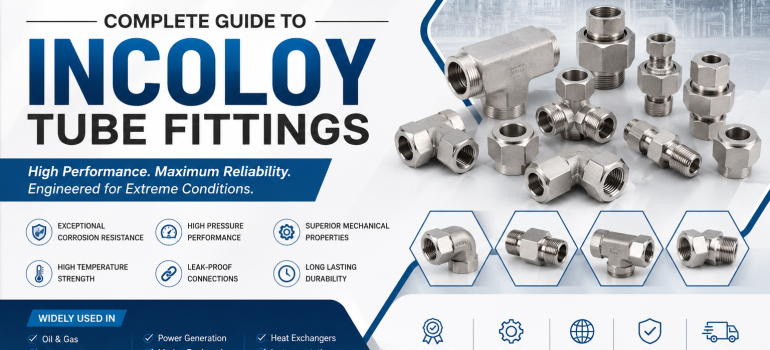
Complete Guide to Incoloy Tube Fittings for High-Performance Industrial Applications, Benefits & Buying Guide

Introduction

Industrial piping and instrumentation systems often operate in demanding environments where high temperatures, pressure variations, and corrosive chemicals can rapidly deteriorate ordinary materials. Choosing the right tube fittings is essential for maintaining leak-free performance, ensuring workplace safety, and extending the life of critical equipment.

Incoloy Tube Fittings have become a preferred solution across industries due to their exceptional corrosion resistance, superior mechanical strength, and excellent performance under elevated temperatures. Designed to withstand harsh industrial conditions, these fittings provide reliable connections for tubing systems used in chemical processing, offshore installations, power generation, and other demanding applications.

Mcneil Instruments is a leading manufacturer, supplier, and exporter of premium-quality Incoloy Tube Fittings, manufactured using international quality standards to deliver unmatched durability, precision, and performance for industrial fluid handling systems worldwide.


Why Incoloy Tube Fittings Are Preferred for Industrial Applications

Industrial operations require tubing systems that perform consistently even under severe operating conditions.

Key Advantages

✔ Outstanding corrosion resistance

✔ Excellent oxidation resistance

✔ Superior high-temperature strength

✔ High pressure handling capability

✔ Excellent mechanical properties

✔ Leak-free tubing connections

✔ Long operational lifespan

✔ Low maintenance requirements

✔ Reliable performance in aggressive environments

✔ Cost-effective lifecycle solution


What Are Incoloy Tube Fittings?

Incoloy Tube Fittings are precision-engineered connectors manufactured from Incoloy nickel-iron-chromium alloys, specifically developed for applications involving high temperatures, corrosive chemicals, seawater, and oxidizing environments.

These fittings create secure, leak-proof tubing connections while maintaining structural integrity even under extreme operating pressures and temperatures.

Because of their exceptional resistance to oxidation, carburization, sulfidation, and chloride-induced corrosion, Incoloy Tube Fittings are widely used in industries where equipment reliability is critical.


Features of Incoloy Tube Fittings

Mcneil Instruments manufactures Incoloy Tube Fittings with advanced engineering and strict quality control to ensure superior performance.

Key Features

• Excellent corrosion resistance

• Outstanding resistance to oxidation

• Superior mechanical strength

• Excellent creep resistance

• High-temperature durability

• Precision machining

• Leak-tight sealing performance

• Excellent dimensional accuracy

• Smooth internal flow characteristics

• Long maintenance-free service life


Types of Incoloy Tube Fittings

Mcneil Instruments manufactures a comprehensive range of Incoloy Tube Fittings suitable for instrumentation and industrial piping systems.

Our Product Range Includes

• Incoloy Tube Elbows

• Incoloy Tube Tees

• Incoloy Tube Crosses

• Incoloy Tube Unions

• Incoloy Male Connectors

• Incoloy Female Connectors

• Incoloy Bulkhead Unions

• Incoloy Reducers

• Incoloy Adapters

• Incoloy Tube Caps

• Incoloy Tube Plugs

• Incoloy Ferrule Tube Fittings

• Incoloy Compression Tube Fittings

• Incoloy Instrumentation Tube Fittings

• Incoloy Double Ferrule Tube Fittings

• Incoloy Single Ferrule Tube Fittings

• Custom Incoloy Tube Fittings


Common Grades of Incoloy Tube Fittings

Different Incoloy grades are selected depending on operating conditions and industrial requirements.

GradeMajor AdvantageCommon Applications
Incoloy 800 Tube FittingsHigh-temperature oxidation resistanceHeat exchangers, furnaces
Incoloy 800H Tube FittingsImproved creep strengthPower plants, petrochemical plants
Incoloy 800HT Tube FittingsExcellent thermal stabilityHigh-temperature processing units
Incoloy 825 Tube FittingsSuperior corrosion resistanceChemical processing, marine applications

Applications of Incoloy Tube Fittings

Mcneil Instruments supplies premium-quality Incoloy Tube Fittings for a wide range of industrial sectors.

Widely Used In

Oil & Gas Industry

Petrochemical Plants

Chemical Processing Plants

Power Generation

Heat Exchanger Systems

Offshore Platforms

Marine Engineering

Nuclear Power Plants

Desalination Plants

Fertilizer Industry

Pharmaceutical Manufacturing

Pulp & Paper Industry

Instrumentation Systems

Hydraulic Systems

Process Automation

Refineries

Boiler Manufacturing

LNG Processing Plants

Pressure Instrumentation

Industrial Fluid Distribution Systems


Benefits of Using Incoloy Tube Fittings

Compared to conventional tubing materials, Incoloy Tube Fittings deliver exceptional operational and economic advantages.

Business Benefits

🌍 Exceptional corrosion resistance

⚙ Superior high-temperature performance

🛡 Leak-proof tubing connections

📈 Increased equipment reliability

💰 Lower maintenance expenses

🚀 Longer service life

🔧 Easy installation and replacement

🌡 Excellent oxidation resistance

🏭 Improved process efficiency

✅ Reduced downtime


Why Incoloy Tube Fittings Are Ideal for Harsh Environments

Industries operating in corrosive and high-temperature environments require materials capable of maintaining structural integrity over long periods.

Incoloy Tube Fittings offer excellent resistance against:

• Chloride stress corrosion cracking

• Oxidizing chemicals

• Sulfur-containing environments

• Carburizing atmospheres

• Acidic process fluids

• High-pressure steam

• Extreme thermal cycling

These characteristics make them ideal for demanding industrial operations where safety and reliability are essential.


How to Select the Right Incoloy Tube Fittings

Choosing the correct tube fittings ensures long-term performance and minimizes maintenance costs.

Factors to Consider

Operating temperature

Working pressure

Fluid compatibility

Chemical exposure

Tube size and wall thickness

Connection type

Industry standards

Installation requirements

Corrosion environment

Lifecycle cost

Selecting the appropriate Incoloy grade based on operating conditions significantly improves equipment performance and service life.


Why Choose Mcneil Instruments?

Mcneil Instruments manufactures precision-engineered Incoloy Tube Fittings that comply with international quality and performance standards.

Our Strengths

✔ Premium-quality raw materials

✔ Precision CNC machining

✔ International manufacturing standards

✔ Wide product inventory

✔ Competitive pricing

✔ Custom manufacturing solutions

✔ Fast global delivery

✔ Experienced engineering support

✔ Strict quality inspections

✔ Worldwide exports


Manufacturing Excellence

Every Incoloy Tube Fitting produced by Mcneil Instruments undergoes advanced manufacturing processes to ensure exceptional quality.

Manufacturing Process

Raw Material Verification

Precision Machining

Thread Rolling

Heat Treatment (where required)

Surface Finishing

Cleaning & Passivation

Dimensional Inspection

Performance Testing

Final Packaging


Quality Assurance

Quality is maintained throughout every stage of production.

Inspection & Testing

Raw Material Inspection

PMI Testing

Hydrostatic Testing

Mechanical Testing

Chemical Analysis

Dimensional Inspection

Surface Finish Inspection

Pressure Leak Testing

Visual Examination

Material Test Certificates (MTC) available upon request.


Why Industries Trust Incoloy Tube Fittings

Industrial companies worldwide continue to rely on Incoloy Tube Fittings because they provide:

Superior corrosion resistance

Outstanding thermal stability

Reliable leak-proof performance

Excellent mechanical strength

Long operational life

Reduced maintenance requirements

Enhanced process safety

Excellent lifecycle value

Consistent performance under extreme conditions


Global Industrial Demand for Incoloy Tube Fittings

With industries increasingly operating under demanding temperatures and corrosive environments, the demand for high-performance tube fittings continues to grow.

Incoloy Tube Fittings have become an essential component in modern industrial infrastructure because they help improve system efficiency, reduce maintenance costs, and ensure uninterrupted plant operations.

Their exceptional durability and reliability make them one of the most trusted solutions for critical instrumentation and fluid handling systems worldwide.


Conclusion

Selecting premium-quality Incoloy Tube Fittings is essential for achieving reliable, leak-free, and long-lasting industrial tubing systems. Their exceptional resistance to corrosion, oxidation, and high temperatures makes them suitable for some of the world’s most demanding industrial applications.

Whether your project involves chemical processing, power generation, offshore installations, instrumentation systems, or refinery operations, Mcneil Instruments manufactures precision-engineered Incoloy Tube Fittings designed to meet international standards while delivering consistent performance, durability, and safety.


Frequently Asked Questions (FAQs)

1. What are Incoloy Tube Fittings?

Incoloy Tube Fittings are high-performance tubing connectors manufactured from nickel-iron-chromium alloys that provide exceptional corrosion resistance, high-temperature strength, and leak-proof connections for industrial systems.

2. Which industries commonly use Incoloy Tube Fittings?

They are widely used in oil & gas, petrochemical, chemical processing, power generation, marine engineering, offshore platforms, pharmaceuticals, fertilizer plants, instrumentation systems, and heat exchanger applications.

3. What are the advantages of Incoloy Tube Fittings?

They offer excellent corrosion resistance, oxidation resistance, high-temperature performance, long service life, leak-proof sealing, superior mechanical strength, and low maintenance requirements.

4. Which Incoloy grade is best for corrosive environments?

Incoloy 825 Tube Fittings are widely preferred for highly corrosive environments because of their outstanding resistance to acids, seawater, and chloride-containing media.

5. Can Mcneil Instruments manufacture custom Incoloy Tube Fittings?

Yes. Mcneil Instruments manufactures customized Incoloy Tube Fittings in various sizes, pressure ratings, configurations, and specifications according to customer requirements.

6. Why choose Mcneil Instruments for Incoloy Tube Fittings?

Mcneil Instruments offers premium-quality products, precision manufacturing, international quality standards, strict inspection procedures, competitive pricing, worldwide exports, technical expertise, and dependable customer support.

Read More

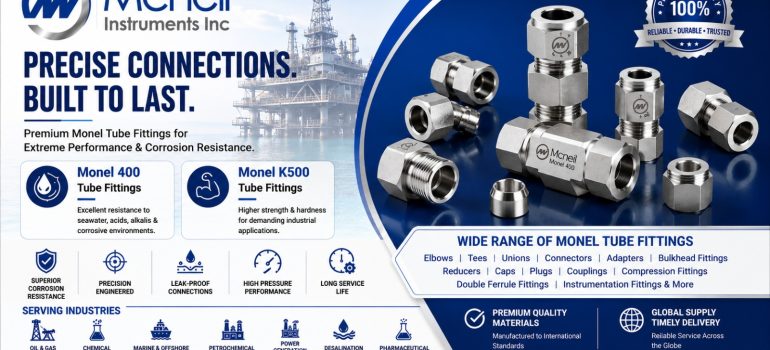
Monel 400 & Monel K500 Tube Fittings Manufacturer & Supplier – Mcneil Instruments

Premium Nickel Alloy Tube Fittings for Corrosion-Resistant Instrumentation Systems

Industrial instrumentation systems operating in corrosive environments demand tube fittings that offer exceptional sealing performance, superior mechanical strength, and long-term durability. Monel tube fittings are widely recognized for their outstanding resistance to seawater, chemicals, alkalis, and harsh industrial conditions, making them the preferred choice across numerous industries.

Mcneil Instruments is a trusted manufacturer and supplier of Monel 400 Tube Fittings and Monel K500 Tube Fittings, offering precision-engineered compression fittings for instrumentation, hydraulic, pneumatic, and process control applications. Manufactured using premium nickel-copper alloys, our fittings ensure reliable performance even under extreme pressure and challenging operating conditions.


Why Choose Mcneil Instruments?

Selecting premium tube fittings is essential for maintaining leak-free systems, reducing maintenance costs, and maximizing operational efficiency. Mcneil Instruments combines advanced manufacturing technology with stringent quality standards to deliver products that exceed customer expectations.

Why Industries Trust Us

✔ Precision-machined Monel tube fittings

✔ High corrosion and erosion resistance

✔ Excellent dimensional accuracy

✔ Leak-proof double ferrule design

✔ Superior pressure handling capability

✔ International quality standards

✔ Fast production and delivery

✔ Worldwide export support

Our products are engineered to provide dependable performance in the most demanding industrial environments.


Our Monel Tube Fittings Range

Monel 400 Tube Fittings

Monel 400 is a solid-solution nickel-copper alloy known for its remarkable resistance to seawater, acids, alkalis, and reducing environments.

Key Features

  • Excellent corrosion resistance
  • Outstanding seawater resistance
  • High mechanical strength
  • Superior thermal conductivity
  • Excellent weldability
  • Long service life

Applications

  • Marine Engineering
  • Offshore Platforms
  • Chemical Processing Plants
  • Desalination Systems
  • Heat Exchangers
  • Oil & Gas Pipelines

Monel K500 Tube Fittings

Monel K500 enhances the properties of Monel 400 by providing greater strength, hardness, and wear resistance while maintaining excellent corrosion resistance.

Advantages

  • Higher tensile strength
  • Exceptional wear resistance
  • Excellent fatigue performance
  • Improved hardness
  • Outstanding corrosion protection
  • Reliable long-term durability

Common Applications

  • Pump Shafts
  • Marine Equipment
  • Chemical Processing
  • Oilfield Equipment
  • Instrumentation Systems
  • High-Pressure Hydraulic Lines

Types of Monel Tube Fittings We Manufacture

Mcneil Instruments manufactures an extensive selection of Monel tube fittings suitable for instrumentation and fluid control systems.

Our product range includes:

  • Compression Tube Fittings
  • Double Ferrule Tube Fittings
  • Tube Unions
  • Union Elbows
  • Male Elbows
  • Female Elbows
  • Equal Tees
  • Branch Tees
  • Bulkhead Unions
  • Tube Connectors
  • Male Connectors
  • Female Connectors
  • Tube Adapters
  • Reducers
  • Tube Caps
  • Tube Plugs
  • Couplings
  • Instrumentation Tube Fittings

Each fitting is manufactured to provide secure, vibration-resistant, and leak-proof connections.


Key Features of Monel Tube Fittings

Mcneil Instruments designs Monel tube fittings to meet the highest industrial performance standards.

Product Highlights

✔ Exceptional corrosion resistance

✔ High-pressure capability

✔ Excellent mechanical strength

✔ Precision-machined components

✔ Leak-free sealing performance

✔ Excellent resistance to seawater

✔ Long operational life

✔ Easy installation

✔ Low maintenance requirements

✔ Suitable for critical instrumentation systems


Available Sizes & Configurations

Our Monel tube fittings are available in a wide variety of configurations to suit different industrial applications.

Available in:

  • 1/8″ to 2″ Tube Sizes
  • Metric Sizes
  • BSP Threads
  • NPT Threads
  • Socket Weld Connections
  • Custom Configurations

Custom dimensions are also available as per customer specifications.


Industries We Serve

Mcneil Instruments supplies Monel tube fittings to industries where corrosion resistance and reliability are critical.

Major Industries

  • Oil & Gas
  • Petrochemical Plants
  • Marine & Offshore
  • Shipbuilding
  • Chemical Processing
  • Power Generation
  • Pharmaceutical Industry
  • Water Treatment Plants
  • Desalination Facilities
  • Instrumentation Systems
  • Hydraulic Equipment
  • Food Processing
  • Fertilizer Plants
  • LNG Projects

International Standards

All Monel tube fittings are manufactured according to globally accepted quality specifications.

Standards

  • ASTM Standards
  • ASME Standards
  • ANSI Standards
  • DIN Standards
  • ISO Standards
  • BS Standards

Every fitting is produced with strict dimensional accuracy and quality assurance.


Advantages of Using Monel Tube Fittings

Compared to conventional stainless steel fittings, Monel alloys provide significantly better performance in corrosive and marine environments.

Business Benefits

🌊 Outstanding seawater resistance

⚙ Superior mechanical strength

🛡 Excellent corrosion protection

📈 Longer equipment life

💰 Reduced maintenance costs

🚀 Improved operational efficiency

🌍 Reliable performance in harsh environments


Quality Assurance at Mcneil Instruments

Quality is the foundation of every product manufactured by Mcneil Instruments.

Each Monel tube fitting undergoes rigorous inspection before dispatch.

Quality Tests Include

  • Raw Material Inspection
  • PMI Testing
  • Hydrostatic Testing
  • Dimensional Inspection
  • Pressure Testing
  • Chemical Analysis
  • Mechanical Testing
  • Surface Finish Inspection
  • Visual Examination

Material Test Certificates (MTC) are supplied upon customer request.


Why Customers Choose Mcneil Instruments

Thousands of customers rely on Mcneil Instruments for premium-quality Monel tube fittings because of our commitment to quality and customer satisfaction.

Our Strengths

✔ Premium-grade raw materials

✔ Modern manufacturing facility

✔ Experienced engineering team

✔ Competitive pricing

✔ Large inventory

✔ Quick delivery

✔ Customized solutions

✔ Technical support


Benefits of Choosing Our Monel Tube Fittings

When you choose Mcneil Instruments, you receive products designed for maximum efficiency and long-term performance.

Customer Benefits

📊 Leak-proof connections

⚙ Reliable instrumentation systems

🌍 Worldwide export capability

🛠 Durable nickel alloy fittings

📈 Improved plant productivity

💼 Trusted manufacturing expertise


Applications of Monel Tube Fittings

Our tube fittings are extensively used in:

  • Instrumentation Panels
  • Hydraulic Systems
  • Pneumatic Systems
  • Process Control Equipment
  • Gas Distribution Networks
  • Chemical Transfer Lines
  • Offshore Platforms
  • Heat Exchangers
  • Marine Pipelines
  • Laboratory Systems
  • High-Pressure Fluid Systems
  • Industrial Automation

📞 Contact Mcneil Instruments Today

Looking for premium Monel 400 Tube Fittings or Monel K500 Tube Fittings for your industrial project?

Mcneil Instruments

📧 info@mcneilinstruments.com

📞 +91 9870883613

Our experts are ready to assist you with product specifications, pricing, technical support, and bulk order requirements.


Frequently Asked Questions (FAQs)

1. What is the difference between Monel 400 and Monel K500 tube fittings?

Monel 400 offers excellent corrosion resistance, while Monel K500 provides higher strength, improved hardness, and better wear resistance, making it ideal for more demanding applications.

2. Where are Monel tube fittings commonly used?

Monel tube fittings are widely used in marine, offshore, chemical processing, oil & gas, desalination, hydraulic systems, and instrumentation industries.

3. What types of Monel tube fittings does Mcneil Instruments manufacture?

We manufacture compression tube fittings, double ferrule fittings, elbows, tees, unions, connectors, adapters, reducers, plugs, caps, couplings, and customized instrumentation fittings.

4. Are Monel tube fittings suitable for high-pressure applications?

Yes. Our Monel tube fittings are designed to withstand high-pressure fluid and gas systems while providing secure and leak-proof performance.

5. Can Mcneil Instruments manufacture customized Monel tube fittings?

Yes. We offer custom manufacturing based on customer drawings, specifications, tube sizes, and thread configurations.

6. Why choose Mcneil Instruments for Monel tube fittings?

Mcneil Instruments is known for precision manufacturing, premium quality materials, strict quality testing, competitive pricing, timely delivery, and reliable customer support.

Read More

How to Choose the Right Instrumentation Tube Fittings for Industrial Applications: A Complete Guide by Mcneil Instruments

Introduction

Every industrial process depends on precision. Whether it’s controlling fluid flow in an oil refinery, maintaining pressure in a petrochemical plant, or ensuring accurate measurements in pharmaceutical manufacturing, the smallest component can significantly impact the performance of an entire system.

One such component is the Instrumentation Tube Fitting.

Although often overlooked, tube fittings are responsible for creating secure, leak-free connections between tubing, valves, gauges, analyzers, and instrumentation equipment. Choosing the wrong fitting can result in leakage, pressure loss, equipment damage, production downtime, and even safety hazards.

This is why selecting the right Instrumentation Tube Fittings is essential for every industrial application.

At Mcneil Instruments, we manufacture and supply premium-quality Instrumentation Tube Fittings engineered for high-pressure, high-temperature, and corrosive industrial environments. This guide explains everything engineers, procurement professionals, and plant operators should consider before selecting tube fittings for their projects.

What Are Instrumentation Tube Fittings?

Instrumentation Tube Fittings are precision-engineered connectors used to join tubing systems in process control and instrumentation applications.

They create leak-tight connections capable of handling:

• High Pressure

• High Temperature

• Hydraulic Fluids

• Pneumatic Systems

• Process Chemicals

• Industrial Gases

Unlike ordinary pipe fittings, instrumentation tube fittings are designed for precision, vibration resistance, and long-term reliability.

Why Choosing the Right Tube Fitting Matters

Industrial systems operate continuously under demanding conditions.

Using the wrong tube fitting may result in:

• Fluid leakage

• Pressure loss

• Equipment failure

• Frequent maintenance

• Safety risks

• Increased operating costs

Properly selected tube fittings provide:

• Leak-free performance

• Reliable sealing

• Longer service life

• Improved plant safety

• Reduced downtime

• Better process efficiency

Step 1 – Understand Your Operating Conditions

Before selecting any fitting, evaluate your process requirements.

Important factors include:

Operating Pressure

Determine the maximum working pressure of the system.

High-pressure applications require precision-engineered compression fittings capable of maintaining seal integrity.

Operating Temperature

Temperature directly affects material performance.

Applications involving:

• Steam

• Heat Transfer

• Petrochemicals

• Furnaces

often require specialty alloy fittings.

Fluid Type

The transported media determines the material selection.

Examples include:

• Water

• Steam

• Hydraulic Oil

• Natural Gas

• Hydrogen

• Acids

• Solvents

• LNG

Environmental Conditions

Consider exposure to:

• Moisture

• Saltwater

• Corrosive chemicals

• Offshore atmosphere

• UV exposure

• Dust

These conditions influence the choice of corrosion-resistant materials.

Step 2 – Select the Correct Tube Fitting Material

Material selection is one of the most important decisions.

Stainless Steel Tube Fittings

Ideal for:

• General Process Industries

• Pharmaceutical Plants

• Food Processing

• Chemical Plants

• Water Treatment

Popular Grades:

• Stainless Steel 304 Tube Fittings

• Stainless Steel 304L Tube Fittings

• Stainless Steel 316 Tube Fittings

• Stainless Steel 316L Tube Fittings

• Stainless Steel 321 Tube Fittings

• Stainless Steel 347 Tube Fittings

Advantages:

• Excellent corrosion resistance

• High strength

• Long service life

Duplex & Super Duplex Tube Fittings

Suitable for:

• Offshore Platforms

• Marine Industries

• Desalination Plants

Advantages:

• Higher mechanical strength

• Excellent chloride resistance

• Outstanding corrosion protection

Inconel Tube Fittings

Recommended for:

• High Temperature Plants

• LNG Facilities

• Aerospace

• Power Generation

Available Grades:

• Inconel 600 Tube Fittings

• Inconel 625 Tube Fittings

• Inconel 718 Tube Fittings

• Inconel 725 Tube Fittings

• Inconel 800 Tube Fittings

• Inconel 800H Tube Fittings

Benefits:

• Excellent heat resistance

• Superior oxidation resistance

• High-pressure capability

Hastelloy Tube Fittings

Ideal for:

• Acid Processing

• Chemical Plants

• Fertilizer Industries

Available Grades:

• Hastelloy C276 Tube Fittings

• Hastelloy C22 Tube Fittings

• Hastelloy B2 Tube Fittings

• Hastelloy B3 Tube Fittings

• Hastelloy X Tube Fittings

Advantages:

• Outstanding chemical resistance

• Excellent corrosion protection

• Long operational life

Monel Tube Fittings

Best suited for:

• Marine Applications

• Offshore Systems

• Seawater Pipelines

Popular Grades:

• Monel 400 Tube Fittings

• Monel K500 Tube Fittings

Incoloy Tube Fittings

Recommended for:

• Petrochemical Plants

• Heat Exchangers

• Boilers

• Chemical Industries

Available Grades:

• Incoloy 800 Tube Fittings

• Incoloy 800H Tube Fittings

• Incoloy 825 Tube Fittings

Titanium Tube Fittings

Ideal for:

• Aerospace

• Marine Engineering

• Offshore Installations

• Chemical Processing

Grades Available:

• Titanium Grade 1 Tube Fittings

• Titanium Grade 2 Tube Fittings

• Titanium Grade 3 Tube Fittings

• Titanium Grade 4 Tube Fittings

Step 3 – Choose the Right Tube Fitting Configuration

Different applications require different fitting types.

Mcneil Instruments manufactures:

Tube Union Fittings

Connect two tubes together securely.

Male Connector Fittings

Join tubing to threaded equipment.

Female Connector Fittings

Connect tubing to female threaded components.

Tube Elbows

Available in:

• 45°

• 90°

• Male Elbows

• Female Elbows

Tube Tees

Create branch connections.

Cross Tube Fittings

Distribute flow in four directions.

Reducer Tube Fittings

Connect different tubing sizes.

Bulkhead Tube Fittings

Ideal for panel-mounted installations.

Double Ferrule Tube Fittings

Most widely used in instrumentation systems.

Advantages:

• Superior sealing

• Excellent vibration resistance

• Leak-proof performance

Single Ferrule Tube Fittings

Suitable for standard industrial applications.

Step 4 – Verify Pressure Ratings

Always ensure that:

• Tube size

• Wall thickness

• Material grade

• Pressure rating

match the system requirements.

Selecting an underrated fitting can compromise both performance and safety.

Step 5 – Consider Installation Conditions

Ask yourself:

• Is vibration present?

• Will the system undergo thermal expansion?

• Is frequent maintenance expected?

• Will fittings require repeated assembly?

These factors influence fitting design and sealing requirements.

Step 6 – Check Compliance with International Standards

Reliable instrumentation fittings should comply with internationally recognized standards.

Common standards include:

• ASTM

• ASME

• ISO

• DIN

• MSS

Choosing certified products ensures compatibility, traceability, and dependable performance.

Industries Using Instrumentation Tube Fittings

Mcneil Instruments supplies tube fittings to industries including:

Oil & Gas

• Refineries

• Offshore Platforms

• Pipeline Systems

Petrochemical

• Chemical Plants

• Reactor Systems

• Process Equipment

Power Generation

• Steam Systems

• Boilers

• Turbines

Pharmaceutical

• Clean Process Systems

• Sterile Manufacturing

Food & Beverage

• Hygienic Fluid Systems

Marine Industry

• Shipbuilding

• Offshore Installations

LNG Industry

• Cryogenic Systems

• Gas Processing

Aerospace

• Precision Fluid Systems

• Hydraulic Equipment

Why Choose Mcneil Instruments?

Mcneil Instruments is recognized as a trusted manufacturer, supplier, exporter, and stockist of premium Instrumentation Tube Fittings.

Customers benefit from:

• Wide range of material grades

• Precision engineering

• Leak-proof designs

• International quality standards

• High-pressure performance

• Custom manufacturing

• Fast global delivery

• Technical support

Our fittings are manufactured for reliability, durability, and long-term performance across demanding industrial environments.

Quality Assurance

Every tube fitting undergoes rigorous testing including:

• Hydrostatic Testing

• Pneumatic Testing

• PMI Testing

• Dimensional Inspection

• Hardness Testing

• Material Traceability

• Leak Testing

• Visual Inspection

These inspections ensure every product meets international quality standards.

Conclusion

Choosing the correct instrumentation tube fitting is not simply about selecting a connector—it is about ensuring the safety, efficiency, and reliability of an entire industrial process.

By evaluating operating conditions, selecting the right material grade, choosing the correct fitting configuration, and verifying pressure ratings and quality standards, industries can significantly improve system performance while reducing maintenance costs.

Whether your project requires Stainless Steel Tube Fittings, Inconel Tube Fittings, Hastelloy Tube Fittings, Monel Tube Fittings, Incoloy Tube Fittings, Duplex Tube Fittings, Super Duplex Tube Fittings, Titanium Tube Fittings, Double Ferrule Tube Fittings, or Compression Tube Fittings, Mcneil Instruments provides precision-engineered solutions trusted by industries worldwide.

Read More

Why Stainless Steel ASTM A403 WP Tube Fittings Are the Preferred Choice for High-Performance Instrumentation and Process Systems

Introduction

In today’s industrial environment, precision, reliability, and corrosion resistance are essential for maintaining efficient process operations. Industries such as oil & gas, petrochemicals, power generation, pharmaceuticals, food processing, marine engineering, LNG facilities, and chemical manufacturing depend heavily on tubing systems for fluid transfer, instrumentation, and process control.

The performance of these systems is largely determined by the quality of their fittings.

This is where Stainless Steel ASTM A403 WP Tube Fittings have become one of the most trusted solutions worldwide.

Designed to provide leak-proof connections, exceptional corrosion resistance, and long-term durability, ASTM A403 WP Tube Fittings are widely used in high-pressure and critical process applications. Their ability to perform under demanding operating conditions makes them an essential component of modern industrial infrastructure.

Today, ASTM A403 WP304 Tube Fittings, ASTM A403 WP304L Tube Fittings, ASTM A403 WP316 Tube Fittings, ASTM A403 WP316L Tube Fittings, ASTM A403 WP321 Tube Fittings, ASTM A403 WP347 Tube Fittings, ASTM A403 WP310 Tube Fittings, ASTM A403 WP317 Tube Fittings, and ASTM A403 WP904L Tube Fittings are extensively used across industries worldwide.

Understanding ASTM A403 WP Tube Fittings

ASTM A403 is the standard specification covering wrought austenitic stainless steel fittings used in pressure piping systems.

These fittings are manufactured to provide:

• Excellent corrosion resistance
• Superior mechanical strength
• Leak-proof performance
• High-pressure capability
• Long operational life
• Easy installation and maintenance

Common fitting configurations include:

• Tube Union Fittings
• Tube Elbow Fittings
• Tube Tee Fittings
• Tube Connector Fittings
• Tube Reducer Fittings
• Bulkhead Tube Fittings
• Male Connector Fittings
• Female Connector Fittings
• Double Ferrule Tube Fittings
• Single Ferrule Tube Fittings

Why Industries Choose ASTM A403 WP Tube Fittings

Industrial process systems demand fittings capable of maintaining performance under severe operating conditions.

Key benefits include:

• Excellent corrosion resistance
• High-pressure capability
• Superior temperature resistance
• Outstanding durability
• Reduced maintenance costs
• Long service life
• Reliable leak-free connections

These characteristics make ASTM A403 WP Tube Fittings a preferred solution for critical industrial applications.

ASTM A403 WP304 Tube Fittings

The Most Versatile Stainless Steel Tube Fitting Grade

ASTM A403 WP304 Tube Fittings are among the most widely used fittings in industrial applications.

Key Features

• Excellent corrosion resistance
• Good formability
• High durability
• Cost-effective performance

Applications

• Water Treatment Plants
• Food Processing Facilities
• Industrial Manufacturing Plants
• Instrumentation Systems

ASTM A403 WP304L Tube Fittings

Enhanced Weldability for Fabricated Systems

ASTM A403 WP304L Tube Fittings contain lower carbon content, improving welding performance.

Benefits

• Reduced carbide precipitation
• Improved weld integrity
• Enhanced corrosion resistance

Applications

• Pharmaceutical Facilities
• Chemical Processing Plants
• Fabricated Tubing Systems

ASTM A403 WP316 Tube Fittings

Superior Resistance in Corrosive Environments

ASTM A403 WP316 Tube Fittings contain molybdenum for improved corrosion resistance.

Advantages

• Excellent chloride resistance
• Enhanced pitting resistance
• Superior durability

Applications

• Offshore Platforms
• Marine Systems
• Petrochemical Facilities
• Desalination Plants

ASTM A403 WP316L Tube Fittings

Preferred Choice for Aggressive Process Conditions

Benefits

• Outstanding corrosion resistance
• Excellent weldability
• Long service life

Applications

• LNG Facilities
• Chemical Plants
• Pharmaceutical Industries

ASTM A403 WP321 Tube Fittings

Designed for Elevated Temperature Applications

Titanium stabilization makes WP321 ideal for heat-intensive environments.

Features

• Excellent oxidation resistance
• Superior thermal stability
• Enhanced high-temperature strength

Applications

• Heat Exchangers
• Refineries
• Power Plants
• Furnace Systems

ASTM A403 WP347 Tube Fittings

Reliable Performance Under Thermal Stress

Niobium stabilization provides improved resistance to intergranular corrosion.

Benefits

• Excellent creep resistance
• Superior heat resistance
• Long operational life

Applications

• Steam Systems
• Petrochemical Facilities
• Thermal Processing Plants

ASTM A403 WP310 Tube Fittings

Exceptional High-Temperature Capability

Advantages

• Outstanding oxidation resistance
• Excellent heat resistance
• Superior thermal stability

Applications

• Industrial Furnaces
• Heat Treatment Plants
• Thermal Processing Systems

ASTM A403 WP317 Tube Fittings

Enhanced Corrosion Resistance for Chemical Processing

Benefits

• Higher molybdenum content
• Excellent resistance to aggressive chemicals
• Improved pitting resistance

Applications

• Chemical Plants
• Petrochemical Facilities
• Process Industries

ASTM A403 WP904L Tube Fittings

Premium Grade for Severe Corrosion Conditions

Features

• Exceptional corrosion resistance
• Excellent resistance to sulfuric acid
• Outstanding durability

Applications

• Offshore Installations
• Chemical Processing Plants
• Marine Applications

Types of ASTM A403 WP Tube Fittings

Industrial instrumentation systems utilize various fitting designs including:

Tube Union Fittings

Secure tube-to-tube connections.

Tube Elbow Fittings

Allow directional changes in tubing systems.

Tube Tee Fittings

Enable branch connections.

Bulkhead Tube Fittings

Support panel-mounted installations.

Male Connector Fittings

Connect tubing to threaded equipment.

Female Connector Fittings

Provide reliable threaded connections.

Double Ferrule Tube Fittings

Deliver superior vibration resistance and leak-proof sealing.

Single Ferrule Tube Fittings

Provide economical and reliable performance.

Industries Using ASTM A403 WP Tube Fittings

Oil & Gas Industry

Used in:

• Refineries
• Offshore Platforms
• Gas Processing Facilities
• Pipeline Instrumentation Systems

Petrochemical Industry

Supports:

• Process Control Systems
• Chemical Transfer Networks
• Instrumentation Installations

LNG Industry

Provides reliable connections for:

• Cryogenic Systems
• LNG Processing Facilities
• Storage Terminals

Pharmaceutical Industry

Supports:

• High-Purity Processing Systems
• Sterile Manufacturing Facilities

Food & Beverage Industry

Ensures hygienic and corrosion-resistant fluid handling.

Power Generation Industry

Used in:

• Steam Systems
• Turbine Installations
• Boiler Instrumentation Networks

Marine Industry

Offers excellent resistance against seawater corrosion.

Why ASTM A403 WP Tube Fittings Outperform Conventional Materials

PropertyASTM A403 WP Tube FittingsCarbon Steel Fittings
Corrosion ResistanceExcellentModerate
Service LifeLongMedium
Maintenance CostLowerHigher
Chemical ResistanceSuperiorStandard
Temperature CapabilityExcellentModerate

Quality Assurance and Testing

Every ASTM A403 WP Tube Fitting undergoes:

• Hydrostatic Testing
• Pressure Testing
• PMI Testing
• Mechanical Testing
• Dimensional Inspection
• Material Traceability Verification
• Quality Certification

These procedures ensure compliance with international standards and dependable performance.

Future Demand for ASTM A403 WP Tube Fittings

Growing investments in:

• LNG Infrastructure
• Petrochemical Facilities
• Offshore Projects
• Pharmaceutical Manufacturing
• Water Treatment Systems
• Industrial Automation

continue driving demand for high-performance stainless steel tube fittings.

Conclusion

As industrial systems become increasingly sophisticated, the need for reliable and corrosion-resistant tubing connections continues to grow.

Stainless Steel ASTM A403 WP Tube Fittings provide the strength, durability, leak-proof performance, and corrosion resistance required for critical applications across multiple industries.

Whether it is ASTM A403 WP304 Tube Fittings, ASTM A403 WP304L Tube Fittings, ASTM A403 WP316 Tube Fittings, ASTM A403 WP316L Tube Fittings, ASTM A403 WP321 Tube Fittings, ASTM A403 WP347 Tube Fittings, ASTM A403 WP310 Tube Fittings, ASTM A403 WP317 Tube Fittings, or ASTM A403 WP904L Tube Fittings, these products continue to be the preferred choice for modern industrial instrumentation and process systems.

Read More
Stainless Steel ASTM A403 WP Tube Fittings banner by Mcneil Instruments featuring stainless steel elbows, reducers, caps, and fittings in grades 304, 316, 304L, 316L, 321, and 347.

Stainless Steel ASTM A403 WP Tube Fittings: Guide to 304, 316, 304L, 316L, 321 & 347 Grades

Introduction


Stainless Steel ASTM A403 WP Tube Fittings are widely used in piping systems across industries such as oil & gas, petrochemical, chemical processing, power generation, food processing, pharmaceuticals, and marine applications. These fittings are manufactured according to ASTM A403 standards and are designed to provide secure, leak-proof connections while maintaining excellent corrosion resistance, durability, and strength under demanding operating conditions.
Available in various grades including Stainless Steel ASTM A403 WP 304 Tube Fittings, Stainless Steel ASTM A403 WP 316 Tube Fittings, Stainless Steel ASTM A403 WP 304L Tube Fittings, Stainless Steel ASTM A403 WP 316L Tube Fittings, Stainless Steel ASTM A403 WP 321 Tube Fittings, and Stainless-Steel ASTM A403 WP 347 Tube Fittings, these fittings meet diverse industrial requirements and operating environments.


What Are ASTM A403 WP Tube Fittings?


ASTM A403 is a standard specification covering wrought austenitic stainless-steel fittings intended for pressure piping applications. The designation “WP” indicates that the fittings are suitable for pressure service and are manufactured through forging, machining, or forming processes.
These fittings include:
⦁ Elbows
⦁ Tees
⦁ Reducers
⦁ Crosses
⦁ Couplings
⦁ Stub Ends
⦁ Caps
⦁ Unions
⦁ Nipples
They are available in seamless and welded constructions, ensuring flexibility for different industrial applications.


Stainless Steel ASTM A403 WP 304 Tube Fittings


Stainless Steel ASTM A403 WP 304 Tube Fittings are among the most commonly used stainless steel fittings due to their excellent corrosion resistance, high strength, and cost-effectiveness. Grade 304 contains approximately 18% chromium and 8% nickel, providing superior resistance against oxidation and atmospheric corrosion.
Key Features
⦁ Excellent corrosion resistance
⦁ High mechanical strength
⦁ Easy fabrication and welding
⦁ Suitable for food processing applications
⦁ Good performance at elevated temperatures
Applications
⦁ Food and beverage industries
⦁ Chemical processing plants
⦁ Water treatment systems
⦁ Architectural piping systems


Stainless Steel ASTM A403 WP 316 Tube Fittings


Stainless Steel ASTM A403 WP 316 Tube Fittings contain molybdenum, which enhances resistance to chlorides and corrosive chemicals. These fittings are ideal for harsh industrial and marine environments.
Key Features
⦁ Superior pitting resistance
⦁ Enhanced corrosion protection
⦁ Excellent weldability
⦁ High-temperature performance
⦁ Suitable for aggressive media
Applications
⦁ Marine equipment
⦁ Petrochemical plants
⦁ Offshore platforms
⦁ Pharmaceutical industries
⦁ Chemical processing units


Stainless Steel ASTM A403 WP 304L Tube Fittings


Stainless Steel ASTM A403 WP 304L Tube Fittings are low-carbon variants of grade 304, designed to minimize carbide precipitation during welding. They offer improved corrosion resistance in welded structures.
Benefits
⦁ Reduced risk of intergranular corrosion
⦁ Excellent weldability
⦁ High durability
⦁ Good formability
Industries Served
⦁ Food processing
⦁ Dairy plants
⦁ Water treatment facilities
⦁ Process piping systems


Stainless Steel ASTM A403 WP 316L Tube Fittings


Stainless Steel ASTM A403 WP 316L Tube Fittings provide superior corrosion resistance combined with low carbon content, making them ideal for highly corrosive environments and extensive welding applications.
Advantages
⦁ Outstanding resistance to chlorides
⦁ Excellent corrosion protection
⦁ Improved weld integrity
⦁ Long service life
Applications
⦁ Pharmaceutical manufacturing
⦁ Biotechnology facilities
⦁ Chemical processing plants
⦁ Marine environments


Stainless Steel ASTM A403 WP 321 Tube Fittings


Stainless Steel ASTM A403 WP 321 Tube Fittings are titanium-stabilized stainless steel fittings designed for high-temperature applications. The addition of titanium prevents carbide precipitation during welding and prolonged exposure to elevated temperatures.
Features
⦁ Excellent heat resistance
⦁ Superior oxidation resistance
⦁ Good mechanical strength
⦁ Enhanced weldability
Applications
⦁ Aerospace industries
⦁ Heat exchangers
⦁ Refinery equipment
⦁ Power generation plants


Stainless Steel ASTM A403 WP 347 Tube Fittings


Stainless Steel ASTM A403 WP 347 Tube Fittings contain niobium (columbium), which enhances resistance to intergranular corrosion and improves performance at elevated temperatures.
Key Benefits
⦁ Excellent high-temperature strength
⦁ Superior corrosion resistance
⦁ Enhanced creep resistance
⦁ Reliable performance under thermal cycling
Applications
⦁ Power plants
⦁ Petrochemical industries
⦁ Heat recovery systems
⦁ Pressure piping systems
Benefits of Stainless Steel ASTM A403 WP Tube Fittings
⦁ Exceptional corrosion resistance
⦁ High pressure handling capability
⦁ Long service life
⦁ Leak-proof connections
⦁ Excellent dimensional accuracy
⦁ Easy installation and maintenance
⦁ Suitable for extreme temperatures
⦁ Compliance with international standards


Industries Using ASTM A403 WP Tube Fittings


These fittings are extensively used in:
⦁ Oil & Gas Industry
⦁ Petrochemical Plants
⦁ Chemical Processing
⦁ Marine Applications
⦁ Pharmaceutical Industry
⦁ Food & Beverage Processing
⦁ Power Generation
⦁ Water Treatment Plants
⦁ Pulp & Paper Industry

Supplying Stainless Steel ASTM A403 Tube Fittings Across Global Markets


Looking for a trusted exporter of Stainless Steel ASTM A403 WP 304, 304L, 316, 316L, 321 & 347 Tube Fittings? Mcneil Instruments delivers high-quality tube fittings to industries across the USA, UAE, Saudi Arabia, Qatar, Oman, Kuwait, South Africa, Nigeria, Egypt, Canada, Australia, Singapore, Malaysia, and many other international markets. Our products are manufactured to ASTM and ASME standards and are trusted in oil & gas, petrochemical, pharmaceutical, marine, and process industries worldwide.

Why Choose Mcneil Instruments?


✔ Global Export Network
✔ ASTM & ASME Compliant Products
✔ Custom Sizes & Configurations Available
✔ Fast Worldwide Shipping
✔ Mill Test Certificates & Quality Documentation
✔ Competitive Export Pricing

Exporting To


USA • Houston • Canada • UAE • Dubai • Abu Dhabi • Saudi Arabia • Qatar • Oman • Kuwait • Bahrain • South Africa • Nigeria • Egypt • Kenya • Australia • Singapore • Malaysia • Indonesia • Vietnam • UK • Europe and many more international destinations.
Conclusion
Stainless Steel ASTM A403 WP Tube Fittings offer unmatched reliability, durability, and corrosion resistance for critical piping applications. Whether you require Stainless Steel ASTM A403 WP 304 Tube Fittings, Stainless Steel ASTM A403 WP 316 Tube Fittings, Stainless Steel ASTM A403 WP 304L Tube Fittings, Stainless Steel ASTM A403 WP 316L Tube Fittings, Stainless Steel ASTM A403 WP 321 Tube Fittings, or Stainless-Steel ASTM A403 WP 347 Tube Fittings, these fittings provide excellent performance across a wide range of industrial environments. Their superior mechanical properties, resistance to corrosion, and compliance with ASTM standards make them a preferred choice for modern piping systems worldwide.


FAQs

  1. What are Stainless Steel ASTM A403 WP Tube Fittings?
    Stainless Steel ASTM A403 WP Tube Fittings are wrought austenitic stainless-steel fittings manufactured according to ASTM A403 standards for pressure piping systems. They are used to connect, redirect, or terminate piping and tubing in various industrial applications.
  2. What grades are available in ASTM A403 WP Tube Fittings?
    Common grades include:
    ⦁ Stainless Steel ASTM A403 WP 304 Tube Fittings
    ⦁ Stainless Steel ASTM A403 WP 316 Tube Fittings
    ⦁ Stainless Steel ASTM A403 WP 304L Tube Fittings
    ⦁ Stainless Steel ASTM A403 WP 316L Tube Fittings
    ⦁ Stainless Steel ASTM A403 WP 321 Tube Fittings
    ⦁ Stainless Steel ASTM A403 WP 347 Tube Fittings
  3. What is the difference between ASTM A403 WP 304 and WP 316 Tube Fittings?
    ASTM A403 WP 316 Tube Fittings contain molybdenum, which provides better resistance to chlorides, chemicals, and marine environments compared to ASTM A403 WP 304 Tube Fittings.
  4. Why choose ASTM A403 WP 304L and 316L Tube Fittings?
    The “L” grades have lower carbon content, reducing the risk of carbide precipitation during welding and improving corrosion resistance in welded applications.
  5. What are the advantages of Stainless Steel ASTM A403 WP 321 Tube Fittings?
    ASTM A403 WP 321 Tube Fittings contain titanium, offering excellent resistance to high temperatures and preventing intergranular corrosion during prolonged heat exposure.
Read More
• Excellent corrosion resistance • High tensile strength • Oxidation resistance • Durability • Easy fabrication • Hygienic surface properties SS304 tube fittings are widely used in: • Instrumentation systems • Hydraulic systems • Pneumatic systems • Chemical processing plants • Pharmaceutical manufacturing • Food & beverage processing • Semiconductor industries • Water treatment plants

Top SS304 Tube Fittings Exporter In USA

The United States is one of the world’s most advanced industrial economies, with massive demand for precision-engineered instrumentation and fluid control systems. Industries such as oil & gas, chemical processing, pharmaceuticals, food processing, power generation, semiconductor manufacturing, marine engineering, and renewable energy all depend heavily on high-quality stainless steel tube fittings for safe and reliable operations.

Mcneil Instruments Inc has established itself as a trusted manufacturer, supplier, and exporter of premium-quality SS304 tube fittings for industrial applications worldwide. The company supplies precision-engineered instrumentation fittings, compression fittings, ferrule fittings, and process piping components designed to meet modern industrial performance standards.

Unlike ordinary suppliers that focus only on standard products, Mcneil Instruments emphasizes advanced engineering reliability, dimensional precision, vibration resistance, and long-term leak-proof performance — critical requirements for modern industrial plants in the USA.


What are SS304 Tube Fittings?

SS304 tube fittings are stainless steel piping and instrumentation components manufactured using Stainless Steel 304 alloy. These fittings are used to connect, regulate, and direct the flow of liquids, gases, chemicals, steam, and process fluids within industrial piping systems.

SS304 is an austenitic stainless steel alloy containing chromium and nickel, which provide:

  • Excellent corrosion resistance
  • High tensile strength
  • Oxidation resistance
  • Durability
  • Easy fabrication
  • Hygienic surface properties

SS304 tube fittings are widely used in:

  • Instrumentation systems
  • Hydraulic systems
  • Pneumatic systems
  • Chemical processing plants
  • Pharmaceutical manufacturing
  • Food & beverage processing
  • Semiconductor industries
  • Water treatment plants

Their versatility and affordability make them one of the most preferred stainless steel fitting solutions globally.


Why SS304 Tube Fittings are Highly Popular in USA Industries

American industries operate under demanding conditions involving:

  • High pressure
  • Continuous vibration
  • Thermal cycling
  • Corrosive environments
  • Automation systems
  • Strict safety standards

Industrial plants require fittings capable of maintaining long-term sealing integrity while reducing maintenance costs and operational downtime.

SS304 tube fittings are highly preferred because they provide:

  • Excellent corrosion resistance
  • Reliable leak-proof performance
  • High-pressure capability
  • Long service life
  • Strong mechanical properties
  • Easy maintenance
  • Cost-effective industrial performance

This makes SS304 one of the most practical stainless steel grades for industrial process systems across the USA.


Mcneil Instruments Inc – Trusted SS304 Tube Fittings Exporter in USA

Mcneil Instruments Inc is recognized globally for manufacturing and exporting premium-quality stainless steel instrumentation fittings and process piping components.

The company supplies:

  • Compression Tube Fittings
  • Instrumentation Tube Fittings
  • Double Ferrule Fittings
  • Male Connector Fittings
  • Female Connector Fittings
  • Elbow Tube Fittings
  • Tee Tube Fittings
  • Reducer Tube Fittings
  • Bulkhead Tube Fittings
  • Union Tube Fittings

Mcneil Instruments focuses on precision engineering, advanced metallurgy, and strict quality control to ensure reliable industrial performance under demanding conditions.

The company exports SS304 tube fittings to industries across the USA, Europe, Middle East, Asia, and Africa.


The Hidden Engineering Problems Most Tube Fittings Blogs Ignore

Most online articles discuss only material composition and pressure ratings. However, real-world industrial failures often happen because of deeper engineering issues rarely discussed publicly.

These include:

  • Ferrule relaxation
  • Surface roughness defects
  • Improper tube grip
  • Thermal expansion mismatch
  • Dynamic vibration fatigue
  • Pressure pulsation instability
  • Micro leakage
  • Incorrect hardness balance

Modern industrial plants in the USA increasingly operate with:

  • Automated production systems
  • High-frequency vibration equipment
  • Robotic process lines
  • High-purity gas systems
  • Continuous operation cycles

Under such conditions, even microscopic fitting imperfections can cause:

  • Process contamination
  • Production downtime
  • Pressure instability
  • Hazardous leakage
  • Equipment failure

Mcneil Instruments designs SS304 tube fittings with precision-engineered ferrule geometry and strict dimensional tolerances to improve long-term sealing performance.

This advanced engineering approach separates premium exporters from ordinary industrial fitting suppliers.


Why Precision Surface Finish Matters in SS304 Tube Fittings

One of the most overlooked aspects of tube fitting performance is internal surface finish quality.

Poor surface roughness can cause:

  • Flow turbulence
  • Chemical residue accumulation
  • Product contamination
  • Bacterial growth
  • Reduced corrosion resistance

Mcneil Instruments manufactures SS304 tube fittings with controlled surface finishing to improve:

  • Laminar flow performance
  • Process hygiene
  • Chemical purity
  • CIP/SIP cleaning efficiency
  • Corrosion resistance

This becomes especially important in:

  • Pharmaceutical plants
  • Food processing systems
  • Semiconductor manufacturing
  • High-purity gas systems
  • Beverage industries

Modern USA industries increasingly prioritize ultra-clean process systems where even microscopic contamination can compromise production quality.


Why SS304 is Ideal for Instrumentation Systems

Instrumentation systems require extremely reliable tube fittings because they handle:

  • Pressure measurement
  • Flow monitoring
  • Gas distribution
  • Process control
  • Analytical systems

SS304 tube fittings are ideal because they offer:

  • Excellent dimensional stability
  • Reliable sealing performance
  • Corrosion resistance
  • High vibration tolerance
  • Long-term operational durability

Precision-engineered instrumentation fittings help maintain accurate process control and reduce system failures.


Types of SS304 Tube Fittings Manufactured by Mcneil Instruments

Compression Tube Fittings

Provide secure and leak-proof sealing in high-pressure systems.

Double Ferrule Tube Fittings

Offer superior vibration resistance and stronger tube grip.

Union Tube Fittings

Allow easy maintenance and tube replacement.

Male Connector Fittings

Used for threaded process connections.

Female Connector Fittings

Ensure secure fluid transfer systems.

Elbow Tube Fittings

Enable directional flow control.

Tee Tube Fittings

Used for branching piping systems.

Reducer Tube Fittings

Connect tubing systems of different sizes.

Bulkhead Tube Fittings

Designed for panel-mounted applications.

Instrumentation Tube Fittings

Widely used in analytical and industrial control systems.


Chemical Composition of SS304

ElementComposition
Chromium (Cr)18 – 20%
Nickel (Ni)8 – 10.5%
Carbon (C)0.08% Max
Manganese (Mn)2.00% Max
Silicon (Si)1.00% Max
Phosphorus (P)0.045% Max
Sulfur (S)0.03% Max

The chromium-rich passive layer improves corrosion resistance while nickel enhances toughness and durability.


Mechanical Properties of SS304 Tube Fittings

PropertyValue
Tensile Strength515 MPa Min
Yield Strength205 MPa Min
Elongation40%
Hardness201 HB Max
Density8.0 g/cm³

These properties make SS304 suitable for demanding industrial applications.


Technical Specifications of SS304 Tube Fittings

ParameterSpecification
Material GradeStainless Steel 304
UNS NumberS30400
DIN Grade1.4301
Pressure RatingUp to 10,000 PSI
Size Range1/16” to 2”
Connection TypesCompression, Threaded, Welded
Thread StandardsNPT, BSPT, BSPP
Surface FinishAnnealed, Pickled, Polished
StandardsASTM A182 / ASTM A276

Industries Using SS304 Tube Fittings in USA

Oil & Gas Industry

Used in refineries, instrumentation systems, and process pipelines.

Chemical Processing Industry

Provide corrosion resistance in chemical transfer systems.

Pharmaceutical Industry

Suitable for hygienic and contamination-free operations.

Food & Beverage Industry

Widely used in sanitary processing systems.

Semiconductor Manufacturing

Used in high-purity gas and fluid systems.

Water Treatment Plants

Provide reliable corrosion-resistant performance.

Marine Industry

Offer durability in humid and saline environments.

Renewable Energy Industry

Used in hydrogen, biofuel, and advanced energy systems.


Why USA Buyers Prefer Mcneil Instruments Inc

Industrial buyers increasingly prefer suppliers capable of delivering:

  • International quality standards
  • Material traceability
  • Precision manufacturing
  • Reliable export logistics
  • Competitive pricing
  • Technical support
  • Consistent product quality

Mcneil Instruments follows international standards such as:

  • ASTM
  • ASME
  • ISO
  • DIN
  • ANSI

The company also performs strict quality inspections to ensure reliable industrial performance.


Quality Testing for SS304 Tube Fittings

Mcneil Instruments performs multiple quality inspections including:

  • Hydrostatic Testing
  • Pressure Testing
  • PMI Testing
  • Surface Finish Inspection
  • Dimensional Verification
  • Hardness Testing
  • Material Traceability Verification

These tests ensure high-performance reliability under demanding industrial conditions.


Why Leak-Proof Tube Fittings are Critical

Industrial leakage can result in:

  • Chemical hazards
  • Fire risks
  • Environmental damage
  • Product contamination
  • Pressure instability
  • Expensive downtime

High-quality SS304 tube fittings reduce these risks through:

  • Precision ferrule engineering
  • Controlled dimensional tolerances
  • Optimized sealing geometry
  • Superior tube grip performance

Modern USA industries increasingly prioritize leak-free systems to improve safety and operational efficiency.


Future Trends in SS304 Tube Fittings Industry

The industrial fittings industry is evolving rapidly with technologies such as:

  • Smart leak detection
  • Predictive maintenance
  • AI-based process monitoring
  • Hydrogen infrastructure
  • Automated fluid systems
  • High-purity manufacturing

Future tube fittings may integrate:

  • Embedded sensors
  • Thermal fatigue monitoring
  • Pressure analytics
  • Maintenance alerts

As industrial automation expands across the USA, demand for precision-engineered SS304 tube fittings will continue increasing.


Export Capabilities of Mcneil Instruments

Mcneil Instruments exports SS304 tube fittings globally with:

  • Export-grade packaging
  • Material test certificates
  • Fast logistics support
  • Bulk supply capability
  • International shipping documentation

The company serves industries across:

  • USA
  • Europe
  • Middle East
  • Asia
  • Africa

Conclusion

The USA remains one of the world’s largest markets for SS304 tube fittings because of increasing industrial automation, infrastructure development, and demand for reliable fluid control systems.

SS304 tube fittings continue to be highly preferred because they offer excellent corrosion resistance, affordability, durability, and long-term industrial performance.

However, modern industrial systems require far more than ordinary fittings. Precision engineering, vibration resistance, thermal stability, advanced surface finishing, and leak-proof reliability have become essential for safe and efficient industrial operations.

Mcneil Instruments Inc has emerged as a trusted SS304 tube fittings exporter in the USA by focusing on advanced engineering reliability, precision manufacturing, and strict international quality standards.

As industries continue evolving toward automation, hydrogen infrastructure, smart manufacturing, and sustainable industrial systems, the demand for premium-quality SS304 tube fittings from trusted exporters like Mcneil Instruments will continue growing across the American industrial market.


FAQs (Frequently Asked Questions)

1. What are SS304 tube fittings used for?

SS304 tube fittings are used to connect and control the flow of liquids and gases in industrial piping and instrumentation systems.
They are widely used in chemical, pharmaceutical, food processing, oil & gas, and water treatment industries.


2. Why are SS304 tube fittings preferred in industrial applications?

SS304 tube fittings offer excellent corrosion resistance, durability, hygienic properties, and cost-effective performance.
They also provide reliable leak-proof sealing in high-pressure industrial systems.


3. What types of SS304 tube fittings does Mcneil Instruments manufacture?

Mcneil Instruments manufactures compression fittings, ferrule fittings, union fittings, elbow fittings, tee fittings, reducer fittings, and instrumentation tube fittings.
These fittings are designed for high-performance industrial applications.


4. Why is precision manufacturing important in tube fittings?

Precision manufacturing ensures proper sealing, dimensional accuracy, and vibration resistance.
Poorly manufactured fittings can cause leakage, pressure instability, and operational failures.


5. Can Mcneil Instruments export SS304 tube fittings to the USA?

Yes. Mcneil Instruments Inc exports SS304 tube fittings globally, including the USA, with proper documentation, export packaging, and international quality certifications.

Read More
ASTM A182 is a standard specification covering forged stainless steel and alloy steel pipe fittings, flanges, valves, and high-temperature service components. The grade F304L refers to the low-carbon forged version of Stainless Steel 304.

ASTM A182 F304L Tube Fitting USA

The industrial sector in the United States depends heavily on high-performance piping and instrumentation systems for safe and uninterrupted operations. From oil refineries and chemical plants to pharmaceutical facilities, food processing units, power generation stations, and semiconductor manufacturing plants, every industry requires reliable tube fittings capable of handling pressure, temperature fluctuations, and corrosive environments.

Among the various stainless steel grades used in industrial applications, ASTM A182 F304L Tube Fittings have become one of the most preferred choices because of their excellent corrosion resistance, superior weldability, and long operational life. These forged stainless steel fittings are widely used across the USA for process piping, instrumentation systems, hydraulic lines, and high-purity fluid transfer systems.


Understanding ASTM A182 F304L Tube Fittings

ASTM A182 is a standard specification covering forged stainless steel and alloy steel pipe fittings, flanges, valves, and high-temperature service components. The grade F304L refers to the low-carbon forged version of Stainless Steel 304.

The low carbon content is one of the most important characteristics of F304L. It improves weldability and minimizes the risk of carbide precipitation during welding. This makes ASTM A182 F304L ideal for industrial systems where welding is unavoidable and corrosion resistance around weld zones is critical.

These tube fittings are commonly manufactured in threaded, compression, and socket weld configurations for various industrial applications. Their ability to maintain mechanical strength and corrosion resistance under demanding conditions makes them highly suitable for modern process industries.


Why ASTM A182 F304L Tube Fittings are Widely Used in USA Industries

American industries operate under highly demanding process conditions where even minor leakage or material failure can lead to major operational and financial losses. This is especially true in sectors such as chemical processing, pharmaceuticals, semiconductor manufacturing, and oil & gas processing.

ASTM A182 F304L tube fittings are preferred because they offer excellent resistance against oxidation, corrosion, and chemical attack while maintaining strong mechanical performance. Their low carbon composition allows better resistance against intergranular corrosion after welding, which is one of the most common causes of failure in industrial piping systems.

Another major reason for their popularity is their ability to perform under high-pressure and high-temperature conditions without compromising sealing integrity. Modern industrial systems increasingly involve automation, vibration, thermal cycling, and continuous operation, all of which place significant stress on tube fittings.

F304L forged fittings provide the durability and structural stability necessary for these advanced industrial environments.


The Engineering Challenges

Most online content about ASTM A182 F304L fittings focuses only on material specifications and pressure ratings. However, real-world industrial failures often happen because of engineering factors that are rarely discussed publicly.

In modern industrial plants, tube fittings are exposed to constant vibration, thermal expansion, pulsation, and pressure fluctuations. Over time, poorly engineered fittings may develop micro leakage due to ferrule relaxation, improper surface finishing, or dimensional inconsistency.

These issues may appear minor initially but can eventually cause process instability, contamination, or complete system shutdowns.

Advanced manufacturers now focus heavily on precision machining, controlled hardness, optimized ferrule geometry, and surface finish quality to improve long-term reliability. These advanced engineering factors play a crucial role in the overall performance of ASTM A182 F304L tube fittings.


Corrosion Resistance and Material Stability

One of the biggest advantages of ASTM A182 F304L tube fittings is their excellent corrosion resistance. The chromium content forms a passive oxide layer on the metal surface, protecting it against oxidation and environmental attack.

The nickel content improves toughness, ductility, and structural stability, especially in high-temperature applications. Because of the low carbon composition, F304L also offers improved protection against weld decay and intergranular corrosion.

This combination of properties makes ASTM A182 F304L suitable for industries where moisture, chemicals, steam, or corrosive gases are continuously present.

The material performs particularly well in applications involving clean water systems, food-grade processing, pharmaceutical manufacturing, and moderate chemical exposure.


Importance of Forged Construction

Forged fittings are generally stronger and more reliable than cast fittings because the forging process improves grain structure and reduces internal porosity.

ASTM A182 F304L forged tube fittings offer higher mechanical strength and better fatigue resistance, making them suitable for critical industrial systems where reliability is essential.

Forged fittings are also better at handling dynamic industrial loads such as vibration, pulsation, and repeated thermal expansion cycles. This is one of the main reasons why industries in the USA increasingly prefer forged stainless steel fittings over ordinary cast components.


Applications of ASTM A182 F304L Tube Fittings in USA

ASTM A182 F304L tube fittings are widely used across multiple industrial sectors in the United States.

In the oil and gas industry, they are commonly used in instrumentation lines, process piping, and fluid transfer systems where corrosion resistance and pressure handling are critical.

Chemical processing plants rely on these fittings for transferring chemicals, solvents, and corrosive fluids safely without leakage.

In pharmaceutical manufacturing, ASTM A182 F304L fittings are preferred because of their hygienic surface properties and contamination-free performance.

Food and beverage industries use these fittings in sanitary process systems because stainless steel provides easy cleaning and excellent hygiene standards.

Semiconductor and electronics industries also use F304L fittings for high-purity gas and fluid systems where even microscopic contamination can affect production quality.

Water treatment plants, marine systems, and renewable energy projects also extensively utilize these forged stainless steel tube fittings because of their durability and corrosion resistance.


Why Surface Finish Quality Matters

Surface finish is one of the least understood yet most important factors affecting industrial fitting performance.

Poor surface finishing can lead to turbulence, residue buildup, bacterial growth, and accelerated corrosion. In industries such as pharmaceuticals and food processing, rough internal surfaces can compromise hygiene and cleaning efficiency.

Modern ASTM A182 F304L tube fittings are manufactured with precision surface finishing techniques that improve fluid flow characteristics and reduce contamination risks.

Controlled surface roughness also improves cleanability in CIP and SIP systems, which are widely used in hygienic industries.

As industries move toward ultra-clean processing environments, surface finish quality has become increasingly important.


Mechanical Strength and Pressure Performance

ASTM A182 F304L tube fittings provide strong mechanical performance under demanding operating conditions. Their forged construction improves structural stability and pressure-handling capability.

These fittings are commonly used in systems operating under high pressure and elevated temperatures. Their ability to maintain sealing integrity under vibration and thermal cycling makes them highly reliable for critical applications.

Industrial plants increasingly demand tube fittings capable of operating continuously for long durations without maintenance-related failures. F304L forged fittings help meet these expectations by offering long-term durability and operational stability.


Quality Standards and Testing

Manufacturers like Mcneil Instruments Inc supplying ASTM A182 F304L tube fittings to the USA market typically follow international standards such as ASTM, ASME, ANSI, and ISO.

High-quality fittings undergo strict testing procedures to ensure safety and reliability. Common inspections include hydrostatic testing, pressure testing, PMI testing, hardness testing, dimensional verification, and surface finish inspection.

Material traceability is also becoming increasingly important, especially in industries involving safety-critical operations.

Reliable testing ensures that fittings can perform safely under real industrial conditions.


Future Demand for ASTM A182 F304L Tube Fittings in USA

The future demand for ASTM A182 F304L tube fittings in the United States is expected to grow steadily because of industrial modernization and infrastructure expansion.

Emerging industries such as hydrogen energy, semiconductor manufacturing, biotech processing, and smart manufacturing require highly reliable and contamination-free fluid systems.

Automation is also increasing the importance of leak-proof instrumentation systems capable of operating continuously with minimal maintenance.

Future industrial systems may increasingly integrate predictive maintenance technologies, smart monitoring systems, and automated leak detection. This will further increase the importance of precision-engineered forged tube fittings.

As industrial standards continue becoming stricter, the demand for high-quality ASTM A182 F304L tube fittings will continue rising across the American market.


Conclusion

ASTM A182 F304L Tube Fittings have become one of the most trusted forged stainless steel fitting solutions in the USA because of their excellent corrosion resistance, superior weldability, strong mechanical performance, and long-term reliability.

Modern industrial systems require far more than ordinary fittings. Precision engineering, surface finish quality, vibration resistance, thermal stability, and leak-proof sealing have become critical for safe and efficient operations.

From chemical processing and pharmaceuticals to oil & gas, food processing, semiconductor manufacturing, and renewable energy projects, ASTM A182 F304L forged tube fittings continue playing an essential role in modern industrial infrastructure across the United States.

As industries move toward automation, clean manufacturing, and advanced process control systems, the demand for premium-quality ASTM A182 F304L tube fittings will continue growing rapidly in the years ahead.

FAQS (Frequently Asked Questions)

1. What are ASTM A182 F304L tube fittings used for?

ASTM A182 F304L tube fittings are used in high-pressure piping, instrumentation, and fluid transfer systems across multiple industries.

2. Why is F304L preferred over standard SS304 in welded applications?

F304L has lower carbon content, which improves weldability and reduces the risk of intergranular corrosion.

3. Which industries commonly use ASTM A182 F304L tube fittings in the USA?

These fittings are widely used in oil & gas, chemical processing, pharmaceuticals, food processing, and semiconductor industries.

4. What makes forged ASTM A182 F304L fittings stronger than cast fittings?

Forged fittings offer better grain structure, higher strength, and improved resistance to pressure and vibration.

5. Why is surface finish important in ASTM A182 F304L tube fittings?

A smooth surface finish improves corrosion resistance, hygiene, cleanability, and overall flow efficiency.

Read More

UNS S34750 Tube Fittings Supplier in Turkey

Turkey’s industrial sector is rapidly expanding across oil & gas, petrochemical, marine, power generation, chemical processing, and infrastructure industries. As these industries grow, the demand for high-performance tube fittings capable of handling extreme temperatures, corrosive environments, and high-pressure applications has increased significantly.

Among the most trusted materials for critical industrial systems is UNS S34750 stainless steel, known for its exceptional corrosion resistance, high-temperature stability, and excellent mechanical strength. Industries operating in harsh environments require tube fittings that provide long-term reliability, leak-proof performance, and resistance to oxidation and intergranular corrosion.

Mcneil Instruments Inc is a leading manufacturer, supplier, and exporter of UNS S34750 Tube Fittings in Turkey, offering premium-quality industrial fittings manufactured according to international standards. The company supplies precision-engineered instrumentation tube fittings designed for critical industrial applications where safety and durability are essential.


What is UNS S34750 Stainless Steel?

UNS S34750 is a stabilized austenitic stainless steel alloy containing chromium, nickel, and niobium. The addition of niobium helps prevent carbide precipitation during welding and high-temperature exposure, making this grade highly resistant to intergranular corrosion.

This Stainless Steel grade is specifically designed for elevated temperature applications and environments where corrosion resistance and thermal stability are critical.

UNS S34750 is widely used in:

  • Petrochemical plants
  • Refineries
  • Power plants
  • Heat exchangers
  • Pressure vessels
  • Aerospace systems
  • Chemical processing units
  • Marine applications

Due to its excellent resistance to oxidation and stress corrosion cracking, UNS S34750 tube fittings are ideal for industrial instrumentation and piping systems in Turkey’s demanding industrial sectors.


Why Turkey Needs High-Performance UNS S34750 Tube Fittings

Turkey has become a major industrial and manufacturing center connecting Europe, Asia, and the Middle East. Industries across Istanbul, Ankara, Izmir, Bursa, Kocaeli, and Sakarya require durable and corrosion-resistant tube fittings capable of handling aggressive operating conditions.

Turkey’s growing industries demand tube fittings that can:

  • Operate under high pressure
  • Resist high temperatures
  • Prevent leakage
  • Handle corrosive chemicals
  • Provide long service life
  • Maintain system integrity

UNS S34750 tube fittings fulfill all these requirements, making them one of the most preferred materials for industrial tubing systems.


Mcneil Instruments Inc – Trusted Tube Fittings Supplier in Turkey

Mcneil Instruments Inc is recognized globally for manufacturing and exporting premium-quality tube fittings for industrial applications in Turkey and worldwide. The company supplies a wide range of instrumentation and compression tube fittings manufactured with strict dimensional accuracy and quality control.

The company provides:

  • Instrumentation tube fittings
  • Compression tube fittings
  • Ferrule fittings
  • Union fittings
  • Elbow fittings
  • Tee fittings
  • Reducer fittings
  • Bulkhead fittings
  • Male and female connectors

Mcneil Instruments focuses on delivering leak-proof and corrosion-resistant tube fittings that ensure long operational performance in critical industries.


Features of UNS S34750 Tube Fittings

Excellent Corrosion Resistance

UNS S34750 offers outstanding resistance to intergranular corrosion, pitting, and oxidation, especially in high-temperature environments.

High Temperature Stability

These fittings maintain mechanical strength and structural stability even under elevated temperatures.

Superior Weldability

Niobium stabilization minimizes carbide precipitation during welding, improving weld integrity and corrosion resistance.

High Mechanical Strength

The alloy provides excellent tensile strength and pressure resistance for demanding industrial systems.

Long Service Life

Due to superior resistance to thermal fatigue and corrosion, UNS S34750 tube fittings have extended operational life with minimal maintenance.

Leak-Proof Performance

Precision manufacturing ensures tight and secure connections for fluid and gas systems.


Types of UNS S34750 Tube Fittings Offered by Mcneil Instruments

Compression Tube Fittings

Compression fittings provide leak-free connections in instrumentation and hydraulic systems.

Union Tube Fittings

Designed for connecting two tubes securely while allowing easy disassembly.

Male Connector Fittings

Used to connect tubing systems with threaded ports.

Female Connector Fittings

Ensure strong and stable fluid transfer connections.

Elbow Tube Fittings

Used to change flow direction in industrial piping systems.

Tee Tube Fittings

Allow branching of pipelines and instrumentation tubing.

Reducer Tube Fittings

Connect tubing of different diameters while maintaining system efficiency.

Bulkhead Tube Fittings

Used in panel-mounted and enclosure applications.

Instrumentation Tube Fittings

Specifically designed for precision instrumentation and control systems.

Mcneil Instruments manufactures all fittings with strict quality inspections to ensure consistent performance.


Technical Specifications of UNS S34750 Tube Fittings

SpecificationDetails
Material GradeUNS S34750
Material TypeAustenitic Stainless Steel
StandardASTM / ASME / DIN
Size Range1/16” to 2”
Pressure RatingUp to 10000 PSI
Connection TypeCompression, Threaded, Welded
Thread TypesNPT, BSP, BSPT
Surface FinishPolished, Annealed, Pickled
FormTee, Elbow, Union, Reducer
Manufacturing StandardASTM A182 / ASTM A276

Chemical Composition of UNS S34750

ElementPercentage
Chromium (Cr)17 – 20%
Nickel (Ni)9 – 13%
Niobium (Nb)10x Carbon Min
Carbon (C)0.08% Max
Manganese (Mn)2.00% Max
Silicon (Si)1.00% Max
Phosphorus (P)0.045% Max
Sulfur (S)0.03% Max

Mechanical Properties of UNS S34750 Tube Fittings

PropertyValue
Tensile Strength515 MPa Min
Yield Strength205 MPa Min
Elongation40%
Hardness201 HB Max
Density7.96 g/cm³
Melting Point1400 – 1450°C

Industrial Applications of UNS S34750 Tube Fittings

Oil & Gas Industry

Used extensively in offshore platforms, refineries, and gas processing plants where corrosion resistance and pressure handling are critical.

Petrochemical Industry

Suitable for handling aggressive chemicals and high-temperature fluids.

Power Generation Plants

Used in boilers, steam pipelines, and turbine systems.

Aerospace Industry

Preferred for exhaust systems and thermal applications due to high heat resistance.

Chemical Processing Plants

Provide safe fluid transfer in corrosive chemical environments.

Marine Industry

Offer excellent resistance against seawater corrosion and harsh marine conditions.

Pharmaceutical Industry

Maintain clean and contamination-free fluid systems.

Food Processing Industry

Used in hygienic processing systems due to corrosion resistance and clean surface finish.


Advantages of Choosing Mcneil Instruments Inc

International Quality Standards

All tube fittings are manufactured according to ASTM, ASME, DIN, ISO, and ANSI standards.

Advanced Manufacturing Technology

The company uses modern machinery and precision engineering processes.

Strict Quality Testing

Products undergo:

  • Hydrostatic Testing
  • Pressure Testing
  • PMI Testing
  • Dimensional Inspection
  • Material Verification
  • Surface Finish Inspection

Wide Product Range

Mcneil Instruments supplies tube fittings in multiple materials and configurations.

Global Export Network

The company exports industrial fittings to Turkey, Europe, the Middle East, and worldwide markets.

Competitive Pricing

Affordable industrial-grade fittings without compromising quality.


Why UNS S34750 Tube Fittings are Better for High-Temperature Applications

FeatureStandard SS GradesUNS S34750
High Temperature ResistanceModerateExcellent
Oxidation ResistanceGoodSuperior
Intergranular Corrosion ResistanceModerateExcellent
WeldabilityStandardExcellent
Mechanical StabilityModerateHigh
Thermal Fatigue ResistanceAverageSuperior

UNS S34750 is specifically designed for industries where high temperatures and corrosion are constant operational challenges.


Packaging and Export Services

Mcneil Instruments ensures safe delivery of tube fittings using:

  • Wooden Cases
  • Export Cartons
  • Bubble Wrapping
  • Plastic End Protection
  • Customized Packaging

The company follows organized export procedures with proper documentation and timely shipment support. (Mcneilinstruments )


Why Quality Tube Fittings Matter in Industrial Systems

Industrial systems operate under continuous stress, pressure, and chemical exposure. Poor-quality tube fittings can result in:

  • Leakage
  • Downtime
  • Equipment damage
  • Safety hazards
  • Increased maintenance costs

High-quality UNS S34750 tube fittings ensure:

  • Operational reliability
  • Leak-proof performance
  • Reduced downtime
  • Longer service life
  • Improved industrial safety

Mcneil Instruments focuses on precision manufacturing to ensure dependable performance across critical industrial applications.


Growing Demand for UNS S34750 Tube Fittings in Turkey

Turkey’s expanding industrial infrastructure continues to increase demand for high-performance stainless steel fittings. Industries require durable materials capable of handling:

  • Corrosive environments
  • Thermal stress
  • Pressure fluctuations
  • Chemical exposure
  • Long operational cycles

UNS S34750 tube fittings are becoming increasingly popular across Turkey because of their superior durability and resistance to harsh industrial conditions.

Mcneil Instruments continues to supply high-quality instrumentation tube fittings that meet the evolving requirements of Turkey’s industrial market.


Conclusion

UNS S34750 Tube Fittings are among the most reliable and high-performing stainless steel fittings for industrial applications requiring exceptional corrosion resistance and high-temperature stability.

As a trusted supplier in Turkey, Mcneil Instruments Inc delivers precision-engineered tube fittings designed for demanding industries including oil & gas, petrochemical, power generation, marine, aerospace, and chemical processing.

With advanced manufacturing processes, strict quality standards, competitive pricing, and global export capabilities, Mcneil Instruments has become a preferred name for industrial tube fittings in Turkey and international markets.

For industries seeking durable, leak-proof, and corrosion-resistant tube fittings, UNS S34750 tube fittings from Mcneil Instruments provide the perfect combination of strength, reliability, and long-term performance.

Read More
“Industrial stainless steel air header manifold for pneumatic instrumentation systems”

Applications of Air Headers Across Different Industries – Mcneil Instruments Inc

In modern industrial environments, efficiency, safety, and precision are non-negotiable. One of the most critical yet often overlooked components that supports these requirements is the air header, also known as an instrument air distribution manifold. These systems act as centralized hubs that distribute compressed air from a single source to multiple instruments and devices.

Air headers manufactured by Mcneil Instruments are widely recognized for their robust construction, leak-proof performance, and adaptability across industries. From oil refineries to food processing plants, these air headers play a vital role in ensuring seamless operations.

This article explores in depth how Mcneil Instruments air headers are applied across various industries and why they are essential for industrial automation and control.


Understanding Air Headers in Industrial Context

Before diving into applications, it’s important to understand what makes air headers so valuable.

An air header is essentially a manifold system equipped with multiple outlet valves that distribute compressed air to various endpoints. Instead of running separate pipelines for each instrument, a single air header simplifies the entire system.

Key Functional Benefits:

  • Centralized air distribution
  • Reduced piping complexity
  • Enhanced safety and leak prevention
  • Consistent pressure delivery
  • Easy maintenance and monitoring

Air headers from Mcneil Instruments are typically made using stainless steel (SS 304/316) or carbon steel, ensuring durability even in harsh industrial environments.


1. Oil and Gas Industry

The oil and gas sector is one of the largest users of air headers due to its dependence on pneumatic control systems.

Applications:

  • Supplying air to control valves
  • Operating valve actuators
  • Supporting pressure and flow instrumentation
  • Distributing air in offshore and onshore platforms

Why Air Headers Are Critical:

Oil and gas environments involve extreme pressures, temperatures, and hazardous conditions. Air headers ensure:

  • Safe and uniform air supply
  • Reduced risk of leaks (critical in explosive environments)
  • Compact installation in confined spaces

Mcneil Advantage:

Air headers from Mcneil Instruments are designed to withstand:

  • Corrosive gases
  • High pressure (up to 3000 PSI)
  • Dust, rust, and contaminants

2. Petrochemical Industry

Petrochemical plants require precise control over chemical processes. Even minor inconsistencies in air pressure can disrupt operations.

Applications:

  • Instrument air supply for reactors and distillation columns
  • Pneumatic control in chemical processing units
  • Distribution of air to safety systems

Key Benefits:

  • Maintains stable pressure levels
  • Reduces installation complexity
  • Enhances operational efficiency

Why Mcneil Instruments:

Their air headers provide:

  • High resistance to chemical corrosion
  • Leak-proof valve integration
  • Custom configurations (4-way, 8-way, 16-way, etc.)

3. Power Generation Plants

In power plants—whether thermal, nuclear, or renewable—instrument air systems are essential for controlling operations.

Applications:

Importance:

Power plants demand:

  • Continuous operation
  • Zero downtime
  • Reliable instrumentation

Air headers ensure uninterrupted air supply to critical systems.

Mcneil’s Role:

Air headers from Mcneil Instruments are built for:

  • Long service life
  • Minimal maintenance
  • High operational reliability

4. Chemical Processing Industry

Chemical plants involve handling aggressive fluids and hazardous substances.

Applications:

  • Supplying air to chemical dosing systems
  • Supporting pneumatic pumps
  • Controlling process automation instruments

Challenges:

  • Corrosion
  • High temperatures
  • Exposure to reactive chemicals

Solution:

Air headers made from SS 316 provide excellent corrosion resistance.

Mcneil Edge:

Their products are:

  • Designed for harsh environments
  • Customizable for specific plant requirements
  • Tested for durability and safety

5. Water Treatment Plants

Water treatment facilities rely heavily on pneumatic systems for aeration and control.

Applications:

  • Air supply to aeration tanks
  • Control of valves and filtration systems
  • Operation of chemical dosing equipment

Benefits of Air Headers:

  • Simplifies piping systems
  • Ensures consistent air pressure
  • Reduces maintenance costs

Why Mcneil Instruments:

Air headers from Mcneil Instruments provide:

  • Rust-resistant construction
  • Reliable performance in wet environments
  • Easy installation and maintenance

6. Pharmaceutical Industry

Precision and hygiene are critical in pharmaceutical manufacturing.

Applications:

  • Air supply to cleanroom equipment
  • Operation of automated packaging systems
  • Control of sterile processing units

Requirements:

  • Clean and dry air
  • Contamination-free systems
  • High precision

Mcneil’s Contribution:

Their stainless steel air headers ensure:

  • Hygienic air distribution
  • Leak-proof connections
  • Compliance with industry standards

7. Food and Beverage Industry

This industry requires strict hygiene and reliability in air systems.

Applications:

  • Air supply for packaging machines
  • Control of automated production lines
  • Pneumatic operations in processing units

Key Needs:

  • Food-grade materials
  • Clean air distribution
  • Consistent pressure

Mcneil Advantage:

Air headers are:

  • Made from high-quality stainless steel
  • Designed for easy cleaning
  • Resistant to contamination

8. Automotive Industry

Modern automotive manufacturing relies heavily on automation.

Applications:

  • Pneumatic tools in assembly lines
  • Air supply to robotic systems
  • Control of painting and coating processes

Benefits:

  • Improves efficiency
  • Reduces downtime
  • Ensures consistent performance

Mcneil Instruments:

Their air headers help:

  • Streamline air distribution
  • Reduce system complexity
  • Enhance operational efficiency

9. Pulp and Paper Industry

This industry uses air systems for process control and machinery operation.

Applications:

  • Air supply to control valves
  • Operation of paper processing equipment
  • Support for automation systems

Challenges:

  • Dust and moisture
  • Continuous operation
  • High maintenance demands

Mcneil Solution:

Air headers offer:

  • Durable construction
  • Resistance to harsh conditions
  • Reduced maintenance requirements

10. Mining and Construction Industry

Mining operations require rugged and reliable equipment.

Applications:

  • Air supply for drilling equipment
  • Control of pneumatic machinery
  • Distribution of compressed air in remote locations

Requirements:

  • High durability
  • Resistance to dust and debris
  • Reliable performance in extreme conditions

Mcneil Edge:

Their air headers are:

  • Built for heavy-duty applications
  • Designed for long-term reliability
  • Easy to install and maintain

11. Marine and Offshore Industry

Marine environments are highly corrosive and demanding.

Applications:

  • Air supply to onboard systems
  • Control of marine equipment
  • Offshore platform instrumentation

Challenges:

  • Saltwater corrosion
  • High humidity
  • Limited maintenance access

Mcneil Instruments:

Air headers are:

  • Corrosion-resistant
  • Compact and space-efficient
  • Built for offshore reliability

12. General Manufacturing and Workshops

Air headers are widely used in small to large manufacturing setups.

Applications:

  • Supplying air to multiple machines
  • Supporting pneumatic tools
  • Improving workshop efficiency

Benefits:

  • Reduces piping costs
  • Simplifies system layout
  • Enhances productivity

Customization and Flexibility

One of the strongest advantages of air headers from Mcneil Instruments is their flexibility.

Available Configurations:

  • 2-way, 4-way, 6-way, 8-way
  • 10-way, 12-way, 16-way
  • Custom-designed bar stock headers

Custom Features:

  • Choice of materials (SS, CS)
  • Ball valve or needle valve options
  • BSP/NPT connections
  • Wall mounting with U-clamps

Why Industries Prefer Mcneil Instruments Air Headers

Across all these industries, the preference for Mcneil Instruments comes down to a few key factors:

1. Reliability

Every unit is tested to ensure leak-proof performance and durability.

2. High Pressure Handling

Capable of operating up to 3000 PSI, suitable for demanding environments.

3. Compact Design

Saves space and simplifies installation.

4. Global Standards

Products comply with international quality requirements.

5. Export Capability

Widely supplied to global markets including:

  • USA
  • Saudi Arabia
  • Australia
  • Europe
  • Middle East

Conclusion

Air headers are a backbone component in modern industrial systems, ensuring efficient, safe, and centralized air distribution. Their importance spans across industries—from oil and gas to pharmaceuticals—making them indispensable in automation and process control.

With advanced engineering, durable materials, and customizable designs, Mcneil Instruments has established itself as a trusted provider of air header solutions globally.

Whether it’s a small manufacturing unit or a large-scale petrochemical plant, the right air header system can significantly improve efficiency, reduce costs, and enhance operational reliability.

If your operations rely on pneumatic systems, investing in high-quality air headers is not just an option—it’s a necessity.

Read More

Tube Fittings Manufacturer, Supplier and Exporter in USA

Mcneil Instruments brings to you the best range of tube fittings that are used for connecting runs of in-line, multi-port, and in-line configurations. There are many uses for these tube fittings in vital parts of systems. Hence it is important to use only the best tube fitting made only by the Best Tube Fittings Manufacturers across the USA.

Introduction to Tube Fittings

Tube fittings are connectors used to join two or more pipes or tubes within a piping system. They ensure smooth flow and prevent leaks, making them indispensable in industries like instrumentation, oil and gas, plumbing, and chemical processing. Designed to meet specific application needs, tube fittings are available in a wide range of shapes, sizes, and materials.

Whether you’re assembling a high-pressure pipeline or a low-pressure residential system, selecting the correct tube fitting is critical to achieving a reliable and efficient connection. This blog will serve as your comprehensive guide to tube fittings, providing insights into their types, features, and uses.

What Are Tube Fittings?

Tube fittings are essential components that provide a secure and reliable connection in piping systems. They are designed to:

  • Prevent fluid or gas leaks by creating tight seals.
  • Facilitate connections in straight, angled, or multi-directional pathways.
  • Withstanding high-pressure and high-temperature environments, ensuring durability and performance.

Manufactured from materials like stainless steel, brass, and specialized alloys, tube fittings are built for strength, corrosion resistance, and long-lasting functionality. Their applications range from industrial instrumentation systems to household plumbing, making them versatile tools for engineers and contractors.

Types of Tube Fittings

Understanding the different types of tube fittings is vital for selecting the right one for your system. Here are the top tube fittings you should know:

Tube Fitting TypeDescription
Straight UnionConnects two pipes in a straight line, ensuring precision and reliability in alignment.
Union ElbowJoins pipes at a 90-degree angle, ideal for tight spaces or where direction changes are needed.
Union CrossLinks four pipes in a cross configuration, perfect for creating complex fluid pathways.
Union TeeConnects three pipes in a T-shape, allowing for multiple flow directions.
Reducing UnionConnects pipes of different diameters, facilitating smooth transitions without pressure loss.
Reducing TeeA T-shaped fitting that accommodates pipes of varying sizes, ensuring versatility in connections.
Bulkhead UnionProvides a sealed connection through walls or panels for secure installations in structural setups.
Bulkhead Union ElbowCombines bulkhead functionality with a 90-degree angle, ideal for angled connections through panels.
Connector NPTEnsures a secure and tight connection with National Pipe Threads (NPT), commonly used in industries.
Male Connector NPTFeatures male threads for a secure connection with NPT female threads, commonly used for high-pressure systems.
Male Elbow NPTA 90-degree elbow with male NPT threads on both ends, ideal for making directional changes in piping systems.
Male Bulkhead ConnectorAllows a male-threaded connection through a panel or wall, providing a leak-proof seal for secure installations.
Male Branch TeeConnects a main line with a branch pipe, featuring male threads for secure attachment in systems that require a Y-shape

Each fitting serves a unique purpose, making it essential to choose the right type based on your application requirements.

Materials Used in Tube Fittings

The choice of material impacts the performance and durability of tube fittings. Mcneil Instruments manufactures fittings using:

  1. Stainless Steel: Known for its corrosion resistance, this material is ideal for high-pressure and high-temperature applications. It is commonly used in industries like petrochemical, marine, and instrumentation.
  2. Brass: Brass fittings are highly durable and resistant to wear and tear, making them suitable for low-pressure plumbing and water systems.
  3. Alloys: Alloy-based fittings provide strength and stability in extreme environments. They are often used in aerospace and chemical processing industries.

These materials ensure that Mcneil Instruments’ fittings meet international standards for durability and reliability.

Specifications and Characteristics

Key Features of Tube Fittings:

Tube Fitting TypeMaterialPressure RatingTemperature RangeKey Characteristics
Straight UnionStainless Steel, Brass, AlloysHigh-pressure up to 6000 PSI-100°C to 400°CEnsures precise alignment and reliable straight connections between two pipes.
Union ElbowStainless Steel, Brass, AlloysModerate to High Pressure-100°C to 350°CProvides a secure 90-degree connection, ideal for tight spaces or directional changes.
Union CrossStainless Steel, Brass, AlloysHigh-pressure systems-100°C to 400°CLinks four pipes securely, enabling complex and multidirectional flow pathways.
Union TeeStainless Steel, Brass, AlloysModerate to High Pressure-100°C to 350°CFacilitates T-shaped connections, allowing branching flow directions.
Reducing UnionStainless Steel, Brass, AlloysHigh-pressure systems-100°C to 400°CSeamlessly connects pipes of varying diameters for smooth transitions.
Reducing TeeStainless Steel, Brass, AlloysModerate to High Pressure-100°C to 350°CAccommodates connections of different pipe sizes in T-shaped configurations.
Bulkhead UnionStainless Steel, Brass, AlloysHigh-pressure systems-100°C to 400°CProvides a leak-proof connection through walls or panels, ensuring durability.
Bulkhead Union ElbowStainless Steel, Brass, AlloysModerate to High Pressure-100°C to 350°CCombines bulkhead functionality with a 90-degree angle for angled connections.
Connector NPTStainless Steel, Brass, AlloysHigh-pressure systems-100°C to 400°COffers secure, threaded connections using National Pipe Thread (NPT) standards.
Male Run TeeStainless Steel, Brass, AlloysHigh-pressure systems-100°C to 400°CEnsures efficient distribution of flow with male-threaded T-shaped connections.
Key Features:
  1. Material Options: Stainless steel for corrosion resistance, brass for durability in low-pressure systems, and alloys for extreme conditions.
  2. Pressure Handling: Suitable for applications ranging from moderate to high pressures.
  3. Temperature Tolerance: Designed to perform under varying temperature conditions without compromising integrity.
  4. ISO Certified: Adherence to international quality standards, ensuring reliability and safety.

Tube Fitting Sizes and Threads

Tube fittings come in various sizes to accommodate diverse piping requirements. Common sizes include small diameters for instrumentation systems and larger sizes for industrial pipelines.

Tube Fitting TypeAvailable Sizes (OD)Thread TypeThread SizesKey Applications
Straight Union1/8” to 2”NPT, BSP, UNF1/8” to 2”Connects pipes of the same size in a straight line for uninterrupted flow.
Union Elbow1/4” to 1-1/2”NPT, BSPT1/8” to 1-1/2”Provides 90-degree directional changes, suitable for compact piping systems.
Union Cross1/8” to 1”NPT, BSP1/8” to 1”Multi-directional flow management in complex piping systems.
Union Tee1/4” to 2”NPT, BSP1/8” to 2”Diverts flow into T-shaped configurations for branching pipelines.
Reducing Union1/8” to 1” (Reducer Ends)NPT, BSP1/8” to 1”Connects pipes with varying diameters for efficient transitions.
Reducing Tee1/4” to 1” (Reducer Ends)NPT, BSP1/4” to 1”Joins pipes of different sizes in T-shaped configurations for diverse flow paths.
Bulkhead Union1/8” to 1-1/2”NPT, BSP1/8” to 1-1/2”Passes securely through walls or panels, maintaining flow integrity.
Bulkhead Union Elbow1/4” to 1”NPT, BSPT1/8” to 1”Combines wall-mount capability with angled connections for space-efficient piping.
Connector NPT1/8” to 2”NPT1/8” to 2”Provides reliable threaded connections adhering to NPT standards.
Male Connector NPT1/4” to 2”NPT1/8” to 2”Male-threaded connectors for high-strength, secure connections.
Male Elbow NPT1/4” to 1-1/2”NPT1/8” to 1-1/2”Provides 90-degree changes in direction with male NPT threads.
Male Bulkhead Connector1/4” to 1”NPT, BSP1/8” to 1”Male-threaded bulkhead connectors for secure wall or panel connections.
Male Branch Tee1/4” to 1-1/2”NPT, BSP1/8” to 1-1/2”Male-threaded T-shaped connectors, used for branch pipelines in systems.

Key Features of Tube Fitting Sizes and Threads:

  1. Size Variability: Accommodates a wide range of outer diameters (OD) for diverse piping needs.
  2. Thread Compatibility: Includes NPT (National Pipe Thread), BSP (British Standard Pipe), and BSPT (British Standard Pipe Tapered) standards.
  3. Custom Solutions: Available in reducing and standard configurations to meet specific project requirements.
  4. Leak-Proof Connections: Threads are designed for secure and reliable performance under pressure.

Mcneil Instruments: Global Exporter of Approved Tube Fittings – Region-Wise Coverage

I. Middle East: Comprehensive Supply of Tube Fittings
Region: UAE, Oman, Kuwait, Qatar, Bahrain, Saudi Arabia
Industries Served: Oil & Gas, Petrochemicals, Construction, Marine

At Mcneil Instruments, a top tube fittings global exporter, we provide high-quality tube fittings that adhere to both regional and international standards, ensuring durability and performance in high-demand industries. We are trusted globally for our ability to support critical infrastructure and industrial projects with reliable and compliant tube fittings.

  • UAE: Delivering premium tube fittings for key sectors like oil refineries, offshore drilling, and energy projects.
  • Oman: Supplying Petroleum Development Oman (PDO) and supporting major oil exploration and infrastructure developments with top-quality fittings.
  • Kuwait: Meeting the rigorous demands of Kuwait National Petroleum Company (KNPC) and Kuwait Oil Company (KOC) with highly durable tube fittings.
  • Qatar: Supplying reliable tube fittings for LNG processing facilities, petrochemical plants, and key industries, ensuring performance under demanding conditions.
  • Bahrain: Providing tube fittings for marine, energy, and manufacturing industries, maintaining high standards for every application.
  • Saudi Arabia: Complying with Saudi Aramco’s stringent standards to supply tube fittings for large-scale pipeline projects and petrochemical industries.

II. North America: High-Grade Tube Fittings for Canadian Industries
Region: Canada
Industries Served: Mining, Energy, Construction, Water Treatment

As a top tube fittings supplier in the North America region, Mcneil Instruments provides certified tube fittings that meet Canadian industry standards for pressure resistance and corrosion prevention. Our products are specifically designed for the harsh conditions of the oil sands, natural gas extraction, and other industrial sectors in Canada.

  • Product Standards: Our tube fittings are pressure-resistant, corrosion-proof, and comply with Canadian regulations to ensure safe and efficient operations.
  • Application Focus: We support critical infrastructure and industrial projects in Canada, including oil sands extraction, natural gas operations, and large-scale construction initiatives.

Conclusion

Tube fittings are indispensable for creating efficient and reliable piping systems. By selecting the right type of fitting, material, and configuration, you can ensure system integrity and performance across a wide range of applications. With its ISO-certified fittings, Mcneil Instruments offers solutions that combine quality, durability, and precision.

Tube fittings are an essential part of piping systems. They make sure that all tubes and pipes stay in place without any disturbances. Hence it is important to get the right tube fittings made by the Best Instrumentation Tube Fittings Manufacturers like Mcneil Instruments.

Call to Action

Looking for high-quality tube fittings to enhance your piping system? Trust Mcneil Instruments for industry-leading solutions. Contact us today to explore our range of fittings and find the perfect match for your needs!

Read More

Tube Fittings Manufacturer, Supplier and Exporter in Canada

Mcneil Instruments brings to you the best range of tube fittings that are used for connecting runs of in-line, multi-port, and in-line configurations. There are many uses for these tube fittings in vital parts of systems. Hence it is important to use only the best tube fitting made only by the Best Tube Fittings Manufacturers across Canada.

Introduction to Tube Fittings

Tube fittings are connectors used to join two or more pipes or tubes within a piping system. They ensure smooth flow and prevent leaks, making them indispensable in industries like instrumentation, oil and gas, plumbing, and chemical processing. Designed to meet specific application needs, tube fittings are available in a wide range of shapes, sizes, and materials.

Whether you’re assembling a high-pressure pipeline or a low-pressure residential system, selecting the correct tube fitting is critical to achieving a reliable and efficient connection. This blog will serve as your comprehensive guide to tube fittings, providing insights into their types, features, and uses.

What Are Tube Fittings?

Tube fittings are essential components that provide a secure and reliable connection in piping systems. They are designed to:

  • Prevent fluid or gas leaks by creating tight seals.
  • Facilitate connections in straight, angled, or multi-directional pathways.
  • Withstanding high-pressure and high-temperature environments, ensuring durability and performance.

Manufactured from materials like stainless steel, brass, and specialized alloys, tube fittings are built for strength, corrosion resistance, and long-lasting functionality. Their applications range from industrial instrumentation systems to household plumbing, making them versatile tools for engineers and contractors.

Types of Tube Fittings

Understanding the different types of tube fittings is vital for selecting the right one for your system. Here are the top tube fittings you should know:

Tube Fitting TypeDescription
Straight UnionConnects two pipes in a straight line, ensuring precision and reliability in alignment.
Union ElbowJoins pipes at a 90-degree angle, ideal for tight spaces or where direction changes are needed.
Union CrossLinks four pipes in a cross configuration, perfect for creating complex fluid pathways.
Union TeeConnects three pipes in a T-shape, allowing for multiple flow directions.
Reducing UnionConnects pipes of different diameters, facilitating smooth transitions without pressure loss.
Reducing TeeA T-shaped fitting that accommodates pipes of varying sizes, ensuring versatility in connections.
Bulkhead UnionProvides a sealed connection through walls or panels for secure installations in structural setups.
Bulkhead Union ElbowCombines bulkhead functionality with a 90-degree angle, ideal for angled connections through panels.
Connector NPTEnsures a secure and tight connection with National Pipe Threads (NPT), commonly used in industries.
Male Connector NPTFeatures male threads for a secure connection with NPT female threads, commonly used for high-pressure systems.
Male Elbow NPTA 90-degree elbow with male NPT threads on both ends, ideal for making directional changes in piping systems.
Male Bulkhead ConnectorAllows a male-threaded connection through a panel or wall, providing a leak-proof seal for secure installations.
Male Branch TeeConnects a main line with a branch pipe, featuring male threads for secure attachment in systems that require a Y-shape

Each fitting serves a unique purpose, making it essential to choose the right type based on your application requirements.

Materials Used in Tube Fittings

The choice of material impacts the performance and durability of tube fittings. Mcneil Instruments manufactures fittings using:

  1. Stainless Steel: Known for its corrosion resistance, this material is ideal for high-pressure and high-temperature applications. It is commonly used in industries like petrochemical, marine, and instrumentation.
  2. Brass: Brass fittings are highly durable and resistant to wear and tear, making them suitable for low-pressure plumbing and water systems.
  3. Alloys: Alloy-based fittings provide strength and stability in extreme environments. They are often used in aerospace and chemical processing industries.

These materials ensure that Mcneil Instruments’ fittings meet international standards for durability and reliability.

Specifications and Characteristics

Key Features of Tube Fittings:

Tube Fitting TypeMaterialPressure RatingTemperature RangeKey Characteristics
Straight UnionStainless Steel, Brass, AlloysHigh-pressure up to 6000 PSI-100°C to 400°CEnsures precise alignment and reliable straight connections between two pipes.
Union ElbowStainless Steel, Brass, AlloysModerate to High Pressure-100°C to 350°CProvides a secure 90-degree connection, ideal for tight spaces or directional changes.
Union CrossStainless Steel, Brass, AlloysHigh-pressure systems-100°C to 400°CLinks four pipes securely, enabling complex and multidirectional flow pathways.
Union TeeStainless Steel, Brass, AlloysModerate to High Pressure-100°C to 350°CFacilitates T-shaped connections, allowing branching flow directions.
Reducing UnionStainless Steel, Brass, AlloysHigh-pressure systems-100°C to 400°CSeamlessly connects pipes of varying diameters for smooth transitions.
Reducing TeeStainless Steel, Brass, AlloysModerate to High Pressure-100°C to 350°CAccommodates connections of different pipe sizes in T-shaped configurations.
Bulkhead UnionStainless Steel, Brass, AlloysHigh-pressure systems-100°C to 400°CProvides a leak-proof connection through walls or panels, ensuring durability.
Bulkhead Union ElbowStainless Steel, Brass, AlloysModerate to High Pressure-100°C to 350°CCombines bulkhead functionality with a 90-degree angle for angled connections.
Connector NPTStainless Steel, Brass, AlloysHigh-pressure systems-100°C to 400°COffers secure, threaded connections using National Pipe Thread (NPT) standards.
Male Run TeeStainless Steel, Brass, AlloysHigh-pressure systems-100°C to 400°CEnsures efficient distribution of flow with male-threaded T-shaped connections.

Key Features:

  1. Material Options: Stainless steel for corrosion resistance, brass for durability in low-pressure systems, and alloys for extreme conditions.
  2. Pressure Handling: Suitable for applications ranging from moderate to high pressures.
  3. Temperature Tolerance: Designed to perform under varying temperature conditions without compromising integrity.
  4. ISO Certified: Adherence to international quality standards, ensuring reliability and safety.

Tube Fitting Sizes and Threads

Tube fittings come in various sizes to accommodate diverse piping requirements. Common sizes include small diameters for instrumentation systems and larger sizes for industrial pipelines.

Tube Fitting TypeAvailable Sizes (OD)Thread TypeThread SizesKey Applications
Straight Union1/8” to 2”NPT, BSP, UNF1/8” to 2”Connects pipes of the same size in a straight line for uninterrupted flow.
Union Elbow1/4” to 1-1/2”NPT, BSPT1/8” to 1-1/2”Provides 90-degree directional changes, suitable for compact piping systems.
Union Cross1/8” to 1”NPT, BSP1/8” to 1”Multi-directional flow management in complex piping systems.
Union Tee1/4” to 2”NPT, BSP1/8” to 2”Diverts flow into T-shaped configurations for branching pipelines.
Reducing Union1/8” to 1” (Reducer Ends)NPT, BSP1/8” to 1”Connects pipes with varying diameters for efficient transitions.
Reducing Tee1/4” to 1” (Reducer Ends)NPT, BSP1/4” to 1”Joins pipes of different sizes in T-shaped configurations for diverse flow paths.
Bulkhead Union1/8” to 1-1/2”NPT, BSP1/8” to 1-1/2”Passes securely through walls or panels, maintaining flow integrity.
Bulkhead Union Elbow1/4” to 1”NPT, BSPT1/8” to 1”Combines wall-mount capability with angled connections for space-efficient piping.
Connector NPT1/8” to 2”NPT1/8” to 2”Provides reliable threaded connections adhering to NPT standards.
Male Connector NPT1/4” to 2”NPT1/8” to 2”Male-threaded connectors for high-strength, secure connections.
Male Elbow NPT1/4” to 1-1/2”NPT1/8” to 1-1/2”Provides 90-degree changes in direction with male NPT threads.
Male Bulkhead Connector1/4” to 1”NPT, BSP1/8” to 1”Male-threaded bulkhead connectors for secure wall or panel connections.
Male Branch Tee1/4” to 1-1/2”NPT, BSP1/8” to 1-1/2”Male-threaded T-shaped connectors, used for branch pipelines in systems.

Key Features of Tube Fitting Sizes and Threads:

  1. Size Variability: Accommodates a wide range of outer diameters (OD) for diverse piping needs.
  2. Thread Compatibility: Includes NPT (National Pipe Thread), BSP (British Standard Pipe), and BSPT (British Standard Pipe Tapered) standards.
  3. Custom Solutions: Available in reducing and standard configurations to meet specific project requirements.
  4. Leak-Proof Connections: Threads are designed for secure and reliable performance under pressure.

Mcneil Instruments: Global Exporter of Approved Tube Fittings – Region-Wise Coverage

I. Middle East: Comprehensive Supply of Tube Fittings
Region: UAE, Oman, Kuwait, Qatar, Bahrain, Saudi Arabia
Industries Served: Oil & Gas, Petrochemicals, Construction, Marine

At Mcneil Instruments, a top tube fittings global exporter, we provide high-quality tube fittings that adhere to both regional and international standards, ensuring durability and performance in high-demand industries. We are trusted globally for our ability to support critical infrastructure and industrial projects with reliable and compliant tube fittings.

  • UAE: Delivering premium tube fittings for key sectors like oil refineries, offshore drilling, and energy projects.
  • Oman: Supplying Petroleum Development Oman (PDO) and supporting major oil exploration and infrastructure developments with top-quality fittings.
  • Kuwait: Meeting the rigorous demands of Kuwait National Petroleum Company (KNPC) and Kuwait Oil Company (KOC) with highly durable tube fittings.
  • Qatar: Supplying reliable tube fittings for LNG processing facilities, petrochemical plants, and key industries, ensuring performance under demanding conditions.
  • Bahrain: Providing tube fittings for marine, energy, and manufacturing industries, maintaining high standards for every application.
  • Saudi Arabia: Complying with Saudi Aramco’s stringent standards to supply tube fittings for large-scale pipeline projects and petrochemical industries.

II. North America: High-Grade Tube Fittings for Canadian Industries
Region: Canada
Industries Served: Mining, Energy, Construction, Water Treatment

As a top tube fittings supplier in the North America region, Mcneil Instruments provides certified tube fittings that meet Canadian industry standards for pressure resistance and corrosion prevention. Our products are specifically designed for the harsh conditions of the oil sands, natural gas extraction, and other industrial sectors in Canada.

  • Product Standards: Our tube fittings are pressure-resistant, corrosion-proof, and comply with Canadian regulations to ensure safe and efficient operations.
  • Application Focus: We support critical infrastructure and industrial projects in Canada, including oil sands extraction, natural gas operations, and large-scale construction initiatives.

Conclusion

Tube fittings are indispensable for creating efficient and reliable piping systems. By selecting the right type of fitting, material, and configuration, you can ensure system integrity and performance across a wide range of applications. With its ISO-certified fittings, Mcneil Instruments offers solutions that combine quality, durability, and precision.

Tube fittings are an essential part of piping systems. They make sure that all tubes and pipes stay in place without any disturbances. Hence it is important to get the right tube fittings made by the Best Instrumentation Tube Fittings Manufacturers like Mcneil Instruments.

Call to Action

Looking for high-quality tube fittings to enhance your piping system? Trust Mcneil Instruments for industry-leading solutions. Contact us today to explore our range of fittings and find the perfect match for your needs!

Read More

Tube Fittings Manufacturer, Supplier and Exporter in Bahrain

Mcneil Instruments brings to you the best range of tube fittings that are used for connecting runs of in-line, multi-port, and in-line configurations. There are many uses for these tube fittings in vital parts of systems. Hence it is important to use only the best tube fitting made only by the Best Tube Fittings Manufacturers across Bahrain.

Introduction to Tube Fittings

Tube fittings are connectors used to join two or more pipes or tubes within a piping system. They ensure smooth flow and prevent leaks, making them indispensable in industries like instrumentation, oil and gas, plumbing, and chemical processing. Designed to meet specific application needs, tube fittings are available in a wide range of shapes, sizes, and materials.

Whether you’re assembling a high-pressure pipeline or a low-pressure residential system, selecting the correct tube fitting is critical to achieving a reliable and efficient connection. This blog will serve as your comprehensive guide to tube fittings, providing insights into their types, features, and uses.

What Are Tube Fittings?

Tube fittings are essential components that provide a secure and reliable connection in piping systems. They are designed to:

  • Prevent fluid or gas leaks by creating tight seals.
  • Facilitate connections in straight, angled, or multi-directional pathways.
  • Withstanding high-pressure and high-temperature environments, ensuring durability and performance.

Manufactured from materials like stainless steel, brass, and specialized alloys, tube fittings are built for strength, corrosion resistance, and long-lasting functionality. Their applications range from industrial instrumentation systems to household plumbing, making them versatile tools for engineers and contractors.

Types of Tube Fittings

Understanding the different types of tube fittings is vital for selecting the right one for your system. Here are the top tube fittings you should know:

Tube Fitting TypeDescription
Straight UnionConnects two pipes in a straight line, ensuring precision and reliability in alignment.
Union ElbowJoins pipes at a 90-degree angle, ideal for tight spaces or where direction changes are needed.
Union CrossLinks four pipes in a cross configuration, perfect for creating complex fluid pathways.
Union TeeConnects three pipes in a T-shape, allowing for multiple flow directions.
Reducing UnionConnects pipes of different diameters, facilitating smooth transitions without pressure loss.
Reducing TeeA T-shaped fitting that accommodates pipes of varying sizes, ensuring versatility in connections.
Bulkhead UnionProvides a sealed connection through walls or panels for secure installations in structural setups.
Bulkhead Union ElbowCombines bulkhead functionality with a 90-degree angle, ideal for angled connections through panels.
Connector NPTEnsures a secure and tight connection with National Pipe Threads (NPT), commonly used in industries.
Male Connector NPTFeatures male threads for a secure connection with NPT female threads, commonly used for high-pressure systems.
Male Elbow NPTA 90-degree elbow with male NPT threads on both ends, ideal for making directional changes in piping systems.
Male Bulkhead ConnectorAllows a male-threaded connection through a panel or wall, providing a leak-proof seal for secure installations.
Male Branch TeeConnects a main line with a branch pipe, featuring male threads for secure attachment in systems that require a Y-shape

Each fitting serves a unique purpose, making it essential to choose the right type based on your application requirements.

Materials Used in Tube Fittings

The choice of material impacts the performance and durability of tube fittings. Mcneil Instruments manufactures fittings using:

  1. Stainless Steel: Known for its corrosion resistance, this material is ideal for high-pressure and high-temperature applications. It is commonly used in industries like petrochemical, marine, and instrumentation.
  2. Brass: Brass fittings are highly durable and resistant to wear and tear, making them suitable for low-pressure plumbing and water systems.
  3. Alloys: Alloy-based fittings provide strength and stability in extreme environments. They are often used in aerospace and chemical processing industries.

These materials ensure that Mcneil Instruments’ fittings meet international standards for durability and reliability.

Specifications and Characteristics

Key Features of Tube Fittings:

Tube Fitting TypeMaterialPressure RatingTemperature RangeKey Characteristics
Straight UnionStainless Steel, Brass, AlloysHigh-pressure up to 6000 PSI-100°C to 400°CEnsures precise alignment and reliable straight connections between two pipes.
Union ElbowStainless Steel, Brass, AlloysModerate to High Pressure-100°C to 350°CProvides a secure 90-degree connection, ideal for tight spaces or directional changes.
Union CrossStainless Steel, Brass, AlloysHigh-pressure systems-100°C to 400°CLinks four pipes securely, enabling complex and multidirectional flow pathways.
Union TeeStainless Steel, Brass, AlloysModerate to High Pressure-100°C to 350°CFacilitates T-shaped connections, allowing branching flow directions.
Reducing UnionStainless Steel, Brass, AlloysHigh-pressure systems-100°C to 400°CSeamlessly connects pipes of varying diameters for smooth transitions.
Reducing TeeStainless Steel, Brass, AlloysModerate to High Pressure-100°C to 350°CAccommodates connections of different pipe sizes in T-shaped configurations.
Bulkhead UnionStainless Steel, Brass, AlloysHigh-pressure systems-100°C to 400°CProvides a leak-proof connection through walls or panels, ensuring durability.
Bulkhead Union ElbowStainless Steel, Brass, AlloysModerate to High Pressure-100°C to 350°CCombines bulkhead functionality with a 90-degree angle for angled connections.
Connector NPTStainless Steel, Brass, AlloysHigh-pressure systems-100°C to 400°COffers secure, threaded connections using National Pipe Thread (NPT) standards.
Male Run TeeStainless Steel, Brass, AlloysHigh-pressure systems-100°C to 400°CEnsures efficient distribution of flow with male-threaded T-shaped connections.

Key Features:

  1. Material Options: Stainless steel for corrosion resistance, brass for durability in low-pressure systems, and alloys for extreme conditions.
  2. Pressure Handling: Suitable for applications ranging from moderate to high pressures.
  3. Temperature Tolerance: Designed to perform under varying temperature conditions without compromising integrity.
  4. ISO Certified: Adherence to international quality standards, ensuring reliability and safety.

Tube Fitting Sizes and Threads

Tube fittings come in various sizes to accommodate diverse piping requirements. Common sizes include small diameters for instrumentation systems and larger sizes for industrial pipelines.

Tube Fitting TypeAvailable Sizes (OD)Thread TypeThread SizesKey Applications
Straight Union1/8” to 2”NPT, BSP, UNF1/8” to 2”Connects pipes of the same size in a straight line for uninterrupted flow.
Union Elbow1/4” to 1-1/2”NPT, BSPT1/8” to 1-1/2”Provides 90-degree directional changes, suitable for compact piping systems.
Union Cross1/8” to 1”NPT, BSP1/8” to 1”Multi-directional flow management in complex piping systems.
Union Tee1/4” to 2”NPT, BSP1/8” to 2”Diverts flow into T-shaped configurations for branching pipelines.
Reducing Union1/8” to 1” (Reducer Ends)NPT, BSP1/8” to 1”Connects pipes with varying diameters for efficient transitions.
Reducing Tee1/4” to 1” (Reducer Ends)NPT, BSP1/4” to 1”Joins pipes of different sizes in T-shaped configurations for diverse flow paths.
Bulkhead Union1/8” to 1-1/2”NPT, BSP1/8” to 1-1/2”Passes securely through walls or panels, maintaining flow integrity.
Bulkhead Union Elbow1/4” to 1”NPT, BSPT1/8” to 1”Combines wall-mount capability with angled connections for space-efficient piping.
Connector NPT1/8” to 2”NPT1/8” to 2”Provides reliable threaded connections adhering to NPT standards.
Male Connector NPT1/4” to 2”NPT1/8” to 2”Male-threaded connectors for high-strength, secure connections.
Male Elbow NPT1/4” to 1-1/2”NPT1/8” to 1-1/2”Provides 90-degree changes in direction with male NPT threads.
Male Bulkhead Connector1/4” to 1”NPT, BSP1/8” to 1”Male-threaded bulkhead connectors for secure wall or panel connections.
Male Branch Tee1/4” to 1-1/2”NPT, BSP1/8” to 1-1/2”Male-threaded T-shaped connectors, used for branch pipelines in systems.

Key Features of Tube Fitting Sizes and Threads:

  1. Size Variability: Accommodates a wide range of outer diameters (OD) for diverse piping needs.
  2. Thread Compatibility: Includes NPT (National Pipe Thread), BSP (British Standard Pipe), and BSPT (British Standard Pipe Tapered) standards.
  3. Custom Solutions: Available in reducing and standard configurations to meet specific project requirements.
  4. Leak-Proof Connections: Threads are designed for secure and reliable performance under pressure.

Mcneil Instruments: Global Exporter of Approved Tube Fittings – Region-Wise Coverage

I. Middle East: Comprehensive Supply of Tube Fittings
Region: UAE, Oman, Kuwait, Qatar, Bahrain, Saudi Arabia
Industries Served: Oil & Gas, Petrochemicals, Construction, Marine

At Mcneil Instruments, a top tube fittings global exporter, we provide high-quality tube fittings that adhere to both regional and international standards, ensuring durability and performance in high-demand industries. We are trusted globally for our ability to support critical infrastructure and industrial projects with reliable and compliant tube fittings.

  • UAE: Delivering premium tube fittings for key sectors like oil refineries, offshore drilling, and energy projects.
  • Oman: Supplying Petroleum Development Oman (PDO) and supporting major oil exploration and infrastructure developments with top-quality fittings.
  • Kuwait: Meeting the rigorous demands of Kuwait National Petroleum Company (KNPC) and Kuwait Oil Company (KOC) with highly durable tube fittings.
  • Qatar: Supplying reliable tube fittings for LNG processing facilities, petrochemical plants, and key industries, ensuring performance under demanding conditions.
  • Bahrain: Providing tube fittings for marine, energy, and manufacturing industries, maintaining high standards for every application.
  • Saudi Arabia: Complying with Saudi Aramco’s stringent standards to supply tube fittings for large-scale pipeline projects and petrochemical industries.

II. North America: High-Grade Tube Fittings for Canadian Industries
Region: Canada
Industries Served: Mining, Energy, Construction, Water Treatment

As a top tube fittings supplier in the North America region, Mcneil Instruments provides certified tube fittings that meet Canadian industry standards for pressure resistance and corrosion prevention. Our products are specifically designed for the harsh conditions of the oil sands, natural gas extraction, and other industrial sectors in Canada.

  • Product Standards: Our tube fittings are pressure-resistant, corrosion-proof, and comply with Canadian regulations to ensure safe and efficient operations.
  • Application Focus: We support critical infrastructure and industrial projects in Canada, including oil sands extraction, natural gas operations, and large-scale construction initiatives.

Conclusion

Tube fittings are indispensable for creating efficient and reliable piping systems. By selecting the right type of fitting, material, and configuration, you can ensure system integrity and performance across a wide range of applications. With its ISO-certified fittings, Mcneil Instruments offers solutions that combine quality, durability, and precision.

Tube fittings are an essential part of piping systems. They make sure that all tubes and pipes stay in place without any disturbances. Hence it is important to get the right tube fittings made by the Best Instrumentation Tube Fittings Manufacturers like Mcneil Instruments.

Call to Action

Looking for high-quality tube fittings to enhance your piping system? Trust Mcneil Instruments for industry-leading solutions. Contact us today to explore our range of fittings and find the perfect match for your needs!

Read More

Tube Fittings Manufacturer, Supplier and Exporter in Qatar

Mcneil Instruments brings to you the best range of tube fittings that are used for connecting runs of in-line, multi-port, and in-line configurations. There are many uses for these tube fittings in vital parts of systems. Hence it is important to use only the best tube fitting made only by the Best Tube Fittings Manufacturers across Qatar.

Introduction to Tube Fittings

Tube fittings are connectors used to join two or more pipes or tubes within a piping system. They ensure smooth flow and prevent leaks, making them indispensable in industries like instrumentation, oil and gas, plumbing, and chemical processing. Designed to meet specific application needs, tube fittings are available in a wide range of shapes, sizes, and materials.

Whether you’re assembling a high-pressure pipeline or a low-pressure residential system, selecting the correct tube fitting is critical to achieving a reliable and efficient connection. This blog will serve as your comprehensive guide to tube fittings, providing insights into their types, features, and uses.

What Are Tube Fittings?

Tube fittings are essential components that provide a secure and reliable connection in piping systems. They are designed to:

  • Prevent fluid or gas leaks by creating tight seals.
  • Facilitate connections in straight, angled, or multi-directional pathways.
  • Withstanding high-pressure and high-temperature environments, ensuring durability and performance.

Manufactured from materials like stainless steel, brass, and specialized alloys, tube fittings are built for strength, corrosion resistance, and long-lasting functionality. Their applications range from industrial instrumentation systems to household plumbing, making them versatile tools for engineers and contractors.

Types of Tube Fittings

Understanding the different types of tube fittings is vital for selecting the right one for your system. Here are the top tube fittings you should know:

Tube Fitting TypeDescription
Straight UnionConnects two pipes in a straight line, ensuring precision and reliability in alignment.
Union ElbowJoins pipes at a 90-degree angle, ideal for tight spaces or where direction changes are needed.
Union CrossLinks four pipes in a cross configuration, perfect for creating complex fluid pathways.
Union TeeConnects three pipes in a T-shape, allowing for multiple flow directions.
Reducing UnionConnects pipes of different diameters, facilitating smooth transitions without pressure loss.
Reducing TeeA T-shaped fitting that accommodates pipes of varying sizes, ensuring versatility in connections.
Bulkhead UnionProvides a sealed connection through walls or panels for secure installations in structural setups.
Bulkhead Union ElbowCombines bulkhead functionality with a 90-degree angle, ideal for angled connections through panels.
Connector NPTEnsures a secure and tight connection with National Pipe Threads (NPT), commonly used in industries.
Male Connector NPTFeatures male threads for a secure connection with NPT female threads, commonly used for high-pressure systems.
Male Elbow NPTA 90-degree elbow with male NPT threads on both ends, ideal for making directional changes in piping systems.
Male Bulkhead ConnectorAllows a male-threaded connection through a panel or wall, providing a leak-proof seal for secure installations.
Male Branch TeeConnects a main line with a branch pipe, featuring male threads for secure attachment in systems that require a Y-shape

Each fitting serves a unique purpose, making it essential to choose the right type based on your application requirements.

Materials Used in Tube Fittings

The choice of material impacts the performance and durability of tube fittings. Mcneil Instruments manufactures fittings using:

  1. Stainless Steel: Known for its corrosion resistance, this material is ideal for high-pressure and high-temperature applications. It is commonly used in industries like petrochemical, marine, and instrumentation.
  2. Brass: Brass fittings are highly durable and resistant to wear and tear, making them suitable for low-pressure plumbing and water systems.
  3. Alloys: Alloy-based fittings provide strength and stability in extreme environments. They are often used in aerospace and chemical processing industries.

These materials ensure that Mcneil Instruments’ fittings meet international standards for durability and reliability.

Specifications and Characteristics

Key Features of Tube Fittings:

Tube Fitting TypeMaterialPressure RatingTemperature RangeKey Characteristics
Straight UnionStainless Steel, Brass, AlloysHigh-pressure up to 6000 PSI-100°C to 400°CEnsures precise alignment and reliable straight connections between two pipes.
Union ElbowStainless Steel, Brass, AlloysModerate to High Pressure-100°C to 350°CProvides a secure 90-degree connection, ideal for tight spaces or directional changes.
Union CrossStainless Steel, Brass, AlloysHigh-pressure systems-100°C to 400°CLinks four pipes securely, enabling complex and multidirectional flow pathways.
Union TeeStainless Steel, Brass, AlloysModerate to High Pressure-100°C to 350°CFacilitates T-shaped connections, allowing branching flow directions.
Reducing UnionStainless Steel, Brass, AlloysHigh-pressure systems-100°C to 400°CSeamlessly connects pipes of varying diameters for smooth transitions.
Reducing TeeStainless Steel, Brass, AlloysModerate to High Pressure-100°C to 350°CAccommodates connections of different pipe sizes in T-shaped configurations.
Bulkhead UnionStainless Steel, Brass, AlloysHigh-pressure systems-100°C to 400°CProvides a leak-proof connection through walls or panels, ensuring durability.
Bulkhead Union ElbowStainless Steel, Brass, AlloysModerate to High Pressure-100°C to 350°CCombines bulkhead functionality with a 90-degree angle for angled connections.
Connector NPTStainless Steel, Brass, AlloysHigh-pressure systems-100°C to 400°COffers secure, threaded connections using National Pipe Thread (NPT) standards.
Male Run TeeStainless Steel, Brass, AlloysHigh-pressure systems-100°C to 400°CEnsures efficient distribution of flow with male-threaded T-shaped connections.

Key Features:

  1. Material Options: Stainless steel for corrosion resistance, brass for durability in low-pressure systems, and alloys for extreme conditions.
  2. Pressure Handling: Suitable for applications ranging from moderate to high pressures.
  3. Temperature Tolerance: Designed to perform under varying temperature conditions without compromising integrity.
  4. ISO Certified: Adherence to international quality standards, ensuring reliability and safety.

Tube Fitting Sizes and Threads

Tube fittings come in various sizes to accommodate diverse piping requirements. Common sizes include small diameters for instrumentation systems and larger sizes for industrial pipelines.

Tube Fitting TypeAvailable Sizes (OD)Thread TypeThread SizesKey Applications
Straight Union1/8” to 2”NPT, BSP, UNF1/8” to 2”Connects pipes of the same size in a straight line for uninterrupted flow.
Union Elbow1/4” to 1-1/2”NPT, BSPT1/8” to 1-1/2”Provides 90-degree directional changes, suitable for compact piping systems.
Union Cross1/8” to 1”NPT, BSP1/8” to 1”Multi-directional flow management in complex piping systems.
Union Tee1/4” to 2”NPT, BSP1/8” to 2”Diverts flow into T-shaped configurations for branching pipelines.
Reducing Union1/8” to 1” (Reducer Ends)NPT, BSP1/8” to 1”Connects pipes with varying diameters for efficient transitions.
Reducing Tee1/4” to 1” (Reducer Ends)NPT, BSP1/4” to 1”Joins pipes of different sizes in T-shaped configurations for diverse flow paths.
Bulkhead Union1/8” to 1-1/2”NPT, BSP1/8” to 1-1/2”Passes securely through walls or panels, maintaining flow integrity.
Bulkhead Union Elbow1/4” to 1”NPT, BSPT1/8” to 1”Combines wall-mount capability with angled connections for space-efficient piping.
Connector NPT1/8” to 2”NPT1/8” to 2”Provides reliable threaded connections adhering to NPT standards.
Male Connector NPT1/4” to 2”NPT1/8” to 2”Male-threaded connectors for high-strength, secure connections.
Male Elbow NPT1/4” to 1-1/2”NPT1/8” to 1-1/2”Provides 90-degree changes in direction with male NPT threads.
Male Bulkhead Connector1/4” to 1”NPT, BSP1/8” to 1”Male-threaded bulkhead connectors for secure wall or panel connections.
Male Branch Tee1/4” to 1-1/2”NPT, BSP1/8” to 1-1/2”Male-threaded T-shaped connectors, used for branch pipelines in systems.

Key Features of Tube Fitting Sizes and Threads:

  1. Size Variability: Accommodates a wide range of outer diameters (OD) for diverse piping needs.
  2. Thread Compatibility: Includes NPT (National Pipe Thread), BSP (British Standard Pipe), and BSPT (British Standard Pipe Tapered) standards.
  3. Custom Solutions: Available in reducing and standard configurations to meet specific project requirements.
  4. Leak-Proof Connections: Threads are designed for secure and reliable performance under pressure.

Mcneil Instruments: Global Exporter of Approved Tube Fittings – Region-Wise Coverage

I. Middle East: Comprehensive Supply of Tube Fittings
Region: UAE, Oman, Kuwait, Qatar, Bahrain, Saudi Arabia
Industries Served: Oil & Gas, Petrochemicals, Construction, Marine

At McNeil Instruments, a top tube fittings global exporter, we provide high-quality tube fittings that adhere to both regional and international standards, ensuring durability and performance in high-demand industries. We are trusted globally for our ability to support critical infrastructure and industrial projects with reliable and compliant tube fittings.

  • UAE: Delivering premium tube fittings for key sectors like oil refineries, offshore drilling, and energy projects.
  • Oman: Supplying Petroleum Development Oman (PDO) and supporting major oil exploration and infrastructure developments with top-quality fittings.
  • Kuwait: Meeting the rigorous demands of Kuwait National Petroleum Company (KNPC) and Kuwait Oil Company (KOC) with highly durable tube fittings.
  • Qatar: Supplying reliable tube fittings for LNG processing facilities, petrochemical plants, and key industries, ensuring performance under demanding conditions.
  • Bahrain: Providing tube fittings for marine, energy, and manufacturing industries, maintaining high standards for every application.
  • Saudi Arabia: Complying with Saudi Aramco’s stringent standards to supply tube fittings for large-scale pipeline projects and petrochemical industries.

II. North America: High-Grade Tube Fittings for Canadian Industries
Region
: Canada
Industries Served: Mining, Energy, Construction, Water Treatment

As a top tube fittings supplier in the North America region, Mcneil Instruments provides certified tube fittings that meet Canadian industry standards for pressure resistance and corrosion prevention. Our products are specifically designed for the harsh conditions of the oil sands, natural gas extraction, and other industrial sectors in Canada.

  • Product Standards: Our tube fittings are pressure-resistant, corrosion-proof, and comply with Canadian regulations to ensure safe and efficient operations.
  • Application Focus: We support critical infrastructure and industrial projects in Canada, including oil sands extraction, natural gas operations, and large-scale construction initiatives.

Conclusion

Tube fittings are indispensable for creating efficient and reliable piping systems. By selecting the right type of fitting, material, and configuration, you can ensure system integrity and performance across a wide range of applications. With its ISO-certified fittings, Mcneil Instruments offers solutions that combine quality, durability, and precision.

Tube fittings are an essential part of piping systems. They make sure that all tubes and pipes stay in place without any disturbances. Hence it is important to get the right tube fittings made by the Best Instrumentation Tube Fittings Manufacturers like Mcneil Instruments.

Call to Action

Looking for high-quality tube fittings to enhance your piping system? Trust Mcneil Instruments for industry-leading solutions. Contact us today to explore our range of fittings and find the perfect match for your needs!

Read More

Tube Fittings Manufacturer, Supplier and Exporter in Kuwait

Mcneil Instruments brings to you the best range of tube fittings that are used for connecting runs of in-line, multi-port, and in-line configurations. There are many uses for these tube fittings in vital parts of systems. Hence it is important to use only the best tube fitting made only by the Best Tube Fittings Manufacturers across Kuwait.

Introduction to Tube Fittings

Tube fittings are connectors used to join two or more pipes or tubes within a piping system. They ensure smooth flow and prevent leaks, making them indispensable in industries like instrumentation, oil and gas, plumbing, and chemical processing. Designed to meet specific application needs, tube fittings are available in a wide range of shapes, sizes, and materials.

Whether you’re assembling a high-pressure pipeline or a low-pressure residential system, selecting the correct tube fitting is critical to achieving a reliable and efficient connection. This blog will serve as your comprehensive guide to tube fittings, providing insights into their types, features, and uses.

What Are Tube Fittings?

Tube fittings are essential components that provide a secure and reliable connection in piping systems. They are designed to:

  • Prevent fluid or gas leaks by creating tight seals.
  • Facilitate connections in straight, angled, or multi-directional pathways.
  • Withstanding high-pressure and high-temperature environments, ensuring durability and performance.

Manufactured from materials like stainless steel, brass, and specialized alloys, tube fittings are built for strength, corrosion resistance, and long-lasting functionality. Their applications range from industrial instrumentation systems to household plumbing, making them versatile tools for engineers and contractors.

Types of Tube Fittings

Understanding the different types of tube fittings is vital for selecting the right one for your system. Here are the top tube fittings you should know:

Tube Fitting TypeDescription
Straight UnionConnects two pipes in a straight line, ensuring precision and reliability in alignment.
Union ElbowJoins pipes at a 90-degree angle, ideal for tight spaces or where direction changes are needed.
Union CrossLinks four pipes in a cross configuration, perfect for creating complex fluid pathways.
Union TeeConnects three pipes in a T-shape, allowing for multiple flow directions.
Reducing UnionConnects pipes of different diameters, facilitating smooth transitions without pressure loss.
Reducing TeeA T-shaped fitting that accommodates pipes of varying sizes, ensuring versatility in connections.
Bulkhead UnionProvides a sealed connection through walls or panels for secure installations in structural setups.
Bulkhead Union ElbowCombines bulkhead functionality with a 90-degree angle, ideal for angled connections through panels.
Connector NPTEnsures a secure and tight connection with National Pipe Threads (NPT), commonly used in industries.
Male Connector NPTFeatures male threads for a secure connection with NPT female threads, commonly used for high-pressure systems.
Male Elbow NPTA 90-degree elbow with male NPT threads on both ends, ideal for making directional changes in piping systems.
Male Bulkhead ConnectorAllows a male-threaded connection through a panel or wall, providing a leak-proof seal for secure installations.
Male Branch TeeConnects a main line with a branch pipe, featuring male threads for secure attachment in systems that require a Y-shape

Each fitting serves a unique purpose, making it essential to choose the right type based on your application requirements.

Materials Used in Tube Fittings

The choice of material impacts the performance and durability of tube fittings. Mcneil Instruments manufactures fittings using:

  1. Stainless Steel: Known for its corrosion resistance, this material is ideal for high-pressure and high-temperature applications. It is commonly used in industries like petrochemical, marine, and instrumentation.
  2. Brass: Brass fittings are highly durable and resistant to wear and tear, making them suitable for low-pressure plumbing and water systems.
  3. Alloys: Alloy-based fittings provide strength and stability in extreme environments. They are often used in aerospace and chemical processing industries.

These materials ensure that Mcneil Instruments’ fittings meet international standards for durability and reliability.

Specifications and Characteristics

Key Features of Tube Fittings:

Tube Fitting TypeMaterialPressure RatingTemperature RangeKey Characteristics
Straight UnionStainless Steel, Brass, AlloysHigh-pressure up to 6000 PSI-100°C to 400°CEnsures precise alignment and reliable straight connections between two pipes.
Union ElbowStainless Steel, Brass, AlloysModerate to High Pressure-100°C to 350°CProvides a secure 90-degree connection, ideal for tight spaces or directional changes.
Union CrossStainless Steel, Brass, AlloysHigh-pressure systems-100°C to 400°CLinks four pipes securely, enabling complex and multidirectional flow pathways.
Union TeeStainless Steel, Brass, AlloysModerate to High Pressure-100°C to 350°CFacilitates T-shaped connections, allowing branching flow directions.
Reducing UnionStainless Steel, Brass, AlloysHigh-pressure systems-100°C to 400°CSeamlessly connects pipes of varying diameters for smooth transitions.
Reducing TeeStainless Steel, Brass, AlloysModerate to High Pressure-100°C to 350°CAccommodates connections of different pipe sizes in T-shaped configurations.
Bulkhead UnionStainless Steel, Brass, AlloysHigh-pressure systems-100°C to 400°CProvides a leak-proof connection through walls or panels, ensuring durability.
Bulkhead Union ElbowStainless Steel, Brass, AlloysModerate to High Pressure-100°C to 350°CCombines bulkhead functionality with a 90-degree angle for angled connections.
Connector NPTStainless Steel, Brass, AlloysHigh-pressure systems-100°C to 400°COffers secure, threaded connections using National Pipe Thread (NPT) standards.
Male Run TeeStainless Steel, Brass, AlloysHigh-pressure systems-100°C to 400°CEnsures efficient distribution of flow with male-threaded T-shaped connections.

Key Features:

  1. Material Options: Stainless steel for corrosion resistance, brass for durability in low-pressure systems, and alloys for extreme conditions.
  2. Pressure Handling: Suitable for applications ranging from moderate to high pressures.
  3. Temperature Tolerance: Designed to perform under varying temperature conditions without compromising integrity.
  4. ISO Certified: Adherence to international quality standards, ensuring reliability and safety.

Tube Fitting Sizes and Threads

Tube fittings come in various sizes to accommodate diverse piping requirements. Common sizes include small diameters for instrumentation systems and larger sizes for industrial pipelines.

Tube Fitting TypeAvailable Sizes (OD)Thread TypeThread SizesKey Applications
Straight Union1/8” to 2”NPT, BSP, UNF1/8” to 2”Connects pipes of the same size in a straight line for uninterrupted flow.
Union Elbow1/4” to 1-1/2”NPT, BSPT1/8” to 1-1/2”Provides 90-degree directional changes, suitable for compact piping systems.
Union Cross1/8” to 1”NPT, BSP1/8” to 1”Multi-directional flow management in complex piping systems.
Union Tee1/4” to 2”NPT, BSP1/8” to 2”Diverts flow into T-shaped configurations for branching pipelines.
Reducing Union1/8” to 1” (Reducer Ends)NPT, BSP1/8” to 1”Connects pipes with varying diameters for efficient transitions.
Reducing Tee1/4” to 1” (Reducer Ends)NPT, BSP1/4” to 1”Joins pipes of different sizes in T-shaped configurations for diverse flow paths.
Bulkhead Union1/8” to 1-1/2”NPT, BSP1/8” to 1-1/2”Passes securely through walls or panels, maintaining flow integrity.
Bulkhead Union Elbow1/4” to 1”NPT, BSPT1/8” to 1”Combines wall-mount capability with angled connections for space-efficient piping.
Connector NPT1/8” to 2”NPT1/8” to 2”Provides reliable threaded connections adhering to NPT standards.
Male Connector NPT1/4” to 2”NPT1/8” to 2”Male-threaded connectors for high-strength, secure connections.
Male Elbow NPT1/4” to 1-1/2”NPT1/8” to 1-1/2”Provides 90-degree changes in direction with male NPT threads.
Male Bulkhead Connector1/4” to 1”NPT, BSP1/8” to 1”Male-threaded bulkhead connectors for secure wall or panel connections.
Male Branch Tee1/4” to 1-1/2”NPT, BSP1/8” to 1-1/2”Male-threaded T-shaped connectors, used for branch pipelines in systems.

Key Features of Tube Fitting Sizes and Threads:

  1. Size Variability: Accommodates a wide range of outer diameters (OD) for diverse piping needs.
  2. Thread Compatibility: Includes NPT (National Pipe Thread), BSP (British Standard Pipe), and BSPT (British Standard Pipe Tapered) standards.
  3. Custom Solutions: Available in reducing and standard configurations to meet specific project requirements.
  4. Leak-Proof Connections: Threads are designed for secure and reliable performance under pressure.

Mcneil Instruments: Global Exporter of Approved Tube Fittings – Region-Wise Coverage

I. Middle East: Comprehensive Supply of Tube Fittings
Region
: UAE, Oman, Kuwait, Qatar, Bahrain, Saudi Arabia
Industries Served: Oil & Gas, Petrochemicals, Construction, Marine

At Mcneil Instruments, a top tube fittings global exporter, we provide high-quality tube fittings that adhere to both regional and international standards, ensuring durability and performance in high-demand industries. We are trusted globally for our ability to support critical infrastructure and industrial projects with reliable and compliant tube fittings.

  • UAE: Delivering premium tube fittings for key sectors like oil refineries, offshore drilling, and energy projects.
  • Oman: Supplying Petroleum Development Oman (PDO) and supporting major oil exploration and infrastructure developments with top-quality fittings.
  • Kuwait: Meeting the rigorous demands of Kuwait National Petroleum Company (KNPC) and Kuwait Oil Company (KOC) with highly durable tube fittings.
  • Qatar: Supplying reliable tube fittings for LNG processing facilities, petrochemical plants, and key industries, ensuring performance under demanding conditions.
  • Bahrain: Providing tube fittings for marine, energy, and manufacturing industries, maintaining high standards for every application.
  • Saudi Arabia: Complying with Saudi Aramco’s stringent standards to supply tube fittings for large-scale pipeline projects and petrochemical industries.

II. North America: High-Grade Tube Fittings for Canadian Industries
Region
: Canada
Industries Served: Mining, Energy, Construction, Water Treatment

As a top tube fittings supplier in the North America region, Mcneil Instruments provides certified tube fittings that meet Canadian industry standards for pressure resistance and corrosion prevention. Our products are specifically designed for the harsh conditions of the oil sands, natural gas extraction, and other industrial sectors in Canada.

  • Product Standards: Our tube fittings are pressure-resistant, corrosion-proof, and comply with Canadian regulations to ensure safe and efficient operations.
  • Application Focus: We support critical infrastructure and industrial projects in Canada, including oil sands extraction, natural gas operations, and large-scale construction initiatives.

Conclusion

Tube fittings are indispensable for creating efficient and reliable piping systems. By selecting the right type of fitting, material, and configuration, you can ensure system integrity and performance across a wide range of applications. With its ISO-certified fittings, Mcneil Instruments offers solutions that combine quality, durability, and precision.

Tube fittings are an essential part of piping systems. They make sure that all tubes and pipes stay in place without any disturbances. Hence it is important to get the right tube fittings made by the Best Instrumentation Tube Fittings Manufacturers like Mcneil Instruments.

Call to Action

Looking for high-quality tube fittings to enhance your piping system? Trust Mcneil Instruments for industry-leading solutions. Contact us today to explore our range of fittings and find the perfect match for your needs!

Read More

Tube Fittings Manufacturer, Supplier and Exporter in UAE

Mcneil Instruments brings to you the best range of tube fittings that are used for connecting runs of in-line, multi-port, and in-line configurations. There are many uses for these tube fittings in vital parts of systems. Hence it is important to use only the best tube fitting made only by the Best Tube Fittings Manufacturers across UAE.

Introduction to Tube Fittings

Tube fittings are connectors used to join two or more pipes or tubes within a piping system. They ensure smooth flow and prevent leaks, making them indispensable in industries like instrumentation, oil and gas, plumbing, and chemical processing. Designed to meet specific application needs, tube fittings are available in a wide range of shapes, sizes, and materials.

Whether you’re assembling a high-pressure pipeline or a low-pressure residential system, selecting the correct tube fitting is critical to achieving a reliable and efficient connection. This blog will serve as your comprehensive guide to tube fittings, providing insights into their types, features, and uses.

What Are Tube Fittings?

Tube fittings are essential components that provide a secure and reliable connection in piping systems. They are designed to:

  • Prevent fluid or gas leaks by creating tight seals.
  • Facilitate connections in straight, angled, or multi-directional pathways.
  • Withstanding high-pressure and high-temperature environments, ensuring durability and performance.

Manufactured from materials like stainless steel, brass, and specialized alloys, tube fittings are built for strength, corrosion resistance, and long-lasting functionality. Their applications range from industrial instrumentation systems to household plumbing, making them versatile tools for engineers and contractors.

Types of Tube Fittings

Understanding the different types of tube fittings is vital for selecting the right one for your system. Here are the top tube fittings you should know:

Tube Fitting TypeDescription
Straight UnionConnects two pipes in a straight line, ensuring precision and reliability in alignment.
Union ElbowJoins pipes at a 90-degree angle, ideal for tight spaces or where direction changes are needed.
Union CrossLinks four pipes in a cross configuration, perfect for creating complex fluid pathways.
Union TeeConnects three pipes in a T-shape, allowing for multiple flow directions.
Reducing UnionConnects pipes of different diameters, facilitating smooth transitions without pressure loss.
Reducing TeeA T-shaped fitting that accommodates pipes of varying sizes, ensuring versatility in connections.
Bulkhead UnionProvides a sealed connection through walls or panels for secure installations in structural setups.
Bulkhead Union ElbowCombines bulkhead functionality with a 90-degree angle, ideal for angled connections through panels.
Connector NPTEnsures a secure and tight connection with National Pipe Threads (NPT), commonly used in industries.
Male Connector NPTFeatures male threads for a secure connection with NPT female threads, commonly used for high-pressure systems.
Male Elbow NPTA 90-degree elbow with male NPT threads on both ends, ideal for making directional changes in piping systems.
Male Bulkhead ConnectorAllows a male-threaded connection through a panel or wall, providing a leak-proof seal for secure installations.
Male Branch TeeConnects a main line with a branch pipe, featuring male threads for secure attachment in systems that require a Y-shape

Each fitting serves a unique purpose, making it essential to choose the right type based on your application requirements.

Materials Used in Tube Fittings

The choice of material impacts the performance and durability of tube fittings. Mcneil Instruments manufactures fittings using:

  1. Stainless Steel: Known for its corrosion resistance, this material is ideal for high-pressure and high-temperature applications. It is commonly used in industries like petrochemical, marine, and instrumentation.
  2. Brass: Brass fittings are highly durable and resistant to wear and tear, making them suitable for low-pressure plumbing and water systems.
  3. Alloys: Alloy-based fittings provide strength and stability in extreme environments. They are often used in aerospace and chemical processing industries.

These materials ensure that Mcneil Instruments’ fittings meet international standards for durability and reliability.

Specifications and Characteristics

Key Features of Tube Fittings:

Tube Fitting TypeMaterialPressure RatingTemperature RangeKey Characteristics
Straight UnionStainless Steel, Brass, AlloysHigh-pressure up to 6000 PSI-100°C to 400°CEnsures precise alignment and reliable straight connections between two pipes.
Union ElbowStainless Steel, Brass, AlloysModerate to High Pressure-100°C to 350°CProvides a secure 90-degree connection, ideal for tight spaces or directional changes.
Union CrossStainless Steel, Brass, AlloysHigh-pressure systems-100°C to 400°CLinks four pipes securely, enabling complex and multidirectional flow pathways.
Union TeeStainless Steel, Brass, AlloysModerate to High Pressure-100°C to 350°CFacilitates T-shaped connections, allowing branching flow directions.
Reducing UnionStainless Steel, Brass, AlloysHigh-pressure systems-100°C to 400°CSeamlessly connects pipes of varying diameters for smooth transitions.
Reducing TeeStainless Steel, Brass, AlloysModerate to High Pressure-100°C to 350°CAccommodates connections of different pipe sizes in T-shaped configurations.
Bulkhead UnionStainless Steel, Brass, AlloysHigh-pressure systems-100°C to 400°CProvides a leak-proof connection through walls or panels, ensuring durability.
Bulkhead Union ElbowStainless Steel, Brass, AlloysModerate to High Pressure-100°C to 350°CCombines bulkhead functionality with a 90-degree angle for angled connections.
Connector NPTStainless Steel, Brass, AlloysHigh-pressure systems-100°C to 400°COffers secure, threaded connections using National Pipe Thread (NPT) standards.
Male Run TeeStainless Steel, Brass, AlloysHigh-pressure systems-100°C to 400°CEnsures efficient distribution of flow with male-threaded T-shaped connections.

Key Features:

  1. Material Options: Stainless steel for corrosion resistance, brass for durability in low-pressure systems, and alloys for extreme conditions.
  2. Pressure Handling: Suitable for applications ranging from moderate to high pressures.
  3. Temperature Tolerance: Designed to perform under varying temperature conditions without compromising integrity.
  4. ISO Certified: Adherence to international quality standards, ensuring reliability and safety.

Tube Fitting Sizes and Threads

Tube fittings come in various sizes to accommodate diverse piping requirements. Common sizes include small diameters for instrumentation systems and larger sizes for industrial pipelines.

Tube Fitting TypeAvailable Sizes (OD)Thread TypeThread SizesKey Applications
Straight Union1/8” to 2”NPT, BSP, UNF1/8” to 2”Connects pipes of the same size in a straight line for uninterrupted flow.
Union Elbow1/4” to 1-1/2”NPT, BSPT1/8” to 1-1/2”Provides 90-degree directional changes, suitable for compact piping systems.
Union Cross1/8” to 1”NPT, BSP1/8” to 1”Multi-directional flow management in complex piping systems.
Union Tee1/4” to 2”NPT, BSP1/8” to 2”Diverts flow into T-shaped configurations for branching pipelines.
Reducing Union1/8” to 1” (Reducer Ends)NPT, BSP1/8” to 1”Connects pipes with varying diameters for efficient transitions.
Reducing Tee1/4” to 1” (Reducer Ends)NPT, BSP1/4” to 1”Joins pipes of different sizes in T-shaped configurations for diverse flow paths.
Bulkhead Union1/8” to 1-1/2”NPT, BSP1/8” to 1-1/2”Passes securely through walls or panels, maintaining flow integrity.
Bulkhead Union Elbow1/4” to 1”NPT, BSPT1/8” to 1”Combines wall-mount capability with angled connections for space-efficient piping.
Connector NPT1/8” to 2”NPT1/8” to 2”Provides reliable threaded connections adhering to NPT standards.
Male Connector NPT1/4” to 2”NPT1/8” to 2”Male-threaded connectors for high-strength, secure connections.
Male Elbow NPT1/4” to 1-1/2”NPT1/8” to 1-1/2”Provides 90-degree changes in direction with male NPT threads.
Male Bulkhead Connector1/4” to 1”NPT, BSP1/8” to 1”Male-threaded bulkhead connectors for secure wall or panel connections.
Male Branch Tee1/4” to 1-1/2”NPT, BSP1/8” to 1-1/2”Male-threaded T-shaped connectors, used for branch pipelines in systems.

Key Features of Tube Fitting Sizes and Threads:

  1. Size Variability: Accommodates a wide range of outer diameters (OD) for diverse piping needs.
  2. Thread Compatibility: Includes NPT (National Pipe Thread), BSP (British Standard Pipe), and BSPT (British Standard Pipe Tapered) standards.
  3. Custom Solutions: Available in reducing and standard configurations to meet specific project requirements.
  4. Leak-Proof Connections: Threads are designed for secure and reliable performance under pressure.

Mcneil Instruments: Global Exporter of Approved Tube Fittings – Region-Wise Coverage

I. Middle East: Comprehensive Supply of Tube Fittings
Region: UAE, Oman, Kuwait, Qatar, Bahrain, Saudi Arabia
Industries Served: Oil & Gas, Petrochemicals, Construction, Marine

At McNeil Instruments, a top tube fittings global exporter, we provide high-quality tube fittings that adhere to both regional and international standards, ensuring durability and performance in high-demand industries. We are trusted globally for our ability to support critical infrastructure and industrial projects with reliable and compliant tube fittings.

  • UAE: Delivering premium tube fittings for key sectors like oil refineries, offshore drilling, and energy projects.
  • Oman: Supplying Petroleum Development Oman (PDO) and supporting major oil exploration and infrastructure developments with top-quality fittings.
  • Kuwait: Meeting the rigorous demands of Kuwait National Petroleum Company (KNPC) and Kuwait Oil Company (KOC) with highly durable tube fittings.
  • Qatar: Supplying reliable tube fittings for LNG processing facilities, petrochemical plants, and key industries, ensuring performance under demanding conditions.
  • Bahrain: Providing tube fittings for marine, energy, and manufacturing industries, maintaining high standards for every application.
  • Saudi Arabia: Complying with Saudi Aramco’s stringent standards to supply tube fittings for large-scale pipeline projects and petrochemical industries.

II. North America: High-Grade Tube Fittings for Canadian Industries
Region: Canada
Industries Served: Mining, Energy, Construction, Water Treatment

As a top tube fittings supplier in the North America region, Mcneil Instruments provides certified tube fittings that meet Canadian industry standards for pressure resistance and corrosion prevention. Our products are specifically designed for the harsh conditions of the oil sands, natural gas extraction, and other industrial sectors in Canada.

  • Product Standards: Our tube fittings are pressure-resistant, corrosion-proof, and comply with Canadian regulations to ensure safe and efficient operations.
  • Application Focus: We support critical infrastructure and industrial projects in Canada, including oil sands extraction, natural gas operations, and large-scale construction initiatives.

Conclusion

Tube fittings are indispensable for creating efficient and reliable piping systems. By selecting the right type of fitting, material, and configuration, you can ensure system integrity and performance across a wide range of applications. With its ISO-certified fittings, Mcneil Instruments offers solutions that combine quality, durability, and precision.

Tube fittings are an essential part of piping systems. They make sure that all tubes and pipes stay in place without any disturbances. Hence it is important to get the right tube fittings made by the Best Instrumentation Tube Fittings Manufacturers like Mcneil Instruments.

Call to Action

Looking for high-quality tube fittings to enhance your piping system? Trust Mcneil Instruments for industry-leading solutions. Contact us today to explore our range of fittings and find the perfect match for your needs!

Read More

Tube Fittings Manufacturer, Supplier and Exporter in Saudi Arabia

Mcneil Instruments brings to you the best range of tube fittings that are used for connecting runs of in-line, multi-port, and in-line configurations. There are many uses for these tube fittings in vital parts of systems. Hence it is important to use only the best tube fitting made only by the Best Tube Fittings Manufacturers across Saudi Arabia.

Introduction to Tube Fittings

Tube fittings are connectors used to join two or more pipes or tubes within a piping system. They ensure smooth flow and prevent leaks, making them indispensable in industries like instrumentation, oil and gas, plumbing, and chemical processing. Designed to meet specific application needs, tube fittings are available in a wide range of shapes, sizes, and materials.

Whether you’re assembling a high-pressure pipeline or a low-pressure residential system, selecting the correct tube fitting is critical to achieving a reliable and efficient connection. This blog will serve as your comprehensive guide to tube fittings, providing insights into their types, features, and uses.

What Are Tube Fittings?

Tube fittings are essential components that provide a secure and reliable connection in piping systems. They are designed to:

  • Prevent fluid or gas leaks by creating tight seals.
  • Facilitate connections in straight, angled, or multi-directional pathways.
  • Withstanding high-pressure and high-temperature environments, ensuring durability and performance.

Manufactured from materials like stainless steel, brass, and specialized alloys, tube fittings are built for strength, corrosion resistance, and long-lasting functionality. Their applications range from industrial instrumentation systems to household plumbing, making them versatile tools for engineers and contractors.

Types of Tube Fittings

Understanding the different types of tube fittings is vital for selecting the right one for your system. Here are the top tube fittings you should know:

Tube Fitting TypeDescription
Straight UnionConnects two pipes in a straight line, ensuring precision and reliability in alignment.
Union ElbowJoins pipes at a 90-degree angle, ideal for tight spaces or where direction changes are needed.
Union CrossLinks four pipes in a cross configuration, perfect for creating complex fluid pathways.
Union TeeConnects three pipes in a T-shape, allowing for multiple flow directions.
Reducing UnionConnects pipes of different diameters, facilitating smooth transitions without pressure loss.
Reducing TeeA T-shaped fitting that accommodates pipes of varying sizes, ensuring versatility in connections.
Bulkhead UnionProvides a sealed connection through walls or panels for secure installations in structural setups.
Bulkhead Union ElbowCombines bulkhead functionality with a 90-degree angle, ideal for angled connections through panels.
Connector NPTEnsures a secure and tight connection with National Pipe Threads (NPT), commonly used in industries.
Male Connector NPTFeatures male threads for a secure connection with NPT female threads, commonly used for high-pressure systems.
Male Elbow NPTA 90-degree elbow with male NPT threads on both ends, ideal for making directional changes in piping systems.
Male Bulkhead ConnectorAllows a male-threaded connection through a panel or wall, providing a leak-proof seal for secure installations.
Male Branch TeeConnects a main line with a branch pipe, featuring male threads for secure attachment in systems that require a Y-shape

Each fitting serves a unique purpose, making it essential to choose the right type based on your application requirements.

Materials Used in Tube Fittings

The choice of material impacts the performance and durability of tube fittings. Mcneil Instruments manufactures fittings using:

  1. Stainless Steel: Known for its corrosion resistance, this material is ideal for high-pressure and high-temperature applications. It is commonly used in industries like petrochemical, marine, and instrumentation.
  2. Brass: Brass fittings are highly durable and resistant to wear and tear, making them suitable for low-pressure plumbing and water systems.
  3. Alloys: Alloy-based fittings provide strength and stability in extreme environments. They are often used in aerospace and chemical processing industries.

These materials ensure that Mcneil Instruments’ fittings meet international standards for durability and reliability.

Specifications and Characteristics

Key Features of Tube Fittings:

Tube Fitting TypeMaterialPressure RatingTemperature RangeKey Characteristics
Straight UnionStainless Steel, Brass, AlloysHigh-pressure up to 6000 PSI-100°C to 400°CEnsures precise alignment and reliable straight connections between two pipes.
Union ElbowStainless Steel, Brass, AlloysModerate to High Pressure-100°C to 350°CProvides a secure 90-degree connection, ideal for tight spaces or directional changes.
Union CrossStainless Steel, Brass, AlloysHigh-pressure systems-100°C to 400°CLinks four pipes securely, enabling complex and multidirectional flow pathways.
Union TeeStainless Steel, Brass, AlloysModerate to High Pressure-100°C to 350°CFacilitates T-shaped connections, allowing branching flow directions.
Reducing UnionStainless Steel, Brass, AlloysHigh-pressure systems-100°C to 400°CSeamlessly connects pipes of varying diameters for smooth transitions.
Reducing TeeStainless Steel, Brass, AlloysModerate to High Pressure-100°C to 350°CAccommodates connections of different pipe sizes in T-shaped configurations.
Bulkhead UnionStainless Steel, Brass, AlloysHigh-pressure systems-100°C to 400°CProvides a leak-proof connection through walls or panels, ensuring durability.
Bulkhead Union ElbowStainless Steel, Brass, AlloysModerate to High Pressure-100°C to 350°CCombines bulkhead functionality with a 90-degree angle for angled connections.
Connector NPTStainless Steel, Brass, AlloysHigh-pressure systems-100°C to 400°COffers secure, threaded connections using National Pipe Thread (NPT) standards.
Male Run TeeStainless Steel, Brass, AlloysHigh-pressure systems-100°C to 400°CEnsures efficient distribution of flow with male-threaded T-shaped connections.

Key Features:

  1. Material Options: Stainless steel for corrosion resistance, brass for durability in low-pressure systems, and alloys for extreme conditions.
  2. Pressure Handling: Suitable for applications ranging from moderate to high pressures.
  3. Temperature Tolerance: Designed to perform under varying temperature conditions without compromising integrity.
  4. ISO Certified: Adherence to international quality standards, ensuring reliability and safety.

Tube Fitting Sizes and Threads

Tube fittings come in various sizes to accommodate diverse piping requirements. Common sizes include small diameters for instrumentation systems and larger sizes for industrial pipelines.

Tube Fitting TypeAvailable Sizes (OD)Thread TypeThread SizesKey Applications
Straight Union1/8” to 2”NPT, BSP, UNF1/8” to 2”Connects pipes of the same size in a straight line for uninterrupted flow.
Union Elbow1/4” to 1-1/2”NPT, BSPT1/8” to 1-1/2”Provides 90-degree directional changes, suitable for compact piping systems.
Union Cross1/8” to 1”NPT, BSP1/8” to 1”Multi-directional flow management in complex piping systems.
Union Tee1/4” to 2”NPT, BSP1/8” to 2”Diverts flow into T-shaped configurations for branching pipelines.
Reducing Union1/8” to 1” (Reducer Ends)NPT, BSP1/8” to 1”Connects pipes with varying diameters for efficient transitions.
Reducing Tee1/4” to 1” (Reducer Ends)NPT, BSP1/4” to 1”Joins pipes of different sizes in T-shaped configurations for diverse flow paths.
Bulkhead Union1/8” to 1-1/2”NPT, BSP1/8” to 1-1/2”Passes securely through walls or panels, maintaining flow integrity.
Bulkhead Union Elbow1/4” to 1”NPT, BSPT1/8” to 1”Combines wall-mount capability with angled connections for space-efficient piping.
Connector NPT1/8” to 2”NPT1/8” to 2”Provides reliable threaded connections adhering to NPT standards.
Male Connector NPT1/4” to 2”NPT1/8” to 2”Male-threaded connectors for high-strength, secure connections.
Male Elbow NPT1/4” to 1-1/2”NPT1/8” to 1-1/2”Provides 90-degree changes in direction with male NPT threads.
Male Bulkhead Connector1/4” to 1”NPT, BSP1/8” to 1”Male-threaded bulkhead connectors for secure wall or panel connections.
Male Branch Tee1/4” to 1-1/2”NPT, BSP1/8” to 1-1/2”Male-threaded T-shaped connectors, used for branch pipelines in systems.

Key Features of Tube Fitting Sizes and Threads:

  1. Size Variability: Accommodates a wide range of outer diameters (OD) for diverse piping needs.
  2. Thread Compatibility: Includes NPT (National Pipe Thread), BSP (British Standard Pipe), and BSPT (British Standard Pipe Tapered) standards.
  3. Custom Solutions: Available in reducing and standard configurations to meet specific project requirements.
  4. Leak-Proof Connections: Threads are designed for secure and reliable performance under pressure.

Mcneil Instruments: Global Exporter of Approved Tube Fittings – Region-Wise Coverage

I. Middle East: Comprehensive Supply of Tube Fittings
Region
: UAE, Oman, Kuwait, Qatar, Bahrain, Saudi Arabiadi Arabia
Industries Served: Oil & Gas, Petrochemicals, Construction, Marine

At McNeil Instruments, a top tube fittings global exporter, we provide high-quality tube fittings that adhere to both regional and international standards, ensuring durability and performance in high-demand industries. We are trusted globally for our ability to support critical infrastructure and industrial projects with reliable and compliant tube fittings.

  • UAE: Delivering premium tube fittings for key sectors like oil refineries, offshore drilling, and energy projects.
  • Oman: Supplying Petroleum Development Oman (PDO) and supporting major oil exploration and infrastructure developments with top-quality fittings.
  • Kuwait: Meeting the rigorous demands of Kuwait National Petroleum Company (KNPC) and Kuwait Oil Company (KOC) with highly durable tube fittings.
  • Qatar: Supplying reliable tube fittings for LNG processing facilities, petrochemical plants, and key industries, ensuring performance under demanding conditions.
  • Bahrain: Providing tube fittings for marine, energy, and manufacturing industries, maintaining high standards for every application.
  • Saudi Arabiadi Arabia: Complying with Saudi Arabiadi Aramco’s stringent standards to supply tube fittings for large-scale pipeline projects and petrochemical industries.

II. North America: High-Grade Tube Fittings for Canadian Industries
Region
: Canada
Industries Served: Mining, Energy, Construction, Water Treatment

As a top tube fittings supplier in the North America region, Mcneil Instruments provides certified tube fittings that meet Canadian industry standards for pressure resistance and corrosion prevention. Our products are specifically designed for the harsh conditions of the oil sands, natural gas extraction, and other industrial sectors in Canada.

  • Product Standards: Our tube fittings are pressure-resistant, corrosion-proof, and comply with Canadian regulations to ensure safe and efficient operations.
  • Application Focus: We support critical infrastructure and industrial projects in Canada, including oil sands extraction, natural gas operations, and large-scale construction initiatives.

Conclusion

Tube fittings are indispensable for creating efficient and reliable piping systems. By selecting the right type of fitting, material, and configuration, you can ensure system integrity and performance across a wide range of applications. With its ISO-certified fittings, Mcneil Instruments offers solutions that combine quality, durability, and precision.

Tube fittings are an essential part of piping systems. They make sure that all tubes and pipes stay in place without any disturbances. Hence it is important to get the right tube fittings made by the Best Instrumentation Tube Fittings Manufacturers like Mcneil Instruments.

Call to Action

Looking for high-quality tube fittings to enhance your piping system? Trust Mcneil Instruments for industry-leading solutions. Contact us today to explore our range of fittings and find the perfect match for your needs!

Read More

Tube Fittings Manufacturer, Supplier and Exporter in India

Mcneil Instruments, a leading manufacturer, supplier and exporter of Instrumentation Tube Fittings in India, provides top solutions across various industries. Mcneil Instruments brings to you the best range of tube fittings that are used for connecting runs of in-line, multi-port, and in-line configurations. There are many uses for these tube fittings in vital parts of systems. Hence it is important to use only the best tube fitting made only by the Best Tube Fittings Manufacturers across India.

Introduction to Tube Fittings

Tube fittings are connectors used to join two or more pipes or tubes within a piping system. They ensure smooth flow and prevent leaks, making them indispensable in industries like instrumentation, oil and gas, plumbing, and chemical processing. Designed to meet specific application needs, tube fittings are available in a wide range of shapes, sizes, and materials.

Whether you’re assembling a high-pressure pipeline or a low-pressure residential system, selecting the correct tube fitting is critical to achieving a reliable and efficient connection. This blog will serve as your comprehensive guide to tube fittings, providing insights into their types, features, and uses.

What Are Tube Fittings?

Tube fittings are essential components that provide a secure and reliable connection in piping systems. They are designed to:

  • Prevent fluid or gas leaks by creating tight seals.
  • Facilitate connections in straight, angled, or multi-directional pathways.
  • Withstanding high-pressure and high-temperature environments, ensuring durability and performance.

Manufactured from materials like stainless steel, brass, and specialized alloys, tube fittings are built for strength, corrosion resistance, and long-lasting functionality. Their applications range from industrial instrumentation systems to household plumbing, making them versatile tools for engineers and contractors.

Types of Tube Fittings

Understanding the different types of tube fittings is vital for selecting the right one for your system. Here are the top tube fittings you should know:

Tube Fitting TypeDescription
Straight UnionConnects two pipes in a straight line, ensuring precision and reliability in alignment.
Union ElbowJoins pipes at a 90-degree angle, ideal for tight spaces or where direction changes are needed.
Union CrossLinks four pipes in a cross configuration, perfect for creating complex fluid pathways.
Union TeeConnects three pipes in a T-shape, allowing for multiple flow directions.
Reducing UnionConnects pipes of different diameters, facilitating smooth transitions without pressure loss.
Reducing TeeA T-shaped fitting that accommodates pipes of varying sizes, ensuring versatility in connections.
Bulkhead UnionProvides a sealed connection through walls or panels for secure installations in structural setups.
Bulkhead Union ElbowCombines bulkhead functionality with a 90-degree angle, ideal for angled connections through panels.
Connector NPTEnsures a secure and tight connection with National Pipe Threads (NPT), commonly used in industries.
Male Connector NPTFeatures male threads for a secure connection with NPT female threads, commonly used for high-pressure systems.
Male Elbow NPTA 90-degree elbow with male NPT threads on both ends, ideal for making directional changes in piping systems.
Male Bulkhead ConnectorAllows a male-threaded connection through a panel or wall, providing a leak-proof seal for secure installations.
Male Branch TeeConnects a main line with a branch pipe, featuring male threads for secure attachment in systems that require a Y-shape

Each fitting serves a unique purpose, making it essential to choose the right type based on your application requirements.

Materials Used in Tube Fittings

The choice of material impacts the performance and durability of tube fittings. Mcneil Instruments manufactures fittings using:

  1. Stainless Steel: Known for its corrosion resistance, this material is ideal for high-pressure and high-temperature applications. It is commonly used in industries like petrochemical, marine, and instrumentation.
  2. Brass: Brass fittings are highly durable and resistant to wear and tear, making them suitable for low-pressure plumbing and water systems.
  3. Alloys: Alloy-based fittings provide strength and stability in extreme environments. They are often used in aerospace and chemical processing industries.

These materials ensure that Mcneil Instruments’ fittings meet international standards for durability and reliability.

Specifications and Characteristics

Key Features of Tube Fittings:
Tube Fitting TypeMaterialPressure RatingTemperature RangeKey Characteristics
Straight UnionStainless Steel, Brass, AlloysHigh-pressure up to 6000 PSI-100°C to 400°CEnsures precise alignment and reliable straight connections between two pipes.
Union ElbowStainless Steel, Brass, AlloysModerate to High Pressure-100°C to 350°CProvides a secure 90-degree connection, ideal for tight spaces or directional changes.
Union CrossStainless Steel, Brass, AlloysHigh-pressure systems-100°C to 400°CLinks four pipes securely, enabling complex and multidirectional flow pathways.
Union TeeStainless Steel, Brass, AlloysModerate to High Pressure-100°C to 350°CFacilitates T-shaped connections, allowing branching flow directions.
Reducing UnionStainless Steel, Brass, AlloysHigh-pressure systems-100°C to 400°CSeamlessly connects pipes of varying diameters for smooth transitions.
Reducing TeeStainless Steel, Brass, AlloysModerate to High Pressure-100°C to 350°CAccommodates connections of different pipe sizes in T-shaped configurations.
Bulkhead UnionStainless Steel, Brass, AlloysHigh-pressure systems-100°C to 400°CProvides a leak-proof connection through walls or panels, ensuring durability.
Bulkhead Union ElbowStainless Steel, Brass, AlloysModerate to High Pressure-100°C to 350°CCombines bulkhead functionality with a 90-degree angle for angled connections.
Connector NPTStainless Steel, Brass, AlloysHigh-pressure systems-100°C to 400°COffers secure, threaded connections using National Pipe Thread (NPT) standards.
Male Run TeeStainless Steel, Brass, AlloysHigh-pressure systems-100°C to 400°CEnsures efficient distribution of flow with male-threaded T-shaped connections.
Key Features:
  1. Material Options: Stainless steel for corrosion resistance, brass for durability in low-pressure systems, and alloys for extreme conditions.
  2. Pressure Handling: Suitable for applications ranging from moderate to high pressures.
  3. Temperature Tolerance: Designed to perform under varying temperature conditions without compromising integrity.
  4. ISO Certified: Adherence to international quality standards, ensuring reliability and safety.

Tube Fitting Sizes and Threads

Tube fittings come in various sizes to accommodate diverse piping requirements. Common sizes include small diameters for instrumentation systems and larger sizes for industrial pipelines.

Tube Fitting TypeAvailable Sizes (OD)Thread TypeThread SizesKey Applications
Straight Union1/8” to 2”NPT, BSP, UNF1/8” to 2”Connects pipes of the same size in a straight line for uninterrupted flow.
Union Elbow1/4” to 1-1/2”NPT, BSPT1/8” to 1-1/2”Provides 90-degree directional changes, suitable for compact piping systems.
Union Cross1/8” to 1”NPT, BSP1/8” to 1”Multi-directional flow management in complex piping systems.
Union Tee1/4” to 2”NPT, BSP1/8” to 2”Diverts flow into T-shaped configurations for branching pipelines.
Reducing Union1/8” to 1” (Reducer Ends)NPT, BSP1/8” to 1”Connects pipes with varying diameters for efficient transitions.
Reducing Tee1/4” to 1” (Reducer Ends)NPT, BSP1/4” to 1”Joins pipes of different sizes in T-shaped configurations for diverse flow paths.
Bulkhead Union1/8” to 1-1/2”NPT, BSP1/8” to 1-1/2”Passes securely through walls or panels, maintaining flow integrity.
Bulkhead Union Elbow1/4” to 1”NPT, BSPT1/8” to 1”Combines wall-mount capability with angled connections for space-efficient piping.
Connector NPT1/8” to 2”NPT1/8” to 2”Provides reliable threaded connections adhering to NPT standards.
Male Connector NPT1/4” to 2”NPT1/8” to 2”Male-threaded connectors for high-strength, secure connections.
Male Elbow NPT1/4” to 1-1/2”NPT1/8” to 1-1/2”Provides 90-degree changes in direction with male NPT threads.
Male Bulkhead Connector1/4” to 1”NPT, BSP1/8” to 1”Male-threaded bulkhead connectors for secure wall or panel connections.
Male Branch Tee1/4” to 1-1/2”NPT, BSP1/8” to 1-1/2”Male-threaded T-shaped connectors, used for branch pipelines in systems.

Key Features of Tube Fitting Sizes and Threads:

  1. Size Variability: Accommodates a wide range of outer diameters (OD) for diverse piping needs.
  2. Thread Compatibility: Includes NPT (National Pipe Thread), BSP (British Standard Pipe), and BSPT (British Standard Pipe Tapered) standards.
  3. Custom Solutions: Available in reducing and standard configurations to meet specific project requirements.
  4. Leak-Proof Connections: Threads are designed for secure and reliable performance under pressure.

Mcneil Instruments: Global Exporter of Approved Tube Fittings – Region-Wise Coverage

I. Middle East: Comprehensive Supply of Tube Fittings
  • Region: UAE, Oman, Kuwait, Qatar, Bahrain, Saudi Arabia
  • Industries Served: Oil & Gas, Petrochemicals, Construction, Marine

At McNeil Instruments, a top tube fittings global exporter, we provide high-quality tube fittings that adhere to both regional and international standards, ensuring durability and performance in high-demand industries. We are trusted globally for our ability to support critical infrastructure and industrial projects with reliable and compliant tube fittings.

  • UAE: Delivering premium tube fittings for key sectors like oil refineries, offshore drilling, and energy projects.
  • Oman: Supplying Petroleum Development Oman (PDO) and supporting major oil exploration and infrastructure developments with top-quality fittings.
  • Kuwait: Meeting the rigorous demands of Kuwait National Petroleum Company (KNPC) and Kuwait Oil Company (KOC) with highly durable tube fittings.
  • Qatar: Supplying reliable tube fittings for LNG processing facilities, petrochemical plants, and key industries, ensuring performance under demanding conditions.
  • Bahrain: Providing tube fittings for marine, energy, and manufacturing industries, maintaining high standards for every application.
  • Saudi Arabia: Complying with Saudi Aramco’s stringent standards to supply tube fittings for large-scale pipeline projects and petrochemical industries.
II. North America: High-Grade Tube Fittings for Canadian Industries
  • Region: Canada
  • Industries Served: Mining, Energy, Construction, Water Treatment

As a top tube fittings supplier in the North America region, Mcneil Instruments provides certified tube fittings that meet Canadian industry standards for pressure resistance and corrosion prevention. Our products are specifically designed for the harsh conditions of the oil sands, natural gas extraction, and other industrial sectors in Canada.

  • Product Standards: Our tube fittings are pressure-resistant, corrosion-proof, and comply with Canadian regulations to ensure safe and efficient operations.
  • Application Focus: We support critical infrastructure and industrial projects in Canada, including oil sands extraction, natural gas operations, and large-scale construction initiatives.

Conclusion

Tube fittings are indispensable for creating efficient and reliable piping systems. By selecting the right type of fitting, material, and configuration, you can ensure system integrity and performance across a wide range of applications. With its ISO-certified fittings, Mcneil Instruments offers solutions that combine quality, durability, and precision.

Tube fittings are an essential part of piping systems. They make sure that all tubes and pipes stay in place without any disturbances. Hence it is important to get the right tube fittings made by the Best Instrumentation Tube Fittings Manufacturers like Mcneil Instruments.

Call to Action

Looking for high-quality tube fittings to enhance your piping system? Trust Mcneil Instruments for industry-leading solutions. Contact us today to explore our range of fittings and find the perfect match for your needs!

Read More