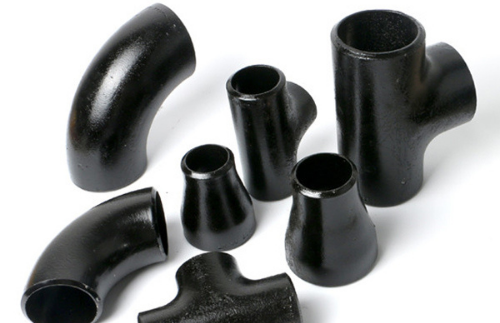
Carbon Steel Pipe Fittings in Ghana — Complete Guide to ASTM A105, A234 WPB, WP11, WP22 & WP91 Standards

In Ghana’s expanding industrial landscape — including power generation, oil & gas, petrochemical, mining, manufacturing, and construction sectors — reliable piping systems are essential. Carbon steel pipe fittings play a crucial role in creating safe, efficient, and durable pipeline networks for conveying steam, oil, gas, water, and process fluids.

This comprehensive guide explains the key ASTM specifications used for carbon steel pipe fittings, helping engineers, procurement specialists, and project managers in Ghana choose the right materials for their applications.

What Are Carbon Steel Pipe Fittings?

Pipe fittings are components used to connect, branch, or adapt sections of piping, ensuring flow direction, size transitions, or sealing ends. Carbon steel fittings are widely used in industrial piping due to their high strength, weldability, and cost-effectiveness in moderate to high-temperature environments. Hnssd+1

Common fittings include:

● Elbows — change direction

● Tees — create branch lines

● Reducers — connect different pipe sizes

● Caps & Plugs — close pipe ends

● Couplings & Unions — join or disconnect piping segments

Key ASTM Standards for Carbon Steel Pipe Fittings

In the piping industry, several specifications define material properties, manufacturing processes, and acceptable applications for carbon steel fittings. Let’s examine the five major standards relevant for fittings supplied to Ghana’s industrial market:

1. ASTM A105 — Forged Carbon Steel Fittings

ASTM A105 is the standard specification for forged carbon steel components used in pressure systems. cnkpipefitting.com

Overview

● Covers forged pipe fittings and flanges manufactured from carbon steel

● Designed for ambient to elevated temperature service

● Used mainly in pressure-containing components (like forged elbows, threaded fittings) rather than butt-weld fittings

Applications in Ghana

● High-pressure steam lines in power plants

● Oil & gas facility piping systems

● Chemical processing units

● Infrastructure requiring forged components with high mechanical strength

ASTM A105 fittings are known for excellent strength, ductility, and toughness, making them suitable where internal pressure is high. cnkpipefitting.com

2. ASTM A234 WPB — General Carbon Steel Buttweld Fittings

ASTM A234 WPB is one of the most widely used specifications for carbon steel butt-weld pipe fittings. Hnssd+1

Overview

● Covers butt-weld elbows, tees, reducers, and caps for moderate to high-temperature service

● Material is weldable carbon steel suitable for pressure pipelines and pressure vessel connections

● Available in seamless or welded construction

● Manufactured in compliance with standards such as ASME B16.9, B16.11, MSS-SP-79/83/95/97 and more Hnssd

Why A234 WPB Matters

● High strength and durability

● Good weldability and long service life

● Suitable for a wide range of applications

Common Uses in Ghana

● Refineries and oil storage facilities

● Power plant piping networks

● High-pressure steam systems

● Industrial fluid transportation lines

A234 WPB fittings are versatile, cost-effective, and widely used in Ghana’s energy, industrial, and infrastructure projects. rpfindia.com

3. ASTM A234 WP11 — Alloy Carbon Steel Buttweld Fittings

ASTM A234 WP11 extends the ASTM A234 specification to include chrome-moly alloy fittings with higher alloy content. Octalsteel

Overview

● Similar fitting types as WPB (elbows, tees, reducers)

● Designed for higher temperature and pressure applications

● Includes various classes (CL1/CL2/CL3) with varying mechanical properties

Applications in Ghana

● High-temperature steam lines in energy plants

● Petrochemical process piping

● Heat exchangers and boilers

● Pipelines operating at elevated temperatures

ASTM A234 WP11 fittings provide enhanced thermal resistance compared to plain carbon steel. Octalsteel

4. ASTM A234 WP22 — Advanced Alloy Carbon Steel Fittings

ASTM A234 WP22 further increases chromium and molybdenum content for greater creep strength and oxidation resistance. These alloy butt-weld fittings are ideal where thermal stress is significant. Octalsteel

Overview

● Alloy grade superior to WP11 for high-temperature and high-stress use

● Provides extended service life under severe conditions

Applications in Ghana

● Superheated steam distribution

● Heavy-duty industrial piping

● Petrochemical processing infrastructure

A234 WP22 fittings are chosen when longevity under extreme thermal environments is key. Octalsteel

5. ASTM A234 WP91 — Premium Chrome-Moly Alloy Fittings

ASTM A234 WP91 represents the highest performance among these carbon and alloy steel fittings. rcmetal.co.in

Overview

● Alloy steel with high chromium, molybdenum, and heat-treated properties

● Excellent resistance to high temperatures and pressures

● Superior creep and fatigue strength

Applications in Ghana

● Supercritical and ultra-high-temperature steam lines

● Advanced power plant infrastructure

● Chemical industries requiring high integrity connections

A234 WP91 fittings are ideal where extended durability in aggressive conditions is required. rcmetal.co.in

Why Carbon Steel Pipe Fittings Matter in Ghana’s Industries

1. Strong Mechanical Performance

Carbon steel fittings offer excellent strength, making them suitable for pressure piping systems used widely across Ghana’s industrial sectors. Hnssd

2. Weldability and Fabrication Ease

Standards like ASTM A234 WPB and alloy grades support reliable butt weld joints, essential for long piping runs and large-scale installations. American Piping Products

3. Temperature and Pressure Resistance

Alloy grades such as WP11, WP22, and WP91 deliver enhanced performance in elevated temperature applications, such as steam generation and heat transfer. Octalsteel

4. Broad Industrial Use

From power plants and mining operations to oil & gas refineries and manufacturing facilities, carbon steel fittings are foundational to robust pipeline infrastructure.

Typical Applications Across Ghana

Carbon steel pipe fittings are used in:

● Thermal and Hydropower Plants — steam, feedwater, and condensate lines

● Oil & Gas Facilities — refinery piping and distribution systems

● Mining Processing Plants — slurry and fluid transport

● Chemical & Petrochemical Plants — heat exchangers and process piping

● Water Treatment and Distribution — municipal and industrial systems

Their adaptability and strength make them a go-to choice in many sectors.

Choosing the Right Fitting for Your Project

Grade/SpecTypeBest Use Case in Ghana
ASTM A105Forged fittingsHigh-pressure flange & threaded connections
ASTM A234 WPBStandard buttweld fittingsGeneral piping, moderate temp/pressure
ASTM A234 WP11Alloy buttweldElevated temp/medium pressure
ASTM A234 WP22Advanced alloyHigh thermal stress systems
ASTM A234 WP91Premium alloyUltra-high temp/pressure systems

Selecting the correct grade ensures safety, longevity, and optimal cost performance.

Conclusion

For Ghana’s industrial piping systems, choosing the right carbon steel pipe fitting standard — from ASTM A105 forged components to advanced A234 WP91 alloy fittings — is crucial for delivering performance, safety, and reliability. These standards support a wide range of applications in power generation, petrochemical, oil & gas, mining, manufacturing, and infrastructure projects across the country.

Whether you are building new pipeline systems or upgrading existing ones, understanding the differences, strengths, and applications of these carbon steel fitting grades empowers better engineering decisions and enhances long-term operational success.
Read More

Alloy Steel ASTM A182 Pipe Fittings: High-Performance Connectors for Demanding Industrial Systems

Across industries such as oil & gas, power generation, petrochemicals, chemical processing, water treatment, and heavy engineering, pipelines act as the lifelines of production. These pipelines carry high-temperature steam, corrosive chemicals, crude oil, gas, and other critical fluids — and their reliability depends heavily on the quality of fittings installed.

Among all piping components, Alloy Steel ASTM A182 Pipe Fittings stand out as essential connectors that ensure leak-proof flow, structural strength, and long-term durability — especially in high-pressure, high-temperature, and corrosive environments.

For industries operating under extreme conditions, choosing the right fittings is not just a performance decision, but a safety imperative.

Mcneil Instrument, a trusted manufacturer, supplier, and exporter, delivers ASTM A182 alloy steel fittings engineered to global standards — making them a strong choice for projects that demand toughness, corrosion resistance, and lifecycle reliability.

What Are ASTM A182 Alloy Steel Pipe Fittings — and Why Do They Matter?

ASTM A182 is the international specification that covers forged or rolled alloy steel materials used in high-temperature service. Fittings such as elbows, tees, reducers, caps, unions, and couplings manufactured under this standard are designed to handle:

✔ High pressure
✔ Elevated temperatures
✔ Corrosive or chemically aggressive media
✔ Mechanical stress and thermal cycling

These fittings are installed to change the direction of flow, branch piping lines, reduce diameter, or seal pipe ends — all while maintaining mechanical integrity under harsh conditions.

Key Advantages of Using Alloy Steel ASTM A182 Pipe Fittings

1. High Strength Under Pressure

Forged alloy steel provides excellent tensile strength, making these fittings ideal for pipelines handling steam, hydrocarbons, or high-pressure process fluids.

2. Superior Temperature Resistance

Alloy steel grades under ASTM A182 retain their mechanical properties even when exposed to extreme temperatures, preventing deformation or failure.

3. Excellent Corrosion & Oxidation Resistance

Chromium-molybdenum alloy steels resist corrosion in chemical plants, refineries, offshore units, boilers, and heat-intensive systems.

4. Longer Lifecycle & Lower Maintenance

Due to better metallurgical stability, these fittings last significantly longer than standard carbon steel fittings — reducing plant downtime and maintenance costs.

5. Dimensional Accuracy & Leak-Proof Performance

Forged fittings offer tight tolerances and reliable sealing, which is critical for safety in high-risk industrial environments.

Types of ASTM A182 Alloy Steel Pipe Fittings (and Where They Are Used)

Mcneil Instrument offers a complete range of forged and butt-weld fittings compliant with ASTM A182. Below is an overview of the most commonly used fittings:

Fitting TypeKey CharacteristicsBest-Suited Applications
Elbows (45° / 90°)Change direction of flow; smooth radius minimizes pressure dropSteam lines, refinery heaters, high-pressure chemical lines
Tees (Equal / Unequal)Allow branching of pipelinesPetrochemical grids, boiler systems, power generation
Reducers (Concentric / Eccentric)Connect pipes of different diametersPump discharge lines, process piping, compressed air systems
CapsSeal the pipe endTesting lines, isolation points, shutdown maintenance
Couplings & UnionsJoin two pipes; allow easy disassemblyInstrumentation, small bore piping, maintenance-heavy systems
Socket-Weld & Threaded FittingsProvide strong mechanical joints for small-diameter linesHydraulic lines, high-pressure chemical service

These fittings are used extensively in industries where temperature, pressure, and corrosion challenges demand superior material performance.

Why ASTM A182 Material Grade Selection Matters

Different alloy steel grades (such as F1, F5, F9, F11, F22, F91) offer varying levels of:

● temperature stability

● creep resistance

● corrosion protection

● pressure-handling capability

For example:

● F11 / F22 → widely used in refineries, boilers, and petrochemical plants

● F5 / F9 → preferred in power generation and high-temperature steam systems

● F91 → used in ultra-supercritical systems due to exceptional high-temperature strength

Selecting the correct grade ensures safe operation, longer life, and compliance with engineering standards.

Why Quality Matters — Especially in High-Performance Piping

Using substandard fittings can lead to:

⚠ Leaks and pressure drops
⚠ Corrosion failures
⚠ Pipeline shutdowns
⚠ Safety hazards
⚠ Expensive downtime

High-pressure and high-temperature industries cannot afford these risks.

Mcneil Instrument manufactures fittings using advanced forging, heat treatment, and machining processes to ensure:

● Uniform grain structure

● Dimensional precision

● Mechanical strength

● Compliance with ASTM / ASME / ISO standards

Each batch is supplied with Material Test Certificates (MTCs)for full traceability.

Mcneil Instrument: Trusted Supplier of ASTM A182 Alloy Steel Fittings

Here’s what sets Mcneil Instrument apart as a global supplier:

✔ Complete Range of Fittings

Butt-weld, forged socket weld, threaded fittings — all available in ASTM A182 alloy grades.

✔ Engineering-Grade Quality

Fittings manufactured using controlled forging, machining, and heat-treatment processes to ensure durability.

✔ Wide Grade Selection

Includes F1, F5, F9, F11, F22, F91 — covering all major industrial needs.

✔ Global Export Readiness

Well-versed in handling packaging, documentation, and logistics — making procurement smooth for international buyers.

✔ Application Expertise

Serving oil & gas, power plants, steam systems, chemical processing, water treatment, and infrastructure projects.

What Engineers Should Consider When Ordering Alloy Steel Fittings

Before specifying ASTM A182 fittings, engineers should check:

1. Required grade (F11, F22, etc.) based on temperature + pressure.

2. Fitting type according to pipeline design (elbows, tees, reducers, etc.).

3. Pressure rating for socket-weld/threaded fittings.

4. Welding or assembly requirements (butt weld vs forged).

5. Corrosion resistance requirements depending on media.

6. Documentation needs — MTCs, compliance certificates.

7. Supplier capability for bulk supply and timely delivery.

Mcneil Instrument supports clients across all stages — from selection to delivery.

Conclusion — High-Quality Alloy Steel Fittings are Vital for Safe, Efficient Piping Systems

ASTM A182 Alloy Steel Pipe Fittings play a central role in maintaining the safety, reliability, and performance of industrial pipelines. Their ability to handle heat, pressure, corrosion, and mechanical stress makes them indispensable in today’s demanding industrial environments.

Choosing a reliable manufacturer like Mcneil Instrumentensures:

● Verified material quality

● Precision manufacturing

● Global compliance

● Long-term durability

When industrial integrity and performance matter, high-quality alloy steel fittings are not optional — they are essential.

Read More
ASTM A182 F5 is a Chromium-Molybdenum (5% Cr, 0.5% Mo) alloy steel grade known for:

Mcneil Instrument India – Premier Manufacturer, Supplier & Global Exporter of Alloy Steel ASTM A182 F5 Tube Fittings

Introduction

In high-pressure and high-temperature piping systems, the reliability of every joint determines the long-term safety and performance of the entire network. Tube fittings must withstand extreme thermal loading, corrosive fluids, internal pressure, and constant vibration — and Alloy Steel ASTM A182 F5 is one of the most widely used materials for these challenging environments.

At Mcneil Instrument India, we specialize in manufacturing high-precision Alloy Steel ASTM A182 F5 Tube Fittings that are engineered to deliver leak-free, long-lasting performance in the harshest industrial conditions. Each fitting is designed with metallurgical accuracy, forged for superior toughness, and machined for perfect dimensional consistency.

These fittings are extensively used in refineries, boilers, steam lines, chemical processing plants, high-temperature pipelines, petrochemical units, and power generation systems across the world.


What Are Alloy Steel ASTM A182 F5 Tube Fittings?

ASTM A182 F5 is a Chromium-Molybdenum (5% Cr, 0.5% Mo) alloy steel grade known for:

  • Exceptional high-temperature strength
  • Excellent resistance to oxidation and scaling
  • Superior stress rupture and creep strength at elevated temperatures
  • Stability under repeated thermal cycling
  • Low wear and long service life under pressure

F5 tube fittings are engineered to connect, branch, regulate, or terminate piping and tubing systems that handle:

  • Superheated steam
  • High-pressure gases
  • Hydrocarbon fluids
  • Chemical processing media
  • Thermal energy lines
  • High-temperature boiler feed lines

The strengthened alloy composition makes these fittings ideal for high-demand environments involving temperatures up to 600°C–650°C and pressures ranging from medium to extremely high.


Types of Alloy Steel ASTM A182 F5 Tube Fittings Manufactured by Mcneil Instrument India

We offer one of the widest ranges of ASTM A182 F5 tube fittings, suitable for instrumentation, high-pressure piping, general industrial use, and custom project requirements.


1. Forged Socket Weld Tube Fittings (ASME B16.11)

These are used in high-pressure piping systems where strong, leak-proof joints are essential.

Available Types:

  • 45° Socket Weld Elbow
  • 90° Socket Weld Elbow
  • Equal Tee
  • Reducing Tee
  • Cross
  • Full Coupling
  • Half Coupling
  • Socket Weld Cap
  • Socket Weld Union

Uses:
Steam lines, refinery pipelines, pressure vessels, turbine systems, high-pressure chemical lines.


2. Forged Threaded Tube Fittings (NPT / BSP)

Threaded F5 fittings provide fast, secure assembly without welding.

Types:

  • Threaded Elbow
  • Threaded Tee
  • Hex Plug
  • Square Plug
  • Bushings
  • Reducers
  • NPT/BSP Unions
  • Hex/Barrel Nipples

Uses:
Instrumentation systems, small-bore tubing, gas pipelines, control panels, and corrosive media handling.


3. Precision Tube & Compression Fittings (Custom)

Machined from F5 alloy for tight-seal performance.

Types:

  • Tube-to-tube connectors
  • Elbow connectors
  • Bulkhead unions
  • Male/female connectors
  • Ferrule-type fittings

Uses:
Instrumentation lines, analytical equipment, high-pressure hydraulic & pneumatic tubes.


4. Special & Custom-Engineered ASTM A182 F5 Tube Fittings

Manufactured as per:

  • Client drawings
  • Piping isometrics
  • CAD models
  • Special pressure class
  • Unusual configurations & geometries

Ideal for:
Power projects, refinery maintenance, offshore system upgrades, and specialized process engineering designs.


Material, Metallurgy & Properties of ASTM A182 F5 Alloy Steel

1. Strength at High Temperatures

The 5% Chromium and 0.5% Molybdenum composition provides strong resistance to:

  • Thermal deformation
  • Oxidation and scaling
  • Stress rupture
  • Creep under sustained loads

2. Resistance to Corrosion & Oxidation

F5 alloy performs exceptionally well in:

  • Hot steam environments
  • Hydrocarbon atmospheres
  • Sulfur-containing gases
  • High-temperature chemical settings

3. Mechanical Attributes

ASTM A182 F5 exhibits:

  • High tensile and yield strength
  • Excellent hardness stability
  • Controlled grain size
  • Resistance to fatigue and vibration
  • High structural integrity under cycling pressure loads

4. Dimensional Stability

Maintains accuracy even after repeated exposure to heat, pressure, and corrosive media.


Key Performance Benefits of Mcneil’s ASTM A182 F5 Tube Fittings

Leak-proof connections under high pressure
Long life in high-temperature pipelines
Strong mechanical toughness in demanding industrial environments
Smooth internal finishes to reduce pressure drop
High resistance to thermal shock
Perfect for steam, boiler, and turbine lines
Corrosion protection in refinery & petrochemical applications
Tight tolerances for flawless fitment

Our fittings are engineered to function reliably even in continuous-service conditions where failure is not an option.


Manufacturing Excellence at Mcneil Instrument India

We follow rigorous manufacturing stages to ensure that every fitting exceeds global quality expectations.


1. Material Testing & Verification

Every batch of F5 alloy is tested for:

  • Chemical composition
  • Mechanical properties
  • PMI (Positive Material Identification)
  • Microstructure accuracy
  • Hardness consistency

2. Forging & High-Temperature Shaping

Forging is done at controlled temperatures to produce:

  • Uniform metallurgical grain flow
  • High tensile strength
  • Superior impact resistance
  • Defect-free forming

3. CNC Machining & Threading

Computer-controlled machining ensures:

  • Perfect dimensional tolerances
  • Accurate threading (NPT/BSP)
  • Smooth bores and edges
  • Zero leakage paths

4. Heat Treatment

Heat treatment processes such as:

  • Normalizing
  • Tempering
  • Stress relieving

are applied to optimize mechanical properties.


5. Surface Finishing

Depending on customer requirements:

  • Black oxide coating
  • Anti-corrosion oiling
  • Pickling & passivation

6. Quality Testing & Inspection

Fittings undergo:

  • Dimensional inspection
  • Hydrostatic testing
  • Hardness tests
  • NDT (UT, MT, PT)
  • Surface integrity checks

Supplied with EN 10204 3.1 MTC and TPI on request.


Technical Specifications

  • Standard: ASTM A182 F5
  • Size Range: 1/8” to 4” (custom sizes available)
  • Pressure Classes: 2000, 3000, 6000, 9000
  • Connection Types: Socket Weld, Threaded (NPT/BSP), Compression
  • Surface Finish: Black, Oiled, Pickled
  • Applicable Standards: ASME B16.11, MSS-SP series
  • Temperature Range: Suitable for high-temp applications up to 600–650°C

Industrial Applications

F5 tube fittings from Mcneil Instrument India are installed globally across industries that require superior thermal and pressure performance:

1. Petrochemical & Refinery Units

For transporting hydrocarbons, process gases, high-temperature fluids, and corrosive chemicals.

2. Power Generation Plants

Used in boilers, turbine lines, superheaters, reheaters, and steam distribution networks.

3. Chemical Processing Plants

Ideal for aggressive media and corrosive process conditions.

4. High-Temperature Steam Lines

F5 withstands scaling and oxidation even under superheated steam exposure.

5. Oil & Gas Pipelines

Perfect for high-pressure gas transmission, refining applications, and offshore systems.

6. Fertilizer & Heavy Industrial Units

Handles high-temperature chemical reactions and hot gases effectively.

7. Instrumentation & Control Lines

Small-bore precision fittings ensure accurate measurement and control.


Why Mcneil Instrument India Is the Preferred Choice

✔ In-house forging, machining & testing
✔ Global-standard quality at competitive prices
✔ Custom sizes & designs manufactured rapidly
✔ Wide inventory for fast delivery
✔ Strict adherence to ASTM & ASME standards
✔ Exported to Asia, Middle East, Africa, Europe & more
✔ Trusted by EPC contractors, industries & engineering firms


Maintenance & Handling Guide

To maximize the life of ASTM A182 F5 tube fittings:

  • Store in dry, humidity-free environments
  • Keep protected from direct weather exposure
  • Clean before installation
  • Follow correct torque & installation guidelines
  • Avoid over-tightening threaded fittings
  • Replace any fitting showing signs of wear or corrosion

Conclusion

Alloy Steel ASTM A182 F5 Tube Fittings are essential for industries where extreme temperature, pressure, and corrosion are everyday challenges. At Mcneil Instrument India, we combine advanced forging technology, CNC precision machining, metallurgical expertise, and strict testing standards to manufacture fittings that deliver unmatched durability and operational safety.

Whether for steam pipelines, refinery applications, power plants, or high-temperature chemical systems — Mcneil’s F5 tube fittings ensure reliability, strength, and long-term performance.


Frequently Asked Questions (FAQ)

1. What makes F5 alloy suitable for high-temperature applications?

Its Chromium-Molybdenum composition provides superior oxidation resistance, creep strength, and thermal stability.

2. What types of F5 fittings are available?

Socket weld fittings, threaded fittings, compression fittings, tube connectors, and custom-machined fittings.

3. Are these fittings suitable for corrosive media?

Yes. F5 alloy resists corrosion, oxidation, and scaling under hot chemical conditions.

4. Do you provide custom-made F5 fittings?

Absolutely — manufactured based on drawings, CAD designs, or non-standard project demands.

5. Are test certificates provided?

Yes. All products come with EN 10204 3.1 MTC and optional third-party testing.

Read More

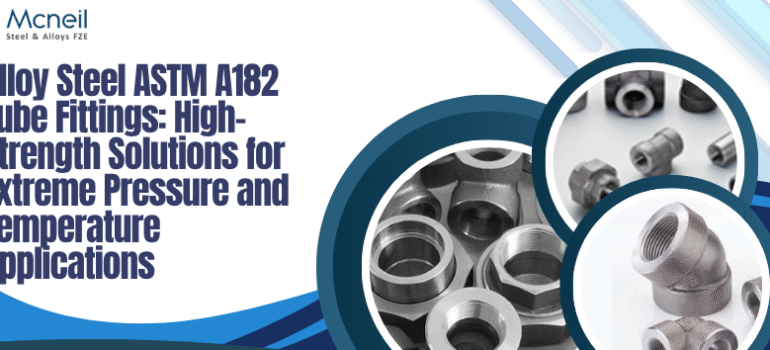
Alloy Steel ASTM A182 Tube Fittings: High-Strength Solutions for Extreme Pressure and Temperature Applications

Introduction: Built for Endurance and Performance

In the industrial world, where systems operate under extreme heat, pressure, and corrosion, the reliability of tube fittings determines the overall efficiency and safety of operations. From power plants and refineries to chemical processing units and oil & gas facilities, Alloy Steel ASTM A182 Tube Fittings are vital components that ensure leak-proof, long-lasting performance under the most challenging conditions.

At Mcneil Instruments, we specialize in manufacturing, supplying, and exporting a complete range of Alloy Steel ASTM A182 Tube Fittings that meet international standards like ASTM, ASME, and ANSI. Engineered from premium-grade alloy steel, these fittings offer exceptional mechanical strength, oxidation resistance, and durability across demanding industrial environments.

This blog explores in depth the properties, specifications, grades, and applications of Alloy Steel ASTM A182 Tube Fittings, along with insights into Mcneil Instruments’ global manufacturing excellence.

What Are Alloy Steel ASTM A182 Tube Fittings?

ASTM A182 covers forged or rolled alloy steel fittings intended for high-temperature service and pressure piping systems. These fittings are heat-treated for optimal toughness, machinability, and strength, making them ideal for steam lines, pressure vessels, and energy systems.

The ASTM A182 grades — F1, F5, F9, F11, F22, and F91 — each feature unique chemical compositions and mechanical properties suited for specific operating conditions. They are widely used in critical applications that demand precision, resilience, and consistent performance.

Key Features of Alloy Steel ASTM A182 Tube Fittings

  • Excellent resistance to high temperature and pressure
  • Superior oxidation and corrosion resistance
  • Enhanced mechanical strength and creep resistance
  • Available in forged, seamless, and welded forms
  • Ideal for thermal, chemical, and mechanical stress environments
  • Manufactured in compliance with ASTM, ASME, and DIN standards

Grades of Alloy Steel ASTM A182 Tube Fittings

1. Alloy Steel ASTM A182 F1 Tube Fittings

Overview:
Grade F1 is known for its good weldability and moderate strength, making it suitable for lower-temperature, moderate-pressure systems.

Key Features:

  • Excellent machinability and weldability
  • Good resistance to oxidation
  • Cost-effective for standard pressure applications

Applications:

  • Steam lines
  • Chemical processing systems
  • Low-pressure boilers

Chemical Composition (%):

ElementComposition
Carbon (C)0.15 max
Manganese (Mn)0.30–0.60
Chromium (Cr)0.50–0.80
Molybdenum (Mo)0.44–0.65
Silicon (Si)0.50 max

2. Alloy Steel ASTM A182 F5 Tube Fittings

Overview:
Grade F5 offers superior creep strength and oxidation resistance at elevated temperatures, ideal for petrochemical and refinery applications.

Key Features:

  • Performs well under continuous high-temperature exposure
  • Excellent resistance to sulfuric and nitric acids
  • Maintains dimensional stability under pressure

Applications:

  • Oil & gas refineries
  • Heat exchangers
  • Power generation plants

Mechanical Properties:

PropertyValue
Tensile Strength≥ 415 MPa
Yield Strength≥ 205 MPa
Elongation≥ 20%
Hardness≤ 197 HBW

3. Alloy Steel ASTM A182 F9 Tube Fittings

Overview:
F9 tube fittings contain higher chromium and molybdenum, enhancing their strength and corrosion resistance under high-stress conditions.

Key Features:

  • Excellent resistance to creep and scaling
  • Suitable for high-temperature steam systems
  • Good structural integrity over prolonged use

Applications:

  • Steam pipelines
  • Power plants
  • Superheaters and reheaters

Chemical Composition (%):

ElementComposition
Chromium (Cr)8.00–10.00
Molybdenum (Mo)0.90–1.10
Carbon (C)0.15 max
Manganese (Mn)0.30–0.60

4. Alloy Steel ASTM A182 F11 Tube Fittings

Overview:
F11 fittings are a chromium-molybdenum alloy providing a balance of strength, ductility, and corrosion resistance at elevated temperatures.

Key Features:

  • High tensile and yield strength
  • Excellent resistance to oxidation and scaling
  • Ideal for cyclic temperature operations

Applications:

  • Steam boilers and pressure vessels
  • Thermal power plants
  • Process piping systems

Mechanical Properties:

PropertyValue
Tensile Strength≥ 415 MPa
Yield Strength≥ 205 MPa
Elongation20% min
Hardness≤ 200 HBW

5. Alloy Steel ASTM A182 F22 Tube Fittings

Overview:
Grade F22 tube fittings are designed for superheated steam and high-pressure pipelines, offering excellent toughness and fatigue resistance.

Key Features:

  • Superior creep and rupture strength
  • Outstanding oxidation resistance up to 600°C
  • Consistent performance under thermal stress

Applications:

  • Superheaters and reheaters
  • Petrochemical and fertilizer plants
  • Power and refinery systems

Chemical Composition (%):

ElementComposition
Chromium (Cr)1.90–2.60
Molybdenum (Mo)0.87–1.13
Carbon (C)0.05–0.15
Manganese (Mn)0.30–0.60

6. Alloy Steel ASTM A182 F91 Tube Fittings

Overview:
The F91 grade is the most advanced in the A182 series, providing exceptional creep strength, high-temperature endurance, and superior oxidation resistance — ideal for ultra-high-pressure environments.

Key Features:

  • Enhanced thermal stability and pressure retention
  • Long service life in extreme environments
  • Best suited for advanced power and refinery systems

Applications:

  • Nuclear and thermal power plants
  • High-pressure steam pipelines
  • Energy and chemical industries

Mechanical Properties:

PropertyValue
Tensile Strength≥ 585 MPa
Yield Strength≥ 415 MPa
Elongation20% min
Hardness≤ 250 HBW

Technical Specifications of Alloy Steel ASTM A182 Tube Fittings

SpecificationDetails
Standards ComplianceASTM A182 / ASME SA182
Grades AvailableF1, F5, F9, F11, F22, F91
Connection TypesForged, Socket Weld, Butt-Weld, Threaded
Size Range1/8″ NB to 48″ NB
Pressure RatingUp to 9000 PSI
Temperature Range-46°C to 675°C
Manufacturing TypeSeamless, Forged, Welded

Advantages of Alloy Steel ASTM A182 Tube Fittings

  • Superior performance under thermal cycling
  • High resistance to oxidation and corrosion
  • Excellent tensile and yield strength
  • Suitable for high-pressure and high-temperature environments
  • Long service life and low maintenance costs

Applications Across Industries

  • Power Generation Plants: Boilers, turbines, and reheaters
  • Oil & Gas Refineries: Steam and hydrocarbon lines
  • Petrochemical Plants: Heat exchangers and pressure vessels
  • Chemical Processing: Acid and alkali-resistant piping
  • Marine & Offshore Systems: Corrosion-resistant connections

Quality Testing and Certifications

All Mcneil Instruments products undergo stringent quality assurance to ensure unmatched performance.

Testing Procedures:

  • Hydrostatic and Pneumatic Pressure Testing
  • Ultrasonic and Radiographic Examination
  • Dimensional and Surface Inspection
  • Positive Material Identification (PMI)
  • Hardness and Tensile Strength Tests

Certifications:

  • ISO 9001:2015 Certified Manufacturer
  • EN 10204 3.1 / 3.2 Material Test Certificates
  • ASTM, ASME, and ANSI Compliance

Global Reach of Mcneil Instruments

Mcneil Instruments is a globally recognized manufacturer, supplier, and exporter of Alloy Steel ASTM A182 Tube Fittings, supplying to over 30 countries worldwide.

Key Export Destinations:

  • Middle East: Saudi Arabia, UAE, Oman, Qatar – Petrochemical & Power Sectors
  • Africa: Nigeria, Egypt, Ghana – Energy & Industrial Infrastructure
  • Asia-Pacific: Singapore, Malaysia, Indonesia – Refineries & Engineering Plants
  • Europe & North America: USA, UK, Canada, Germany – Energy & Nuclear Projects

Future Trends in Alloy Steel Tube Fittings

As industries evolve toward automation and advanced metallurgy, the demand for high-performance alloy steel tube fittings continues to grow. Innovations in heat-resistant coatings and precision forging technologies will further enhance their performance, durability, and efficiency in extreme operational environments.

Conclusion: Strength That Sustains Industry

Alloy Steel ASTM A182 Tube Fittings in grades F1, F5, F9, F11, F22, and F91 represent the backbone of critical piping systems across power, oil, gas, and chemical sectors. Built to perform under pressure, these fittings ensure reliability, safety, and longevity in every connection.

As a trusted manufacturer, supplier, and exporter in India, Mcneil Instruments provides globally certified, precision-engineered solutions that meet the highest international standards — delivering performance that defines excellence.

Read More