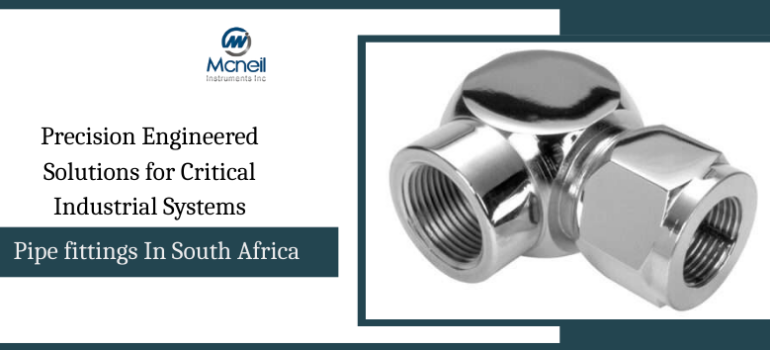
pipe fittings South Africa, pipe fittings manufacturer South Africa

Pipe Fittings in South Africa: Engineered Strength for Demanding Industrial Environments

Supporting South Africa’s Industrial & Infrastructure Growth

South Africa stands as one of Africa’s most industrially advanced economies. From deep-level mining and oil & gas operations to power generation, water infrastructure, chemical processing, and heavy manufacturing—every sector depends on piping systems that can perform reliably under extreme conditions.

High pressure, abrasive slurry, corrosive chemicals, temperature fluctuations, and continuous operation are part of everyday industrial life in South Africa. In such environments, pipe fittings are not just connectors—they are pressure-retaining, load-bearing components that directly impact plant safety, operational efficiency, and uptime. Even a single fitting failure can result in costly shutdowns, production losses, and serious safety risks.

That’s why industries across the country rely on Mcneil Instruments, a globally trusted manufacturer, supplier, and exporter of ASTM, ASME, and ISO-compliant pipe fittings engineered to meet South Africa’s demanding industrial requirements.

This guide explains pipe fittings, their types, materials, standards, applications, and why Mcneil Instruments is a preferred partner for South African projects.


What Are Pipe Fittings?

Pipe fittings are engineered components used to connect, redirect, control, or terminate flow within piping systems. They allow changes in direction, pipe diameter, pressure flow, and system branching—while maintaining mechanical strength and leak-free performance.

In South Africa, pipe fittings are critical across:

  • Mining slurry and mineral processing lines
  • Oil & gas refineries and fuel terminals
  • Power plants and boiler systems
  • Water treatment and desalination facilities
  • Chemical and petrochemical plants

Mcneil Instruments designs pipe fittings with dimensional accuracy, pressure integrity, and long service life, even in harsh African operating environments.


Types of Pipe Fittings for South African Applications

Elbows (45°, 90°, 180°)

Used to change flow direction while minimizing turbulence and pressure loss.
Common applications:

  • Mining process pipelines
  • Petrochemical and refinery units
  • Power plant auxiliary piping

Tees & Crosses

Enable flow splitting or combining in multi-line systems.
Common applications:

  • Process distribution networks
  • Water and wastewater treatment plants
  • Chemical dosing systems

Reducers (Concentric & Eccentric)

Ensure smooth flow transition between different pipe diameters.
Common applications:

  • Pump suction and discharge lines
  • Slurry handling systems
  • Industrial utility pipelines

Caps & Plugs

Safely close pipe ends during operation, testing, or future expansion.
Common applications:

  • Pipeline termination points
  • Maintenance shutdowns
  • Pressure testing systems

Stub Ends & Flanged Fittings

Allow easy dismantling and maintenance of high-pressure piping.
Common applications:

  • Refineries and power stations
  • Large-diameter industrial pipelines
  • Offshore and coastal installations

Materials & Grades for Pipe Fittings in South Africa

South African industries face abrasion, corrosion, high pressure, and temperature extremes, making material selection a critical decision.

Mcneil Instruments supplies pipe fittings in:

  • Carbon Steel (ASTM A234 WPB) – cost-effective strength for oil, gas, water, and mining
  • Stainless Steel (ASTM A403 WP304, WP316, WP316L) – corrosion resistance for chemical, coastal, and hygienic applications
  • Alloy Steel (ASTM A234 WP5, WP9, WP11, WP22, WP91) – ideal for high-temperature and high-pressure service
  • Special Alloys – for aggressive chemical and extreme operating conditions

These materials ensure reliable performance across onshore, offshore, coastal, and inland installations in South Africa.


Standards & Compliance You Can Trust

All pipe fittings supplied by Mcneil Instruments are manufactured and tested according to internationally accepted standards.

Specification Overview

  • Manufacturing: Hot formed / Machined
  • Standards: ASTM, ASME, ISO
  • Size Range: ½″ to 48″
  • Pressure Class: As per ASME B16 standards
  • End Connections: Butt weld, socket weld, threaded
  • Surface Finish: Black, pickled, passivated, coated

Why Standards Matter in South African Projects

Strict compliance is essential for mining companies, EPC contractors, and energy operators because it ensures:

  • Safe operation under high pressure and temperature
  • Compatibility with international engineering codes
  • Long-term durability in abrasive and corrosive environments
  • Acceptance by global consultants, inspectors, and insurers

Every shipment from Mcneil Instruments includes full traceability, inspection reports, and certification.


Key Applications of Pipe Fittings in South Africa

  • Mining & Minerals: slurry pipelines, concentrators, processing plants
  • Oil & Gas: refineries, terminals, fuel distribution systems
  • Power Generation: boilers, steam lines, auxiliary piping
  • Water & Wastewater: treatment plants, pumping stations
  • Chemical & Petrochemical: corrosive and high-pressure process lines

Quality Assurance: Testing & Certification

Each pipe fitting is thoroughly inspected before dispatch.

Testing Procedures

  • Dimensional and visual inspection
  • Hydrostatic or pressure testing
  • PMI (Positive Material Identification)
  • Weld and surface finish inspection

Certifications Provided

  • EN 10204 3.1 / 3.2
  • ASTM & ASME compliance certificates
  • ISO 9001:2015 Quality Management

Mcneil Instruments: A Reliable Pipe Fittings Supplier to South Africa

With extensive export experience across Africa, Mcneil Instruments supports South African projects with:

  • Custom sizes and project-specific fittings
  • Secure export packaging for long-distance transport
  • Timely delivery to South African ports and sites
  • Technical assistance for material and grade selection

Future Outlook: Growing Demand for Pipe Fittings in South Africa

As South Africa continues to invest in mining expansion, energy transition projects, water infrastructure upgrades, and industrial modernization, demand for durable, standards-compliant pipe fittings will keep rising.

High-strength, corrosion-resistant fittings will remain essential for ensuring plant safety, efficiency, and long-term operational reliability.


Conclusion: Pipe Fittings Built for South African Industry

From deep underground mines to refineries, power plants, and water treatment facilities, industrial pipe fittings play a vital role in keeping South Africa’s industries running safely and efficiently.

By combining global standards, strict quality control, and proven export expertise, Mcneil Instruments delivers precision-engineered pipe fittings that meet the real-world challenges of South African industrial environments—today and into the future.
Read More

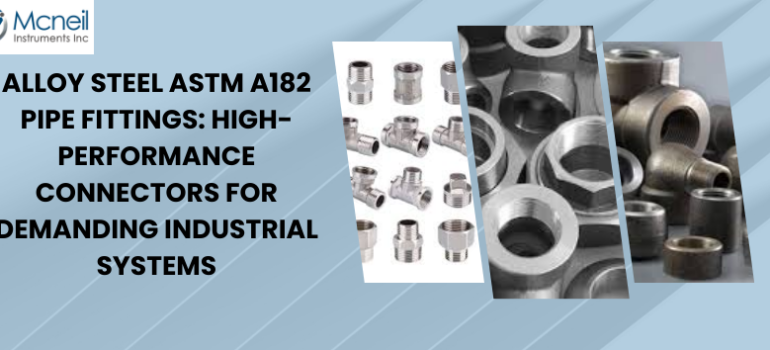
Alloy Steel ASTM A182 Pipe Fittings: High-Performance Connectors for Demanding Industrial Systems

Across industries such as oil & gas, power generation, petrochemicals, chemical processing, water treatment, and heavy engineering, pipelines act as the lifelines of production. These pipelines carry high-temperature steam, corrosive chemicals, crude oil, gas, and other critical fluids — and their reliability depends heavily on the quality of fittings installed.

Among all piping components, Alloy Steel ASTM A182 Pipe Fittings stand out as essential connectors that ensure leak-proof flow, structural strength, and long-term durability — especially in high-pressure, high-temperature, and corrosive environments.

For industries operating under extreme conditions, choosing the right fittings is not just a performance decision, but a safety imperative.

Mcneil Instruments, a trusted manufacturer, supplier, and exporter, delivers ASTM A182 alloy steel fittings engineered to global standards — making them a strong choice for projects that demand toughness, corrosion resistance, and lifecycle reliability.

What Are ASTM A182 Alloy Steel Pipe Fittings — and Why Do They Matter?

ASTM A182 is the international specification that covers forged or rolled alloy steel materials used in high-temperature service. Fittings such as elbows, tees, reducers, caps, unions, and couplings manufactured under this standard are designed to handle:

✔ High pressure
✔ Elevated temperatures
✔ Corrosive or chemically aggressive media
✔ Mechanical stress and thermal cycling

These fittings are installed to change the direction of flow, branch piping lines, reduce diameter, or seal pipe ends — all while maintaining mechanical integrity under harsh conditions.

Key Advantages of Using Alloy Steel ASTM A182 Pipe Fittings

1. High Strength Under Pressure

Forged alloy steel provides excellent tensile strength, making these fittings ideal for pipelines handling steam, hydrocarbons, or high-pressure process fluids.

2. Superior Temperature Resistance

Alloy steel grades under ASTM A182 retain their mechanical properties even when exposed to extreme temperatures, preventing deformation or failure.

3. Excellent Corrosion & Oxidation Resistance

Chromium-molybdenum alloy steels resist corrosion in chemical plants, refineries, offshore units, boilers, and heat-intensive systems.

4. Longer Lifecycle & Lower Maintenance

Due to better metallurgical stability, these fittings last significantly longer than standard carbon steel fittings — reducing plant downtime and maintenance costs.

5. Dimensional Accuracy & Leak-Proof Performance

Forged fittings offer tight tolerances and reliable sealing, which is critical for safety in high-risk industrial environments.

Types of ASTM A182 Alloy Steel Pipe Fittings (and Where They Are Used)

Mcneil Instrument offers a complete range of forged and butt-weld fittings compliant with ASTM A182. Below is an overview of the most commonly used fittings:

Fitting TypeKey CharacteristicsBest-Suited Applications
Elbows (45° / 90°)Change direction of flow; smooth radius minimizes pressure dropSteam lines, refinery heaters, high-pressure chemical lines
Tees (Equal / Unequal)Allow branching of pipelinesPetrochemical grids, boiler systems, power generation
Reducers (Concentric / Eccentric)Connect pipes of different diametersPump discharge lines, process piping, compressed air systems
CapsSeal the pipe endTesting lines, isolation points, shutdown maintenance
Couplings & UnionsJoin two pipes; allow easy disassemblyInstrumentation, small bore piping, maintenance-heavy systems
Socket-Weld & Threaded FittingsProvide strong mechanical joints for small-diameter linesHydraulic lines, high-pressure chemical service

These fittings are used extensively in industries where temperature, pressure, and corrosion challenges demand superior material performance.

Why ASTM A182 Material Grade Selection Matters

Different alloy steel grades (such as F1, F5, F9, F11, F22, F91) offer varying levels of:

  • temperature stability
  • creep resistance
  • corrosion protection
  • pressure-handling capability

For example:

  • F11 / F22 → widely used in refineries, boilers, and petrochemical plants
  • F5 / F9 → preferred in power generation and high-temperature steam systems
  • F91 → used in ultra-supercritical systems due to exceptional high-temperature strength

Selecting the correct grade ensures safe operation, longer life, and compliance with engineering standards.

Why Quality Matters — Especially in High-Performance Piping

Using substandard fittings can lead to:

⚠ Leaks and pressure drops
⚠ Corrosion failures
⚠ Pipeline shutdowns
⚠ Safety hazards
⚠ Expensive downtime

High-pressure and high-temperature industries cannot afford these risks.

Mcneil Instrument manufactures fittings using advanced forging, heat treatment, and machining processes to ensure:

  • Uniform grain structure
  • Dimensional precision
  • Mechanical strength
  • Compliance with ASTM / ASME / ISO standards

Each batch is supplied with Material Test Certificates (MTCs) for full traceability.

Mcneil Instruments: Trusted Supplier of ASTM A182 Alloy Steel Fittings

Here’s what sets Mcneil Instrument apart as a global supplier:

✔ Complete Range of Fittings

Butt-weld, forged socket weld, threaded fittings — all available in ASTM A182 alloy grades.

✔ Engineering-Grade Quality

Fittings manufactured using controlled forging, machining, and heat-treatment processes to ensure durability.

✔ Wide Grade Selection

Includes F1, F5, F9, F11, F22, F91 — covering all major industrial needs.

✔ Global Export Readiness

Well-versed in handling packaging, documentation, and logistics — making procurement smooth for international buyers.

✔ Application Expertise

Serving oil & gas, power plants, steam systems, chemical processing, water treatment, and infrastructure projects.

What Engineers Should Consider When Ordering Alloy Steel Fittings

Before specifying ASTM A182 fittings, engineers should check:

  1. Required grade (F11, F22, etc.) based on temperature + pressure.
  2. Fitting type according to pipeline design (elbows, tees, reducers, etc.).
  3. Pressure rating for socket-weld/threaded fittings.
  4. Welding or assembly requirements (butt weld vs forged).
  5. Corrosion resistance requirements depending on media.
  6. Documentation needs — MTCs, compliance certificates.
  7. Supplier capability for bulk supply and timely delivery.

Mcneil Instrument supports clients across all stages — from selection to delivery.

Conclusion — High-Quality Alloy Steel Fittings are Vital for Safe, Efficient Piping Systems

ASTM A182 Alloy Steel Pipe Fittings play a central role in maintaining the safety, reliability, and performance of industrial pipelines. Their ability to handle heat, pressure, corrosion, and mechanical stress makes them indispensable in today’s demanding industrial environments.

Choosing a reliable manufacturer like Mcneil Instruments ensures:

  • Verified material quality
  • Precision manufacturing
  • Global compliance
  • Long-term durability

When industrial integrity and performance matter, high-quality alloy steel fittings are not optional — they are essential.

Read More

Alloy Steel ASTM A182 Pipe Fittings: High-Performance Connectors for Demanding Industrial Systems

Across industries such as oil & gas, power generation, petrochemicals, chemical processing, water treatment, and heavy engineering, pipelines act as the lifelines of production. These pipelines carry high-temperature steam, corrosive chemicals, crude oil, gas, and other critical fluids — and their reliability depends heavily on the quality of fittings installed.

Among all piping components, Alloy Steel ASTM A182 Pipe Fittings stand out as essential connectors that ensure leak-proof flow, structural strength, and long-term durability — especially in high-pressure, high-temperature, and corrosive environments.

For industries operating under extreme conditions, choosing the right fittings is not just a performance decision, but a safety imperative.

Mcneil Instrument, a trusted manufacturer, supplier, and exporter, delivers ASTM A182 alloy steel fittings engineered to global standards — making them a strong choice for projects that demand toughness, corrosion resistance, and lifecycle reliability.

What Are ASTM A182 Alloy Steel Pipe Fittings — and Why Do They Matter?

ASTM A182 is the international specification that covers forged or rolled alloy steel materials used in high-temperature service. Fittings such as elbows, tees, reducers, caps, unions, and couplings manufactured under this standard are designed to handle:

✔ High pressure
✔ Elevated temperatures
✔ Corrosive or chemically aggressive media
✔ Mechanical stress and thermal cycling

These fittings are installed to change the direction of flow, branch piping lines, reduce diameter, or seal pipe ends — all while maintaining mechanical integrity under harsh conditions.

Key Advantages of Using Alloy Steel ASTM A182 Pipe Fittings

1. High Strength Under Pressure

Forged alloy steel provides excellent tensile strength, making these fittings ideal for pipelines handling steam, hydrocarbons, or high-pressure process fluids.

2. Superior Temperature Resistance

Alloy steel grades under ASTM A182 retain their mechanical properties even when exposed to extreme temperatures, preventing deformation or failure.

3. Excellent Corrosion & Oxidation Resistance

Chromium-molybdenum alloy steels resist corrosion in chemical plants, refineries, offshore units, boilers, and heat-intensive systems.

4. Longer Lifecycle & Lower Maintenance

Due to better metallurgical stability, these fittings last significantly longer than standard carbon steel fittings — reducing plant downtime and maintenance costs.

5. Dimensional Accuracy & Leak-Proof Performance

Forged fittings offer tight tolerances and reliable sealing, which is critical for safety in high-risk industrial environments.

Types of ASTM A182 Alloy Steel Pipe Fittings (and Where They Are Used)

Mcneil Instrument offers a complete range of forged and butt-weld fittings compliant with ASTM A182. Below is an overview of the most commonly used fittings:

Fitting TypeKey CharacteristicsBest-Suited Applications
Elbows (45° / 90°)Change direction of flow; smooth radius minimizes pressure dropSteam lines, refinery heaters, high-pressure chemical lines
Tees (Equal / Unequal)Allow branching of pipelinesPetrochemical grids, boiler systems, power generation
Reducers (Concentric / Eccentric)Connect pipes of different diametersPump discharge lines, process piping, compressed air systems
CapsSeal the pipe endTesting lines, isolation points, shutdown maintenance
Couplings & UnionsJoin two pipes; allow easy disassemblyInstrumentation, small bore piping, maintenance-heavy systems
Socket-Weld & Threaded FittingsProvide strong mechanical joints for small-diameter linesHydraulic lines, high-pressure chemical service

These fittings are used extensively in industries where temperature, pressure, and corrosion challenges demand superior material performance.

Why ASTM A182 Material Grade Selection Matters

Different alloy steel grades (such as F1, F5, F9, F11, F22, F91) offer varying levels of:

● temperature stability

● creep resistance

● corrosion protection

● pressure-handling capability

For example:

● F11 / F22 → widely used in refineries, boilers, and petrochemical plants

● F5 / F9 → preferred in power generation and high-temperature steam systems

● F91 → used in ultra-supercritical systems due to exceptional high-temperature strength

Selecting the correct grade ensures safe operation, longer life, and compliance with engineering standards.

Why Quality Matters — Especially in High-Performance Piping

Using substandard fittings can lead to:

⚠ Leaks and pressure drops
⚠ Corrosion failures
⚠ Pipeline shutdowns
⚠ Safety hazards
⚠ Expensive downtime

High-pressure and high-temperature industries cannot afford these risks.

Mcneil Instrument manufactures fittings using advanced forging, heat treatment, and machining processes to ensure:

● Uniform grain structure

● Dimensional precision

● Mechanical strength

● Compliance with ASTM / ASME / ISO standards

Each batch is supplied with Material Test Certificates (MTCs)for full traceability.

Mcneil Instrument: Trusted Supplier of ASTM A182 Alloy Steel Fittings

Here’s what sets Mcneil Instrument apart as a global supplier:

✔ Complete Range of Fittings

Butt-weld, forged socket weld, threaded fittings — all available in ASTM A182 alloy grades.

✔ Engineering-Grade Quality

Fittings manufactured using controlled forging, machining, and heat-treatment processes to ensure durability.

✔ Wide Grade Selection

Includes F1, F5, F9, F11, F22, F91 — covering all major industrial needs.

✔ Global Export Readiness

Well-versed in handling packaging, documentation, and logistics — making procurement smooth for international buyers.

✔ Application Expertise

Serving oil & gas, power plants, steam systems, chemical processing, water treatment, and infrastructure projects.

What Engineers Should Consider When Ordering Alloy Steel Fittings

Before specifying ASTM A182 fittings, engineers should check:

1. Required grade (F11, F22, etc.) based on temperature + pressure.

2. Fitting type according to pipeline design (elbows, tees, reducers, etc.).

3. Pressure rating for socket-weld/threaded fittings.

4. Welding or assembly requirements (butt weld vs forged).

5. Corrosion resistance requirements depending on media.

6. Documentation needs — MTCs, compliance certificates.

7. Supplier capability for bulk supply and timely delivery.

Mcneil Instrument supports clients across all stages — from selection to delivery.

Conclusion — High-Quality Alloy Steel Fittings are Vital for Safe, Efficient Piping Systems

ASTM A182 Alloy Steel Pipe Fittings play a central role in maintaining the safety, reliability, and performance of industrial pipelines. Their ability to handle heat, pressure, corrosion, and mechanical stress makes them indispensable in today’s demanding industrial environments.

Choosing a reliable manufacturer like Mcneil Instrumentensures:

● Verified material quality

● Precision manufacturing

● Global compliance

● Long-term durability

When industrial integrity and performance matter, high-quality alloy steel fittings are not optional — they are essential.

Read More
ASTM A182 F5 is a Chromium-Molybdenum (5% Cr, 0.5% Mo) alloy steel grade known for:

Mcneil Instrument India – Premier Manufacturer, Supplier & Global Exporter of Alloy Steel ASTM A182 F5 Tube Fittings

Introduction

In high-pressure and high-temperature piping systems, the reliability of every joint determines the long-term safety and performance of the entire network. Tube fittings must withstand extreme thermal loading, corrosive fluids, internal pressure, and constant vibration — and Alloy Steel ASTM A182 F5 is one of the most widely used materials for these challenging environments.

At Mcneil Instrument India, we specialize in manufacturing high-precision Alloy Steel ASTM A182 F5 Tube Fittings that are engineered to deliver leak-free, long-lasting performance in the harshest industrial conditions. Each fitting is designed with metallurgical accuracy, forged for superior toughness, and machined for perfect dimensional consistency.

These fittings are extensively used in refineries, boilers, steam lines, chemical processing plants, high-temperature pipelines, petrochemical units, and power generation systems across the world.


What Are Alloy Steel ASTM A182 F5 Tube Fittings?

ASTM A182 F5 is a Chromium-Molybdenum (5% Cr, 0.5% Mo) alloy steel grade known for:

  • Exceptional high-temperature strength
  • Excellent resistance to oxidation and scaling
  • Superior stress rupture and creep strength at elevated temperatures
  • Stability under repeated thermal cycling
  • Low wear and long service life under pressure

F5 tube fittings are engineered to connect, branch, regulate, or terminate piping and tubing systems that handle:

  • Superheated steam
  • High-pressure gases
  • Hydrocarbon fluids
  • Chemical processing media
  • Thermal energy lines
  • High-temperature boiler feed lines

The strengthened alloy composition makes these fittings ideal for high-demand environments involving temperatures up to 600°C–650°C and pressures ranging from medium to extremely high.


Types of Alloy Steel ASTM A182 F5 Tube Fittings Manufactured by Mcneil Instrument India

We offer one of the widest ranges of ASTM A182 F5 tube fittings, suitable for instrumentation, high-pressure piping, general industrial use, and custom project requirements.


1. Forged Socket Weld Tube Fittings (ASME B16.11)

These are used in high-pressure piping systems where strong, leak-proof joints are essential.

Available Types:

  • 45° Socket Weld Elbow
  • 90° Socket Weld Elbow
  • Equal Tee
  • Reducing Tee
  • Cross
  • Full Coupling
  • Half Coupling
  • Socket Weld Cap
  • Socket Weld Union

Uses:
Steam lines, refinery pipelines, pressure vessels, turbine systems, high-pressure chemical lines.


2. Forged Threaded Tube Fittings (NPT / BSP)

Threaded F5 fittings provide fast, secure assembly without welding.

Types:

  • Threaded Elbow
  • Threaded Tee
  • Hex Plug
  • Square Plug
  • Bushings
  • Reducers
  • NPT/BSP Unions
  • Hex/Barrel Nipples

Uses:
Instrumentation systems, small-bore tubing, gas pipelines, control panels, and corrosive media handling.


3. Precision Tube & Compression Fittings (Custom)

Machined from F5 alloy for tight-seal performance.

Types:

  • Tube-to-tube connectors
  • Elbow connectors
  • Bulkhead unions
  • Male/female connectors
  • Ferrule-type fittings

Uses:
Instrumentation lines, analytical equipment, high-pressure hydraulic & pneumatic tubes.


4. Special & Custom-Engineered ASTM A182 F5 Tube Fittings

Manufactured as per:

  • Client drawings
  • Piping isometrics
  • CAD models
  • Special pressure class
  • Unusual configurations & geometries

Ideal for:
Power projects, refinery maintenance, offshore system upgrades, and specialized process engineering designs.


Material, Metallurgy & Properties of ASTM A182 F5 Alloy Steel

1. Strength at High Temperatures

The 5% Chromium and 0.5% Molybdenum composition provides strong resistance to:

  • Thermal deformation
  • Oxidation and scaling
  • Stress rupture
  • Creep under sustained loads

2. Resistance to Corrosion & Oxidation

F5 alloy performs exceptionally well in:

  • Hot steam environments
  • Hydrocarbon atmospheres
  • Sulfur-containing gases
  • High-temperature chemical settings

3. Mechanical Attributes

ASTM A182 F5 exhibits:

  • High tensile and yield strength
  • Excellent hardness stability
  • Controlled grain size
  • Resistance to fatigue and vibration
  • High structural integrity under cycling pressure loads

4. Dimensional Stability

Maintains accuracy even after repeated exposure to heat, pressure, and corrosive media.


Key Performance Benefits of Mcneil’s ASTM A182 F5 Tube Fittings

Leak-proof connections under high pressure
Long life in high-temperature pipelines
Strong mechanical toughness in demanding industrial environments
Smooth internal finishes to reduce pressure drop
High resistance to thermal shock
Perfect for steam, boiler, and turbine lines
Corrosion protection in refinery & petrochemical applications
Tight tolerances for flawless fitment

Our fittings are engineered to function reliably even in continuous-service conditions where failure is not an option.


Manufacturing Excellence at Mcneil Instrument India

We follow rigorous manufacturing stages to ensure that every fitting exceeds global quality expectations.


1. Material Testing & Verification

Every batch of F5 alloy is tested for:

  • Chemical composition
  • Mechanical properties
  • PMI (Positive Material Identification)
  • Microstructure accuracy
  • Hardness consistency

2. Forging & High-Temperature Shaping

Forging is done at controlled temperatures to produce:

  • Uniform metallurgical grain flow
  • High tensile strength
  • Superior impact resistance
  • Defect-free forming

3. CNC Machining & Threading

Computer-controlled machining ensures:

  • Perfect dimensional tolerances
  • Accurate threading (NPT/BSP)
  • Smooth bores and edges
  • Zero leakage paths

4. Heat Treatment

Heat treatment processes such as:

  • Normalizing
  • Tempering
  • Stress relieving

are applied to optimize mechanical properties.


5. Surface Finishing

Depending on customer requirements:

  • Black oxide coating
  • Anti-corrosion oiling
  • Pickling & passivation

6. Quality Testing & Inspection

Fittings undergo:

  • Dimensional inspection
  • Hydrostatic testing
  • Hardness tests
  • NDT (UT, MT, PT)
  • Surface integrity checks

Supplied with EN 10204 3.1 MTC and TPI on request.


Technical Specifications

  • Standard: ASTM A182 F5
  • Size Range: 1/8” to 4” (custom sizes available)
  • Pressure Classes: 2000, 3000, 6000, 9000
  • Connection Types: Socket Weld, Threaded (NPT/BSP), Compression
  • Surface Finish: Black, Oiled, Pickled
  • Applicable Standards: ASME B16.11, MSS-SP series
  • Temperature Range: Suitable for high-temp applications up to 600–650°C

Industrial Applications

F5 tube fittings from Mcneil Instrument India are installed globally across industries that require superior thermal and pressure performance:

1. Petrochemical & Refinery Units

For transporting hydrocarbons, process gases, high-temperature fluids, and corrosive chemicals.

2. Power Generation Plants

Used in boilers, turbine lines, superheaters, reheaters, and steam distribution networks.

3. Chemical Processing Plants

Ideal for aggressive media and corrosive process conditions.

4. High-Temperature Steam Lines

F5 withstands scaling and oxidation even under superheated steam exposure.

5. Oil & Gas Pipelines

Perfect for high-pressure gas transmission, refining applications, and offshore systems.

6. Fertilizer & Heavy Industrial Units

Handles high-temperature chemical reactions and hot gases effectively.

7. Instrumentation & Control Lines

Small-bore precision fittings ensure accurate measurement and control.


Why Mcneil Instrument India Is the Preferred Choice

✔ In-house forging, machining & testing
✔ Global-standard quality at competitive prices
✔ Custom sizes & designs manufactured rapidly
✔ Wide inventory for fast delivery
✔ Strict adherence to ASTM & ASME standards
✔ Exported to Asia, Middle East, Africa, Europe & more
✔ Trusted by EPC contractors, industries & engineering firms


Maintenance & Handling Guide

To maximize the life of ASTM A182 F5 tube fittings:

  • Store in dry, humidity-free environments
  • Keep protected from direct weather exposure
  • Clean before installation
  • Follow correct torque & installation guidelines
  • Avoid over-tightening threaded fittings
  • Replace any fitting showing signs of wear or corrosion

Conclusion

Alloy Steel ASTM A182 F5 Tube Fittings are essential for industries where extreme temperature, pressure, and corrosion are everyday challenges. At Mcneil Instrument India, we combine advanced forging technology, CNC precision machining, metallurgical expertise, and strict testing standards to manufacture fittings that deliver unmatched durability and operational safety.

Whether for steam pipelines, refinery applications, power plants, or high-temperature chemical systems — Mcneil’s F5 tube fittings ensure reliability, strength, and long-term performance.


Frequently Asked Questions (FAQ)

1. What makes F5 alloy suitable for high-temperature applications?

Its Chromium-Molybdenum composition provides superior oxidation resistance, creep strength, and thermal stability.

2. What types of F5 fittings are available?

Socket weld fittings, threaded fittings, compression fittings, tube connectors, and custom-machined fittings.

3. Are these fittings suitable for corrosive media?

Yes. F5 alloy resists corrosion, oxidation, and scaling under hot chemical conditions.

4. Do you provide custom-made F5 fittings?

Absolutely — manufactured based on drawings, CAD designs, or non-standard project demands.

5. Are test certificates provided?

Yes. All products come with EN 10204 3.1 MTC and optional third-party testing.

Read More
ASTM A182 is a globally recognized specification for forged or rolled alloy steel fittings suitable for high-temperature and high-pressure service.

Mcneil Instrument India – Leading Alloy Steel ASTM A182 Pipe Fittings Manufacturer, Supplier & Global Exporter

Introduction

In high-pressure piping systems, every connection matters — and the integrity of the entire flow network often depends on the precision, durability, and metallurgical strength of the pipe fittings used. Alloy Steel ASTM A182 Pipe Fittings are engineered to withstand extreme pressure, temperature variations, corrosive environments, and mechanical stress, making them essential for critical industries where safety and reliability cannot be compromised.

At Mcneil Instrument India, we specialize in the manufacturing and global supply of premium-quality Alloy Steel ASTM A182 Forged & Buttweld Pipe Fittings. Designed with high-temperature tensile robustness, corrosion protection, and dimensional accuracy, our fittings ensure long-lasting performance in refineries, power plants, chemical processing units, offshore systems, and heavy industrial environments.

Our product range includes Elbows, Tees, Reducers, Caps, Couplings, Crosses, Unions, Nipples, Olets, Swage Nipples, and Custom-Engineered Fittings, available across ASTM A182 grades F5, F9, F11, F12, F22, F91, and other alloy steel specifications depending on application requirements.


What Are Alloy Steel ASTM A182 Pipe Fittings?

ASTM A182 is a globally recognized specification for forged or rolled alloy steel fittings suitable for high-temperature and high-pressure service.

These fittings provide:

  • Superior mechanical strength
  • High heat resistance (up to 600–650°C+)
  • Excellent corrosion and oxidation resistance
  • Structural integrity under thermal cycling & pressure fluctuations

They are widely used for connecting, branching, terminating, and changing the flow direction in pipelines handling steam, gases, hydrocarbons, chemicals, and high-pressure fluids.

Mcneil Instrument India manufactures Alloy Steel A182 fittings in compliance with ASME, ANSI, MSS-SP, and international dimensional standards including ASME B16.11, ASME B16.9, B16.5, and B16.25.


Types of Alloy Steel ASTM A182 Pipe Fittings Manufactured

1. Buttweld Pipe Fittings (ASME B16.9)

  • Elbows (45°/90°/180°)
  • Reducers (Concentric/Eccentric)
  • Tees (Equal & Reducing)
  • Caps
  • Crosses

Applications: High-pressure pipelines, steam lines, boilers, petrochemical processing.

2. Forged Socket Weld & Threaded Fittings (ASME B16.11)

  • Couplings
  • Unions
  • Nipples
  • Elbows & Tees
  • Bushings
  • Plugs

Applications: Compact high-strength connections in oil & gas, instrumentation, and power plants.

3. Branch Fittings (Olets)

  • Weldolet, Threadolet, Sockolet
  • Sweepolet, Latrolet, Elbolet

Applications: Safe branch connections on run pipes without welding defects.

4. Custom Machined Alloy Steel Fittings

Manufactured as per:

  • Customer drawings
  • Isometric diagrams
  • P&ID requirements
  • Special pressure ratings (Class 2000, 3000, 6000, 9000)

Material Grades Available

Alloy Steel ASTM A182 pipe fittings are available in:

Low Alloy Grades

  • A182 F1
  • A182 F2

Chromium-Molybdenum Grades

  • A182 F5 / F9
  • A182 F11 / F12
  • A182 F22 (2.25Cr-1Mo)
  • A182 F91 (9Cr-1Mo-V)

Key Characteristics

GradeKey FeaturesSuitable Applications
A182 F11 / F22Excellent creep strength, pressure resistanceSteam lines, boilers, power plants
A182 F5 / F9High-temperature resistancePetrochemical cracking, refinery heaters
A182 F91Exceptional oxidation & fatigue resistanceUltra-supercritical power plants

All materials undergo chemical, mechanical, and microstructural testing to ensure conformance with ASTM A182 requirements.


Mechanical & Performance Advantages

✔ High-temperature stability up to 600–650°C+
✔ Excellent fatigue resistance under pressure cycles
✔ Superior creep strength
✔ Oxidation & corrosion resistance for harsh media
✔ Precise dimensional tolerance for leak-free joints
✔ High tensile & yield strength for safety
✔ Long-lasting performance under thermal stress


Manufacturing Process at Mcneil Instrument India

Our production facilities follow stringent international protocols and quality control systems.

1. Raw Material Testing

  • Positive Material Identification (PMI)
  • Chemical analysis (spectrometer)
  • Mechanical property verification
  • Microstructure evaluation

2. Forging / Hot Forming

High-temperature forging ensures:

  • Improved grain flow
  • Increased toughness
  • Structural stability

3. Machining & Shaping

CNC machining ensures:

  • Accurate wall thickness
  • Precision dimensions
  • Smooth internal flow characteristics

4. Heat Treatment

Performed as per grade:

  • Normalizing
  • Annealing
  • Quenching & tempering

Enhances:

  • Hardness consistency
  • Tensile strength
  • Stress relief

5. Surface Treatment

  • Black oxide coating
  • Anti-corrosion oiling
  • Sandblasting
  • Pickling & passivation

6. Quality Inspection

Every fitting undergoes:

  • Dimensional checks
  • Hydrostatic test
  • Hardness test
  • Impact test
  • NDT (UT/RT/MT/PT)
  • Surface & visual examination

All fittings are supplied with EN 10204 3.1 MTC and TPI approval on request.


Technical Specifications

  • Standard: ASTM A182, ASME B16.11, ASME B16.9
  • Size Range: ½” to 48” (or custom)
  • Pressure Ratings: Class 2000, 3000, 6000, 9000
  • Dimensions: As per MSS-SP-75, SP-79, SP-97
  • Surface Finish: Black, pickled, sandblasted, oil-coated
  • End Connections: Beveled, threaded, socket weld
  • Tolerances: As per ASME B16.9 / custom

Industrial Applications

Mcneil Alloy Steel ASTM A182 fittings are widely used in:

  • Refineries & Petrochemical Plants
  • Thermal & Nuclear Power Plants
  • Boilers & Steam Lines
  • Oil & Gas Transmission Pipelines
  • Fertilizer & Chemical Processing Units
  • Offshore & Marine Engineering
  • Heat Exchangers & Pressure Vessels
  • Hydrocarbon Processing Units

Ideal for:

  • High temperature
  • High pressure
  • Corrosive fluid environments
  • Hydrogen-rich atmospheres
  • Thermal cycling

Quality Certifications

  • ISO 9001:2015 Certified
  • PED / IBR compliance (where required)
  • EN 10204 3.1 MTC
  • Full traceability

Testing Includes:

  • PMI Test
  • Mechanical Test
  • Hardness Test
  • Impact Test
  • Hydrostatic / Pneumatic Test
  • NDT (RT/UT/MT/PT)
  • Surface Roughness Check

Why Choose Mcneil Instrument India?

✔ Wide range of ASTM A182 grades (F5 to F91)
✔ Precision-forged, heat-treated, & tested pipe fittings
✔ Perfect dimensional accuracy & high strength
✔ Custom manufacturing as per drawing
✔ Global export to Middle East, Europe, Africa, Asia
✔ Competitive pricing with fast delivery
✔ 100% traceable & certified products

We supply fittings engineered for uncompromised safety, durability, and heavy-duty performance.


Maintenance & Handling Guidelines

  • Store in a clean, dry environment
  • Keep away from moisture to avoid surface oxidation
  • For high-temperature applications, inspect periodically
  • Replace fittings with visible deformation or corrosion
  • Follow proper torqueing and welding practices

Conclusion

Alloy Steel ASTM A182 Pipe Fittings are indispensable components in high-pressure and high-temperature piping systems. At Mcneil Instrument India, each fitting is manufactured with strict metallurgical control, precision engineering, and advanced forging techniques to guarantee exceptional performance under demanding industrial conditions.

Whether for refineries, power plants, petrochemical units, offshore systems, or chemical processing lines — Mcneil provides world-class alloy steel fittings trusted globally for reliability, strength, and longevity.


Frequently Asked Questions (FAQ)

1. What grades of ASTM A182 alloy steel are available?

F5, F9, F11, F12, F22, F91, and other chromium-molybdenum alloy grades.

2. Are these pipe fittings suitable for high-temperature service?

Yes. Many grades (F11, F22, F91) are designed for temperatures up to 600–650°C+.

3. Do you offer forged and buttweld fittings?

Yes. We manufacture both ASME B16.11 forged and ASME B16.9 buttweld fittings.

4. Can fittings be customized?

Yes — fully customized as per drawings, isometric sketches, or application requirements.

5. Are fittings supplied with test certificates?

Yes — all products come with MTC EN 10204 3.1, and TPI reports on request.

Read More

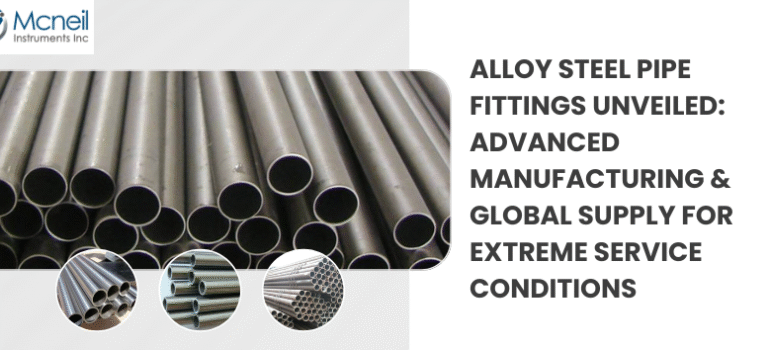
Alloy Steel Pipe Fittings Unveiled: Advanced Manufacturing & Global Supply for Extreme Service Conditions

Introduction: Why Alloy Steel Pipe Fittings Matter

In industries ranging from oil & gas to power generation and petrochemicals, the performance of piping systems often comes down to one critical element—the fittings. These components manage direction changes, branching, and system integrity under harsh conditions. When standard carbon steel is no longer sufficient—due to high temperature, pressure, or corrosion—alloy steel pipe fittings become essential. These are engineered to offer enhanced mechanical strength, corrosion resistance and longevity. At Mcneil Instruments, we specialise in manufacturing, supplying and exporting alloy steel pipe fittings built to global standards—helping engineers and procurement teams overcome the challenge of sourcing truly resilient solutions.

What Are Alloy Steel Pipe Fittings?

Alloy steel pipe fittings are components produced from pipe-fitting materials that contain alloying elements (such as chromium, molybdenum, nickel) in addition to carbon and iron. The added alloys raise performance thresholds—better creep resistance, oxidation resistance, fatigue strength—making them suitable for demanding applications. They come in forms such as elbows, tees, reducers, caps, crosses and stub ends, and are available in seamless or welded constructions.

Core Characteristics & Why They Matter

  • Elevated temperature strength: Many alloy steel grades maintain strength at hundreds of degrees Celsius, where standard steels would fail.
  • Corrosion and oxidation resistance: In high-temperature steam, sulphur-laden environments or chemical media, alloy steels resist scaling and attack better than standard steels.
  • Dimensional and part-integrity reliability: In heavy industrial systems, fittings must match pipe schedules, tolerances and welding procedures to avoid failure points.
  • Global standards compliance: Consistency in material composition, testing and certification ensures these fittings can be used confidently in international projects.

Manufacturing Process & Quality Assurance

Producing high-performance alloy steel pipe fittings involves multiple critical stages:

  1. Raw material selection – base alloy bars or pipe blanks with specified chemistry and traceability.
  2. Forming – forging, pressing or machining into the desired fitting shape (elbow, tee, reducer) per standards.
  3. Heat treatment – to achieve required microstructure and mechanical properties.
  4. Finishing operations – beveling, threading, surface preparation.
  5. Inspection & testing – chemical analysis, dimensional checks, mechanical tests, NDT (ultrasonic, radiography) and material traceability (MTCs).
  6. Documentation & certification – compliance with ASTM/ASME/EN norms, issuance of test certificates, third-party approvals.

Grades & Specifications: A Technical Overview

Here is a tabular snapshot of typical alloy steel pipe fitting grades and their application focus:

GradeTypical Alloy ElementsKey Performance AttributeCommon Applications
WP11 (Cr-Mo)~1.0 % Cr, ~0.5 % MoGood strength at high temperaturePower plant boilers, steam lines
WP22~2.25 % Cr, ~1 % MoEnhanced creep & oxidation resistanceSuperheaters, reheaters, refineries
WP91~9 % Cr, ~1 % Mo (+V/Nb)Ultra high-temperature strength & pressureUltra-supercritical boilers, advanced power stations

Based on industry data and spec summarization. 

Additional dimensions & standards:

  • Typical size range: ½″ NB to 48″ NB for weld fittings.
  • Manufacturing types: seamless, welded, butt-weld.
  • Standard dimensions: ANSI/ASME B16.9, B16.28, MSS SP-43.
  • Pressure ratings and wall thicknesses vary with class (150#, 300#, 600#, etc) and schedule (SCH 10 to XXS).

Choosing the Right Alloy Steel Pipe Fitting: Practical Guidance

When selecting alloy steel pipe fittings for a project, consider:

  • Service temperature & pressure – ensure grade is rated for extremes expected.
  • Fluid and environment – corrosive media require higher alloying.
  • Compatibility with pipe & system – matching schedule, bore, end-connection and welding specs.
  • Standards & certification – verify material test certificates (MTC), traceability to standards.
  • Maintenance & lifecycle costs – higher cost upfront may save downtime and replacement costs later.

Global Supply & Export Excellence

Mcneil Instruments acts as a trusted manufacturer, supplier and exporter of alloy steel pipe fittings from India, serving major industrial hubs and projects worldwide. Key markets include:

  • Middle East (Saudi Arabia, UAE, Qatar) for oil & gas, refinery and petrochemical applications.
  • Africa (Nigeria, Ghana) for power, industrial, and infrastructure systems.
  • North America (USA – Texas, Chicago) for power, energy and heavy industry supply.
  • Asia-Pacific (Malaysia, Singapore) for marine, processing and fabrication industries.

Our commitment to manufacturing excellence, rigorous testing and global logistics ensures that clients receive high-quality alloy steel fittings that meet project schedules and performance demands.

Certification & Traceability

To guarantee reliability, fittings from Mcneil undergo comprehensive certification:

  • Material Test Certificates per EN 10204 3.1 / 3.2
  • Compliance with ASTM A234 / ASME SA234 (or equivalent) specifications
  • Hydrostatic and non-destructive testing (ultrasonic, radiographic)
  • ISO 9001:2015 certified manufacturing processes
  • Full traceability of raw material batches and finished components

Future Trends & Innovation in Alloy Steel Fittings

As industries push toward higher efficiencies, cleaner energy and more severe service conditions, alloy steel pipe fittings are evolving:

  • New alloy compositions for extended creep life and higher temperatures
  • Advanced manufacturing (forging + machining) for tighter tolerances
  • Digital traceability, advanced NDT and predictive maintenance integration
  • Enhanced coatings and corrosion-protection systems for offshore or chemical-aggressive environments

Conclusion: Investing in Reliability

Alloy steel pipe fittings are not simply components—they are critical enablers of safe, efficient, and long-life piping systems in demanding industrial applications. By choosing fittings manufactured with precision, certified integrity and global export capability, engineers and procurement teams safeguard project performance and cost-effectiveness.

As a leading alloy steel pipe fittings manufacturer, supplier and exporter in India, Mcneil Instruments stands ready to partner with industrial clients worldwide—delivering fittings engineered for extreme conditions and global standards.

Read More