

Stainless Steel 316 Pipe Fittings Manufacturer, Supplier and Exporter in India
Mcneil Instruments is a trusted manufacturer, supplier, stockist, and exporter of Stainless Steel 316 Pipe Fittings in India. These pipe fittings are crafted from a molybdenum-bearing grade of stainless steel, which enhances corrosion resistance, especially against chlorides and acidic environments. SS 316 pipe fittings are known for their exceptional strength and durability, making them ideal for demanding applications.
Stainless Steel 316 Pipe Fittings are commonly used in marine environments, chemical processing, food & beverage industries, and pharmaceutical plants. With superior resistance to pitting and crevice corrosion, they are a reliable choice for aggressive and high-temperature service conditions.
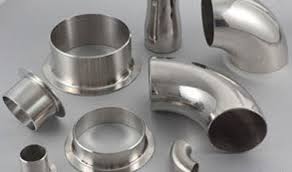
At Mcneil Instruments, we deliver precision-engineered SS 316 pipe fittings in various forms such as elbows, tees, reducers, and stub ends, fully compliant with international standards.
What Are Stainless Steel 316 Pipe Fittings
Stainless Steel 316 pipe fittings are high-performance components designed to connect, redirect, branch, reduce, or terminate piping systems operating in corrosive and demanding environments. The addition of molybdenum in grade 316 significantly improves resistance to chlorides, acids, and harsh chemicals, making it a preferred choice where standard stainless steel grades fall short.
As a reliable manufacturer, supplier, and exporter in India, we supply Stainless Steel 316 pipe fittings engineered for long-term reliability in critical industrial systems worldwide
Why Stainless Steel 316 Pipe Fittings Are Preferred
The defining advantage of Stainless Steel 316 lies in its superior corrosion resistance, particularly in chloride-rich and chemical environments. This makes it suitable for marine, coastal, chemical, and pharmaceutical applications where corrosion can quickly compromise system integrity.
316 pipe fittings also maintain excellent mechanical strength at elevated temperatures, offer good weldability, and provide a clean, non-reactive surface for sensitive process applications.
Specifications of Stainless Steel 316 Pipe Fittings
| Specifications | ASTM A403 / ASME SA403 |
| Material Grade | Stainless Steel 316 |
| Size Range | 1/2″ NB to 48″ NB |
| Type | Seamless / Welded / Fabricated |
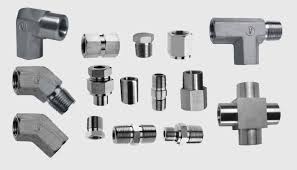
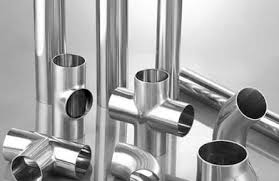
| Form | Elbow, Tee, Reducer, Cap, Stub End, Cross |
| Schedule | SCH 10 to SCH XXS |
| Ends | Bevelled / Plain / Threaded |
| Standards | ASME B16.9, B16.11, B16.28, MSS-SP-43 |
Key Features and Benefits
- Enhanced Corrosion Resistance: Performs exceptionally well in chloride and chemical environments
• Molybdenum Alloying: Improves resistance to pitting and crevice corrosion
• High Strength & Durability: Withstands pressure and temperature fluctuations
• Good Weldability: Suitable for both shop and site fabrication
• Hygienic Surface Finish: Ideal for pharmaceutical and food-grade systems.
These advantages make SS 316 pipe fittings a dependable solution for aggressive service conditions
Types of Stainless Steel 316 Pipe Fittings
Stainless Steel 316 pipe fittings are available in multiple configurations to suit varied piping layouts:
Elbows: Change flow direction in constrained or complex piping systems
Tees & Crosses: Enable branching or combining of fluid lines
Reducers: Connect different pipe diameters while maintaining smooth flow
Couplings & Unions: Join straight pipe sections efficiently
Caps & Plugs: Seal pipe ends during testing or isolation
Stub Ends: Used with lap joint flanges where dismantling is required
Each fitting type supports leak-free connections and system stability.
Where Stainless Steel 316 Pipe Fittings Are Used
Stainless Steel 316 pipe fittings are widely used in industries exposed to corrosive media:
- Chemical & Petrochemical Plants: Handles aggressive chemicals and solvents
- Marine & Coastal Applications: Resists saltwater and chloride corrosion
- Pharmaceutical Industry: Maintains cleanliness and purity standards
- Food & Beverage Processing: Suitable for hygienic piping systems
- Oil & Gas: Used in process piping and auxiliary systems
- Water Treatment & Desalination: Performs reliably in saline environments
These applications demand materials that remain stable under corrosion and pressure — exactly where 316 excels.
How to Choose the Right 316 Pipe Fittings
Selecting the correct Stainless Steel 316 pipe fittings depends on:
- Level of chloride or chemical exposure
- Operating pressure and temperature conditions
- Connection type — welded, threaded, or socket weld
- Maintenance and inspection requirements
- Compliance with industrial and international standards
For environments with higher corrosion risk, 316 is often preferred over 304 or 304L.
Manufacturing, Supply & Export from India
As a trusted Indian manufacturer, supplier, and exporter, we produce Stainless Steel 316 pipe fittings under strict quality controls. Our fittings are:
- Made from certified stainless steel with molybdenum content
- Fabricated with precise dimensional accuracy
- Tested for pressure resistance and surface quality
- Securely packed for domestic and global supply
We support EPC contractors, industrial plants, and international buyers with consistent supply and technical reliability.
Frequently Asked Questions – Stainless Steel 316 Pipe Fittings
What makes Stainless Steel 316 better than 304 for pipe fittings?
SS 316 contains molybdenum, which significantly improves resistance to chlorides and chemical corrosion compared to SS 304.
Are SS 316 pipe fittings suitable for marine environments?
Yes. Stainless Steel 316 is widely used in marine and coastal environments due to its superior saltwater corrosion resistance.
Can Stainless Steel 316 pipe fittings be welded?
Yes. SS 316 offers good weldability and is suitable for both shop fabrication and site installation.
Are SS 316 pipe fittings suitable for high temperature applications?
They perform well at moderately high temperatures. For extreme heat conditions, stabilized or high-temperature grades may be considered.
Where are SS 316 pipe fittings commonly used?
They are commonly used in chemical plants, marine systems, pharmaceutical facilities, food processing units, and desalination plants.