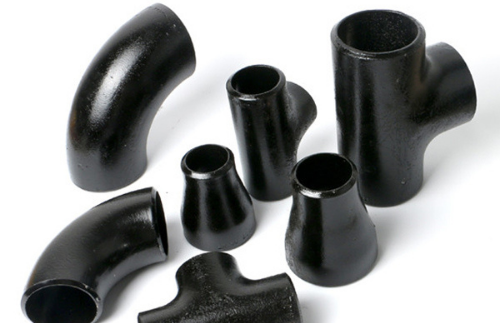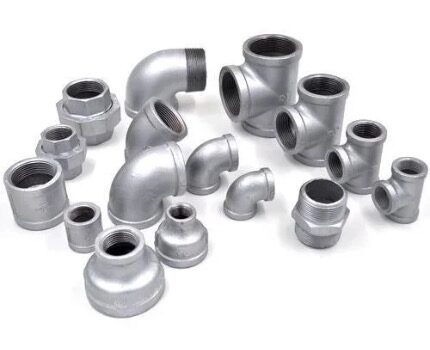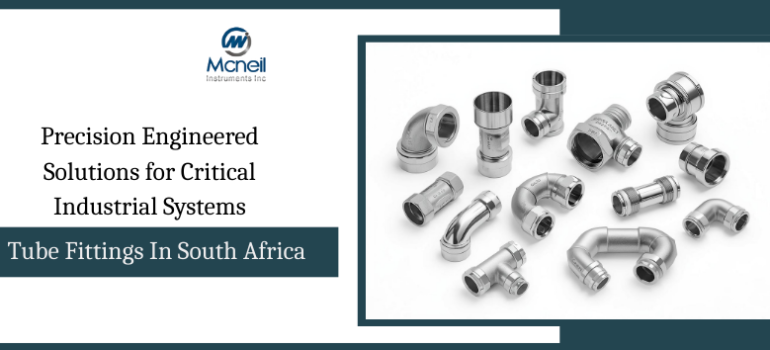
Industrial tube fittings play a critical role in maintaining safe, efficient, and durable tubing systems across South Africa’s key industries. Their performance directly impacts operational reliability and lifecycle costs. As a trusted manufacturer, supplier, and exporter, Mcneil Instruments delivers precision tube fittings engineered to meet South Africa’s demanding industrial environments—ensuring dependable performance, global compliance, and long-term value.
Tube Fittings in South Africa: Precision Connections for High-Performance Industrial Systems

Introduction: Supporting South Africa’s Industrial & Energy Growth

South Africa’s industrial landscape is driven by mining, oil & gas, petrochemicals, power generation, water treatment, and heavy manufacturing. These sectors operate under high pressure, temperature fluctuations, vibration, and corrosive environments—where even a minor leak can lead to safety risks, downtime, and financial loss.

In such critical systems, tube fittings are not simple accessories. They are precision-engineered components that ensure leak-tight connections, system integrity, and long-term operational reliability.

Mcneil Instruments, a trusted manufacturer, supplier, and exporter, delivers high-performance industrial tube fittings engineered to meet South African project requirements and international standards.

This blog provides a comprehensive overview of industrial tube fittings for South Africa, their types, materials, applications, and why Mcneil Instruments is a preferred global supply partner.


What Are Industrial Tube Fittings?

Tube fittings are mechanical components used to connect straight tubing sections, adapt tubing to threaded equipment, control flow direction, or terminate lines safely. Unlike welded joints, tube fittings allow easy installation, maintenance, and system modification without compromising performance.

In South Africa, industrial tube fittings are widely used in:

  • Oil & gas processing facilities

  • Mining slurry and hydraulic systems

  • Power plants and boiler auxiliaries

  • Chemical and petrochemical plants

  • Water treatment and desalination units

Mcneil Instruments manufactures tube fittings designed for high pressure, vibration resistance, and corrosion protection, ensuring dependable service across South African industries.


Types of Tube Fittings Supplied to South Africa

Each fitting type serves a specific functional role within tubing systems.

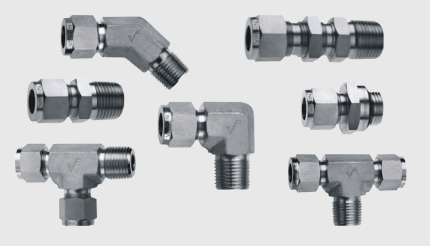
Double Ferrule Tube Fittings

Double ferrule fittings provide a strong mechanical grip and leak-proof seal, even under vibration and thermal cycling.

Typical applications in South Africa

  • Instrumentation lines

  • Hydraulic and pneumatic systems

  • Oil & gas control panels


Single Ferrule Tube Fittings

Single ferrule fittings offer simple installation and reliable sealing for moderate pressure systems.

Typical applications

  • Process tubing

  • Utility and auxiliary lines

  • Industrial fluid transfer systems


Tube Elbows, Tees & Crosses

These fittings help change flow direction or split lines while maintaining pressure integrity.

Typical applications

  • Process plants

  • Chemical distribution networks

  • Power station piping layouts


Tube Unions & Adapters

Used for connecting or transitioning between different tube sizes, threads, or systems.

Typical applications

  • Maintenance-friendly installations

  • Equipment connections

  • Retrofitting existing systems


Materials of Tube Fittings for South African Conditions

Material selection is critical due to corrosion, pressure, and temperature demands.

Mcneil Instruments supplies tube fittings in:

  • Stainless Steel (SS 304, 316, 316L) – corrosion resistance and strength

  • Alloy Steel – high pressure and temperature service

  • Carbon Steel – cost-effective industrial applications

  • Special Alloys – for aggressive chemical environments

These materials ensure long service life in coastal, mining, and high-temperature environments common across South Africa.


Key Standards & Specifications

All tube fittings supplied comply with international quality and performance benchmarks.

SpecificationDetails
Manufacturing TypePrecision Machined
Pressure RatingAs per ASTM / ASME standards
Tube Size Range1/8” to 2”
End ConnectionsCompression, NPT, BSP
FinishPickled, passivated, coated
StandardsASTM, ASME, ISO

Why Standards Matter in South African Projects

South African EPC contractors and industrial operators demand strict compliance to ensure safety and global acceptance.

Standards ensure:

  • Leak-free performance under pressure

  • Compatibility with international designs

  • Long-term system reliability

  • Acceptance in mining, oil & gas, and power projects

Mcneil Instruments provides full traceability, MTCs, and compliance documentation with every supply.


Applications of Tube Fittings in South Africa

  • Oil & Gas: instrumentation, sampling lines, control systems

  • Mining: hydraulic lines, slurry handling systems

  • Power Generation: auxiliary steam and fuel lines

  • Chemical & Petrochemical: high-pressure process tubing

  • Water Treatment: dosing and control tubing


Quality Control, Testing & Certification

Every tube fitting supplied undergoes stringent quality checks.

Testing includes

  • Dimensional inspection

  • Pressure and leak testing

  • PMI (Positive Material Identification)

  • Visual and surface finish inspection

Certifications

  • EN 10204 3.1 / 3.2

  • ASTM & ASME compliance

  • ISO 9001:2015 manufacturing standards


Mcneil Instruments: Tube Fittings Manufacturer, Supplier & Exporter to South Africa

Mcneil Instruments has built a reliable export network serving South African industries, EPC contractors, and distributors.

South Africa-focused supply advantages

  • Experience with African industrial standards

  • Export-ready packaging & documentation

  • Custom sizes and configurations

  • Consistent quality and timely delivery

  • Technical support for fitting selection


Future Outlook: Tube Fittings Demand in South Africa

With continued investment in mining expansion, energy projects, petrochemicals, and water infrastructure, demand for high-quality industrial tube fittings in South Africa will continue to rise. Leak-proof, precision-engineered fittings will remain essential for improving safety, efficiency, and plant uptime.


Conclusion: Precision Tube Fittings for South Africa’s Industrial Reliability

Industrial tube fittings play a critical role in maintaining safe, efficient, and durable tubing systems across South Africa’s key industries. Their performance directly impacts operational reliability and lifecycle costs.

As a trusted manufacturer, supplier, and exporter, Mcneil Instruments delivers precision tube fittings engineered to meet South Africa’s demanding industrial environments—ensuring dependable performance, global compliance, and long-term value.
Read More

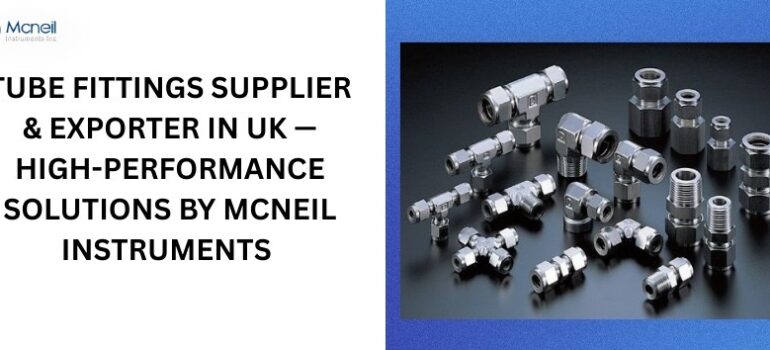
Tube Fittings Supplier & Exporter in UK — High-Performance Solutions by Mcneil Instruments

Introduction: Why Tube Fittings Matter in the UK Industrial Landscape

In the United Kingdom’s advanced industrial sectors — from oil and gas, petrochemical plants, and power generation to pharmaceutical manufacturing, marine engineering, and water treatment — precision and reliability are non-negotiable. At the heart of every high-integrity fluid system are tube fittings — the components that ensure a secure, leak-free, and corrosion-resistant connection in piping and tubing systems.

Whether it is instruments for process control, high-pressure hydraulic lines, offshore piping, or instrumentation loops, choosing the right tube fittings directly impacts operational reliability, safety, and long-term maintenance costs. That is why companies across the UK depend on Mcneil Instruments  as a leading tube fittings manufacturer, supplier, and exporter — providing engineered solutions designed for demanding industrial environments.

In this blog, we explore the key features, material grades, specifications, and applications of tube fittings supplied to the UK market, along with practical insights for engineers and procurement professionals.

What Are Tube Fittings and Where Are They Used?

Tube fittings are mechanical connectors that join tubes to other tubes, valves, or instrumentation. They provide secure connections capable of handling high pressures, dynamic loads, and corrosive media. Unlike pipe fittings, tube fittings are typically used where precise internal diameters and tubing systems are common — for example:

● Instrumentation lines

● High-pressure gas manifolds

● Chemical dosing systems

● Hydraulic systems

● Instrument control loops

● Offshore platforms and FPSO applications

Tube fittings offer reliable sealing without the need for welding, soldering, or brazing, enabling rapid installation and reduced downtime.

Material Grades Supplied to the UK

Mcneil Instruments offers tube fittings in a wide range of materials, each selected for specific industrial environments:

Stainless Steel Grades

● ASTM A213 / A269 Grades 304 & 304L
Used for general industrial applications with good corrosion resistance.

● ASTM A213 / A269 Grades 316 & 316L
Higher corrosion resistance, ideal for marine, chemical, and offshore service.

● ASTM A213 / A269 Grades 321 & 347
Stabilized stainless steels for improved high-temperature performance.

Duplex & Super Duplex Stainless Steel

● Duplex 2205

● Super Duplex 2507
Excellent strength and chloride stress-corrosion resistance — ideal for UK offshore and chemical applications.

Nickel Alloys & Exotic Metals

● Inconel 600 / 625 / 718 — high temperature stability and oxidation resistance.

● Monel 400 / K500 — superior performance in seawater and acidic environments.

● Hastelloy C276 / C22 / B2 / B3 — exceptional corrosion resistance in aggressive chemical media.

Other Alloys

● Incoloy 800 / 825 / 925 — heat-resistant and corrosion-resistant alloys for industrial process lines.

● Titanium Grades 1–4 — lightweight, high corrosion resistance for specialized applications.

Each material grade has been engineered to meet international standards, including ASTM, ASME, ISO, and DIN, ensuring compliance in UK industrial projects.

Types of Tube Fittings Supplied

Mcneil Instruments supplies an extensive range of tube fittings suited to various applications:

● Compression Tube Fittings
Provide a reliable mechanical seal for high-pressure instrumentation lines.

● Ferrule Fittings
Designed for accurate, leak-free connections using single or double ferrule designs.

● Union Fittings
Used to connect tubes end-to-end without disassembly of adjoining components.

● Adapters & Connectors
Convert between different tube sizes or connect tube to threaded connections.

● Elbows, Tees & Crosses
Enable changes in direction or branching in instrumentation networks.

● Reducers & Bushings
Used where changes in tube diameter are required.

● Caps & Plugs
Seal off tube ends for maintenance or isolation.

Specifications — Technical Details for UK Projects

Tube fittings supplied by Mcneil Instruments  to the UK market meet robust technical standards and manufacturing tolerances.

Manufacturing Standards

StandardDescription
ASTM B564 / ASME SB564Standard for nickel alloy and stainless steel tube fittings
ISO 8434Metallic tube fittings for general industrial use
DIN/EN StandardsEuropean standard compliance where required
ASME B31.3Process piping compliance for industrial use

Size & Pressure Ratings

SpecificationDetails
Tube O.D. Sizes1/8″ to 2″ (can be extended by request)
Pressure RangeUp to 6000 psi dependent on material and size
Temperature RangeCryogenic to +982°C depending on alloy
ConnectionsCompression, Ferrule, Threaded

Mechanical Properties (Typical)

The mechanical properties vary based on material, but below are representative values for common stainless tube fitting grades:

Material GradeTensile StrengthYield StrengthCorrosion Resistance
Stainless 304≥ 515 MPa≥ 205 MPaGood
Stainless 316≥ 515 MPa≥ 205 MPaExcellent
Duplex 2205≥ 620 MPa≥ 450 MPaVery High
Super Duplex 2507≥ 850 MPa≥ 620 MPaSuperior
Inconel 625≥ 655 MPa≥ 310 MPaExceptional

Exact values are provided with Mill Test Certificates (MTCs) for traceability and project compliance.

Why UK Industries Prefer Mcneil Instruments Tube Fittings

1. High-Quality Manufacturing

Mcneil Instruments employs precision machining, strict quality control, and advanced testing methods to ensure fittings meet global standards with minimal tolerance deviation.

2. Global Supplier with Local Impact

Although a global manufacturer and exporter, Mcneil Instruments  understands UK market expectations, including adherence to European and British standards where applicable, and provides documentation that helps smooth project approvals.

3. Comprehensive Material Range

Whether the requirement is pressure instrumentation, marine service, chemical resistance, or high-temperature process lines, the wide spectrum of materials ensures the right fit for every application.

4. Full Technical Support

From material selection and engineering guidance to test documentation and logistics support, Mcneil Instruments  supports UK clients through every stage of procurement and implementation.

5. Export-Ready Logistics & Documentation

As a proven exporter, Mcneil Instruments  handles packaging, export documentation, compliance certificates, and freight logistics — ensuring reliable shipment to UK ports and industrial locations.

Applications in the UK Market

Tube fittings supplied to UK industries are used in:

Oil & Gas Sector

Instrumentation lines, pressure control systems, and flow metering where safe and leak-proof connections are essential.

Chemical & Petrochemical Plants

Corrosion resistant fittings for aggressive chemical handling systems.

Marine & Offshore Engineering

Duplex and Super Duplex tube fittings for seawater systems, FPSO instrumentation, and offshore production platforms.

Power Generation

High temperature and high pressure lines in thermal and nuclear power plants.

Pharmaceutical and Food Industries

Hygienic and corrosion-resistant fittings for clean environments.

Water Treatment and Utilities

Leak-free connections for water distribution networks, filtration systems, and utility lines.

Quality Assurance & Testing

All tube fittings shipped by Mcneil Instruments  undergo rigorous testing before dispatch:

● Material Test Certificates (EN 10204 3.1 / 3.2)

● Positive Material Identification (PMI)

● Hydrostatic and Leak Testing

● Ultrasonic and Radiographic Examination

● Dimensional & Visual Inspection

Certifications are provided with every batch, ensuring traceability, safety, and quality for critical UK projects.

Conclusion: Reliable Tube Fittings for UK Industrial Excellence

In industries where precision, safety, and long-term performance matter, tube fittings play a pivotal role. Mcneil Instruments  stands out as a trusted manufacturer, supplier, and exporteroffering a broad range of stainless steel, duplex, super duplex, and alloy tube fittings engineered to meet stringent industrial demands.

Whether for offshore marine systems, refinery instrumentation, power plant piping, or hygienic process lines, Mcneil Instruments  delivers certified, high-performance tube fittingsthat are ready for the most challenging applications across the United Kingdom.

Partner with a supplier that combines global manufacturing excellence with UK market readiness — Mcneil Instruments .

Read More

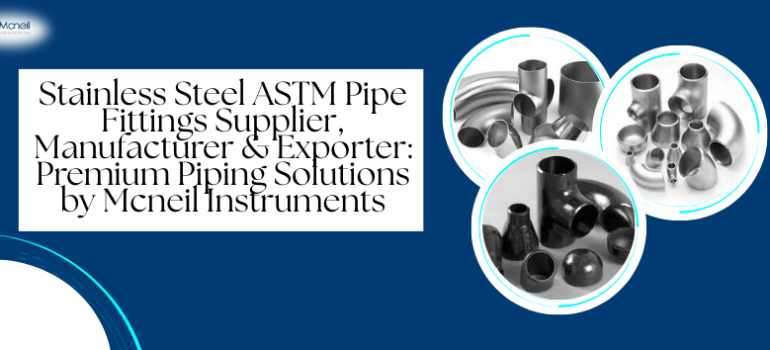
Stainless Steel ASTM Pipe Fittings Supplier, Manufacturer & Exporter: Premium Piping Solutions by Mcneil Instruments

Introduction: The Role of Stainless Steel ASTM Pipe Fittings in Modern Industry

In industrial piping systems that handle critical fluids and gases, the quality and performance of pipe fittings can make the difference between safe, reliable operation and costly downtime or failure. Whether in chemical plants, oil and gas facilities, pharmaceuticals, power generation, water treatment, or food and beverage processing, piping components must meet stringent standards for strength, corrosion resistance, and dimensional accuracy.

Stainless steel ASTM pipe fittings are engineered to meet these challenges. They are precision-manufactured components designed to connect, redirect, branch, or terminate stainless pipes in systems that demand durability and safety. As a leading manufacturer, supplier, and exporter, Mcneil Instruments delivers comprehensive stainless steel ASTM pipe fittings that conform to international standards and perform reliably in the most demanding environments.

This blog explores what stainless steel ASTM pipe fittings are, their key material grades and applications, technical specifications, benefits, and why industries around the world — including those in the USA, Europe, Africa, and Asia — choose Mcneil Instruments as their trusted provider.

Understanding Stainless Steel ASTM Pipe Fittings

Stainless steel ASTM pipe fittings are components designed to join sections of pipe, change flow direction, adapt pipe sizes, or cap pipe ends, while providing a secure and leak-proof connection. These fittings are manufactured according to ASTM (American Society for Testing and Materials) standards, ensuring conformity with internationally recognized material and performance criteria.

These fittings are usually supplied in seamless or welded form, depending on the grade and application, and are commonly used in high-purity and high-pressure systems where corrosion resistance and mechanical strength are priorities.

Key Stainless Steel Grades for ASTM Pipe Fittings

Mcneil Instruments supplies pipe fittings in a wide range of stainless steel grades to meet diverse industrial requirements. Some of the most popular grades include:

1. Stainless Steel ASTM A403 WP304 Pipe Fittings

304 stainless steel is the most widely used general-purpose austenitic grade. It provides excellent corrosion resistance, formability, and weldability.

Applications:

  • Water treatment lines
  • Food and beverage systems
  • General industrial piping

Key Characteristics:

  • Excellent resistance to rust and corrosion
  • Good weldability and ductility
  • Suitable for a wide range of temperatures

2. Stainless Steel ASTM A403 WP316 Pipe Fittings

316 stainless steel enhances corrosion resistance with the addition of molybdenum, making it suitable for chloride-rich or aggressive environments.

Applications:

  • Petrochemical piping
  • Marine environments
  • Chemical processing

Key Characteristics:

  • Better pitting and crevice corrosion resistance, especially in chloride environments
  • High strength at elevated temperatures

3. Stainless Steel ASTM A403 WP316L Pipe Fittings

316L is a low-carbon variant of 316, optimized for enhanced weldability and reduced carbide precipitation during welding.

Applications:

  • Pharmaceutical and sanitary systems
  • High-temperature welding applications

Key Characteristics:

  • Improved weldability
  • Reduced risk of sensitization in welded components

4. Stainless Steel ASTM A403 WP321 Pipe Fittings

WP321 is stabilized with titanium to resist intergranular corrosion, especially in high-temperature environments.

Applications:

  • Heat exchangers
  • Exhaust systems
  • Chemical processing

Key Characteristics:

  • Enhanced high-temperature performance
  • Excellent resistance to intergranular corrosion

5. Stainless Steel ASTM A403 WP347 Pipe Fittings

WP347 is stabilized with niobium and offers similar benefits to WP321, with improved mechanical stability.

Applications:

  • High-temperature steam systems
  • Refineries and petrochemical units

Key Characteristics:

  • Superior stabilization at high temperatures
  • Reliable corrosion resistance under thermal cycling

Types of Stainless Steel ASTM Pipe Fittings Offered

Mcneil Instruments manufactures the following types of stainless steel ASTM pipe fittings:

  • Elbows (45°, 90°, 180°) — change direction in piping systems
  • Tees & Crosses — enable branching and distribution
  • Reducers (Concentric & Eccentric) — adapt between different pipe sizes
  • Caps & Plugs — terminate pipe ends securely
  • Stub Ends & Lap Joint Fittings — for easy flange connections
  • Custom Machined Fittings — engineered to project-specific dimensions

Each fitting is precision manufactured, inspected, and tested for dimensional accuracy and mechanical performance.

Technical Specifications and Standards

Below is an overview of typical technical specifications for Mcneil Instruments’ stainless steel ASTM pipe fittings.

Material & Standards Compliance

StandardDescription
ASTM A403Standard Specification for Wrought Austenitic Stainless Steel Pipe Fittings
ASME B16.9Factory-Made Wrought Buttwelding Fittings
ASME B16.11Forged Fittings, Socket-Welding and Threaded
ISO & DINAdditional standards supported upon request

Dimensions & Size Range

ParameterDetails
Size Range1/2″ NB to 48″ NB (custom sizes available)
Wall ThicknessSCH 10S to SCH XXS (depending on grade and application)
Connection TypeButtweld, Socket Weld, Threaded (as required)
EndsBeveled, Plain, Threaded

Mcneil Instruments supports tailored sizing for specific engineer designs or unique industrial applications.

Mechanical Properties (Typical by Grade)

GradeTensile StrengthYield StrengthElongationCorrosion Resistance
WP304515 MPa205 MPa≥ 40%Excellent
WP316515 MPa205 MPa≥ 40%Very High
WP316L485 MPa170 MPa≥ 40%Very High
WP321515 MPa205 MPa≥ 35%High (High Temp)
WP347515 MPa205 MPa≥ 35%High (Thermal Cycling)

Note: Actual property values may vary slightly depending on manufacturing processes and certifications; full testing reports are supplied with each batch.

Benefits of Stainless Steel ASTM Pipe Fittings

Stainless steel ASTM pipe fittings offer distinct advantages:

  • Superior corrosion resistance — ideal for aggressive or marine environments
  • Long service life — minimal maintenance and replacement costs
  • High strength and durability — withstand pressure and temperature variation
  • Excellent hygiene properties — ideal for food, pharmaceutical, and sanitary systems
  • Thermal stability — suitable for steam, hot water, and industrial utilities
  • Compatibility with global standards — simplifies compliance for international projects

These benefits make stainless steel ASTM fittings a preferred choice for industries seeking reliability and regulatory alignment.

Applications Across Industries

Stainless steel ASTM pipe fittings from Mcneil Instruments are used across a wide range of industrial sectors:

Oil & Gas and Petrochemical

Corrosion-resistant fittings are critical in sour gas, hydrocarbon processing, and marine terminal pipelines.

Chemical and Process Industries

Resistant to acidic or alkaline environments; ideal for chemical feeds and process piping.

Water Treatment and Utilities

Used in clean water systems, desalination plants, wastewater treatment, and municipal supply lines.

Food, Beverage & Pharmaceuticals

Sanitary standards make stainless steel essential for sanitary and high-purity systems.

Power Generation

Steam distribution lines, cooling systems and high-temperature circuits require dependable fittings with thermal endurance.

Construction & HVAC

Used in heating, ventilation, air conditioning systems that demand corrosion resistance and long life.

Quality Assurance and Testing

Mcneil Instruments ensures that every stainless steel ASTM pipe fitting undergoes rigorous testing and quality control:

  • Material Test Certificates (MTCs) compliant with EN 10204 3.1 / 3.2
  • Positive Material Identification (PMI)
  • Hydrostatic & Pneumatic Pressure Testing
  • Non-Destructive Testing (NDT) — Radiography / Ultrasonic
  • Dimensional Inspection (ASME B16.9 / B16.11)

These protocols guarantee that fittings meet the mechanical and chemical specifications required by global industries.

Why Choose Mcneil Instruments — Manufacturer, Supplier & Exporter

Global Quality Standards

Mcneil Instruments adheres to ASTM, ASME, ISO, and international specifications — ensuring products meet rigorous compliance.

Diverse Product Range

From standard stainless steel grades (304, 316) to stabilized and specialty grades (321, 347), the range addresses diverse industrial environments.

Custom Engineering Support

Mcneil Instruments offers tailored solutions based on project specifications, including non-standard sizes and complex configurations.

Reliable Supply Chain

As a trusted supplier and exporter, Mcneil Instruments manages logistics, documentation, export compliance, and on-time delivery to global destinations.

Technical Assistance

Engineering support, material selection guidance, and compliance documentation help buyers make informed decisions and streamline procurement.

Conclusion: Stainless Steel ASTM Pipe Fittings for Reliable Flow Systems

Stainless steel ASTM pipe fittings are foundational components for industrial piping systems that demand durability, corrosion resistance, and compliance with global standards. Whether for oil and gas infrastructure in Houston, chemical plants in Europe, water treatment systems in Africa, or pharmaceutical facilities in Asia, these fittings ensure reliable, long-term performance.

As a seasoned manufacturer, supplier, and exporter, Mcneil Instruments delivers premium stainless steel ASTM pipe fittings that withstand challenging service environments, meet technical requirements, and support operational excellence.

Read More

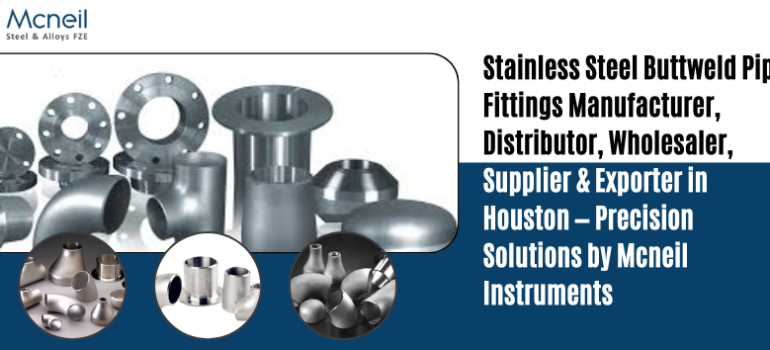
Stainless Steel Buttweld Pipe Fittings Manufacturer, Distributor, Wholesaler, Supplier & Exporter in Houston — Precision Solutions by Mcneil Instruments 

Introduction: Houston’s Industrial Piping Demands High-Quality Fittings

Houston sits at the heart of the U.S. energy and industrial landscape. With its extensive network of oil refineries, petrochemical plants, LNG terminals, pharmaceutical facilities, food processing hubs, and large-scale infrastructure projects, the city’s industries depend on piping systems that provide safe, reliable, and long-lasting performance.

At the center of these fluid handling systems are buttweld pipe fittings — components critical for joining pipes in high-pressure or high-temperature service. Houston industries cannot afford failures due to poor-quality joints, especially when dealing with corrosive media or critical steam distribution systems.

Mcneil Instruments  is a globally recognized manufacturer, supplier, wholesaler, distributor  and exporter of stainless steel buttweld pipe fittings engineered to meet the rigorous demands of Houston’s industrial sectors. This blog explains what these fittings are, their technical characteristics, applications, and why Houston buyers prefer globally certified supplies.

What Are Stainless Steel Buttweld Pipe Fittings?

Stainless steel buttweld pipe fittings are forged or formed components designed to be welded to pipes at both ends, creating smooth internal flow paths and seamless transitions. These fittings are essential where joint strength, leak-proofing, and long-term integrity are required.

Buttweld fittings are typically used in:

  • Oil & gas pipelines
  • Chemical process lines
  • High-temperature steam systems
  • Corrosive environments
  • Food and pharmaceutical piping
  • Water and wastewater treatment

Unlike threaded or mechanical fittings, buttweld fittings create permanent welded joints that eliminate stress concentrations, minimize turbulence, and reduce the risk of leakage.

Why Stainless Steel for Buttweld Fittings?

Stainless steel offers a combination of properties that make it ideal for demanding Houston applications:

  • Corrosion resistance — ideal for saltwater environments, chemical plants, marine terminals, and refinery feed lines.
  • High strength and temperature resistance — critical for steam, hydrocarbon, and power plant piping.
  • Hygienic properties — essential for food, beverage, and pharmaceutical applications requiring easy cleaning and sterilization.
  • Durability and low maintenance — reduces downtime and long-term operating cost.

Mcneil Instruments  supplies buttweld fittings in a variety of stainless grades to match application needs and service conditions.

Types of Stainless Steel Buttweld Pipe Fittings Supplied in Houston

The fittings provided by Mcneil Instruments  cover a full range of buttweld configurations that industrial projects in Houston typically require:

Elbows

Used to change direction in piping systems (45°, 90°, 180°).

Tees & Crosses

Used to branch or distribute flow.

Reducers

Concentric and eccentric reducers to adapt different pipe sizes.

Caps

Close the ends of pipes securely.

Stub Ends

Used with lap joint flanges for easier alignment.

Custom Fittings

Engineered solutions for project-specific requirements.

Each of these fittings is produced to comply with recognized international dimensions and quality standards.

Material Grades & Specifications

Mcneil Instruments  supplies buttweld fittings in common stainless steel grades including:

  • ASTM A403 WP304 — general corrosion resistance, ideal for mild environments.
  • ASTM A403 WP316 / WP316L — enhanced resistance to chlorides, acids, and corrosive media.
  • ASTM A403 WP321 / WP347 — stabilized grades for higher temperatures and improved creep resistance.
  • Duplex & Super Duplex Stainless Steels — higher strength and superior chloride stress-corrosion resistance.
  • Other specialty stainless alloys — as per specific project demands.

All fittings are manufactured to ASTM A403 standards and, where applicable, to corresponding ASME B16.9 dimensional standards.

Technical Specifications

Here is an overview of how Mcneil Instruments ’s stainless steel buttweld pipe fittings are specified:

SpecificationDetails
Material StandardsASTM A403 / ASME B16.9
Size Range1/2″ NB to 48″ NB (as required)
ScheduleSCH 10S to SCH XXS
ConnectionButtweld
ManufacturingForged / Seamless / Formed
Surface FinishPolished / Pickled / Bead Blasted
Pressure RatingPer ASME/ANSI Classes

Mechanical Properties (Typical for WP316 / WP316L)

PropertyTypical Value
Tensile Strength≥ 515 MPa
Yield Strength≥ 205 MPa
Elongation≥ 35%
Hardness≤ 95 HRB
Operating Temp RangeCryogenic to 400-700°C depending on grade

Actual mechanical properties vary by grade and testing standards; full mill test certificates are provided with every shipment.

Houston Industrial Sectors That Rely on Stainless Steel Buttweld Fittings

Oil & Gas

Refinery process lines, hydrocarbon transport, FPSO connections, and pipeline networks use buttweld fittings for reliability under pressure and corrosion.

Chemical & Petrochemical Plants

Media handling systems require high corrosion resistance, particularly in chlorides and acids.

Power Generation

Steam and condensate systems demand fittings that can withstand high temperature and pressure fluctuations.

Water & Wastewater Treatment

Treatment plants need corrosion-resistant materials for long service life in aggressive environments.

Food, Beverage & Pharma

Hygienic systems employ stainless steel fittings for cleanability and contamination control.

Quality Control, Testing & Certification

Mcneil Instruments ’s buttweld fittings undergo rigorous quality checks to ensure reliability:

  • Material Test Certificates (MTCs) — EN 10204 3.1 / 3.2
  • Chemical & Mechanical Analysis
  • Non-Destructive Testing (NDT) — Radiography, Ultrasonic
  • Dimensional Inspection (ASME B16.9)
  • Hydrostatic and Leak Resistance Testing

These protocols ensure every fitting can be confidently deployed in critical Houston projects, meeting both U.S. and international compliance.

Why Houston Companies Choose Mcneil Instruments 

Houston engineers, plant managers, and procurement teams choose Mcneil Instruments  because:

  • Proven Manufacturer, Supplier & Exporter: A trusted global source for certified buttweld fittings.
  • Wide Material Range: From standard grades to Duplex and Super Duplex.
  • Custom Solutions: Tailored fittings for unique project specifications.
  • Global Standards Compliance: ASTM, ASME, ISO adherence.
  • Export Ready: Professional handling of logistics, documentation, and delivery to Houston and surrounding industrial zones.

When downtime costs money and safety is paramount, quality fittings become mission-critical.

Conclusion: Precision Fittings for Houston’s Industrial Needs

Stainless steel buttweld pipe fittings are fundamental to the integrity of piping systems in Houston’s most demanding sectors. With Mcneil Instruments ’s certified, quality-tested fittings, companies can ensure safe fluid handling, longer system life, and compliance with global standards.

Whether it’s a petrochemical complex in Baytown, a refinery expansion, a power plant upgrade, or a food processing facility requiring hygienic piping, stainless steel buttweld pipe fittings from Mcneil Instruments  deliver performance, reliability, and peace of mind.

Read More

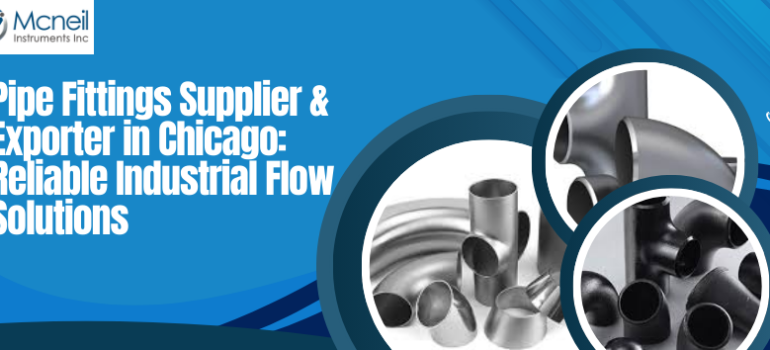
Pipe Fittings Manufacturer, Supplier, Exporter, Distributor and Wholesaler in Chicago: Reliable Industrial Flow Solutions by Mcneil Instruments

Introduction: Supporting Chicago’s Industrial Backbone

Chicago is more than a logistics hub. It is a city powered by manufacturing, energy infrastructure, chemical processing, water treatment, and large-scale construction. At the core of these industries lies one critical component that often goes unnoticed until it fails: pipe fittings.

From refineries and power plants to industrial fabrication units and commercial infrastructure, pipe fittings determine the safety, efficiency, and lifespan of piping systems. This is where Mcneil Instruments plays a vital role. As a trusted pipe fittings manufacturer, supplier, Distributor, Wholesaler and exporter, Mcneil Instruments delivers globally certified fittings to industrial projects across Chicago and the greater Illinois region.

This blog explores the importance of high-quality pipe fittings, the types and materials supplied by Mcneil Instruments, their technical capabilities, and why Chicago-based industries rely on globally sourced, ASTM and ASME compliant solutions.

Why Pipe Fittings Matter in Chicago’s Industrial Environment

Chicago’s industries operate under demanding conditions. Seasonal temperature variations, high-pressure systems, corrosive media, and continuous operations require pipe fittings that do more than just connect pipes.

High-quality pipe fittings ensure:

  • Leak-free flow of liquids and gases
  • Resistance to pressure, temperature, and corrosion
  • Compliance with US and international engineering standards
  • Reduced maintenance and long service life
  • Safe operation in critical environments

Poor-quality fittings can lead to shutdowns, safety hazards, and costly downtime. This is why Chicago industries increasingly source fittings from proven global manufacturers rather than generic local stock.

Mcneil Instruments: Manufacturer, Supplier, Distributor, Wholesaler and Exporter of Pipe Fittings for Chicago

Mcneil Instruments is an internationally trusted pipe fittings manufacturer, supplier, and exporter serving industrial clients in Chicago. With advanced manufacturing facilities in India and a strong export network, Mcneil delivers precision-engineered fittings that meet US project requirements.

Our fittings are widely used in:

  • Oil and gas terminals
  • Chemical and petrochemical plants
  • Power generation facilities
  • Food and pharmaceutical plants
  • Water treatment and utility systems
  • Industrial fabrication and EPC projects

Every product is manufactured with strict quality control, tested to international standards, and supplied with full documentation.

Types of Pipe Fittings Supplied to Chicago

Mcneil Instruments offers a complete range of pipe fittings suitable for diverse industrial applications.

Butt Weld Pipe Fittings

Used in high-pressure and high-temperature systems where strength and leak-free joints are critical.

  • Elbows (45°, 90°, 180°)
  • Tees and Crosses
  • Reducers (Concentric and Eccentric)
  • Caps and Stub Ends

Forged Pipe Fittings

Ideal for compact systems and high-pressure instrumentation lines.

  • Socket Weld Fittings
  • Threaded Fittings
  • Couplings, Unions, Plugs, Bushings

Instrumentation and Precision Fittings

Designed for control systems, automation lines, and process instrumentation.

  • Compression fittings
  • Tube adapters
  • Ferrule fittings

Materials Offered for Pipe Fittings in Chicago

Different industries require different materials based on pressure, temperature, and media. Mcneil Instruments supplies pipe fittings in a wide range of materials.

Carbon Steel Pipe Fittings

Commonly used in power plants, refineries, and construction.

  • ASTM A105
  • ASTM A234 WPB

Alloy Steel Pipe Fittings

Used in high-temperature and high-pressure applications.

  • ASTM A234 WP11
  • ASTM A234 WP22
  • ASTM A234 WP91

Stainless Steel Pipe Fittings

Ideal for corrosion resistance and hygienic environments.

  • ASTM A403 WP304
  • ASTM A403 WP316 / WP316L
  • ASTM A403 WP321 / WP347

Nickel and Exotic Alloy Fittings

Used in aggressive chemical and extreme service conditions.

  • Inconel
  • Monel
  • Hastelloy
  • Duplex and Super Duplex
  • Titanium and Tantalum (on request)

Technical Specifications Overview

SpecificationDetails
Manufacturing StandardsASTM, ASME, ANSI, MSS
Size Range1/8″ NB to 48″ NB
ScheduleSCH 10 to SCH XXS
Pressure RatingUp to 6000 psi
Temperature RangeCryogenic to above 650°C
Manufacturing TypeSeamless, Welded, Forged
End ConnectionsButt Weld, Socket Weld, Threaded

Mechanical Properties (Typical)

PropertyCarbon SteelAlloy SteelStainless Steel
Tensile Strength≥ 415 MPa≥ 415–585 MPa≥ 485 MPa
Yield Strength≥ 205 MPa≥ 205–415 MPa≥ 170 MPa
Elongation20–30%20–30%30%
Corrosion ResistanceModerateHighExcellent

Actual values vary by grade and application, with full test reports provided.

Industries Served in Chicago

Mcneil Instruments supplies pipe fittings to a wide range of industries across Chicago and surrounding regions.

  • Oil and Gas Refineries
  • Power Generation and Utilities
  • Chemical and Petrochemical Plants
  • Food Processing and Pharmaceuticals
  • HVAC and Building Services
  • Water Treatment and Infrastructure
  • OEM and Fabrication Units

Quality Testing and Certification

Every fitting supplied to Chicago undergoes strict inspection and testing.

  • Hydrostatic and Pneumatic Pressure Testing
  • Ultrasonic and Radiographic Testing
  • PMI (Positive Material Identification)
  • Dimensional and Visual Inspection
  • Hardness and Mechanical Testing

Certifications include:

  • EN 10204 3.1 / 3.2
  • ISO 9001:2015
  • ASTM and ASME Compliance
  • Project-specific third-party inspection on request

Why Chicago Industries Choose Mcneil Instruments

  • Proven manufacturer, supplier, and exporter
  • Global manufacturing with US-compliant standards
  • Consistent quality across large volumes
  • Custom sizes and project-specific solutions
  • Reliable export logistics to Chicago ports
  • Complete documentation and traceability

Mcneil Instruments is not just a supplier. It is a long-term partner for industrial piping projects that demand reliability.

Conclusion: Reliable Pipe Fittings for Chicago’s Industrial Growth

Pipe fittings are small components with massive responsibility. In a city like Chicago, where industrial performance and safety go hand in hand, selecting the right pipe fittings manufacturer, supplier, Distributor, Wholesaler  and exporter is critical.

Mcneil Instruments delivers precision-engineered pipe fittings that meet international standards, perform under pressure, and support long-term operational efficiency. From carbon steel and alloy steel to stainless steel and exotic materials, our fittings power industries across Chicago with confidence.

Read More

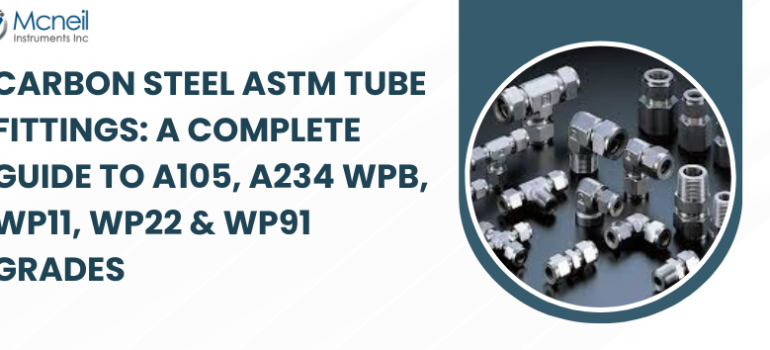
Carbon Steel ASTM Tube Fittings: A Complete Guide to A105, A234 WPB, WP11, WP22 & WP91 Grades

Introduction — Critical Connectors for Industrial Piping Systems

In any industrial piping network, whether it’s transporting steam in power plants, chemical feeds in petrochemical plants, water in treatment facilities, or hydrocarbons in oil and gas refineries, tube fittings are essential. They join sections of pipe and tubing, adapt changes in direction or diameter, and provide secure, leak-proof connections in demanding environments.

Carbon steel ASTM tube fittings — manufactured under stringent industry standards — provide a robust and reliable solution for medium and high pressure, elevated temperature, and corrosive conditions. As a leading manufacturer, supplier, and exporter, Mcneil Instruments  offers a complete range of these fittings in different grades, each engineered to support specific industrial requirements.

This guide covers the most commonly used carbon steel tube fitting grades:

  • ASTM A105
  • ASTM A234 WPB
  • ASTM A234 WP11
  • ASTM A234 WP22
  • ASTM A234 WP91

We will explore their chemical and mechanical properties, applications, specifications, and differences — helping engineers and buyers make informed decisions.

Standard Overview — What Is ASTM Tube Fitting Material?

Carbon steel tube fittings covered in this guide adhere to recognized ASTM and ASME specifications. These standards define acceptable chemical compositions, mechanical properties, and performance criteria. The most relevant standards include:

  • ASTM A105 – Forged carbon steel for moderate and high-temperature service.
  • ASTM A234 WPB / WP11 / WP22 / WP91 – Carbon and alloy steel buttweld tube fittings designed for elevated temperature and pressure services.

These fittings are typically produced via forging and machining to achieve uniform strength and dimensional accuracy.

Types of Carbon Steel Tube Fittings

Before diving into grades, here are the common tube fittings typically offered by Mcneil Instruments :

  • Elbows (45°, 90°) – change direction of flow.
  • Tees & Crosses – branch flows or connect three/four lines.
  • Reducers (Concentric & Eccentric) – join two sizes of piping.
  • Caps & Plugs – close pipe ends.
  • Couplings & Adapters – join sections in different configurations.
  • Custom Machined Fittings – for special application requirements.

Each fitting type is produced to match the required grade, wall thickness, and dimensional tolerance.

Grade Profiles

1. ASTM A105 Tube Fittings

ASTM A105 is a forged carbon steel grade commonly used for moderate and high-temperature applications. These fittings offer good weldability and mechanical strength.

Chemical Composition (Typical)

ElementComposition (%)
Carbon (C)0.35 max
Manganese (Mn)0.60–1.05
Phosphorus (P)0.035 max
Sulfur (S)0.040 max
Silicon (Si)0.10–0.35

Applications:

  • Pressure and high-temperature services
  • Refining and petrochemical plants
  • Boiler systems

2. ASTM A234 WPB Tube Fittings

ASTM A234 WPB represents the most widely used grade of carbon steel buttweld fittings. These are suitable for moderate temperature and standard industrial applications.

Key Features:

  • Excellent weldability
  • Reliable performance in conventional process systems
  • Cost-effective for standard applications

Applications:

  • Pipeline connections in general plant services
  • Low/medium temperature fluid lines
  • HVAC systems

3. ASTM A234 WP11 Tube Fittings

ASTM A234 WP11 fittings are made from carbon steel alloyed with chromium and molybdenum, giving them better resistance in higher temperature environments compared to WPB.

Applications:

  • High temperature steam lines
  • Industrial boilers
  • Medium-pressure systems requiring oxidation resistance

4. ASTM A234 WP22 Tube Fittings

ASTM A234 WP22 is a higher alloy grade than WP11, with improved creep and oxidation resistance. These tube fittings perform better under sustained high temperatures and pressures.

Applications:

  • Superheaters and reheaters
  • High-pressure steam piping
  • Chemical processing lines

5. ASTM A234 WP91 Tube Fittings

ASTM A234 WP91 fittings represent one of the most advanced carbon steel grades. They are engineered for extreme conditions involving both high temperature and pressure.

Key Advantages:

  • Superior creep strength
  • High mechanical toughness
  • Reliability in prolonged elevated temperature service

Applications:

  • High-pressure boiler systems
  • Thermal power plant piping
  • Heavy industrial applications

Mechanical Properties Comparison

The following table summarizes typical mechanical properties for these carbon steel fitting grades:

PropertyA105A234 WPBA234 WP11A234 WP22A234 WP91
Tensile Strength (min)≥ 485 MPa≥ 415 MPa≥ 415 MPa≥ 520 MPa≥ 620 MPa
Yield Strength (min)≥ 240 MPa≥ 240 MPa≥ 205 MPa≥ 310 MPa≥ 415 MPa
Elongation (%)~20–25~22~22~22~20

Note: Actual mechanical values depend on manufacturing process, heat treatment, and test outcomes.

Chemical Composition Overview

Different grades are alloyed with varying levels of chromium, molybdenum and other elements to enhance high-temperature strength and corrosion resistance.

GradeKey Alloying Elements
A105Carbon, Manganese
WPBCarbon, Manganese
WP11Cr, Mo
WP22Higher Cr, Mo
WP91Cr, Mo with added elements for creep strength

Dimensions & Wall Thickness Standards

Carbon steel ASTM tube fittings are typically produced according to ASME B16.9 and/or ASME B16.11 dimensional standards. These define fitting geometry based on Nominal Pipe Size (NPS) and Schedule (SCH) designations.

Typical Size Range

  • 1/2″ NB to 48″ NB or larger (depending on product)
  • Wall thicknesses: SCH 10 to SCH XXS
  • Fittings manufactured for both buttweld and socket-weld connections

Certifications & Quality Assurance

Mcneil Instruments  ensures that all carbon steel ASTM tube fittings meet rigorous quality parameters. Each product undergoes:

  • Material Test Certificates (MTCs) (EN 10204 3.1 / 3.2)
  • Positive Material Identification (PMI)
  • Hydrostatic Pressure Testing
  • Dimensional Inspection
  • Weld Integrity & Hardness Tests

This makes them suitable for critical industrial services where safety and reliability are non-negotiable.

Applications Across Industries

Carbon steel ASTM tube fittings are used in:

  • Oil & Gas Production & Refining
    Fittings in crude handling, steam systems, gas lines
  • Power Plants & Boilers
    High temperature steam lines, superheated fluid circuits
  • Petrochemical & Chemical Processing
    Process piping with elevated temperature and pressure
  • Industrial Manufacturing
    Heavy equipment cooling lines, process fluid transportation
  • Water Treatment & Infrastructure
    Main lines, distribution systems, plant utilities

Each grade has its niche depending on operational temperature, pressure, and fluid characteristics.

Why Choose Mcneil Instruments  — Manufacturer, Supplier & Exporter

Mcneil Instruments  stands out due to:

  • Broad Product Range: Comprehensive offering covering all major ASTM carbon steel grades from A105 to WP91.
  • Global Standards Compliance: Manufacturing to ASTM, ASME, and international norms.
  • Quality Tracking & Documentation: Full traceability with certified test reports.
  • Custom Solutions: Machined fittings tailored to unique project needs.
  • Export Capability: Serving global markets with expertise in packaging, logistics, and export documentation.

This combination makes Mcneil Instruments  a reliable partner for global EPC contractors, industrial end-users, and procurement teams.

Conclusion — Fit for Purpose and Built to Last

Choosing the right carbon steel ASTM tube fitting is a key engineering decision. Each grade — from A105 through A234 WPB, WP11, WP22, and WP91 — is designed for specific use cases ranging from general service to high temperature and high pressure.

As industries in oil & gas, power, petrochemical, and manufacturing continue to evolve, having a supplier that delivers quality, consistency, and certified performance is essential. Mcneil Instruments  meets these expectations as a trusted manufacturer, supplier, and exporter, offering tube fittings designed for performance, longevity, and project success.

Read More

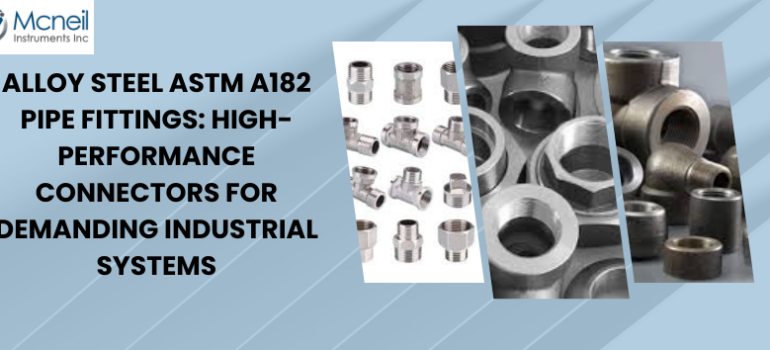
Alloy Steel ASTM A182 Pipe Fittings: High-Performance Connectors for Demanding Industrial Systems

Across industries such as oil & gas, power generation, petrochemicals, chemical processing, water treatment, and heavy engineering, pipelines act as the lifelines of production. These pipelines carry high-temperature steam, corrosive chemicals, crude oil, gas, and other critical fluids — and their reliability depends heavily on the quality of fittings installed.

Among all piping components, Alloy Steel ASTM A182 Pipe Fittings stand out as essential connectors that ensure leak-proof flow, structural strength, and long-term durability — especially in high-pressure, high-temperature, and corrosive environments.

For industries operating under extreme conditions, choosing the right fittings is not just a performance decision, but a safety imperative.

Mcneil Instruments, a trusted manufacturer, supplier, and exporter, delivers ASTM A182 alloy steel fittings engineered to global standards — making them a strong choice for projects that demand toughness, corrosion resistance, and lifecycle reliability.

What Are ASTM A182 Alloy Steel Pipe Fittings — and Why Do They Matter?

ASTM A182 is the international specification that covers forged or rolled alloy steel materials used in high-temperature service. Fittings such as elbows, tees, reducers, caps, unions, and couplings manufactured under this standard are designed to handle:

✔ High pressure
✔ Elevated temperatures
✔ Corrosive or chemically aggressive media
✔ Mechanical stress and thermal cycling

These fittings are installed to change the direction of flow, branch piping lines, reduce diameter, or seal pipe ends — all while maintaining mechanical integrity under harsh conditions.

Key Advantages of Using Alloy Steel ASTM A182 Pipe Fittings

1. High Strength Under Pressure

Forged alloy steel provides excellent tensile strength, making these fittings ideal for pipelines handling steam, hydrocarbons, or high-pressure process fluids.

2. Superior Temperature Resistance

Alloy steel grades under ASTM A182 retain their mechanical properties even when exposed to extreme temperatures, preventing deformation or failure.

3. Excellent Corrosion & Oxidation Resistance

Chromium-molybdenum alloy steels resist corrosion in chemical plants, refineries, offshore units, boilers, and heat-intensive systems.

4. Longer Lifecycle & Lower Maintenance

Due to better metallurgical stability, these fittings last significantly longer than standard carbon steel fittings — reducing plant downtime and maintenance costs.

5. Dimensional Accuracy & Leak-Proof Performance

Forged fittings offer tight tolerances and reliable sealing, which is critical for safety in high-risk industrial environments.

Types of ASTM A182 Alloy Steel Pipe Fittings (and Where They Are Used)

Mcneil Instrument offers a complete range of forged and butt-weld fittings compliant with ASTM A182. Below is an overview of the most commonly used fittings:

Fitting TypeKey CharacteristicsBest-Suited Applications
Elbows (45° / 90°)Change direction of flow; smooth radius minimizes pressure dropSteam lines, refinery heaters, high-pressure chemical lines
Tees (Equal / Unequal)Allow branching of pipelinesPetrochemical grids, boiler systems, power generation
Reducers (Concentric / Eccentric)Connect pipes of different diametersPump discharge lines, process piping, compressed air systems
CapsSeal the pipe endTesting lines, isolation points, shutdown maintenance
Couplings & UnionsJoin two pipes; allow easy disassemblyInstrumentation, small bore piping, maintenance-heavy systems
Socket-Weld & Threaded FittingsProvide strong mechanical joints for small-diameter linesHydraulic lines, high-pressure chemical service

These fittings are used extensively in industries where temperature, pressure, and corrosion challenges demand superior material performance.

Why ASTM A182 Material Grade Selection Matters

Different alloy steel grades (such as F1, F5, F9, F11, F22, F91) offer varying levels of:

  • temperature stability
  • creep resistance
  • corrosion protection
  • pressure-handling capability

For example:

  • F11 / F22 → widely used in refineries, boilers, and petrochemical plants
  • F5 / F9 → preferred in power generation and high-temperature steam systems
  • F91 → used in ultra-supercritical systems due to exceptional high-temperature strength

Selecting the correct grade ensures safe operation, longer life, and compliance with engineering standards.

Why Quality Matters — Especially in High-Performance Piping

Using substandard fittings can lead to:

⚠ Leaks and pressure drops
⚠ Corrosion failures
⚠ Pipeline shutdowns
⚠ Safety hazards
⚠ Expensive downtime

High-pressure and high-temperature industries cannot afford these risks.

Mcneil Instrument manufactures fittings using advanced forging, heat treatment, and machining processes to ensure:

  • Uniform grain structure
  • Dimensional precision
  • Mechanical strength
  • Compliance with ASTM / ASME / ISO standards

Each batch is supplied with Material Test Certificates (MTCs) for full traceability.

Mcneil Instruments: Trusted Supplier of ASTM A182 Alloy Steel Fittings

Here’s what sets Mcneil Instrument apart as a global supplier:

✔ Complete Range of Fittings

Butt-weld, forged socket weld, threaded fittings — all available in ASTM A182 alloy grades.

✔ Engineering-Grade Quality

Fittings manufactured using controlled forging, machining, and heat-treatment processes to ensure durability.

✔ Wide Grade Selection

Includes F1, F5, F9, F11, F22, F91 — covering all major industrial needs.

✔ Global Export Readiness

Well-versed in handling packaging, documentation, and logistics — making procurement smooth for international buyers.

✔ Application Expertise

Serving oil & gas, power plants, steam systems, chemical processing, water treatment, and infrastructure projects.

What Engineers Should Consider When Ordering Alloy Steel Fittings

Before specifying ASTM A182 fittings, engineers should check:

  1. Required grade (F11, F22, etc.) based on temperature + pressure.
  2. Fitting type according to pipeline design (elbows, tees, reducers, etc.).
  3. Pressure rating for socket-weld/threaded fittings.
  4. Welding or assembly requirements (butt weld vs forged).
  5. Corrosion resistance requirements depending on media.
  6. Documentation needs — MTCs, compliance certificates.
  7. Supplier capability for bulk supply and timely delivery.

Mcneil Instrument supports clients across all stages — from selection to delivery.

Conclusion — High-Quality Alloy Steel Fittings are Vital for Safe, Efficient Piping Systems

ASTM A182 Alloy Steel Pipe Fittings play a central role in maintaining the safety, reliability, and performance of industrial pipelines. Their ability to handle heat, pressure, corrosion, and mechanical stress makes them indispensable in today’s demanding industrial environments.

Choosing a reliable manufacturer like Mcneil Instruments ensures:

  • Verified material quality
  • Precision manufacturing
  • Global compliance
  • Long-term durability

When industrial integrity and performance matter, high-quality alloy steel fittings are not optional — they are essential.

Read More

Stainless Steel Tube Fittings in Ghana: Complete Guide to Grades 304, 304L, 316, 316L, 321 & 347

Ghana’s expanding industrial, manufacturing, energy, and infrastructure sectors increasingly rely on durable, high-performance piping solutions. Among these, stainless steel tube fittings are essential components that ensure leak-free connections, corrosion resistance, and long service life in systems carrying fluids, gases, and chemicals.

This comprehensive blog explains the most commonly used stainless steel tube fittings — Grades 304, 304L, 316, 316L, 321 & 347 — their properties, applications, and relevance to Ghana’s engineering and industrial needs.

What Are Stainless Steel Tube Fittings?

Stainless steel tube fittings are connectors used to join, redirect, or terminate tubing in various piping assemblies. They include:

● Elbows

● Tees

● Reducers

● Couplings

● Caps

● Adapters

These fittings must withstand pressure, resist corrosion, and maintain integrity across fluid systems — especially in harsh industrial conditions. Stainless steel’s superior resistance to rust, pitting, and chemical attack makes it a top choice for Ghana’s piping infrastructure.

Why Choose Stainless Steel Fittings in Ghana?

1. Corrosion Resistance

Ghana’s coastal, humid, and industrial environments expose piping to moisture and corrosive agents. Stainless steel resists:

● Salt spray corrosion

● Chemical attack

● Microbial corrosion

This makes it ideal for marine, refinery, chemical, and food processing environments.

2. Durability & Long Life

These fittings sustain performance under:

● High pressure

● Thermal cycling

● Vibration and mechanical load

3. Clean & Hygienic

Stainless steel’s non-porous surface is perfect for:

● Food and beverage processing

● Pharmaceutical utilities

● Water treatment systems

Overview of Stainless Steel Tube Fitting Grades

Below is a detailed look at the six major stainless grades used in tube fittings supplied to Ghana:

1. Stainless Steel 304 Tube Fittings

Material Overview

Grade 304 is one of the most widely used austenitic stainless steels. It contains:

● 18% Chromium (Cr)

● 8% Nickel (Ni)

Key Features

● Excellent corrosion resistance

● Good weldability and formability

● Strong performance in most general environments

Applications in Ghana

● Food and beverage processing equipment

● General industrial piping

● Water lines and municipal utilities

● HVAC systems

2. Stainless Steel 304L Tube Fittings

Material Overview

Grade 304L is the low-carbon version of 304. Lower carbon minimizes carbide precipitation during welding.

Key Features

● Enhanced weldability

● Lower risk of intergranular corrosion

● Ideal for fabrication-intensive applications

Applications in Ghana

● Welding-intensive industries

● Chemical handling systems

● Infrastructure where post-weld corrosion resistance is crucial

3. Stainless Steel 316 Tube Fittings

Material Overview

Grade 316 includes molybdenum (Mo), improving corrosion resistance.

Key Features

● Better resistance to chloride environments

● Higher overall corrosion resistance than 304

● Suitable where chemical exposure is heavy

Applications in Ghana

● Coastal infrastructure

● Marine piping systems

● Chemical and petrochemical plants

4. Stainless Steel 316L Tube Fittings

Material Overview

316L is the low-carbon counterpart of 316, offering better post-weld performance.

Key Features

● Excellent weldability

● Reduced carbide precipitation

● Strong corrosion resistance after welding

Applications in Ghana

● Welding-critical industrial piping

● Offshore and marine construction

● Water desalination and treatment systems

5. Stainless Steel 321 Tube Fittings

Material Overview

Grade 321 is a titanium-stabilized austenitic stainless steel. It resists sensitization (grain boundary corrosion) at elevated temperatures.

Key Features

● Good heat resistance

● Stable mechanical properties at high temperature

● Ideal where thermal cycling is common

Applications in Ghana

● Heat exchangers

● Boiler feed lines

● Thermal process piping in manufacturing

6. Stainless Steel 347 Tube Fittings

Material Overview

Grade 347 uses niobium (Nb) stabilization, providing similar benefits to 321 but with higher creep resistance.

Key Features

● Excellent stability in high-temperature environments

● Less susceptibility to intergranular corrosion

● Good mechanical strength at elevated temperatures

Applications in Ghana

● Power plant piping

● High-temperature chemical processing

● Steam distribution systems

Comparative Benefits of These Grades

GradeCorrosion ResistanceWeldabilityHigh Temp CapabilitiesBest Overall Use
304GoodGoodModerateGeneral industrial use
304LBetter after weldingExcellentModerateFabricated systems
316Very GoodGoodModerate-HighMarine/chemical
316LExcellent after weldExcellentModerate-HighOffshore/chemical
321GoodGoodHighHeat/thermal service
347GoodGoodVery HighHigh-temperature / steam

Key Industrial Uses in Ghana

Stainless steel tube fittings are widely used across:

1. Oil & Gas Sector

● Pipeline systems

● Control instrumentation

● Offshore drilling platforms

2. Power Generation

● Cooling systems

● Steam and feedwater piping

● Thermal plant infrastructure

3. Food & Beverage Processing

● Hygienic fluid transport

● Brewery, dairy, and edible oils

4. Chemical Manufacturing

● Acid and alkaline fluid lines

● Corrosive service applications

5. Water Treatment & Distribution

● Municipal systems

● Industrial wastewater handling

Why Choose Stainless Steel Tube Fittings for Ghana Projects

Corrosion Protection in Coastal Regions

Ghana’s coastal humidity and salt exposure accelerate corrosion in mild steel systems. Stainless steel avoids premature failure.

Low Maintenance & Longer Life

Stainless steel reduces downtime and maintenance costs — a major advantage in industrial operations.

Safety & Hygiene

For potable water and food processing, stainless steel meets sanitary and regulatory standards without compromising strength.

High-Temperature & Pressure Resilience

Grades like 321 and 347 handle thermal load and repeated temperature cycling with stable mechanical performance.

Choosing the Right Fitting Grade in Ghana

Industry / EnvironmentRecommended Stainless Grade
General Industrial304
Fabrication & Welding-Intensive304L, 316L
Marine & Coastal316, 316L
High Temp / Thermal Cycling321, 347
Chemical Processing316 / 316L

Choose based on environmental corrosion factors, thermal exposure, and fabrication needs.

Conclusion

Stainless steel tube fittings in Grades 304, 304L, 316, 316L, 321 & 347 provide Ghana’s industrial infrastructure with reliable performance, superior corrosion resistance, and long-term durability. Whether used in oil & gas, power plants, chemical processing, food production, or water treatment systems, these fittings ensure secure and long-lasting piping systems.

Investing in the right stainless steel tube fittings grade not only improves operational efficiency but also enhances safety, longevity, and cost savings over the life of the project.

Read More

Carbon Steel Pipe Fittings in Ghana — Complete Guide to ASTM A105, A234 WPB, WP11, WP22 & WP91 Standards

In Ghana’s expanding industrial landscape — including power generation, oil & gas, petrochemical, mining, manufacturing, and construction sectors — reliable piping systems are essential. Carbon steel pipe fittings play a crucial role in creating safe, efficient, and durable pipeline networks for conveying steam, oil, gas, water, and process fluids.

This comprehensive guide explains the key ASTM specifications used for carbon steel pipe fittings, helping engineers, procurement specialists, and project managers in Ghana choose the right materials for their applications.

What Are Carbon Steel Pipe Fittings?

Pipe fittings are components used to connect, branch, or adapt sections of piping, ensuring flow direction, size transitions, or sealing ends. Carbon steel fittings are widely used in industrial piping due to their high strength, weldability, and cost-effectiveness in moderate to high-temperature environments. Hnssd+1

Common fittings include:

● Elbows — change direction

● Tees — create branch lines

● Reducers — connect different pipe sizes

● Caps & Plugs — close pipe ends

● Couplings & Unions — join or disconnect piping segments

Key ASTM Standards for Carbon Steel Pipe Fittings

In the piping industry, several specifications define material properties, manufacturing processes, and acceptable applications for carbon steel fittings. Let’s examine the five major standards relevant for fittings supplied to Ghana’s industrial market:

1. ASTM A105 — Forged Carbon Steel Fittings

ASTM A105 is the standard specification for forged carbon steel components used in pressure systems. cnkpipefitting.com

Overview

● Covers forged pipe fittings and flanges manufactured from carbon steel

● Designed for ambient to elevated temperature service

● Used mainly in pressure-containing components (like forged elbows, threaded fittings) rather than butt-weld fittings

Applications in Ghana

● High-pressure steam lines in power plants

● Oil & gas facility piping systems

● Chemical processing units

● Infrastructure requiring forged components with high mechanical strength

ASTM A105 fittings are known for excellent strength, ductility, and toughness, making them suitable where internal pressure is high. cnkpipefitting.com

2. ASTM A234 WPB — General Carbon Steel Buttweld Fittings

ASTM A234 WPB is one of the most widely used specifications for carbon steel butt-weld pipe fittings. Hnssd+1

Overview

● Covers butt-weld elbows, tees, reducers, and caps for moderate to high-temperature service

● Material is weldable carbon steel suitable for pressure pipelines and pressure vessel connections

● Available in seamless or welded construction

● Manufactured in compliance with standards such as ASME B16.9, B16.11, MSS-SP-79/83/95/97 and more Hnssd

Why A234 WPB Matters

● High strength and durability

● Good weldability and long service life

● Suitable for a wide range of applications

Common Uses in Ghana

● Refineries and oil storage facilities

● Power plant piping networks

● High-pressure steam systems

● Industrial fluid transportation lines

A234 WPB fittings are versatile, cost-effective, and widely used in Ghana’s energy, industrial, and infrastructure projects. rpfindia.com

3. ASTM A234 WP11 — Alloy Carbon Steel Buttweld Fittings

ASTM A234 WP11 extends the ASTM A234 specification to include chrome-moly alloy fittings with higher alloy content. Octalsteel

Overview

● Similar fitting types as WPB (elbows, tees, reducers)

● Designed for higher temperature and pressure applications

● Includes various classes (CL1/CL2/CL3) with varying mechanical properties

Applications in Ghana

● High-temperature steam lines in energy plants

● Petrochemical process piping

● Heat exchangers and boilers

● Pipelines operating at elevated temperatures

ASTM A234 WP11 fittings provide enhanced thermal resistance compared to plain carbon steel. Octalsteel

4. ASTM A234 WP22 — Advanced Alloy Carbon Steel Fittings

ASTM A234 WP22 further increases chromium and molybdenum content for greater creep strength and oxidation resistance. These alloy butt-weld fittings are ideal where thermal stress is significant. Octalsteel

Overview

● Alloy grade superior to WP11 for high-temperature and high-stress use

● Provides extended service life under severe conditions

Applications in Ghana

● Superheated steam distribution

● Heavy-duty industrial piping

● Petrochemical processing infrastructure

A234 WP22 fittings are chosen when longevity under extreme thermal environments is key. Octalsteel

5. ASTM A234 WP91 — Premium Chrome-Moly Alloy Fittings

ASTM A234 WP91 represents the highest performance among these carbon and alloy steel fittings. rcmetal.co.in

Overview

● Alloy steel with high chromium, molybdenum, and heat-treated properties

● Excellent resistance to high temperatures and pressures

● Superior creep and fatigue strength

Applications in Ghana

● Supercritical and ultra-high-temperature steam lines

● Advanced power plant infrastructure

● Chemical industries requiring high integrity connections

A234 WP91 fittings are ideal where extended durability in aggressive conditions is required. rcmetal.co.in

Why Carbon Steel Pipe Fittings Matter in Ghana’s Industries

1. Strong Mechanical Performance

Carbon steel fittings offer excellent strength, making them suitable for pressure piping systems used widely across Ghana’s industrial sectors. Hnssd

2. Weldability and Fabrication Ease

Standards like ASTM A234 WPB and alloy grades support reliable butt weld joints, essential for long piping runs and large-scale installations. American Piping Products

3. Temperature and Pressure Resistance

Alloy grades such as WP11, WP22, and WP91 deliver enhanced performance in elevated temperature applications, such as steam generation and heat transfer. Octalsteel

4. Broad Industrial Use

From power plants and mining operations to oil & gas refineries and manufacturing facilities, carbon steel fittings are foundational to robust pipeline infrastructure.

Typical Applications Across Ghana

Carbon steel pipe fittings are used in:

● Thermal and Hydropower Plants — steam, feedwater, and condensate lines

● Oil & Gas Facilities — refinery piping and distribution systems

● Mining Processing Plants — slurry and fluid transport

● Chemical & Petrochemical Plants — heat exchangers and process piping

● Water Treatment and Distribution — municipal and industrial systems

Their adaptability and strength make them a go-to choice in many sectors.

Choosing the Right Fitting for Your Project

Grade/SpecTypeBest Use Case in Ghana
ASTM A105Forged fittingsHigh-pressure flange & threaded connections
ASTM A234 WPBStandard buttweld fittingsGeneral piping, moderate temp/pressure
ASTM A234 WP11Alloy buttweldElevated temp/medium pressure
ASTM A234 WP22Advanced alloyHigh thermal stress systems
ASTM A234 WP91Premium alloyUltra-high temp/pressure systems

Selecting the correct grade ensures safety, longevity, and optimal cost performance.

Conclusion

For Ghana’s industrial piping systems, choosing the right carbon steel pipe fitting standard — from ASTM A105 forged components to advanced A234 WP91 alloy fittings — is crucial for delivering performance, safety, and reliability. These standards support a wide range of applications in power generation, petrochemical, oil & gas, mining, manufacturing, and infrastructure projects across the country.

Whether you are building new pipeline systems or upgrading existing ones, understanding the differences, strengths, and applications of these carbon steel fitting grades empowers better engineering decisions and enhances long-term operational success.

Read More

Alloy Steel ASTM A182 Pipe Fittings: High-Performance Connectors for Demanding Industrial Systems

Across industries such as oil & gas, power generation, petrochemicals, chemical processing, water treatment, and heavy engineering, pipelines act as the lifelines of production. These pipelines carry high-temperature steam, corrosive chemicals, crude oil, gas, and other critical fluids — and their reliability depends heavily on the quality of fittings installed.

Among all piping components, Alloy Steel ASTM A182 Pipe Fittings stand out as essential connectors that ensure leak-proof flow, structural strength, and long-term durability — especially in high-pressure, high-temperature, and corrosive environments.

For industries operating under extreme conditions, choosing the right fittings is not just a performance decision, but a safety imperative.

Mcneil Instrument, a trusted manufacturer, supplier, and exporter, delivers ASTM A182 alloy steel fittings engineered to global standards — making them a strong choice for projects that demand toughness, corrosion resistance, and lifecycle reliability.

What Are ASTM A182 Alloy Steel Pipe Fittings — and Why Do They Matter?

ASTM A182 is the international specification that covers forged or rolled alloy steel materials used in high-temperature service. Fittings such as elbows, tees, reducers, caps, unions, and couplings manufactured under this standard are designed to handle:

✔ High pressure
✔ Elevated temperatures
✔ Corrosive or chemically aggressive media
✔ Mechanical stress and thermal cycling

These fittings are installed to change the direction of flow, branch piping lines, reduce diameter, or seal pipe ends — all while maintaining mechanical integrity under harsh conditions.

Key Advantages of Using Alloy Steel ASTM A182 Pipe Fittings

1. High Strength Under Pressure

Forged alloy steel provides excellent tensile strength, making these fittings ideal for pipelines handling steam, hydrocarbons, or high-pressure process fluids.

2. Superior Temperature Resistance

Alloy steel grades under ASTM A182 retain their mechanical properties even when exposed to extreme temperatures, preventing deformation or failure.

3. Excellent Corrosion & Oxidation Resistance

Chromium-molybdenum alloy steels resist corrosion in chemical plants, refineries, offshore units, boilers, and heat-intensive systems.

4. Longer Lifecycle & Lower Maintenance

Due to better metallurgical stability, these fittings last significantly longer than standard carbon steel fittings — reducing plant downtime and maintenance costs.

5. Dimensional Accuracy & Leak-Proof Performance

Forged fittings offer tight tolerances and reliable sealing, which is critical for safety in high-risk industrial environments.

Types of ASTM A182 Alloy Steel Pipe Fittings (and Where They Are Used)

Mcneil Instrument offers a complete range of forged and butt-weld fittings compliant with ASTM A182. Below is an overview of the most commonly used fittings:

Fitting TypeKey CharacteristicsBest-Suited Applications
Elbows (45° / 90°)Change direction of flow; smooth radius minimizes pressure dropSteam lines, refinery heaters, high-pressure chemical lines
Tees (Equal / Unequal)Allow branching of pipelinesPetrochemical grids, boiler systems, power generation
Reducers (Concentric / Eccentric)Connect pipes of different diametersPump discharge lines, process piping, compressed air systems
CapsSeal the pipe endTesting lines, isolation points, shutdown maintenance
Couplings & UnionsJoin two pipes; allow easy disassemblyInstrumentation, small bore piping, maintenance-heavy systems
Socket-Weld & Threaded FittingsProvide strong mechanical joints for small-diameter linesHydraulic lines, high-pressure chemical service

These fittings are used extensively in industries where temperature, pressure, and corrosion challenges demand superior material performance.

Why ASTM A182 Material Grade Selection Matters

Different alloy steel grades (such as F1, F5, F9, F11, F22, F91) offer varying levels of:

● temperature stability

● creep resistance

● corrosion protection

● pressure-handling capability

For example:

● F11 / F22 → widely used in refineries, boilers, and petrochemical plants

● F5 / F9 → preferred in power generation and high-temperature steam systems

● F91 → used in ultra-supercritical systems due to exceptional high-temperature strength

Selecting the correct grade ensures safe operation, longer life, and compliance with engineering standards.

Why Quality Matters — Especially in High-Performance Piping

Using substandard fittings can lead to:

⚠ Leaks and pressure drops
⚠ Corrosion failures
⚠ Pipeline shutdowns
⚠ Safety hazards
⚠ Expensive downtime

High-pressure and high-temperature industries cannot afford these risks.

Mcneil Instrument manufactures fittings using advanced forging, heat treatment, and machining processes to ensure:

● Uniform grain structure

● Dimensional precision

● Mechanical strength

● Compliance with ASTM / ASME / ISO standards

Each batch is supplied with Material Test Certificates (MTCs)for full traceability.

Mcneil Instrument: Trusted Supplier of ASTM A182 Alloy Steel Fittings

Here’s what sets Mcneil Instrument apart as a global supplier:

✔ Complete Range of Fittings

Butt-weld, forged socket weld, threaded fittings — all available in ASTM A182 alloy grades.

✔ Engineering-Grade Quality

Fittings manufactured using controlled forging, machining, and heat-treatment processes to ensure durability.

✔ Wide Grade Selection

Includes F1, F5, F9, F11, F22, F91 — covering all major industrial needs.

✔ Global Export Readiness

Well-versed in handling packaging, documentation, and logistics — making procurement smooth for international buyers.

✔ Application Expertise

Serving oil & gas, power plants, steam systems, chemical processing, water treatment, and infrastructure projects.

What Engineers Should Consider When Ordering Alloy Steel Fittings

Before specifying ASTM A182 fittings, engineers should check:

1. Required grade (F11, F22, etc.) based on temperature + pressure.

2. Fitting type according to pipeline design (elbows, tees, reducers, etc.).

3. Pressure rating for socket-weld/threaded fittings.

4. Welding or assembly requirements (butt weld vs forged).

5. Corrosion resistance requirements depending on media.

6. Documentation needs — MTCs, compliance certificates.

7. Supplier capability for bulk supply and timely delivery.

Mcneil Instrument supports clients across all stages — from selection to delivery.

Conclusion — High-Quality Alloy Steel Fittings are Vital for Safe, Efficient Piping Systems

ASTM A182 Alloy Steel Pipe Fittings play a central role in maintaining the safety, reliability, and performance of industrial pipelines. Their ability to handle heat, pressure, corrosion, and mechanical stress makes them indispensable in today’s demanding industrial environments.

Choosing a reliable manufacturer like Mcneil Instrumentensures:

● Verified material quality

● Precision manufacturing

● Global compliance

● Long-term durability

When industrial integrity and performance matter, high-quality alloy steel fittings are not optional — they are essential.

Read More

Alloy Steel ASTM Tube Fittings: A Definitive Guide for Global Industries

Introduction — When Precision Meets Performance

In piping and fluid-transport systems, the choice of fittings can make or break long-term reliability. While pipes carry the flow, tube fittings are the critical junctions that ensure leak-free performance, proper alignment, and durability under pressure, temperature changes, and corrosive media.

Alloy steel ASTM-rated tube fittings are designed for demanding environments — from oil & gas pipelines, petrochemical plants, boilers, and refineries to heavy-duty industrial process lines. With enhanced mechanical strength, high-temperature resilience, and robust corrosion resistance, these fittings offer a trusted solution where ordinary stainless or carbon steel might fail.

As a seasoned manufacturer, supplier, and exporter, Mcneil Instruments  delivers high-quality Alloy Steel ASTM Tube Fittings built to international standards and engineered for global projects. This blog dives deep into what makes these fittings essential, explores their specifications and advantages, and illustrates their applications across industries worldwide.

What Are Alloy Steel ASTM Tube Fittings?

Alloy Steel ASTM Tube Fittings are connection components designed to join, branch, or terminate alloy steel tubes. They conform to internationally accepted ASTM (and often ASME) specifications, ensuring consistent material composition, mechanical properties, and quality standards.

Unlike generic fittings, these are engineered for high-pressure, high-temperature, and chemically aggressive environments — making them ideal for critical industrial applications.

Common types of fittings include: elbows, tees, reducers, couplings, unions, caps, stubs, and custom adapters or transitions.

Why Choose Alloy Steel, Not Ordinary Steel or Stainless

Alloy steel offers a valuable balance of properties that make it superior under demanding conditions:

  • High Strength & Creep Resistance: Alloying elements such as chromium and molybdenum improve tensile and yield strength, and ensure structural integrity under prolonged thermal stress.
  • Temperature Stability: Alloy fittings maintain mechanical properties at elevated temperatures, making them suitable for boilers, steam lines, and thermal processing.
  • Good Corrosion & Oxidation Resistance: Compared to plain carbon steel, alloy steel resists oxidation and scaling better under high temperature — important for steam, chemical, or refinery environments.
  • Durability under Pressure: The fittings withstand high internal pressures and thermal cycling, reducing risk of leaks, fatigue, or failure over time.
  • Global Standards Compliance: Fittings manufactured per ASTM/ASME standards are widely accepted across international projects and meet rigorous testing and certification requirements.

This makes Alloy Steel ASTM Tube Fittings from Mcneil Instruments  a preferred choice for industries that demand reliability, safety, and longevity.

Product Range – What Mcneil Instruments  Offers

Mcneil Instruments  manufactures a wide variety of alloy steel tube fittings to meet different project requirements:

  • Elbows (45°, 90°, 180°) — for directional flow change
  • Tees & Branch Tees — for branching pipelines and complex flow paths
  • Reducers (Concentric & Eccentric) — to adapt different pipe/tube diameters
  • Couplings, Unions & Adapters — for connection flexibility and maintenance ease
  • Caps & Plugs — for sealing or temporarily blocking lines
  • Stub Ends & Flange Weld Preparations — for flanged connections and customized installations
  • Custom Machined Fittings — tailored to special requirements, specifications, or exotic alloys

Whether for small-bore instrumentation lines or heavy-duty process pipelines, Mcneil Instruments  provides compatible fittings with precise tolerances and finish quality.

Typical Specifications and Standards

Although exact specifications vary by material grade and project requirements, typical Alloy Steel ASTM Tube Fittings from Mcneil Instruments  follow these guidelines:

  • Material & Standards Compliance: ASTM / ASME standards for alloy steel tube fittings
  • Size Range: From small-diameter instrumentation tubes to large process piping (varied OD and wall thickness)
  • Pressure Ratings: Suitable for moderate to high-pressure services (depending on alloy grade and wall thickness)
  • Temperature Range: Designed for ambient up to elevated temperatures (depending on alloy)
  • Testing & Quality Assurance: Each fitting batch undergoes chemical & mechanical tests, PMI (Positive Material Identification), dimensional inspection, and when needed, non-destructive testing (NDT) for weld-fittings

Mcneil Instruments  issues full Material Test Certificates (MTCs) and provides traceability — critical for projects in petrochemical, power, and offshore sectors.

Where Alloy Steel Tube Fittings Excel: Key Industries & Applications

Oil & Gas and Petrochemical Plants

Used for high-pressure fluid transport, chemical lines, steam injection, refinery units, and process piping — where alloy steel’s strength and corrosion resistance matter.

Power Generation and Thermal Plants

For boilers, superheaters, reheaters, high-pressure steam lines, and large-scale thermal systems — alloy fittings ensure long-term integrity under heat and pressure.

Chemical Processing and Fertilizer Plants

Chemical reactors, acid or alkaline transport systems, heat exchangers — alloy steel fittings resist corrosion and thermal stress better than standard steels.

Refineries and Petrochemical Utilities

In atmospheric distillation, catalytic cracking, and hydro-processing units, fittings need to handle heat, pressure, and corrosive chemicals — a domain where alloy steel shines.

Marine, Offshore and Subsea Installations

Under high saltwater corrosion risk and cyclic loading, properly certified alloy fittings ensure reliable performance for platforms, rigs, and marine processing units.

Industrial Manufacturing & Heavy Engineering

Heat exchangers, industrial boilers, process lines, manufacturing plants — whenever reliability under stress and time is essential, alloy tube fittings deliver.

Why Global Buyers Rely on Mcneil Instruments  — Manufacturer, Supplier & Exporter

1. Manufacturing Expertise

Mcneil Instruments  has the technical capability to produce high-grade alloy steel tube fittings, adhering to global standards and project specifications.

2. Diverse Product Range

From small instrumentation fittings to large process line components, various alloy grades and customized fittings — all managed under one roof.

3. Quality Assurance & Certification

Strict QC protocols — PMI, MTCs, NDT, dimensional checks, material traceability — ensure each batch is fit for critical industrial applications.

4. Export & Logistics Capability

As an exporter, Mcneil Instruments  supports global clients — handling documentation, packaging, export compliance — making them suitable for projects across Africa, Middle East, Southeast Asia, and beyond.

5. Custom Solutions & Client Support

For specialized projects requiring custom alloys, non-standard dimensions or urgent delivery, Mcneil Instruments  provides tailored solutions as supplier and exporter.

Considerations Before Specification — What Customers Should Check

While Alloy Steel ASTM Tube Fittings offer high performance, buyers should ensure:

  • Correct alloy grade selection based on temperature, pressure, and media (steam, chemical, saline, etc.)
  • Proper pipe-fitting compatibility (tube OD and fitting ID must match precisely)
  • Compliance with project standards and documentation requirements (MTCs, traceability)
  • Suitability of end connections (butt-weld, socket-weld, threaded, etc.) as per application
  • Adequate inspection and testing regimes especially if weld-fittings are used

Mcneil Instruments  assists clients with technical guidance to ensure correct specification and selection.

Conclusion: Why Alloy Steel ASTM Tube Fittings Are Critical — And Why Mcneil Instruments  Is the Go-To Exporter

When industrial systems operate under extreme conditions — high temperature, pressure, corrosive fluids — ordinary materials may not last. Alloy Steel ASTM Tube Fittings offer the reliability, strength, and longevity such systems demand.

As an experienced manufacturer, supplier, and exporter, Mcneil Instruments  brings together global-standard manufacturing, wide product range, certified quality, and export readiness. Whether you are building a refinery in West Africa, a chemical plant in Southeast Asia, or a thermal power station in the Middle East, choosing the right alloy tube fittings can define your system’s success.

With Mcneil Instruments , you get access to top-quality Alloy Steel ASTM Tube Fittings that stand the test of pressure, temperature, and time.

Read More
In industries where precision, safety, and reliability define operational success, the quality of the tube fittings used in a system becomes critical. From petrochemical plants to aerospace lines, from hydraulic systems to marine engineering — even the smallest fitting must perform flawlessly under pressure.

Mcneil Instruments – Leading Tube Fittings Manufacturer, Supplier & Exporter in the USA

Introduction

In industries where precision, safety, and reliability define operational success, the quality of the tube fittings used in a system becomes critical. From petrochemical plants to aerospace lines, from hydraulic systems to marine engineering — even the smallest fitting must perform flawlessly under pressure.

At Mcneil Instruments, we manufacture and export premium tube fittings engineered to meet the demanding performance standards required across multiple industrial sectors in the United States. Our fittings deliver exceptional sealing performance, corrosion resistance, dimensional accuracy, and mechanical strength — ensuring long-term system integrity even under high pressure and fluctuating temperature conditions.

Designed to meet ASTM, ASME, ANSI, and international specifications, our precision-engineered tube fittings are trusted across America for their reliability, versatility, and industry-leading performance.

Whether you operate in refining, chemical processing, power generation, pharmaceuticals, or heavy engineering, Mcneil Instruments provides tube fittings engineered for durability, safety, and long-term efficiency.


What Are Tube Fittings?

Tube fittings are precision components used to:

  • Connect tube-to-tube
  • Connect tube-to-pipe
  • Provide a leak-proof, pressure-tight sealing
  • Enable controlled flow of liquids or gases
  • Maintain structural stability under vibration, pressure, and temperature variations

High-quality tube fittings must offer:

✔ Leak-proof joints
✔ High-pressure tolerance
✔ Excellent corrosion resistance
✔ Easy assembly and disassembly
✔ Compatibility with multiple tubing materials
✔ Long service life in harsh working environments

At Mcneil Instruments, we manufacture tube fittings with meticulous attention to material purity, machining accuracy, and sealing technology — ensuring flawless performance throughout the system’s lifecycle.


Types of Tube Fittings We Manufacture and Export to the USA

We offer a complete range of industrial and instrumentation tube fittings including:

Elbows (45° & 90°)

For directional flow changes in compact piping systems.

Tees (Equal & Reducing)

Used for branching off process lines in industrial setups.

Reducers

Allows connection of tubes with different diameters while maintaining flow efficiency.

Couplings & Unions

Enable easy joining, maintenance, and system disassembly.

Caps & Plugs

Provide secure closure for tube ends during storage, testing, or shutdown.

Crosses, Nipples & Custom Fittings

Designed for complex piping geometries and project-specific requirements.

Each fitting undergoes rigorous machining, heat treatment where required, and finishing processes to ensure perfect sealing and superior performance in demanding US industrial conditions.


Material Grades Available

Our tube fittings are available in a variety of materials based on application requirements:

Stainless Steel (SS 304, SS 316, SS 316L)

✔ Excellent corrosion resistance
✔ Ideal for marine, oil & gas, chemical, pharmaceutical, and food industries

Carbon Steel

✔ High strength
✔ Economical solution for hydraulic and industrial systems

Alloy Steel

✔ Superior performance in high-pressure and high-temperature environments

Brass

✔ Highly machinable
✔ Used in low-pressure and general utility applications

Duplex & Super Duplex Steel (optional)

✔ Excellent chloride stress cracking resistance
✔ Suitable for offshore, desalination, and subsea systems

All materials comply with ASTM, ASME, and international quality standards.


Key Features and Advantages of Mcneil Instruments Tube Fittings

1. Leak-Proof Performance

Our fittings use precision sealing technology to ensure zero leakage under pressure, vibration, and temperature variations.

2. Corrosion Resistance

Suitable for aggressive chemicals, seawater exposure, and industrial atmospheres found across refineries, offshore rigs, and chemical plants.

3. High Pressure Strength

Engineered for hydraulic, pneumatic, and high-pressure fluid systems used across American industries.

4. Dimensional Accuracy

Advanced CNC machining ensures tight tolerances and compatibility with major tubing standards.

5. Easy Assembly & Maintenance

Designed for effortless installation, repeat use, and minimal downtime.

6. High-Temperature Stability

Withstands operational extremes in power plants, oil & gas units, and thermal processing lines.

7. Smooth Internal Surface

Provides unobstructed flow and reduces wear, friction, and contamination risks.


Manufacturing Process at Mcneil Instruments

Our manufacturing process integrates advanced metallurgy, precision engineering, and strict quality control:

1. Raw Material Selection

We source certified steel and alloys from globally trusted mills with full traceability.

2. Precision Machining

Advanced CNC turning and milling deliver uniformity, tolerance accuracy, and perfect sealing geometry.

3. Heat Treatment (as required)

Enhances strength, hardness, and stress resistance for high-pressure applications.

4. Deburring & Surface Finishing

Ensures smooth sealing surfaces and corrosion protection during long-term service.

5. Non-Destructive Testing (NDT)

Includes ultrasonic testing, visual inspection, dimensional checks, hydrostatic tests, and pressure integrity tests.

6. Final Coating & Packaging

Each fitting is protected with anti-corrosion coating and shipped in export-grade packaging for safe transit to the USA.


Technical Specifications

  • Standards: ASTM, ASME, ANSI, DIN, JIS
  • Sizes: 1/8” to 2” OD or custom
  • Pressure Rating: Low, medium, and high pressure
  • Thread Types: NPT, BSP, BSPT, UNF, Metric
  • Finishing: Electro-polished, passivated, or custom coating
  • Temperature Range: Suitable for cryogenic to high-temperature applications

Applications of Tube Fittings Across USA Industries

Tube fittings from Mcneil Instruments are widely used in:

Oil & Gas (Upstream, Midstream & Downstream)

Refineries, pipelines, FPSO units, drilling rigs, and processing units.

Chemical & Petrochemical Plants

Handling corrosive fluids, hydrocarbons, and pressurized gas systems.

Power Generation Plants

Steam lines, cooling systems, turbine instrumentation, and control lines.

Marine & Offshore Engineering

Saltwater-resistant fittings for ships, offshore rigs, subsea pipelines, and dock systems.

Pharmaceutical & Biotechnology

Hygienic-grade fittings for sterile fluid transfer.

Food & Beverage Manufacturing

Sanitary tube fittings for contamination-free transport.

Water Treatment & Desalination

Corrosion-resistant components for chloride-rich environments.

HVAC, Aerospace & Industrial Automation

High-precision components for pneumatic, hydraulic, and robotic systems.


Testing & Quality Assurance

We follow ISO 9001:2015 quality standards, offering comprehensive testing that includes:

  • Hydrostatic Pressure Test
  • Pneumatic Leak Test
  • Ultrasonic Testing (UT)
  • Eddy Current Test (ECT)
  • Dimensional Measurement
  • Hardness & Tensile Testing
  • PMI (Positive Material Identification)
  • Visual and Microscopic Inspection

Each fitting is delivered with a Mill Test Certificate (MTC) according to EN 10204 3.1 / 3.2.


Why Choose Mcneil Instruments for Tube Fittings in the USA

🔹 Global Manufacturing Expertise

Supplying to over 40 countries with strong export logistics for the United States.

🔹 Complete Range Under One Roof

From elbows and tees to custom-machined fittings.

🔹 High Standards Compliance

Meets ASTM, ASME, DIN, and ANSI requirements.

🔹 Custom Engineering & Special Orders

We manufacture made-to-order fittings based on drawings and specifications.

🔹 Competitive Pricing with Premium Quality

High-value solutions without compromising materials or testing.

🔹 Fast Delivery to All US States

Including Texas, Louisiana, California, New York, New Jersey, Illinois & more.

Mcneil Instruments provides true value by combining engineering excellence with reliable service and customer support.


Maintenance & Handling Guidelines

  • Store fittings in dry environments to prevent corrosion.
  • Use correct torque during installation to avoid thread damage.
  • Ensure compatibility of tubes and fittings to prevent leaks.
  • Clean regularly in sanitary applications to prevent contamination.
  • Inspect threads and sealing surfaces for wear before re-use.

When maintained correctly, Mcneil Instruments fittings deliver decades of reliable service.


Conclusion

Tube fittings may be small, but they play a massive role in keeping industrial systems safe, efficient, and leak-free. At Mcneil Instruments, we are proud to be a trusted manufacturer, supplier, and exporter of tube fittings to the USA, offering precision-engineered products that perform reliably under extreme pressures, temperatures, and environmental conditions.

From designing fittings that handle corrosive chemicals to manufacturing components for high-pressure hydraulic lines, we deliver durability, accuracy, and long-term stability — engineered for American industry.


Frequently Asked Questions (FAQ)

1. What industries in the USA use Mcneil Instruments tube fittings?

Oil & gas, chemical processing, pharmaceutical, power generation, marine, and more.

2. What materials are available for tube fittings?

Stainless steel, carbon steel, alloy steel, brass, duplex steel, and custom alloys.

3. Can you manufacture custom-designed tube fittings?

Yes, we offer custom engineering based on drawings and technical requirements.

4. What standards do your tube fittings comply with?

ASTM, ASME, ANSI, DIN, and other international norms.

5. Do you export tube fittings across all US states?

Absolutely — we deliver nationwide with export-grade packaging.

Read More
At Mcneil Instruments, we manufacture and supply high-performance tube fittings built to deliver exceptional sealing, corrosion resistance, and long-term durability even in the harshest industrial environments. As a trusted global exporter, we provide Ghanaian industries with engineered solutions that withstand extreme pressure, vibration, temperature variations, and corrosive working conditions.

Top Tube Fittings Manufacturer, Supplier & Exporter in Ghana | High-Performance Industrial Fittings | Mcneil Instruments

Introduction

Fluid transfer systems, hydraulic networks, and precision piping installations rely on one critical element — reliable tube fittings. Whether it’s oil & gas production in Takoradi, chemical processing in Tema, mining operations in Obuasi, or water treatment in Accra, the integrity of industrial systems depends heavily on the quality of their tube fittings.

At Mcneil Instruments, we manufacture and supply high-performance tube fittings built to deliver exceptional sealing, corrosion resistance, and long-term durability even in the harshest industrial environments. As a trusted global exporter, we provide Ghanaian industries with engineered solutions that withstand extreme pressure, vibration, temperature variations, and corrosive working conditions.

Designed with precision, manufactured under strict global standards, and tested for absolute reliability — Mcneil tube fittings ensure leak-proof performance for mission-critical applications.


What Are Tube Fittings?

Tube fittings are mechanical components used to connect, terminate, control, or change the direction of tubing in fluid or gas systems. They are essential for ensuring leak-proof, stable, and safe tubing connections across a wide range of industrial processes.

Mcneil Instruments manufactures tube fittings using premium materials such as Stainless Steel 304/316, brass, carbon steel, and alloy steel to meet the diverse requirements of Ghana’s evolving industrial sectors.

Key Functional Roles of Tube Fittings

  • Maintain a secure connection between tubes
  • Withstand high pressure and vibration
  • Provide corrosion-resistant sealing
  • Ensure uninterrupted fluid or gas flow
  • Improve system safety and efficiency

Our fittings are manufactured to global standards such as ASTM, ASME, DIN, ISO, and ANSI, making them compatible with international project specifications.


Types of Tube Fittings Offered by Mcneil Instruments in Ghana

We supply a comprehensive catalog of precision-engineered tube fittings, including:

Elbows (45° & 90°)

  • Enables smooth directional changes
  • Minimizes pressure loss and turbulence

Tees (Equal & Reducing)

  • Facilitates branching of pipelines
  • Ideal for distribution systems

Reducers

  • Connects tubes of different diameters
  • Ensures smooth flow transition

Couplings & Unions

  • Provides strong, secure, and easy-to-maintain joints
  • Useful for systems requiring frequent assembly/disassembly

Caps & Plugs

  • Offers reliable closure for tube ends
  • Prevents contamination or leakage

Crosses, Nipples & Custom Fittings

  • Specialized fittings for complex system layouts
  • Custom machined on request

Material Grades & Advantages

Mcneil Instruments uses high-grade metals specifically suited for Ghana’s humid, marine, and industrial environments.

Stainless Steel 304 / 316 / 316L

  • Outstanding corrosion resistance
  • Excellent hygienic properties
  • High-temperature stability

Brass Tube Fittings

  • Good machinability and sealing properties
  • Suitable for general low/medium pressure applications

Carbon Steel & Alloy Steel

  • High strength
  • Suitable for hydraulic and heavy-duty systems

Each material is carefully selected based on performance, durability, and environmental conditions.


Key Features and Performance Benefits

✔ Leak-Proof Sealing

Our double-ferrule and single-ferrule design options ensure tight, reliable sealing even under vibration and high pressure.

✔ High Corrosion Resistance

Perfect for coastal Ghana, marine operations, and chemical-laden environments.

✔ Superior Mechanical Strength

Withstands pressure surges, mechanical stress, and temperature fluctuations.

✔ Dimensional Precision

Seamless manufacturing ensures uniformity, smooth flow, and easy installation.

✔ Compatibility with International Systems

Designed to fit global instrumentation and process control systems.

✔ Long-Term Durability

Reduces maintenance costs and improves system reliability over years of service.


Manufacturing Excellence at Mcneil Instruments

Our manufacturing facilities combine advanced technology with metallurgical expertise to produce world-class tube fittings.

1. Raw Material Sourcing

We procure certified, high-purity metals from reputed global suppliers.

2. Precision Machining

CNC machining ensures perfect dimensional accuracy and surface finish.

3. Heat Treatment (as required)

Enhances mechanical strength and fatigue resistance.

4. Surface Treatment

Polishing, passivation, or protective coatings applied as per application needs.

5. Non-Destructive Testing (NDT)

Includes pressure testing, leakage tests, and dimensional inspections.

6. Final Inspection & Certification

Every fitting is thoroughly inspected to meet global standards before dispatch.


Technical Specifications

  • Standards: ASTM, ASME, ISO, DIN, ANSI
  • Material Options: SS 304/316, Brass, Carbon Steel, Alloy Steel
  • Size Range: 1/8″ to 2″ (custom options available)
  • Pressure Rating: Up to 6000 PSI depending on material & configuration
  • Thread Options: NPT, BSP, BSPT, UNF, Metric Threads

Applications of Tube Fittings in Ghana’s Industries

Mcneil tube fittings are widely used across Ghana’s major industrial sectors:

Oil & Gas (Onshore & Offshore)

  • Refinery pipelines
  • Instrumentation tubing
  • Hydrocarbon transfer systems

Mining & Mineral Processing

  • High-pressure slurry transfer
  • Chemical handling lines

Chemical & Petrochemical Plants

  • Corrosive chemical transport
  • High-temperature systems

Water Treatment & Desalination

  • Chlorine-resistant fittings
  • Filtration & RO systems

Marine & Shipbuilding

  • Saltwater-resistant tube fittings

Food, Beverage & Pharmaceutical

  • Hygienic, easy-to-clean stainless steel fittings

Power Generation

  • Control lines, cooling cycles, and steam support systems

Testing & Quality Assurance

We follow a comprehensive quality management system to ensure reliability:

  • Hydrostatic Pressure Test
  • Pneumatic Leak Test
  • Ferrule Tightness Test
  • Tensile & Hardness Testing
  • Positive Material Identification (PMI)
  • Dimensional Accuracy Check
  • Surface Finish Inspection

All fittings are supplied with Mill Test Certificates (MTC 3.1 / 3.2) as required.


Why Choose Mcneil Instruments for Tube Fittings in Ghana?

🔹 Full Range of Fittings Under One Roof

From elbows to unions to specialty items.

🔹 Global Standards, Local Relevance

Designed for Ghana’s industrial climate.

🔹 Customized Sizes & Configurations

Built according to project specifications.

🔹 Fast Export Support

Quick logistics, export-ready packaging, and global delivery.

🔹 Engineering Expertise

Experienced team with strong industry knowledge.

🔹 Long-Term Performance & Safety

Our fittings reduce leakage, downtime, and maintenance cost.


Maintenance & Handling Guidelines

To maximize performance:

  • Store fittings in a clean, dry place
  • Avoid abrasive cleaning agents
  • Use proper alignment tools during installation
  • Inspect periodically for wear or corrosion
  • Replace ferrules as recommended for high-pressure systems

Proper handling ensures long service life and reliable operation.


Conclusion

Tube fittings may appear small, but their impact on industrial performance is massive. In Ghana — a country advancing in oil, mining, energy, and chemical processing — reliable tube fittings are crucial for maintaining safety, efficiency, and operational continuity.

With Mcneil Instruments, you gain access to globally engineered, certified, and precision-built tube fittings that meet the most demanding service conditions.

When your systems require quality, consistency, and confidence, Mcneil Instruments delivers.


Frequently Asked Questions (FAQ)

1. Which industries in Ghana use tube fittings?

Oil & gas, petrochemical, mining, marine, water treatment, power generation, food processing, and pharmaceuticals.

2. Do you offer stainless steel tube fittings?

Yes — SS 304, 316, and 316L fittings are available.

3. Can Mcneil manufacture custom fittings?

Absolutely — custom shapes, threads, and sizes can be provided on request.

4. What pressure ratings are available?

Up to 6000 PSI depending on the material and configuration.

5. Do your fittings meet international standards?

Yes — all fittings comply with ASTM, ASME, ANSI, and DIN specifications.

Read More

Mcneil Instruments Pipe Fittings Strengthening Nigeria’s Infrastructure

Introduction: Building Reliable Piping Networks Across Borders

Whether for industrial plants, water systems, oil & gas pipelines, or infrastructure projects, the pipe fittings you choose can make or break your system’s reliability. Poor-quality fittings can lead to leaks, system failures, inefficiencies, or expensive maintenance — especially under heavy use, varying pressure, or corrosive environments.

That is why sourcing from a credible, experienced manufacturer with global export capability is crucial. Mcneil Instruments, based in India, positions itself as a trusted Pipe Fittings manufacturer, supplier, and exporter — now serving Nigeria and many other international markets. This blog explains how Mcneil Instruments ensures quality, what kinds of fittings they export to Nigeria, and why partnering with them can benefit your project’s long-term success.

What Mcneil Instruments Offers as a Supplier & Exporter to Nigeria

Mcneil Instruments supplies a wide variety of pipe fittings tailored to industrial, commercial, and infrastructure applications. As per their Nigeria-focused offering, they provide: 

  • Couplings, unions, plugs to connect or cap pipes.
  • Female/male run tees and branch tees — to branch or divert flows.
  • Female elbows and other directional fittings to change pipe orientation.

These piping components are manufactured using quality materials — stainless steel, carbon steel, brass, copper or other appropriate metals — depending on the application demands (strength, corrosion resistance, temperature tolerance, etc.).

Mcneil’s commitment to quality control, material traceability, and export-ready logistics makes them a strong candidate for clients in Nigeria seeking dependable import partners
. 

Why High-Quality Pipe Fittings Matter: Risks of Substandard Components

Using inferior pipe fittings can lead to several risks — especially in critical systems used for water supply, chemical processing, industrial fluids, or high-pressure lines:

  • Leaks and Corrosion: Poor material or faulty manufacturing can result in early corrosion or failure under stress.
  • System Downtime: Failures in fittings may require shutdowns, leading to loss of productivity and increased maintenance.
  • Safety Hazards: Leaks in chemical or fluid systems pose hazards to personnel, environment, and equipment.
  • Non-Compliance: Projects may require compliance with standards; using uncertified fittings may lead to regulatory or warranty issues.

Therefore, selecting a reliable exporter — one that adheres to global quality norms — is not optional but essential.

What to Expect from Mcneil’s Pipe Fittings for Nigeria

When sourcing from Mcneil Instruments for Nigeria projects, you can expect several value-driving benefits:

  • Wide Range of Fittings: From unions and couplings to tees and elbows, Mcneil offers flexibility to match different piping layouts and requirements.
  • Material Versatility: Depending on the application — water supply, industrial fluids, high-pressure systems — you can get stainless steel, carbon steel, brass or copper fittings.
  • International Quality Standards: Mcneil follows globally recognized manufacturing & quality norms, making their fittings suitable for international projects and export.
  • Export-Ready Logistics: With experience exporting to many countries, Mcneil knows the packaging, documentation, and shipping requirements to assure safe delivery to Nigeria and beyond.
  • Custom & Project-Specific Solutions: For complex industrial or infrastructure projects, Mcneil can supply fittings tailored to required specifications (size, material, connection type) — useful when standard fittings don’t match project needs.

Typical Applications in Nigeria: Where These Pipe Fittings Are Used

Given the diverse economies and industrial needs in Nigeria, Mcneil’s pipe fittings serve multiple sectors:

  • Water Treatment & Plumbing: For municipal water supply, sanitation, agricultural irrigation, or borewell/well-water systems, where reliable stainless or carbon steel fittings ensure leak-free, durable service.
  • Industrial & Manufacturing Plants: For chemical, cement, or processing units needing robust fittings to handle fluids or gases under pressure.
  • Construction & Building Services: For HVAC, drainage, construction-site plumbing where durable and corrosion-resistant fittings are crucial.
  • Oil, Gas & Energy Infrastructure: For pipelines, flow lines, utility systems in refineries or processing plants, where higher-grade fittings from trusted exporters are preferred.

Checklist: What to Look for When Choosing a Pipe Fittings Exporter

When evaluating an overseas supplier such as Mcneil Instruments for projects in Nigeria (or anywhere), verify the following:

  • Material Quality & Traceability — ensure raw-material certification, alloy composition, mill test certificates.
  • Manufacturing Standards & Compliance — check conformity to ASTM, ASME, ISO or other relevant norms depending on application.
  • Range of Products — ability to supply various fittings (tees, elbows, couplings, unions, etc.) in required sizes and materials.
  • Quality Testing & Inspection — non-destructive test, dimensional accuracy, finishing, corrosion resistance.
  • Logistics & Export Readiness — packaging, shipping safeguards, documentation for import into Nigeria.
  • Technical Support & Customer Service — ability to provide custom solutions, guidance, timely communication.

Partnering with a supplier who ticks these boxes significantly reduces project risk, ensures compliance, and enhances system longevity.

Why Mcneil Instruments is Well-Positioned to Serve Nigeria & Global Markets

  • Operating for decades with experience across materials (stainless, carbon steel, alloy) and components (pipes, fittings, valves, instrumentation)
  • Capable manufacturing facility: from raw-material receipt to final inspection and export documentation — holistic control over quality and delivery timelines.
  • Strong export track-record: Mcneil lists Nigeria among many countries served — indicating familiarity with export regulations, shipping challenges, and international customer needs.
  • Flexibility and wide product range: from basic plumbing fittings to industrial-grade instrumentation and pipe fittings, making them suitable for a broad spectrum of clients and industries.

Conclusion: Reliable Pipe Fittings for Nigeria’s Growth — A Partnership with Confidence

For businesses, developers, or engineers in Nigeria seeking dependable Pipe Fittings that can withstand industrial stress, corrosive media, and long-term use, sourcing from a trusted exporter like Mcneil Instruments offers several advantages: high-quality materials, global compliance, export logistics, and breadth of products.

In a world of complex supply chains and varying industrial standards, selecting a manufacturer–supplier–exporter with demonstrable quality and reliability reduces risk and ensures your infrastructure remains robust over time.

If you’re evaluating fittings for water systems, industrial plants, chemical or energy projects in Nigeria or beyond, consider reaching out to Mcneil Instruments — where global manufacturing capabilities meet export-grade quality and service.

Read More

Duplex, Super-Duplex and PH Stainless Alloy Tube Fittings — Certified Solutions for High-Performance Piping Systems

Introduction: When Standard Alloys Are Not Enough

In modern industries — from offshore drilling and petrochemicals to aerospace, chemical processing, and desalination — piping systems face extreme demands: high pressure, corrosive media, chloride-rich seawater, rapid thermal cycling, or cyclic loading. Under these harsh conditions, conventional stainless steels sometimes fail to deliver long-term reliability. That’s where duplex, super-duplex and precipitation-hardening (PH) stainless alloys step in.

Duplex alloy steels combine the strength of ferritic steels with the corrosion resistance of austenitic steels. Super-duplex and PH stainless steels elevate this further by improving chloride resistance, pitting resistance and mechanical strength. Tube fittings made from these alloys offer unmatched performance for critical applications.

Mcneil Instruments specializes in manufacturing, supplying, and exporting high-quality tube fittings in Duplex 2205, Super Duplex 2507, 17-4 PH, and 15-5 PH grades — engineered for extreme environments and international project requirements. This blog guides you through their specifications, applications, types, and global distribution.

What Are Duplex, Super-Duplex & PH Stainless Alloy Tube Fittings?

These fittings are components such as elbows, tees, reducers, caps, stub ends, and couplings — made from stainless alloy steels designed for superior corrosion resistance, structural strength, and long lifecycle even under aggressive or fluctuating operating conditions.

  • Duplex 2205 Stainless Steel — balances ferritic and austenitic micro-structures, delivering high strength and good corrosion resistance.
  • Super Duplex 2507 Stainless Steel — higher chromium, molybdenum, and nitrogen content for superior pitting, crevice, and chloride-induced corrosion resistance.
  • 17-4 PH Stainless Steel — a precipitation-hardening alloy offering high strength, good corrosion resistance, and hardness after heat treatment.
  • 15-5 PH Stainless Steel — similar to 17-4 PH but with modified alloying to offer improved toughness and corrosion resistance, suitable for a variety of industrial applications.

Why These Alloys Matter: Core Advantages

  • Superior Corrosion Resistance — especially against chlorides, seawater, acids, and saline environments (critical for marine, offshore, chemical, and desalination industries).
  • High Mechanical Strength & Fatigue Resistance — accommodating high-pressure systems, frequent pressure cycles, and mechanical stress.
  • Excellent Weldability and Fabricability — suitable for complex piping networks and custom configurations.
  • Long Service Life & Low Maintenance — reducing downtime and lifecycle costs in demanding industrial settings.
  • Versatile in Extreme Conditions — from subsea pipelines to high-temperature chemical lines, desalination plants to power generation.

Grades of Stainless Alloy Tube Fittings and Their Applications

1. Duplex 2205 Tube Fittings

Key Attributes: Balanced duplex microstructure — sturdiness + corrosion resistance.
Ideal For: Seawater lines, desalination plants, offshore platforms, chemical processing units, high-pressure water/sea-water cooling lines.

2. Super Duplex 2507 Tube Fittings

Key Attributes: High Cr-Mo-N content for superior resistance to pitting, crevice corrosion, and chlorides; high strength.
Ideal For: Offshore rigs, subsea pipelines, oil & gas flow lines, acid / saltwater chemical transport, marine installations, high-pressure seawater systems.

3. 17-4 PH Tube Fittings

Key Attributes: Precipitation hardened for high tensile strength and hardness; good corrosion resistance.
Ideal For: Petrochemical plants, chemical process lines, hydraulic systems, high-pressure steam or fluid pipelines needing strength & corrosion resistance.

4. 15-5 PH Tube Fittings

Key Attributes: Good balance of strength, toughness, and corrosion resistance. Slightly more corrosion-resistant than 17-4 PH under certain conditions.
Ideal For: Pharmaceutical & clean-fluid systems, chemical processing, water treatment, pressure systems requiring robust mechanical properties + corrosion resistance.

Types of Tube Fittings Available from Mcneil Instruments

Mcneil Instruments manufactures a full range of fittings to match diverse industrial requirements:

  • Elbows (45°, 90°, 180°)
  • Tees (equal, reducing) and Crosses
  • Reducers (concentric & eccentric)
  • Caps, Stub Ends, End-Caps
  • Couplings & Adapters
  • Custom Machined Fittings (as per project specs)
  • Precision Tubing Connectors for instrumentation and critical fluid lines

Each fitting is produced with precision machining, strict metallurgical control, and rigorous quality testing to meet international standards.

Technical Specifications & Typical Mechanical Properties

Alloy GradeTypical Tensile Strength (MPa)Typical Yield Strength (MPa)Corrosion ResistanceTypical Use Temperature Range
Duplex 2205~550–650~350–450High (chloride, seawater)-50°C to +300°C
Super Duplex 2507~700–750~450–520Very High (pitting, crevice, acids, chlorides)-50°C to +350°C
17-4 PH (H900/H1025)~950–1100 (post-heat treatment)~830–900Good (general and mild chlorides)-50°C to +200–250°C (depending on temper)
15-5 PH~900–1000~780–880Good to Very Good-50°C to +200–250°C

Standards & Compliance:
Typical fittings conform to global norms such as ASTM, ASME, EN, ISO, ensuring suitability for international industrial projects and global export requirements.

Mcneil Instruments issues full Material Test Certificates (MTCs), provides traceability, and follows rigorous non-destructive testing (NDT), dimensional inspections, and quality audits for each batch before dispatch.

Applications Across Global Industries

  • Offshore & Marine: Seawater pipelines, ballast lines, desalination plants, offshore platforms
  • Oil & Gas: Flow lines, risers, production piping, chemical injection lines
  • Petrochemical & Chemical Processing: Acid handling, salt solutions, chemical reactors, process piping
  • Power Generation: Cooling systems, flue gas desulphurization, heat exchangers, boiler feed-water lines
  • Desalination & Water Treatment: Seawater intake, RO systems, desalination plant piping
  • Pharmaceutical & Clean-Fluid Systems: High-purity fluid transport, medical-grade water systems
  • Industrial Manufacturing & General Engineering: Hydraulic systems, chemical plants, fabrication, high-pressure fluid systems

Global Export and Distribution: Mcneil Instruments Worldwide Supply

Mcneil Instruments serves a broad global client base, delivering stainless alloy tube fittings to major industrial markets:

  • Middle East: Saudi Arabia, UAE, Qatar, Kuwait, Oman — especially for offshore, petrochemical, and desalination projects
  • Africa: Nigeria, Egypt, South Africa — chemical processing, water treatment, industrial projects
  • Asia-Pacific: Singapore, Malaysia, Indonesia, Australia — marine fabrication, chemical plants, manufacturing
  • Europe: Germany, UK, Netherlands, France, Italy — offshore engineering, chemical & power industries
  • North America: USA, Canada — oil & gas, petrochemical, marine, manufacturing
  • Latin America: Brazil, Argentina — mining, petrochemical, water treatment, industrial infrastructure

Mcneil Instruments’ global logistics, export compliance, and supply-chain capability make it a reliable partner for international EPC contractors, chemical plants, offshore operators, and industrial groups.

Quality Assurance & Certification Processes

To guarantee performance and compliance, Mcneil Instruments follows stringent quality protocols:

  • Material Test Certificates (MTCs) per EN 10204 3.1 / 3.2
  • Chemical Composition Analysis & PMI for traceability
  • Non-Destructive Testing (NDT) — Ultrasonic, Radiographic, Dye-penetrant where required
  • Pressure / Hydrostatic Testing for integrity under service conditions
  • Dimensional & Surface Finish Inspections
  • Heat Treatment & Aging (for PH grades) to ensure correct mechanical properties
  • Compliance with global standards: ASTM, ASME, EN, ISO — ensuring fit for international projects

Why Mcneil Instruments? Credibility, Quality & Global Reach

  • Expertise in exotic and high-performance stainless alloy manufacturing
  • Wide range across Duplex, Super-Duplex, PH grades — suitable for varied industrial demands
  • End-to-end supply: manufacturing, heat treatment, testing, certification, export documentation
  • Proven global supply track-record across multiple continents
  • Custom sizing and tailored solutions for project-specific requirements

Conclusion: Future-Proof Piping with Duplex & PH Stainless Alloy Tube Fittings

In high-demand industries — where corrosion, pressure, chemicals, and harsh environments threaten system integrity — Duplex 2205, Super Duplex 2507, 17-4 PH, and 15-5 PH stainless alloy tube fittings provide robust, long-lasting, and reliable solutions.

When engineered and certified properly, these fittings ensure safe, maintenance-free, and efficient operation over decades.

As a leading manufacturer, supplier, and exporter in India, Mcneil Instruments delivers globally certified, high-performance tube fittings tailored for the toughest industrial challenges.

Choosing the right alloy grade, ensuring rigorous quality checks, and partnering with a trusted supplier like Mcneil Instruments turns a complex piping requirement into a dependable, long-term asset.

Read More
ASTM A182 F5 is a Chromium-Molybdenum (5% Cr, 0.5% Mo) alloy steel grade known for:

Mcneil Instrument India – Premier Manufacturer, Supplier & Global Exporter of Alloy Steel ASTM A182 F5 Tube Fittings

Introduction

In high-pressure and high-temperature piping systems, the reliability of every joint determines the long-term safety and performance of the entire network. Tube fittings must withstand extreme thermal loading, corrosive fluids, internal pressure, and constant vibration — and Alloy Steel ASTM A182 F5 is one of the most widely used materials for these challenging environments.

At Mcneil Instrument India, we specialize in manufacturing high-precision Alloy Steel ASTM A182 F5 Tube Fittings that are engineered to deliver leak-free, long-lasting performance in the harshest industrial conditions. Each fitting is designed with metallurgical accuracy, forged for superior toughness, and machined for perfect dimensional consistency.

These fittings are extensively used in refineries, boilers, steam lines, chemical processing plants, high-temperature pipelines, petrochemical units, and power generation systems across the world.


What Are Alloy Steel ASTM A182 F5 Tube Fittings?

ASTM A182 F5 is a Chromium-Molybdenum (5% Cr, 0.5% Mo) alloy steel grade known for:

  • Exceptional high-temperature strength
  • Excellent resistance to oxidation and scaling
  • Superior stress rupture and creep strength at elevated temperatures
  • Stability under repeated thermal cycling
  • Low wear and long service life under pressure

F5 tube fittings are engineered to connect, branch, regulate, or terminate piping and tubing systems that handle:

  • Superheated steam
  • High-pressure gases
  • Hydrocarbon fluids
  • Chemical processing media
  • Thermal energy lines
  • High-temperature boiler feed lines

The strengthened alloy composition makes these fittings ideal for high-demand environments involving temperatures up to 600°C–650°C and pressures ranging from medium to extremely high.


Types of Alloy Steel ASTM A182 F5 Tube Fittings Manufactured by Mcneil Instrument India

We offer one of the widest ranges of ASTM A182 F5 tube fittings, suitable for instrumentation, high-pressure piping, general industrial use, and custom project requirements.


1. Forged Socket Weld Tube Fittings (ASME B16.11)

These are used in high-pressure piping systems where strong, leak-proof joints are essential.

Available Types:

  • 45° Socket Weld Elbow
  • 90° Socket Weld Elbow
  • Equal Tee
  • Reducing Tee
  • Cross
  • Full Coupling
  • Half Coupling
  • Socket Weld Cap
  • Socket Weld Union

Uses:
Steam lines, refinery pipelines, pressure vessels, turbine systems, high-pressure chemical lines.


2. Forged Threaded Tube Fittings (NPT / BSP)

Threaded F5 fittings provide fast, secure assembly without welding.

Types:

  • Threaded Elbow
  • Threaded Tee
  • Hex Plug
  • Square Plug
  • Bushings
  • Reducers
  • NPT/BSP Unions
  • Hex/Barrel Nipples

Uses:
Instrumentation systems, small-bore tubing, gas pipelines, control panels, and corrosive media handling.


3. Precision Tube & Compression Fittings (Custom)

Machined from F5 alloy for tight-seal performance.

Types:

  • Tube-to-tube connectors
  • Elbow connectors
  • Bulkhead unions
  • Male/female connectors
  • Ferrule-type fittings

Uses:
Instrumentation lines, analytical equipment, high-pressure hydraulic & pneumatic tubes.


4. Special & Custom-Engineered ASTM A182 F5 Tube Fittings

Manufactured as per:

  • Client drawings
  • Piping isometrics
  • CAD models
  • Special pressure class
  • Unusual configurations & geometries

Ideal for:
Power projects, refinery maintenance, offshore system upgrades, and specialized process engineering designs.


Material, Metallurgy & Properties of ASTM A182 F5 Alloy Steel

1. Strength at High Temperatures

The 5% Chromium and 0.5% Molybdenum composition provides strong resistance to:

  • Thermal deformation
  • Oxidation and scaling
  • Stress rupture
  • Creep under sustained loads

2. Resistance to Corrosion & Oxidation

F5 alloy performs exceptionally well in:

  • Hot steam environments
  • Hydrocarbon atmospheres
  • Sulfur-containing gases
  • High-temperature chemical settings

3. Mechanical Attributes

ASTM A182 F5 exhibits:

  • High tensile and yield strength
  • Excellent hardness stability
  • Controlled grain size
  • Resistance to fatigue and vibration
  • High structural integrity under cycling pressure loads

4. Dimensional Stability

Maintains accuracy even after repeated exposure to heat, pressure, and corrosive media.


Key Performance Benefits of Mcneil’s ASTM A182 F5 Tube Fittings

✔ Leak-proof connections under high pressure
✔ Long life in high-temperature pipelines
✔ Strong mechanical toughness in demanding industrial environments
✔ Smooth internal finishes to reduce pressure drop
✔ High resistance to thermal shock
✔ Perfect for steam, boiler, and turbine lines
✔ Corrosion protection in refinery & petrochemical applications
✔ Tight tolerances for flawless fitment

Our fittings are engineered to function reliably even in continuous-service conditions where failure is not an option.


Manufacturing Excellence at Mcneil Instrument India

We follow rigorous manufacturing stages to ensure that every fitting exceeds global quality expectations.


1. Material Testing & Verification

Every batch of F5 alloy is tested for:

  • Chemical composition
  • Mechanical properties
  • PMI (Positive Material Identification)
  • Microstructure accuracy
  • Hardness consistency

2. Forging & High-Temperature Shaping

Forging is done at controlled temperatures to produce:

  • Uniform metallurgical grain flow
  • High tensile strength
  • Superior impact resistance
  • Defect-free forming

3. CNC Machining & Threading

Computer-controlled machining ensures:

  • Perfect dimensional tolerances
  • Accurate threading (NPT/BSP)
  • Smooth bores and edges
  • Zero leakage paths

4. Heat Treatment

Heat treatment processes such as:

  • Normalizing
  • Tempering
  • Stress relieving

are applied to optimize mechanical properties.


5. Surface Finishing

Depending on customer requirements:

  • Black oxide coating
  • Anti-corrosion oiling
  • Pickling & passivation

6. Quality Testing & Inspection

Fittings undergo:

  • Dimensional inspection
  • Hydrostatic testing
  • Hardness tests
  • NDT (UT, MT, PT)
  • Surface integrity checks

Supplied with EN 10204 3.1 MTC and TPI on request.


Technical Specifications

  • Standard: ASTM A182 F5
  • Size Range: 1/8” to 4” (custom sizes available)
  • Pressure Classes: 2000, 3000, 6000, 9000
  • Connection Types: Socket Weld, Threaded (NPT/BSP), Compression
  • Surface Finish: Black, Oiled, Pickled
  • Applicable Standards: ASME B16.11, MSS-SP series
  • Temperature Range: Suitable for high-temp applications up to 600–650°C

Industrial Applications

F5 tube fittings from Mcneil Instrument India are installed globally across industries that require superior thermal and pressure performance:

1. Petrochemical & Refinery Units

For transporting hydrocarbons, process gases, high-temperature fluids, and corrosive chemicals.

2. Power Generation Plants

Used in boilers, turbine lines, superheaters, reheaters, and steam distribution networks.

3. Chemical Processing Plants

Ideal for aggressive media and corrosive process conditions.

4. High-Temperature Steam Lines

F5 withstands scaling and oxidation even under superheated steam exposure.

5. Oil & Gas Pipelines

Perfect for high-pressure gas transmission, refining applications, and offshore systems.

6. Fertilizer & Heavy Industrial Units

Handles high-temperature chemical reactions and hot gases effectively.

7. Instrumentation & Control Lines

Small-bore precision fittings ensure accurate measurement and control.


Why Mcneil Instrument India Is the Preferred Choice

✔ In-house forging, machining & testing
✔ Global-standard quality at competitive prices
✔ Custom sizes & designs manufactured rapidly
✔ Wide inventory for fast delivery
✔ Strict adherence to ASTM & ASME standards
✔ Exported to Asia, Middle East, Africa, Europe & more
✔ Trusted by EPC contractors, industries & engineering firms


Maintenance & Handling Guide

To maximize the life of ASTM A182 F5 tube fittings:

  • Store in dry, humidity-free environments
  • Keep protected from direct weather exposure
  • Clean before installation
  • Follow correct torque & installation guidelines
  • Avoid over-tightening threaded fittings
  • Replace any fitting showing signs of wear or corrosion

Conclusion

Alloy Steel ASTM A182 F5 Tube Fittings are essential for industries where extreme temperature, pressure, and corrosion are everyday challenges. At Mcneil Instrument India, we combine advanced forging technology, CNC precision machining, metallurgical expertise, and strict testing standards to manufacture fittings that deliver unmatched durability and operational safety.

Whether for steam pipelines, refinery applications, power plants, or high-temperature chemical systems — Mcneil’s F5 tube fittings ensure reliability, strength, and long-term performance.


Frequently Asked Questions (FAQ)

1. What makes F5 alloy suitable for high-temperature applications?

Its Chromium-Molybdenum composition provides superior oxidation resistance, creep strength, and thermal stability.

2. What types of F5 fittings are available?

Socket weld fittings, threaded fittings, compression fittings, tube connectors, and custom-machined fittings.

3. Are these fittings suitable for corrosive media?

Yes. F5 alloy resists corrosion, oxidation, and scaling under hot chemical conditions.

4. Do you provide custom-made F5 fittings?

Absolutely — manufactured based on drawings, CAD designs, or non-standard project demands.

5. Are test certificates provided?

Yes. All products come with EN 10204 3.1 MTC and optional third-party testing.

Read More
ASTM A182 is a globally recognized specification for forged or rolled alloy steel fittings suitable for high-temperature and high-pressure service.

Mcneil Instrument India – Leading Alloy Steel ASTM A182 Pipe Fittings Manufacturer, Supplier & Global Exporter

Introduction

In high-pressure piping systems, every connection matters — and the integrity of the entire flow network often depends on the precision, durability, and metallurgical strength of the pipe fittings used. Alloy Steel ASTM A182 Pipe Fittings are engineered to withstand extreme pressure, temperature variations, corrosive environments, and mechanical stress, making them essential for critical industries where safety and reliability cannot be compromised.

At Mcneil Instrument India, we specialize in the manufacturing and global supply of premium-quality Alloy Steel ASTM A182 Forged & Buttweld Pipe Fittings. Designed with high-temperature tensile robustness, corrosion protection, and dimensional accuracy, our fittings ensure long-lasting performance in refineries, power plants, chemical processing units, offshore systems, and heavy industrial environments.

Our product range includes Elbows, Tees, Reducers, Caps, Couplings, Crosses, Unions, Nipples, Olets, Swage Nipples, and Custom-Engineered Fittings, available across ASTM A182 grades F5, F9, F11, F12, F22, F91, and other alloy steel specifications depending on application requirements.


What Are Alloy Steel ASTM A182 Pipe Fittings?

ASTM A182 is a globally recognized specification for forged or rolled alloy steel fittings suitable for high-temperature and high-pressure service.

These fittings provide:

  • Superior mechanical strength
  • High heat resistance (up to 600–650°C+)
  • Excellent corrosion and oxidation resistance
  • Structural integrity under thermal cycling & pressure fluctuations

They are widely used for connecting, branching, terminating, and changing the flow direction in pipelines handling steam, gases, hydrocarbons, chemicals, and high-pressure fluids.

Mcneil Instrument India manufactures Alloy Steel A182 fittings in compliance with ASME, ANSI, MSS-SP, and international dimensional standards including ASME B16.11, ASME B16.9, B16.5, and B16.25.


Types of Alloy Steel ASTM A182 Pipe Fittings Manufactured

1. Buttweld Pipe Fittings (ASME B16.9)

  • Elbows (45°/90°/180°)
  • Reducers (Concentric/Eccentric)
  • Tees (Equal & Reducing)
  • Caps
  • Crosses

Applications: High-pressure pipelines, steam lines, boilers, petrochemical processing.

2. Forged Socket Weld & Threaded Fittings (ASME B16.11)

  • Couplings
  • Unions
  • Nipples
  • Elbows & Tees
  • Bushings
  • Plugs

Applications: Compact high-strength connections in oil & gas, instrumentation, and power plants.

3. Branch Fittings (Olets)

  • Weldolet, Threadolet, Sockolet
  • Sweepolet, Latrolet, Elbolet

Applications: Safe branch connections on run pipes without welding defects.

4. Custom Machined Alloy Steel Fittings

Manufactured as per:

  • Customer drawings
  • Isometric diagrams
  • P&ID requirements
  • Special pressure ratings (Class 2000, 3000, 6000, 9000)

Material Grades Available

Alloy Steel ASTM A182 pipe fittings are available in:

Low Alloy Grades

  • A182 F1
  • A182 F2

Chromium-Molybdenum Grades

  • A182 F5 / F9
  • A182 F11 / F12
  • A182 F22 (2.25Cr-1Mo)
  • A182 F91 (9Cr-1Mo-V)

Key Characteristics

GradeKey FeaturesSuitable Applications
A182 F11 / F22Excellent creep strength, pressure resistanceSteam lines, boilers, power plants
A182 F5 / F9High-temperature resistancePetrochemical cracking, refinery heaters
A182 F91Exceptional oxidation & fatigue resistanceUltra-supercritical power plants

All materials undergo chemical, mechanical, and microstructural testing to ensure conformance with ASTM A182 requirements.


Mechanical & Performance Advantages

✔ High-temperature stability up to 600–650°C+
✔ Excellent fatigue resistance under pressure cycles
✔ Superior creep strength
✔ Oxidation & corrosion resistance for harsh media
✔ Precise dimensional tolerance for leak-free joints
✔ High tensile & yield strength for safety
✔ Long-lasting performance under thermal stress


Manufacturing Process at Mcneil Instrument India

Our production facilities follow stringent international protocols and quality control systems.

1. Raw Material Testing

  • Positive Material Identification (PMI)
  • Chemical analysis (spectrometer)
  • Mechanical property verification
  • Microstructure evaluation

2. Forging / Hot Forming

High-temperature forging ensures:

  • Improved grain flow
  • Increased toughness
  • Structural stability

3. Machining & Shaping

CNC machining ensures:

  • Accurate wall thickness
  • Precision dimensions
  • Smooth internal flow characteristics

4. Heat Treatment

Performed as per grade:

  • Normalizing
  • Annealing
  • Quenching & tempering

Enhances:

  • Hardness consistency
  • Tensile strength
  • Stress relief

5. Surface Treatment

  • Black oxide coating
  • Anti-corrosion oiling
  • Sandblasting
  • Pickling & passivation

6. Quality Inspection

Every fitting undergoes:

  • Dimensional checks
  • Hydrostatic test
  • Hardness test
  • Impact test
  • NDT (UT/RT/MT/PT)
  • Surface & visual examination

All fittings are supplied with EN 10204 3.1 MTC and TPI approval on request.


Technical Specifications

  • Standard: ASTM A182, ASME B16.11, ASME B16.9
  • Size Range: ½” to 48” (or custom)
  • Pressure Ratings: Class 2000, 3000, 6000, 9000
  • Dimensions: As per MSS-SP-75, SP-79, SP-97
  • Surface Finish: Black, pickled, sandblasted, oil-coated
  • End Connections: Beveled, threaded, socket weld
  • Tolerances: As per ASME B16.9 / custom

Industrial Applications

Mcneil Alloy Steel ASTM A182 fittings are widely used in:

  • Refineries & Petrochemical Plants
  • Thermal & Nuclear Power Plants
  • Boilers & Steam Lines
  • Oil & Gas Transmission Pipelines
  • Fertilizer & Chemical Processing Units
  • Offshore & Marine Engineering
  • Heat Exchangers & Pressure Vessels
  • Hydrocarbon Processing Units

Ideal for:

  • High temperature
  • High pressure
  • Corrosive fluid environments
  • Hydrogen-rich atmospheres
  • Thermal cycling

Quality Certifications

  • ISO 9001:2015 Certified
  • PED / IBR compliance (where required)
  • EN 10204 3.1 MTC
  • Full traceability

Testing Includes:

  • PMI Test
  • Mechanical Test
  • Hardness Test
  • Impact Test
  • Hydrostatic / Pneumatic Test
  • NDT (RT/UT/MT/PT)
  • Surface Roughness Check

Why Choose Mcneil Instrument India?

✔ Wide range of ASTM A182 grades (F5 to F91)
✔ Precision-forged, heat-treated, & tested pipe fittings
✔ Perfect dimensional accuracy & high strength
✔ Custom manufacturing as per drawing
✔ Global export to Middle East, Europe, Africa, Asia
✔ Competitive pricing with fast delivery
✔ 100% traceable & certified products

We supply fittings engineered for uncompromised safety, durability, and heavy-duty performance.


Maintenance & Handling Guidelines

  • Store in a clean, dry environment
  • Keep away from moisture to avoid surface oxidation
  • For high-temperature applications, inspect periodically
  • Replace fittings with visible deformation or corrosion
  • Follow proper torqueing and welding practices

Conclusion

Alloy Steel ASTM A182 Pipe Fittings are indispensable components in high-pressure and high-temperature piping systems. At Mcneil Instrument India, each fitting is manufactured with strict metallurgical control, precision engineering, and advanced forging techniques to guarantee exceptional performance under demanding industrial conditions.

Whether for refineries, power plants, petrochemical units, offshore systems, or chemical processing lines — Mcneil provides world-class alloy steel fittings trusted globally for reliability, strength, and longevity.


Frequently Asked Questions (FAQ)

1. What grades of ASTM A182 alloy steel are available?

F5, F9, F11, F12, F22, F91, and other chromium-molybdenum alloy grades.

2. Are these pipe fittings suitable for high-temperature service?

Yes. Many grades (F11, F22, F91) are designed for temperatures up to 600–650°C+.

3. Do you offer forged and buttweld fittings?

Yes. We manufacture both ASME B16.11 forged and ASME B16.9 buttweld fittings.

4. Can fittings be customized?

Yes — fully customized as per drawings, isometric sketches, or application requirements.

5. Are fittings supplied with test certificates?

Yes — all products come with MTC EN 10204 3.1, and TPI reports on request.

Read More

Copper Tubes for High-Performance Piping Systems: A Complete Guide to Type L, Type K & Type M Grades

Introduction: The Gold Standard for Reliability and Versatility

When a piping system demands durability, thermal efficiency, corrosion resistance, and long-term reliability, copper becomes the natural choice. Copper tubes are the backbone of plumbing networks, HVAC lines, medical gas pipelines, refrigeration systems, desalination units, and industrial heat exchangers.

For decades, engineers across sectors—from construction and energy to pharmaceuticals and marine—have relied on copper due to its excellent workability, long lifespan, and compatibility with a wide range of fluids and gases.

With various grades like Type L, Type K, and Type M, each offering unique pressure ratings and wall thicknesses, choosing the right copper tube plays a critical role in system safety and efficiency. This blog provides a complete breakdown of copper tube grades and explains why Mcneil Instruments is a trusted global manufacturer, supplier, and exporter.

What Are Copper Tubes?

Copper tubes are precision-engineered cylindrical components used to transport liquids and gases safely across industrial and commercial systems.

They are valued for:

  • Superior corrosion resistance in water, brine, and mild chemicals
  • High thermal conductivity ideal for heating, cooling, and refrigeration
  • Excellent hygiene making them suitable for medical and food-grade applications
  • Ease of bending, soldering, and forming, ensuring design flexibility
  • Long service life, often exceeding 50 years in ideal conditions

Understanding Copper Tube Grades: Type L, Type K & Type M

1. Copper Tube Type L

Medium wall thickness suitable for both residential and industrial systems.

Applications:

  • Plumbing networks
  • Medical gas pipelines
  • HVAC system lines

Why Type L?

  • Balanced strength and flexibility
  • Ideal for pressure-bearing applications
  • Blue color code

2. Copper Tube Type K

The thickest and strongest grade of copper tubing.

Applications:

  • Underground water lines
  • High-pressure HVAC systems
  • Industrial gas transport

Why Type K?

  • Highest corrosion and pressure resistance
  • Suitable for extreme conditions
  • Green color code

3. Copper Tube Type M

A thinner and more economical option for light-duty applications.

Applications:

  • Low-pressure plumbing
  • Residential water supply
  • General-purpose fluid transport

Why Type M?

  • Lightweight and easy to install
  • Cost-effective for non-critical systems
  • Red color code

Technical Specifications of Copper Tubes

PropertyType LType KType M
Wall ThicknessMediumHeavyThin
Pressure RatingMedium–HighHighestLow–Medium
Tensile Strength210–250 MPa240–280 MPa200–230 MPa
Temperature Limit-200°C to +200°C-200°C to +250°C-200°C to +200°C
Corrosion ResistanceHighVery HighModerate–High

All tubes adhere to:

  • ASTM B88
  • ASME Standards
  • ASTM B280 for refrigeration applications

Types of Copper Tubes Offered by Mcneil Instruments

  • Seamless Copper Tubes
  • Refrigeration Copper Tubes (AC, HVAC)
  • Medical Gas Copper Tubes
  • L-Type/LWC (Level Wound Coil) Copper Tubes
  • Straight Length Copper Tubes
  • Pancake Coils
  • Copper Plumbing Tubes
  • Custom OD/ID Tubes for OEM applications

Every tube is manufactured with tight dimensional accuracy, smooth internal surfaces, and verified metallurgical properties.

Key Applications Across Industries

HVAC & Refrigeration

Air conditioning lines, condenser tubes, evaporator coils

Plumbing & Water Supply

Municipal lines, household plumbing, commercial water systems

Medical & Healthcare

Medical gas pipelines compliant with international hygiene standards

Aerospace & Marine

Corrosion-resistant piping for fuel systems and brine circulation

Chemical & Energy

Heat exchangers, solar heaters, industrial cooling systems

Automotive & Electronics

Transformer cooling, electrical bus bars, precision tubing

Why Standards & Certification Matter

Copper tubes must meet global norms to ensure safe transport of medical gases, refrigerants, drinking water, and industrial fluids.

Mcneil Instruments complies with:

  • ASTM B88 / B75
  • ASME Standards
  • ASTM B280 (HVAC-R)
  • EN, DIN & ISO Standards
  • EN 10204 3.1 / 3.2 Test Certificates

Each batch undergoes:

  • Eddy current testing
  • Hydrostatic pressure testing
  • Dimensional checks
  • Microstructure analysis
  • Surface finish inspection
  • Positive material identification (PMI)

Global Supply Network: Mcneil Instruments Across Continents

Middle East

  • Saudi Arabia: Plumbing & refinery cooling lines
  • UAE: HVAC megaprojects, district cooling networks
  • Qatar & Kuwait: Desalination & petrochemical pipelines

Europe

  • Germany, France & Italy: OEM manufacturing, refrigeration units
  • UK: Medical gas installations and R&D labs

Asia-Pacific

  • Singapore, Malaysia, Japan: Semiconductor and electronic cooling systems
  • China, South Korea: HVAC-R mass manufacturing

Africa

  • South Africa, Nigeria, Egypt: Commercial plumbing & industrial cooling

Americas

  • USA: Medical gas pipelines, HVAC-R systems
  • Canada: Cold climate heating systems
  • Brazil: Food processing and industrial cooling lines

Mcneil Instruments has built a global reputation through consistent quality, project-level expertise, and timely supply.

Why Choose Mcneil Instruments?

  • ISO-certified manufacturing
  • Decades of experience in copper metallurgy
  • Precision-engineered tubes for critical applications
  • Custom sizes, large-scale orders, and OEM supply
  • Strict quality assurance and global logistics capability

Conclusion: Precision Copper Tubes Built for Long-Term Performance

Copper tubes remain one of the most reliable and efficient piping materials across HVAC, medical, industrial, and infrastructure applications. Whether you need Type L for balanced performance, Type K for high-pressure durability, or Type M for economical installations, selecting the right grade ensures system longevity and safety.

As a leading manufacturer, supplier, and exporter, Mcneil Instruments provides world-class copper tubing solutions trusted across industries and continents. Our products combine strict quality, dimensional accuracy, and superior metallurgical performance — delivering reliability for the most demanding applications.

Read More

Tantalum Pipe Fittings for Extreme Environments: A Complete Guide to TA-1, TA-2, TA-10W & TA-2.5W Grades

Introduction: Precision Piping for the World’s Harshest Conditions

When an industrial system operates in conditions where most metals fail, engineers turn to materials that deliver absolute reliability. Tantalum is one of those rare metals. Known for its exceptional corrosion resistance, stability at high temperatures, and compatibility with extremely aggressive chemicals, tantalum pipe fittings are a critical choice in chemical processing, pharmaceuticals, aerospace, semiconductors, and nuclear applications.

As global industries become more demanding, sourcing the right tantalum grade becomes a challenge. Each grade from TA-1 to TA-10W and TA-2.5W offers different mechanical, chemical, and thermal capabilities. This blog breaks down these grades and explains why Mcneil Instruments has become a trusted manufacturer, supplier, and exporter of Tantalum Pipe Fittings worldwide.

What Are Tantalum Pipe Fittings?

Tantalum pipe fittings are specialized components designed to handle highly corrosive fluids and extreme temperatures. They are used to connect, adapt, or regulate flow within critical piping systems. What sets tantalum apart is its resistance to attack from acids like hydrochloric, nitric, sulfuric, and even aqua regia under specific conditions.

Key Advantages

  • Exceptional corrosion resistance in almost all inorganic environments
  • High melting point (over 3000°C) ensures stability under high thermal loads
  • Biocompatibility and non-reactivity make it ideal for medical and pharmaceutical environments
  • Long service life reduces maintenance in high-value industrial lines

Understanding Tantalum Grades: TA-1, TA-2, TA-10W, TA-2.5W

1. Tantalum Grade TA-1 Pipe Fittings

A soft, highly ductile grade with excellent formability.
Ideal for complex shapes and components exposed to strong acids.

Applications: chemical reactors, HCl lines, lab-grade equipment.

2. Tantalum Grade TA-2 Pipe Fittings

Stronger than TA-1 and more widely used in industrial settings.

Applications: pharmaceutical production, heat exchangers, high-purity chemical transport.

3. Tantalum Grade TA-10W Pipe Fittings

Alloyed with 10 percent tungsten to enhance strength and thermal performance.

Applications: aerospace, high-temperature fluid transport, nuclear systems.

4. Tantalum Grade TA-2.5W Pipe Fittings

A balanced alloy offering improved strength and excellent corrosion resistance.

Applications: petrochemicals, semiconductor grade chemical delivery, precision equipment.

Technical Specifications of Tantalum Pipe Fittings

PropertyTA-1TA-2TA-10WTA-2.5W
Tensile Strength240 MPa345 MPa650 MPa450 MPa
Yield Strength170 MPa275 MPa480 MPa350 MPa
Melting Point3017°C3017°C3030°C3020°C
Density16.6 g/cm³16.6 g/cm³16.7 g/cm³16.7 g/cm³
Corrosion ResistanceExceptionalExcellentVery HighExcellent

Types of Tantalum Pipe Fittings Offered by Mcneil Instruments

  • Elbows (45°/90°/180°)
  • Reducers (Concentric & Eccentric)
  • Tees & Crosses
  • End Caps & Stub Ends
  • Adapters & Couplings
  • Bends & Custom CNC-machined fittings

Each fitting is manufactured with strict dimensional accuracy and tested for purity, stability, and performance.

Key Applications Across Industries

  • Chemical Processing Units
  • Acid Production Lines (HCl, H2SO4, HNO3)
  • Semiconductor Manufacturing
  • Aerospace & Propulsion Systems
  • Pharmaceuticals and High-Purity Water Systems
  • Medical Implants & Biocompatible Systems
  • Nuclear Reactors & Heat Exchangers

Why Standards and Certification Matter

Tantalum fittings must comply with global quality norms due to their use in life-critical and failure-sensitive environments.

Mcneil Instruments meets:

  • ASTM B521
  • ASTM B365
  • ASME SB521
  • ISO and DIN International Standards
  • EN 10204 3.1 & 3.2 Certifications

Each product undergoes:

  • Ultrasonic Testing
  • PMI (Positive Material Identification)
  • Corrosion & Microstructure Examination
  • Hydrostatic Testing
  • Dimensional Inspection

Global Distribution: Mcneil Instruments Serving the World

Tantalum pipe fittings from Mcneil Instruments are supplied to major industrial markets across the globe.

Middle East

  • Saudi Arabia: petrochemical industries, acid processing units
  • UAE: chemical plants, offshore engineering
  • Qatar & Kuwait: refineries and desalination systems

Europe

  • Germany, France, Italy: pharmaceutical and semiconductor fabrication
  • UK: aerospace and R&D laboratories

Asia-Pacific

  • Singapore & Malaysia: high-purity chemical handling
  • South Korea & Japan: electronics and semiconductor industries
  • China & Indonesia: process industries and OEM manufacturing

Africa

  • South Africa, Nigeria, Egypt: chemical treatment and energy systems

Americas

  • USA: aerospace, defense, nuclear units
  • Canada: chemical plants and material research
  • Brazil: industrial processing and mining

Mcneil Instruments has established itself as a strategic global supplier with consistent quality and timely project delivery.

Why Choose Mcneil Instruments for Tantalum Pipe Fittings?

  • In-house precision machining
  • ISO-certified manufacturing
  • Global export capabilities
  • Custom sizes and tailor-made solutions
  • Decades of experience in exotic metals
  • Strong quality control and documentation support

Conclusion: Precision, Reliability, and Performance You Can Trust

Tantalum pipe fittings are a necessity in environments where other metals rapidly corrode or fail. Whether the requirement is TA-1 for ductility, TA-2 for industrial performance, TA-10W for thermal stability, or TA-2.5W for balanced strength, choosing the right grade is crucial for project success.

As a leading manufacturer, supplier, and exporter in India, Mcneil Instruments delivers high-performance tantalum fittings built for extreme reliability and global compliance. Our products are engineered to meet the expectations of industries that cannot afford material failure.

Read More
Stainless Steel 347 (UNS S34700 / Werkstoff Nr. 1.4550) is an austenitic chromium-nickel stainless steel stabilized with niobium (columbium) and tantalum to prevent carbide precipitation during welding and prolonged high-temperature exposure. This stabilization makes SS 347 particularly suited for applications where materials like 304 or 316 might lose strength or suffer intergranular corrosion after thermal cycling.

Stainless Steel 347 Pipe Fittings – Manufacturer, Supplier & Exporter | Mcneil Instruments India

Introduction

At Mcneil Instruments India, we specialize in the engineering, manufacturing, and global export of Stainless Steel 347 Pipe Fittings — precision-built components crafted to endure high temperatures, aggressive environments, and complex process conditions.
Designed for industries where thermal stability, corrosion resistance, and weld reliability are non-negotiable, our SS 347 and SS 347H fittings are trusted across refineries, petrochemical complexes, thermal plants, and power generation networks.

Each fitting — whether elbow, tee, reducer, bend, stub end, or end cap — is produced to ASTM A403 WP347 / WP347H, ASME B16.9, and ANSI/DIN standards. We engineer them with dimensional accuracy, smooth internal finish, and optimum strength-to-weight ratio, ensuring leak-free performance and mechanical endurance in every system.


What is Stainless Steel 347?

Stainless Steel 347 (UNS S34700 / Werkstoff Nr. 1.4550) is an austenitic chromium-nickel stainless steel stabilized with niobium (columbium) and tantalum to prevent carbide precipitation during welding and prolonged high-temperature exposure.
This stabilization makes SS 347 particularly suited for applications where materials like 304 or 316 might lose strength or suffer intergranular corrosion after thermal cycling.

For higher heat resistance, the 347H variant (UNS S34709) incorporates a higher carbon content (0.04–0.10%), which improves creep strength and stress-rupture resistance, making it ideal for continuous service above 900°C.

Stabilization Advantage

The niobium-tantalum combination forms stable carbides instead of chromium carbides, preserving chromium content in the matrix — which in turn maintains a protective passive film, ensuring corrosion protection even in sensitizing temperature ranges (450°C–850°C).


Chemical Composition (% by weight)

Element347347HFunction
Chromium (Cr)17.0–19.017.0–19.0Corrosion & oxidation resistance
Nickel (Ni)9.0–13.09.0–13.0Ductility & toughness
Niobium + Tantalum (Cb + Ta)≥ 10 × C% min≥ 8 × C% minPrevents carbide precipitation
Carbon (C)≤ 0.080.04–0.10Improves creep resistance
Manganese (Mn)≤ 2.00≤ 2.00Strength & hot workability
Silicon (Si)≤ 1.00≤ 1.00Oxidation resistance
Sulfur (S)≤ 0.030≤ 0.030Controlled impurity
Phosphorus (P)≤ 0.045≤ 0.045Controlled impurity
Iron (Fe)BalanceBalanceBase metal

Mechanical Properties (Typical Minimum Values)

Property347 / 347HUnit
Tensile Strength515 MPaMinimum
Yield Strength (0.2% offset)205 MPaMinimum
Elongation (in 50mm)35%Minimum
Hardness (Brinell)201 HBMax
Melting Range1398 – 1454°C—
Operating TemperatureContinuous up to 870°C—
Creep Rupture StrengthExcellent—

Key Performance Characteristics

  • Resists Sensitization: Niobium stabilization prevents intergranular corrosion in weld heat-affected zones.
  • Superior Creep Strength: Withstands prolonged stress at elevated temperatures better than SS 304/316.
  • Excellent Weldability: Performs well under TIG, MIG, or manual arc welding with minimal distortion.
  • High Oxidation Resistance: Retains surface stability even under cyclic heating up to 870°C.
  • Non-Magnetic in Annealed Condition: Useful in applications sensitive to magnetic interference.
  • Stable Mechanical Properties: Maintains toughness and ductility in both cryogenic and high-heat environments.

Types of Stainless Steel 347 Pipe Fittings

At Mcneil Instruments India, we manufacture a complete portfolio of SS 347 & 347H fittings, designed to integrate seamlessly into critical process pipelines.

1. SS 347 Elbow

Used to change the flow direction (45°, 90°, or 180°). These elbows are ideal for high-pressure steam, gas, and superheated systems where strength and corrosion protection are essential.

2. SS 347 Tee

Used for fluid branching or mixing applications. Equal and reducing tees are designed to maintain pressure balance and uniform flow velocity even under cyclic loads.

3. SS 347 Reducer

Available in concentric and eccentric designs, reducers connect pipes of different diameters while minimizing flow turbulence and pressure drop.

4. SS 347 Buttweld Fittings

Designed for permanent joints, these fittings are welded directly to pipes — providing smooth, leak-proof, and corrosion-resistant connections suitable for high-pressure operations.

5. SS 347 Stub Ends

Used with lap joint flanges to allow easy disassembly for inspection or cleaning in refineries and process plants.

6. SS 347 End Caps

Protect pipe ends from mechanical damage or environmental corrosion; essential for pressurized line terminations.

7. SS 347 Bends

Custom-fabricated bends with long or short radii ensure optimized fluid dynamics and reduced erosion at directional changes.

Available Range:

  • Size: ½″ NB to 36″ NB
  • Type: Seamless, Welded, ERW, Fabricated
  • Schedules: SCH 10 to SCH 160 & XXS
  • Standards: ASTM A403 WP347 / 347H, ASME B16.9 / B16.28 / MSS-SP-43

Applications of Stainless Steel 347 Pipe Fittings

Owing to their thermal endurance and resistance to intergranular corrosion, SS 347/347H fittings serve in diverse industrial sectors:

  • Power Plants: Superheaters, reheaters, and high-pressure steam lines.
  • Oil & Gas Refineries: Hydrocarbon transport, catalytic cracking, and furnace lines.
  • Chemical & Petrochemical Industries: Heat exchangers, reactor vessels, and process piping for sulfuric and nitric acid environments.
  • Food & Beverage Plants: Steam sterilization systems and high-temperature fluid transport.
  • Pharmaceutical & Biotech: Cleanroom-compatible fittings for high-temperature sterilized systems.
  • Marine Engineering: Seawater and exhaust systems resisting scaling and oxidation.
  • Aerospace & Thermal Systems: High-performance exhaust manifolds, turbines, and heat-treatment chambers.

Advantages of Using SS 347 Pipe Fittings

✅ Enhanced Thermal Resistance: Maintains stability at 870°C continuous service.
✅ Excellent Weld Integrity: Niobium prevents weld decay and cracking.
✅ Corrosion & Scaling Resistance: Ideal for environments exposed to oxidizing gases.
✅ Long Service Life: Reduced maintenance frequency and operational downtime.
✅ Precision Engineering: Manufactured under ISO-certified quality systems for tight tolerances.
✅ Versatile Fabrication: Easily machinable, formable, and weldable across industrial setups.


Quality Assurance & Testing

Each SS 347 pipe fitting manufactured by Mcneil Instruments India undergoes rigorous testing and inspection to meet international quality standards.

Tests Conducted:

  • Hydrostatic Pressure Test
  • PMI (Positive Material Identification)
  • Ultrasonic & Radiographic Examination
  • Intergranular Corrosion (IGC) Test
  • Dimensional Accuracy Check
  • Tensile & Hardness Tests
  • Surface Finish & Visual Inspection

All fittings are supplied with EN 10204 3.1 / 3.2 certification, heat numbers, and traceable mill test reports (MTRs).


Why Choose Mcneil Instruments India

  • ISO 9001:2015 Certified Manufacturing Facility
  • In-house Machining, Forging & Welding Units
  • Strict Compliance with ASTM, ASME, ANSI, and DIN
  • 100% Pressure & Dimensional Testing
  • Global Export Expertise to 40+ Countries
  • Customization Available in Thickness, Radius, and End Connection
  • Secure Export Packaging & Timely Logistics Support

Our legacy of precision, consistency, and customer trust makes Mcneil Instruments India one of the most dependable SS 347 Pipe Fittings manufacturers and exporters globally.


Maintenance & Care Guidelines

  • Inspect periodically for stress cracks or scaling, especially in high-temperature zones.
  • Avoid cleaning with chloride-based agents; use mild alkaline solutions.
  • Maintain controlled welding parameters during installation.
  • Ensure uniform alignment to prevent mechanical fatigue at joints.
  • Store in dry environments to avoid surface oxidation before installation.

Conclusion

Stainless Steel 347 Pipe Fittings represent the pinnacle of high-performance metallurgical design — balancing strength, weldability, and corrosion resistance for extreme service conditions.
At Mcneil Instruments India, every fitting reflects engineering excellence — from raw material selection to final inspection — ensuring performance that stands the test of pressure, temperature, and time.

Contact our technical team today to discuss customized solutions or request a quotation for your next project.


Frequently Asked Questions (FAQ)

1. What makes SS 347 better than SS 304/316 for high-temperature service?
SS 347 is stabilized with niobium, preventing intergranular corrosion and ensuring better mechanical strength at high temperatures — something 304/316 can’t sustain beyond 800°C.

2. What is the difference between 347 and 347H fittings?
The 347H grade has a higher carbon content for superior creep strength and high-temperature resistance, making it ideal for continuous exposure above 900°C.

3. What testing standards does Mcneil Instruments India follow?
We comply with ASTM A403 WP347/WP347H, ASME B16.9, and ISO 9001 quality management, performing full hydro, NDT, and PMI tests on each batch.

4. In what sizes and types are SS 347 fittings available?
From ½″ NB to 36″ NB, in seamless, welded, and fabricated forms — across all schedules from SCH 10 to XXS.

5. How do I request a quotation?
Visit www.Mcneilinstruments.com and fill out our inquiry form — our technical team will respond promptly with a detailed quote and specifications.

Read More