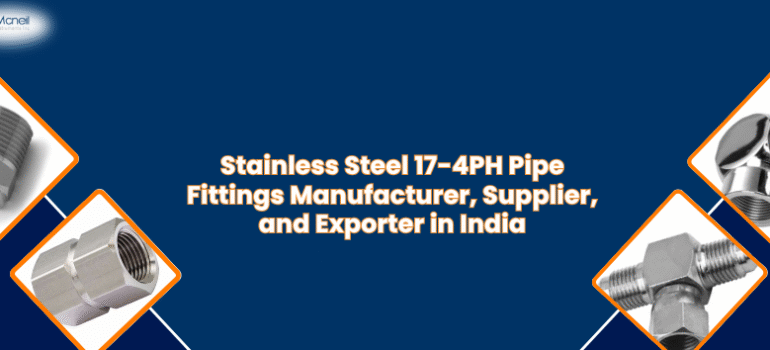
Stainless Steel 17-4PH Pipe Fittings Manufacturer, Supplier, and Exporter in India

Introduction

Stainless Steel 17-4PH pipe fittings are widely recognized for their exceptional combination of strength, corrosion resistance, and heat treatment capabilities. These fittings are ideal for aerospace, petrochemical, marine, and high-pressure industries where reliability under stress is critical.

Mcneil Instruments is a leading manufacturer, supplier, and exporter of Stainless Steel 17-4PH pipe fittings in India. With advanced production capabilities and international certifications, we cater to clients seeking durable and high-performance stainless steel fitting solutions.

What Makes Stainless Steel 17-4PH Unique?

17-4PH (UNS S17400) is a precipitation-hardening martensitic stainless steel. It combines the corrosion resistance of stainless steel with the high strength of hardened alloys.

Key Characteristics:
  • High tensile and yield strength after heat treatment (H900 to H1150)
  • Excellent mechanical properties up to 600°F (316°C)
  • Good corrosion resistance in marine and chemical environments
  • Ideal for welding, machining, and heat treatment

Properties of 17-4PH Material

17-4PH stainless steel is a precipitation-hardening martensitic alloy, known for its high strength, excellent corrosion resistance, and good mechanical properties at elevated temperatures.

  • Corrosion Resistance: Performs well in chemical, marine, and atmospheric conditions; better than many martensitic grades.
  • High Strength: Can achieve tensile strength above 1300 MPa after heat treatment (e.g., H900 condition).
  • Heat Treatable: Offers flexibility with heat treatments (H900–H1150) to balance hardness and toughness.
  • Good Weldability: Can be welded using standard procedures, with post-weld heat treatment improving properties.
  • Dimensional Stability: Minimal distortion during hardening makes it ideal for precision-engineered parts.

These properties make 17-4PH ideal for industries requiring a combination of strength, corrosion resistance, and heat resistance, such as aerospace, oil & gas, nuclear, and marine applications.

Difference Between 17-7PH and 17-4PH Stainless Steel (Comparison Table)

Property17-4PH Stainless Steel17-7PH Stainless Steel
UNS DesignationS17400S17700
Primary Alloying ElementsChromium (17%), Nickel (4%), CopperChromium (17%), Nickel (7%), Aluminum
Heat Treatment ResponsePrecipitation hardenable with H900–H1150 conditionsRequires cold working before aging
Corrosion ResistanceExcellent, similar to 304/316 in many environmentsModerate, less than 17-4PH
Hardness Range (HRC)35–44 (depending on heat treatment)35–50 (depending on aging condition)
FormabilityGood machinability and weldabilityLimited; less weldable and harder to form
Typical ApplicationsAerospace, nuclear, marine, petrochemicalsSprings, diaphragms, washers, aerospace parts

Technical Specifications & Mechanical Properties of Stainless Steel 17-4PH Pipe Fittings

PropertyDetails
StandardASTM A182 / ASME SA182 F564
GradeStainless Steel 17-4PH (UNS S17400)
FormElbows, Tees, Reducers, Couplings, Caps
Heat TreatmentSolution Annealed & Aged (H900–H1150)
Manufacturing MethodForged / Machined / Seamless
ApplicationAerospace, Power, Petrochemical, Marine

Stainless Steel 17-4PH Pipe Fittings Mechanical Properties

PropertyValue (at H900 condition)
Tensile Strength≥ 1310 MPa
Yield Strength≥ 1170 MPa
Elongation≥ 10%
Hardness38–44 HRC
Service TemperatureUp to 600°F (316°C)

Dimensions & Wall Thickness Chart Stainless Steel 17-4PH Pipe Fittings

Nominal Pipe Size (NPS)Wall Thickness (Schedule)
½″ – 24″SCH 10S, SCH 40S, SCH 80S
Fittings StandardASME B16.11 / B16.9
Dimensional ToleranceAs per MSS-SP-43 / ANSI B16.9

Stainless Steel 17-4PH Pipe Fittings Certifications

CertificationDetails
ASTM A182 / ASME SA182Grade and material compliance
EN 10204 3.1 / 3.2Mill Test Certificates (MTCs)
ISO 9001:2015Quality Management System
NACE MR0175Suitable for Sour Service Environments
PED 2014/68/EUEuropean Pressure Equipment Directive Approval

Available Sizes & Specifications Stainless Steel 17-4PH Pipe Fittings

FormSize Range (NPS)Schedule
Elbows, Tees½″ to 24″SCH 10S to SCH 160
Couplings, Caps½″ to 6″SCH 40 to SCH 160
Custom FittingsOn RequestBased on Project Specs

Global Reach of Mcneil Instruments: Stainless Steel 17-4PH Pipe Fittings

  • In Saudi Arabia, Mcneil Instruments is a leading manufacturer of 17-4PH pipe fittings used in desalination and offshore drilling applications.
  • In Qatar, we are a reliable exporter, supplying 17-4PH fittings for aerospace and gas processing projects.
  • In Nigeria, industries benefit from our expertise as a trusted supplier, using our high-strength 17-4PH fittings in chemical processing plants.
  • As a dedicated exporter in Ghana, Mcneil delivers 17-4PH stainless fittings for corrosion-prone environments in marine and mining operations.
  • In Texas, Mcneil is a prominent manufacturer and supplier of 17-4PH pipe fittings, serving the oil & gas, and defense industries.
  • From Chicago, we are a known exporter, delivering 17-4PH pipe fittings for industrial automation and clean energy sectors.
  • In Malaysia, we serve as a dependable supplier and exporter for 17-4PH fittings used in shipbuilding and petrochemical engineering.
  • In Singapore, Mcneil Instruments is recognized as a high-quality manufacturer and exporter, supporting offshore platforms and subsea equipment.
  • Across Brazil, we are a trusted supplier, providing 17-4PH pipe fittings to paper mills, refinery units, and energy plants.

Conclusion

Stainless Steel 17-4PH pipe fittings offer unmatched strength and corrosion resistance, especially in harsh industrial environments. Mcneil Instruments ensures top-grade, heat-treated 17-4PH fittings tailored to global quality standards. As a manufacturer, supplier, and exporter, we deliver robust solutions for mission-critical applications.

People Also Searched for

stainless steel 3d elbow grade 17-4PH price list, ss 17-4PH buttweld elbow supplier in mumbai, 17-4PH stainless steel pipe fittings price list, stainless steel 17-4PH pipe fittings manufacturers in india, stainless steel 17-4PH seamless buttweld elbow price list in india, stainless steel 17-4PH pipe fittings suppliers, stainless steel 17-4PH long radius bend, stainless steel 17-4PH pipe fittings manufacturer, stainless steel 17-4PH pipe elbow supplier, austenitic stainless steel 17-4PH butt weld fittings, stainless steel 17-4PH piggable bend supplier, stainless steel 17-4PH pipe fittings catalogue, astm a403 17-4PH two joint fittings, stainless steel 17-4PH pipe nipple supplier, ss 17-4PH buttweld fittings price list, stainless steel 17-4PH pipe fittings suppliers in chennai, stainless steel 17-4PH butt weld fittings supplier in india, austenitic stainless steel 17-4PH pipe fittings, stainless steel 17-4PH pipe fittings manufacturers in india, stainless steel 17-4PH pipe elbow price, asme sa403 17-4PH stainless steel pipe fittings, stainless steel 17-4PH pipe reducer price, ss 17-4PH buttweld fittings manufacturer in mumbai, stainless steel 17-4PH long radius elbow, price of stainless steel buttweld fittings 17-4PH, ss 17-4PH buttweld fittings price list, stanless steel 17-4PH 5d elbow, ss 17-4PH pipe fittings manufacturer in mumbai, stainless steel 17-4PH seamless pipe fittings, stainless steel 17-4PH two halve fittings supplier, stainless steel 17-4PH reducing elbow supplier, stainless steel 45 degree elbow, stainless steel 17-4PH 90 deg buttweld elbow supplier, ss 17-4PH butt weld fittings supplier in india, stainless steel 17-4PH eual cross, ss 17-4PH short radius elbow supplier.
Read More

Stainless Steel Super Duplex 2507 Pipe Fittings Manufacturer, Supplier, and Exporter in India

Introduction

Stainless Steel Super Duplex 2507 pipe fittings are engineered for highly corrosive and high-pressure environments. With excellent mechanical strength, outstanding resistance to chloride stress corrosion, and superior weldability, these fittings are ideal for chemical processing, offshore oil rigs, desalination plants, and marine systems.

Mcneil Instruments stands as a trusted manufacturer, supplier, and exporter of Super Duplex 2507 pipe fittings in India. Our products are precision-engineered to meet global standards, ensuring long-term durability and safety in harsh environments.

What is Stainless Steel Super Duplex 2507 Pipe Fittings

Stainless Steel Super Duplex 2507 pipe fittings are components made from a high-performance duplex stainless steel alloy, known for its exceptional strength and corrosion resistance, especially in chloride-containing environments. Specifically, “2507” refers to the UNS designation (S32750), indicating a super duplex stainless steel with a high proportion of chromium, molybdenum, and nitrogen. These fittings are used to join, regulate, or terminate piping systems, and are designed to withstand harsh conditions in industries like petrochemical, chemical processing, and marine applications. 

What Makes Super Duplex 2507 Exceptional

Super Duplex 2507 combines the benefits of both austenitic and ferritic stainless steels. It contains 25% chromium, 4% molybdenum, and 7% nickel, which enhances its resistance to pitting, crevice corrosion, and stress corrosion cracking—especially in chloride-rich environments.

Key Features:

  • High yield strength (almost double that of austenitic grades)
  • Excellent corrosion resistance in seawater and aggressive media
  • Superior mechanical strength and fatigue resistance
  • Good weldability and thermal conductivity

Stainless Steel Super Duplex 2507 Pipe Fittings Technical Specifications & Mechanical Properties

PropertyDetails
StandardASTM A815 / ASME SA815
GradeSuper Duplex 2507 (UNS S32750)
FormElbows, Tees, Reducers, Caps, Stub Ends
Manufacturing ProcessSeamless / Welded / Forged
Surface FinishPickled, Polished
Heat TreatmentSolution Annealed
End ConnectionsBeveled, Plain, Threaded

Mechanical Properties of Stainless Steel Super Duplex 2507 Pipe Fittings

PropertyValue
Tensile Strength≥ 800 MPa
Yield Strength≥ 550 MPa
Elongation≥ 15%
Hardness≤ 32 HRC
Operating TempUp to 300°C (continuous)
Impact ToughnessExcellent, even at -50°C

Stainless Steel Super Duplex 2507 Pipe Fittings Dimensions & Wall Thickness Chart

Nominal Pipe Size (NPS)Wall Thickness Range (SCH)
½″ – 24″SCH 10S, SCH 40S, SCH 80S, XXS
Dimensional StandardASME B16.9 / B16.11
ToleranceAs per ANSI B16.9 / MSS-SP-43

Stainless Steel Super Duplex 2507 Pipe Fittings Certifications

CertificationDetails
ASTM A815 / ASME SA815Material and manufacturing compliance
EN 10204 3.1 / 3.2Mill Test Certificates
ISO 9001:2015Quality Management System Certification
NACE MR0175Sour service corrosion resistance
IBR CertifiedBoiler and pressure application suitability

Available Sizes & Specifications for Stainless Steel Super Duplex 2507 Pipe Fittings

FormSize Range (NPS)Schedule / Class
Elbows, Tees½″ to 24″SCH 10S – XXS
Reducers, Caps½″ to 24″SCH 10S – XXS
Unions, Stub Ends½″ to 4″Class 150 – Class 3000
Custom SizesOn RequestBased on project requirements

Global Reach of Mcneil Instruments: Super Duplex 2507 Pipe Fittings

  • In Saudi Arabia, Mcneil Instruments is a leading manufacturer of Super Duplex 2507 pipe fittings for desalination and petrochemical infrastructure.
  • In Qatar, we are a reliable exporter, providing 2507 fittings to offshore drilling and gas separation units.
  • Across Nigeria, industries depend on us as a trusted supplier for high-strength, corrosion-resistant 2507 fittings used in process plants and marine pipelines.
  • As an experienced exporter in Ghana, Mcneil delivers fittings tailored for energy plants and refineries.
  • In Texas, we are a reputed manufacturer and supplier of Super Duplex fittings used in subsea systems and chemical facilities.
  • From Chicago, we operate as a reliable exporter, delivering to HVAC, oil refining, and wastewater systems.
  • In Malaysia, Mcneil is known as a top supplier and exporter, meeting demand from fabrication yards and industrial clients.
  • In Singapore, we serve as a recognized manufacturer and exporter of Super Duplex 2507 fittings, especially for shipbuilding and chemical sectors.
  • Across Brazil, Mcneil is a long-term supplier of Super Duplex fittings to pulp, paper, and ethanol plants.

Conclusion

Stainless Steel Super Duplex 2507 pipe fittings offer unparalleled performance in harsh, high-pressure, and chloride-rich environments. As your dedicated manufacturer, supplier, and exporter, Mcneil Instruments delivers globally certified, corrosion-resistant, and durable Super Duplex 2507 fittings tailored for critical industrial applications.

Read More

Stainless Steel Duplex 2205 Pipe Fittings Manufacturer, Supplier, and Exporter in India

Introduction

Stainless Steel Duplex 2205 pipe fittings combine a dual-phase microstructure—roughly equal parts austenite and ferrite—to deliver remarkable strength, corrosion resistance, and stress corrosion cracking resistance. These features make them ideal for demanding applications in chemical processing, oil & gas, marine environments, and desalination plants.

Mcneil Instruments is a leading manufacturer, supplier, and exporter of Stainless Steel Duplex 2205 pipe fittings in India. With advanced manufacturing facilities and full compliance with international standards, Mcneil delivers reliable and high-performance fittings to clients worldwide.

What Makes SS Duplex 2205 Unique

Duplex 2205 has an alloy structure with 22% chromium, 5–6% nickel, and 3% molybdenum, along with nitrogen added for enhanced strength and corrosion resistance. This results in:

  • Superior resistance to pitting, crevice, chloride stress corrosion, and chloride-induced stress cracking.
  • High mechanical strength, approximately double that of standard austenitic stainless steels.
  • Cost-effective designs due to reduced material thickness requirements without compromising performance.

Manufacturing & Quality Control

  • Raw Materials: Procured in accordance with ASTM A815 standards.
  • Forming: Produced into fittings such as elbows, tees, reducers, and caps using forging or seamless forming techniques.
  • Heat Treatment: Solution annealed and quenched to stabilize the duplex microstructure.
  • Finishing: Includes machining, threading, and pickling to ensure professional delivery.
  • Testing & Inspection: Includes dimensional checks, hardness testing, tensile testing, NDT (UT/RT), and PMI. All products include Mill Test Certificates (EN 10204) and IBR approval as needed.

Technical Specifications & Mechanical Properties

PropertyDetails
StandardASTM A815 / ASME SA815 for Duplex 2205 fittings
GradeDuplex Stainless Steel 2205 (UNS S32205 / S31803)
FormsElbow, Tee, Reducer, Cap, Stub End, Cross, Union
Manufacturing MethodSeamless / Welded / Forged
Heat TreatmentSolution Annealed (1040–1105 °C)
Surface FinishPickled, Polished, Bead-blasted
End Connection TypesBeveled, Plain, Threaded

Mechanical Properties

PropertyValue
Tensile Strength620–850 MPa
Yield Strength≥ 450 MPa
Elongation≥ 25%
Hardness≤ 35 HRC
Impact ToughnessExcellent ductility even at −50 °C

Dimensions & Wall Thickness Chart

Nominal Size (NPS)Wall Thickness (SCH 10S to SCH XXS)
½″ – 24″SCH 10S, 40S, 80S, 160, XXS
Fittings StandardASME B16.9 / B16.11
Dimensional ToleranceAs per ANSI B16.9 and MSS-SP-43

Certifications

CertificationDetails
ASTM A815 / ASME SA815Duplex 2205 material standard
EN 10204 3.1 / 3.2Third-party approved mill test certificates
ISO 9001:2015Quality management assurance
IBR CertifiedBoiler & pressure vessel suitability
PED (Optional)EU Pressure Equipment Directive
NACE MR0175Sour service stress corrosion resistance

Available Sizes & Specifications

FormSize Range (NPS)Schedule/Class
Elbows, Tees½″ to 24″SCH 10S to SCH XXS
Reducers, Caps½″ to 24″SCH 10S to SCH XXS
Unions, Stub Ends½″ to 4″Class 150 – Class 3000
Custom SizesOn RequestAs per Project Requirements

Global Reach of Mcneil Instruments: Stainless Steel Duplex 2205 Pipe Fittings

  • In Saudi Arabia, Mcneil Instruments is a recognized manufacturer of Duplex 2205 fittings used in oil & gas and petrochemical projects.
  • In Qatar, we act as a trusted exporter, supplying corrosion-resistant fittings for water treatment and petrochemical facilities.
  • Industries in Nigeria rely on us as a dependable supplier for Duplex fittings in desalination plants and power generation.
  • As a committed exporter in Ghana, Mcneil provides fittings used in coastal power and desalination projects.
  • In Texas, MCneil is known as a leading manufacturer and supplier, delivering Duplex 2205 fittings to the oil & gas and chemical industries.
  • From Chicago, we serve as a reliable exporter, providing high-strength fittings for refinery and industrial piping networks.
  • In Malaysia, we are a reputable supplier and exporter, offering fittings for offshore installation and marine fabrication.
  • In Singapore, Mcneil Instruments is considered a premium manufacturer and exporter, supporting shipbuilding and petrochemical facilities.
  • Across Brazil, we operate as a dedicated supplier, delivering Duplex 2205 pipe fittings for pulp & paper, mining, and chemical sectors.

Conclusion

Stainless Steel Duplex 2205 pipe fittings deliver unmatched corrosion resistance, high mechanical strength, and temperature resilience—ideal for critical industrial applications. Mcneil Instruments offers certified, precise, and durable fittings designed to serve global demands reliably.

Read More

Stainless Steel 347 Pipe Fittings Manufacturer, Supplier, and Exporter in India

Introduction

Stainless Steel 347 pipe fittings are stabilized with columbium (niobium), offering excellent resistance to intergranular corrosion even after welding and exposure to high temperatures. These fittings are ideal for use in aerospace, refinery, and chemical processing industries.

Mcneil Instruments is a trusted manufacturer, supplier, and exporter of Stainless Steel 347 pipe fittings in India, known for delivering components that meet stringent industrial and international standards.

What Sets SS 347 Apart

Stainless Steel 347 contains 17–19% Chromium, 9–13% Nickel, and is stabilized with columbium (Nb) to prevent chromium carbide precipitation.

It offers:

  • Excellent weldability and mechanical strength in high-heat service.
  • Resistance to intergranular corrosion in post-welded applications.
  • Suitability for pressure vessels, heat exchangers, and furnace components.

Manufacturing & Quality Control

  • Raw Materials: Sourced as per ASTM A403 WP347 standard.
  • Forming: Fittings like elbows, tees, reducers, and stub ends are forged or formed seamlessly.
  • Heat Treatment: Solution annealed to ensure resistance to sensitization.
  • Finishing: Includes polishing, beveling, and threading.
  • Testing & Inspection: PMI, NDT (UT/RT), tensile testing, hardness, and dimensional checks.
  • Certifications: MTCs, IBR, EN 10204 compliance ensure transparency and traceability.

Technical Specifications & Mechanical Properties of Stainless Steel 347 Pipe Fittings

PropertyDetails
StandardASTM A403 WP347 / ASME B16.9 / B16.11
GradeStainless Steel 347 (UNS S34700)
FormElbows, Tees, Reducers, Caps, Stub Ends
Manufacturing MethodSeamless / Welded / Forged
Heat TreatmentSolution annealed
Surface FinishPickled, Polished, Bead-blasted
End ConnectionsBeveled, Plain, Threaded

Mechanical Properties of Stainless Steel 347 Pipe Fittings

PropertyValue
Tensile Strength≥ 515 MPa
Yield Strength≥ 205 MPa
Elongation≥ 35%
Hardness≤ 95 HRB
Operating TempUp to 870°C

Dimensions & Wall Thickness Chart of Stainless Steel 347 Pipe Fittings

Nominal Size (NPS)Wall Thickness (SCH 10S – XXS)
½″ – 24″SCH 10S, SCH 40S, SCH 80S, XXS
Fittings StandardASME B16.9 / B16.11
Dimensional ToleranceAs per ANSI B16.9 / MSS-SP-43

Stainless Steel 347 Pipe Fittings Certifications

CertificationDetails
ASTM A403Material and manufacturing compliance
ASME B16.9 / B16.11Fitting dimensions
EN 10204 3.1 / 3.2Mill Test Certificates
ISO 9001:2015Quality Management
IBR CertifiedBoiler application suitability
NACE MR0175 (Optional)Sour service corrosion resistance

Stainless Steel 347 Pipe Fittings Available Sizes & Specifications

FormSize Range (NPS)Schedule/Class
Elbows, Tees½″ to 24″SCH 10S to SCH XXS
Reducers, Caps½″ to 24″SCH 10S to SCH XXS
Unions, Stub Ends½″ to 4″Class 150 – Class 3000
Custom SizesOn RequestBased on Project Specs

Global Reach of Mcneil Instruments: Stainless Steel 347 Pipe Fittings

  • In Saudi Arabia, Mcneil Instruments is a reliable manufacturer of SS 347 pipe fittings used in petrochemical plants and high-temperature steam services.
  • In Qatar, we operate as a trusted exporter, supplying SS 347 pipe fittings for high-pressure chemical processing pipelines.
  • Industries in Nigeria rely on us as a dependable supplier, using our fittings in boiler systems and heat-treatment lines.
  • As a committed exporter in Ghana, we support infrastructure and industrial piping needs with corrosion-resistant 347 fittings.
  • In Texas, Mcneil is a renowned manufacturer and supplier, delivering 347 pipe fittings for aerospace, heat exchanger, and refineries.
  • From Chicago, we act as a consistent exporter, serving HVAC, welding-intensive piping, and cleanroom applications.
  • In Malaysia, Mcneil is a dedicated supplier and exporter of 347 pipe fittings for chemical tank fabrication and offshore services.
  • In Singapore, we’re known as a premium manufacturer and exporter of SS 347 fittings for use in marine and energy industries.
  • Across Brazil, we support industries as a long-standing supplier, offering 347 pipe fittings trusted in food processing and heat-sensitive environments.

Conclusion

Stainless Steel 347 pipe fittings are the ideal choice for demanding thermal applications requiring both weldability and resistance to sensitization. As your trusted manufacturer, supplier, and exporter, Mcneil Instruments offers world-class products, expert support, and dependable delivery.

Read More

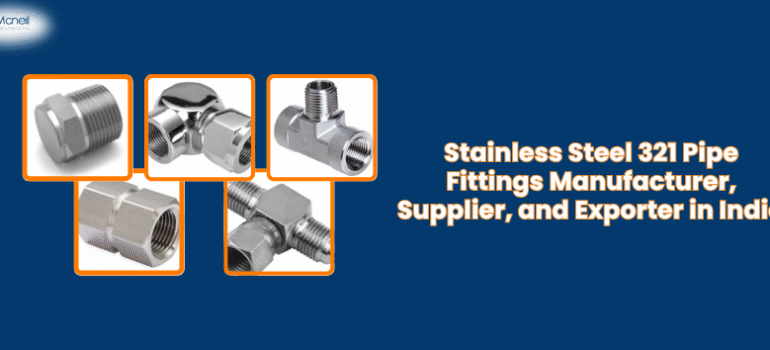
Stainless Steel 321 Pipe Fittings Manufacturer, Supplier, and Exporter in India

Introduction

Stainless Steel 321 pipe fittings are celebrated for their excellent resistance to intergranular corrosion and high-temperature stability, thanks to titanium stabilization. Widely used in burners, exhaust systems, and chemical processing, SS 321 fittings endure challenging conditions without compromising integrity.

Mcneil Instruments is a trusted manufacturer, supplier, and exporter of stainless steel 321 pipe fittings in India, delivering precision-engineered components that meet global standards and diverse industrial applications.

Why Stainless Steel 321 Stands Apart

  • Contains 17–19% Chromium, 9–12% Nickel, and Titanium (Ti) to stabilize against carbide precipitates.
  • Ideal for welding services up to 870 °C where creep resistance is needed.
  • Provides strong oxidation and corrosion resistance in high-heat environments.

Manufacturing & Testing Process

  • Raw Material from certified mills conforming to ASTM A403 WP321.
  • Forming: Forged or formed to produce elbows, tees, reducers, and caps.
  • Heat Treatment: Solution annealed and quenched per specifications.
  • Finishing: Deburring, threading, and passivation for clean finish.
  • Quality Checks: Dimensional inspections, NDT (UT or RT), mechanical testing, and PMI. Certified via MTCs, EN 10204, and IBR optional.

Technical Specifications & Mechanical Properties of Stainless Steel 321 Pipe Fittings

SpecificationDetails
StandardASTM A403 WP321 / ASME B16.9 / B16.11
Material GradeStainless Steel 321 (Titanium-stabilized Austenitic)
UNS DesignationS32100
TypeSeamless / Welded / Fabricated
FormElbow, Tee, Reducer, Cap, Cross, Stub End, Union
Manufacturing StandardsASTM, ASME, ANSI, MSS-SP
Stabilizing ElementTitanium (Ti)
ApplicationsHeat exchangers, refineries, chemical plants, power plants

Mechanical Properties of Stainless Steel 321 Pipe Fittings

PropertyValue
Tensile Strength≥ 515 MPa (75 ksi)
Yield Strength≥ 205 MPa (30 ksi)
Elongation≥ 35%
Hardness (HRB)≤ 95
Impact ResistanceExcellent, especially at high temperatures

Stainless Steel 321 Pipe Fittings Dimensions & Wall Thickness Chart

Size (NPS)Outside Diameter (mm)Wall Thickness (mm) (SCH 10S–SCH XXS)
½″21.31.65 – 5.54
1″33.42.77 – 9.09
2″60.33.91 – 15.09
4″114.36.02 – 21.44
6″168.37.11 – 28.58
8″219.18.18 – 33.32
10″273.09.27 – 38.89

Note: Custom wall thickness and dimensions available on request.

Certifications for Stainless Steel 321 Pipe Fittings

CertificationDetails
ASTM A403 / ASME B16.9Material and dimensional standards
EN 10204 3.1 / 3.2Mill Test Certificates / Third-party inspection available
IBR CertifiedFor boiler and pressure vessel applications
NACE MR0175 / MR0103For sour service (if applicable)
PED CertifiedFor EU-compliant pressure systems
ISO 9001:2015Quality Management System Compliance

Available Sizes & Specifications of Stainless Steel 321 Pipe Fittings

SpecificationDetails
Size Range½″ NB to 24″ NB (and custom sizes on request)
TypeSeamless, Welded, Buttweld, Forged
Wall ThicknessSCH 10S, SCH 40, SCH 80, SCH 160, SCH XXS
End TypesBeveled End (BE), Plain End (PE), Threaded End (TE)
Forms Available90° / 45° Elbow, Tee, Concentric/Eccentric Reducer, Cap, Stub End
FinishPickled, Annealed, Polished, Bead-blasted
Heat TreatmentSolution Annealed as per standard

Global Reach of Mcneil Instruments: SS 321 Pipe Fittings

  • In Saudi Arabia, Mcneil is a trusted manufacturer of SS 321 pipe fittings, serving high-temp petrochemical units.
  • From Qatar, we act as a key exporter, supplying corrosion-resistant fittings for exhaust and boiler systems.
  • In Nigeria, Mcneil serves as a reliable supplier of SS 321 fittings for chemical and power plants.
  • As an exporter in Ghana, Mcneil provides fittings for thermal installations and industrial kitchens.
  • Mcneil functions as a leading manufacturer and supplier in Texas, providing SS 321 fittings for aerospace and refinery projects.
  • In Chicago, we are a noted exporter of SS 321 pipe fittings for HVAC and fire protection systems.
  • Our presence in Malaysia includes roles as supplier and exporter, delivering fittings for marine and industrial applications.
  • In Singapore, Mcneil is recognized as a manufacturer and exporter, catering to shipbuilding and petrochemical industries.In Brazil, our company is a distinguished supplier, providing sustainably sourced SS 321 fittings for food and beverage plants.

Conclusion

Stainless Steel 321 pipe fittings offer exceptional performance in high-temperature applications thanks to their titanium-stabilized construction. With Mcneil Instruments as your manufacturer, supplier, and exporter, you gain access to expertly engineered, certified fittings backed by global reach.

Read More

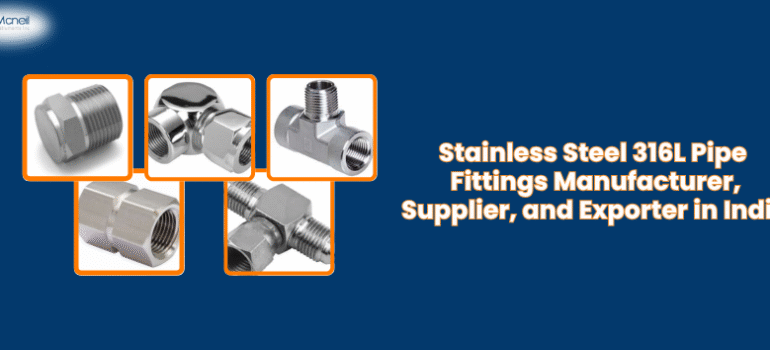
Stainless Steel 316L Pipe Fittings Manufacturer, Supplier, and Exporter in India

Introduction

In demanding industrial environments, where corrosion resistance, hygiene, and strength are non-negotiable, Stainless Steel 316L pipe fittings have become a preferred choice. Known for their low carbon content and enhanced weldability, SS 316L fittings are critical to the performance and safety of piping systems across sectors such as pharmaceuticals, marine, food processing, and chemical industries.

Mcneil Instruments is a trusted manufacturer, supplier, and exporter of stainless steel 316L pipe fittings in India, offering high-quality fittings that comply with global standards and meet diverse application requirements across both domestic and international markets.

Understanding Stainless Steel 316L Pipe Fittings

What Makes 316L Different from 316?

Stainless Steel 316L is the low-carbon version of SS 316. The “L” stands for “low carbon,” meaning the carbon content is limited to 0.03% max. This reduction significantly improves resistance to intergranular corrosion after welding, eliminating the need for post-weld heat treatment in many applications.

Key Characteristics of SS 316L Pipe Fittings
  • Low Carbon Content: Prevents carbide precipitation during welding, enhancing corrosion resistance.
  • Superior Corrosion Resistance: Excellent in chloride-rich environments such as marine and chemical plants.
  • High Strength and Durability: Retains mechanical strength even at high temperatures.
  • Hygienic Finish: Smooth, non-porous surface ideal for sanitary applications.
  • Good Weldability and Fabrication: Suitable for all standard welding techniques without pre-heating.
  • Compliance with International Standards: Meets ASTM A403 WP316L, ASME B16.9, and B16.11.

Manufacturing Process of SS 316L Pipe Fittings

  • Raw Material Sourcing: Selection of high-purity 316L stainless steel billets and bars, conforming to ASTM A403 standards.
  • Forming Processes:
    • Buttweld Fittings: Produced using hot working and cold forming methods.
    • Forged Fittings: Created via forging and machining for socket weld and threaded types.
  • Heat Treatment: Solution annealing at specific temperatures to optimize corrosion resistance and mechanical integrity.
  • Finishing Operations: Beveling, polishing, and precision machining to ensure dimensional accuracy.
  • Testing and Inspection:
    • Mechanical properties testing (tensile, hardness)
    • Chemical composition analysis
    • Hydrostatic and pneumatic pressure testing
    • NDT (Ultrasonic, Radiographic, PMI)
  • Certifications Provided: MTCs with EN 10204 3.1 / 3.2, IBR, NACE, and PED compliance.

Technical Specifications of Stainless Steel 316L Pipe Fittings

SpecificationDetails
GradeStainless Steel 316L
StandardASTM A403 WP316L
DimensionsASME B16.9, B16.11, B16.28
Sizes½” NB to 48” NB
Wall ThicknessSCH 10S, 40S, 80S, 160S, XXS
TypesElbows, Tees, Reducers, Caps, Stub Ends, Couplings
Pressure RatingsClass 150, 300, 600, 900, 1500
FinishPickled, Polished, Annealed

Stainless Steel 316L Pipe Fittings Certifications Table 

CertificationStandard / Description
Material Test Certificate (MTC)EN 10204 3.1 / 3.2
ASTM / ASME ComplianceASTM A403 WP316L / ASME B16.9
Indian Boiler Regulation (IBR)Approved for high-pressure usage
NACE ComplianceMR0175 for sour service applications
Positive Material Identification (PMI)Confirming chemical composition
Radiography & Ultrasonic TestingOptional upon request

Available Sizes & Specifications of Stainless Steel 316L Pipe Fittings

TypeSize Range (NB)Schedule / Rating
Buttweld Fittings½” – 48”SCH 10S, SCH 40S, SCH 80S, XXS
Forged Fittings½” – 4”3000#, 6000#, 9000#
Threaded Fittings½” – 4”BSP / NPT Threads
Socket Weld Fittings½” – 4”ANSI B16.11

Mcneil Instruments: Global Supplier & Exporter of SS 316L Pipe Fittings

As a trusted name in stainless steel solutions, Mcneil Instruments serves diverse industrial sectors worldwide as a manufacturer, supplier, and exporter of Stainless Steel 316L pipe fittings.

  • In Saudi Arabia, Mcneil Instruments is recognized as a reliable manufacturer of stainless steel 316L pipe fittings for petrochemical and desalination projects, where chloride resistance is crucial.
  • In Qatar, we act as a leading exporter of 316L pipe fittings, delivering hygienic and corrosion-resistant solutions to oil & gas processing and infrastructure developments.
  • In Nigeria, industries benefit from our role as a trusted supplier of SS 316L pipe fittings, meeting the needs of water treatment, mining, and energy sectors.
  • As an established pipe fittings exporter in Ghana, Mcneil Instruments supports industrial growth with fittings suited for high-moisture, high-corrosion environments.
  • In Texas, Mcneil serves as a reputed manufacturer and supplier of stainless steel 316L pipe fittings, particularly for pharmaceutical, energy, and food processing facilities adhering to ASTM/ASME standards.
  • In Chicago, we are known as a reliable exporter of stainless steel 316L fittings, catering to HVAC, cleanroom, and process piping installations.
  • Our presence in Malaysia is marked by being a committed exporter and supplier of SS 316L pipe fittings, commonly used in marine fabrication and industrial kitchen applications.
  • In Singapore, Mcneil Instruments is regarded as a premium manufacturer and exporter of stainless steel 316L pipe fittings, particularly for shipbuilding and chemical industries.
  • Across Brazil, Mcneil supports industries as a dedicated supplier of 316L pipe fittings, trusted for chemical plant pipelines and high-acidity environments like pulp and paper mills.

Mcneil Instruments: Your Strategic Partner for SS 316L Fittings in India 

As a leading Stainless Steel 316L Pipe Fittings manufacturer, supplier, and exporter in India, Mcneil Instruments distinguishes itself through an unwavering commitment to excellence:

  • Manufacturing Prowess: Our advanced manufacturing facilities, equipped with cutting-edge technology and staffed by skilled professionals, ensure the consistent production of ASTM A403 WP316L fittings that meet or exceed global quality benchmarks. 
  • Extensive & Ready Inventory: We maintain a vast stock of SS 316L pipe fittings in all critical types (elbows, tees, reducers, caps, crosses, stub ends, bends) and a comprehensive range of sizes (1/8″ NB to 48″ NB) and schedules (SCH 5S, 10S, 40S, 80S, STD, XS, XXS). This ready availability facilitates rapid dispatch and ensures project timelines are met. 
  • Proven Global Export Capabilities: With extensive experience in international trade, we efficiently export Stainless Steel 316L fittings to clients across all continents, guaranteeing smooth logistics, precise documentation, and reliable, on-time global deliveries. 
  • Uncompromising Quality Assurance: Our dedication to quality is absolute. Every fitting undergoes stringent multi-stage inspection and testing, backed by full certifications (e.g., EN 10204 3.1/3.2, NACE MR0175, HIC, PMI), offering complete material traceability and peace of mind.
  • Customer-Centric Approach: We provide tailored solutions, maintain competitive pricing, and offer unparalleled technical support. Our expert team guides clients from initial inquiry through material selection and post-delivery satisfaction.

Conclusion

Stainless Steel 316L pipe fittings are indispensable in industries that demand hygienic, corrosion-resistant, and high-strength components. As a reputed manufacturer, supplier, and exporter in India, Mcneil Instruments ensures that every product meets rigorous quality standards and customer expectations.

If you’re sourcing SS 316L pipe fittings for critical applications, connect with Mcneil Instruments for expert guidance, certified products, and dependable service across the globe.

Read More

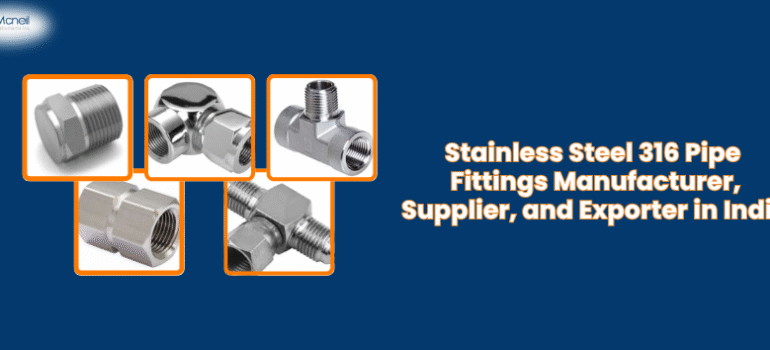
Stainless Steel 316 Pipe Fittings Manufacturer, Supplier, and Exporter in India

Introduction

Stainless steel 316 pipe fittings play a vital role in the integrity and reliability of industrial piping systems, especially in environments exposed to high corrosion and chemical exposure. Known for their excellent corrosion resistance and high performance under pressure and temperature variations, SS 316 fittings are a trusted choice across sectors like chemical, marine, food processing, and pharmaceutical industries.

Mcneil Instruments stands out as a leading manufacturer, supplier, and exporter of stainless steel 316 pipe fittings in India, offering a wide range of products engineered to meet global quality and compliance standards. With an emphasis on precision, durability, and timely delivery, Mcneil serves domestic and international markets alike with superior piping solutions.

Understanding Stainless Steel 316 Pipe Fittings

What Makes SS 316 Unique?

Stainless Steel 316 is an austenitic alloy containing 16-18% Chromium, 10-14% Nickel, and 2-3% Molybdenum, which provides exceptional resistance to chlorides and other industrial solvents. It is especially preferred for applications exposed to saltwater, acids, and elevated temperatures.

Key Characteristics of SS 316 Pipe Fittings
  • Superior Corrosion Resistance: Excellent resistance to pitting and crevice corrosion in chloride environments.
  • High Strength and Durability: Withstands pressure and mechanical stress over long-term use.
  • Enhanced Weldability: Suitable for welding without the need for post-weld annealing.
  • Hygienic Surface: Smooth and easy-to-clean surfaces make it ideal for food and pharmaceutical industries.
  • Temperature Resistance: Retains mechanical properties at both cryogenic and elevated temperatures.

Manufacturing Process of SS 316 Pipe Fittings

At Mcneil Instruments, stainless steel 316 pipe fittings are manufactured under stringent quality controls using advanced processes and certified raw materials.

Key Stages in the Manufacturing Process

  • Raw Material Selection: High-grade SS 316 billets and bars conforming to ASTM A403.
  • Forming Techniques:
    • Hot Forging & Extrusion for elbows, tees, reducers, and caps.
    • Cold Forming for precise and seamless constructions.
  • Heat Treatment: Solution annealing to restore corrosion resistance and relieve internal stress.
  • Machining & Finishing: Accurate threading, beveling, and polishing as per international standards.
  • Quality Testing:
    • Mechanical Testing: Tensile, yield, elongation, and hardness tests.
    • NDT: Ultrasonic, radiographic, and hydrostatic testing.
    • Chemical Composition Analysis and PMI (Positive Material Identification).
  • Certifications Provided: MTCs with EN 10204 3.1/3.2, NACE compliance, and IBR approval.

Technical Specifications of Stainless Steel 316 Pipe Fittings

SpecificationDetails
GradeStainless Steel 316
StandardASTM A403 WP316
DimensionsASME B16.9, B16.11, B16.28
Sizes½” NB to 48” NB
Wall ThicknessSCH 10S, 40S, 80S, 160S, XXS
TypesElbows, Tees, Reducers, Caps, Couplings, Stub Ends
Pressure RatingsClass 150, 300, 600, 900, 1500
FinishPickled, Annealed, Polished

Certifications Table

CertificationStandard/Authority
Material Test Certificate (MTC)EN 10204 3.1 / 3.2
International ComplianceASTM A403, ASME B16.9
Indian Boiler Regulation (IBR)Approved for high-pressure use
Corrosion StandardsNACE MR0175, ISO standards
Inspection ReportsThird-party and internal QC records

Available Sizes & Specifications of SS 316 Fittings

TypeSize Range (NB)Schedules Available
Buttweld Fittings½” to 48”SCH 10S, 40S, 80S, 160, XXS
Socket Weld½” to 4”3000#, 6000#, 9000#
Threaded½” to 4”BSP/NPT
Forged Fittings½” to 4”ANSI B16.11

Mcneil Instruments: A Trusted Exporter of SS 316 Pipe Fittings

  • Middle East & Africa (Saudi Arabia, Qatar, Nigeria, Ghana): In oil & gas, desalination, and infrastructure projects, Mcneil’s SS 316 fittings offer unmatched resistance to corrosive media and high-pressure environments.
  • North America (Texas, Chicago): Supplying stainless steel 316 pipe fittings that meet ASTM and ASME standards for industries such as chemical, food, and biotech sectors requiring hygienic, corrosion-resistant systems.
  • Asia-Pacific (Malaysia, Singapore): Serving industrial giants in Malaysia and Singapore with SS 316 pipe fittings engineered for performance in marine, petrochemical, and pharmaceutical sectors.
  • South America (Brazil): Mcneil Instruments exports durable SS 316 pipe fittings for use in pulp & paper, marine engineering, and processing industries across Brazil.

Conclusion

Stainless Steel 316 pipe fittings are essential for systems where reliability under corrosion, pressure, and heat is non-negotiable. As a leading manufacturer, supplier, and exporter in India, Mcneil Instruments delivers fittings that meet global benchmarks in quality, safety, and performance.

For technical queries, orders, or custom fitting requirements, contact Mcneil Instruments to source SS 316 pipe fittings backed by excellence, certifications, and service.

Read More

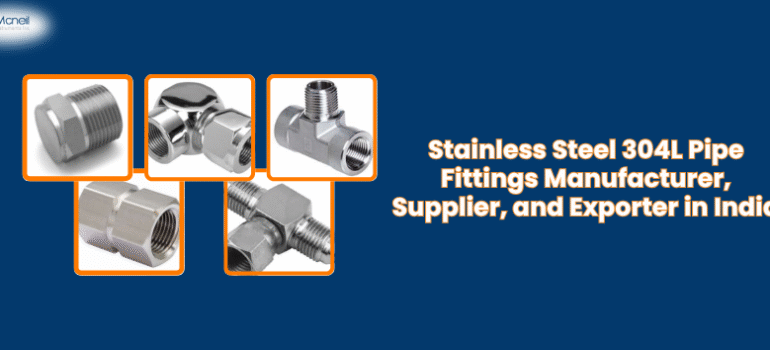
Stainless Steel 304L Pipe Fittings Manufacturer, Supplier, and Exporter in India

Introduction

Pipe fittings are crucial components that ensure leak-proof connections, maintain pipeline integrity, and support system reliability. They enable fluid transfer, pressure control, and system adaptability in industries like food processing, pharmaceuticals, oil and gas, and water treatment.

Introduction to Stainless Steel 304L Pipe Fittings

Stainless Steel 304L pipe fittings including elbows, tees, reducers, caps, couplings, and unions are recognized for their low-carbon formulation, excellent corrosion resistance, and superior weldability. These characteristics make them ideal for welding-intensive installations and systems exposed to corrosive environments.

Mcneil Instruments is a leading manufacturer, supplier, and exporter of stainless steel 304L pipe fittings in India. With modern facilities and adherence to international standards, Mcneil delivers high-quality products to both domestic and global markets.

Understanding Stainless Steel 304L Pipe Fittings

Definition and Composition of Stainless Steel 304L

Stainless Steel 304L is an austenitic grade that mirrors the properties of 304 but contains lower carbon content (≤ 0.03%). This low-carbon design significantly reduces the risk of intergranular corrosion, especially in welded assemblies.

Key Characteristics:
  1. Low Carbon Content – Ensures superior weldability without needing post-weld annealing.
  2. Chemical Composition – 18–20% Chromium, 8–10.5% Nickel, ≤ 0.03% Carbon.
  3. Corrosion Resistance – Effective against acids, chlorides, and oxidative environments; excellent intergranular resistance after welding.
  4. Enhanced Weldability – Ideal for welded pipe systems; reduced risk of sensitization.
  5. Mechanical Properties – Yields ≥ 170 MPa, tensile ≥ 485 MPa, elongation ≥ 40%.
  6. Hygienic Properties – Smooth, non-porous surface, easy to clean and sterilize.
Comparison with Stainless Steel 304

While both grades share chromium and nickel content, 304L’s reduced carbon content enhances weld integrity and corrosion resistance in welded environments, giving it a clear advantage over SS 304 pipe fittings.

Manufacturing Process of SS 304L Pipe Fittings

A. Raw Material Sourcing

Mcneil Instruments sources premium-grade SS 304L billets, bars, and plates in compliance with ASTM A403 standards for fittings.

B. Forming Methods
  • Buttweld Fittings: Formed by hot forging or pressing; available in seamless or welded variants.
  • Forged Fittings: Precision forging is used for socket weld and threaded fittings, ensuring dimensional accuracy and strength.
C. Finishing Operations

Machining ensures precise dimensions; fittings undergo beveling, threading, and polishing to meet specifications.

D. Heat Treatment

Solution Annealing performed at approximately 1030–1140°C followed by rapid cooling restores corrosion resistance and ductility.

E. Rigorous Quality Control & Testing

Mcneil Instruments adheres to strict testing protocols, including:

TestPurpose
Dimensional InspectionEnsures compliance with ASME/ANSI B16.9 and B16.28
Chemical AnalysisConfirms 304L composition
Mechanical TestingValidates tensile, yield, elongation, and hardness
Non-Destructive Testing (NDT)Detects internal/external defects via UT or RT
Positive Material IdentificationConfirms material grade using PMI tools
Hydrostatic TestingEnsures leak-free performance under pressure
CertificationsProvides MTCs, EN 10204 3.1/3.2, IBR, and NACE as needed

Technical Specifications of SS 304L Pipe Fittings

PropertyValue / Standard
MaterialStainless Steel 304L
StandardASTM A403 WP304L
Pressure RatingASME Class 150–600, PN16–PN100
Wall ThicknessAs per schedule (5–12.7 mm typical)
DimensionsAs per ASME/ANSI B16.9 & B16.11
Mechanical StrengthTensile ≥ 485 MPa; Yield ≥ 170 MPa
Corrosion ResistanceExcellent against chlorides and acids

Certifications Table for SS 304L Pipe Fittings

CertificationDescription
ASTM / ASME StandardsASTM A403 WP304L, ASME B16.9, B16.11
ISO 9001:2015Quality Management System
EN 10204 3.1 / 3.2Third-party material test certification
IBR ApprovalCompliance with Indian Boiler Regulations
NACE MR0175/ISO 15156Sour service suitability

Available Sizes & Specifications

Fitting TypeSize RangeDimensions
Buttweld Fittings½″ to 24″ (15–600 mm)ASME B16.9
Socket Weld / Threaded½″ to 4″ (15–100 mm)ASME B16.11
SchedulesSch 10–160, custom variants—
Material FormsSeamless, Welded, Forged—

Conclusion

Stainless Steel 304L pipe fittings are essential for welded, corrosive environments that require structural integrity, hygiene, and ease of fabrication. Choosing a reputable supplier ensures product reliability and compliance.

Mcneil Instruments, a recognized manufacturer, supplier, and exporter of 304L pipe fittings in India, delivers precision-engineered products backed by rigorous testing and certifications. Their technical expertise and global logistics capabilities make them an ideal partner for industrial projects.

Contact Mcneil Instruments today for a comprehensive range of ASTM A403 WP304L fittings tailored to your specific requirements.

Read More

Stainless Steel 304 Pipe Fittings Manufacturer, Supplier, and Exporter in India

Introduction

Stainless Steel 304 pipe fittings are essential components used in piping systems across diverse industries such as food processing, pharmaceuticals, water treatment, and construction. With its excellent corrosion resistance and mechanical properties, Grade 304 has become a staple for reliable and hygienic connections.

Mcneil Instruments is a leading manufacturer, supplier, and exporter of stainless steel 304 pipe fittings in India. With a commitment to quality, precision, and performance, Mcneil offers a complete range of SS 304 fittings designed to meet both domestic and international demand.

Understanding Stainless Steel 304: The “18/8” Advantage

Stainless Steel 304 gets its “18/8” nickname from its chemistry: approximately 18% chromium and 8% nickel. This balanced composition offers a combination of corrosion resistance, strength, durability, and hygiene, ideal for demanding environments.

  • Excellent Corrosion Resistance: The chromium content forms a protective oxide film on the surface, shielding the material against humidity, acids, and chlorides.
  • Good Formability and Weldability: SS 304 can be readily shaped into elbows, tees, reducers, and other connection types, and it welds cleanly with minimal post-processing.
  • High Strength and Durability: Capable of withstanding moderate pressures and temperatures, SS 304 fittings are reliable for long-term use.
  • Hygienic Properties: The non-porous surface makes it easy to clean and sterilize, making it a preferred choice for sanitary applications.

What Is a 304 Pipe Grade?

The term 304 pipe grade refers to pipes and fittings made of stainless steel conforming to international standards (e.g., ASTM A403 WP304) and designed to precise dimensions, mechanical properties, and performance criteria. Below are key specifications and charts related to SS 304 fittings.

Stainless Steel 304 Pipe Fittings Sizes & Dimensions

Fitting TypeRangeSchedule
Elbows, Tees½″ to 12″ (15 to 300 mm)Sch 10–160
Reducers, CapsSame rangeSch 10–160
Couplings, Unions½″ to 4″ (15 to 100 mm)Sch 10–160

Stainless Steel 304 Chemical Composition

ElementMinMax
Chromium18.0%20.0%
Nickel8.0%10.5%
Carbon—0.08%
Manganese—2.0%
Phosphorus—0.045%
Sulfur—0.03%

ASTM A403 WP304 Mechanical Properties

PropertyMin. Value
Tensile Strength515 MPa
Yield Strength205 MPa
Elongation (in 50 mm)40%
Hardness (Rockwell B)92

Pressure Rating for SS 304 Fittings

Fitting SizeSchedule 40 RatingSchedule 80 Rating
½″1,480 psi (10.2 MPa)2,540 psi (17.5 MPa)
1″1,220 psi (8.4 MPa)2,020 psi (13.9 MPa)
2″1,130 psi (7.8 MPa)2,000 psi (13.8 MPa)

SS 304 vs SS 304L Fittings

FeatureSS 304SS 304L
Carbon ContentUp to 0.08%Up to 0.03% (lower)
WeldabilityGoodExcellent
Intergranular CorrosionModerateVery Low (better)

Manufacturing Process

Stainless steel 304 pipe fittings undergo a multi-stage manufacturing process:

  1. Raw Material Sourcing: Precision-grade SS 304 is sourced from reputable mills with full traceability.
  2. Forging / Casting: Fittings are hammered or cast into blanks based on the required shape—elbows, tees, caps, etc.
  3. Machining & Forming: CNC machining and forming processes refine the fittings to precise dimensions and wall thickness.
  4. Heat Treatment: Annealing is performed to restore ductility and corrosion resistance after forming.
  5. Quality Assurance: Every batch is tested for chemical composition, dimensional accuracy, surface finish, and pressure integrity.
  6. Final Inspection & Packaging: Fittings are checked, individually marked, cleaned, and packed for export-ready condition.

Mcneil Instruments: Your Trusted SS 304 Pipe Fittings Solution

When you choose Mcneil Instruments, you gain access to:

  • ASTM A403 WP304 certified fittings
  • A comprehensive product range of elbows, tees, reducers, caps, couplings, and unions
  • Strict quality control protocols, including hydrostatic testing and dimensional accuracy
  • Robust supply chain management for timely delivery in India and abroad
  • Technical support to assist with material selection and application requirements
  • Competitive pricing with consistent quality and after-sales service

Our commitment is to excellence from sourcing raw materials to shipping the final product.

Ensuring Quality and Compliance

Before selecting a supplier, verify that they offer:

  • Certifications: ASTM, ASME, ISO
  • Material Traceability through Mill Test Certificates (MTCs)
  • Pressure Ratings and mechanical test results
  • Packaging Standards for safe transit and storage
  • Reputation & References from previous clients

Conclusion

Stainless steel 304 pipe fittings are trusted for their corrosion resistance, strength, and hygiene. However, not all fittings are manufactured to the same standards. Choosing a supplier like Mcneil Instruments ensures that you receive authentic, certified, and high-performance SS 304 fittings backed by technical expertise.

Contact Mcneil Instruments today to explore a wide selection of ASTM A403 WP304 fittings tailored to your project needs.

Read More

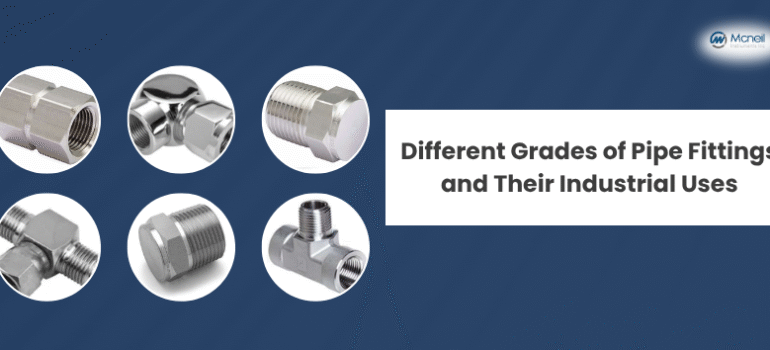
Different Grades of Pipe Fittings and Their Industrial Uses

Introduction

When it comes to industrial piping systems, not all pipe fittings are created equal. Each fitting is defined by its material grade, which determines its strength, corrosion resistance, temperature tolerance, and overall durability. These material differences are not just technicalities—they directly impact the performance, safety, and longevity of the systems they’re part of.

As a leading manufacturer, supplier, and exporter of pipe fittings in India, Mcneil Instruments specializes in delivering high-quality fittings across a wide spectrum of grades and alloys. From stainless steel and carbon steel to exotic metals like Inconel, Hastelloy, and Titanium, Mcneil Instruments offers tailored solutions for industries ranging from petrochemicals and power plants to pharmaceuticals and marine applications.

Selecting the right grade of pipe fittings is crucial—not only for ensuring compliance with international standards, but also for optimizing efficiency, minimizing maintenance, and avoiding costly failures.

This blog is designed to guide engineers, project managers, and procurement specialists through the most common grades of pipe fittings and their industrial uses, helping you make informed choices based on application-specific requirements.

Understanding Pipe Fitting Grades by Material Type

Carbon Steel Pipe Fittings

Carbon steel fittings are cost-effective and widely used in industrial pipelines. Common grades include ASTM A105, ideal for moderate pressure and non-corrosive environments, while ASTM A234 WPB/WP11/WP22/WP91 are designed for varying pressure and temperature service in high-pressure systems.

Key grades:

  • ASTM A105 – Forged fittings, suitable for general industrial use
  • ASTM A234 WPB/WP11/WP22/WP91 – Welded fittings qualified for steam, oil, and power industries

Stainless Steel Fittings
  • SS 304 & 304L: SS 304 is the most common stainless steel, offering good corrosion resistance and formability. The 304L variant has lower carbon content, enhancing its weldability and reducing intergranular corrosion in welded systems.
  • SS 316 & 316L: With added molybdenum, SS 316 provides better resistance to chlorides and acids—making it ideal for marine and chemical processing. 316L further improves on this by offering enhanced post-weld corrosion resistance due to its lower carbon.
  • SS 321 & 347: SS 321 includes titanium for stability in high-temperature welding, preventing carbide precipitation. SS 347 uses niobium (columbium) for similar stabilization, offering excellent performance in annealing, heat exchangers, and boiler systems.
  • Duplex & Super Duplex: Duplex 2205 and Super Duplex 2507 offer a balance of strength and corrosion resistance, outperforming 316L in harsh environments like seawater or chemical processing. These alloys are favored in offshore oil, gas, and desalination systems.
  • PH Stainless Steels: 17-4PH and 15-5PH are precipitation-hardening grades combining high strength and moderate corrosion resistance, common in aerospace, petrochemical, and high-pressure instrumentation.
Nickel alloys & Superalloys
  • Inconel Series: Inconel 600, 625, 718, 725, 800, 800H are nickel-chromium alloys known for exceptional high-temperature strength and corrosion resistance. Widely used in gas turbines, nuclear power, and chemical processing.
  • Monel: Monel 400 and K500 are nickel-copper alloys, resistant to seawater and acids—common in marine, desalination, and chemical plant applications.
  • Hastelloy: C276, C22, B2, B3, X are nickel-molybdenum-chromium alloys that stand up to difficult chemical exposures, including chlorides and strong acids, used in specialty chemical, pollution control, and nuclear industries.
  • Incoloy: 800, 800H, 825, 925 combine nickel, iron, and chromium to resist oxidation and corrosion. These grades are preferred for heat exchangers, chemical reactors, and petroleum refinery coils.
Specialty Alloy & Non-Ferrous Fittings
  • Titanium (Grades 1–4): These provide the best strength-to-weight ratio and excellent corrosion resistance to seawater, chlorides, and oxidizing acids—frequently applied in aerospace, desalination, and medical equipment.
  • Tantalum (Ta-1, Ta-2, Ta-10W, Ta-2.5W): Tantalum excels in resisting sulfuric and phosphoric acids and is used in harsh chemical processing, semiconductor manufacturing, and nuclear waste handling.
  • Bronzes & Phosphor Bronzes: Alloys like C22000, C23000, C51000, C54400 offer corrosion resistance and good machinability for use in valves, pumps, marine hardware, and low-pressure systems.
  • Brass (C26000, C23000): Brass fittings are ductile and corrosion-resistant, perfect for water plumbing, HVAC, and low-pressure hydraulic systems.
  • Stainless Fittings (ASTM A403 WP Grades): ASTM A403 WP304, WP316, WP317 are seamless and welded stainless steel fittings designed to meet ASME piping requirements in sanitary, chemical, and pharmaceutical industries.

Choosing the Right Grade

Selecting pipe fitting material is a function of:

  • Pressure and temperature conditions
  • Chemical compatibility with the transferred media
  • Weldability, fabrication requirements
  • Industry and regulatory standards (ASTM, ASME, NACE)

Consulting experienced suppliers like Mcneil Instruments, with material experts across grades from Duplex 2205 fittings to Incoloy 800H valves, helps ensure optimal and compliant material selection.

Mcneil Instruments: Your Partner for Precision Pipe Fittings

At Mcneil Instruments, we offer a broad portfolio of pipe fitting grades including ASTM A234 WP5/9/11/22/91, Duplex/Super Duplex, Inconel, Hastelloy, Titanium, Tantalum, Bronze, and Brass. With certifications to ASTM, ASME, ISO, and NACE, and robust material testing, we help engineers in India and globally select the right grade for critical projects—supporting everything from oil & gas to desalination and pharmaceutical applications.

Conclusion

Not all pipe fittings are created equal—materials and grades matter. Understanding material properties and industry needs helps ensure safety, integrity, and compliance. Explore Mcneil Instruments’ comprehensive range of grades—partner with us to select pipe fittings tailored for your specific industry applications.

Contact us for grade recommendations, datasheets, and expert assistance in material selection for your next critical infrastructure project!

Read More

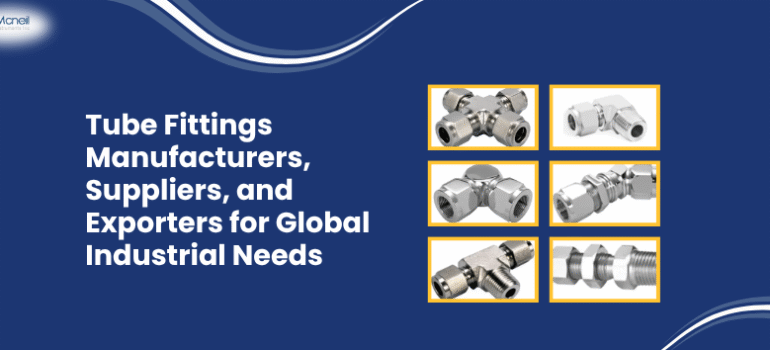
Tube Fittings Manufacturers, Suppliers, and Exporters for Global Industrial Needs

Introduction

Tube fittings play a crucial role in ensuring leak-proof and secure connections in piping systems, especially in industries that demand precision and durability. Whether it’s oil and gas, chemical processing, pharmaceuticals, or hydraulics, the right tube fittings enhance safety, efficiency, and long-term performance.

As one of the leading tube fittings manufacturers, suppliers, and exporters, Mcneil Instruments delivers premium-quality tube fittings that meet global standards and application requirements. Our reach extends across critical industrial hubs like Texas, Houston, Chicago, Nigeria, Ghana, Malaysia, Brazil, Singapore, Saudi Arabia, Qatar, and Kuwait.

What Are Tube Fittings?

Tube fittings are connectors used to join tubing sections in fluid or gas systems without leakage. They are designed to handle high-pressure and high-temperature conditions while resisting corrosion and wear.

Common Types of Tube Fittings:

  • Compression Tube Fittings
  • Ferrule Fittings (Single and Double)
  • Male and Female Connectors
  • Union Elbows and Tee Fittings
  • Bulkhead Unions
  • Adapters and Couplings

These fittings are manufactured in various materials including Stainless Steel, Brass, Alloy Steel, and Nickel Alloys.

Tube Fittings Dimension Chart

Tube OD (Outer Diameter)Thread Size (Inch)Length (L)Hex Size (H1)Hex Size (H2)Male Thread Length (M)Female Thread Length (F)
1/8″ (3.18 mm)1/8-27 NPT1.10″ (28 mm)0.44″ (11 mm)0.44″ (11 mm)0.41″ (10.4 mm)0.30″ (7.6 mm)
1/4″ (6.35 mm)1/4-18 NPT1.30″ (33 mm)0.56″ (14 mm)0.56″ (14 mm)0.48″ (12.2 mm)0.37″ (9.4 mm)
3/8″ (9.52 mm)3/8-18 NPT1.50″ (38 mm)0.69″ (17.5 mm)0.69″ (17.5 mm)0.53″ (13.5 mm)0.39″ (9.9 mm)
1/2″ (12.7 mm)1/2-14 NPT1.75″ (44 mm)0.88″ (22 mm)0.88″ (22 mm)0.67″ (17 mm)0.46″ (11.7 mm)
3/4″ (19.05 mm)3/4-14 NPT2.00″ (51 mm)1.06″ (27 mm)1.06″ (27 mm)0.75″ (19.1 mm)0.54″ (13.7 mm)
1″ (25.4 mm)1-11.5 NPT2.38″ (60 mm)1.31″ (33 mm)1.31″ (33 mm)0.88″ (22.2 mm)0.61″ (15.5 mm)
  • Tube OD (Outer Diameter): The outer diameter of the tube in inches or millimeters.
  • Thread Size (Inch): The size of the thread for the fitting, usually in NPT (National Pipe Thread) or other standards.
  • Length (L): The overall length of the fitting.
  • Hex Size (H1 & H2): The size across the flats of the hexagonal sections of the fitting.
  • Male Thread Length (M): The length of the male threaded portion.
  • Female Thread Length (F): The depth of the female threaded portion.

Global Presence of Mcneil Instruments’ Tube Fittings

United States – Houston,TX & Chicago

Mcneil Instruments supplies high-performance tube fittings to refineries, petrochemical units, and HVAC industries in major U.S. industrial zones. With strict adherence to ASME/ANSI standards, our fittings ensure leak-proof systems even under extreme pressure.

West Africa – Nigeria & Ghana

In regions like Lagos and Accra, where oil exploration and water treatment plants are booming, our tube fittings are known for their durability in corrosive environments and cost-effective performance.

Southeast Asia – Malaysia & Singapore

Malaysia and Singapore’s pharmaceutical, semiconductor, and food processing industries demand ultra-clean piping systems. Our SS tube fittings meet these hygienic and regulatory standards effortlessly.

South America – Brazil

Brazil’s mining, chemical, and power sectors rely on robust tube fittings to handle aggressive media. Mcneil provides high-strength, pressure-rated fittings that support safe and sustainable operations.

Middle East – Saudi Arabia, Qatar & Kuwait

We are a trusted exporter to the Middle East’s oil & gas, desalination, and thermal power sectors, supplying tube fittings that resist chloride stress cracking, oxidation, and thermal fatigue—all vital for desert and offshore conditions.

How to Choose the Right Tube Fittings Supplier

When selecting a tube fittings manufacturer or supplier, consider:

  • Compliance with international standards
  • Availability in a range of sizes and pressure ratings
  • Material quality and traceability
  • Export readiness and logistics support
  • Experience with your specific industry and application

Why Choose Mcneil Instruments for Tube Fittings?

  • Wide Product Range: From single ferrule to double ferrule tube fittings, we cover all connection types.
  • Global Certifications: All fittings conform to ASTM, DIN, and ISO standards.
  • Precision Engineering: Manufactured using CNC machines for high dimensional accuracy.
  • Material Traceability: Complete documentation and material test certificates (MTCs) provided.
  • Corrosion Resistance: Ideal for marine, chemical, and high-temperature environments.

Conclusion

For businesses in Texas, Houston, Chicago, Nigeria, Ghana, Malaysia, Brazil, Singapore, Saudi Arabia, Qatar, and Kuwait, partnering with a reliable tube fittings manufacturer, supplier, and exporter like Mcneil Instruments ensures high performance, reliability, and global compliance.

We provide customized solutions, bulk export support, and technical assistance to meet your piping system needs—no matter the scale or complexity.

Get in touch today to request a quote or discuss your project requirements!

Read More

Best Quick Release Coupling Manufacturer, Supplier, and Exporter in India

Introduction

Quick release couplings are vital components in fluid and pneumatic systems, allowing for swift, secure connections and disconnections without fluid leakage or system depressurization. These couplings enhance productivity, safety, and efficiency across various industrial applications.

Mcneil Instruments stands out as a trusted manufacturer, supplier, and exporter of premium-quality quick release couplings in India. This blog aims to help you understand the types of couplings available, their applications, and why Mcneil Instruments is the ideal partner for your quick coupling needs.

Understanding the Versatility of Quick Release Couplings: Types and Applications

Quick release couplings operate on a male plug and female socket mechanism with built-in locking systems for ease of operation. Here’s a breakdown of the key types:

  • Hydraulic Quick Release Couplings: Used in high-pressure applications like construction, agriculture, and heavy machinery.
  • Pneumatic Quick Release Couplings: Ideal for air tools, compressors, and automation systems.
  • Flat Face Quick Release Couplings: Designed to minimize fluid loss and contamination, especially in cleanroom and hydraulic systems.
  • Threaded Quick Release Couplings: Perfect for vibration-heavy and high-pressure environments, ensuring secure fittings.
  • Ball and Sleeve Quick Release Couplings: Common in both hydraulic and pneumatic setups, known for ease of use.
  • Single Shut-Off Quick Release Couplings: Prevent leakage from one side upon disconnection.
  • Double Shut-Off Quick Release Couplings: Ensures no fluid loss from either side when disconnected.

Additional specialized variants cater to chemical, food processing, and marine industries.

Why Choose Mcneil Instruments for Your Quick Release Coupling Needs?

Mcneil Instruments is a reliable name for high-performance industrial coupling solutions. Here’s why industries trust them:

  • High-grade materials and precise manufacturing processes.
  • A comprehensive range to suit diverse applications.
  • Focused on durability, leak-proof performance, and safety.
  • Custom-engineered solutions tailored to client specifications.
  • Efficient global supply capabilities and compliance with international standards.

Key Benefits of Using High-Quality Quick Release Couplings

Choosing the right coupling brings long-term advantages:

  • Boosted efficiency via rapid connection/disconnection.
  • Improved safety by avoiding leaks and exposure.
  • Reduced downtime and fluid loss, lowering maintenance costs.
  • Broad compatibility across multiple industries.
  • Enhanced flexibility in operational settings.

Selecting the Right Quick Release Coupling: Factors to Consider

Before choosing a coupling, evaluate:

  • Application type – hydraulic, pneumatic, or chemical.
  • Pressure and temperature requirements.
  • Media compatibility – air, oil, gas, chemicals, etc.
  • Connection size and style – push-pull, threaded, or quick twist.
  • Material – stainless steel, brass, carbon steel, etc.
  • Seal type – based on temperature, pressure, and chemical exposure.
  • Frequency of engagement/disengagement.

Quick Release Coupling Certifications and Industry Standards

StandardDescription
ISO 7241Hydraulic quick couplings – general standard
ISO 6150Pneumatic couplings – international standard
SAE J2044Automotive fluid connection standard
RoHS & REACH CompliantEnsures material safety and environmental care

Working Principle and Operational Conditions of Quick Release Coupling

ComponentFunction
Male & Female EndsConnect to each other to form a secure seal
Locking MechanismHolds the connection in place
Seals/O-ringsPrevent leakage and maintain pressure
Working PressureUp to 400 bar (type-dependent)
Temperature Range-20°C to 250°C (based on material/seal type)

Exploring the Different Types of Quick Release Couplings

TypeBest Used In
Hydraulic CouplingsConstruction equipment, oil & gas rigs
Pneumatic CouplingsAir tools, automation systems
Flat Face CouplingsCleanrooms, food & beverage
Threaded CouplingsVibrational environments, oil rigs
Double Shut-Off CouplingsMobile hydraulic systems, chemical lines
Single Shut-Off CouplingsFluid return lines

Key Factors to Consider When Choosing a Quick Release Coupling

  • Operational pressure and environment
  • Contamination control needs
  • Media type and temperature range
  • Interchangeability and maintenance access
  • Installation and connection frequency

Mcneil Instruments: Your Reliable Partner for Quick Release Couplings in India and Beyond

Mcneil Instruments is a leading manufacturer, supplier, and exporter of industrial-grade quick release couplings in India. With decades of experience, the company delivers:

  • Internationally certified products
  • Robust technical support
  • Custom solutions with fast turnaround
  • Proven export capabilities to meet global demand


Global Reach of Quick Release Coupling by Mcneil Instruments

Middle East and North Africa (MENA)
Mcneil’s quick release couplings are widely used in oil & gas, firefighting, and irrigation systems—offering fast, leak-proof connections under extreme pressure and heat.

North America
Our couplings are preferred in hydraulic tools, medical equipment, and food-grade applications, thanks to their precision engineering and compliance with ANSI and SAE standards.

Europe
Meeting ISO and CE requirements, Mcneil’s quick release couplings are used in automation systems, compressed air tools, and manufacturing plants for efficient and safe fluid control.

Asia-Pacific
With booming sectors like agriculture, construction, and industrial automation, the demand for our quick couplings continues to rise—Mcneil delivers reliability with every unit.

South America
Mcneil’s quick release couplings ensure operational efficiency in chemical handling, mining, and mobile hydraulics—providing rugged design and ease of maintenance in tough conditions.

Conclusion

For businesses looking to enhance efficiency, safety, and reliability, quick release couplings are essential. Selecting the right product and supplier can make all the difference.

Mcneil Instruments offers the perfect combination of quality engineering, industry standards, and global trust, making it your go-to source in India.

Explore the range or get in touch with the Mcneil team today for your quick release coupling requirements.

Read More

Best Snubber Manufacturer, Supplier, and Exporter in India

Introduction

In high-performance industrial systems, safety and stability are critical. Equipment and pipelines often face sudden dynamic forces, seismic activity, fluid hammer, or thermal expansion—that can lead to costly damage or downtime. This is where snubbers play a vital role. These precision-engineered devices absorb shock and control unwanted movement, ensuring structural integrity and operational reliability.

Mcneil Instruments is recognized as one of the leading snubber manufacturers, suppliers, and exporters in India, delivering premium-quality solutions trusted across industries.
This blog is your complete guide to understanding the importance of snubbers, their types, applications, and why Mcneil Instruments is the ideal choice for your industrial safety needs.

Understanding the Critical Role of Snubbers in Industrial Safety

Snubbers are mechanical or hydraulic devices designed to restrain or dampen sudden movements in piping and structural systems. While they allow slow movements caused by thermal expansion, they instantly resist dynamic loads such as:

  • Seismic events
  • Fluid surges or hammering
  • Sudden equipment startup/shutdown

By doing so, snubbers help to:

  • Protect sensitive pipelines, valves, and machinery
  • Minimize downtime due to vibration or shock
  • Prevent catastrophic failures and maintain system stability

Without proper snubbers, industries risk structural damage, safety hazards, and production loss.

Exploring the Different Types of Snubbers and Their Applications

Hydraulic Snubbers

  • Working Principle: Use hydraulic fluid to provide resistance during sudden motion. The fluid passes through orifices to control movement rate.
  • Benefits:
    • Excellent for large load capacities
    • High damping efficiency
    • Suitable for high-energy environments
  • Applications:
    • Power plants
    • Refineries
    • Large-diameter pipelines

Mechanical Snubbers

  • Working Principle: Utilize mechanical locking mechanisms such as gears, levers, and springs that engage only during sudden motion.
  • Benefits:
    • Low maintenance
    • Ideal for frequent movement cycles
    • Reliable under specific displacement limits
  • Applications:
    • Industrial piping systems
    • Machinery support
    • Structural bracing systems

The Mcneil Instruments Advantage: Quality, Reliability, and Expertise

At Mcneil Instruments, excellence is not an option—it’s the standard. Our snubbers are engineered to deliver maximum protection and performance across demanding industrial environments.

  • Use of premium-grade materials
  • In-house quality testing and inspection
  • Adherence to global certifications
  • Team of experienced engineers and design specialists
  • Ability to custom-design snubbers based on client requirements

Key Considerations When Selecting the Right Snubber

Choosing the appropriate snubber is critical. Here’s what to consider:

  • Type of Loading: Is it seismic, thermal, or fluid-induced?
  • Direction and Magnitude of Movement: Choose based on expected displacement range.
  • Environmental Conditions: Assess temperature, humidity, and chemical exposure.
  • Load Capacity: Ensure the snubber can handle the weight or force applied.
  • Regulatory Compliance: Verify adherence to industry standards.
  • Maintenance Requirements: Opt for designs suited to your maintenance cycles.

Snubber Certifications and Industry Standards

Standard/CertificationSpecification
ISO 9001:2015Quality Management System Certification
ASTM E185Standard Practice for Snubber Qualification
ASME B31.1 / B31.3Code for Pressure Piping Systems
IEEE Std 344Seismic Qualification for Mechanical Equipment
RoHS ComplianceEnvironmental and safety compliance

Working Principle and Operational Conditions of Snubbers

Snubbers operate by remaining inactive during normal conditions, allowing free movement caused by temperature or pressure changes. However, when a sudden or high-speed force is detected, they instantly activate to resist movement and absorb energy, protecting connected systems.

  • Operating Range: -30°C to 250°C
  • Dynamic Load Capacity: Up to several thousand pounds
  • Movement Allowance: Linear, axial, or rotational—depending on design
  • Maintenance Needs: Typically low for mechanical, periodic checks for hydraulic

Global Reach of Mcneil Instruments’ Snubbers

Middle East & North Africa (MENA)
Used in oil & gas, chemical plants, and desert-based refineries.

Europe
Supplied to clients following strict seismic and environmental regulations.

North America
Valued in nuclear and thermal power plants for compliance and reliability.

Asia-Pacific
Installed across urban infrastructure, transport networks, and factories.

South America
Protecting mining operations, steel plants, and petrochemical facilities.

Why Choose Mcneil Instruments as Your Snubber Manufacturer, Supplier, and Exporter?

Here’s why Mcneil Instruments is the top choice in India:

  • Wide selection of Hydraulic and Mechanical Snubbers
  • Deep technical expertise in shock and vibration control
  • Stringent quality assurance and testing at every stage
  • Strong global distribution network
  • Tailored snubber solutions for specific industry applications
  • Reliable stock and on-time exports across continents

Explore our full snubber range or contact us directly for personalized assistance on choosing the right product for your setup.

Conclusion

Snubbers are not just components—they’re critical safety devices that protect your infrastructure from the unpredictable. From fluid hammer control to seismic restraint, they are an essential part of any industrial operation.

With its commitment to engineering excellence, certified quality, and customer-centric approach, Mcneil Instruments stands as the best snubber manufacturer, supplier, and exporter in India.

Reach out to Mcneil Instruments today to explore our full line of Hydraulic and Mechanical Snubbers—designed to protect, built to last.

Read More

Best Copper Tube Manufacturer, Supplier, and Exporter in India 

Introduction

Whether it’s for air conditioning systems, electrical wiring, or industrial heat exchangers, copper tubes are trusted for their versatility, strength, and conductivity. These tubes serve as essential components in fluid transfer, gas distribution, and even antimicrobial applications in medical and plumbing systems.

Mcneil Instruments stands out as a leading manufacturer, supplier, and exporter of high-quality copper tubes in India. With decades of expertise, Mcneil delivers precision-engineered copper solutions to meet the diverse needs of industries worldwide.

This blog will help you understand the key features of copper tubes, their advantages, and guide you in selecting the best copper tube manufacturers in India—especially highlighting why Mcneil Instruments is your most reliable partner.

Understanding Copper Tubes

Copper tubes are hollow cylindrical products made from refined copper, designed to carry fluids or gases and transmit heat or electricity. They are available in:

  • Seamless Copper Tubes: Made without a weld seam, offering superior strength and leak-proof performance.
  • Welded Copper Tubes: Economical options suitable for less demanding applications, made by welding copper strips into tubes.

Why Choose Copper Tubes for Your Projects

Copper tubes offer multiple benefits that make them ideal for residential, commercial, and industrial applications:

  • Excellent Thermal Conductivity – Perfect for HVAC and refrigeration.
  • High Electrical Conductivity – Essential for wiring and power transmission.
  • Superior Corrosion Resistance – Withstands harsh environmental conditions.
  • Great Ductility and Malleability – Easy to bend, shape, and install.
  • Antimicrobial Properties – Prevents bacterial growth in plumbing and medical systems.
  • Recyclability – A green material supporting sustainability goals.
  • Long Lifespan – Performs efficiently for decades with minimal maintenance.

Key Factors to Consider When Choosing a Copper Tube Manufacturer

When sourcing copper tubes, ensure the manufacturer meets the following criteria:

  • Quality of Raw Materials – Use of pure, high-grade copper.
  • Modern Manufacturing Techniques – Consistent production and dimensional accuracy.
  • Certifications and Compliance – Adherence to global standards.
  • Wide Product Range – Availability of various sizes, grades, and customization options
  • Testing and Inspection – Ensuring strength, conductivity, and finish.

Copper Tube: Standards, Grades, and Certifications

Standard/CertificationSpecification
ASTM B75/B88Seamless Copper Tubes for General & Plumbing Use
ASTM B280Copper Tubes for Air Conditioning & Refrigeration
EN 1057Copper Tubes for Water and Gas in Buildings
ISO 9001:2015Certified Quality Management System
RoHS ComplianceEnvironmentally safe and non-toxic

Working Principle and Operational Conditions of Copper Tubes

Copper tubes operate by enabling smooth and efficient flow of fluids or gases through a corrosion-resistant, thermally conductive channel. Their low friction loss, high burst pressure, and resistance to chemical reactions make them suitable for:

  • Operating Pressure: Typically 150–1000 PSI depending on wall thickness.
  • Temperature Range: -200°C to 200°C.
  • Applications: HVAC systems, water distribution, gas pipelines, refrigeration, and power systems.

Difference Between Copper Tube and Copper Wire

FeatureCopper TubeCopper Wire
StructureHollow cylindricalSolid or stranded wire
Primary UseFluid/Gas transfer, heat exchangeElectrical power transmission
FlexibilityModerateHigh
Wall ThicknessThickerThinner
Thermal ApplicationsExcellent for HVAC and refrigeration systemsNot used in thermal transfer
Manufacturing ProcessExtruded or drawn into tube formDrawn into thin wires

Global Reach of Copper Tubes by Mcneil Instruments

Middle East and North Africa (MENA)
Copper tubes from Mcneil are widely used in desalination plants, oil refineries, and cooling systems due to their durability in high-salinity environments.

North America
Strict compliance with ASTM and RoHS standards ensures Mcneil is a trusted supplier for HVAC manufacturers and green building solutions.

Europe
Adhering to EN 1057 standards, Mcneil’s copper tubes are used in sustainable construction, plumbing, and heat recovery systems.

Asia-Pacific
Rapid urbanization drives high demand for copper tubing in infrastructure, refrigeration, and electrical sectors—Mcneil delivers competitively and reliably.

South America
Mcneil’s corrosion-resistant and easy-to-install copper tubes support mining operations, thermal plants, and urban housing projects.

Conclusion

Copper tubes are a time-tested solution for applications requiring strength, conductivity, and corrosion resistance. When choosing a manufacturer, it’s essential to look for quality assurance, certifications, and industry expertise qualities that Mcneil Instruments excels in.

As the best copper tube manufacturer, supplier, and exporter in India, Mcneil combines technical strength, global reach, and customer-focused service.

Contact Mcneil Instruments today to explore premium copper tubing solutions tailored to your industrial and commercial needs.

Read More

Best Syphon Tube/Pipe Manufacturers, Suppliers, and Exporters in India

Introduction

In industrial systems, precise fluid control is crucial—and syphon tubes and pipes play a pivotal role in ensuring safety and efficiency. These components are vital in pressure measuring instruments, helping protect sensitive gauges from high-temperature media like steam.

Understanding syphon technology is essential not just for engineers and plant operators, but also for procurement professionals seeking durable and compliant solutions. That’s where Mcneil Instruments stands out—recognized as one of India’s most trusted manufacturers, suppliers, and exporters of syphon tubes and pipes, the company offers world-class products backed by deep technical expertise.

This blog will guide you through the essentials of syphon tubes and pipes, their applications, differences, materials, and global demand—helping you make a confident and informed choice.

What is a Syphon Tube/Pipe?

A syphon tube or pipe is a device designed to protect pressure instruments like gauges from high-temperature media by allowing the medium to cool before it reaches the instrument. It works on the principle of syphoning, which involves the movement of liquid from one level to another using atmospheric pressure and gravity.

These components are especially useful in steam systems, where they prevent direct exposure of pressure instruments to high heat, thereby extending their life and ensuring accurate readings.

Working Principle and Operational Conditions

Key ElementsExplanation
Syphoning PrincipleUses atmospheric pressure and gravity to move liquid over a raised section
Required Conditions for Syphoning– Height difference between fluid levels- Initial priming- Unbroken fluid column
Rate of Fluid Transfer Depends On– Height difference- Tube/Pipe diameter- Viscosity of the fluid

Difference Between Syphon Tube and Syphon Pipe

FeatureSyphon TubeSyphon Pipe
StructureTypically smaller in diameter and more flexibleRigid and usually larger in size
UsageSuitable for compact setups and instrument connectionsOften used in larger systems or pipelines
Material OptionsStainless steel, plastic, rubberPrimarily stainless steel or carbon steel
ApplicationsPressure gauges, lab setups, chemical dosingSteam lines, boiler systems, heavy industry

Material Matters: Choosing the Right Syphon Tube/Pipe

MaterialIdeal ForAdvantages
Stainless SteelHigh-pressure steam, corrosive fluids, industrial useExcellent chemical resistance, high durability, heat-resistant
PVC / PlasticNon-aggressive fluids, general-purpose use, lab setupsLightweight, cost-effective, good chemical compatibility
Rubber / PolymersSpecialized or flexible applicationsOffers flexibility, moderate chemical resistance, used in niche needs

Mcneil Instruments excels in stainless steel syphon solutions and also offers other materials based on industry-specific requirements.

Syphon Tube/Pipe Standards, Grades, and Certifications

Standard/CertificationDetails
ASTM A269 / ASTM A213Common stainless steel tubing standards
IBR ApprovalFor steam and boiler applications
ISO 9001:2015 CertifiedEnsures quality management and process reliability
EN / DIN StandardsEuropean quality and performance benchmarks
MTC EN 10204 3.1/3.2Mill test certificates for traceability and compliance

Global Reach of Syphon Tube/Pipe by Mcneil Instruments

Middle East and North Africa (MENA)
Used in oil & gas and power generation sectors, Mcneil’s stainless steel syphons perform well in extreme temperature and pressure environments.

North America
Stringent quality standards are met through compliance with ASME and ASTM norms, making Mcneil a preferred supplier for industrial automation and instrumentation sectors.

Europe
With an emphasis on precision engineering and sustainability, Mcneil’s syphon pipes meet EN and ISO standards, widely adopted in machinery and steam systems.

Asia-Pacific
Rapid industrial growth fuels demand for reliable instrumentation components. Mcneil provides cost-effective, high-performance syphons across India, Southeast Asia, and beyond.

South America
Energy and infrastructure projects benefit from Mcneil’s durable, IBR-approved syphon tubes tailored for steam and boiler applications.

Conclusion

When it comes to precision, performance, and protection, choosing the right syphon tube or pipe is essential for the long-term success of your instrumentation systems. Mcneil Instruments combines decades of industry expertise, world-class manufacturing, and a customer-centric approach to deliver the best syphon solutions globally.

Looking for high-quality syphon tube/pipe manufacturers in India?
Explore Mcneil’s offerings or connect with our technical team today for tailored recommendations.

Read More

Best Pipe Clamp Manufacturer, Supplier and Exporter in India

In industries like construction, oil & gas, hydraulics, and manufacturing, even the smallest component—like a pipe clamp—plays a vital role in maintaining system integrity. A single loose or poorly-fitted pipe can lead to leaks, vibrations, or even system failures, making strong, reliable pipe clamps an essential part of any industrial setup.

Mcneil Instruments is the best Pipe Clamp manufacturer, supplier, and exporter in India, known for delivering precision-engineered, IBR-approved solutions for various piping applications. With a core specialization in hydraulic pipe clamps and a wide array of tube clamp solutions, Mcneil serves industries with products that offer both performance and reliability.

In this blog, we’ll explore the types of pipe clamps offered by Mcneil Instruments, their features, and why industries across the globe trust Mcneil for quality and performance.

Understanding Pipe Clamps

What Are Pipe Clamps?

A pipe clamp is a fastening device used to hold or secure pipes in place, preventing movement or vibration. These clamps support pipes either vertically or horizontally and are essential in both industrial and residential piping systems.

Functions of Pipe Clamps:
  • Secure pipes to walls, ceilings, or floors
  • Absorb shock and vibration
  • Maintain pipe alignment
  • Prevent pipe sagging or displacement
  • Enable easy maintenance and inspections

Different Types of Clamps for Pipes

Here’s a table summarizing different types of pipe clamps and their typical uses:

Type of ClampCharacteristicsTypical Uses
Saddle ClampsU-shaped clamp that fits around a pipe, usually with a single bolt for tightening.Securing pipes to walls or ceilings.
Hose ClampsCircular clamp with a screw for tightening.Securing hoses onto fittings.
Tube ClampsTypically made of plastic or metal with a base for mounting.Holding small diameter tubes in place.
Cushion ClampsClamps with a rubber or plastic cushion.Reducing vibration and noise in piping systems.
Beam ClampsClamps that attach pipes to I-beams or other structural elements.Industrial and construction applications.
Split Ring ClampsClamps with two semicircular halves that bolt together.Securing heavy pipes in plumbing and HVAC.
Swivel ClampsClamps that can pivot, allowing for angular adjustment.Flexible positioning of pipes and tubes.
Conduit ClampsDesigned to secure electrical conduit pipes.Electrical installations.
Quick Release ClampsClamps that can be quickly opened and closed.Applications requiring frequent pipe adjustments.
Strut ClampsClamps designed to attach to strut channels.Supporting pipes in mechanical and electrical installations.
T-Bolt ClampsHeavy-duty clamps with a T-bolt for tightening.High-pressure applications, such as automotive hoses.
Pipe HangersClamps with a hanger component for suspending pipes from ceilings.Plumbing and HVAC systems.

This table provides an overview of various pipe clamps, highlighting their characteristics and typical uses to help in selecting the right clamp for different applications.

Why Quality Pipe Clamps Matter

Choosing the right pipe clamp is not just a design choice—it’s a critical safety measure.

Here’s Why Quality Clamps Are Essential:
  • Maintain system stability under pressure or vibration
  • Reduce wear and tear on pipes
  • Prevent leaks, corrosion, and mechanical failure
  • Ensure long-term operational efficiency
  • Enable compliance with industry safety standards

Using low-grade or mismatched clamps can lead to misalignment, frequent breakdowns, and high maintenance costs. That’s why durability, precision, and reliability are non-negotiable features in pipe clamp selection—and Mcneil Instruments delivers exactly that.

IBR Approved Pipe Clamps

Mcneil Instruments is a trusted source for IBR-approved pipe clamps, guaranteeing that every product meets the Indian Boiler Regulations—a mark of quality, safety, and industrial reliability. These clamps are ideal for high-pressure systems, especially in thermal power plants and steam applications.

As an experienced IBR approved pipe clamp supplier and exporter, Mcneil Instruments offers a wide range of pipe clamps suitable for industries such as power generation, oil & gas, chemical processing, and more. Our pipe clamps are manufactured using premium materials and advanced engineering to ensure superior performance and reliability.

Product Range and Global Reach of Pipe Clamps

CategoryDetails
Global ReachMcneil Instruments serves clients in India and internationally, including the USA, South Africa, Greece, and more.
Product FeaturesHigh-tensile strength, easy installation, and precision engineering for reliable performance.
Product Offerings– Pipe Clamps
– Hydraulic Oil Strainers
– Check Valves
– Inline Filters
Quality AssuranceAll products manufactured with strict quality control, meeting international standards.
CustomizationOffers tailored solutions for diverse industrial needs across various countries and applications

Global Reach of Pipe Clamps

Middle East and North Africa (MENA)
The MENA region’s expanding oil & gas, petrochemical, and construction industries require robust pipe support systems. Indian manufacturers supply hydraulic pipe clamps and heavy-duty tube clamps that offer high performance under extreme temperatures and pressures, meeting the region’s demanding operational needs.

North America
The USA and Canada emphasize quality control and regulatory compliance. Indian pipe clamp exporters meet ASTM and ISO standards, providing precision-engineered clamps for sectors like industrial automation, HVAC systems, and fluid control industries.

Europe
European markets demand both technical innovation and eco-compliance. Indian suppliers deliver aluminum and twin tube clamps manufactured with sustainable processes and strict adherence to DIN 3015 standards, supporting industries like renewable energy, process engineering, and machinery.

Asia-Pacific
With rapid urban development and industrial expansion in China, Japan, and Southeast Asia, the demand for reliable pipe fittings and clamps continues to rise. Indian manufacturers provide cost-effective, durable solutions suited for use in infrastructure, hydraulics, and commercial systems.

South America
As South America accelerates industrial growth, Indian pipe clamp exporters support this progress by supplying standard and custom clamp solutions for power plants, mining operations, and heavy industries, ensuring secure and long-lasting piping installations.

Pipe Clamp Standards, Grades, and Certifications

Product TypeMaterial GradeStandards FollowedCertification
Hydraulic Pipe ClampsPP / PA / AluminumDIN 3015 / ISO 9001IBR, ISO Certified
Twin Tube ClampsMild Steel / SS304DIN 3015IBR Approved
Heavy Duty Tube ClampsCarbon Steel / SS316ISO, DIN, ASTMISO Certified
Aluminum Tube ClampsAluminum AlloyCustom/Client-SpecificRoHS Compliant
Building Construction ClampsGalvanized SteelIS StandardsISI Marked

Why Choose Mcneil Instruments?

  • Leading Pipe Clamp Manufacturer in India
  • Full range of Hydraulic Pipe Clamps, Tube Clamps, and Building Construction Clamps
  • Customization options based on project specs
  • IBR and ISO certified products
  • Backed by decades of industry experience
  • Global supplier with on-time delivery

Final Thoughts

When it comes to ensuring safe, secure, and stable piping systems, the quality of your pipe clamps should never be compromised. As a top-tier pipe clamp supplier and exporter in India, Mcneil Instruments offers solutions built for performance, compliance, and durability.

Whether you’re working in construction, hydraulics, power plants, or industrial manufacturing, trust Mcneil Instruments to provide pipe clamps that last.

Read More

Washers Manufacturer, Supplier, and Exporter in India

Introduction

In the realm of mechanical assemblies, washers often go unnoticed. Yet, these small components play a pivotal role in ensuring the stability and longevity of various structures. From preventing surface damage to distributing loads evenly, washers are indispensable in numerous applications.

Mcneil Instruments stands at the forefront as a trusted manufacturer, exporter and supplier of high-quality washers in India. With a commitment to excellence, we cater to diverse industrial needs, offering a wide range of washers tailored to specific requirements.

What Exactly Are Washers and Why Are They Important?

Washers are thin, typically disc-shaped plates with a hole in the center, designed to distribute the load of a threaded fastener, such as a bolt or nut. Their primary functions include;

  • Load Distribution: Evenly spreading the force exerted by the fastener to prevent damage to the surface.
  • Surface Protection: Acting as a barrier to prevent direct contact between the fastener and the material, reducing wear.
  • Vibration Resistance: Dampening vibrations to maintain the integrity of the assembly.
  • Sealing: Preventing leakage in applications involving fluids or gases.
  • Electrical Insulation: Isolating components electrically to prevent short circuits

Materials commonly used for washers include steel, stainless steel, brass, copper, plastic, and rubber, each chosen based on the application’s specific needs.

Types of Washers

Understanding the various types of washers is crucial for selecting the right one for your application. Here’s an overview:

  • Wedge Lock Washers: Designed to prevent loosening due to vibration and dynamic loads.
  • Square Washers: Provide a larger surface area, ideal for wood constructions.
  • Spring Lock Washers: Offer resistance to loosening caused by vibration.
  • Self-Locking Washers: Feature a unique design that resists rotation under dynamic loads.
  • Sealing Washers: Combine a metal washer with a rubber seal to prevent leakage.
  • Plain Flat Washers: Distribute load and reduce surface wear.
  • Ogee Washers: Thicker washers used in heavy timber construction.
  • Industrial Washers: Heavy-duty washers for industrial applications.
  • Hex Washer: Combines a hex head with a washer for secure fastening.
  • Finishing Washers: Provide a neat appearance for exposed fasteners.
  • Fender Washers: Have a larger outer diameter for distributing load over a wider area.
  • Conical Washers: Also known as Belleville washers, they provide a spring-like action.
  • Countersunk Washers: Allow flat-head screws to sit flush with the surface.
  • Square Beveled Washers: Used in structural applications to provide angular support.
  • Curved Wave Washers: Provide moderate load and deflection in small spaces.
  • External Tooth Lock Washers: Teeth on the outer edge bite into the bearing surface.
  • Internal Tooth Lock Washers: Teeth on the inner edge provide a secure grip.
  • Internal Tab Washers: Feature a tab that locks into a keyway to prevent rotation.
  • Tab Washers: Have a tab that can be bent to lock into place.
  • Structural Washers: Heavy-duty washers used in construction applications

Materials Used in Washers

The choice of material affects a washer’s performance, durability, and suitability for specific environments:

  • Steel: Strong and cost-effective, suitable for general applications.
  • Stainless Steel: Offers corrosion resistance, ideal for outdoor and marine environments.
  • Brass: Provides good conductivity and corrosion resistance.
  • Copper: Excellent thermal and electrical conductivity.
  • Plastic: Lightweight and corrosion-resistant, suitable for electrical insulation.
  • Rubber: Provides sealing and vibration damping properties.

Choosing the Right Washer

Selecting the appropriate washer involves considering:

  • Size: Ensure it matches the bolt or screw dimensions.
  • Type: Choose based on the application’s load, vibration, and sealing requirements.
  • Material: Select based on environmental conditions and compatibility with other materials.
  • Application: Consider the specific needs of the assembly, such as electrical insulation or corrosion resistance.

Consulting with experts, like those at Mcneil Instruments, can aid in making the right choice for your application.

Maintenance and Care for Washers

To ensure the longevity and effectiveness of washers:

  • Regular Inspection: Check for signs of wear, corrosion, or deformation.
  • Proper Installation: Ensure washers are correctly positioned and compatible with the fasteners used.
  • Timely Replacement: Replace washers that show signs of damage or wear to maintain assembly integrity.

Washers Standards, Grades, and Certifications

StandardDescription
DIN 125Flat washers for general use.
DIN 127Spring lock washers to prevent loosening.
ISO 7089Plain washers, similar to DIN 125.
ASTM F436Hardened steel washers for structural applications.
BS 4320British standard for metric plain washers.

These standards ensure consistency, quality, and compatibility in various applications.

Global Reach of Indian Washer Manufacturers

India has emerged as a significant hub for manufacturing and exporting high-quality washers:

  • Middle East and North Africa (MENA): Demand for durable washers in oil and gas industries.
  • North America: Requirements for precision and compliance in aerospace and automotive sectors.
  • Europe: Focus on corrosion-resistant washers for chemical processing.
  • Asia-Pacific: Rapid urbanization driving the need for construction and infrastructure components.
  • South America: Growing mining and energy sectors requiring heavy-duty washers.

Mcneil Instruments caters to these global markets, ensuring quality and timely delivery.

Conclusion

Washers, though small, play a crucial role in the integrity and longevity of mechanical assemblies. Understanding their types, materials, and applications is essential for optimal performance.

Mcneil Instruments, with its extensive range and commitment to quality, stands as a leading manufacturer, supplier, and exporter of washers in India. For reliable and high-performance fastening solutions, trust Mcneil Instruments to meet your needs.

Read More

Screws Manufacturers, Suppliers, and Exporters in India

Introduction

From assembling furniture to constructing skyscrapers, screws are integral to countless applications. These small yet mighty components convert rotational motion into linear force, securely fastening materials together. In India, the screws manufacturing industry has witnessed significant growth, catering to both domestic and international markets. This blog aims to provide an in-depth understanding of screws, their types, materials, standards, and the global reach of Indian manufacturers.

At Mcneil Instruments, we pride ourselves on being one of the best manufacturers, suppliers, and exporters of screws. Screws are indispensable fasteners used across numerous industries and applications due to their versatile design and functionality. Whether it’s construction, engineering, or DIY projects, screws form the backbone of secure assemblies. Our commitment to producing high-quality screws makes us a trusted partner in both domestic and global markets.

What Exactly is a Screw? Defining the Essential Fastener

A screw is a type of fastener characterized by a helical ridge, known as a thread, wrapped around a cylindrical shaft. The primary components of a screw include:

  • Head: The top part designed for driving the screw using tools like screwdrivers or wrenches.
  • Shank: The smooth portion below the head.
  • Threads: The helical structure that allows the screw to grip materials.
  • Point: The tip that initiates the entry into the material.

Screws function by converting rotational motion into linear force, pulling materials together and holding them securely.

Types of Screws and Their Uses

Understanding the various types of screws is crucial for selecting the right one for your application.

Screw TypeDescription
Wood ScrewDesigned for joining wood to wood.
Thread Cutting ScrewCuts threads into the material during installation.
Mushroom Head ScrewFeatures a rounded head, used for aesthetic applications.
Thread Forming ScrewForms threads in soft materials without cutting.
Set ScrewUsed to secure an object within or against another object.
Hex Socket Cap ScrewCylindrical head with hexagonal drive hole.
Pan Head ScrewRounded head with a flat bearing surface.
Self-Drilling ScrewDrills its own hole and forms threads in one operation.
T Head ScrewT-shaped head, used in slots or channels.
Square ScrewSquare-shaped head for increased torque.
Truss Head ScrewLow-profile head with a wide bearing surface.
Thumb ScrewDesigned to be turned by hand.
Butterfly ScrewWinged head for manual tightening.
Cheese Head ScrewCylindrical head with a flat top.
Coach ScrewHeavy-duty screw for wood, with a hexagonal head.
Oval Head ScrewCombines countersunk and domed head features.
Fillister Head ScrewDeep, narrow head for use in counterbored holes.
Hex Cap ScrewHexagonal head, used in machinery and construction.
Hammer Head ScrewT-shaped head for insertion into slots.
Dome Head ScrewRounded head for decorative applications.
Flange Head ScrewIntegrated washer-like flange for load distribution.
Knurled Head ScrewTextured head for grip during manual adjustment.
Mating ScrewDesigned to mate with a sex bolt for a secure connection.
Button Head Cap ScrewLow-profile, rounded head for aesthetic applications.
Countersunk Head ScrewTapered head to sit flush with the material surface.

Materials and Coatings

The choice of material and coating significantly impacts a screw’s performance and longevity.

  • Materials:
    • Steel: Commonly used for general applications.
    • Stainless Steel: Offers corrosion resistance, ideal for outdoor or moisture-prone environments.
    • Brass: Provides good corrosion resistance and electrical conductivity.
    • Aluminum: Lightweight and corrosion-resistant.
  • Coatings:
    • Zinc Plating: Provides a protective layer against corrosion.
    • Black Oxide: Offers mild corrosion resistance and a sleek appearance.
    • Hot-Dip Galvanizing: Provides a thick, durable coating for extreme environments.

Understanding the Anatomy: Key Features of a Screw

A. Head Types
  • Flat Head: Sits flush with the surface, ideal for countersinking.
  • Round Head: Protrudes above the surface, used where a decorative finish is desired.
  • Pan Head: Low-profile head with a slightly rounded top.
  • Oval Head: Combines the benefits of flat and round heads.
  • Bugle Head: Tapered head that reduces material damage.
  • Socket Cap Head: Cylindrical head with a recessed hex drive.
  • Hex Head: Six-sided head for wrench or socket driving.
  • Truss Head: Extra-wide head for holding thin materials.
B. Drive Types
  • Slotted: Single slot for flathead screwdrivers.
  • Phillips: Cross-shaped recess for better torque.
  • Pozidriv: Enhanced version of Phillips with additional lines.
  • Square (Robertson): Square recess for reduced cam-out.
  • Hex Socket (Allen): Hexagonal recess for Allen wrenches.
  • Torx (Star): Star-shaped recess for high torque applications.
C. Materials

Selecting the appropriate material ensures the screw performs optimally in its intended environment.

  • Steel: Versatile and cost-effective.
  • Stainless Steel: Resistant to rust and corrosion.
  • Brass: Non-magnetic and corrosion-resistant.
  • Aluminum: Lightweight with good corrosion resistance
D. Thread Types
  • Coarse Threads: Fewer threads per inch, suitable for soft materials.
  • Fine Threads: More threads per inch, offering better tensile strength.
E. Point Types
  • Pointed: Eases insertion into materials.
  • Blunt: Used where a pointed tip is unnecessary.
  • Self-Drilling: Eliminates the need for pre-drilling.

Screw Sizes and Measurements

Accurate sizing is crucial for the effectiveness of screws.

  • Length: Measured from the tip to the head.
  • Diameter: The width of the screw shaft.
  • Thread Count: Number of threads per inch (TPI) or thread pitch in metric.

Measuring Tips:

  1. Use a caliper for precise diameter measurement.
  2. Measure the length from the tip to the point where the head sits on the surface.
  3. Use a thread gauge to determine thread count or pitch.

Screws Standards, Grades, and Certifications

Adherence to standards ensures quality and compatibility.

StandardDescriptionCommon Grades
ASTM A354Specifies chemical and mechanical properties for alloy steel bolts, screws, and studs.Grades BC and BD
ISO 898Defines mechanical and physical properties for metric fasteners.Property Classes 8.8, 10.9, 12.9
SAE J429Covers mechanical and material requirements for inch-series steel bolts, screws, and studs.Grades 2, 5, 8

Global Reach of Indian Screw Manufacturers

Middle East and North Africa (MENA)

The MENA region’s booming construction and oil & gas sectors demand high-quality screws that can withstand extreme conditions. Indian manufacturers cater to this market by supplying corrosion-resistant and high-strength screws suitable for infrastructure projects and industrial applications.

North America

In the USA and Canada, there’s a strong emphasis on precision and compliance with stringent standards. Indian screw exporters meet these requirements by offering products that align with ASTM and SAE specifications, serving industries like automotive, aerospace, and electronics.

Europe

European markets prioritize innovation and sustainability. Indian manufacturers supply screws that comply with ISO standards, catering to sectors such as renewable energy, transportation, and machinery.

Asia-Pacific

Rapid industrialization in countries like China, Japan, and Southeast Asian nations has led to increased demand for screws in construction, manufacturing, and electronics. Indian suppliers provide cost-effective and high-quality solutions to meet this growing demand.

South America

Infrastructure development and industrial growth in South American countries have opened new avenues for screw exports. Indian manufacturers offer durable and versatile screws suitable for diverse applications in this region.

Why Choose Mcneil Instruments for Screws?

  • Comprehensive Range: We provide an extensive selection of screws catering to diverse applications and industries.
  •  Custom Solutions: Our screws can be tailored to specific requirements, including size, material, and threading.
  • Global Reputation: Known for delivering quality products, we are a trusted partner in both domestic and international markets.
  • Commitment to Quality: Every screw undergoes stringent quality checks to meet international standards.

Mcneil Instruments is dedicated to delivering top-quality screws for all industrial, commercial, and residential needs. Our wide variety of screws, precision manufacturing, and commitment to customer satisfaction make us the ideal choice for your fastening solutions. Get in touch with Mcneil Instruments today to find the best screws for your applications. Contact us now for a quote and experience the difference in quality and service!

Read More

Bolts Manufacturer, Supplier and Exporter  in India

Introduction

When a bridge collapses or a machine malfunctions, it’s often due to one small but critical component: the bolt. In construction, manufacturing, and infrastructure, bolts are not just hardware they are essential to structural integrity and operational safety. A single faulty bolt can result in equipment failure, financial loss, or even loss of life.

That’s why industries worldwide trust Mcneil Instruments — a leading bolt manufacturer, supplier, and exporter for products that meet the highest standards of quality, strength, and reliability. With decades of expertise and a global footprint, Mcneil delivers bolts engineered for performance and built to last.

This blog will guide you through the essentials of bolts, helping you understand why Mcneil Instruments should be your go-to partner for all your fastening needs.

Understanding Bolts: Definition and Function

Bolts are mechanical fasteners designed to hold two or more components together securely. Typically used with nuts and washers, bolts ensure structural stability under various load conditions.

Unlike screws, which cut threads into materials, bolts are used in pre-threaded holes or with nuts. Their strength, precision, and ability to be removed and reused make them a preferred choice in many industrial applications.

Types of Bolts and Their Uses

Here’s a quick overview of the most widely used industrial bolts:

  • Hex Bolts: Common in construction and machine assembly, offering strong grip.
  • Elevator Bolts: Feature a flat, countersunk head; ideal for conveyor systems.
  • Eye Bolts: Designed to secure cables or ropes; used in lifting and rigging.
  • Hanger Bolts: Threaded on both ends for wooden and metal connections.
  • Heavy Hex Bolts: Thicker head and body; used in heavy machinery.
  • Hex Flange Bolts: Integrated washer distributes load; reduces loosening.
  • Hollow Allen Bolts: Allen-drive with hollow shaft; used in light frameworks.
  • Hollow Hex Bolts: Lightweight and corrosion-resistant; suitable for electronics.
  • J Bolts: Shaped like the letter “J”; anchor bolts for structural foundations.
  • Lag Bolts: Strong threaded fasteners for wood; used in framing.
  • Machine Bolts: Uniform diameter bolts for machinery and industrial use.
  • Shoulder Bolts: Also called stripper bolts; used in pulleys and linkages.
  • Socket Head Bolts: Compact with high tensile strength; ideal for tight spaces.
  • Square Head Bolts: Classic design for vintage equipment or decorative projects.
  • Countersunk Bolts: Flat head sits flush with surface; often used in metalwork.
  • Carriage Bolts: Smooth domed head and square neck; commonly used in wood.
  • U Bolts: Shaped like a “U”; secure pipes and tubes to surfaces.
  • Stud Bolts: Threaded rods without a head; used in flanged connections.
  • Allen Bolts: Hexagonal socket bolts for precision fastening.
  • Anchor Bolts: Secure structural elements to concrete or foundations.

Bolt Sizes and Specifications

Understanding the right bolt specifications ensures safe, long-lasting performance.

ParameterDescription
DiameterWidth of the bolt shaft
LengthDistance from under the head to the tip
Thread PitchDistance between threads (fine or coarse)
GradeIndicates tensile strength (e.g., Grade 5, 8)
Coating/FinishZinc, black oxide, hot-dip galvanized, etc.

Choosing the right size and grade is essential to match load requirements and environmental exposure.

Mcneil Instruments: Setting the Standard for Bolt Excellence

Mcneil Instruments is not just a bolt supplier—we are an industry benchmark.

Manufacturing Excellence

Our bolts are made using precision CNC machines and tested through rigorous quality control procedures, including tensile strength, hardness, and fatigue testing.

Material Options

We offer a wide range of materials:

  • Carbon Steel Bolts: Ideal for general engineering applications
  • Stainless Steel Bolts: Excellent corrosion resistance for marine and chemical industries
  • Alloy Steel Bolts: High-strength performance under stress and heat
Standards Compliance

Mcneil’s products comply with ISO, ASTM, DIN, BS, and ANSI standards, ensuring global compatibility.

Supply and Logistics

With a well-established supply chain and global distribution network, we ensure on-time delivery across continents.

Customer-Centric Support

We provide technical consultations, customized solutions, and after-sales service, supporting our clients through every stage of their project.

How to Choose the Right Bolt

When selecting a bolt, consider:

  • Load Requirements: Choose the correct tensile strength
  • Material Compatibility: Match with environmental exposure
  • Thread Type and Size: Ensure compatibility with the application
  • Installation Environment: For corrosion or temperature resistance

Installation and Maintenance Tips

  • Ensure Tightness: Use the correct torque tools
  • Avoid Over-Tightening: It may cause thread stripping
  • Inspect Regularly: Check for rust, fatigue, or deformation
  • Apply Anti-Seize Compounds: In high-temperature or corrosive areas

Proper installation and maintenance can extend the lifespan and safety of bolt assemblies.

What Makes Us the “Best” Bolt Manufacturer, Supplier, and Exporter?

At Mcneil Instruments, we stand out through:

  • Manufacturing Excellence: Precision-machined bolts under strict QA protocols
  • Wide Product Range: From heavy-duty industrial bolts to specialty fasteners
  • Material Expertise: Carbon steel, stainless steel, and alloy options
  • Standards Compliance: Certified to major international standards
  • Reliable Supply Chain: Strong logistics and inventory systems
  • Global Export Capabilities: Timely shipments across international markets
  • Dedicated Support: Help in choosing the right bolt for your specific application

Global Reach of Industrial Bolts

Middle East and North Africa (MENA)

The MENA region, with its vast oil, gas, and petrochemical infrastructure, demands high-strength, corrosion-resistant bolts for critical operations. From desert climates to offshore platforms, bolts used here must perform under extreme environmental conditions, withstanding heat, sand, and aggressive chemicals.

North America

In the United States and Canada, bolts are integral to sectors like aerospace, automotive, construction, and renewable energy. These industries require precision-engineered fasteners that meet strict safety and performance standards. Mcneil’s bolts are designed to meet ANSI, ASTM, and SAE codes, ensuring long-term reliability.

Other Key Markets

Europe, Asia-Pacific, and South America are also major consumers of industrial bolts. Europe emphasizes precision fastening for machinery and automotive assembly, while Asia-Pacific shows strong demand due to rapid industrialization, construction, and shipbuilding. South America is emerging with rising infrastructure, mining, and heavy equipment needs.

Mcneil Instruments continues to be a global leader in bolt supply and export, with a reputation built on quality, consistency, and logistics expertise. Whether it’s supplying anchor bolts for energy infrastructure in the Middle East or precision fasteners for North American industries, Mcneil delivers excellence worldwide

Read More

Nuts Manufacturer, Supplier, and Exporter in India

Nuts are fundamental components in industries that demand secure fastening solutions. As the top nuts manufacturer, supplier, and exporter in India, Mcneil Instruments delivers high-quality products that meet international standards and cater to diverse industrial needs. In this blog, we will dive deep into the world of nuts, discussing their types, materials, grades, and much more.

Mcneil Instruments is a leading nuts manufacturer, nuts supplier, and nuts exporter based in Mumbai, India. Renowned for delivering precision-engineered nuts, we cater to a wide range of industries with products built for durability and optimal performance. Our nuts are crafted from premium materials and meet the highest international standards, ensuring reliable and secure fastening solutions.

What Are Nuts?

Nuts are mechanical fasteners characterized by their internal helical threads, precisely engineered to mate with the external threads of bolts, screws, or threaded rods. Their primary function is to create a clamping force that securely holds two or more components together. When a nut is turned onto a threaded fastener, it applies pressure to the joined parts, ensuring a robust and often adjustable connection.

Definition and Function

  • Definition: A nut is a type of fastener with a threaded hole designed to mate with a bolt or screw.
  • Function: Nuts are used to secure mechanical joints by creating resistance against loosening due to vibration or torque.

Types of Nuts

At Mcneil Instruments, we manufacture a wide variety of nuts to meet the requirements of multiple industries. Here’s a list of the types of nuts we offer:

  • Hex Coupling Nuts: Ideal for joining two threaded rods or pipes for added length. Their elongated shape provides a larger surface area for secure connection.
  • Hex Flange Nuts: Built with a flange to distribute pressure evenly and prevent loosening. This integrated washer eliminates the need for a separate washer, simplifying assembly and providing greater resistance to vibration.
  • Hex Jam Nuts: Thin nuts used to lock larger nuts in place. Typically used in pairs, the jam nut is tightened against the primary Hex Nut to prevent it from backing off due to vibration or movement.
  • Hex Nuts: Versatile and widely used in various industries for fastening. Their six-sided design provides good wrench grip from multiple angles, making them a standard fastener in countless applications.
  • K Lock Nuts: Feature built-in locking mechanisms for vibration resistance. These mechanisms can include distorted threads or a free-spinning washer with teeth that bite into the mating surface upon tightening.
  • Nylock Nuts: Include nylon inserts to enhance grip and resist loosening. The nylon ring compresses against the threads of the bolt, creating friction and preventing the nut from vibrating loose. Nylock Jam Nuts combine this feature with a thinner profile.
  • Wing Nuts: Designed for easy hand-tightening and loosening. Their wing-like projections provide a grip for manual manipulation, making them suitable for applications requiring frequent adjustments.
  • T Slot Nuts: Perfect for use in machine tables and assembly fixtures. Their shape allows them to slide into T-slots, providing a secure and adjustable anchor point for clamping and fixturing.
  • Heavy Hex Nuts: Larger and thicker for heavy-duty applications. Their increased size provides greater strength and bearing surface, making them suitable for high-load and high-stress environments.
  • Hex Weld Nuts: Made for welding onto metal surfaces. Their design includes projections that melt and fuse with the base metal during welding, creating a permanent and strong threaded connection. Weld Square Nuts serve a similar purpose with a square shape.
  • 2 Way Lock Nuts: Provide locking features on both sides for enhanced security. These nuts are designed with locking elements at both ends of the thread, offering increased resistance to loosening in demanding applications.
  • Nylock Jam Nuts: A combination of thin structure (like Hex Jam Nuts) and nylon insert (like Nylock Nuts) for added reliability in space-constrained, vibration-prone environments.
  • Slotted Nuts: Used with cotter pins for extra security in machinery. Slots cut into the nut align with a hole in the bolt, allowing a cotter pin to be inserted, physically preventing the nut from rotating.
  • Square Thin Nuts: Compact design for tight spaces. Their four-sided shape offers good wrench grip in situations where a standard Hex Nut might be too large.
  • Lifting Eye Nuts: Feature an eye for lifting and rigging operations. These nuts provide a secure attachment point for hooks or other lifting hardware.
  • Hex Cap Nuts: Aesthetic caps (often dome-shaped, similar to Acorn Nuts) that protect the bolt threads from damage and corrosion and prevent injuries from sharp bolt ends.
  • 12 Point Flange Nuts: High-strength nuts with multiple contact points for better torque distribution and reduced risk of fastener damage during tightening. The flange (similar to Hex Flange Nuts) also helps distribute pressure.
  • All Metal Lock Nuts: Built entirely of metal for high-temperature and vibration-resistant applications. These nuts utilize various metal-on-metal locking mechanisms, such as distorted threads or prevailing torque features, to prevent loosening in extreme conditions.
  • Weld Square Nuts: Square-shaped nuts designed for welding. Similar to Hex Weld Nuts, their shape and projections facilitate a strong, permanent connection to metal surfaces.
  • Acorn Nuts: Dome-shaped nuts that provide a finished look and protect threads (similar to Hex Cap Nuts). Their aesthetic design makes them suitable for applications where appearance is important.

Nut Grades and Standards

Nut Grades and StandardsDescription
Nut Grades
Grade 2Standard strength for low-stress applications.
Grade 5Medium-strength nuts for automotive and machinery use.
Grade 8High-strength nuts for heavy-duty applications.
Industry Standards
ASTMAmerican Society for Testing and Materials – Ensures compliance with high-quality material standards.
ISOInternational Organization for Standardization – Guarantees adherence to global quality benchmarks.

IBR Approved Nuts

Mcneil Instruments is a leading IBR Approved Nuts Manufacturer, Supplier, and Exporter, providing high-quality fastening solutions. Our products conform to Indian Boiler Regulations (IBR), ensuring superior performance in high-pressure environments such as boilers, pressure vessels, and industrial piping systems. With a commitment to precision and durability, we offer a wide range of customized IBR-approved fasteners that meet the strictest industrial standards.

Global Reach of Industrial Nuts

Middle East and North Africa (MENA)

The MENA region, known for its oil and gas dominance, relies heavily on high-strength nuts to withstand extreme environmental and operational conditions. These nuts are essential in applications such as pipeline joints, refinery equipment, and offshore platforms.

Key Nuts in Demand:

  • Heavy Hex Nuts
  • High-Tensile Steel Nuts
  • Hot-Dip Galvanized Nuts
North America

In the USA and Canada, precision-engineered nuts are a staple in sectors like aerospace, construction, and energy. The focus here is on high-performance fastening solutions that meet stringent industry standards for safety and durability.

Key Nuts in Demand:

  • Stainless Steel Hex Nuts
  • Nylon Insert Lock Nuts
  • Grade 8 Nuts
Other Key Markets

Europe, Asia-Pacific, and South America also play a significant role in global demand. Europe emphasizes precision nuts for machinery and automotive assembly. In contrast, Asia-Pacific sees a spike in consumption due to rapid urban development and manufacturing growth.

Key Nuts in Demand:

  • Flange Nuts
  • Wing Nuts
  • Titanium and Alloy Steel Nuts

Conclusion: Why Global Industries Trust Mcneil Instruments for Nuts

As a trusted manufacturer, supplier, and exporter of nuts, Mcneil Instruments delivers high-precision fastening solutions that meet global standards and cater to varied industry needs. With extensive reach and a commitment to quality, Mcneil ensures your projects stay secure—whether in high-pressure pipelines or precision machinery.

Explore our full range of standard and custom nuts designed for your toughest industrial challenges.

Read More