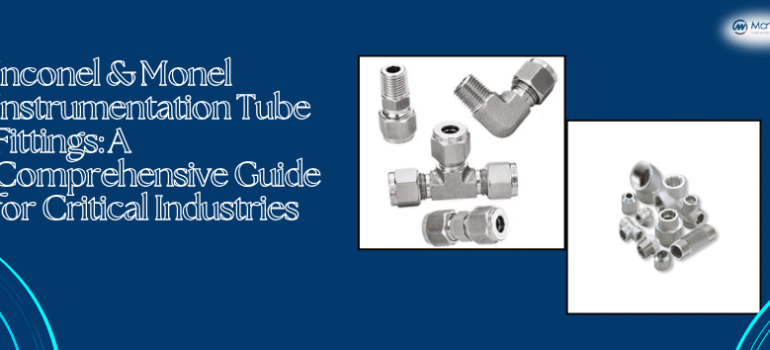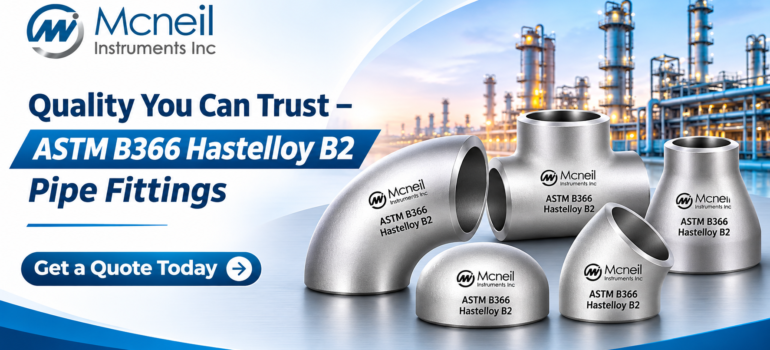
Mcneil Instruments Inc. ASTM B366 Hastelloy B2 pipe fittings, including stainless alloy elbows, tees, reducers and end caps for industrial piping applications.

Quality You Can Trust: ASTM B366 Hastelloy B2 Pipe Fittings for Demanding Industrial Applications

In industries where corrosion resistance, material reliability and long-term performance are essential, selecting the right piping components makes a significant difference. Chemical processing, petrochemical, pharmaceutical and other process industries often operate under aggressive conditions where conventional stainless steel fittings may not provide the required level of protection. This is where ASTM B366 Hastelloy B2 Pipe Fittings offer a dependable solution.

At Mcneil Instruments, we understand the importance of supplying quality-engineered piping components that meet demanding industrial requirements. Our focus is on providing reliable Hastelloy B2 pipe fittings designed for applications involving highly corrosive chemicals and challenging operating environments.

What Are ASTM B366 Hastelloy B2 Pipe Fittings?

ASTM B366 is a material specification covering factory-made wrought nickel and nickel-alloy fittings used in pressure piping applications. Hastelloy B2, also known as UNS N10665, is a nickel-molybdenum alloy developed for excellent resistance to hydrochloric acid and other reducing chemical environments.

These fittings are manufactured to provide dependable connections between piping systems while maintaining corrosion resistance and mechanical integrity. Depending on project requirements, they can be supplied in different configurations, including elbows, tees, reducers, caps and other butt-weld fittings.

Key Properties of Hastelloy B2 Pipe Fittings

  1. Excellent Corrosion Resistance
    Hastelloy B2 offers excellent resistance to hydrochloric acid at various concentrations and temperatures. It is particularly suitable for reducing environments where many conventional alloys may experience rapid corrosion.
  2. Resistance to Pitting and Crevice Corrosion
    Its nickel-molybdenum composition provides good resistance to localized corrosion in suitable chemical environments, helping improve piping system reliability.
  3. Low Carbon and Silicon Content
    Hastelloy B2 is designed with controlled carbon and silicon content to help minimize harmful carbide and silicide precipitation during thermal exposure and welding-related operations.
  4. Reliable Performance in Chemical Processing
    These fittings are used in industrial systems where chemical compatibility and material integrity are critical for safe and consistent operations.
  5. Suitable for Fabricated Piping Systems
    ASTM B366 Hastelloy B2 fittings are available in different dimensions and configurations to support customized piping layouts and industrial installation requirements.

Common Types of ASTM B366 Hastelloy B2 Pipe Fittings

Depending on the piping design and application, Hastelloy B2 fittings are available in several configurations:
Hastelloy B2 Elbows: Used to change the direction of fluid flow in piping systems.
Hastelloy B2 Equal and Reducing Tees: Used for creating branch connections.
Hastelloy B2 Reducers: Used to connect pipes of different diameters.
Hastelloy B2 End Caps: Used to close piping ends.
Hastelloy B2 Cross Fittings: Used for connecting four piping sections.
Custom Butt Weld Fittings: Manufactured according to project drawings and dimensional requirements.

Industrial Applications of Hastelloy B2 Pipe Fittings

ASTM B366 Hastelloy B2 pipe fittings are commonly considered for applications involving reducing chemical environments.
Chemical Processing Plants: Used in piping systems handling hydrochloric acid and other compatible aggressive chemicals.
Petrochemical Industry: Suitable for selected process lines where corrosion resistance and material reliability are essential.
Pharmaceutical Manufacturing: Used in compatible chemical processing and handling systems requiring reliable material performance.
Specialty Chemical Production: Supports piping systems exposed to demanding chemical conditions.
Industrial Processing Facilities: Used in specialized equipment and piping installations where material selection is based on chemical compatibility.
The suitability of Hastelloy B2 depends on chemical concentration, temperature, contaminants and operating conditions. Proper material selection should always be based on application-specific engineering requirements.

ASTM B366 Standards and Quality Requirements

ASTM B366 establishes requirements for factory-made wrought nickel and nickel-alloy fittings used in pressure piping systems. Compliance with the applicable specification helps ensure that fittings meet the required material and manufacturing criteria.

When sourcing Hastelloy B2 fittings, buyers should consider the following quality and inspection requirements:
Chemical composition verification
Mechanical property testing
Dimensional inspection
Material Test Certificates (MTC)
Positive Material Identification (PMI), where specified
Surface and visual inspection
Heat number identification and material traceability
Non-destructive testing (NDT), where required by the project

The applicable inspection and testing requirements should be clearly defined in the purchase order and project specification.

Why Choose Mcneil Instruments for Hastelloy B2 Pipe Fittings?

Choosing an experienced supplier is important when sourcing nickel-alloy piping components for critical industrial applications. At Mcneil Instruments, we focus on delivering piping products that meet customer specifications and industrial quality expectations.

Our advantages include:
Supply of Hastelloy B2 pipe fittings in different configurations.
Products manufactured to applicable ASTM specifications.
Custom dimensions and project-specific requirements.
Material documentation and traceability as specified.
Support for domestic and international industrial requirements.
Reliable supply solutions for chemical, petrochemical and process industries.

We aim to support customers with quality-focused products, technical specifications and dependable service.

Conclusion

ASTM B366 Hastelloy B2 Pipe Fittings are an important choice for industrial piping systems that require resistance to reducing acids and demanding chemical environments. Their nickel-molybdenum composition, corrosion resistance and suitability for selected chemical-processing applications make them valuable components in specialized industrial installations.

At Mcneil Instruments, we are committed to supplying quality-engineered Hastelloy B2 pipe fittings that support the requirements of modern process industries. Whether you need elbows, tees, reducers, caps or customized fittings, our team can assist with your project requirements.

Looking for Reliable ASTM B366 Hastelloy B2 Pipe Fittings?

Choose Mcneil Instruments for quality-focused nickel-alloy piping solutions. We offer Hastelloy B2 elbows, tees, reducers, caps and customized pipe fittings for demanding industrial applications.

Contact our team today to discuss your requirements and request a competitive quotation.

Website: https://www.mcneilinstruments.com/

Frequently Asked Questions (FAQs)

  1. What is ASTM B366 Hastelloy B2?
    ASTM B366 Hastelloy B2 refers to factory-made wrought nickel-alloy fittings manufactured according to ASTM B366 requirements. Hastelloy B2 is a nickel-molybdenum alloy identified by UNS N10665, known for its resistance to reducing chemical environments.
  2. What is the UNS number of Hastelloy B2?
    The UNS designation of Hastelloy B2 is N10665. It is a nickel-molybdenum alloy containing approximately 26–30% molybdenum.
  3. What types of Hastelloy B2 pipe fittings are available?
    Common configurations include 45-degree and 90-degree elbows, tees, reducers, caps, bends, stub ends and other customized butt-weld fittings.
  4. Is Hastelloy B2 suitable for hydrochloric acid applications?
    Yes. Hastelloy B2 offers excellent resistance to hydrochloric acid under suitable operating conditions. However, concentration, temperature, impurities and oxidizing contaminants must be evaluated before selecting the material.
    Rolled Alloys+1
  5. What is the difference between Hastelloy B2 and stainless steel?
    Hastelloy B2 is a nickel-molybdenum alloy specifically designed for demanding reducing-acid environments. Stainless steel grades such as 304 and 316 offer good corrosion resistance in many general industrial applications but may not provide equivalent performance in certain aggressive acid environments.
  6. Which industries use ASTM B366 Hastelloy B2 fittings?
    These fittings are used in chemical processing, petrochemical manufacturing, pharmaceutical production, specialty chemical plants and other industrial facilities handling compatible corrosive chemicals.
  7. Can Hastelloy B2 fittings be customized?
    Yes. Hastelloy B2 fittings can be sourced in different sizes, schedules, dimensions and configurations according to project drawings and applicable manufacturing specifications.
  8. What documents should be checked when purchasing Hastelloy B2 fittings?
    Buyers should check the Material Test Certificate, chemical composition, mechanical test results, dimensional inspection reports and heat number traceability. Additional inspection documents can be requested according to project requirements.
  9. Is Hastelloy B2 suitable for all corrosive environments?
    No. Hastelloy B2 is particularly suited to reducing environments. Its low chromium content makes it unsuitable for certain strongly oxidizing environments, oxidizing salts, wet chlorine gas and hypochlorite bleach.
    Rolled Alloys+1
  10. Where can I buy ASTM B366 Hastelloy B2 Pipe Fittings?
    You can contact Mcneil Instruments for Hastelloy B2 pipe fittings in different configurations and sizes. Share your technical specifications and project requirements to discuss suitable supply options.
Read More

Your Trusted Source for Hastelloy B3 Tube Fittings

Introduction

In industries where corrosive chemicals and demanding operating conditions are common, selecting the right material for piping components is essential. Hastelloy B3 tube fittings are designed to provide excellent resistance to corrosion, particularly in environments containing hydrochloric acid and other aggressive chemicals.

Mcneil Instruments offers reliable Hastelloy B3 tube fittings designed to meet the requirements of chemical processing, petrochemical, pharmaceutical, and other industrial applications.

What Are Hastelloy B3 Tube Fittings?

Hastelloy B3 is a nickel-molybdenum alloy known for its excellent resistance to hydrochloric acid and other reducing chemicals. It offers improved thermal stability and resistance to corrosion compared with several conventional nickel-based alloys.

Hastelloy B3 tube fittings are used to connect, control, and maintain the integrity of tubing systems in corrosive environments. These fittings help create secure connections while supporting reliable fluid transportation in critical industrial processes.

Key Properties of Hastelloy B3 Tube Fittings

Excellent Corrosion Resistance: Hastelloy B3 provides outstanding resistance to hydrochloric acid across a wide range of concentrations and temperatures.
Improved Thermal Stability: Its chemical composition helps maintain structural stability during thermal exposure and demanding operating conditions.
Resistance to Pitting and Stress Corrosion: The alloy offers resistance to localized corrosion and stress corrosion cracking in suitable chemical environments.
High Mechanical Strength: Hastelloy B3 tube fittings provide dependable mechanical performance for demanding industrial applications.
Reliable Connections: Properly selected and installed fittings help maintain secure tubing connections and reduce the risk of leakage.

Applications of Hastelloy B3 Tube Fittings

Hastelloy B3 tube fittings are widely used in industries that handle aggressive chemicals and corrosive fluids.

Common applications include:
Chemical processing plants
Pharmaceutical manufacturing facilities
Petrochemical industries
Acid handling and processing systems
Industrial instrumentation systems
Chemical storage and transfer applications
Their corrosion resistance makes them particularly suitable for tubing systems exposed to hydrochloric acid and other reducing chemical environments.

Why Choose Hastelloy B3 Tube Fittings?

Selecting Hastelloy B3 tube fittings can help improve the reliability and service life of tubing systems operating in corrosive environments.

Their resistance to aggressive chemicals helps reduce corrosion-related maintenance, minimize the risk of premature component failure, and support dependable industrial operations.

However, the suitability of Hastelloy B3 depends on the chemical composition, concentration, temperature, and operating conditions of the application. Proper material selection is essential to achieve the desired performance.

Why Choose Mcneil Instruments?

Mcneil Instruments provides industrial instrumentation and piping solutions designed to meet demanding application requirements.

With a focus on quality, reliability, and customer satisfaction, Mcneil Instruments supports industries that require dependable tube fittings for critical operations.

Whether you need Hastelloy B3 tube fittings for chemical processing, instrumentation, or other industrial applications, choosing a reliable supplier is essential for maintaining system performance and operational efficiency.

Looking for reliable Hastelloy B3 tube fittings for your industrial applications? Contact Mcneil Instruments today for quality instrumentation solutions designed to meet your project requirements.

Frequently Asked Questions (FAQs)

  1. What are Hastelloy B3 tube fittings?
    Hastelloy B3 tube fittings are tubing connection components manufactured from a nickel-molybdenum alloy known for its excellent resistance to hydrochloric acid and other corrosive chemicals.
  2. What are the main benefits of Hastelloy B3 tube fittings?
    They offer excellent corrosion resistance, improved thermal stability, good mechanical strength, and reliable performance in demanding chemical environments.
  3. Which industries use Hastelloy B3 tube fittings?
    These fittings are commonly used in chemical processing, petrochemical, pharmaceutical, and industrial instrumentation applications.
  4. Are Hastelloy B3 tube fittings suitable for hydrochloric acid applications?
    Yes, Hastelloy B3 offers excellent resistance to hydrochloric acid under suitable operating conditions. The specific concentration and temperature should be evaluated before selecting the material.
  5. How do I select the right Hastelloy B3 tube fittings?
    Consider the operating pressure, temperature, chemical composition, tubing dimensions, connection type, and material compatibility before selecting the fittings.
Read More
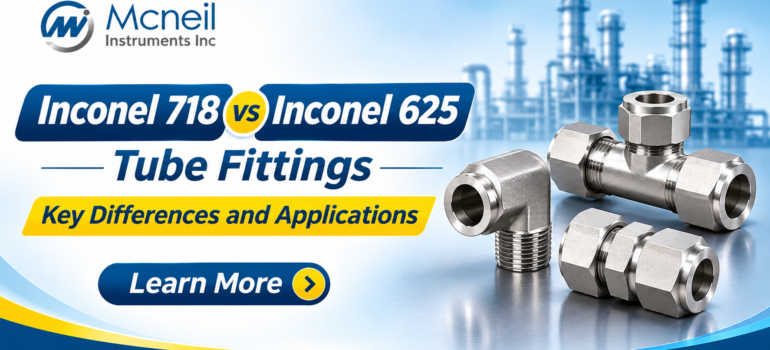
Inconel 718 vs Inconel 625 tube fittings comparison highlighting key differences, material properties, corrosion resistance, and industrial applications by Mcneil Instruments Inc.

Inconel 718 vs Inconel 625 Tube Fittings: Key Differences and Applications – Mcneil Instruments

Introduction

Selecting the right material for tube fittings is essential in industries where components are exposed to high temperatures, pressure, corrosive chemicals, and demanding operating conditions. Inconel alloys are widely used in such environments because of their excellent mechanical strength, oxidation resistance, and ability to perform under extreme service conditions.

Among the different nickel-based superalloys, Inconel 718 and Inconel 625 are two popular choices for industrial applications. Both alloys offer excellent corrosion resistance and high-temperature performance, but they differ in chemical composition, mechanical strength, heat treatment requirements, and application suitability.

Inconel 625 is primarily known for its outstanding corrosion resistance and resistance to oxidation, making it suitable for marine, chemical processing, offshore, and oil and gas applications. Inconel 718, on the other hand, is a precipitation-hardening nickel-based alloy known for its exceptionally high strength and fatigue resistance, particularly in high-pressure and high-temperature environments.

For manufacturers, engineers, and procurement professionals sourcing high-performance tube fittings, understanding these differences helps ensure better material selection, operational reliability, and long-term performance.

At Mcneil Instruments, we understand the importance of selecting suitable materials for industrial instrumentation and fluid control systems. In this blog, we explore the differences between Inconel 718 and Inconel 625 tube fittings, including their properties, corrosion resistance, advantages, and industrial applications.

What Are Inconel Tube Fittings?

Inconel tube fittings are specialized connectors manufactured using nickel-based superalloys. They are designed to connect tubing in industrial systems where conventional stainless steel materials may not provide the required performance.

These fittings are commonly used in high-pressure instrumentation systems, chemical processing facilities, offshore installations, power plants, and oil and gas operations.

Depending on the application and design requirements, Inconel tube fittings may include:
Tube connectors
Union fittings
Elbow fittings
Tee fittings
Male and female connectors
Bulkhead connectors
Reducer fittings
Instrumentation tube fittings
The selection of Inconel 625 or Inconel 718 depends on operating pressure, temperature, chemical exposure, mechanical loading, and applicable engineering specifications.

What Is Inconel 625?

Inconel 625 is a nickel-based superalloy primarily known for its excellent corrosion resistance, oxidation resistance, and high strength across a wide range of temperatures.

Its chemical composition includes nickel, chromium, molybdenum, and niobium. The combination of these elements provides excellent resistance to pitting, crevice corrosion, and many aggressive chemical environments.

Unlike precipitation-hardening alloys, Inconel 625 primarily derives its strength from solid-solution strengthening.

Key properties of Inconel 625:
Excellent resistance to general corrosion.
High resistance to pitting and crevice corrosion.
Good resistance to chloride-induced stress corrosion cracking.
Excellent oxidation resistance.
Good mechanical strength at elevated temperatures.
Suitable for demanding marine and chemical environments.
Good weldability and fabrication characteristics.

Common applications of Inconel 625 tube fittings:
Offshore oil and gas installations.
Marine engineering systems.
Chemical processing equipment.
Heat exchangers.
Seawater handling systems.
Pollution control equipment.
Aerospace components.
Industrial instrumentation systems.
Inconel 625 is particularly suitable for applications where corrosion resistance is a major consideration.

What Is Inconel 718?

Inconel 718 is a high-strength nickel-based superalloy designed for applications requiring excellent mechanical strength, fatigue resistance, and performance under elevated temperatures.

It contains nickel, chromium, iron, molybdenum, niobium, and other alloying elements. Its strength is primarily developed through precipitation hardening using controlled heat treatment.

Inconel 718 is widely used in aerospace, gas turbines, high-pressure equipment, and demanding industrial applications.

Key properties of Inconel 718:
Very high tensile and yield strength after appropriate heat treatment.
Excellent fatigue resistance.
Good creep and rupture strength.
Good oxidation resistance.
Strong performance at elevated temperatures.
Good resistance to stress corrosion cracking in many environments.
Suitable for high mechanical loading applications.

Common applications of Inconel 718 tube fittings:
Aerospace systems.
Gas turbine equipment.
High-pressure instrumentation systems.
Oil and gas equipment.
Power generation facilities.
Industrial process equipment.
High-temperature engineering applications.

Inconel 718 is particularly suitable when mechanical strength and resistance to fatigue are critical design requirements.

Inconel 718 vs Inconel 625: Chemical Composition

The chemical composition of these two alloys is responsible for their different mechanical and corrosion-resistant properties.

Chemical Element Inconel 625 Inconel 718
Nickel (Ni) 58% minimum 50–55%
Chromium (Cr) 20–23% 17–21%
Molybdenum (Mo) 8–10% 2.8–3.3%
Niobium (Nb) 3.15–4.15% 4.75–5.5%
Iron (Fe) 5% maximum Balance
Titanium (Ti) 0.4% maximum 0.65–1.15%
Aluminium (Al) 0.4% maximum 0.2–0.8%
Note: Values are approximate typical specification ranges. Exact limits depend on the applicable material standard and product specification.

The higher chromium and molybdenum content in Inconel 625 provides excellent corrosion resistance. Inconel 718 contains additional strengthening elements, including niobium, titanium, and aluminium, which contribute to its precipitation-hardening characteristics.

Corrosion Resistance: Inconel 718 vs Inconel 625

Corrosion resistance is a critical factor when selecting tube fittings for industrial applications, particularly in environments involving seawater, chemicals, moisture, and aggressive operating conditions.

Inconel 625 Corrosion Resistance
Inconel 625 offers excellent resistance to various corrosive environments. Its chromium and molybdenum content helps protect against oxidation, pitting, crevice corrosion, and localized corrosion.

It is particularly suitable for:
Marine and seawater applications.
Offshore oil and gas installations.
Chemical processing equipment.
Chloride-containing environments.
Industrial pollution control systems.

Inconel 718 Corrosion Resistance
Inconel 718 also provides good corrosion and oxidation resistance. However, its primary advantage is its high mechanical strength rather than maximum corrosion resistance.

It is suitable for applications involving elevated temperatures, mechanical stress, and demanding operating conditions. Its corrosion performance should be evaluated against the specific chemicals, temperatures, and environmental exposure involved.

Which Alloy Offers Better Corrosion Resistance?
In general, Inconel 625 offers better corrosion resistance than Inconel 718, especially in aggressive chloride-containing and marine environments. For applications where corrosion resistance is the primary requirement, Inconel 625 is often the preferred choice.

Mechanical Strength: Inconel 718 vs Inconel 625

Mechanical strength is another major difference between these two nickel-based alloys.

Inconel 718 is precipitation-hardenable, which allows it to achieve significantly higher tensile and yield strength after the specified heat treatment.

Inconel 625, meanwhile, offers good mechanical strength combined with excellent corrosion resistance and fabrication characteristics.

Mechanical Property Inconel 625 Inconel 718
Tensile Strength Around 827 MPa minimum Around 1,240 MPa minimum
Yield Strength Around 414 MPa minimum Around 1,034 MPa minimum
Strengthening Method Solid-solution strengthening Precipitation hardening
Fatigue Resistance Good Excellent
Corrosion Resistance Excellent Good
Weldability Generally excellent Requires controlled procedures

Note: Mechanical properties are indicative reference values and vary with product form, heat treatment, temperature, and applicable specifications. They should not be treated as universal tube-fitting design values.

For high-pressure applications involving substantial mechanical loading, Inconel 718 may offer an advantage because of its higher strength. However, actual fitting pressure ratings depend on geometry, wall thickness, connection design, manufacturing quality, and testing requirements.

High-Temperature Performance

Both alloys are used in high-temperature industrial environments, but their performance characteristics differ.

Inconel 625: Offers excellent oxidation resistance and maintains useful mechanical properties at elevated temperatures. It is widely used in heat exchangers, chemical processing equipment, marine systems, and industrial furnace components.

Inconel 718: Is particularly well known for maintaining high mechanical strength, fatigue resistance, and creep resistance under elevated-temperature conditions. It is widely used in gas turbines, aerospace engines, and high-performance engineering equipment.

The appropriate grade should be selected according to the actual operating temperature, mechanical load, exposure conditions, and design requirements.

Applications of Inconel 625 Tube Fittings

Inconel 625 tube fittings are commonly selected for industrial environments where corrosion resistance and reliable fluid or gas connections are important.

Major applications include:

  1. Oil and Gas Industry: Used in offshore installations, instrumentation systems, chemical injection lines, and applications exposed to corrosive fluids.
  2. Marine Industry: Suitable for seawater-related equipment and marine engineering systems because of its resistance to chloride-induced corrosion.
  3. Chemical Processing: Used in equipment handling aggressive chemicals and corrosive process media, subject to chemical compatibility.
  4. Power Generation: Applied in heat exchangers and other equipment exposed to elevated temperatures and demanding service conditions.
  5. Aerospace Industry: Used in selected engine and exhaust-related components requiring corrosion and oxidation resistance.

Applications of Inconel 718 Tube Fittings

Inconel 718 tube fittings are considered for applications where high mechanical strength and performance under demanding operating conditions are essential.

Major applications include:

  1. Aerospace Industry: Used in aircraft engine components, fuel systems, and high-performance engineering applications.
  2. Gas Turbine Systems: Suitable for components exposed to high mechanical stress and elevated temperatures.
  3. Oil and Gas Equipment: Used in selected high-strength components, instrumentation assemblies, and equipment requiring strong mechanical performance.
  4. Power Generation: Applied in demanding mechanical and high-temperature equipment.
  5. Industrial Engineering: Used in specialized systems where high tensile strength, fatigue resistance, and durability are required.

How to Choose Between Inconel 718 and Inconel 625 Tube Fittings?

Selecting the correct alloy depends on the actual operating environment and technical requirements of your industrial system.

Consider these important factors before making a decision:
Corrosion Exposure: Choose Inconel 625 when excellent resistance to chloride-induced corrosion and aggressive environments is a priority.
Mechanical Strength: Consider Inconel 718 when high tensile strength, fatigue resistance, and mechanical loading are major requirements.
Operating Temperature: Evaluate the temperature range and expected mechanical loads before selecting the material.
Chemical Compatibility: Identify the process fluids and chemicals that will come into contact with the fittings.
Pressure Requirements: Verify the fitting design, wall thickness, connection type, and applicable pressure ratings.
Manufacturing Standards: Confirm material specifications, heat treatment, inspection, and testing requirements.
Project Budget: Compare material costs with expected service life, maintenance, and replacement requirements.

It is also important to confirm whether the selected alloy is available in the required tube-fitting configuration and product specification. Material selection should always be supported by engineering calculations and application-specific requirements.

Why Choose Mcneil Instruments for Inconel Tube Fittings?

Choosing the right supplier is important when sourcing specialized nickel alloy tube fittings for industrial instrumentation and fluid control systems.

Mcneil Instruments focuses on industrial piping and instrumentation products, supporting customers across oil and gas, petrochemical, chemical processing, power generation, and other engineering industries.

We understand that different applications require different material grades, connection configurations, dimensions, and technical specifications.

Why consider Mcneil Instruments?
Expertise in industrial instrumentation and piping products.
Support for specialized alloy material requirements.
Product options based on project specifications.
Focus on material quality and dimensional requirements.
Support for domestic and international procurement.
Solutions for demanding industrial applications.
Whether your project requires Inconel 625 for corrosion-resistant applications or Inconel 718 for high-strength requirements, selecting the correct material and fitting configuration is essential.

Conclusion

Inconel 718 and Inconel 625 are both high-performance nickel-based alloys used in demanding industrial applications. However, they serve different engineering requirements.

Inconel 625 is generally preferred for applications requiring excellent corrosion resistance, particularly in marine, offshore, and chemical processing environments. Inconel 718 is better suited to applications requiring exceptionally high mechanical strength, fatigue resistance, and performance under elevated temperatures.

For industrial tube fittings, the final material selection should consider corrosion exposure, operating pressure, temperature, mechanical loading, and applicable engineering standards.

Mcneil Instruments supports industrial buyers looking for suitable instrumentation and alloy product solutions. Contact our team to discuss your Inconel 625 and Inconel 718 tube fitting requirements.

Looking for a Reliable Inconel Tube Fittings Supplier in India?

Choose Mcneil Instruments for industrial instrumentation and alloy product requirements. Whether you need Inconel 625 tube fittings for corrosion-resistant applications or Inconel 718 for high-strength engineering requirements, our team can help you explore suitable material options.

Contact Mcneil Instruments today to discuss your technical requirements and request a competitive quotation.

Frequently Asked Questions (FAQs)

  1. What is the main difference between Inconel 718 and Inconel 625?
    The main difference is their performance characteristics. Inconel 625 offers superior corrosion resistance due to its higher chromium and molybdenum content, while Inconel 718 provides significantly higher mechanical strength through precipitation hardening.
  2. Which is better for tube fittings, Inconel 718 or Inconel 625?
    The choice depends on the application. Inconel 625 is generally preferred for corrosive environments, while Inconel 718 is suitable for applications requiring high mechanical strength and fatigue resistance.
  3. Is Inconel 625 more corrosion-resistant than Inconel 718?
    Yes. Inconel 625 generally provides better resistance to pitting, crevice corrosion, and chloride-containing environments because of its higher chromium and molybdenum content.
  4. Why is Inconel 718 used in high-pressure applications?
    Inconel 718 offers high tensile strength and yield strength after appropriate heat treatment. These properties make it suitable for components exposed to significant mechanical loading. Actual pressure suitability depends on the fitting design and engineering calculations.
  5. Can Inconel 625 be used in marine applications?
    Yes. Inconel 625 is widely used in marine and offshore applications because of its excellent resistance to seawater-related corrosion, pitting, and crevice corrosion.
  6. Is Inconel 718 suitable for high-temperature applications?
    Yes. Inconel 718 offers excellent strength, fatigue resistance, and creep performance at elevated temperatures, making it suitable for gas turbines, aerospace equipment, and other demanding engineering applications.
  7. What industries use Inconel 625 tube fittings?
    Inconel 625 tube fittings are used in oil and gas, offshore engineering, marine systems, chemical processing, power generation, and selected aerospace applications.
  8. What industries use Inconel 718 tube fittings?
    Inconel 718 is used in aerospace, gas turbines, oil and gas equipment, power generation, and specialized industrial systems requiring high mechanical strength.
  9. Can Inconel 718 and Inconel 625 be welded?
    Both alloys can be welded using suitable procedures. Inconel 625 generally offers better weldability, while Inconel 718 requires more controlled welding and post-weld heat treatment considerations depending on the application.
  10. Where can I find Inconel tube fittings in India?
    You can contact Mcneil Instruments for Inconel alloy tube fitting requirements. Share your required alloy grade, fitting type, dimensions, pressure rating, and project specifications to discuss suitable supply options.
Read More
ASTM A234 WP11 tube fittings by Mcneil Instruments Inc., featuring industrial steel elbows, tees, reducers, and end caps.

ASTM A234 WP11 Tube Fittings: Quality Standards, Testing, and Inspection Requirements

ASTM A234 WP11 fittings are used in industrial piping systems that require suitable mechanical strength and resistance to elevated temperatures. These fittings are commonly associated with power generation, petrochemical processing, refineries, and other industries where piping components must perform reliably under demanding operating conditions. To maintain quality and safety, selecting the appropriate material grade and verifying compliance with applicable standards are essential.

Quality standards, material testing, and inspection procedures help ensure that ASTM A234 WP11 fittings meet specified requirements for chemical composition, mechanical properties, dimensions, and manufacturing quality. For buyers, engineers, and project managers, understanding these requirements can help reduce material selection errors and improve piping system reliability.

Mcneil Instruments supports industrial piping and instrumentation requirements by helping customers identify components suited to their project specifications and operating conditions.

What Are ASTM A234 WP11 Tube Fittings?

ASTM A234 WP11 is a specification for wrought carbon steel and alloy steel piping fittings intended for moderate and elevated-temperature service. WP11 is a chromium-molybdenum alloy steel grade commonly used in applications requiring suitable high-temperature strength and resistance to oxidation.

The specification covers fittings such as elbows, tees, reducers, and caps manufactured for welded piping systems. Although the term “tube fittings” is sometimes used commercially, ASTM A234 WP11 generally refers to butt-welding pipe fittings. Buyers should verify the product type and applicable specification before placing an order.

These fittings are used in power plants, refineries, petrochemical facilities, and industrial processing systems where the material must meet the relevant design and operating requirements.

Understanding ASTM A234 WP11 Quality Standards

ASTM A234 establishes requirements for wrought carbon steel and alloy steel piping fittings intended for specified temperature applications. ASTM A234 WP11 fittings must comply with the applicable edition of the specification, the ordered grade and class, and the requirements stated in the purchase order.

In addition to ASTM material requirements, project specifications may reference applicable ASME piping codes, such as ASME B31.1 for power piping or ASME B31.3 for process piping. ASME B16.9 may apply to factory-made wrought butt-welding fittings within its scope.

The relevant requirements depend on the piping system, fitting dimensions, manufacturing method, and service conditions. Buyers should confirm the applicable standards with the engineering or procurement team rather than assuming that every standard applies to every product.

Important quality considerations include:
Compliance with the specified ASTM A234 WP11 grade and applicable material class.
Chemical composition and mechanical property requirements.
Correct dimensions, wall thickness, and fitting configuration.
Appropriate heat treatment and manufacturing processes.
Required inspection, testing, traceability, and documentation.

Chemical Composition Testing

Chemical composition testing verifies that the material contains the required alloying elements within the limits specified by the applicable material standard.

For WP11 alloy steel, chromium and molybdenum are important alloying elements that contribute to its performance at elevated temperatures. Other elements, including carbon, manganese, silicon, phosphorus, and sulfur, are also controlled according to the applicable specification.

Chemical analysis may be conducted using suitable laboratory methods. Product analysis may also be required when specified by the applicable standard, purchase order, or inspection plan.

Material verification helps confirm that the supplied fitting matches the ordered grade and reduces the risk of material mix-ups.

Why it matters: Incorrect chemical composition can affect mechanical properties, heat-treatment response, weldability, and performance in service.

Mechanical Property Testing

Mechanical testing helps establish whether the material meets the specified strength and ductility requirements.

Depending on the applicable specification and inspection requirements, mechanical testing may include tensile testing and other specified tests. The required tests, acceptance criteria, and sampling frequency should be confirmed against the applicable edition of ASTM A234 and the relevant material requirements.

Mechanical properties are important because industrial fittings may experience internal pressure, thermal cycling, vibration, and mechanical loads during operation.

Testing records provide evidence that the material meets the applicable acceptance requirements. Buyers should verify that the reported results correspond to the supplied material and relevant heat or lot.

Heat Treatment Requirements

Heat treatment is an important part of manufacturing alloy steel fittings, particularly when the components are intended for elevated-temperature service.

The required heat treatment depends on the specified grade, class, manufacturing process, material thickness, and applicable edition of the standard. For WP11 fittings, the manufacturer must follow the relevant heat-treatment provisions and any additional requirements in the purchase order.

Heat-treatment records may include details such as the process used, relevant temperatures, holding periods, and batch identification, as applicable to the procedure and inspection requirements.

Proper heat treatment helps achieve the required material properties and can reduce the risk of unacceptable variations caused by manufacturing.

Buyer recommendation: Confirm that the manufacturer can provide the required heat-treatment documentation and traceability when these records are specified for the project.

Dimensional Inspection

Dimensional inspection confirms that the fitting matches the ordered size, shape, wall thickness, and applicable dimensional standard.

Typical inspection points include:
Outside diameter and fitting dimensions.
Wall thickness at specified locations.
Elbow angle and center-to-end dimensions.
Tee branch dimensions and alignment.
Reducer end dimensions and overall length.
Bevel preparation and end condition.
Surface condition and visible manufacturing defects.

For factory-made butt-welding fittings, ASME B16.9 may define applicable dimensions and tolerances when specified. Other standards or project requirements may apply to fittings outside its scope.

Correct dimensions help ensure fit-up during installation, support weld quality, and reduce problems during piping fabrication.

Non-Destructive Testing (NDT)

Non-destructive testing methods are used to examine components for certain types of discontinuities without destroying the inspected item. The need for NDT depends on the applicable product requirements, purchase order, engineering specification, and inspection plan.

Common methods include:

Visual Testing (VT): Checks accessible surfaces for visible defects, damage, irregularities, and workmanship concerns.
Liquid Penetrant Testing (PT): Helps identify surface-breaking discontinuities in suitable non-porous materials.
Magnetic Particle Testing (MT): Detects surface and near-surface discontinuities in suitable ferromagnetic materials.
Ultrasonic Testing (UT): Uses sound waves to examine material for internal discontinuities or assess thickness, depending on the procedure.
Radiographic Testing (RT): Uses X-rays or gamma rays to produce an image that can reveal certain internal discontinuities.

Not every ASTM A234 WP11 fitting automatically requires all these methods. The applicable specification and purchase order determine which examinations are required, the inspection extent, and the acceptance criteria.

Visual Inspection and Surface Quality

Visual inspection is an important step in confirming the general condition and workmanship of ASTM A234 WP11 fittings.

Inspectors may examine the fitting surface for cracks, laps, seams, excessive scale, dents, corrosion, and other visible irregularities. The inspection should also confirm that identification markings are legible and that the fitting has the correct configuration.

Where surface imperfections are identified, their acceptability must be evaluated against the applicable standard and project requirements. Any permitted repair must follow the relevant approved procedure and documentation requirements.

A thorough visual inspection can help identify obvious problems before the fittings reach installation or welding stages.

Hydrostatic Testing and Pressure Requirements

Hydrostatic testing involves applying liquid pressure to equipment or piping to verify pressure integrity under a specified test procedure. However, hydrostatic testing is not automatically a mandatory individual fitting test for every ASTM A234 WP11 order.

The need for pressure testing depends on the component design, applicable code, product specification, purchase order, and project inspection requirements. In many piping systems, pressure testing is performed on the completed piping system or a designated assembly rather than on every individual butt-welding fitting.

Buyers should clarify whether individual fitting pressure tests, system-level pressure tests, or other verification procedures are required for their application.

Pressure tests must be conducted using an approved procedure, appropriate equipment, and suitable safety controls.

Material Test Certificates and Documentation

Documentation provides traceability and helps demonstrate that the supplied fittings meet the ordered requirements.

Depending on the contract and applicable standards, documentation may include:

Material Test Certificates (MTCs) or inspection certificates.
Chemical composition test results.
Mechanical test results.
Heat-treatment records, where required.
Dimensional and visual inspection reports.
NDT reports, when specified.
Product identification and heat or lot traceability.
Certificates of conformity and other project-required documents.

Buyers should verify that certificate details match the actual fittings, including material grade, size, schedule or wall thickness, heat number, quantity, and applicable specification.

Traceability is particularly important in critical industrial installations, where materials may need to be verified during fabrication, commissioning, or future maintenance.

How to Choose a Reliable ASTM A234 WP11 Fittings Supplier

Selecting a supplier involves more than comparing product prices. Buyers should verify that the supplier understands the relevant material specifications and can provide products and documentation consistent with the project requirements.

Consider the following factors:
Material specification: Confirm that the offered fittings meet the ordered ASTM A234 WP11 grade and applicable class.
Quality control: Ask about manufacturing controls, inspection procedures, testing arrangements, and traceability systems.
Documentation: Confirm the availability of material certificates and other required inspection records.
Dimensional compliance: Verify that the fittings match the specified dimensions, wall thickness, end preparation, and applicable standards.
Application suitability: Ensure that the material and fitting design are appropriate for the operating pressure, temperature, fluid, and service environment.
Order requirements: Specify quantities, sizes, delivery expectations, documentation, marking, and any additional inspection requirements before placing an order.

A clear purchase specification helps reduce misunderstandings and improves the likelihood of receiving fittings that meet the intended application requirements.

Industries Using ASTM A234 WP11 Fittings

ASTM A234 WP11 fittings may be used in a variety of industrial applications when their material properties and specifications are suitable for the service conditions.

Power generation: Used in designated piping systems where elevated-temperature alloy steel components are required.
Oil and gas: Applied in suitable process and utility piping systems, subject to engineering and material selection requirements.
Petrochemical plants: Used in piping that must meet specified material and operating requirements.
Refineries: Installed in appropriate process piping systems designed for elevated-temperature service.
Industrial processing: Used in applications where the specified alloy steel grade is compatible with the operating environment.

The suitability of WP11 fittings should always be assessed against the design code, temperature, pressure, process fluid, corrosion conditions, and required service life.

Conclusion

Quality standards, testing, and inspection are essential when purchasing ASTM A234 WP11 alloy steel fittings for industrial piping systems. Chemical analysis, mechanical testing, heat-treatment verification, dimensional inspection, and appropriate non-destructive examinations can help establish whether the supplied components meet their specified requirements.

Equally important are accurate material identification, traceability, and complete documentation. Buyers should define the applicable standards, inspection extent, testing requirements, and acceptance criteria before placing an order.

Mcneil Instruments supports industrial piping and instrumentation requirements by helping customers identify suitable products for their applications. Contact the team to discuss your ASTM A234 WP11 fitting requirements and the documentation needed for your project.

Looking for ASTM A234 WP11 alloy steel fittings for your industrial piping project?

Contact Mcneil Instruments to discuss your required sizes, specifications, inspection requirements, and material documentation. Our team can help you identify suitable products for your project needs.

Frequently Asked Questions (FAQs)

  1. What is ASTM A234 WP11?
    ASTM A234 WP11 is a chromium-molybdenum alloy steel grade covered by ASTM A234 for wrought piping fittings intended for specified moderate and elevated-temperature service.
  2. Which industries use ASTM A234 WP11 fittings?
    These fittings may be used in power generation, refineries, petrochemical facilities, oil and gas installations, and other industrial piping systems where the grade is suitable for the design conditions.
  3. What tests are performed on ASTM A234 WP11 fittings?
    Depending on the applicable specification and purchase requirements, testing may include chemical analysis, mechanical testing, dimensional inspection, visual examination, and specified non-destructive testing.
  4. Is heat treatment required for ASTM A234 WP11 fittings?
    Heat-treatment requirements depend on the applicable grade, class, manufacturing process, and edition of the specification. Buyers should verify the relevant requirements and obtain supporting records when specified.
  5. Is hydrostatic testing mandatory for every ASTM A234 WP11 fitting?
    Not necessarily. Hydrostatic testing requirements depend on the product specification, applicable code, purchase order, and project inspection plan. Testing may be required at the piping-system or assembly level rather than for every individual fitting.
  6. What documents should accompany ASTM A234 WP11 fittings?
    Required documents may include material test certificates, chemical and mechanical test results, heat-treatment records, dimensional inspection reports, NDT reports, and traceability information, depending on the purchase requirements.
  7. What is the purpose of non-destructive testing?
    NDT helps identify certain surface or internal discontinuities without damaging the component. The required method and inspection extent depend on the specification and project requirements.
  8. What is the difference between ASTM A234 WP11 and WP22?
    Both are chromium-molybdenum alloy steel fitting grades, but they differ in chemical composition and specified material properties. The appropriate grade depends on the design requirements, operating conditions, and applicable engineering code.
  9. How can buyers verify the quality of ASTM A234 WP11 fittings?
    Buyers should check material identification, applicable standards, material certificates, required test results, dimensional compliance, inspection records, and traceability against the purchase order.
  10. How do I select the right ASTM A234 WP11 fittings supplier?
    Choose a supplier that can meet your specified grade, dimensions, quality requirements, documentation needs, and delivery expectations. Confirm all technical and inspection requirements before placing an order.
Read More
Mcneil Instruments Inc. ASTM A234 WPB pipe fittings for high-pressure and elevated-temperature industrial piping systems.

ASTM A234 WPB Pipe Fittings for High-Pressure and Elevated-Temperature Piping

Introduction

Industrial piping systems used in refineries, power plants, petrochemical facilities, and process industries must withstand demanding operating conditions. Selecting the right pipe fittings is essential for maintaining system integrity, supporting reliable fluid flow, and reducing the risk of leakage or premature failure. ASTM A234 WPB pipe fittings are widely used in carbon steel piping systems designed for moderate and elevated-temperature service.

At Mcneil Instruments, we understand the importance of selecting pipe fittings that meet project specifications, material requirements, and applicable industry standards. In this guide, we explore the properties, applications, selection considerations, and quality requirements of ASTM A234 WPB pipe fittings for demanding industrial piping systems.

What Are ASTM A234 WPB Pipe Fittings?

ASTM A234/A234M is a material specification covering wrought carbon steel and alloy steel piping fittings for moderate- and elevated-temperature service. Grade WPB is a commonly specified carbon steel grade used in industrial pressure piping applications. Depending on the applicable product standard and design, these fittings are available in configurations such as elbows, tees, reducers, and caps.

ASTM A234 WPB fittings are commonly selected for piping systems carrying water, steam, oil, gas, and other compatible process fluids. Their suitability depends on operating pressure, temperature, fluid characteristics, piping design, and the relevant engineering code.

Why Are ASTM A234 WPB Fittings Used in Demanding Piping Systems?

  1. Mechanical strength
    Carbon steel WPB fittings provide mechanical properties suited to many industrial pressure-piping applications. The fitting grade, wall thickness, dimensions, and design conditions must be considered together to ensure the completed system meets its requirements.
  2. Suitability for elevated temperatures
    ASTM A234 covers fittings intended for moderate- and elevated-temperature service. However, the allowable operating temperature and pressure depend on the material properties at the design temperature, the applicable piping code, and the complete system design.
  3. Multiple fitting configurations
    Different fitting configurations help engineers design piping layouts that accommodate changes in direction, branch connections, and pipe diameter.
    Elbows: Change the direction of flow.
    Tees: Create branch connections.
    Reducers: Connect pipes of different diameters.
    Caps: Close the end of a pipe.
  4. Compatibility with industrial piping systems
    ASTM A234 WPB fittings can be specified for compatible carbon steel piping systems when the material, dimensions, joining method, and design requirements align. Material compatibility and corrosion protection should be evaluated for the specific service.

Key industrial applications of ASTM A234 WPB pipe fittings

Oil and gas industry
WPB fittings are used in suitable process and utility piping systems for transporting compatible fluids. Selection depends on pressure, temperature, corrosion conditions, and project specifications.

Power generation
In power plants, carbon steel fittings may be used in steam, water, and auxiliary piping systems when their design conditions fall within the permitted material limits.

Petrochemical processing
ASTM A234 WPB fittings support process piping layouts that require directional changes, branch connections, and transitions between pipe sizes.

Industrial utilities
Compatible WPB fittings can be used in selected water, air, and other utility piping applications, subject to the operating conditions and applicable standards.

Important factors when selecting ASTM A234 WPB fittings

Before purchasing fittings for high-pressure or elevated-temperature piping, engineers and procurement teams should evaluate the following factors.

Operating pressure and temperature: Confirm the design pressure and design temperature of the complete piping system. Do not select fittings based on material grade alone.

Dimensions and wall thickness: Check nominal pipe size, schedule, fitting dimensions, end preparation, and dimensional tolerances against the piping drawings and applicable standards.

Applicable standards: ASTM A234/A234M specifies material requirements, while dimensional and design requirements are governed by the relevant product standards and piping code. ASME B16.9 is commonly relevant to factory-made wrought butt-welding fittings.

Material traceability: Review material test certificates and product markings to verify the specified grade and traceability requirements.

Inspection and testing: Confirm the required mechanical tests, heat treatment, dimensional inspections, and any additional examinations specified by the purchase order or applicable standard.

Corrosion and fluid compatibility: Evaluate the fluid composition, moisture, contaminants, and operating environment to determine whether carbon steel is appropriate and whether additional corrosion protection is necessary.

Quality assurance and procurement considerations

Reliable sourcing involves more than confirming the grade name. Buyers should verify the manufacturer’s documentation, product dimensions, material identification, inspection requirements, and compliance with the project specification.

For critical services, additional testing or third-party inspection may be required by the purchaser, engineering contractor, or applicable code. Requirements should be established before ordering to avoid delays during inspection and installation.

Mcneil Instruments supports industrial buyers looking for pipe fittings that meet defined project requirements. Procurement teams should provide the required grade, size, schedule, fitting type, quantity, applicable standards, and inspection documentation when requesting a quotation.

Conclusion

ASTM A234 WPB pipe fittings are an established option for many carbon steel piping systems operating under moderate and elevated temperatures. Their suitability for high-pressure applications depends on the complete engineering design, including material properties, dimensions, temperature-dependent pressure limits, fluid compatibility, and applicable codes.

By evaluating these factors and verifying material documentation, industrial buyers can make more informed procurement decisions. Mcneil Instruments can assist customers in identifying pipe fitting requirements in line with their project specifications.

Looking for ASTM A234 WPB Pipe Fittings?

Mcneil Instruments supports industrial piping projects with pipe fitting solutions aligned with customer specifications and application requirements. Contact our team to discuss your required fitting types, sizes, schedules, material documentation, and inspection requirements.

Request a quotation today and share your project specifications with Mcneil Instruments for assistance with your carbon steel pipe fitting requirements.

Frequently asked questions

  1. What is ASTM A234 WPB used for?
    ASTM A234 WPB specifies wrought carbon steel fittings used in pressure piping and pressure-vessel fabrication for moderate- and elevated-temperature service.
  2. Are ASTM A234 WPB fittings suitable for high-pressure applications?
    They can be used in appropriately engineered pressure-piping systems. Suitability depends on the design pressure, temperature, fitting dimensions, material properties, and applicable piping code.
  3. What types of fittings are available in ASTM A234 WPB?
    Common configurations include elbows, tees, reducers, and caps. Availability and dimensional requirements depend on the applicable fitting standard and manufacturer.
  4. Which standard applies to ASTM A234 WPB butt-weld fittings?
    ASTM A234/A234M covers the material specification. ASME B16.9 commonly covers dimensions and tolerances for factory-made wrought butt-welding fittings. Other fitting types may require different standards.
  5. Can ASTM A234 WPB fittings be used in steam lines?
    Yes, in suitable steam piping applications when the grade and fitting design meet the specified pressure, temperature, and code requirements.
  6. What documents should buyers request when purchasing WPB fittings?
    Depending on the project, buyers may request material test certificates, grade and heat-number traceability, dimensional inspection records, test reports, and any specified third-party inspection documentation.
  7. How do I choose the right ASTM A234 WPB fitting size?
    Confirm the nominal pipe size, schedule, fitting configuration, end connection, and applicable dimensional standard using the approved piping drawings and project specifications.
  8. What is the difference between ASTM A234 WPB and ASTM A105?
    ASTM A234 WPB is used for wrought carbon steel piping fittings, while ASTM A105 covers carbon steel forgings for piping applications, including many forged flanges and fittings. They are different material specifications and are not interchangeable solely by name.
Read More
Mcneil Instruments Inc. ASTM A234 WP11 alloy steel pipe fittings, including elbows, tees, reducers, and caps for industrial piping applications.

How to Select the Right ASTM A234 WP11 Pipe Fittings

Introduction

Selecting the right pipe fittings is essential for maintaining the safety, efficiency, and reliability of industrial piping systems. In industries such as oil and gas, power generation, petrochemicals, and refineries, piping components must withstand demanding operating temperatures, pressure conditions, and mechanical stresses. ASTM A234 WP11 pipe fittings are commonly used in applications requiring chromium-molybdenum alloy steel components for elevated-temperature service.

However, choosing the correct WP11 pipe fitting involves more than identifying the material grade. Buyers must consider fitting dimensions, wall thickness, manufacturing standards, operating conditions, and project-specific requirements. Understanding these factors helps engineers and procurement teams select suitable components for their applications.

Mcneil Instruments supports industrial customers looking for piping products and alloy steel solutions. This guide explains the key considerations for selecting ASTM A234 WP11 pipe fittings for industrial projects.

What Are ASTM A234 WP11 Pipe Fittings?

ASTM A234 WP11 pipe fittings are wrought chromium-molybdenum alloy steel fittings intended for use in moderate- and high-temperature pressure piping systems, subject to the applicable specification and design requirements.

ASTM A234 covers wrought carbon steel and alloy steel piping fittings for moderate- and high-temperature service. The WP11 grade is a chromium-molybdenum alloy steel grade valued for its strength and performance in selected elevated-temperature applications.

These fittings are used to connect pipes, change flow direction, create branch connections, and modify pipeline diameters. Common configurations include elbows, tees, reducers, and caps.

The correct fitting must meet the applicable material specification, dimensional requirements, and engineering design code for the intended service.

Key Features of ASTM A234 WP11 Pipe Fittings

  1. Chromium-Molybdenum Alloy Composition
    WP11 contains chromium and molybdenum as key alloying elements. These elements contribute to elevated-temperature strength and resistance to oxidation under appropriate operating conditions.
  2. Suitability for Elevated-Temperature Service
    WP11 fittings are designed for applications covered by ASTM A234 where alloy steel is required for moderate- or high-temperature pressure piping. Their suitability depends on the design temperature, pressure, and relevant engineering code.
  3. Strength and Durability
    When manufactured, heat-treated, inspected, and installed according to the applicable requirements, WP11 fittings can provide the material properties needed for demanding industrial piping systems.
  4. Multiple Fitting Configurations
    WP11 fittings are available in various configurations depending on the supplier’s product range and project requirements. These may include elbows, tees, reducers, and caps.
  5. Industrial Applications
    WP11 fittings are considered for selected power generation, refinery, petrochemical, and industrial process piping applications where chromium-molybdenum alloy steel is specified.

Types of ASTM A234 WP11 Pipe Fittings

Understanding the available fitting configurations helps ensure that the selected component meets the piping system’s functional and dimensional requirements.

WP11 Elbows: Used to change the direction of flow within a pipeline. Common configurations include 45-degree and 90-degree elbows, subject to availability and project specifications.

WP11 Tees: Used to create branch connections from a main pipeline. Equal and reducing tees may be selected according to the required branch size.

WP11 Reducers: Used to connect pipes of different diameters. Concentric and eccentric designs are selected according to piping layout and process requirements.

WP11 Caps: Used to close the end of a pipe or terminate a piping connection where the design requires a cap.

The fitting type, dimensions, wall thickness, and end preparation must be compatible with the adjoining pipes and the applicable piping design.

How to Select the Right ASTM A234 WP11 Pipe Fittings

  1. Understand Your Operating Conditions
    Start by identifying the operating temperature, design pressure, process medium, and expected service life of the piping system. WP11 should be selected only when its material properties are suitable for the actual operating environment and the applicable design code.
  2. Verify the Material Specification
    Confirm that the fittings are specified to ASTM A234 WP11 and meet the applicable requirements. Review the purchase specification to establish the required material condition, heat treatment, testing, and documentation.

Do not assume that all chromium-molybdenum fittings are interchangeable. Different grades can have different chemical compositions and mechanical properties.

  1. Select the Correct Dimensions
    Determine the nominal pipe size, outside diameter, wall thickness or schedule, fitting dimensions, and end preparation. The fitting must match the connected piping components and the dimensional standard specified for the project.
    Incorrect dimensions can create installation difficulties, alignment problems, and potential performance issues.
  2. Check Pressure and Temperature Requirements
    Pressure and temperature ratings depend on the complete piping design, material properties, wall thickness, and applicable code. Confirm that the selected fitting is suitable for the specified operating and design conditions.

A material grade alone does not establish the allowable pressure of a piping component.

  1. Consider Heat Treatment Requirements
    Chromium-molybdenum alloy steel fittings may require specific heat treatment according to the applicable material specification, grade, manufacturing method, and purchase requirements.

Review the required heat-treatment condition and supporting records to ensure the product meets the project’s technical requirements.

  1. Evaluate Welding and Fabrication Requirements
    WP11 fittings used in welded piping systems require suitable welding procedures and qualified personnel. Preheating, post-weld heat treatment, and other fabrication controls may be required depending on the applicable code, material thickness, and service conditions.

Confirm the project’s welding and fabrication requirements before ordering.

  1. Request Material Test Certificates
    Material documentation helps establish that the supplied fittings meet the required specification. Depending on the purchase requirements, documentation may include chemical composition, mechanical test results, heat-treatment records, inspection reports, and material traceability.

Ensure the certificates correspond to the supplied products and required material grade.

  1. Choose a Reliable Supplier
    Select a supplier that understands industrial piping specifications and can provide accurate product information, traceability, and documentation.

Before placing an order, confirm product availability, dimensions, applicable standards, inspection requirements, delivery schedule, and commercial terms.

ASTM A234 WP11 vs. WP22 Pipe Fittings

ASTM A234 WP11 and WP22 are chromium-molybdenum alloy steel fitting grades used in selected elevated-temperature piping applications. However, they differ in alloy composition and material properties.

WP11: Typically contains approximately 1.0–1.5% chromium and 0.44–0.65% molybdenum, depending on the applicable specification limits.

WP22: Typically contains approximately 2.0–2.5% chromium and 0.87–1.13% molybdenum, depending on the applicable specification limits.

WP22 has higher chromium and molybdenum content than WP11. However, this does not mean that WP22 is automatically the better choice for every project. The selection should be based on design calculations, operating conditions, material specifications, and engineering requirements.

Always verify the applicable specification and grade requirements before choosing a replacement material.

Common Mistakes to Avoid When Selecting WP11 Fittings

Several mistakes can create procurement delays or technical problems in industrial piping projects.

Ignoring the Operating Environment: Selecting a fitting without reviewing the operating temperature, pressure, and process medium can result in an unsuitable material choice.

Overlooking Dimensions: Incorrect pipe sizes, wall thicknesses, or fitting configurations can lead to installation and alignment issues.

Assuming Grades Are Interchangeable: WP11, WP22, and other alloy steel grades have different compositions and properties. Substitutions should be approved by the responsible engineering authority.

Neglecting Material Documentation: Missing or inconsistent material test certificates can complicate quality verification and project acceptance.

Ignoring Welding Requirements: Inadequate welding procedures or heat-treatment controls can affect the performance of alloy steel piping systems.

Avoiding these mistakes helps improve procurement accuracy and supports compliance with project requirements.

Why Choose Mcneil Instruments for ASTM A234 WP11 Pipe Fittings?

Choosing the right industrial pipe fittings requires careful attention to material specifications, dimensions, manufacturing requirements, and quality documentation.

Mcneil Instruments serves industrial customers looking for piping products and alloy steel solutions. When sourcing ASTM A234 WP11 pipe fittings, buyers should confirm the required fitting type, dimensions, material certification, heat-treatment condition, and delivery requirements.

Whether your project involves power generation, refinery operations, petrochemical processing, or industrial pressure piping, clearly defining your requirements helps identify the appropriate product for your application.

Contact Mcneil Instruments to discuss your WP11 pipe fitting requirements and request information about product availability and technical specifications.

Conclusion

Selecting the right ASTM A234 WP11 pipe fittings requires a thorough understanding of operating conditions, material specifications, dimensions, pressure and temperature requirements, heat treatment, and welding procedures.

By verifying these factors before purchasing, engineers and procurement teams can reduce specification errors and improve the reliability of industrial piping systems. Working with a dependable supplier and reviewing the appropriate material documentation are also important steps in the selection process.

Looking for ASTM A234 WP11 Pipe Fittings for Your Next Industrial Project?

Mcneil Instruments can help you explore piping solutions for your industrial requirements. Contact our team to discuss fitting types, dimensions, material specifications, certification requirements, and delivery schedules.

Website: https://www.mcneilinstruments.com/
Phone: +91 98708 83613
Email: info@mcneilinstruments.com

Get in touch with Mcneil Instruments to discuss your requirements and request a quotation.

Frequently Asked Questions (FAQs)

  1. What are ASTM A234 WP11 pipe fittings?
    ASTM A234 WP11 pipe fittings are wrought chromium-molybdenum alloy steel fittings intended for moderate- and high-temperature pressure piping applications, subject to the applicable specification and design requirements.
  2. What is ASTM A234 WP11 used for?
    WP11 fittings are used in selected industrial piping systems, including applications in power generation, refineries, petrochemical plants, and process industries where chromium-molybdenum alloy steel is specified.
  3. What types of WP11 pipe fittings are available?
    Common configurations include elbows, tees, reducers, and caps. Availability depends on the supplier, required dimensions, and project specifications.
  4. What is the difference between ASTM A234 WP11 and WP22?
    WP11 and WP22 have different chromium and molybdenum contents. WP22 generally contains higher levels of both elements, but the correct grade depends on the operating conditions and engineering specifications.
  5. How do I select the correct size of WP11 pipe fittings?
    Determine the nominal pipe size, outside diameter, wall thickness or schedule, fitting dimensions, and end preparation. Verify that these details match the adjoining pipes and project drawings.
  6. Are ASTM A234 WP11 fittings suitable for high-temperature applications?
    They are intended for moderate- and high-temperature pressure piping service. Suitability for a particular installation depends on design temperature, pressure, material condition, and the applicable engineering code.
  7. What documentation should I request when purchasing WP11 fittings?
    Depending on the purchase specification, request material test certificates, chemical composition results, mechanical test results, heat-treatment records, inspection documentation, and material traceability information.
  8. Do WP11 pipe fittings require special welding procedures?
    Welding requirements depend on the material thickness, applicable design code, service conditions, and project specifications. Qualified welding procedures, preheating, and post-weld heat treatment may be required.
  9. What factors affect the price of ASTM A234 WP11 pipe fittings?
    Prices depend on fitting type, size, wall thickness, quantity, manufacturing requirements, inspection and certification requirements, and market conditions.
  10. How can I enquire about ASTM A234 WP11 pipe fittings from Mcneil Instruments?
    Visit the official Mcneil Instruments website to discuss your required grade, dimensions, quantity, technical documentation, and delivery schedule.
Read More
Applications of Incoloy 825 tube fittings in chemical and petrochemical industries, featuring stainless steel tube fittings and an industrial refinery.

Applications of Incoloy 825 Tube Fittings in Chemical and Petrochemical Industries

In chemical processing plants and petrochemical refineries, instrument lines and fluid systems face extreme operating environments. Exposure to aggressive acids, reactive hydrocarbon streams, high pressure, and fluctuating temperatures can cause standard materials to degrade rapidly—leading to unexpected leaks, costly downtime, and safety risks.

Selecting the right alloy for small-bore instrumentation and tubing systems is essential for long-term plant safety and operational efficiency. Incoloy 825 tube fittings (UNS N08825) are engineered specifically to solve severe corrosion challenges.

At Mcneil Instruments, we manufacture and supply high-precision Incoloy 825 tube fittings designed to maintain leak-tight, reliable connections across demanding industrial environments.

What Are Incoloy 825 Tube Fittings?

Incoloy 825 (UNS N08825 / W.Nr. 2.4858) is a nickel-iron-chromium superalloy enhanced with molybdenum, copper, and titanium.

When manufactured into precision tube fittings—such as male/female connectors, unions, elbows, tees, and cross fittings—Incoloy 825 creates secure, leak-proof mechanical joints between small-bore tubing, valves, and process instruments.

Thanks to its balanced chemistry, Alloy 825 offers exceptional resistance to reducing acids, oxidizing chemicals, pitting, crevice corrosion, and chloride-induced stress corrosion cracking (SCC).

Key Performance Advantages of Alloy 825 Fittings

Why do corrosion engineers specify Incoloy 825 over standard stainless steel grades?

  1. Superior Acid & Chemical Resistance
    The addition of copper ($1.5% – 3.0%$) in combination with molybdenum gives Alloy 825 outstanding resistance to reducing acids, especially sulfuric acid ($H_2SO_4$) and phosphoric acid ($H_3PO_4$). The chromium content simultaneously protects against oxidizing media like nitric acid solutions.
  2. Resistance to Pitting & Crevice Corrosion
    The high molybdenum ($2.5% – 3.5%$) content protects small-bore fitting threads and ferrule clamping zones from localized pitting and crevice attack in stagnant or aggressive chloride-rich process fluids.
  3. Immunity to Stress Corrosion Cracking (SCC)
    With a minimum nickel content of $38%$, Incoloy 825 is virtually immune to chloride-induced stress corrosion cracking—a common failure mode in standard 300-series stainless steels operating under thermal and mechanical stress.
  4. Thermal Stability & High-Temperature Strength
    Titanium stabilization ($0.6% – 1.2%$) prevents intergranular corrosion by stabilizing the material against chromium carbide precipitation during thermal exposure, allowing these fittings to perform reliably across elevated temperature ranges.

Critical Applications in Chemical Processing

Chemical processing facilities rely on Incoloy 825 tube fittings for critical instrumentation, dosing, and fluid transfer systems:

Sulfuric & Phosphoric Acid Handling: Ideal for process lines, chemical injection, and acid concentration units where standard alloys deteriorate rapidly.
Chemical Dosing & Injection Systems: Provides long-term seal integrity in metered dosing systems handling aggressive catalysts, solvents, or neutralizing agents.
Process Sampling Lines: Ensures uncontaminated sample extraction for lab analysis by preventing internal surface corrosion and metallic leaching.
Analyzer Sample Conditioning Systems: Maintains consistent pressure and flow for online gas and liquid chromatographs in harsh chemical service.

Core Applications in Petrochemical & Refining Industries

Petrochemical plants and refineries handle complex fluid streams containing hydrogen sulfide ($H_2S$), chlorides, organic acids, and elevated heat:

Refinery Process Instrumentation: Used in pressure transmitters, flow sensors, and temperature wells across crude distillation and catalytic cracking units.
Chemical Injection Skids: Essential for injecting corrosion inhibitors, anti-fouling agents, and demulsifiers into high-pressure hydrocarbon process lines.
Sour Gas ($H_2S$) & Gas Treatment Lines: Resists sulfide stress cracking in sour gas processing environments and amine gas treating units.
Flue Gas & Condensate Monitoring: Performs reliably in corrosive flue gas analyzers and acid condensate monitoring circuits.

Incoloy 825 vs. Stainless Steel 316L: A Quick Comparison

While 316/316L stainless steel is a versatile general-purpose material, aggressive industrial chemicals exceed its performance envelope:

Property / Parameter Stainless Steel 316/316L Incoloy 825 (UNS N08825)
Base Material Iron-based austenitic stainless Nickel-Iron-Chromium Superalloy
Nickel Content $10% – 14%$ $38% – 46%$
Sulfuric Acid Resistance Poor to Moderate Outstanding
Resistance to Chloride SCC Moderate (Susceptible at elevated heat) Superior / Virtually Immune
Best Suited For Clean fluids, mild industrial environments Severe acids, sour gas, marine/chloride environments

Sourcing Checklist: Selecting the Right Fitting Parameters

To ensure maximum performance and seamless integration, verify the following specifications when placing your order:
Configuration & Sizing: Specify fractional (e.g., $1/4″$, $3/8″$, $1/2″$) or metric tube OD along with the required configuration (Straight Union, NPT Male Connector, Union Elbow, Swagelok-style Dual Ferrule).
Pressure & Temperature Ratings: Ensure the fitting’s pressure rating matches or exceeds the maximum allowable working pressure (MAWP) of the mating tubing.
Thread Specifications: Confirm thread type (NPT, BSPT, BSPP, SAE) and seal methodology.
Material Traceability: Request EN 10204 3.1 Mill Test Reports (MTRs) with full chemical and mechanical test compliance.
Quality Verification: Check for non-destructive testing (NDT), dimensional inspection, and hardness compliance.

Why Partner with Mcneil Instruments for Incoloy 825 Fittings?

At Mcneil Instruments, we specialize in high-precision, corrosion-resistant instrumentation components for mission-critical industrial applications. When you choose our Incoloy 825 tube fittings, you benefit from:

Precision Engineering: Tight machining tolerances ensure leak-tight seals under severe thermal cycling and high pressures.
Complete Quality Assurance: Every order comes with complete material test certificates, heat numbers, and 100% material traceability.
Custom Configurations: Wide range of sizes, thread types, and specialized configurations tailored to your project requirements.
Global Supply Capabilities: Fast response times, technical guidance, and reliable international shipping support.

Need Reliable Incoloy 825 Tube Fittings for Your Plant?

Prevent corrosion-induced leaks and extend system maintenance cycles with high-performance Incoloy 825 fittings.

👉 Get in touch with Mcneil Instruments today:

Contact our sales engineering team with your required fitting types, tube sizes, operating parameters, and quantities to receive a competitive technical quotation.

Frequently Asked Questions (FAQs)

  1. What are Incoloy 825 tube fittings?
    Incoloy 825 tube fittings are instrumentation components made from UNS N08825, a nickel-iron-chromium alloy engineered to provide exceptional corrosion resistance in severe chemical and high-heat environments.
  2. Why are Incoloy 825 fittings preferred for acid handling?
    The addition of copper and molybdenum in Alloy 825 provides superior resistance to reducing acids, particularly sulfuric and phosphoric acids, where standard stainless steels rapidly corrode.
  3. Are Incoloy 825 tube fittings suitable for sour gas ($H_2S$) environments?
    Yes, the high nickel and chromium content provides strong resistance to sulfide stress cracking, making Incoloy 825 suitable for sour oil and gas process lines in compliance with NACE MR0175/ISO 15156 standards.
  4. What is the difference between Incoloy 825 and Inconel 625 fittings?
    While both are high-nickel alloys, Incoloy 825 is an iron-nickel-chromium alloy optimized for cost-effective acid resistance (especially sulfuric acid). Inconel 625 has a higher nickel and molybdenum content with niobium added, offering higher mechanical strength and extreme temperature capability.
  5. What fitting configurations are available at Mcneil Instruments?
    We supply a complete range, including male/female connectors, tube-to-tube unions, reducing unions, union elbows, tees, cross fittings, and bulkheads in both fractional and metric dimensions.
  6. Do Incoloy 825 fittings require specialized installation?
    Incoloy 825 tube fittings install similarly to standard double-ferrule compression fittings. However, ensuring clean tube cuts, proper deburring, and exact pull-up turns using a gap inspection gauge is essential for leak-tight performance.
  7. What documentation is supplied with Mcneil Instruments fittings?
    We provide complete EN 10204 3.1 Material Test Certificates (MTCs), raw material heat traceability, dimensional reports, and compliance certificates upon request.
  8. How can I request a quote for my project?
    Send your technical requirements—including tube sizes, fitting configurations, thread specifications, design pressures/temperatures, and quantities—directly to Mcneil Instruments to receive a prompt response from our technical specialists.
Read More
Stainless steel tube fittings by Mcneil Instruments Inc., manufacturer, supplier and exporter of industrial instrumentation fittings in Nigeria.

Stainless Steel Tube Fittings Manufacturer, Supplier & Exporter in Nigeria

Stainless Steel Tube Fittings are essential components in industrial instrumentation, hydraulic, pneumatic, and fluid-handling systems. Designed to connect tubing securely, these fittings help maintain reliable flow paths for liquids and gases across demanding industrial applications. Their corrosion resistance, mechanical strength, and precision-engineered connections make them suitable for environments where dependable performance and leak prevention are important.


Mcneil Instruments offers Stainless Steel Tube Fittings in multiple grades, including SS 304, SS 304L, SS 316, SS 316L, SS 321, SS 347, Duplex 2205, Super Duplex 2507, 17-4PH, and 15-5PH. These fittings support industrial requirements across oil and gas, petrochemical processing, marine engineering, pharmaceuticals, food processing, power generation, and instrumentation systems.
For Nigerian industries, choosing the appropriate tube fitting requires careful consideration of material grade, tube dimensions, connection type, pressure requirements, and operating conditions. Mcneil Instruments supplies tube fitting solutions for projects requiring precision, durability, and compliance with applicable technical specifications.

What Are Stainless Steel Tube Fittings?

Stainless Steel Tube Fittings are precision-engineered connectors used to join, redirect, branch, or terminate tubing in industrial systems. They are commonly installed in instrumentation panels, hydraulic circuits, pneumatic systems, process control equipment, and fluid distribution networks.


Depending on the design, tube fittings may use compression ferrules, threaded connections, or other specified connection arrangements. Compression fittings are particularly useful in instrumentation systems because they can provide secure tubing connections without requiring the tube to be welded directly to the fitting.


Stainless steel construction offers a combination of mechanical strength and corrosion resistance. The suitability of a fitting depends on the grade, pressure rating, tube material, fluid compatibility, temperature, and installation procedure.

Key Functions of Stainless Steel Tube Fittings

Connect stainless steel tubing to instruments, valves, and other equipment.
Provide connections for liquid and gas transmission systems.
Support pressure-containing instrumentation applications.
Enable branching, direction changes, and transitions between connection types.
Simplify installation and maintenance of tubing networks.
Help reduce leakage risks when correctly selected and installed.

Stainless Steel Tube Fitting Grades Available

Mcneil Instruments lists several stainless steel and specialty alloy options for industrial tube fitting applications. Each grade has different properties, making material selection dependent on the intended service environment.

  1. Stainless Steel 304 Tube Fittings
    SS 304 is a widely used austenitic stainless steel grade that offers good general corrosion resistance, strength, and fabrication characteristics.
    Typical applications:
    General industrial instrumentation
    Manufacturing equipment
    Food and beverage processing systems
    Utility lines
    Suitable fluid and gas handling applications
    SS 304 is a practical option for many general-purpose applications where the environment does not require the additional corrosion resistance of a higher-alloy grade.
  2. Stainless Steel 304L Tube Fittings
    SS 304L is the low-carbon version of SS 304. Its lower carbon content helps reduce the risk of sensitization during welding under appropriate fabrication conditions.
    Typical applications:
    Fabricated instrumentation assemblies
    Industrial process equipment
    Chemical processing systems
    Applications requiring welded stainless steel components
    The choice between SS 304 and SS 304L should reflect the fabrication method, service environment, and applicable material specification.
  3. Stainless Steel 316 Tube Fittings
    SS 316 contains molybdenum, which improves resistance to pitting and crevice corrosion in many chloride-containing environments compared with SS 304.
    Typical applications:
    Marine and offshore equipment
    Oil and gas instrumentation
    Chemical processing plants
    Petrochemical facilities
    Water treatment systems
    SS 316 is commonly considered for applications where moisture, chlorides, or corrosive process conditions make enhanced corrosion resistance important.
  4. Stainless Steel 316L Tube Fittings
    SS 316L combines the corrosion-resistance characteristics of SS 316 with a lower carbon content. It is frequently selected for applications involving welded assemblies and demanding industrial environments.
    Typical applications:
    Offshore instrumentation systems
    Chemical processing equipment
    Pharmaceutical production systems
    Marine installations
    Selected water treatment applications
  5. Stainless Steel 321 Tube Fittings
    SS 321 is a titanium-stabilized austenitic stainless steel grade. It is used in selected applications where elevated-temperature service and resistance to intergranular corrosion are relevant considerations.
    Typical applications:
    Industrial heating systems
    Selected high-temperature process equipment
    Thermal processing installations
    Applications specified for stabilized stainless steel
  6. Stainless Steel 347 Tube Fittings
    SS 347 is a niobium-stabilized stainless steel grade used in applications where elevated-temperature properties and resistance to intergranular corrosion are important.
    Typical applications:
    Selected high-temperature process systems
    Power generation equipment
    Industrial thermal systems
    Applications requiring a stabilized stainless steel grade
  7. Duplex 2205 Tube Fittings
    Duplex 2205 combines austenitic and ferritic microstructures. It offers higher strength than many conventional austenitic stainless steels and enhanced resistance to several forms of corrosion.
    Typical applications:
    Oil and gas processing
    Offshore installations
    Chemical processing systems
    Water treatment facilities
    Selected marine applications
  8. Super Duplex 2507 Tube Fittings
    Super Duplex 2507 is a high-alloy duplex stainless steel developed for demanding environments requiring high strength and enhanced corrosion resistance, particularly in suitable chloride-containing services.
    Typical applications:
    Offshore oil and gas systems
    Seawater handling equipment
    Desalination installations
    Marine engineering
    Aggressive industrial process environments
  9. 17-4PH and 15-5PH Tube Fittings
    These precipitation-hardening stainless steel grades are associated with applications requiring high strength and specific mechanical properties. Their suitability depends on the required material condition, corrosion exposure, and engineering specification.

  10. For all grades, the final selection should be based on actual operating conditions rather than the grade name alone.

Types of Stainless Steel Tube Fittings

Different fitting configurations support different tubing layouts and equipment connections.
Stainless Steel Compression Tube Fittings
Compression fittings use components such as a fitting body, nut, and ferrule system to create a connection around the tube. Correct tube preparation, dimensional compatibility, and installation procedure are essential to achieve reliable sealing.
They are widely used in instrumentation, pneumatic, and fluid handling systems.
Stainless Steel Double Ferrule Tube Fittings
Double ferrule fittings use two ferrules designed to perform different functions within the connection assembly. The front ferrule helps establish the seal, while the back ferrule provides gripping and support according to the fitting design.
These fittings are commonly selected for instrumentation applications that require dependable tube connections. Their performance depends on compatibility between the fitting, tubing dimensions, material, and installation method.
Stainless Steel Male Connectors
Male connectors connect tubing to female-threaded ports on valves, instruments, manifolds, and other equipment.
Connection options may include NPT, BSPT, BSPP, or metric threads, depending on the specified configuration.
Stainless Steel Male Elbows
Male elbows allow tubing to connect to threaded ports while changing the direction of the flow path. They can help reduce the space required for tubing arrangements in compact instrumentation installations.
Stainless Steel Tees
Tube fitting tees create branch connections within a tubing network. Different configurations are available according to the required run and branch connections.
Stainless Steel Bulkhead Connectors
Bulkhead connectors provide tubing connections through panels, enclosures, or equipment walls. They are useful in instrumentation cabinets and process control assemblies where tubing must pass through a mounting surface.
Stainless Steel Reducing Connectors
Reducing connectors accommodate specified transitions between different tube sizes or connection dimensions. The fitting must be compatible with both connected components and the intended operating pressure.

Technical Specifications of Stainless Steel Tube Fittings

Mcneil Instruments publishes the following specifications for its tube fitting range. Confirm the exact grade, dimensions, pressure rating, and connection configuration for the specific product before ordering.


Parameter Published details
Product Stainless Steel Tube Fittings
Material grades SS 304, 304L, 316, 316L, 321, 347, Duplex 2205, Super Duplex 2507, 17-4PH and 15-5PH
Tube size range 1/16 inch OD to 2 inches OD, with metric sizes up to 50 mm OD listed for the broader tube fitting range
Stainless steel pressure rating Up to 6,000 PSI for the broader tube fitting range
Thread types NPT/NPTF, BSP, JIS PT, SAE and metric tapered or parallel threads
Fitting configurations Compression fittings, connectors, elbows, tees, bulkhead fittings and adapters
Applications Instrumentation, hydraulic, pneumatic and fluid handling systems
Pressure ratings vary according to the fitting design, material, tube dimensions, temperature, and connection configuration. The published maximum should not be interpreted as the allowable working pressure of every fitting.

Stainless Steel Tube Fittings for Nigerian Industries

Nigeria has industrial requirements across oil and gas, petrochemicals, power generation, marine operations, manufacturing, and water treatment. Stainless Steel Tube Fittings can support these sectors when the selected material and connection are appropriate for the operating environment.


Oil and Gas Industry
Instrumentation tubing systems are used to connect pressure instruments, control equipment, sampling systems, and process monitoring devices. Stainless steel tube fittings may be specified for suitable liquid and gas services in onshore and offshore facilities.
Material selection should account for pressure, temperature, process media, corrosion exposure, and project-specific requirements.


Petrochemical and Chemical Processing
Chemical plants require tubing connections compatible with the fluids and operating conditions involved. SS 316, SS 316L, Duplex 2205, and Super Duplex 2507 may be considered for suitable applications where enhanced corrosion resistance is required.
The process fluid and possible corrosion mechanisms must be evaluated before selecting the material.


Marine and Offshore Engineering
Coastal and offshore facilities may expose fittings to salt-laden atmospheres and chloride-containing environments. SS 316 and suitable duplex grades may provide advantages over general-purpose stainless steel in some applications.
The required grade should be determined by the actual exposure conditions and engineering specification.


Power Generation
Power plants use instrumentation systems to monitor pressure, temperature, and other operating parameters. Stainless steel tube fittings help connect instruments and tubing assemblies used in these systems.
The fitting’s pressure and temperature limits must match the intended service.


Pharmaceutical and Food Processing

Stainless steel components are used in suitable pharmaceutical and food processing systems because of their corrosion resistance and cleanability characteristics. The required grade, surface finish, and cleaning compatibility depend on the particular application.


Water Treatment and Desalination
Water treatment facilities use tubing and instrumentation connections throughout process monitoring and control systems. For seawater and chloride-rich environments, higher-alloy materials may be considered where justified by the service conditions.

Benefits of Stainless Steel Tube Fittings

Corrosion Resistance
Suitable stainless steel grades resist corrosion in a range of industrial environments. Higher-alloy grades may be required where chloride exposure or aggressive process media are present.


Secure Connections
Correctly selected and installed tube fittings provide reliable connections for instrumentation and fluid handling systems. Proper installation is critical to sealing performance.


Mechanical Strength
Stainless steel fittings offer useful strength for industrial service. The allowable pressure depends on the fitting design, material, dimensions, temperature, and connected tubing.


Installation Flexibility
Threaded, compression, and other connection configurations allow tubing to be integrated with instruments, valves, manifolds, and equipment ports.


Maintenance Convenience
Suitable fitting designs can simplify tubing assembly, inspection, and replacement during planned maintenance.


Material Versatility
The availability of multiple stainless steel and duplex grades allows engineers to select materials according to corrosion exposure, mechanical requirements, and operating conditions.

How to Select the Right Stainless Steel Tube Fittings

Selecting the correct fitting is essential for maintaining the integrity of an instrumentation or fluid handling system.

  1. Confirm the tube outside diameter
    Specify the tube outside diameter accurately. A fitting designed for a different tube dimension may not seal or grip correctly.
  2. Select the material grade
    Choose SS 304, SS 316, a suitable stabilized grade, or a duplex alloy according to corrosion conditions, process media, and mechanical requirements.
  3. Determine operating pressure and temperature
    Confirm normal and maximum design conditions. Check the fitting’s allowable pressure at the intended operating temperature.
  4. Specify the connection type
    Identify the required thread standard, compression connection, adapter, or other configuration. Do not assume that different thread standards are interchangeable.
  5. Check fluid compatibility
    Consider the chemical composition, concentration, temperature, and other characteristics of the process fluid or gas.
  6. Confirm tubing compatibility
    The tubing material, hardness, wall thickness, outside diameter, and surface condition must be compatible with the fitting design.
  7. Review testing and documentation
    Define material certification, inspection, traceability, and any required pressure or leak testing before placing the order.

Quality Assurance and Inspection

Quality verification helps ensure that Stainless Steel Tube Fittings conform to the specified material and dimensional requirements.


Depending on the product and project specification, relevant checks may include:
Material verification: Confirms the specified grade and material identification.
Dimensional inspection: Verifies tube connection dimensions, thread details, and fitting geometry.
Thread inspection: Checks thread type, dimensions, and conformity with the specified connection standard.
Chemical analysis: Verifies material chemistry where required.
Mechanical testing: Confirms specified mechanical properties where applicable.
Positive Material Identification (PMI): Helps verify alloy composition when required by the project.
Pressure or leak testing: Conducted according to the fitting design and applicable inspection requirements.
Material Test Certificates: Provide relevant material and test information as specified.
Traceability documentation: Helps link supplied products to their material and inspection records.


Not every test applies to every fitting. Testing and acceptance criteria should be agreed upon according to the applicable standard and purchase order.

Why Choose Mcneil Instruments for Stainless Steel Tube Fittings in Nigeria?

Mcneil Instruments offers a range of stainless steel and specialty alloy tube fittings for industrial applications. Its product range includes SS 304, SS 304L, SS 316, SS 316L, SS 321, SS 347, Duplex 2205, Super Duplex 2507, 17-4PH, and 15-5PH.


For Nigerian procurement teams, specifying the complete technical requirements helps identify the appropriate fitting for each application.


When requesting a quotation, provide:
Required material grade
Tube outside diameter and wall thickness
Fitting type and configuration
Thread type and size
Design pressure and operating temperature
Process fluid or gas
Applicable standards
Testing and certification requirements
Required quantity and delivery location


Mcneil Instruments supports industrial supply and export enquiries for customers seeking stainless steel tube fittings for Nigerian projects. Product availability, delivery schedules, and documentation should be confirmed for each order.

Frequently Asked Questions

What are Stainless Steel Tube Fittings used for?
Stainless Steel Tube Fittings connect tubing to other tubes, instruments, valves, manifolds, and equipment. They are used in instrumentation, hydraulic, pneumatic, and industrial fluid handling systems.
Which stainless steel tube fitting grades are available?
Mcneil Instruments lists SS 304, SS 304L, SS 316, SS 316L, SS 321, SS 347, Duplex 2205, Super Duplex 2507, 17-4PH, and 15-5PH for its tube fitting range. Confirm the required grade and product availability when enquiring.
What is the difference between SS 304 and SS 316 tube fittings?
SS 304 is widely used for general industrial applications. SS 316 contains molybdenum, which generally improves resistance to pitting and crevice corrosion in chloride-containing environments. The suitable grade depends on the service conditions.
What are double ferrule tube fittings?
Double ferrule tube fittings use two ferrules within the connection assembly to provide sealing and gripping functions. They are commonly used in instrumentation tubing systems where reliable connections are required.
What sizes are available?
The broader Mcneil Instruments tube fitting range lists sizes from 1/16 inch OD to 2 inches OD, with metric sizes up to 50 mm OD. Confirm availability for the specific fitting design and material.
What pressure rating can Stainless Steel Tube Fittings support?
Mcneil Instruments lists pressure ratings up to 6,000 PSI for its broader stainless steel tube fitting range. The applicable working pressure must be verified for the specific fitting, tube dimensions, temperature, and connection configuration.
Are Stainless Steel Tube Fittings suitable for Nigerian oil and gas projects?
They can be suitable for oil and gas instrumentation systems when the selected grade, connection, pressure rating, and material documentation meet the project’s requirements. Offshore and chloride-rich applications may require more corrosion-resistant materials.
Which thread types can be specified?
The broader tube fitting range lists NPT/NPTF, BSP, JIS PT, SAE, and metric tapered or parallel threads. Confirm the exact thread standard and dimensions before ordering.
What information is required to order tube fittings?
Provide the material grade, tube outside diameter, wall thickness, fitting configuration, thread type, pressure and temperature requirements, process medium, inspection requirements, quantity, and delivery location.

Conclusion

Stainless Steel Tube Fittings are important components in industrial instrumentation and fluid handling systems, where secure connections, material compatibility, and dependable performance are essential. Grades such as SS 304, SS 316, SS 316L, Duplex 2205, and Super Duplex 2507 serve different operating environments and should be selected according to the project’s technical requirements.


Mcneil Instruments offers stainless steel tube fitting options for industrial buyers seeking a Stainless Steel Tube Fittings Manufacturer, Supplier & Exporter in Nigeria. By confirming tube dimensions, material grade, connection type, pressure rating, and inspection requirements, procurement teams can make more informed decisions for their industrial projects.

Read More

Hastelloy Pipe Fittings Manufacturers, Suppliers & Exporters in India – Mcneil Instruments

Introduction

Industrial piping systems operating in aggressive chemical environments require materials that offer exceptional corrosion resistance, mechanical strength, and long-term reliability. Hastelloy Pipe Fittings are engineered to perform under harsh conditions where conventional stainless steel fittings may fail.

Mcneil Instruments is a leading Hastelloy Pipe Fittings manufacturer, supplier, and exporter in India, offering premium-quality fittings manufactured according to international standards. Our Hastelloy fittings are widely used across chemical processing plants, refineries, offshore platforms, pharmaceutical facilities, and power generation industries where durability and safety are critical.


Why Choose Hastelloy Pipe Fittings?

Hastelloy is a high-performance nickel-based alloy known for its excellent resistance to corrosion, oxidation, pitting, and stress corrosion cracking.

Major Advantages

✔ Outstanding corrosion resistance

✔ Excellent performance in acidic environments

✔ High-temperature strength

✔ Superior oxidation resistance

✔ Long operational lifespan

✔ Excellent fabrication and weldability

These qualities make Hastelloy Pipe Fittings one of the preferred choices for critical industrial piping systems.


Features of Hastelloy Pipe Fittings

Mcneil Instruments manufactures precision-engineered Hastelloy Pipe Fittings designed for demanding industrial applications.

Key Features

Each fitting is thoroughly tested to ensure dependable performance.


Types of Hastelloy Pipe Fittings We Supply

Mcneil Instruments offers a comprehensive range of Hastelloy Pipe Fittings suitable for different piping systems.

Available Products

  • 45° Elbows
  • 90° Elbows
  • Long Radius Elbows
  • Short Radius Elbows
  • Equal Tees
  • Reducing Tees
  • Concentric Reducers
  • Eccentric Reducers
  • Pipe Caps
  • Stub Ends
  • Crosses
  • Couplings
  • Unions
  • Nipples

Our fittings are available in seamless and welded construction based on customer requirements.


Available Hastelloy Grades

We manufacture and supply various Hastelloy grades, including:

  • Hastelloy C22 Pipe Fittings
  • Hastelloy C276 Pipe Fittings
  • Hastelloy B2 Pipe Fittings
  • Hastelloy B3 Pipe Fittings
  • Hastelloy X Pipe Fittings

Each grade is selected according to the operating environment, pressure, and corrosion requirements.


Industrial Applications of Hastelloy Pipe Fittings

Our Hastelloy Pipe Fittings are trusted across industries requiring superior corrosion resistance and reliable performance.

Industries Served

  • Chemical Processing Plants
  • Petrochemical Industries
  • Oil & Gas Refineries
  • Offshore Platforms
  • Marine Engineering
  • Pharmaceutical Manufacturing
  • Fertilizer Plants
  • Power Generation Plants
  • Heat Exchanger Systems
  • Desalination Plants
  • Water Treatment Facilities
  • Pulp & Paper Industry
  • Food Processing Industry
  • Aerospace & Heavy Engineering

These industries rely on Hastelloy fittings for uninterrupted and safe operations.


Benefits of Using Hastelloy Pipe Fittings

Choosing premium-quality Hastelloy Pipe Fittings offers several long-term advantages.

Benefits Include

✔ Excellent resistance to aggressive chemicals

✔ Reduced maintenance costs

✔ Improved operational safety

✔ Longer equipment lifespan

✔ Reliable high-pressure performance

✔ Better return on investment

Their outstanding durability makes them suitable for the most challenging industrial environments.


Quality Assurance at Mcneil Instruments

Quality is at the heart of our manufacturing process.

Our Quality Standards

  • Premium-grade raw materials
  • Precision CNC machining
  • Compliance with ASTM, ASME & international standards
  • Chemical composition testing
  • Mechanical testing
  • Hydrostatic testing
  • Dimensional inspection
  • Third-party inspection available

Every Hastelloy Pipe Fitting is manufactured to deliver consistent quality and dependable performance.


Why Choose Mcneil Instruments?

Mcneil Instruments has built a strong reputation as one of India’s trusted manufacturers and exporters of industrial pipe fittings.

What Sets Us Apart?

✔ Experienced manufacturer of Hastelloy Pipe Fittings

✔ Extensive inventory of standard and custom fittings

✔ International quality compliance

✔ Competitive pricing

✔ Timely delivery across India and worldwide

✔ Technical guidance for material selection

✔ Reliable customer support

Our focus is on delivering products that meet the highest quality and performance standards.


Advantages of Professional Hastelloy Pipe Fittings

Industries prefer Hastelloy fittings because they provide:

📈 Superior corrosion resistance

⚙ High mechanical strength

🔥 Excellent high-temperature performance

🌍 Reliable operation in aggressive environments

💰 Lower lifecycle costs

🚀 Long-term industrial reliability


Choose Mcneil Instruments for Premium Hastelloy Pipe Fittings in India

Looking for reliable Hastelloy Pipe Fittings manufacturers, suppliers, or exporters in India?

Mcneil Instruments supplies precision-engineered Hastelloy Pipe Fittings designed for high-performance industrial applications. With advanced manufacturing capabilities, strict quality control, and timely delivery, we provide piping solutions trusted by industries across India and international markets.

Company Name: Mcneil Instruments

Website: https://mcneilinstruments.com/hastelloy-pipe-fittings.html

Phone: +91-22-66518756

👉 Contact Mcneil Instruments today to request a quote for premium Hastelloy Pipe Fittings tailored to your industrial requirements.


Frequently Asked Questions (FAQ)

1. What are Hastelloy Pipe Fittings?

Hastelloy Pipe Fittings are nickel-based alloy fittings designed to provide exceptional resistance to corrosion, high temperatures, and aggressive chemical environments.

2. Which Hastelloy grades are commonly available?

Common grades include Hastelloy C22, C276, B2, B3, and Hastelloy X, each suitable for different industrial applications.

3. Where are Hastelloy Pipe Fittings used?

They are widely used in chemical processing, petrochemical plants, oil & gas, pharmaceuticals, marine, power generation, and offshore industries.

4. Why are Hastelloy Pipe Fittings preferred over stainless steel?

Hastelloy offers significantly better resistance to corrosive chemicals, stress corrosion cracking, oxidation, and high-temperature environments than conventional stainless steel.

5. Does Mcneil Instruments supply Hastelloy Pipe Fittings across India?

Yes. Mcneil Instruments supplies Hastelloy Pipe Fittings throughout India and exports them to customers worldwide.

6. Can Mcneil Instruments manufacture custom Hastelloy Pipe Fittings?

Yes. We provide customized sizes, dimensions, and specifications to meet the unique requirements of industrial projects.

Read More

Inconel & Monel Instrumentation Tube Fittings: A Comprehensive Guide for Critical Industries

Introduction: The Backbone of Reliable Fluid and Gas Control

In industries where safety, precision, and durability are non-negotiable, the choice of material for tube fittings becomes critical. From oil refineries to aerospace and marine applications, instrumentation tube fittings ensure leak-proof connections that withstand extreme pressures, temperatures, and corrosive environments. Among the wide range of alloys, Inconel and Monel tube fittings have earned a global reputation for their outstanding performance in aggressive industrial settings.

With global sourcing and complex supply chains, engineers and procurement specialists often face challenges in selecting fittings that meet both international standards and project-specific requirements. This blog explores Inconel and Monel instrumentation tube fittings, their unique properties, technical specifications, industrial applications, and how Mcneil Instruments stands out as a trusted manufacturer, supplier, and exporter in India.

What are Inconel and Monel Instrumentation Tube Fittings?

Inconel Tube Fittings: Inconel is a family of nickel-chromium-based alloys known for their resistance to oxidation and corrosion, even in extreme environments such as jet engines, chemical plants, and marine systems. They maintain structural integrity at elevated temperatures and are commonly used in aerospace and high-temperature energy systems.

Monel Tube Fittings: Monel is primarily a nickel-copper alloy offering exceptional resistance to seawater, hydrofluoric acid, and alkalis. Its toughness and strength at sub-zero and elevated temperatures make it highly suitable for marine, chemical, and oil & gas applications.

Both materials are widely used for instrumentation tube fittings such as ferrule fittings, compression fittings, unions, elbows, tees, and adapters that form the foundation of secure and efficient fluid systems.

Key Features of Inconel & Monel Tube Fittings

  • High resistance to oxidation and corrosion in extreme chemical environments
  • Excellent tensile strength and toughness, even under thermal stress
  • Leak-proof performance with double ferrule and compression designs
  • Compatibility with high-pressure and high-temperature service
  • Available in seamless, forged, and machined forms for diverse applications

Importance of Standards in Instrumentation Tube Fittings

Just as ball valves follow ASTM, ASME, and ISO standards, tube fittings must comply with stringent norms to ensure safety, compatibility, and reliability in global projects.

Why standards matter:

  • Consistency: Assures that fittings match across different systems and suppliers.
  • Safety: Prevents leaks that could cause accidents in critical environments.
  • Global compliance: Ensures acceptance in international projects.
  • Reliability: Guarantees long-term performance in harsh conditions.

Technical Specifications of Inconel & Monel Tube Fittings

SpecificationInconel Tube FittingsMonel Tube Fittings
Standards ComplianceASTM B564, ASME SB564, ISO, DINASTM B366, ASME SB564, ISO, DIN
Size Range1/8″ to 2″ OD1/8″ to 2″ OD
Pressure RatingUp to 6000 psiUp to 5000 psi
Temperature Range-196°C to +982°C-200°C to +550°C
Forms AvailableFerrule fittings, compression fittings, unions, elbows, tees, adaptersFerrule fittings, compression fittings, unions, elbows, tees, adapters

Mechanical Properties

PropertyInconel FittingsMonel Fittings
Tensile Strength≥ 655 MPa≥ 480 MPa
Yield Strength≥ 310 MPa≥ 170 MPa
Hardness≤ 95 HRB≤ 85 HRB
Corrosion ResistanceExceptional in oxidizing and reducing mediaSuperior in marine and alkaline conditions

Common Applications

  • Inconel Tube Fittings:
    • Aerospace engines and exhaust systems
    • Chemical processing plants
    • Power generation (gas turbines, heat exchangers)
    • Oil & gas refining at high pressure and temperature
  • Monel Tube Fittings:
    • Marine engineering and desalination plants
    • Offshore oil drilling platforms
    • Heat exchangers and pump shafts
    • Hydrofluoric acid and alkali handling systems

How to Choose Between Inconel and Monel Tube Fittings

  • For high-temperature applications: Inconel is the preferred choice due to its ability to withstand extreme thermal stress.
  • For marine and seawater applications: Monel stands out with its resistance to chloride-induced corrosion.
  • For cost-sensitive projects: Monel offers a more economical alternative while still delivering robust performance in corrosion-prone environments.
  • For critical aerospace and energy projects: Inconel ensures unmatched reliability at elevated pressures and temperatures.

Global Reach of Mcneil Instruments: Inconel & Monel Tube Fittings

Mcneil Instruments is a globally trusted manufacturer, supplier, and exporter of Inconel and Monel instrumentation tube fittings. Our products are widely used across continents:

  • In Saudi Arabia and UAE, trusted for petrochemical refineries and offshore drilling.
  • In Qatar and Kuwait, exported for chemical plants and desalination projects.
  • In Nigeria and Ghana, supplied for mining and water treatment industries.
  • In the USA (Texas, Chicago), preferred in oil & gas and aerospace sectors.
  • In Brazil, Malaysia, and Singapore, integrated into marine engineering, pulp & paper, and industrial fabrication systems.

Certifications and Testing

Mcneil Instruments ensures every product meets the highest quality benchmarks:

  • Material Test Certificates (EN 10204 3.1/3.2)
  • Hydrostatic and Pneumatic Pressure Testing
  • Non-Destructive Testing (Ultrasonic, Radiography)
  • Compliance with ASTM, ASME, and ISO standards
  • ISO 9001:2015 Certified Facilities

Future Trends in Alloy Tube Fittings

With industries moving toward automation, energy efficiency, and renewable systems, Inconel and Monel tube fittings will continue to dominate in extreme environments. Innovations in machining and surface finishing are expected to enhance their performance and extend lifecycle even further.

Conclusion: Reliable Alloy Tube Fittings for Demanding Applications

Inconel and Monel tube fittings offer unmatched performance in extreme environments, from corrosive seas to high-temperature turbines. By combining international standards with advanced manufacturing, Mcneil Instruments ensures leak-proof, durable, and high-performance fittings trusted by industries worldwide.

As one of the leading Inconel and Monel instrumentation tube fittings manufacturers, suppliers, and exporters in India,  Mcneil Instruments provides engineers and procurement managers with globally certified solutions designed for precision and safety.

Read More

Stainless Steel 304 Pipe Fittings Manufacturer, Supplier, and Exporter in India

Introduction

Stainless Steel 304 pipe fittings are essential components used in piping systems across diverse industries such as food processing, pharmaceuticals, water treatment, and construction. With its excellent corrosion resistance and mechanical properties, Grade 304 has become a staple for reliable and hygienic connections.

Mcneil Instruments is a leading manufacturer, supplier, and exporter of stainless steel 304 pipe fittings in India. With a commitment to quality, precision, and performance, Mcneil offers a complete range of SS 304 fittings designed to meet both domestic and international demand.

Understanding Stainless Steel 304: The “18/8” Advantage

Stainless Steel 304 gets its “18/8” nickname from its chemistry: approximately 18% chromium and 8% nickel. This balanced composition offers a combination of corrosion resistance, strength, durability, and hygiene, ideal for demanding environments.

  • Excellent Corrosion Resistance: The chromium content forms a protective oxide film on the surface, shielding the material against humidity, acids, and chlorides.
  • Good Formability and Weldability: SS 304 can be readily shaped into elbows, tees, reducers, and other connection types, and it welds cleanly with minimal post-processing.
  • High Strength and Durability: Capable of withstanding moderate pressures and temperatures, SS 304 fittings are reliable for long-term use.
  • Hygienic Properties: The non-porous surface makes it easy to clean and sterilize, making it a preferred choice for sanitary applications.

What Is a 304 Pipe Grade?

The term 304 pipe grade refers to pipes and fittings made of stainless steel conforming to international standards (e.g., ASTM A403 WP304) and designed to precise dimensions, mechanical properties, and performance criteria. Below are key specifications and charts related to SS 304 fittings.

Stainless Steel 304 Pipe Fittings Sizes & Dimensions

Fitting TypeRangeSchedule
Elbows, Tees½″ to 12″ (15 to 300 mm)Sch 10–160
Reducers, CapsSame rangeSch 10–160
Couplings, Unions½″ to 4″ (15 to 100 mm)Sch 10–160

Stainless Steel 304 Chemical Composition

ElementMinMax
Chromium18.0%20.0%
Nickel8.0%10.5%
Carbon—0.08%
Manganese—2.0%
Phosphorus—0.045%
Sulfur—0.03%

ASTM A403 WP304 Mechanical Properties

PropertyMin. Value
Tensile Strength515 MPa
Yield Strength205 MPa
Elongation (in 50 mm)40%
Hardness (Rockwell B)92

Pressure Rating for SS 304 Fittings

Fitting SizeSchedule 40 RatingSchedule 80 Rating
½″1,480 psi (10.2 MPa)2,540 psi (17.5 MPa)
1″1,220 psi (8.4 MPa)2,020 psi (13.9 MPa)
2″1,130 psi (7.8 MPa)2,000 psi (13.8 MPa)

SS 304 vs SS 304L Fittings

FeatureSS 304SS 304L
Carbon ContentUp to 0.08%Up to 0.03% (lower)
WeldabilityGoodExcellent
Intergranular CorrosionModerateVery Low (better)

Manufacturing Process

Stainless steel 304 pipe fittings undergo a multi-stage manufacturing process:

  1. Raw Material Sourcing: Precision-grade SS 304 is sourced from reputable mills with full traceability.
  2. Forging / Casting: Fittings are hammered or cast into blanks based on the required shape—elbows, tees, caps, etc.
  3. Machining & Forming: CNC machining and forming processes refine the fittings to precise dimensions and wall thickness.
  4. Heat Treatment: Annealing is performed to restore ductility and corrosion resistance after forming.
  5. Quality Assurance: Every batch is tested for chemical composition, dimensional accuracy, surface finish, and pressure integrity.
  6. Final Inspection & Packaging: Fittings are checked, individually marked, cleaned, and packed for export-ready condition.

Mcneil Instruments: Your Trusted SS 304 Pipe Fittings Solution

When you choose Mcneil Instruments, you gain access to:

  • ASTM A403 WP304 certified fittings
  • A comprehensive product range of elbows, tees, reducers, caps, couplings, and unions
  • Strict quality control protocols, including hydrostatic testing and dimensional accuracy
  • Robust supply chain management for timely delivery in India and abroad
  • Technical support to assist with material selection and application requirements
  • Competitive pricing with consistent quality and after-sales service

Our commitment is to excellence from sourcing raw materials to shipping the final product.

Ensuring Quality and Compliance

Before selecting a supplier, verify that they offer:

  • Certifications: ASTM, ASME, ISO
  • Material Traceability through Mill Test Certificates (MTCs)
  • Pressure Ratings and mechanical test results
  • Packaging Standards for safe transit and storage
  • Reputation & References from previous clients

Conclusion

Stainless steel 304 pipe fittings are trusted for their corrosion resistance, strength, and hygiene. However, not all fittings are manufactured to the same standards. Choosing a supplier like Mcneil Instruments ensures that you receive authentic, certified, and high-performance SS 304 fittings backed by technical expertise.

Contact Mcneil Instruments today to explore a wide selection of ASTM A403 WP304 fittings tailored to your project needs.

Read More

Best Needle Valve Manufacturers in India

From critical chemical applications to high-pressure gas regulation, needle valves play an essential role in ensuring accurate flow control and system integrity. Whether it’s for throttling purposes or safeguarding sensitive instruments, the right valve can dramatically impact safety and performance. This blog walks you through everything you need to know about needle valves, their types, specifications, and why Mcneil Instruments stands out as one of the best Needle Valve manufacturers in India.

What Are Needle Valves and Why Are They Important?

A needle valve is designed to provide precise regulation of flow in a system. Its distinguishing feature is a slender, needle-like plunger that fits into a narrow seat, allowing extremely fine control. Commonly used in hydraulic and gas systems, needle valves are ideal for applications where slow, controlled flow is necessary.

They are used to:

  • Prevent pressure surges in sensitive instruments
  • Provide accurate flow regulation in fuel, oil, air, or water systems
  • Deliver leak-tight shut-off in critical systems

Types of Needle Valves by Mcneil Instruments

Mcneil Instruments offers a comprehensive range of needle valves, each engineered for specific applications and performance requirements:

-> Type N / UN: These single isolation hand valves feature a robust metal-to-metal seat and body-to-bonnet connection, providing outstanding bubble-tight sealing at high pressures (6000 – 10,000 psi) and temperatures (-40°C up to 230°C). The non-rotating toughened tip enhances service life. Ideal for high-pressure, high-temperature isolation.


-> Type PV: The ‘PV’ Series rising plug valve delivers bubble-tight isolation with a regenerative soft seat. It’s clear bore design allows for high flow and precise control, and it is roddable for easy maintenance. Excellent for high-pressure applications involving viscous materials.

-> Type AV: The ‘AV’ Series 90° angle pattern needle valve offers high-pressure bubble-tight sealing in a compact body. Its design allows for a 90° change in pipe work direction at the valve, saving space and simplifying installations.

-> Type OB: Featuring a nearly straight bore, the ‘OB’ Series minimizes pressure drop and flow restriction, making it significantly more efficient than typical needle valves, especially when used with heavy or viscous fluids. The inclined head unit and handle further enhance user-friendliness.

-> Type GV / UGV: These multiport gauge valves are equipped with vent and blanked port facilities, as well as additional drains. They provide an effective means of attaching pressure gauges, manometers, pressure transducers, or transmitters within a circuit or system.

-> Type UN-V: Similar to the ‘N’ Series, the “UN-V” Series single isolation hand valve utilizes a metal-to-metal seat and body-to-bonnet connection to ensure superior, bubble-tight sealing performance under high pressures and temperatures.

Technical Specifications of Needle Valve

TypeConnection SizePressure RatingTemperature Range
Type N / UN1/4″ – 1″6000 – 10,000 psi-40°C to 230°C
Type PV1/4″ – 1″6000 – 10,000 psi-40°C to 230°C
Type AV1/4″ – 1″6000 – 10,000 psi-40°C to 230°C
Type OB1/4″ – 3/4″6000 – 10,000 psi-40°C to 230°C
Type GV / UGV1/4″ – 3/4″6000 – 10,000 psi-40°C to 230°C
Type UN-V1/4″ – 1″6000 – 10,000 psi-40°C to 230°C

Inconel 600 Needle Valves

For industries that demand resistance to oxidation, high temperatures, and corrosive environments, Mcneil Instruments offers Inconel 600 needle valves.

About Inconel 600:
  • Nickel-chromium alloy designed for aggressive environments
  • Resists chloride, alkali, and oxidizing agents
  • Performs up to 1093°C
  • Ideal for chemical processing, aerospace, and marine industries

Mcneil Instruments manufactures and exports Inconel 600 needle valves globally, ensuring top-notch quality and customization.

Inconel 600 Needle Valve Specifications

ParameterDetails
Valve Size1/8″ to 2″ / 6 mm to 50 mm
Thread TypesNPT, BSPP, BSPT, JIC, Metric, UNF
Connection TypesThreaded, Tube End, Butt Weld, Socket Weld, Flange End
Flow PatternStraight, Angle, Cross Patterns
Function2 Way, 3 Way
Body ShapeSquare, Round, Hexagon
Pressure Rating1500 PSI to 20000 PSI
Orifice Size2 mm to 9.5 mm
MediaHydraulic Oil, Air, Water, Steam, Gas, Chemical, Sea Water, Hot/Cold Water
Media Temperature-120°C to 500°C (Varies with pressure)
Body TypeBar Stock, Forged
Handle OptionsBar T-Handle, Knob Handle, Wheel Handle
PackingBox Packing, Wooden Pallet
MaterialInconel 600
Equivalent BrandsSwagelok, Parker, DK-Lok, Hamlet, Oliver Valves, Hoke

Choosing the Right Needle Valve: What to Consider

When selecting a needle valve for your project, keep these factors in mind:

✔ Media type: Gas, liquid, or viscous fluids

✔ Pressure and temperature ranges

✔ Required flow rate control

✔ Connection type and size

✔ Material compatibility with media

Consulting with experts like Mcneil Instruments can save time, ensure safety, and improve performance.

Why Mcneil Instruments is the Trusted Needle Valve Manufacturer in India

When precision, durability, and reliability matter, Mcneil Instruments stands out for a reason:

  • Extensive Product Range: Needle valves for every industrial need.
  • Material Versatility: From stainless steel to Inconel 600 and exotic alloys.
  •  Global Reach: Trusted by industries across India and worldwide.
  • Customized Solutions: Available in BAR STOCK NEEDLE VALVE TUBE-TUBE FRACTIONAL and other configurations.
  • Trusted by Engineers: Mcneil’s needle valves are used in high-stakes sectors like petrochemical, marine, oil & gas, and power generation.

Final Thoughts

Whether you’re regulating pressure in an industrial pipeline or controlling the flow of corrosive fluids in a chemical plant, needle valves are an essential component. With Mcneil Instruments, you get the precision, quality, and reliability that high-performance applications demand. As one of the top needle valve manufacturers in India, Mcneil is your trusted partner for every flow control challenge.

Looking for a high-quality needle valve tailored to your needs?

Read More

Exploring Inconel 600 and Monel 400 Needle Valves

Valves are essential components in various industrial systems, regulating the flow of fluids and gases. Among the different types, needle valves are particularly valued for their precision in controlling flow rates. This blog delves into the specifics of Inconel 600 and Monel 600 needle valves, highlighting their features, applications, and why they are preferred in industries across cities like Chicago and Houston in the USA.

At Mcneil Instruments, located in the heart of industrial India, we understand the critical nature of these specialized components. Serving industries across the globe, including those right here in Maharashtra, we engineer and supply needle valves crafted from these high-performance alloys to ensure unwavering control and enduring reliability. Let’s delve into the unique properties and applications that make Inconel 600 and Monel 400 needle valves the unyielding guardians of flow in demanding scenarios.

Understanding Valves and Their Types

Valves are mechanical devices that control the flow and pressure within a system or process. They are integral to various industries, including oil and gas, chemical manufacturing, and power generation. Common types of valves include:

  • Manifold Valve – Used for controlling the flow of multiple pipeline connections.
  • Needle Valve – Precision valve designed to regulate flow in smaller diameter pipelines.
  • Ball Valve – Provides quick shut-off in high-pressure systems with a full-port design.
  • Check Valve – Prevents reverse flow, ensuring one-way fluid direction in the system.
  • Globe Valve – Used for regulating flow in pipelines by adjusting the valve position.
  • Gate Valve – Primarily used for on/off control with minimal pressure loss.
  • Block Bleed Valve – Allows simultaneous blocking and venting of a pipeline.
  • Gauge Cock Valve – Designed for safely isolating pressure gauges for maintenance.

Inconel 600 Needle Valves: Features and Applications

Inconel 600 is a nickel-chromium alloy known for its excellent resistance to oxidation and corrosion, especially at high temperatures. Needle valves made from Inconel 600 are suitable for:

  • High-temperature environments (up to 1093°C).
  • Applications involving corrosive substances.
  • Industries such as chemical processing and power generation.

Key Features:

  • Non-magnetic with high tensile strength.
  • Good weldability and cold-forming properties.
  • Reliable performance in both cryogenic and elevated temperatures.
Specifications of Inconel 600 Needle Valve:
ParameterDetails
Valve Size1/8″ to 2″ / 6 mm to 50 mm
Thread TypesNPT, BSPP, BSPT, JIC, Metric, UNF
Pressure Rating1500 PSI to 20000 PSI
Temperature Range-120°C to 500°C
MaterialInconel 600

Monel 600 Needle Valves: Features and Applications

Monel 600 is a nickel-copper alloy that offers excellent resistance to corrosion, particularly in marine and chemical environments. Monel 600 needle valves are commonly used in:

  • Marine engineering applications.
  • Chemical and hydrocarbon processing.
  • High-temperature steam systems.

Key Features:

  • High resistance to seawater and steam at elevated temperatures.
  • Excellent corrosion resistance to acids and alkalis.
  • Strong mechanical properties across a wide temperature range.

Specifications of Monel 600 Needle Valve:
ParameterDetails
Valve Size¼” to 2”
Connection TypesNPT, BSP, Butt Weld, Socket Weld
Pressure RatingUp to 6000 PSI
Temperature Range-29°C to +538°C
MaterialMonel 600

Choosing the Right Guardian: Inconel 600 vs. Monel 400

Comparison FactorInconel 600Monel 400
Primary StrengthExcellent resistance to high temperatures and oxidationSuperior resistance to a wide range of corrosive environments
Best Used ForHigh-temperature and heat-intensive industrial applicationsMarine, chemical, and harsh corrosive processing environments
Corrosion ResistanceEffective against specific chemicals and oxidizing environmentsBroad corrosion resistance including seawater and non-oxidizing acids
Application-Specific SuitabilityIdeal where thermal stability and high-pressure strength are requiredPreferred in chloride-rich or alkaline environments
Selection TipChoose when operating under extreme heat and pressureChoose when facing diverse corrosive media and moderate temperature demands

Leading Valve Supplier and Exporter Serving Chicago and Houston Industries

Mcneil Instruments has established a strong global footprint as a trusted manufacturer, supplier, and exporter of industrial valves and pipe fittings. With a robust supply chain and customer-focused approach, Mcneil has earned the trust of industries across international markets—including key U.S. industrial hubs like Chicago and Houston—by delivering reliable, certified products like Inconel 600 and Monel 400 needle valves.

Chicago – Industrial Hub of the Midwest

Mcneil Instruments is a reputed supplier and exporter in Chicago, catering to the city’s diverse industries, including manufacturing, water treatment, and chemical processing. With a consistent focus on quality and material integrity, we deliver Inconel 600 and Monel 400 needle valves that meet the high standards of Chicago’s engineering-driven environment. Our valves offer durability and corrosion resistance essential for the region’s high-performance industrial needs.

Houston – Energy Capital of the World

As a leading exporter and supplier in Houston, Mcneil Instruments supports the city’s vital oil & gas and petrochemical sectors with top-grade Inconel 600 and Monel 400 needle valves. Designed for extreme environments, our valves are trusted by Houston-based clients for their resistance to pressure, heat, and corrosive media. We ensure timely delivery and full compliance with international specifications, empowering industries in Houston to operate without compromise.

Why Mcneil Instruments Stands Out for Needle Valves


Mcneil Instruments is a trusted manufacturer, supplier, and exporter of high-performance needle valves including Inconel 600 and Monel 400 variants. With a proven track record of delivering reliable flow control solutions to industries in the USA (Chicago, Houston), Europe, and the Middle East, Mcneil ensures quality, durability, and precision across applications.

Key Advantages of Choosing Mcneil Instruments:
 → Global supplier with reach in USA, Europe, Middle East
 → Offers both Inconel 600 and Monel 400 needle valves
 → Customized valve solutions for complex applications
 → Adherence to international material and testing standards
 → Fast and safe delivery with robust packaging methods
 → Decades of expertise in industrial flow control solutions

Read More