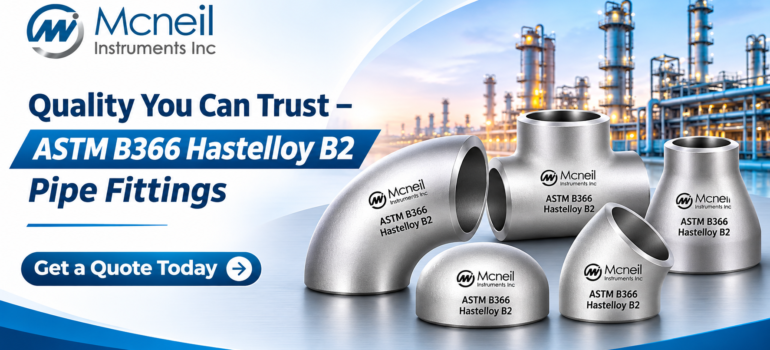
Mcneil Instruments Inc. ASTM B366 Hastelloy B2 pipe fittings, including stainless alloy elbows, tees, reducers and end caps for industrial piping applications.

Quality You Can Trust: ASTM B366 Hastelloy B2 Pipe Fittings for Demanding Industrial Applications

In industries where corrosion resistance, material reliability and long-term performance are essential, selecting the right piping components makes a significant difference. Chemical processing, petrochemical, pharmaceutical and other process industries often operate under aggressive conditions where conventional stainless steel fittings may not provide the required level of protection. This is where ASTM B366 Hastelloy B2 Pipe Fittings offer a dependable solution.

At Mcneil Instruments, we understand the importance of supplying quality-engineered piping components that meet demanding industrial requirements. Our focus is on providing reliable Hastelloy B2 pipe fittings designed for applications involving highly corrosive chemicals and challenging operating environments.

What Are ASTM B366 Hastelloy B2 Pipe Fittings?

ASTM B366 is a material specification covering factory-made wrought nickel and nickel-alloy fittings used in pressure piping applications. Hastelloy B2, also known as UNS N10665, is a nickel-molybdenum alloy developed for excellent resistance to hydrochloric acid and other reducing chemical environments.

These fittings are manufactured to provide dependable connections between piping systems while maintaining corrosion resistance and mechanical integrity. Depending on project requirements, they can be supplied in different configurations, including elbows, tees, reducers, caps and other butt-weld fittings.

Key Properties of Hastelloy B2 Pipe Fittings

  1. Excellent Corrosion Resistance
    Hastelloy B2 offers excellent resistance to hydrochloric acid at various concentrations and temperatures. It is particularly suitable for reducing environments where many conventional alloys may experience rapid corrosion.
  2. Resistance to Pitting and Crevice Corrosion
    Its nickel-molybdenum composition provides good resistance to localized corrosion in suitable chemical environments, helping improve piping system reliability.
  3. Low Carbon and Silicon Content
    Hastelloy B2 is designed with controlled carbon and silicon content to help minimize harmful carbide and silicide precipitation during thermal exposure and welding-related operations.
  4. Reliable Performance in Chemical Processing
    These fittings are used in industrial systems where chemical compatibility and material integrity are critical for safe and consistent operations.
  5. Suitable for Fabricated Piping Systems
    ASTM B366 Hastelloy B2 fittings are available in different dimensions and configurations to support customized piping layouts and industrial installation requirements.

Common Types of ASTM B366 Hastelloy B2 Pipe Fittings

Depending on the piping design and application, Hastelloy B2 fittings are available in several configurations:
Hastelloy B2 Elbows: Used to change the direction of fluid flow in piping systems.
Hastelloy B2 Equal and Reducing Tees: Used for creating branch connections.
Hastelloy B2 Reducers: Used to connect pipes of different diameters.
Hastelloy B2 End Caps: Used to close piping ends.
Hastelloy B2 Cross Fittings: Used for connecting four piping sections.
Custom Butt Weld Fittings: Manufactured according to project drawings and dimensional requirements.

Industrial Applications of Hastelloy B2 Pipe Fittings

ASTM B366 Hastelloy B2 pipe fittings are commonly considered for applications involving reducing chemical environments.
Chemical Processing Plants: Used in piping systems handling hydrochloric acid and other compatible aggressive chemicals.
Petrochemical Industry: Suitable for selected process lines where corrosion resistance and material reliability are essential.
Pharmaceutical Manufacturing: Used in compatible chemical processing and handling systems requiring reliable material performance.
Specialty Chemical Production: Supports piping systems exposed to demanding chemical conditions.
Industrial Processing Facilities: Used in specialized equipment and piping installations where material selection is based on chemical compatibility.
The suitability of Hastelloy B2 depends on chemical concentration, temperature, contaminants and operating conditions. Proper material selection should always be based on application-specific engineering requirements.

ASTM B366 Standards and Quality Requirements

ASTM B366 establishes requirements for factory-made wrought nickel and nickel-alloy fittings used in pressure piping systems. Compliance with the applicable specification helps ensure that fittings meet the required material and manufacturing criteria.

When sourcing Hastelloy B2 fittings, buyers should consider the following quality and inspection requirements:
Chemical composition verification
Mechanical property testing
Dimensional inspection
Material Test Certificates (MTC)
Positive Material Identification (PMI), where specified
Surface and visual inspection
Heat number identification and material traceability
Non-destructive testing (NDT), where required by the project

The applicable inspection and testing requirements should be clearly defined in the purchase order and project specification.

Why Choose Mcneil Instruments for Hastelloy B2 Pipe Fittings?

Choosing an experienced supplier is important when sourcing nickel-alloy piping components for critical industrial applications. At Mcneil Instruments, we focus on delivering piping products that meet customer specifications and industrial quality expectations.

Our advantages include:
Supply of Hastelloy B2 pipe fittings in different configurations.
Products manufactured to applicable ASTM specifications.
Custom dimensions and project-specific requirements.
Material documentation and traceability as specified.
Support for domestic and international industrial requirements.
Reliable supply solutions for chemical, petrochemical and process industries.

We aim to support customers with quality-focused products, technical specifications and dependable service.

Conclusion

ASTM B366 Hastelloy B2 Pipe Fittings are an important choice for industrial piping systems that require resistance to reducing acids and demanding chemical environments. Their nickel-molybdenum composition, corrosion resistance and suitability for selected chemical-processing applications make them valuable components in specialized industrial installations.

At Mcneil Instruments, we are committed to supplying quality-engineered Hastelloy B2 pipe fittings that support the requirements of modern process industries. Whether you need elbows, tees, reducers, caps or customized fittings, our team can assist with your project requirements.

Looking for Reliable ASTM B366 Hastelloy B2 Pipe Fittings?

Choose Mcneil Instruments for quality-focused nickel-alloy piping solutions. We offer Hastelloy B2 elbows, tees, reducers, caps and customized pipe fittings for demanding industrial applications.

Contact our team today to discuss your requirements and request a competitive quotation.

Website: https://www.mcneilinstruments.com/

Frequently Asked Questions (FAQs)

  1. What is ASTM B366 Hastelloy B2?
    ASTM B366 Hastelloy B2 refers to factory-made wrought nickel-alloy fittings manufactured according to ASTM B366 requirements. Hastelloy B2 is a nickel-molybdenum alloy identified by UNS N10665, known for its resistance to reducing chemical environments.
  2. What is the UNS number of Hastelloy B2?
    The UNS designation of Hastelloy B2 is N10665. It is a nickel-molybdenum alloy containing approximately 26–30% molybdenum.
  3. What types of Hastelloy B2 pipe fittings are available?
    Common configurations include 45-degree and 90-degree elbows, tees, reducers, caps, bends, stub ends and other customized butt-weld fittings.
  4. Is Hastelloy B2 suitable for hydrochloric acid applications?
    Yes. Hastelloy B2 offers excellent resistance to hydrochloric acid under suitable operating conditions. However, concentration, temperature, impurities and oxidizing contaminants must be evaluated before selecting the material.
    Rolled Alloys+1
  5. What is the difference between Hastelloy B2 and stainless steel?
    Hastelloy B2 is a nickel-molybdenum alloy specifically designed for demanding reducing-acid environments. Stainless steel grades such as 304 and 316 offer good corrosion resistance in many general industrial applications but may not provide equivalent performance in certain aggressive acid environments.
  6. Which industries use ASTM B366 Hastelloy B2 fittings?
    These fittings are used in chemical processing, petrochemical manufacturing, pharmaceutical production, specialty chemical plants and other industrial facilities handling compatible corrosive chemicals.
  7. Can Hastelloy B2 fittings be customized?
    Yes. Hastelloy B2 fittings can be sourced in different sizes, schedules, dimensions and configurations according to project drawings and applicable manufacturing specifications.
  8. What documents should be checked when purchasing Hastelloy B2 fittings?
    Buyers should check the Material Test Certificate, chemical composition, mechanical test results, dimensional inspection reports and heat number traceability. Additional inspection documents can be requested according to project requirements.
  9. Is Hastelloy B2 suitable for all corrosive environments?
    No. Hastelloy B2 is particularly suited to reducing environments. Its low chromium content makes it unsuitable for certain strongly oxidizing environments, oxidizing salts, wet chlorine gas and hypochlorite bleach.
    Rolled Alloys+1
  10. Where can I buy ASTM B366 Hastelloy B2 Pipe Fittings?
    You can contact Mcneil Instruments for Hastelloy B2 pipe fittings in different configurations and sizes. Share your technical specifications and project requirements to discuss suitable supply options.
Read More
Inconel 718 pipe fittings by Mcneil Instruments with the Turkish flag, highlighting high-strength nickel alloy solutions for critical industrial applications in Turkey.

Inconel 718 Pipe Fittings: High-Strength Nickel Alloy for Critical Applications

Industrial piping systems used in high-temperature, high-pressure and demanding operating environments require materials that deliver strength, reliability and long-term performance. Inconel 718 is a nickel-based superalloy known for its high strength, good fatigue resistance and ability to maintain useful mechanical properties under challenging conditions.
Inconel 718 pipe fittings are considered for specialized industrial applications where mechanical performance, temperature resistance and material reliability are important. Industries such as oil and gas, aerospace, power generation and chemical processing may use nickel-based alloys when conventional materials do not meet the required operating conditions.


At Mcneil Instruments Inc., we understand the importance of selecting suitable piping components for critical industrial projects. We support industrial buyers looking for alloy piping solutions, including requirements associated with engineering and infrastructure projects in Turkey.

What Are Inconel 718 Pipe Fittings?

Inconel 718 is a precipitation-hardenable nickel-chromium alloy strengthened primarily through the addition of niobium, with other alloying elements contributing to its mechanical properties. It is commonly identified by the designation UNS N07718.
Pipe fittings made from this alloy connect piping sections, change flow direction, create branch connections or adapt between different pipe sizes. Depending on the piping design and manufacturing specification, these may include elbows, tees, reducers, caps and specialized fittings.


The alloy’s high strength and fatigue resistance make it useful in selected applications involving mechanical loads, elevated temperatures and demanding operating conditions. Its suitability for a particular piping system depends on the product form, heat treatment, manufacturing process and applicable engineering requirements.

Key Properties of Inconel 718 Pipe Fittings

  1. High Mechanical Strength
    One of the main advantages of Inconel 718 is its high strength after appropriate heat treatment. This property makes it valuable for components exposed to significant mechanical loads and demanding service conditions.
    For industrial piping applications, the fitting’s allowable pressure and load capacity must still be determined from its dimensions, manufacturing specification, design code and operating conditions.
  2. Performance at Elevated Temperatures
    Inconel 718 retains useful mechanical strength at elevated temperatures and is widely used in demanding high-temperature engineering applications.
    Its suitability for industrial piping depends on the actual operating temperature, exposure duration, environment and relevant design limits. Material selection should therefore be based on the project’s technical requirements rather than a general temperature rating.
  3. Good Fatigue and Creep Resistance
    Industrial components may experience repeated loading, vibration or prolonged exposure to elevated temperatures. Inconel 718 offers good fatigue resistance and useful creep resistance in appropriate service conditions.
    These characteristics make it an important material to evaluate for specialized equipment and systems where mechanical durability is essential.
  4. Oxidation and Corrosion Resistance
    The nickel-chromium composition of Inconel 718 provides oxidation resistance and resistance to various corrosive environments. However, its corrosion performance varies with chemical composition, temperature and process conditions.
    It should not automatically be considered suitable for every highly corrosive application. The actual process environment must be assessed before selecting the alloy.
  5. Reliability in Demanding Applications
    When correctly manufactured, heat-treated, inspected and installed, Inconel 718 components can provide dependable mechanical performance in demanding environments. Material certification, dimensional verification and compliance with the specified manufacturing requirements remain essential.

Common Types of Inconel 718 Pipe Fittings

Different fitting configurations support different piping arrangements and flow requirements.
Inconel 718 Elbows: Change the direction of fluid flow in piping systems.
Inconel 718 Tees: Provide branch connections in compatible piping layouts.
Inconel 718 Reducers: Connect pipes of different nominal diameters.
Inconel 718 Caps: Close pipe ends where required by the design.
Custom Alloy Fittings: Support specialized configurations when the required material, manufacturing process and engineering specification can be met.


Availability depends on the manufacturer’s product range, dimensions, material form and applicable specifications. Buyers should confirm whether the required fitting is available in the specified Inconel 718 grade and condition.

Industrial Applications of Inconel 718 Pipe Fittings

Oil and Gas Industry
Oil and gas operations may involve elevated temperatures, pressure, vibration and demanding mechanical conditions. Inconel 718 can be used in selected specialized components where its strength and fatigue resistance meet the application requirements.
Material selection must consider the actual process fluids, environmental exposure, applicable sour-service requirements and relevant industry standards.


Aerospace and Aviation
Inconel 718 is widely used in aerospace components, including selected engine and structural applications that require high strength and elevated-temperature performance.
Although the alloy is established in aerospace engineering, pipe fitting applications must be evaluated against their specific pressure, fluid and certification requirements.


Power Generation
Power generation equipment may contain components exposed to elevated temperatures, mechanical stress and demanding operating cycles. Inconel 718 can be considered for suitable specialized applications where its properties align with the design requirements.


Chemical and Process Industries
Some chemical and process facilities require high-performance alloys for selected equipment and piping components. Inconel 718 may be suitable where mechanical strength and environmental resistance are important, subject to a detailed compatibility assessment.


Industrial Engineering Projects in Turkey
Turkey has industrial activity across manufacturing, energy, petrochemicals, infrastructure and engineering. Projects in these sectors may require specialized piping components and high-performance alloy materials for demanding applications.
For procurement teams and EPC contractors in USA, Nigeria, India and other industrial centres, material selection should be based on the project’s design specifications, operating conditions, quality requirements and applicable standards.


Mcneil Instruments Inc. can assist buyers in discussing their Inconel 718 pipe fitting requirements, subject to product availability and the specified technical requirements.

Inconel 718 vs Inconel 625: What Is the Difference?

Inconel 718 and Inconel 625 are nickel-based alloys designed for demanding applications, but they offer different combinations of properties.


Inconel 718 is precipitation-hardenable and is particularly known for its high mechanical strength and fatigue performance after suitable heat treatment. Inconel 625 is strengthened primarily by solid-solution mechanisms and is widely recognized for its corrosion resistance in many aggressive environments.


The preferred alloy depends on the application. Where high mechanical strength is a major requirement, Inconel 718 may be worth evaluating. Where resistance to particular corrosive chemicals is the primary concern, Inconel 625 may be a more appropriate candidate.


The final decision should consider chemical compatibility, operating temperature, pressure, fabrication requirements and lifecycle costs.

Standards and Quality Requirements

When sourcing Inconel 718 pipe fittings, it is important to confirm that the material and finished product comply with the project’s specified requirements.


Consider the following factors:
Material identification: Confirm the specified alloy designation, such as UNS N07718, and the required heat-treatment condition.
Product specification: Verify the applicable ASTM, ASME or other approved material and manufacturing specification for the particular product form.
Dimensional requirements: Confirm fitting dimensions, wall thickness, end connections and applicable design standards.
Material certification: Request material test certificates and verify chemical composition and mechanical test results against the purchase specification.
Inspection and traceability: Establish the required inspection, testing, marking and traceability documentation.
Application suitability: Verify pressure-temperature limits, corrosion compatibility and compliance with the relevant engineering code.


Not every standard for nickel-alloy products applies to every type of pipe fitting. Buyers should confirm the precise specification before placing an order, particularly for critical-service applications.

How to Select the Right Inconel 718 Pipe Fittings

Choosing the correct fitting requires careful review of both technical and procurement requirements.

  1. Define the operating conditions: Establish design pressure, operating temperature, process fluid and expected mechanical loads.
  2. Confirm the alloy and heat treatment: Specify the required Inconel 718 material condition and mechanical properties.
  3. Select the fitting configuration: Identify the required elbows, tees, reducers, caps or custom components.
  4. Verify dimensions: Confirm nominal size, wall thickness, end preparation and compatibility with adjoining piping components.
  5. Review standards and certification: Specify material documentation, testing, traceability and applicable design-code requirements.
  6. Evaluate supplier capability: Confirm that the supplier can meet the specified material, manufacturing, inspection and delivery requirements for the project.

Why Choose Mcneil Instruments Inc.?

At Mcneil Instruments Inc., we understand that industrial buyers need piping components selected according to their project specifications and operating requirements.


Our team focuses on helping customers identify appropriate instrumentation and piping products for industrial applications. For Inconel 718 pipe fitting enquiries, we recommend confirming the required dimensions, alloy condition, applicable standards, certification requirements and intended operating environment before finalizing a purchase.


For buyers in Turkey and international procurement teams, clear technical specifications and accurate product documentation are important steps toward sourcing suitable components for critical applications.

Conclusion

Inconel 718 pipe fittings are an option for specialized applications that require high mechanical strength, fatigue resistance and useful performance at elevated temperatures. Their suitability depends on the operating environment, product condition, manufacturing specification and relevant engineering requirements.


From oil and gas operations to power generation and specialized engineering projects, choosing the right alloy requires a clear understanding of the application’s technical demands.


Mcneil Instruments Inc. is ready to discuss your industrial piping requirements. Contact our team to enquire about Inconel 718 pipe fittings for your next project in Turkey or other international markets.

Looking for Inconel 718 Pipe Fittings for Your Industrial Project?

Choose suitable high-strength nickel alloy piping components for demanding industrial applications with Mcneil Instruments Inc.
Whether your project is in Turkey or another international market, our team can discuss your technical specifications, fitting requirements and documentation needs.


Request a Quote Today to discuss your Inconel 718 pipe fitting requirements.
🌐 Website: https://mcneilinstruments.com/
📩 Email: info@mcneilinstruments.com
📞 Phone: +91-22-66518756

Frequently asked questions (FAQs)

  1. What are Inconel 718 pipe fittings used for?
    Inconel 718 pipe fittings are considered for specialized industrial applications requiring high mechanical strength, fatigue resistance and performance at elevated temperatures. Potential applications include selected oil and gas equipment, power generation systems and demanding engineering projects.
  2. What is the material designation of Inconel 718?
    Inconel 718 is commonly identified by the UNS designation N07718. Buyers should confirm the exact material specification, product form and heat-treatment condition required for their application.
  3. Are Inconel 718 pipe fittings suitable for high-temperature applications?
    They can be suitable for certain elevated-temperature applications because the alloy retains useful mechanical properties at elevated temperatures. The permitted operating conditions depend on the design, heat treatment, environment and applicable engineering requirements.
  4. What types of Inconel 718 pipe fittings are available?
    Common fitting configurations include elbows, tees, reducers, caps and specialized components. Availability should be confirmed with the supplier based on the required size, manufacturing specification and material condition.
  5. What is the difference between Inconel 718 and Inconel 625?
    Inconel 718 is precipitation-hardenable and is known for its high mechanical strength and fatigue resistance. Inconel 625 is widely used for its corrosion resistance across many demanding chemical environments. The appropriate grade depends on the service conditions and engineering requirements.
  6. Can Inconel 718 be used in corrosive environments?
    Inconel 718 provides resistance to oxidation and various corrosive environments, but it is not universally suitable for all corrosive chemicals. Chemical compatibility should be evaluated for the actual process fluid, concentration and operating temperature.
  7. What standards should be checked when buying Inconel 718 pipe fittings?
    The applicable material, manufacturing and dimensional standards depend on the specific fitting and project. Buyers should verify the specified material designation, mechanical requirements, inspection procedures and certification documentation before ordering.
  8. How can buyers in Turkey enquire about Inconel 718 pipe fittings from Mcneil Instruments?
    Buyers can prepare their fitting type, size, wall thickness, required material condition, applicable specifications, quantity and delivery location before contacting Mcneil Instruments Inc. Product availability and delivery arrangements should be confirmed directly with the company.
Read More

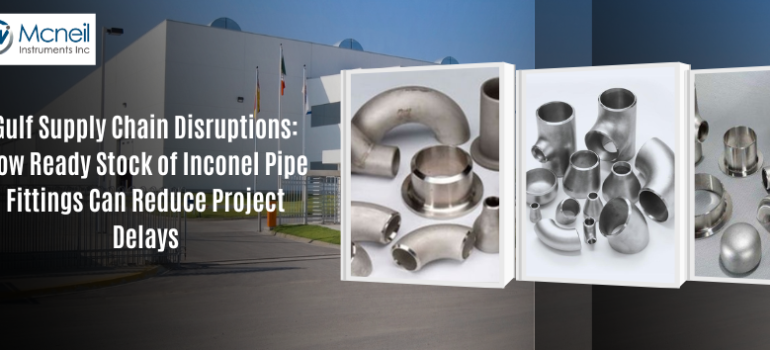
Gulf Supply Chain Disruptions: How Ready Stock of Inconel Pipe Fittings Can Reduce Project Delays

Introduction

Industrial projects across the Gulf region depend on a steady flow of specialized piping components, instrumentation materials, valves, fittings, and other critical equipment. In sectors such as oil and gas, petrochemicals, refineries, power generation, desalination, and chemical processing, even a small delay in receiving one essential component can affect installation schedules and commissioning timelines.

The current disruption to shipping routes in and around the Gulf has made this challenge more significant. Recent reports indicate that vessel traffic through the Strait of Hormuz has fallen substantially below normal pre-war levels, creating additional uncertainty for maritime logistics, delivery schedules, and freight movement.

For projects requiring specialized materials such as Inconel Pipe Fittings, relying entirely on just-in-time procurement can therefore create unnecessary exposure to logistics delays.

Maintaining ready stock of Inconel Pipe Fittings can provide an important buffer. Instead of waiting for a new manufacturing cycle and international shipment, project teams can source critical fittings from available inventory and keep installation work moving.


Why Gulf Supply Chains Are Facing Greater Pressure

The Gulf is a major center for energy, petrochemical, refining, marine, and industrial activity. A large proportion of industrial equipment and raw materials used in these projects moves through international shipping networks.

When conflict or geopolitical instability affects important maritime routes, several parts of the procurement process can be affected simultaneously.

Longer Transit Times

Ships may be forced to alter routes or wait for safer operating conditions, increasing transportation times.

Freight Uncertainty

Changes in vessel availability, routing, insurance requirements, and operating risks can affect transportation costs and delivery schedules.

Procurement Delays

A component that would normally arrive within a predictable lead time may suddenly require significantly more time.

Manufacturing Dependencies

If the required fitting is not already available, the buyer may need to wait for material procurement, manufacturing, inspection, certification, and shipment.

Project Schedule Impact

A missing piping component can prevent a particular section of a pipeline or process system from being completed, potentially affecting downstream installation and commissioning activities.

UNCTAD has highlighted the importance of the Strait of Hormuz to global maritime trade, while recent shipping developments demonstrate how geopolitical disruptions can quickly affect vessel movements.


Why Inconel Pipe Fittings Require Careful Procurement Planning

Inconel Pipe Fittings are nickel-based alloy components used in applications where high-temperature strength and corrosion resistance are important.

They are commonly considered for demanding environments involving:

  • High temperatures
  • Aggressive chemicals
  • Chloride exposure
  • Oxidizing conditions
  • Thermal cycling
  • High-pressure process systems

Nickel alloys are specifically used in applications where ordinary materials may not provide the required combination of corrosion resistance and high-temperature performance. ASTM’s current B462 specification, for example, covers nickel-alloy forged fittings and related components intended for corrosive, high-temperature service.

Because these are specialized engineering components, procurement cannot always be treated like buying a standard commodity fitting.

The required grade, dimensions, schedule, pressure class, connection type, specification, and certification must match the project requirement.


How Ready Stock Helps Reduce Project Delays

Maintaining ready inventory does not eliminate every supply-chain risk, but it can significantly reduce dependence on new production and long-distance transportation for urgent requirements.

1. Shorter Procurement Lead Times

If the required Inconel Pipe Fitting is already available in stock, the project does not necessarily need to wait for the complete manufacturing cycle.

The procurement process can move directly toward inspection, documentation, dispatch, and delivery.

This can be particularly valuable when a project is approaching a scheduled installation or commissioning milestone.


2. Protection Against Manufacturing Delays

Without ready stock, a new order may involve multiple stages:

Raw material → Manufacturing → Heat treatment → Machining → Inspection → Certification → Packing → Shipping → Delivery

Any disruption at one stage can affect the final delivery date.

Ready stock reduces the number of stages that need to be completed after the order is placed.


3. Reduced Exposure to Shipping Disruptions

The Gulf’s dependence on maritime logistics means international shipping disruptions can have consequences for industrial procurement.

Current conditions around the Strait of Hormuz demonstrate how quickly vessel movements can change during geopolitical disruptions. Reuters reported on August 11, 2026 that only six vessels passed through the strait on the previous day, compared with a pre-war norm of roughly 130 to 140 vessels.

Having critical fittings available before a disruption becomes a procurement emergency can reduce dependence on uncertain shipping windows.


4. Better Support for Shutdown and Maintenance Projects

Refinery and petrochemical maintenance projects often operate within tightly controlled shutdown windows.

When equipment is taken offline, installation teams may have a limited period to complete piping modifications, replacements, and repairs.

A missing fitting can create a disproportionate problem.

For example:

Planned maintenance → Component unavailable → Installation delayed → Testing delayed → Commissioning delayed

Ready stock can help reduce the possibility of this chain reaction.


5. Faster Response to Emergency Requirements

Industrial facilities can experience unexpected requirements due to:

  • Damaged fittings
  • Maintenance work
  • Corrosion-related replacement
  • Design modifications
  • Construction changes
  • Expansion projects
  • Commissioning requirements

If suitable Inconel fittings are already available, procurement teams have an immediate sourcing option instead of starting the entire purchasing cycle from the beginning.


6. Improved Project Procurement Planning

Ready stock can also be used as part of a broader inventory strategy.

Project teams can identify components that are:

Critical

A missing component can stop installation or commissioning.

Long Lead

The component requires significant time to manufacture and deliver.

Specialized

The component is manufactured from an uncommon material or requires specific dimensions and certifications.

High Risk

The component is particularly vulnerable to transportation or geopolitical disruptions.

Inconel Pipe Fittings can fall into several of these categories depending on the project specification.


Which Inconel Fittings Should Be Considered for Stock?

The appropriate stock profile depends on the application and project requirements. Common fitting configurations can include:

  • Inconel Elbows
  • Inconel Tees
  • Inconel Crosses
  • Inconel Reducers
  • Inconel Couplings
  • Inconel Unions
  • Inconel Caps
  • Inconel Plugs
  • Inconel Stub Ends
  • Inconel Socket Weld Fittings
  • Inconel Threaded Fittings
  • Inconel Butt Weld Fittings

For specialized projects, the inventory strategy should be based on historical consumption, project drawings, maintenance requirements, and expected replacement demand rather than simply stocking every possible configuration.


Choosing the Right Inconel Grade

Ready stock is only useful if the material actually matches the application.

Different Inconel grades provide different combinations of strength, corrosion resistance, temperature performance, and fabrication characteristics.

Inconel 600

Known for its resistance to oxidation and corrosion and used in applications involving elevated temperatures and aggressive environments.

Inconel 625

Offers a combination of high strength and corrosion resistance and is widely used in demanding chemical, marine, offshore, and process applications.

Inconel 718

Known for high mechanical strength and creep resistance, making it suitable for specialized high-performance applications.

The final grade should always be selected according to the project’s technical specification and operating conditions.


Ready Stock vs Just-in-Time Procurement

FactorReady StockJust-in-Time Procurement
Immediate availabilityHigh, if the required item is stockedLow
Exposure to shipping delaysLowerHigher
Manufacturing lead timeOften avoided for stocked itemsUsually required
Emergency requirementsEasier to addressMore difficult
Inventory costHigherLower
Project schedule protectionStrongerMore dependent on logistics
Best suited forCritical and long-lead componentsPredictable routine requirements

The objective is not necessarily to replace just-in-time procurement completely.

A better strategy can be to maintain strategic stock for critical components while continuing planned procurement for routine requirements.


How EPC Contractors Can Build a Strategic Inconel Inventory

A practical approach starts with identifying the components that could create the greatest project impact if unavailable.

Step 1: Identify Critical Components

Review piping drawings, bill of materials, maintenance records, and project schedules.

Step 2: Identify Long-Lead Materials

Highlight materials that require specialized manufacturing or international sourcing.

Step 3: Analyze Historical Consumption

Look at previous maintenance and replacement requirements to determine which fittings are regularly needed.

Step 4: Define Minimum Stock Levels

Establish minimum quantities for critical grades, sizes, and configurations.

Step 5: Verify Material Documentation

Stock should be accompanied by appropriate material identification and project-required documentation.

Step 6: Review Inventory Regularly

Avoid holding obsolete or project-specific fittings indefinitely. Inventory should be reviewed as project requirements change.


The Importance of Material Traceability

For specialized alloy fittings, having the physical component available is only part of the procurement requirement.

Project teams may also require documentation such as:

  • Material Test Certificates
  • Heat Number Traceability
  • Chemical Composition
  • Mechanical Test Results
  • Dimensional Inspection Reports
  • PMI Reports
  • Hydrostatic Test Reports where applicable
  • Third-Party Inspection Documentation where specified

For critical applications, procurement teams should confirm documentation requirements before accepting stock.

This helps prevent a situation where a fitting is physically available but cannot be released for installation because its material documentation does not satisfy the project specification.


Why Gulf Projects Should Consider Strategic Stock

The recent disruption to Gulf shipping illustrates an important procurement lesson: availability itself has become a risk-management consideration.

Shipping disruptions do not necessarily mean that every industrial component will become unavailable. However, uncertainty can make traditional lead-time assumptions less reliable.

Maritime risk around the Strait of Hormuz and Red Sea has already become an important consideration for supply-chain resilience planning.

For critical industrial components, strategic inventory can therefore act as a buffer between the project schedule and external logistics conditions.


Mcneil Instruments and Inconel Pipe Fittings

Mcneil Instruments supplies Inconel Pipe Fittings for demanding industrial applications where corrosion resistance, high-temperature performance, and reliable mechanical properties are important.

Its Inconel product range is positioned for applications across industries such as:

  • Oil & Gas
  • Petrochemical
  • Chemical Processing
  • Power Generation
  • Marine
  • Offshore
  • Refineries
  • Industrial Process Systems

For Gulf projects, sourcing specialized fittings from an experienced manufacturer and supplier can help procurement teams evaluate material grades, fitting configurations, specifications, documentation, and availability before placing an order.


Conclusion

Gulf industrial projects operate in an environment where supply-chain reliability can directly affect project schedules. Recent disruptions around major maritime routes have demonstrated how quickly geopolitical developments can affect shipping activity and create uncertainty for international procurement.

For specialized components such as Inconel Pipe Fittings, maintaining strategic ready stock can reduce dependence on new manufacturing cycles and uncertain transportation schedules.

The most effective approach is not simply to stock large quantities. It is to identify critical, specialized, and long-lead components, maintain appropriate inventory levels, verify material traceability, and establish dependable supplier relationships.

For EPC contractors, refineries, petrochemical plants, oil & gas companies, and other industrial facilities across the Gulf, this approach can provide an additional layer of protection against unexpected procurement delays and help keep critical project activities moving.

Frequently Asked Questions

Why are Inconel Pipe Fittings important for Gulf industries?

They are used in demanding industrial environments where corrosion resistance, high-temperature performance, and mechanical reliability are important.

How can ready stock reduce project delays?

Ready stock can eliminate or reduce the need to wait for a new manufacturing cycle and can provide an alternative when international shipping schedules become uncertain.

Should every Inconel fitting be kept in stock?

No. Strategic stock should focus on critical, frequently required, specialized, or long-lead components relevant to the facility or project.

What should buyers verify before purchasing stocked Inconel fittings?

Buyers should verify the alloy grade, dimensions, schedule or pressure class, fitting configuration, applicable ASTM/ASME specification, material traceability, inspection requirements, and required certification.

Is ready stock a replacement for normal procurement?

Not necessarily. A combination of planned procurement and strategic inventory is generally more practical than relying exclusively on either approach.

Read More
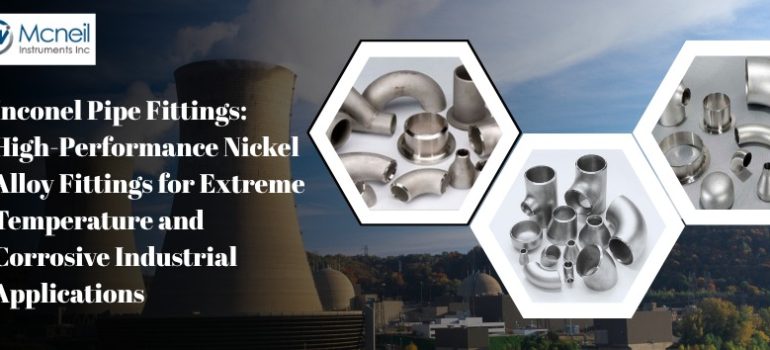
Mcneil Instruments banner showcasing Inconel pipe fittings, including elbows, tees, reducers, and end caps, designed for high-temperature and corrosive industrial applications.

Inconel Pipe Fittings: High-Performance Nickel Alloy Fittings for Extreme Temperature and Corrosive Industrial Applications

Introduction


Industrial piping systems used in oil & gas, petrochemical processing, offshore platforms, power generation, marine engineering, aerospace, and chemical manufacturing often operate under harsh conditions where high temperatures, corrosive media, and extreme pressure are constant challenges. Selecting the right pipe fittings is essential for ensuring safety, minimizing maintenance, and achieving long-term operational reliability.
Inconel Pipe Fittings are among the most dependable solutions for these demanding applications. Manufactured from nickel-chromium-based superalloys, they provide outstanding resistance to oxidation, carburization, pitting, crevice corrosion, chloride attack, and thermal fatigue while maintaining exceptional mechanical strength at elevated temperatures.
Mcneil Instruments is a trusted manufacturer, supplier, exporter, and stockist of Inconel Pipe Fittings, offering precision-engineered fittings manufactured to ASTM, ASME, ANSI, MSS, and DIN standards. With decades of manufacturing expertise and a strong global supply network, Mcneil Instruments delivers reliable piping solutions for critical industrial applications worldwide.

What Are Inconel Pipe Fittings?


Inconel Pipe Fittings are nickel alloy piping components designed to connect, redirect, branch, reduce, or terminate pipelines carrying corrosive chemicals, steam, hydrocarbons, process gases, and high-temperature fluids.
These fittings maintain their structural integrity even under continuous exposure to:

  • High temperatures
  • Aggressive chemicals
  • Oxidizing atmospheres
  • Marine environments
  • High-pressure systems
  • Thermal cycling
    Their excellent corrosion resistance and superior mechanical properties make them the preferred choice for mission-critical piping systems.

Benefits of Inconel Pipe Fittings


Industries worldwide choose Inconel Pipe Fittings because they provide:

  • Exceptional corrosion resistance
  • Excellent oxidation resistance
  • Outstanding creep resistance
  • High tensile and yield strength
  • Superior fatigue resistance
  • Excellent weldability
  • Long service life
  • Low maintenance requirements
    These properties improve plant reliability while reducing downtime and lifecycle costs.

Mcneil Instruments – Leading Manufacturer of Inconel Pipe Fittings


Mcneil Instruments manufactures and supplies a complete range of Inconel Pipe Fittings for high-performance industrial piping systems.
The product portfolio includes:

  • Inconel 600 Pipe Fittings
  • Inconel 601 Pipe Fittings
  • Inconel 625 Pipe Fittings
  • Inconel 718 Pipe Fittings
  • Inconel 725 Pipe Fittings
  • Inconel X750 Pipe Fittings
  • Inconel 800 Pipe Fittings
  • Inconel 800H Pipe Fittings
  • Inconel 800HT Pipe Fittings
  • Inconel Buttweld Pipe Fittings
  • Inconel Socket Weld Pipe Fittings
  • Inconel Threaded Pipe Fittings
  • Custom Inconel Pipe Fittings
    Mcneil Instruments manufactures fittings with precision machining, excellent dimensional accuracy, and strict quality control to ensure leak-free performance in demanding industrial environments.

Inconel 600 Pipe Fittings


Excellent Resistance to Heat and Corrosion


Inconel 600 is widely used where excellent oxidation resistance and high-temperature performance are required.
Applications

  • Chemical Processing
  • Heat Treatment Equipment
  • Nuclear Plants
  • Furnace Components
    Key Benefits
  • Excellent oxidation resistance
  • High-temperature stability
  • Good weldability
  • Long operating life

Inconel 625 Pipe Fittings


Outstanding Performance in Marine and Offshore Applications


Inconel 625 contains molybdenum and niobium, providing superior resistance to seawater corrosion and aggressive chemicals.
Applications

  • Offshore Platforms
  • Marine Systems
  • Petrochemical Plants
  • LNG Facilities
    Advantages
  • Excellent chloride resistance
  • High fatigue strength
  • Outstanding corrosion resistance

Inconel 718 Pipe Fittings


Exceptional Strength for Critical Pressure Systems


Inconel 718 is engineered for applications involving high pressure, elevated temperatures, and cyclic loading.
Applications

  • Aerospace
  • Gas Turbines
  • Power Plants
  • High-Pressure Process Lines
    Features
  • Excellent creep resistance
  • High tensile strength
  • Superior fatigue performance

Inconel 725 Pipe Fittings


Ideal for Sour Oil & Gas Service


Inconel 725 offers excellent resistance to stress corrosion cracking and harsh offshore environments.
Applications

  • Offshore Oil & Gas
  • Subsea Equipment
  • Chemical Injection Systems

Inconel 800, 800H & 800HT Pipe Fittings


Reliable Long-Term High-Temperature Performance


These grades are designed for prolonged service under elevated temperatures.
Benefits

  • Excellent oxidation resistance
  • Outstanding creep strength
  • Superior structural stability
    Applications
  • Boilers
  • Steam Pipelines
  • Heat Exchangers
  • Petrochemical Plants

Types of Inconel Pipe Fittings


Mcneil Instruments manufactures a comprehensive range of industrial pipe fittings.


Elbows


Available in:

  • 45° Elbows
  • 90° Elbows
  • 180° Return Bends

Tees

  • Equal Tees
  • Reducing Tees

Reducers

  • Concentric Reducers
  • Eccentric Reducers

End Caps
Used for safely terminating pipeline ends.

Stub Ends
Designed for use with lap joint flange assemblies.

Couplings & Unions
Provide secure and leak-free pipe connections.

Socket Weld Pipe Fittings
Recommended for compact, high-pressure piping systems.

Threaded Pipe Fittings
Suitable where welding is not practical.

Buttweld Pipe Fittings
Preferred for large-diameter pipelines requiring permanent welded joints.

Technical Specifications


Parameter Specification
Product Inconel Pipe Fittings
Standards ASTM B366 / ASME SB366
Grades 600, 601, 625, 718, 725, X750, 800, 800H, 800HT
Types Elbows, Tees, Reducers, Caps, Stub Ends, Couplings, Unions
Construction Buttweld, Socket Weld, Threaded
End Connections Beveled, Threaded, Socket Weld
Applications Oil & Gas, Marine, Chemical, Aerospace, Power

Industrial Applications


Mcneil Instruments Inconel Pipe Fittings are widely used in:


Oil & Gas

  • Refineries
  • Offshore Platforms
  • LNG Plants

Petrochemical Industry

  • Process Units
  • Reactor Systems
  • High-Temperature Pipelines

Chemical Processing

  • Acid Handling Systems
  • Corrosive Fluid Transfer
  • Heat Exchanger Networks

Marine Industry

  • Shipbuilding
  • Seawater Cooling Systems
  • Offshore Structures

Aerospace

  • Engine Components
  • Fuel Systems
  • Exhaust Assemblies

Power Generation

  • Boilers
  • Steam Pipelines
  • Turbine Installations

Quality Assurance


Every Inconel Pipe Fitting manufactured by Mcneil Instruments undergoes rigorous quality inspections, including:

  • PMI Testing
  • Hydrostatic Testing
  • Mechanical Testing
  • Chemical Analysis
  • Ultrasonic Testing
  • Dimensional Inspection
  • Hardness Testing
  • Visual Inspection
  • Material Traceability Verification
  • Third-Party Inspection
    These inspection procedures ensure compliance with international quality standards before every shipment.

Why Choose Mcneil Instruments?


Customers worldwide rely on Mcneil Instruments because of:

  • Complete range of Inconel grades
  • ASTM and ASME compliant manufacturing
  • Advanced production facilities
  • Premium-quality raw materials
  • Strict quality assurance
  • Customized engineering solutions
  • Ready stock for fast deliveries
  • Global export capability
  • Dedicated technical support
    With nearly four decades of engineering expertise, Mcneil Instruments continues to supply high-performance piping solutions that meet the requirements of critical industrial projects worldwide.

Conclusion


For applications involving extreme temperatures, aggressive chemicals, high pressure, and corrosive process environments, Inconel Pipe Fittings provide unmatched durability, mechanical strength, and corrosion resistance. Their outstanding performance makes them indispensable for industries where reliability and safety cannot be compromised.
Whether your project requires Inconel 600 Pipe Fittings, Inconel 601 Pipe Fittings, Inconel 625 Pipe Fittings, Inconel 718 Pipe Fittings, Inconel 725 Pipe Fittings, Inconel X750 Pipe Fittings, Inconel 800 Pipe Fittings, Inconel 800H Pipe Fittings, Inconel 800HT Pipe Fittings, Elbows, Tees, Reducers, End Caps, Stub Ends, Socket Weld Pipe Fittings, Threaded Pipe Fittings, or Buttweld Pipe Fittings, Mcneil Instruments delivers precision-engineered products manufactured to international standards for dependable performance across the world’s most demanding industrial applications.

Read More

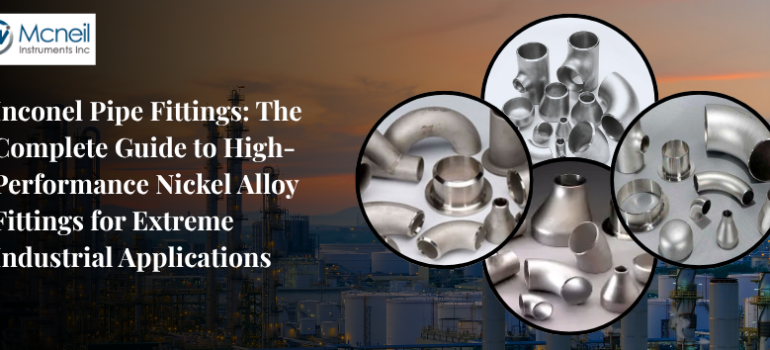
Inconel Pipe Fittings: The Complete Guide to High-Performance Nickel Alloy Fittings for Extreme Industrial Applications

Introduction

Industrial piping systems operating in extreme temperatures, corrosive environments, and high-pressure conditions demand materials that deliver exceptional reliability and long service life. In industries such as oil & gas, offshore, petrochemicals, chemical processing, aerospace, marine, and power generation, ordinary stainless steel fittings may not provide the required resistance against aggressive chemicals, oxidation, or thermal fatigue.

This is where Inconel Pipe Fittings become the preferred solution. Manufactured from premium nickel-chromium alloys, Inconel pipe fittings offer superior resistance to corrosion, oxidation, carburization, and high-temperature creep while maintaining excellent mechanical strength. Their ability to perform under the harshest industrial environments makes them ideal for critical piping systems where safety and performance are paramount.

Mcneil Instruments is a leading manufacturer, supplier, exporter, and stockist of Inconel Pipe Fittings, offering precision-engineered buttweld, socket weld, and threaded fittings in multiple Inconel grades. The company manufactures fittings in accordance with international ASTM, ASME, ANSI, and DIN standards for demanding industrial applications worldwide.

What Are Inconel Pipe Fittings?

Inconel Pipe Fittings are nickel-based alloy components used to connect, redirect, reduce, or terminate pipelines carrying corrosive chemicals, steam, gases, and high-temperature fluids.

These fittings are engineered to withstand:

• Extreme temperatures

• High-pressure systems

• Oxidizing environments

• Chloride-rich media

• Acidic chemicals

• Marine conditions

Unlike conventional steel fittings, Inconel maintains excellent strength and corrosion resistance even after prolonged exposure to elevated temperatures.

Why Choose Inconel Pipe Fittings?

Industries worldwide rely on Inconel Pipe Fittings because of their outstanding performance characteristics.

Exceptional Corrosion Resistance

Resists pitting, crevice corrosion, oxidation, and chemical attack in highly aggressive environments.

High-Temperature Performance

Maintains strength and structural stability at temperatures exceeding 1000°C depending on the alloy grade.

Excellent Mechanical Strength

Provides superior tensile strength, fatigue resistance, and durability under continuous pressure.

Outstanding Oxidation Resistance

Performs exceptionally well in furnace, boiler, and heat-treatment applications.

Long Service Life

Reduces maintenance costs and minimizes unplanned downtime.

Mcneil Instruments – Trusted Manufacturer of Inconel Pipe Fittings

Mcneil Instruments manufactures a complete range of Inconel Pipe Fittings for industrial piping and process systems.

The product range includes:

• Inconel 90° Elbows

• Inconel 45° Elbows

• Inconel 180° Return Bends

• Inconel Equal Tees

• Inconel Reducing Tees

• Inconel Concentric Reducers

• Inconel Eccentric Reducers

• Inconel End Caps

• Inconel Stub Ends

• Inconel Couplings

• Inconel Unions

• Inconel Socket Weld Fittings

• Inconel Threaded Fittings

• Inconel Buttweld Pipe Fittings

Every fitting is precision-machined to provide leak-free connections, excellent dimensional accuracy, and dependable long-term performance.

Inconel 600 Pipe Fittings

Reliable Performance in High-Temperature Environments

Inconel 600 offers excellent resistance to oxidation and corrosion while maintaining strength at elevated temperatures.

Applications

• Heat Treatment Equipment

• Chemical Processing

• Furnace Components

• Nuclear Engineering

Benefits

• Excellent oxidation resistance

• Superior heat resistance

• Good weldability

Inconel 625 Pipe Fittings

Premium Corrosion Resistance

Inconel 625 contains molybdenum and niobium, providing exceptional resistance to seawater, pitting, and chloride attack.

Applications

• Offshore Platforms

• Marine Systems

• Chemical Plants

• Oil & Gas Pipelines

Advantages

• Outstanding seawater resistance

• High fatigue strength

• Excellent corrosion protection

Inconel 718 Pipe Fittings

High Strength for Critical Industrial Systems

Inconel 718 delivers outstanding tensile strength and creep resistance for demanding pressure applications.

Applications

• Aerospace

• Gas Turbines

• High-Pressure Process Lines

• Power Generation

Features

• Excellent fatigue resistance

• High-pressure capability

• Superior mechanical properties

Inconel 725 Pipe Fittings

Designed for Sour Service Applications

Inconel 725 provides enhanced resistance to stress corrosion cracking and harsh oilfield environments.

Applications

• Offshore Oil & Gas

• Subsea Equipment

• Production Systems

Inconel 800 & 800H Pipe Fittings

Long-Term High-Temperature Stability

These grades are widely used in continuous high-temperature industrial processes.

Benefits

• Excellent creep resistance

• Outstanding oxidation resistance

• Reliable structural stability

Applications

• Boilers

• Heat Exchangers

• Petrochemical Plants

• Thermal Power Stations

Types of Inconel Pipe Fittings

Inconel Elbows

Available in 45°, 90°, and 180° configurations for changing pipeline direction.

Inconel Equal & Reducing Tees

Used to divide or combine process flow while maintaining system efficiency.

Inconel Reducers

Available in concentric and eccentric designs for connecting different pipe diameters.

Inconel End Caps

Used for securely closing pipeline ends during operation or maintenance.

Inconel Stub Ends

Designed for use with lap joint flanges where frequent dismantling is required.

Inconel Socket Weld Fittings

Ideal for compact, high-pressure piping systems.

Inconel Threaded Fittings

Suitable for applications where welding is impractical.

Inconel Buttweld Pipe Fittings

Preferred for large-diameter piping systems requiring permanent, high-strength welded joints.

Technical Specifications

ParameterSpecification
ProductInconel Pipe Fittings
Grades600, 625, 718, 725, 800, 800H
StandardsASTM B366 / ASME SB366
TypesElbows, Tees, Reducers, Caps, Stub Ends, Couplings
ConstructionButtweld, Socket Weld, Threaded
ApplicationsOil & Gas, Marine, Chemical, Aerospace, Power

Industrial Applications

Mcneil Instruments Inconel Pipe Fittings are widely used across various industries.

Oil & Gas

• Refineries

• Offshore Platforms

• LNG Facilities

Petrochemical Industry

• Chemical Processing Units

• High-Temperature Pipelines

• Reactor Systems

Marine & Offshore

• Seawater Systems

• Shipbuilding

• Offshore Structures

Aerospace

• Engine Components

• Fuel Systems

• High-Performance Fluid Lines

Power Generation

• Boilers

• Steam Lines

• Turbine Installations

Chemical Processing

• Acid Handling Systems

• Corrosive Fluid Transfer

• Heat Exchangers

Quality Assurance

Every Inconel Pipe Fitting manufactured by Mcneil Instruments undergoes comprehensive quality inspections, including:

• PMI Testing

• Hydrostatic Testing

• Mechanical Testing

• Chemical Analysis

• Dimensional Inspection

• Hardness Testing

• Visual Inspection

• Material Traceability

• Third-Party Inspection

These testing procedures ensure every fitting complies with international quality standards before dispatch.

Why Choose Mcneil Instruments?

Industries worldwide trust Mcneil Instruments because of:

• Complete range of Inconel grades

• International manufacturing standards

• Precision engineering

• Premium nickel alloy raw materials

• Strict quality control

• Ready stock for quick deliveries

• Global export network

• Technical application support

Mcneil Instruments supplies high-performance Inconel pipe fittings designed to deliver leak-free, long-lasting performance in the world’s most demanding industrial environments.

Conclusion

For applications involving high temperatures, corrosive chemicals, aggressive marine environments, and extreme operating pressures, Inconel Pipe Fittings offer unmatched durability, corrosion resistance, and mechanical strength. Their ability to maintain performance under the toughest conditions makes them the preferred choice across critical industries worldwide.

Whether your project requires Inconel 600 Pipe Fittings, Inconel 625 Pipe Fittings, Inconel 718 Pipe Fittings, Inconel 725 Pipe Fittings, Inconel 800 Pipe Fittings, Inconel 800H Pipe Fittings, Inconel Elbows, Tees, Reducers, End Caps, Stub Ends, Socket Weld Fittings, Threaded Fittings, or Buttweld Pipe Fittings, Mcneil Instruments delivers precision-engineered solutions manufactured to international standards for dependable industrial performance.

Read More

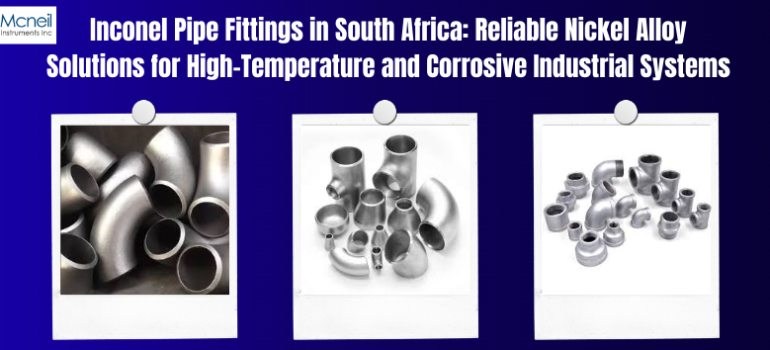
Inconel Pipe Fittings in South Africa: Reliable Nickel Alloy Solutions for High-Temperature and Corrosive Industrial Systems

Introduction: Why Inconel Pipe Fittings Matter in Industrial Piping

Industrial piping systems operating in harsh environments require materials that can withstand extreme temperatures, high pressure, and aggressive chemicals. In sectors such as petrochemicals, offshore energy, mining, and power generation, standard stainless steel components may not always provide the required durability.

This is where Inconel pipe fittings become essential. These fittings are manufactured from nickel-chromium-based superalloys designed to perform in conditions where corrosion, oxidation, and heat resistance are critical.

Industries across South Africa, particularly mining operations, chemical processing facilities, and offshore energy projects, rely on Inconel pipe fittings for long-term reliability in challenging environments. These fittings maintain structural stability even under intense heat and corrosive exposure, making them ideal for demanding industrial piping systems.

Among the commonly used grades, Inconel 600, Inconel 625, and Inconel 718 pipe fittings are widely selected due to their exceptional strength, corrosion resistance, and high-temperature performance.

This article explores Inconel pipe fittings, their properties, specifications, industrial applications, and their importance in high-performance piping systems in South Africa.

What Are Inconel Pipe Fittings?

Inconel pipe fittings are high-performance piping components manufactured from nickel-based superalloys. These fittings are designed to connect pipes, redirect flow, reduce pipe size, or seal pipelines while maintaining strength and corrosion resistance under extreme industrial conditions.

They are typically manufactured according to ASTM B366 / ASME SB366 standards, which define specifications for nickel alloy pipe fittings used in high-temperature and corrosive environments.

Common types of Inconel pipe fittings include:

• Elbows – change the direction of fluid flow
• Tees – split or combine pipeline flow
• Reducers – connect pipes with different diameters
• Stub Ends – used with lap joint flanges
• Caps – seal the end of pipelines
• Cross Fittings – connect four pipelines together

These fittings are manufactured through forging, machining, and welding processes to ensure dimensional accuracy and mechanical strength.

Chemical Composition of Inconel Pipe Fittings

The superior performance of Inconel pipe fittings comes from their nickel-based alloy composition, which provides exceptional resistance to corrosion, oxidation, and high temperatures.

Typical Chemical Composition (Inconel 625 Example)

ElementComposition (%)
Nickel (Ni)≥ 58
Chromium (Cr)20 – 23
Molybdenum (Mo)8 – 10
Niobium (Nb)3 – 4
Iron (Fe)≤ 5
Carbon (C)≤ 0.10

Nickel provides corrosion resistance and structural stability, chromium protects against oxidation, while molybdenum and niobium enhance strength in extreme environments.

Mechanical Properties of Inconel Pipe Fittings

Inconel pipe fittings offer excellent mechanical strength, even at extremely high temperatures, which makes them suitable for critical industrial applications.

PropertyTypical Value
Tensile Strength≥ 760 MPa
Yield Strength≥ 345 MPa
Elongation≥ 30%
Hardness≤ 220 HB
Density8.44 g/cm³

These properties allow Inconel pipe fittings to maintain structural integrity in extreme operating conditions.

Key Advantages of Inconel Pipe Fittings

Exceptional Corrosion Resistance

Inconel alloys resist corrosion in acidic, alkaline, and marine environments. This makes them suitable for offshore and chemical processing industries.

Outstanding High-Temperature Performance

Inconel maintains mechanical strength and oxidation resistance even at temperatures exceeding 1000°C.

Excellent Mechanical Strength

These alloys retain their structural stability under high pressure and mechanical stress.

Oxidation and Scaling Resistance

The chromium content forms a protective oxide layer that prevents oxidation in high-temperature environments.

Long Service Life

Because of their durability and corrosion resistance, Inconel pipe fittings provide extended operational lifespan in demanding industrial systems.

Technical Specifications of Inconel Pipe Fittings

SpecificationDetails
StandardASTM B366 / ASME SB366
GradesInconel 600, 625, 718
Size Range½″ to 48″ NB
Wall ThicknessSCH 10 to SCH XXS
Manufacturing TypeSeamless / Welded
Connection TypeButt Weld, Threaded, Socket Weld
Pressure StandardASME B16.9 / B16.11

These specifications ensure compatibility with global industrial piping systems.

Industrial Applications of Inconel Pipe Fittings in South Africa

Industries in South Africa operate in demanding environments such as mining, offshore drilling, and chemical processing. Inconel pipe fittings are widely used because they can withstand extreme temperatures and corrosive conditions.

Mining Industry

Used in mineral processing plants where pipelines handle corrosive chemicals and abrasive fluids.

Oil and Gas Sector

Essential for offshore drilling platforms and refinery piping systems.

Chemical Processing Plants

Ideal for transporting highly corrosive chemicals and solvents.

Power Generation

Used in high-temperature steam pipelines, boilers, and heat exchangers.

Marine and Offshore Applications

Provides corrosion resistance against saltwater environments.

Major Inconel Pipe Fitting Grades

Inconel 600 Pipe Fittings

Inconel 600 pipe fittings are nickel-chromium alloys designed for high corrosion resistance and heat stability.

Key Characteristics

• Excellent oxidation resistance
• Strong performance in high-temperature environments
• Resistance to chloride stress corrosion

Applications

• Chemical processing plants
• Furnace components
• Heat treatment equipment

Inconel 625 Pipe Fittings

Inconel 625 pipe fittings are widely used because of their outstanding strength and resistance to extreme environments.

Key Characteristics

• Superior corrosion resistance
• High tensile strength
• Excellent fatigue resistance

Applications

• Offshore oil platforms
• Marine piping systems
• Aerospace components

Inconel 718 Pipe Fittings

Inconel 718 pipe fittings are precipitation-hardened alloys designed for extreme strength and temperature stability.

Key Characteristics

• Exceptional mechanical strength
• Resistance to creep and fatigue
• Excellent weldability

Applications

• Aerospace systems
• Gas turbines
• Nuclear reactors

Comparison of Inconel Pipe Fitting Grades

GradeKey Alloy ElementKey AdvantageTypical Applications
Inconel 600Nickel + ChromiumOxidation resistanceHeat treatment systems
Inconel 625Nickel + Mo + NbSuperior corrosion resistanceOffshore oil platforms
Inconel 718Nickel + NiobiumHigh strength at extreme temperaturesAerospace turbines

Quality Testing of Inconel Pipe Fittings

To ensure reliability and compliance with global standards, Inconel pipe fittings undergo rigorous testing procedures.

Common testing methods include:

• Chemical composition testing
• Mechanical strength testing
• Hydrostatic pressure testing
• Ultrasonic testing
• Radiographic inspection
• Positive Material Identification (PMI)
• Dimensional inspection

These quality checks ensure that the fittings meet strict industrial safety and performance requirements.

Conclusion

Inconel pipe fittings play a critical role in industrial piping systems that operate under extreme temperature, pressure, and corrosion conditions. Their nickel-based composition provides outstanding resistance to oxidation, corrosion, and mechanical stress, making them ideal for high-performance applications.

Industries across South Africa, including mining, oil and gas, power generation, and chemical processing, rely on Inconel pipe fittings for safe and efficient pipeline operations.

With superior strength, durability, and resistance to harsh environments, Inconel pipe fittings remain one of the most reliable solutions for demanding industrial piping systems.

Read More