ASTM A234 WP11 alloy steel tube fittings including elbows, tees, reducers and caps for oil and gas, petrochemical and power generation industries by Mcneil Instruments Inc.

ASTM A234 WP11 Tube Fittings for Oil & Gas, Petrochemical, and Power Generation Industries

Introduction

Industrial piping systems operating under high temperatures and pressures require materials that can deliver strength, durability, and reliable performance. In industries such as oil and gas, petrochemical processing, and power generation, selecting the right pipe fittings is essential for maintaining operational efficiency and minimizing the risk of equipment failure.

ASTM A234 WP11 is a chromium-molybdenum alloy steel grade widely used for manufacturing wrought pipe fittings designed for elevated-temperature service. These fittings are suitable for applications where conventional carbon steel may not provide the required high-temperature strength and resistance to oxidation.

Mcneil Instruments supplies industrial alloy products for demanding applications, helping businesses identify suitable materials for their piping system requirements.

What Are ASTM A234 WP11 Tube Fittings?

ASTM A234 WP11 is a specification covering wrought carbon steel and alloy steel pipe fittings intended for moderate and high-temperature service.

WP11 is a chromium-molybdenum alloy steel grade containing approximately 1.0–1.5% chromium and 0.44–0.65% molybdenum, depending on the applicable product specification and class.

The chromium content improves oxidation resistance, while molybdenum contributes to high-temperature strength and resistance to creep deformation.

ASTM A234 WP11 fittings are commonly manufactured in different configurations, including elbows, tees, reducers, and caps. They are designed to connect piping sections, change flow direction, and accommodate variations in pipe diameter.

These fittings are commonly used in piping systems that transport steam, hydrocarbons, and other fluids under demanding operating conditions.

Key Features of ASTM A234 WP11 Pipe Fittings

  1. Excellent High-Temperature Strength
    ASTM A234 WP11 fittings are designed for applications involving elevated temperatures. Their chromium-molybdenum composition helps maintain mechanical strength and structural stability during high-temperature service.

This makes them suitable for industrial piping systems where temperature fluctuations and continuous operation are common.

  1. Improved Oxidation Resistance
    The chromium content in WP11 alloy steel provides improved resistance to oxidation compared with conventional carbon steel.

This characteristic is particularly important in applications involving hot gases, steam, and elevated operating temperatures.

  1. Reliable Mechanical Properties
    ASTM A234 WP11 fittings offer a combination of tensile strength, yield strength, and toughness suitable for demanding industrial environments.

These properties help support piping system integrity under specified operating conditions.

  1. Suitable for High-Pressure Piping Systems
    When manufactured and selected according to applicable design requirements, WP11 fittings can be used in high-pressure industrial piping systems.

Their suitability depends on factors such as wall thickness, temperature, pressure, material class, and applicable piping codes.

  1. Compatibility With Alloy Steel Piping
    ASTM A234 WP11 fittings are commonly used with compatible chromium-molybdenum alloy steel pipes, including ASTM A335 P11.

This compatibility makes them suitable for piping systems designed for high-temperature service.

Applications of ASTM A234 WP11 Tube Fittings

Oil and Gas Industry
The oil and gas industry requires piping components capable of handling demanding operating temperatures, pressures, and fluid conditions.
ASTM A234 WP11 fittings are used in applications such as:
Refinery piping systems
Hydrocarbon processing units
High-temperature process lines
Steam piping systems
Industrial heating equipment
Their high-temperature mechanical properties make them suitable for selected applications in oil and gas processing facilities.
Petrochemical Industry
Petrochemical plants operate with complex processes involving high temperatures, pressure variations, and potentially corrosive fluids.
ASTM A234 WP11 fittings are used in:
Petrochemical processing units
Heat exchanger piping systems
Process heating systems
High-temperature transfer lines
Industrial steam distribution networks
Selecting the appropriate fitting material helps maintain piping system reliability and supports safe plant operations.
Power Generation Industry
Power generation facilities rely on piping systems that can withstand elevated temperatures and pressure during continuous operation.
ASTM A234 WP11 fittings are commonly used in:
Steam distribution systems
Boiler piping applications
Thermal power plants
High-temperature feedwater systems
Industrial turbine piping
Their chromium-molybdenum composition makes them suitable for selected high-temperature power generation applications.

Common Types of ASTM A234 WP11 Pipe Fittings

ASTM A234 WP11 fittings are available in different configurations to meet industrial piping requirements.

WP11 Elbows: Used to change the direction of fluid flow, commonly at 45° and 90° angles.
WP11 Tees: Used to create branch connections in piping systems.
WP11 Reducers: Used to connect pipes of different diameters while maintaining appropriate flow conditions.
WP11 Caps: Used to close the end of a piping section.

The selection of a fitting depends on piping layout, operating conditions, and applicable engineering specifications.

ASTM A234 WP11 Material Classes

ASTM A234 WP11 fittings are available in different material classes, including Class 1, Class 2, and Class 3.

These classes have different chemical composition and mechanical property requirements.

The appropriate class should be selected according to the applicable material specification, piping design requirements, and service conditions.

It is important to verify the material grade and class before purchasing fittings for critical industrial applications.

Quality Standards and Inspection Requirements

Quality assurance is essential when selecting ASTM A234 WP11 fittings for industrial piping systems.

The fittings should comply with the applicable ASTM A234 material requirements and relevant piping design codes.

Important quality checks include:
Chemical Composition Analysis: Confirms that the material meets the required chromium, molybdenum, and other alloying element specifications.
Mechanical Testing: Verifies tensile strength, yield strength, and other required mechanical properties.
Dimensional Inspection: Ensures that fitting dimensions, wall thickness, and tolerances meet the applicable standards.
Heat Treatment Verification: Confirms that the required heat treatment has been performed according to the applicable specification.
Material Traceability: Ensures that material identification and documentation are available for verification.

For critical applications, buyers should confirm the required inspection documentation, including material test certificates and any additional testing specified by the project.

Why Choose Mcneil Instruments for ASTM A234 WP11 Tube Fittings?

Mcneil Instruments provides industrial alloy products for applications across oil and gas, petrochemical, and power generation industries.

Selecting the right alloy steel fittings is essential for maintaining piping system performance under demanding operating conditions.

When sourcing ASTM A234 WP11 fittings, buyers should consider material specifications, dimensional requirements, pressure ratings, and quality documentation.

Mcneil Instruments can help customers identify suitable products based on their project requirements and applicable industry standards.

Conclusion

ASTM A234 WP11 tube fittings play an important role in industrial piping systems that operate under elevated temperatures and demanding pressure conditions.

Their chromium-molybdenum composition provides useful high-temperature strength and oxidation resistance, making them suitable for selected applications in oil and gas, petrochemical processing, and power generation.

Looking for reliable ASTM A234 WP11 tube fittings for oil and gas, petrochemical, or power generation applications?
Contact Mcneil Instruments to discuss your material specifications, dimensions, and project requirements.
Choose quality alloy steel fittings designed to support dependable performance in demanding industrial environments.

Frequently Asked Questions (FAQs)

  1. What are ASTM A234 WP11 tube fittings?
    ASTM A234 WP11 fittings are wrought chromium-molybdenum alloy steel pipe fittings designed for moderate and high-temperature service in industrial piping systems.
  2. What are ASTM A234 WP11 fittings used for?
    They are commonly used in oil and gas refineries, petrochemical plants, power generation facilities, steam piping systems, and other high-temperature industrial applications.
  3. What is the chemical composition of ASTM A234 WP11?
    ASTM A234 WP11 typically contains approximately 1.0–1.5% chromium and 0.44–0.65% molybdenum. The exact composition depends on the applicable material class and specification requirements.
  4. What is the difference between ASTM A234 WP11 and ASTM A234 WP22?
    Both are chromium-molybdenum alloy steel grades. WP11 generally contains lower chromium and molybdenum levels than WP22, making them suitable for different operating conditions and design requirements.
  5. Are ASTM A234 WP11 fittings suitable for high-pressure applications?
    Yes. They can be used in high-pressure piping systems when the fitting dimensions, material class, temperature, and pressure ratings meet the applicable design requirements.
  6. What types of ASTM A234 WP11 fittings are available?
    Common types include elbows, tees, reducers, and caps. These fittings are available in different dimensions and configurations to meet industrial piping requirements.
  7. Which pipe grade is commonly used with ASTM A234 WP11 fittings?
    ASTM A335 P11 alloy steel pipe is commonly used with ASTM A234 WP11 fittings in compatible high-temperature piping systems.
  8. What inspection documents should be requested when purchasing WP11 fittings?
    Buyers should verify material test certificates, chemical composition reports, mechanical test results, dimensional inspection records, and heat treatment documentation as required by the project specification.
Read More
Mcneil Instruments Inc. ASTM A234 WP11 alloy steel pipe fittings, including elbows, tees, reducers, and caps for industrial piping applications.

How to Select the Right ASTM A234 WP11 Pipe Fittings

Introduction

Selecting the right pipe fittings is essential for maintaining the safety, efficiency, and reliability of industrial piping systems. In industries such as oil and gas, power generation, petrochemicals, and refineries, piping components must withstand demanding operating temperatures, pressure conditions, and mechanical stresses. ASTM A234 WP11 pipe fittings are commonly used in applications requiring chromium-molybdenum alloy steel components for elevated-temperature service.

However, choosing the correct WP11 pipe fitting involves more than identifying the material grade. Buyers must consider fitting dimensions, wall thickness, manufacturing standards, operating conditions, and project-specific requirements. Understanding these factors helps engineers and procurement teams select suitable components for their applications.

Mcneil Instruments supports industrial customers looking for piping products and alloy steel solutions. This guide explains the key considerations for selecting ASTM A234 WP11 pipe fittings for industrial projects.

What Are ASTM A234 WP11 Pipe Fittings?

ASTM A234 WP11 pipe fittings are wrought chromium-molybdenum alloy steel fittings intended for use in moderate- and high-temperature pressure piping systems, subject to the applicable specification and design requirements.

ASTM A234 covers wrought carbon steel and alloy steel piping fittings for moderate- and high-temperature service. The WP11 grade is a chromium-molybdenum alloy steel grade valued for its strength and performance in selected elevated-temperature applications.

These fittings are used to connect pipes, change flow direction, create branch connections, and modify pipeline diameters. Common configurations include elbows, tees, reducers, and caps.

The correct fitting must meet the applicable material specification, dimensional requirements, and engineering design code for the intended service.

Key Features of ASTM A234 WP11 Pipe Fittings

  1. Chromium-Molybdenum Alloy Composition
    WP11 contains chromium and molybdenum as key alloying elements. These elements contribute to elevated-temperature strength and resistance to oxidation under appropriate operating conditions.
  2. Suitability for Elevated-Temperature Service
    WP11 fittings are designed for applications covered by ASTM A234 where alloy steel is required for moderate- or high-temperature pressure piping. Their suitability depends on the design temperature, pressure, and relevant engineering code.
  3. Strength and Durability
    When manufactured, heat-treated, inspected, and installed according to the applicable requirements, WP11 fittings can provide the material properties needed for demanding industrial piping systems.
  4. Multiple Fitting Configurations
    WP11 fittings are available in various configurations depending on the supplier’s product range and project requirements. These may include elbows, tees, reducers, and caps.
  5. Industrial Applications
    WP11 fittings are considered for selected power generation, refinery, petrochemical, and industrial process piping applications where chromium-molybdenum alloy steel is specified.

Types of ASTM A234 WP11 Pipe Fittings

Understanding the available fitting configurations helps ensure that the selected component meets the piping system’s functional and dimensional requirements.

WP11 Elbows: Used to change the direction of flow within a pipeline. Common configurations include 45-degree and 90-degree elbows, subject to availability and project specifications.

WP11 Tees: Used to create branch connections from a main pipeline. Equal and reducing tees may be selected according to the required branch size.

WP11 Reducers: Used to connect pipes of different diameters. Concentric and eccentric designs are selected according to piping layout and process requirements.

WP11 Caps: Used to close the end of a pipe or terminate a piping connection where the design requires a cap.

The fitting type, dimensions, wall thickness, and end preparation must be compatible with the adjoining pipes and the applicable piping design.

How to Select the Right ASTM A234 WP11 Pipe Fittings

  1. Understand Your Operating Conditions
    Start by identifying the operating temperature, design pressure, process medium, and expected service life of the piping system. WP11 should be selected only when its material properties are suitable for the actual operating environment and the applicable design code.
  2. Verify the Material Specification
    Confirm that the fittings are specified to ASTM A234 WP11 and meet the applicable requirements. Review the purchase specification to establish the required material condition, heat treatment, testing, and documentation.

Do not assume that all chromium-molybdenum fittings are interchangeable. Different grades can have different chemical compositions and mechanical properties.

  1. Select the Correct Dimensions
    Determine the nominal pipe size, outside diameter, wall thickness or schedule, fitting dimensions, and end preparation. The fitting must match the connected piping components and the dimensional standard specified for the project.
    Incorrect dimensions can create installation difficulties, alignment problems, and potential performance issues.
  2. Check Pressure and Temperature Requirements
    Pressure and temperature ratings depend on the complete piping design, material properties, wall thickness, and applicable code. Confirm that the selected fitting is suitable for the specified operating and design conditions.

A material grade alone does not establish the allowable pressure of a piping component.

  1. Consider Heat Treatment Requirements
    Chromium-molybdenum alloy steel fittings may require specific heat treatment according to the applicable material specification, grade, manufacturing method, and purchase requirements.

Review the required heat-treatment condition and supporting records to ensure the product meets the project’s technical requirements.

  1. Evaluate Welding and Fabrication Requirements
    WP11 fittings used in welded piping systems require suitable welding procedures and qualified personnel. Preheating, post-weld heat treatment, and other fabrication controls may be required depending on the applicable code, material thickness, and service conditions.

Confirm the project’s welding and fabrication requirements before ordering.

  1. Request Material Test Certificates
    Material documentation helps establish that the supplied fittings meet the required specification. Depending on the purchase requirements, documentation may include chemical composition, mechanical test results, heat-treatment records, inspection reports, and material traceability.

Ensure the certificates correspond to the supplied products and required material grade.

  1. Choose a Reliable Supplier
    Select a supplier that understands industrial piping specifications and can provide accurate product information, traceability, and documentation.

Before placing an order, confirm product availability, dimensions, applicable standards, inspection requirements, delivery schedule, and commercial terms.

ASTM A234 WP11 vs. WP22 Pipe Fittings

ASTM A234 WP11 and WP22 are chromium-molybdenum alloy steel fitting grades used in selected elevated-temperature piping applications. However, they differ in alloy composition and material properties.

WP11: Typically contains approximately 1.0–1.5% chromium and 0.44–0.65% molybdenum, depending on the applicable specification limits.

WP22: Typically contains approximately 2.0–2.5% chromium and 0.87–1.13% molybdenum, depending on the applicable specification limits.

WP22 has higher chromium and molybdenum content than WP11. However, this does not mean that WP22 is automatically the better choice for every project. The selection should be based on design calculations, operating conditions, material specifications, and engineering requirements.

Always verify the applicable specification and grade requirements before choosing a replacement material.

Common Mistakes to Avoid When Selecting WP11 Fittings

Several mistakes can create procurement delays or technical problems in industrial piping projects.

Ignoring the Operating Environment: Selecting a fitting without reviewing the operating temperature, pressure, and process medium can result in an unsuitable material choice.

Overlooking Dimensions: Incorrect pipe sizes, wall thicknesses, or fitting configurations can lead to installation and alignment issues.

Assuming Grades Are Interchangeable: WP11, WP22, and other alloy steel grades have different compositions and properties. Substitutions should be approved by the responsible engineering authority.

Neglecting Material Documentation: Missing or inconsistent material test certificates can complicate quality verification and project acceptance.

Ignoring Welding Requirements: Inadequate welding procedures or heat-treatment controls can affect the performance of alloy steel piping systems.

Avoiding these mistakes helps improve procurement accuracy and supports compliance with project requirements.

Why Choose Mcneil Instruments for ASTM A234 WP11 Pipe Fittings?

Choosing the right industrial pipe fittings requires careful attention to material specifications, dimensions, manufacturing requirements, and quality documentation.

Mcneil Instruments serves industrial customers looking for piping products and alloy steel solutions. When sourcing ASTM A234 WP11 pipe fittings, buyers should confirm the required fitting type, dimensions, material certification, heat-treatment condition, and delivery requirements.

Whether your project involves power generation, refinery operations, petrochemical processing, or industrial pressure piping, clearly defining your requirements helps identify the appropriate product for your application.

Contact Mcneil Instruments to discuss your WP11 pipe fitting requirements and request information about product availability and technical specifications.

Conclusion

Selecting the right ASTM A234 WP11 pipe fittings requires a thorough understanding of operating conditions, material specifications, dimensions, pressure and temperature requirements, heat treatment, and welding procedures.

By verifying these factors before purchasing, engineers and procurement teams can reduce specification errors and improve the reliability of industrial piping systems. Working with a dependable supplier and reviewing the appropriate material documentation are also important steps in the selection process.

Looking for ASTM A234 WP11 Pipe Fittings for Your Next Industrial Project?

Mcneil Instruments can help you explore piping solutions for your industrial requirements. Contact our team to discuss fitting types, dimensions, material specifications, certification requirements, and delivery schedules.

Website: https://www.mcneilinstruments.com/
Phone: +91 98708 83613
Email: info@mcneilinstruments.com

Get in touch with Mcneil Instruments to discuss your requirements and request a quotation.

Frequently Asked Questions (FAQs)

  1. What are ASTM A234 WP11 pipe fittings?
    ASTM A234 WP11 pipe fittings are wrought chromium-molybdenum alloy steel fittings intended for moderate- and high-temperature pressure piping applications, subject to the applicable specification and design requirements.
  2. What is ASTM A234 WP11 used for?
    WP11 fittings are used in selected industrial piping systems, including applications in power generation, refineries, petrochemical plants, and process industries where chromium-molybdenum alloy steel is specified.
  3. What types of WP11 pipe fittings are available?
    Common configurations include elbows, tees, reducers, and caps. Availability depends on the supplier, required dimensions, and project specifications.
  4. What is the difference between ASTM A234 WP11 and WP22?
    WP11 and WP22 have different chromium and molybdenum contents. WP22 generally contains higher levels of both elements, but the correct grade depends on the operating conditions and engineering specifications.
  5. How do I select the correct size of WP11 pipe fittings?
    Determine the nominal pipe size, outside diameter, wall thickness or schedule, fitting dimensions, and end preparation. Verify that these details match the adjoining pipes and project drawings.
  6. Are ASTM A234 WP11 fittings suitable for high-temperature applications?
    They are intended for moderate- and high-temperature pressure piping service. Suitability for a particular installation depends on design temperature, pressure, material condition, and the applicable engineering code.
  7. What documentation should I request when purchasing WP11 fittings?
    Depending on the purchase specification, request material test certificates, chemical composition results, mechanical test results, heat-treatment records, inspection documentation, and material traceability information.
  8. Do WP11 pipe fittings require special welding procedures?
    Welding requirements depend on the material thickness, applicable design code, service conditions, and project specifications. Qualified welding procedures, preheating, and post-weld heat treatment may be required.
  9. What factors affect the price of ASTM A234 WP11 pipe fittings?
    Prices depend on fitting type, size, wall thickness, quantity, manufacturing requirements, inspection and certification requirements, and market conditions.
  10. How can I enquire about ASTM A234 WP11 pipe fittings from Mcneil Instruments?
    Visit the official Mcneil Instruments website to discuss your required grade, dimensions, quantity, technical documentation, and delivery schedule.
Read More
Inconel 718 pipe fittings by Mcneil Instruments with the Turkish flag, highlighting high-strength nickel alloy solutions for critical industrial applications in Turkey.

Inconel 718 Pipe Fittings: High-Strength Nickel Alloy for Critical Applications

Industrial piping systems used in high-temperature, high-pressure and demanding operating environments require materials that deliver strength, reliability and long-term performance. Inconel 718 is a nickel-based superalloy known for its high strength, good fatigue resistance and ability to maintain useful mechanical properties under challenging conditions.
Inconel 718 pipe fittings are considered for specialized industrial applications where mechanical performance, temperature resistance and material reliability are important. Industries such as oil and gas, aerospace, power generation and chemical processing may use nickel-based alloys when conventional materials do not meet the required operating conditions.


At Mcneil Instruments Inc., we understand the importance of selecting suitable piping components for critical industrial projects. We support industrial buyers looking for alloy piping solutions, including requirements associated with engineering and infrastructure projects in Turkey.

What Are Inconel 718 Pipe Fittings?

Inconel 718 is a precipitation-hardenable nickel-chromium alloy strengthened primarily through the addition of niobium, with other alloying elements contributing to its mechanical properties. It is commonly identified by the designation UNS N07718.
Pipe fittings made from this alloy connect piping sections, change flow direction, create branch connections or adapt between different pipe sizes. Depending on the piping design and manufacturing specification, these may include elbows, tees, reducers, caps and specialized fittings.


The alloy’s high strength and fatigue resistance make it useful in selected applications involving mechanical loads, elevated temperatures and demanding operating conditions. Its suitability for a particular piping system depends on the product form, heat treatment, manufacturing process and applicable engineering requirements.

Key Properties of Inconel 718 Pipe Fittings

  1. High Mechanical Strength
    One of the main advantages of Inconel 718 is its high strength after appropriate heat treatment. This property makes it valuable for components exposed to significant mechanical loads and demanding service conditions.
    For industrial piping applications, the fitting’s allowable pressure and load capacity must still be determined from its dimensions, manufacturing specification, design code and operating conditions.
  2. Performance at Elevated Temperatures
    Inconel 718 retains useful mechanical strength at elevated temperatures and is widely used in demanding high-temperature engineering applications.
    Its suitability for industrial piping depends on the actual operating temperature, exposure duration, environment and relevant design limits. Material selection should therefore be based on the project’s technical requirements rather than a general temperature rating.
  3. Good Fatigue and Creep Resistance
    Industrial components may experience repeated loading, vibration or prolonged exposure to elevated temperatures. Inconel 718 offers good fatigue resistance and useful creep resistance in appropriate service conditions.
    These characteristics make it an important material to evaluate for specialized equipment and systems where mechanical durability is essential.
  4. Oxidation and Corrosion Resistance
    The nickel-chromium composition of Inconel 718 provides oxidation resistance and resistance to various corrosive environments. However, its corrosion performance varies with chemical composition, temperature and process conditions.
    It should not automatically be considered suitable for every highly corrosive application. The actual process environment must be assessed before selecting the alloy.
  5. Reliability in Demanding Applications
    When correctly manufactured, heat-treated, inspected and installed, Inconel 718 components can provide dependable mechanical performance in demanding environments. Material certification, dimensional verification and compliance with the specified manufacturing requirements remain essential.

Common Types of Inconel 718 Pipe Fittings

Different fitting configurations support different piping arrangements and flow requirements.
Inconel 718 Elbows: Change the direction of fluid flow in piping systems.
Inconel 718 Tees: Provide branch connections in compatible piping layouts.
Inconel 718 Reducers: Connect pipes of different nominal diameters.
Inconel 718 Caps: Close pipe ends where required by the design.
Custom Alloy Fittings: Support specialized configurations when the required material, manufacturing process and engineering specification can be met.


Availability depends on the manufacturer’s product range, dimensions, material form and applicable specifications. Buyers should confirm whether the required fitting is available in the specified Inconel 718 grade and condition.

Industrial Applications of Inconel 718 Pipe Fittings

Oil and Gas Industry
Oil and gas operations may involve elevated temperatures, pressure, vibration and demanding mechanical conditions. Inconel 718 can be used in selected specialized components where its strength and fatigue resistance meet the application requirements.
Material selection must consider the actual process fluids, environmental exposure, applicable sour-service requirements and relevant industry standards.


Aerospace and Aviation
Inconel 718 is widely used in aerospace components, including selected engine and structural applications that require high strength and elevated-temperature performance.
Although the alloy is established in aerospace engineering, pipe fitting applications must be evaluated against their specific pressure, fluid and certification requirements.


Power Generation
Power generation equipment may contain components exposed to elevated temperatures, mechanical stress and demanding operating cycles. Inconel 718 can be considered for suitable specialized applications where its properties align with the design requirements.


Chemical and Process Industries
Some chemical and process facilities require high-performance alloys for selected equipment and piping components. Inconel 718 may be suitable where mechanical strength and environmental resistance are important, subject to a detailed compatibility assessment.


Industrial Engineering Projects in Turkey
Turkey has industrial activity across manufacturing, energy, petrochemicals, infrastructure and engineering. Projects in these sectors may require specialized piping components and high-performance alloy materials for demanding applications.
For procurement teams and EPC contractors in USA, Nigeria, India and other industrial centres, material selection should be based on the project’s design specifications, operating conditions, quality requirements and applicable standards.


Mcneil Instruments Inc. can assist buyers in discussing their Inconel 718 pipe fitting requirements, subject to product availability and the specified technical requirements.

Inconel 718 vs Inconel 625: What Is the Difference?

Inconel 718 and Inconel 625 are nickel-based alloys designed for demanding applications, but they offer different combinations of properties.


Inconel 718 is precipitation-hardenable and is particularly known for its high mechanical strength and fatigue performance after suitable heat treatment. Inconel 625 is strengthened primarily by solid-solution mechanisms and is widely recognized for its corrosion resistance in many aggressive environments.


The preferred alloy depends on the application. Where high mechanical strength is a major requirement, Inconel 718 may be worth evaluating. Where resistance to particular corrosive chemicals is the primary concern, Inconel 625 may be a more appropriate candidate.


The final decision should consider chemical compatibility, operating temperature, pressure, fabrication requirements and lifecycle costs.

Standards and Quality Requirements

When sourcing Inconel 718 pipe fittings, it is important to confirm that the material and finished product comply with the project’s specified requirements.


Consider the following factors:
Material identification: Confirm the specified alloy designation, such as UNS N07718, and the required heat-treatment condition.
Product specification: Verify the applicable ASTM, ASME or other approved material and manufacturing specification for the particular product form.
Dimensional requirements: Confirm fitting dimensions, wall thickness, end connections and applicable design standards.
Material certification: Request material test certificates and verify chemical composition and mechanical test results against the purchase specification.
Inspection and traceability: Establish the required inspection, testing, marking and traceability documentation.
Application suitability: Verify pressure-temperature limits, corrosion compatibility and compliance with the relevant engineering code.


Not every standard for nickel-alloy products applies to every type of pipe fitting. Buyers should confirm the precise specification before placing an order, particularly for critical-service applications.

How to Select the Right Inconel 718 Pipe Fittings

Choosing the correct fitting requires careful review of both technical and procurement requirements.

  1. Define the operating conditions: Establish design pressure, operating temperature, process fluid and expected mechanical loads.
  2. Confirm the alloy and heat treatment: Specify the required Inconel 718 material condition and mechanical properties.
  3. Select the fitting configuration: Identify the required elbows, tees, reducers, caps or custom components.
  4. Verify dimensions: Confirm nominal size, wall thickness, end preparation and compatibility with adjoining piping components.
  5. Review standards and certification: Specify material documentation, testing, traceability and applicable design-code requirements.
  6. Evaluate supplier capability: Confirm that the supplier can meet the specified material, manufacturing, inspection and delivery requirements for the project.

Why Choose Mcneil Instruments Inc.?

At Mcneil Instruments Inc., we understand that industrial buyers need piping components selected according to their project specifications and operating requirements.


Our team focuses on helping customers identify appropriate instrumentation and piping products for industrial applications. For Inconel 718 pipe fitting enquiries, we recommend confirming the required dimensions, alloy condition, applicable standards, certification requirements and intended operating environment before finalizing a purchase.


For buyers in Turkey and international procurement teams, clear technical specifications and accurate product documentation are important steps toward sourcing suitable components for critical applications.

Conclusion

Inconel 718 pipe fittings are an option for specialized applications that require high mechanical strength, fatigue resistance and useful performance at elevated temperatures. Their suitability depends on the operating environment, product condition, manufacturing specification and relevant engineering requirements.


From oil and gas operations to power generation and specialized engineering projects, choosing the right alloy requires a clear understanding of the application’s technical demands.


Mcneil Instruments Inc. is ready to discuss your industrial piping requirements. Contact our team to enquire about Inconel 718 pipe fittings for your next project in Turkey or other international markets.

Looking for Inconel 718 Pipe Fittings for Your Industrial Project?

Choose suitable high-strength nickel alloy piping components for demanding industrial applications with Mcneil Instruments Inc.
Whether your project is in Turkey or another international market, our team can discuss your technical specifications, fitting requirements and documentation needs.


Request a Quote Today to discuss your Inconel 718 pipe fitting requirements.
🌐 Website: https://mcneilinstruments.com/
📩 Email: info@mcneilinstruments.com
📞 Phone: +91-22-66518756

Frequently asked questions (FAQs)

  1. What are Inconel 718 pipe fittings used for?
    Inconel 718 pipe fittings are considered for specialized industrial applications requiring high mechanical strength, fatigue resistance and performance at elevated temperatures. Potential applications include selected oil and gas equipment, power generation systems and demanding engineering projects.
  2. What is the material designation of Inconel 718?
    Inconel 718 is commonly identified by the UNS designation N07718. Buyers should confirm the exact material specification, product form and heat-treatment condition required for their application.
  3. Are Inconel 718 pipe fittings suitable for high-temperature applications?
    They can be suitable for certain elevated-temperature applications because the alloy retains useful mechanical properties at elevated temperatures. The permitted operating conditions depend on the design, heat treatment, environment and applicable engineering requirements.
  4. What types of Inconel 718 pipe fittings are available?
    Common fitting configurations include elbows, tees, reducers, caps and specialized components. Availability should be confirmed with the supplier based on the required size, manufacturing specification and material condition.
  5. What is the difference between Inconel 718 and Inconel 625?
    Inconel 718 is precipitation-hardenable and is known for its high mechanical strength and fatigue resistance. Inconel 625 is widely used for its corrosion resistance across many demanding chemical environments. The appropriate grade depends on the service conditions and engineering requirements.
  6. Can Inconel 718 be used in corrosive environments?
    Inconel 718 provides resistance to oxidation and various corrosive environments, but it is not universally suitable for all corrosive chemicals. Chemical compatibility should be evaluated for the actual process fluid, concentration and operating temperature.
  7. What standards should be checked when buying Inconel 718 pipe fittings?
    The applicable material, manufacturing and dimensional standards depend on the specific fitting and project. Buyers should verify the specified material designation, mechanical requirements, inspection procedures and certification documentation before ordering.
  8. How can buyers in Turkey enquire about Inconel 718 pipe fittings from Mcneil Instruments?
    Buyers can prepare their fitting type, size, wall thickness, required material condition, applicable specifications, quantity and delivery location before contacting Mcneil Instruments Inc. Product availability and delivery arrangements should be confirmed directly with the company.
Read More

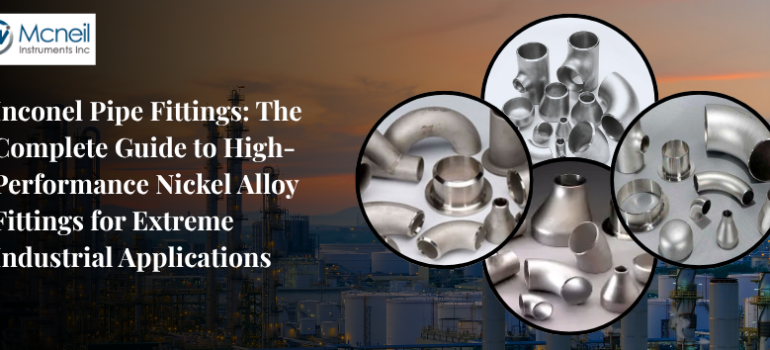
Inconel Pipe Fittings: The Complete Guide to High-Performance Nickel Alloy Fittings for Extreme Industrial Applications

Introduction

Industrial piping systems operating in extreme temperatures, corrosive environments, and high-pressure conditions demand materials that deliver exceptional reliability and long service life. In industries such as oil & gas, offshore, petrochemicals, chemical processing, aerospace, marine, and power generation, ordinary stainless steel fittings may not provide the required resistance against aggressive chemicals, oxidation, or thermal fatigue.

This is where Inconel Pipe Fittings become the preferred solution. Manufactured from premium nickel-chromium alloys, Inconel pipe fittings offer superior resistance to corrosion, oxidation, carburization, and high-temperature creep while maintaining excellent mechanical strength. Their ability to perform under the harshest industrial environments makes them ideal for critical piping systems where safety and performance are paramount.

Mcneil Instruments is a leading manufacturer, supplier, exporter, and stockist of Inconel Pipe Fittings, offering precision-engineered buttweld, socket weld, and threaded fittings in multiple Inconel grades. The company manufactures fittings in accordance with international ASTM, ASME, ANSI, and DIN standards for demanding industrial applications worldwide.

What Are Inconel Pipe Fittings?

Inconel Pipe Fittings are nickel-based alloy components used to connect, redirect, reduce, or terminate pipelines carrying corrosive chemicals, steam, gases, and high-temperature fluids.

These fittings are engineered to withstand:

• Extreme temperatures

• High-pressure systems

• Oxidizing environments

• Chloride-rich media

• Acidic chemicals

• Marine conditions

Unlike conventional steel fittings, Inconel maintains excellent strength and corrosion resistance even after prolonged exposure to elevated temperatures.

Why Choose Inconel Pipe Fittings?

Industries worldwide rely on Inconel Pipe Fittings because of their outstanding performance characteristics.

Exceptional Corrosion Resistance

Resists pitting, crevice corrosion, oxidation, and chemical attack in highly aggressive environments.

High-Temperature Performance

Maintains strength and structural stability at temperatures exceeding 1000°C depending on the alloy grade.

Excellent Mechanical Strength

Provides superior tensile strength, fatigue resistance, and durability under continuous pressure.

Outstanding Oxidation Resistance

Performs exceptionally well in furnace, boiler, and heat-treatment applications.

Long Service Life

Reduces maintenance costs and minimizes unplanned downtime.

Mcneil Instruments – Trusted Manufacturer of Inconel Pipe Fittings

Mcneil Instruments manufactures a complete range of Inconel Pipe Fittings for industrial piping and process systems.

The product range includes:

• Inconel 90° Elbows

• Inconel 45° Elbows

• Inconel 180° Return Bends

• Inconel Equal Tees

• Inconel Reducing Tees

• Inconel Concentric Reducers

• Inconel Eccentric Reducers

• Inconel End Caps

• Inconel Stub Ends

• Inconel Couplings

• Inconel Unions

• Inconel Socket Weld Fittings

• Inconel Threaded Fittings

• Inconel Buttweld Pipe Fittings

Every fitting is precision-machined to provide leak-free connections, excellent dimensional accuracy, and dependable long-term performance.

Inconel 600 Pipe Fittings

Reliable Performance in High-Temperature Environments

Inconel 600 offers excellent resistance to oxidation and corrosion while maintaining strength at elevated temperatures.

Applications

• Heat Treatment Equipment

• Chemical Processing

• Furnace Components

• Nuclear Engineering

Benefits

• Excellent oxidation resistance

• Superior heat resistance

• Good weldability

Inconel 625 Pipe Fittings

Premium Corrosion Resistance

Inconel 625 contains molybdenum and niobium, providing exceptional resistance to seawater, pitting, and chloride attack.

Applications

• Offshore Platforms

• Marine Systems

• Chemical Plants

• Oil & Gas Pipelines

Advantages

• Outstanding seawater resistance

• High fatigue strength

• Excellent corrosion protection

Inconel 718 Pipe Fittings

High Strength for Critical Industrial Systems

Inconel 718 delivers outstanding tensile strength and creep resistance for demanding pressure applications.

Applications

• Aerospace

• Gas Turbines

• High-Pressure Process Lines

• Power Generation

Features

• Excellent fatigue resistance

• High-pressure capability

• Superior mechanical properties

Inconel 725 Pipe Fittings

Designed for Sour Service Applications

Inconel 725 provides enhanced resistance to stress corrosion cracking and harsh oilfield environments.

Applications

• Offshore Oil & Gas

• Subsea Equipment

• Production Systems

Inconel 800 & 800H Pipe Fittings

Long-Term High-Temperature Stability

These grades are widely used in continuous high-temperature industrial processes.

Benefits

• Excellent creep resistance

• Outstanding oxidation resistance

• Reliable structural stability

Applications

• Boilers

• Heat Exchangers

• Petrochemical Plants

• Thermal Power Stations

Types of Inconel Pipe Fittings

Inconel Elbows

Available in 45°, 90°, and 180° configurations for changing pipeline direction.

Inconel Equal & Reducing Tees

Used to divide or combine process flow while maintaining system efficiency.

Inconel Reducers

Available in concentric and eccentric designs for connecting different pipe diameters.

Inconel End Caps

Used for securely closing pipeline ends during operation or maintenance.

Inconel Stub Ends

Designed for use with lap joint flanges where frequent dismantling is required.

Inconel Socket Weld Fittings

Ideal for compact, high-pressure piping systems.

Inconel Threaded Fittings

Suitable for applications where welding is impractical.

Inconel Buttweld Pipe Fittings

Preferred for large-diameter piping systems requiring permanent, high-strength welded joints.

Technical Specifications

ParameterSpecification
ProductInconel Pipe Fittings
Grades600, 625, 718, 725, 800, 800H
StandardsASTM B366 / ASME SB366
TypesElbows, Tees, Reducers, Caps, Stub Ends, Couplings
ConstructionButtweld, Socket Weld, Threaded
ApplicationsOil & Gas, Marine, Chemical, Aerospace, Power

Industrial Applications

Mcneil Instruments Inconel Pipe Fittings are widely used across various industries.

Oil & Gas

• Refineries

• Offshore Platforms

• LNG Facilities

Petrochemical Industry

• Chemical Processing Units

• High-Temperature Pipelines

• Reactor Systems

Marine & Offshore

• Seawater Systems

• Shipbuilding

• Offshore Structures

Aerospace

• Engine Components

• Fuel Systems

• High-Performance Fluid Lines

Power Generation

• Boilers

• Steam Lines

• Turbine Installations

Chemical Processing

• Acid Handling Systems

• Corrosive Fluid Transfer

• Heat Exchangers

Quality Assurance

Every Inconel Pipe Fitting manufactured by Mcneil Instruments undergoes comprehensive quality inspections, including:

• PMI Testing

• Hydrostatic Testing

• Mechanical Testing

• Chemical Analysis

• Dimensional Inspection

• Hardness Testing

• Visual Inspection

• Material Traceability

• Third-Party Inspection

These testing procedures ensure every fitting complies with international quality standards before dispatch.

Why Choose Mcneil Instruments?

Industries worldwide trust Mcneil Instruments because of:

• Complete range of Inconel grades

• International manufacturing standards

• Precision engineering

• Premium nickel alloy raw materials

• Strict quality control

• Ready stock for quick deliveries

• Global export network

• Technical application support

Mcneil Instruments supplies high-performance Inconel pipe fittings designed to deliver leak-free, long-lasting performance in the world’s most demanding industrial environments.

Conclusion

For applications involving high temperatures, corrosive chemicals, aggressive marine environments, and extreme operating pressures, Inconel Pipe Fittings offer unmatched durability, corrosion resistance, and mechanical strength. Their ability to maintain performance under the toughest conditions makes them the preferred choice across critical industries worldwide.

Whether your project requires Inconel 600 Pipe Fittings, Inconel 625 Pipe Fittings, Inconel 718 Pipe Fittings, Inconel 725 Pipe Fittings, Inconel 800 Pipe Fittings, Inconel 800H Pipe Fittings, Inconel Elbows, Tees, Reducers, End Caps, Stub Ends, Socket Weld Fittings, Threaded Fittings, or Buttweld Pipe Fittings, Mcneil Instruments delivers precision-engineered solutions manufactured to international standards for dependable industrial performance.

Read More

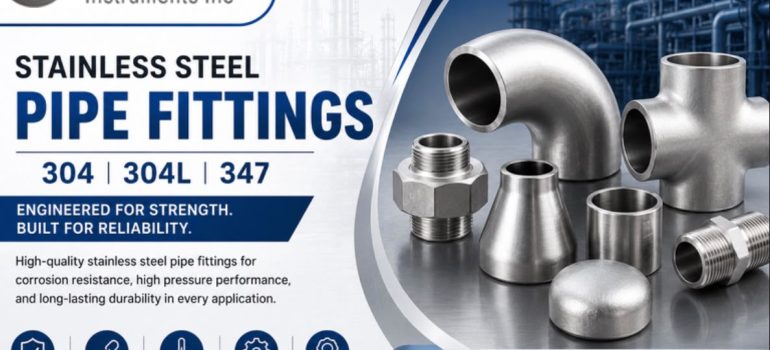
Complete Guide to Stainless Steel Pipe Fittings for Industrial Piping Applications, Benefits & Buying Guide

Introduction

Industrial piping systems demand components that offer exceptional durability, corrosion resistance, and long-term reliability. Selecting the right pipe fittings is essential to ensure leak-free connections, improved operational efficiency, and lower maintenance costs across industries.

Stainless Steel 304 Pipe Fittings, Stainless Steel 304L Pipe Fittings, and Stainless Steel 347 Pipe Fittings are among the most widely used stainless steel fittings for industrial piping systems. Each grade offers unique properties that make it suitable for different operating environments, from general industrial applications to highly corrosive and high-temperature conditions.

Mcneil Instruments is a trusted manufacturer and supplier of premium-quality Stainless Steel 304 Pipe Fittings, Stainless Steel 304L Pipe Fittings, and Stainless Steel 347 Pipe Fittings, manufactured according to international quality standards for industrial, commercial, and process piping applications.


Why Stainless Steel Pipe Fittings Are Preferred in Industrial Piping

Modern industries require piping systems capable of handling pressure, temperature fluctuations, corrosive media, and continuous operation.

Key Benefits

✔ Excellent corrosion resistance

✔ High mechanical strength

✔ Outstanding durability

✔ Excellent weldability

✔ Leak-proof connections

✔ High-pressure capability

✔ Long service life

✔ Low maintenance requirements

✔ Cost-effective industrial solution


Understanding Stainless Steel Pipe Fitting Grades

Stainless Steel 304 Pipe Fittings

Stainless Steel 304 Pipe Fittings are the most commonly used austenitic stainless steel fittings, offering excellent corrosion resistance, good mechanical strength, and outstanding fabrication properties.

Key Features

  • Excellent corrosion resistance
  • Superior weldability
  • High strength
  • Excellent formability
  • Hygienic surface finish
  • Long operational life

Common Applications

  • Food Processing Plants
  • Chemical Processing
  • Water Treatment
  • Pharmaceutical Industry
  • General Industrial Piping
  • HVAC Systems

Stainless Steel 304L Pipe Fittings

Stainless Steel 304L Pipe Fittings contain lower carbon content than 304, making them ideal for welded applications where carbide precipitation must be minimized.

Advantages

  • Improved weldability
  • Better corrosion resistance after welding
  • Reduced carbide precipitation
  • Excellent fabrication properties
  • Long service life

Widely Used In

  • Process Piping
  • Chemical Plants
  • Pressure Vessels
  • Pharmaceutical Equipment
  • Food Processing
  • Fabricated Piping Systems

Stainless Steel 347 Pipe Fittings

Stainless Steel 347 Pipe Fittings are stabilized with niobium, providing exceptional resistance to intergranular corrosion and high-temperature oxidation.

Benefits

  • Superior high-temperature performance
  • Excellent oxidation resistance
  • High creep strength
  • Excellent thermal stability
  • Outstanding corrosion resistance

Applications

  • Heat Exchangers
  • Power Generation Plants
  • Refineries
  • Petrochemical Plants
  • Boiler Systems
  • Aerospace Components

Types of Stainless Steel Pipe Fittings

Mcneil Instruments manufactures a complete range of stainless steel pipe fittings for industrial piping systems.

Our product range includes:

  • Elbows
  • Tees
  • Reducers
  • Stub Ends
  • Pipe Caps
  • Crosses
  • Couplings
  • Unions
  • Nipples
  • Bushings
  • Socket Weld Fittings
  • Threaded Pipe Fittings
  • Butt Weld Pipe Fittings
  • Equal Tees
  • Reducing Tees
  • Long Radius Elbows
  • Short Radius Elbows
  • Custom Pipe Fittings

Stainless Steel 304 vs 304L vs 347 Pipe Fittings

GradeMajor AdvantageBest Applications
Stainless Steel 304 Pipe FittingsGeneral corrosion resistanceFood processing, water treatment, industrial piping
Stainless Steel 304L Pipe FittingsExcellent weldabilityFabricated piping, pressure vessels, chemical plants
Stainless Steel 347 Pipe FittingsHigh-temperature strengthRefineries, power plants, petrochemical industries

Applications of Stainless Steel Pipe Fittings

Our Stainless Steel 304 Pipe Fittings, Stainless Steel 304L Pipe Fittings, and Stainless Steel 347 Pipe Fittings are widely used in:

  • Oil & Gas Industry
  • Petrochemical Plants
  • Chemical Processing
  • Power Generation
  • Water Treatment Plants
  • Marine Engineering
  • Pharmaceutical Industry
  • Food & Beverage Processing
  • Pulp & Paper Industry
  • Heat Exchanger Manufacturing
  • LNG Plants
  • Fertilizer Industry
  • Industrial Automation
  • Process Equipment
  • Pressure Piping Systems

Benefits of Stainless Steel Pipe Fittings

Compared with conventional piping materials, stainless steel pipe fittings provide several operational advantages.

Business Benefits

🌍 Excellent corrosion resistance

⚙ High-pressure performance

🛡 Leak-proof piping systems

📈 Increased plant reliability

💰 Lower maintenance costs

🚀 Longer service life

🔧 Easy installation

🌡 Excellent temperature resistance


Buying Guide: How to Choose the Right Stainless Steel Pipe Fittings

Selecting the appropriate pipe fitting depends on several important factors.

Consider These Points

  • Operating temperature
  • Working pressure
  • Type of fluid or gas
  • Corrosive environment
  • Welding requirements
  • Industry standards
  • Pipe dimensions
  • Thread or weld connection
  • Budget and lifecycle cost

For general industrial applications, Stainless Steel 304 Pipe Fittings provide an economical solution.

For fabricated and welded systems, Stainless Steel 304L Pipe Fittings are recommended.

For elevated temperature environments, Stainless Steel 347 Pipe Fittings offer superior performance.


Why Choose Mcneil Instruments?

Mcneil Instruments manufactures precision-engineered stainless steel pipe fittings designed to meet international quality standards.

Our Advantages

✔ Premium-grade stainless steel

✔ Precision manufacturing

✔ ASTM, ASME & ANSI standards

✔ Extensive product inventory

✔ Competitive pricing

✔ Worldwide exports

✔ Custom manufacturing

✔ Strict quality inspections

✔ On-time delivery


Quality Assurance

Every stainless steel pipe fitting undergoes comprehensive testing before dispatch.

Inspection & Testing

  • Raw Material Inspection
  • PMI Testing
  • Hydrostatic Testing
  • Mechanical Testing
  • Chemical Analysis
  • Dimensional Inspection
  • Surface Finish Inspection
  • Visual Examination

Material Test Certificates (MTC) are available upon request.


Why Industries Trust Stainless Steel Pipe Fittings

Industrial customers continue to choose stainless steel pipe fittings because they deliver:

  • Long operational life
  • Superior corrosion resistance
  • Reliable leak-proof performance
  • Excellent mechanical strength
  • Reduced maintenance costs
  • Easy installation
  • Better lifecycle value
  • Consistent industrial performance

Conclusion

Selecting the right pipe fittings is essential for building efficient and reliable industrial piping systems. Whether your project requires Stainless Steel 304 Pipe Fittings for general-purpose applications, Stainless Steel 304L Pipe Fittingsfor superior weldability, or Stainless Steel 347 Pipe Fittings for high-temperature service, choosing the correct grade ensures long-term performance and operational efficiency.

Mcneil Instruments manufactures premium-quality stainless steel pipe fittings engineered to meet international standards and deliver dependable performance across diverse industrial applications.


Frequently Asked Questions (FAQs)

1. What is the difference between Stainless Steel 304, 304L, and 347 Pipe Fittings?

Stainless Steel 304 is ideal for general industrial use, 304L offers better weldability due to its lower carbon content, while 347 provides superior high-temperature strength and resistance to intergranular corrosion.

2. Which industries commonly use Stainless Steel Pipe Fittings?

Oil & gas, chemical processing, petrochemical, food processing, pharmaceutical, marine, power generation, water treatment, and industrial manufacturing.

3. Which stainless steel grade is best for welded piping systems?

Stainless Steel 304L Pipe Fittings are recommended because their low carbon content minimizes carbide precipitation during welding.

4. Why are Stainless Steel 347 Pipe Fittings used in high-temperature applications?

They are stabilized with niobium, providing excellent oxidation resistance, thermal stability, and high-temperature strength.

5. Does Mcneil Instruments manufacture customized stainless steel pipe fittings?

Yes. We manufacture customized stainless steel pipe fittings in various sizes, schedules, pressure ratings, and specifications based on customer requirements.

6. Why choose Mcneil Instruments?

Mcneil Instruments offers premium-quality products, precision manufacturing, strict quality testing, competitive pricing, worldwide exports, technical expertise, and reliable customer support.

Read More

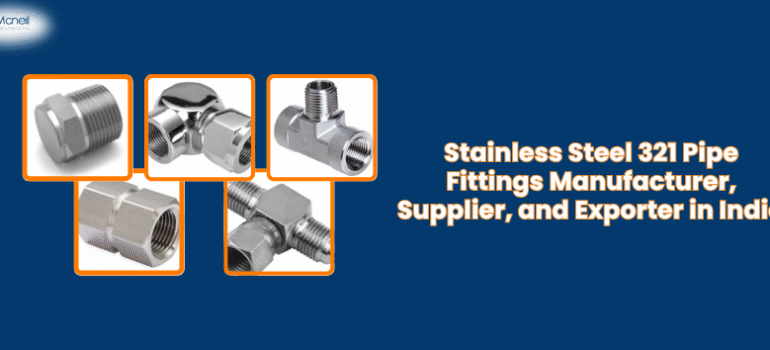
Stainless Steel 321 Pipe Fittings Manufacturer, Supplier, and Exporter in India

Introduction

Stainless Steel 321 pipe fittings are celebrated for their excellent resistance to intergranular corrosion and high-temperature stability, thanks to titanium stabilization. Widely used in burners, exhaust systems, and chemical processing, SS 321 fittings endure challenging conditions without compromising integrity.

Mcneil Instruments is a trusted manufacturer, supplier, and exporter of stainless steel 321 pipe fittings in India, delivering precision-engineered components that meet global standards and diverse industrial applications.

Why Stainless Steel 321 Stands Apart

  • Contains 17–19% Chromium, 9–12% Nickel, and Titanium (Ti) to stabilize against carbide precipitates.
  • Ideal for welding services up to 870 °C where creep resistance is needed.
  • Provides strong oxidation and corrosion resistance in high-heat environments.

Manufacturing & Testing Process

  • Raw Material from certified mills conforming to ASTM A403 WP321.
  • Forming: Forged or formed to produce elbows, tees, reducers, and caps.
  • Heat Treatment: Solution annealed and quenched per specifications.
  • Finishing: Deburring, threading, and passivation for clean finish.
  • Quality Checks: Dimensional inspections, NDT (UT or RT), mechanical testing, and PMI. Certified via MTCs, EN 10204, and IBR optional.

Technical Specifications & Mechanical Properties of Stainless Steel 321 Pipe Fittings

SpecificationDetails
StandardASTM A403 WP321 / ASME B16.9 / B16.11
Material GradeStainless Steel 321 (Titanium-stabilized Austenitic)
UNS DesignationS32100
TypeSeamless / Welded / Fabricated
FormElbow, Tee, Reducer, Cap, Cross, Stub End, Union
Manufacturing StandardsASTM, ASME, ANSI, MSS-SP
Stabilizing ElementTitanium (Ti)
ApplicationsHeat exchangers, refineries, chemical plants, power plants

Mechanical Properties of Stainless Steel 321 Pipe Fittings

PropertyValue
Tensile Strength≥ 515 MPa (75 ksi)
Yield Strength≥ 205 MPa (30 ksi)
Elongation≥ 35%
Hardness (HRB)≤ 95
Impact ResistanceExcellent, especially at high temperatures

Stainless Steel 321 Pipe Fittings Dimensions & Wall Thickness Chart

Size (NPS)Outside Diameter (mm)Wall Thickness (mm) (SCH 10S–SCH XXS)
½″21.31.65 – 5.54
1″33.42.77 – 9.09
2″60.33.91 – 15.09
4″114.36.02 – 21.44
6″168.37.11 – 28.58
8″219.18.18 – 33.32
10″273.09.27 – 38.89

Note: Custom wall thickness and dimensions available on request.

Certifications for Stainless Steel 321 Pipe Fittings

CertificationDetails
ASTM A403 / ASME B16.9Material and dimensional standards
EN 10204 3.1 / 3.2Mill Test Certificates / Third-party inspection available
IBR CertifiedFor boiler and pressure vessel applications
NACE MR0175 / MR0103For sour service (if applicable)
PED CertifiedFor EU-compliant pressure systems
ISO 9001:2015Quality Management System Compliance

Available Sizes & Specifications of Stainless Steel 321 Pipe Fittings

SpecificationDetails
Size Range½″ NB to 24″ NB (and custom sizes on request)
TypeSeamless, Welded, Buttweld, Forged
Wall ThicknessSCH 10S, SCH 40, SCH 80, SCH 160, SCH XXS
End TypesBeveled End (BE), Plain End (PE), Threaded End (TE)
Forms Available90° / 45° Elbow, Tee, Concentric/Eccentric Reducer, Cap, Stub End
FinishPickled, Annealed, Polished, Bead-blasted
Heat TreatmentSolution Annealed as per standard

Global Reach of Mcneil Instruments: SS 321 Pipe Fittings

  • In Saudi Arabia, Mcneil is a trusted manufacturer of SS 321 pipe fittings, serving high-temp petrochemical units.
  • From Qatar, we act as a key exporter, supplying corrosion-resistant fittings for exhaust and boiler systems.
  • In Nigeria, Mcneil serves as a reliable supplier of SS 321 fittings for chemical and power plants.
  • As an exporter in Ghana, Mcneil provides fittings for thermal installations and industrial kitchens.
  • Mcneil functions as a leading manufacturer and supplier in Texas, providing SS 321 fittings for aerospace and refinery projects.
  • In Chicago, we are a noted exporter of SS 321 pipe fittings for HVAC and fire protection systems.
  • Our presence in Malaysia includes roles as supplier and exporter, delivering fittings for marine and industrial applications.
  • In Singapore, Mcneil is recognized as a manufacturer and exporter, catering to shipbuilding and petrochemical industries.In Brazil, our company is a distinguished supplier, providing sustainably sourced SS 321 fittings for food and beverage plants.

Conclusion

Stainless Steel 321 pipe fittings offer exceptional performance in high-temperature applications thanks to their titanium-stabilized construction. With Mcneil Instruments as your manufacturer, supplier, and exporter, you gain access to expertly engineered, certified fittings backed by global reach.

Read More