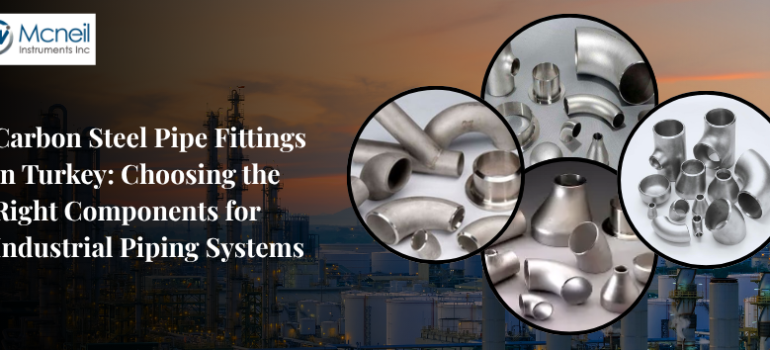
Carbon Steel Pipe Fittings in Turkey: Choosing the Right Components for Industrial Piping Systems

Introduction

Turkey has a diverse industrial base spanning energy, petrochemicals, manufacturing, construction, power generation, marine industries, and water infrastructure. As these sectors continue to develop and modernize, reliable piping systems remain essential for transporting liquids, gases, steam, and other process media.

At the connection points of these systems, Carbon Steel Pipe Fittings play an important role. Elbows, tees, reducers, caps, couplings, unions, and other fittings help create complete piping networks while maintaining mechanical strength and pressure integrity.

Turkey’s carbon steel pipe fittings market serves applications across oil & gas, chemicals and petrochemicals, construction and infrastructure, and general industrial operations.

For EPC contractors, plant operators, engineering companies, and industrial distributors in Turkey, selecting the right Carbon Steel Pipe Fittings Supplier is therefore an important part of project planning.

What Are Carbon Steel Pipe Fittings?

Carbon steel pipe fittings are components used to connect, redirect, reduce, terminate, or extend sections of carbon steel piping.

They are manufactured in different configurations depending on the requirements of the piping system.

Common examples include:

  • Elbows
  • Tees
  • Reducers
  • Caps
  • Couplings
  • Unions
  • Crosses
  • Adapters
  • Nipples
  • Stub ends
  • Forged fittings
  • Butt weld fittings

The selection depends on pipe size, pressure, temperature, connection method, material specification, and application.

Why Carbon Steel Pipe Fittings Are Important for Turkish Industries

Carbon steel remains an important engineering material because it provides a practical combination of strength, machinability, weldability, and cost efficiency.

In Turkey, industrial demand for pipe fittings is connected to several sectors, including:

Oil & Gas

Carbon steel fittings can be used in pipelines, processing facilities, storage systems, and associated infrastructure where the material is appropriate for the service conditions.

Chemical and Petrochemical Industries

Processing plants require piping systems capable of handling fluids under controlled temperature and pressure conditions.

Power Generation

Carbon steel fittings are used in various utility and process piping systems within power-generation facilities.

Construction and Infrastructure

Industrial and infrastructure projects use pipe fittings in water, heating, utility, fire-protection, and other piping networks.

Marine and Shipbuilding

Turkey’s shipbuilding sector also creates demand for engineered piping components for marine systems.

Water Treatment

Carbon steel fittings can be used in suitable water and utility applications where corrosion protection and material compatibility are adequately addressed.

Mcneil Instruments’ published Turkey-focused pipe fitting information identifies oil & gas, petrochemical, power generation, chemical processing, construction, marine, and water treatment among relevant industrial sectors.

Common Types of Carbon Steel Pipe Fittings

Carbon Steel Elbows

Elbows are used to change the direction of a piping system.

Common configurations include:

  • 45-degree elbows
  • 90-degree elbows
  • Long-radius elbows
  • Short-radius elbows

The appropriate elbow depends on the piping layout, flow requirements, pressure conditions, and applicable specifications.

Carbon Steel Tees

A tee creates a branch connection within a piping network.

They are commonly available as:

  • Equal tees
  • Reducing tees

Tees are used where process flow needs to be divided or combined.

Carbon Steel Reducers

Reducers connect pipes with different diameters.

Two common types are:

  • Concentric reducers
  • Eccentric reducers

The selection depends on the piping arrangement and flow requirements.

Carbon Steel Caps

Caps are used to close the end of a pipe or piping section.

They can be useful during:

  • Pipeline construction
  • Equipment connections
  • Maintenance
  • Temporary isolation
  • Permanent piping termination

Carbon Steel Couplings

Couplings connect two sections of pipe or tubing.

They are commonly used in applications where a straight connection is required.

Butt Weld vs Forged Carbon Steel Fittings

One of the important decisions when purchasing carbon steel fittings is selecting the appropriate fitting manufacturing and connection type.

Butt Weld Fittings

Butt weld fittings are welded directly to the pipe.

Typical examples include:

  • Elbows
  • Tees
  • Reducers
  • Caps
  • Stub ends

They are commonly used in process and industrial piping systems where permanent welded connections are required.

Forged Fittings

Forged fittings are manufactured through a forging process and are available in configurations such as:

  • Socket weld fittings
  • Threaded fittings
  • Couplings
  • Unions
  • Adapters
  • Nipples

The appropriate type depends on the system design, pressure requirements, pipe dimensions, and applicable engineering standards.

Mcneil Instruments identifies both butt weld and forged fitting categories within its industrial pipe fitting range.

How to Select Carbon Steel Pipe Fittings for a Turkish Industrial Project

Buying fittings based only on nominal pipe size is not enough.

Several technical factors should be evaluated.

1. Material Specification

Confirm the required carbon steel grade and applicable ASTM, ASME, or project-specific specification.

Material selection should be based on operating conditions rather than simply choosing the lowest-cost option.

2. Pipe Size

The fitting must correspond to the outside diameter and nominal pipe size of the connecting pipe.

Incorrect sizing can create installation problems and compromise the piping system.

3. Wall Thickness and Schedule

The fitting should be compatible with the pipe wall thickness and system design.

Schedule requirements may vary according to:

  • Operating pressure
  • Temperature
  • Pipe size
  • Design code
  • Application

4. Pressure Rating

The fitting must be capable of handling the design and operating pressure of the system.

For high-pressure applications, the pressure class and applicable standards should be confirmed before procurement.


5. Operating Temperature

Temperature can influence material strength and long-term performance.

Fittings should therefore be selected according to the maximum and minimum operating temperatures specified by the engineering team.

6. Connection Type

Determine whether the project requires:

  • Butt weld
  • Socket weld
  • Threaded
  • Flanged
  • Other specified connections

The connection must correspond to the piping design.

7. Corrosion Conditions

Carbon steel is not universally suitable for every corrosive environment.

Where the process medium or external environment presents a significant corrosion risk, engineers may specify stainless steel, alloy steel, or another corrosion-resistant material.

Protective coatings or other corrosion-control measures may also be required depending on the application.

Why Quality Matters in Carbon Steel Fittings

Pipe fittings are small compared with many pieces of industrial equipment, but they are critical pressure-bearing components within piping networks.

Poor-quality or incorrectly specified fittings can contribute to:

  • Leakage
  • Premature failure
  • Installation problems
  • Increased maintenance
  • Unplanned downtime
  • Safety concerns

Modern industrial procurement therefore places increasing emphasis on pressure integrity, standards compliance, inspection, and system reliability.

A reliable supplier should be able to provide fittings that meet the required technical specification rather than simply supplying a visually similar component.

Material Documentation and Traceability

For industrial projects, documentation can be just as important as the physical product.

Depending on the project requirements, buyers may need:

  • Material Test Certificates
  • Heat number traceability
  • Chemical composition
  • Mechanical test results
  • Dimensional inspection
  • Pressure testing
  • PMI where specified
  • Third-party inspection
  • Certificate of conformity

Documentation requirements should be agreed upon before the purchase order is finalized.

This is especially important for EPC projects where materials may need to pass formal inspection and approval before installation.

Why Supplier Reliability Matters in Turkey

Turkey’s position between Europe, Asia, and the Middle East makes it an important industrial and logistics market. Its steel pipe and tube sector serves applications ranging from oil & gas and petrochemicals to power generation, mechanical engineering, transportation, and construction.

For Turkish buyers, choosing a supplier should therefore involve more than comparing prices.

Important supplier-selection factors include:

Manufacturing Capability

Can the supplier provide the required fitting type and material grade?

Product Range

Can one supplier support multiple fitting configurations?

Quality Control

Does the supplier have appropriate inspection and testing procedures?

Documentation

Can the required certificates and traceability records be provided?

Export Experience

Can the supplier manage international packaging, documentation, and shipment requirements?

Custom Requirements

Can the supplier accommodate project-specific dimensions or configurations where required?

Carbon Steel Fittings for Oil & Gas Applications

Oil & gas remains one of the major application areas for carbon steel pipe fittings.

Piping systems in this sector may transport:

  • Crude oil
  • Natural gas
  • Refined products
  • Water
  • Steam
  • Process fluids

Fittings must be selected according to the actual service conditions, applicable codes, pressure requirements, temperature, and fluid compatibility.

Because oil & gas projects typically involve strict engineering specifications, procurement teams should confirm all requirements before placing an order.

Carbon Steel Fittings for Petrochemical Plants

Petrochemical facilities contain extensive piping networks connecting:

  • Process equipment
  • Storage systems
  • Heat exchangers
  • Reactors
  • Pumps
  • Compressors
  • Utility systems

Carbon steel fittings can be suitable for many applications when their material and design are compatible with the process conditions.

The fitting specification should always be determined by the engineering requirements of the individual system.

Carbon Steel Fittings for Power Plants

Power plants use interconnected piping networks for:

  • Water
  • Steam
  • Fuel
  • Cooling systems
  • Compressed air
  • Utility services

Carbon steel fittings may be specified for suitable systems depending on temperature, pressure, and fluid conditions.

For high-temperature steam applications, however, engineers may specify alloy steel or other materials where required.

Carbon Steel Fittings for Water Infrastructure

Turkey’s ongoing infrastructure development also creates demand for piping components used in water and utility systems. Market research identifies construction and infrastructure as one of the application segments for carbon steel pipe fittings in Turkey.

The suitability of carbon steel depends on the water chemistry, corrosion protection, pressure, and design requirements.

Benefits of Carbon Steel Pipe Fittings

When correctly specified, carbon steel fittings offer several practical advantages.

Strength

Carbon steel provides good mechanical strength for many industrial piping applications.

Cost Efficiency

Compared with many specialty alloys, carbon steel can provide an economical solution for suitable service environments.

Fabrication

Carbon steel can be fabricated and welded using established industrial processes.

Availability

Standard carbon steel fittings are widely used across industrial piping applications.

Versatility

They can be used across multiple sectors when the material is appropriate for the operating conditions.

Why Turkish Buyers Should Consider Long-Term Supplier Relationships

Industrial piping projects rarely involve a single purchase.

A contractor or plant operator may require fittings for:

  • New construction
  • Expansion projects
  • Plant modifications
  • Maintenance
  • Shutdowns
  • Replacement
  • Emergency repairs

Working with a dependable supplier can simplify repeat procurement because specifications, documentation requirements, and quality expectations are already established.

This can help reduce the time spent qualifying a new supplier for every project.

Mcneil Instruments Carbon Steel Pipe Fittings

Mcneil Instruments manufactures and supplies industrial pipe fittings for applications requiring strength, dimensional accuracy, pressure resistance, and dependable service.

Its published Turkey-focused information covers pipe fittings for sectors including oil & gas, petrochemical, power generation, chemical processing, construction, marine, and water treatment.

The company’s fitting range includes:

  • Butt weld fittings
  • Forged fittings
  • Socket weld fittings
  • Threaded fittings
  • Couplings
  • Unions
  • Adapters
  • Nipples
  • Stub ends
  • Custom-designed fittings

For Turkish industrial buyers, the ability to source multiple fitting configurations from one experienced supplier can simplify procurement for complex piping projects.

Building Reliable Piping Systems in Turkey

A successful piping project depends on more than selecting a pipe.

The complete system requires compatible:

Pipes + Fittings + Valves + Flanges + Instruments + Supporting Components

Each component must work together according to the project’s engineering requirements.

For this reason, carbon steel pipe fittings should be selected based on:

  • Material
  • Size
  • Schedule
  • Pressure
  • Temperature
  • Connection type
  • Applicable standards
  • Process conditions
  • Inspection requirements

Getting these factors right from the beginning can help reduce installation issues and future maintenance problems.

Conclusion

Turkey’s growing industrial, energy, infrastructure, marine, and manufacturing sectors continue to create demand for reliable piping components. Carbon steel pipe fittings remain an important choice for many applications because of their combination of strength, versatility, fabrication characteristics, and cost efficiency.

However, the right fitting is not simply the cheapest or most readily available option.

For industrial projects, buyers need to consider material specification, dimensions, pressure rating, temperature, connection type, standards, testing, and traceability.

Choosing a dependable Carbon Steel Pipe Fittings Supplier in Turkey can make procurement more predictable and help EPC contractors, distributors, and plant operators maintain the quality and reliability expected from modern industrial piping systems.

Mcneil Instruments provides carbon steel and other industrial pipe fittings for demanding applications, with a product range covering butt weld, forged, socket weld, threaded, and other fitting configurations.

Frequently Asked Questions

What are carbon steel pipe fittings used for?

Carbon steel pipe fittings are used to connect, redirect, reduce, extend, and terminate piping systems. They are widely used in oil & gas, petrochemical, power, construction, water, marine, and general industrial applications.

Which carbon steel fittings are commonly used?

Common types include elbows, tees, reducers, caps, couplings, unions, adapters, nipples, crosses, and stub ends.

How do I choose the right carbon steel fitting?

Consider the material grade, pipe size, wall thickness, pressure rating, operating temperature, connection type, process medium, applicable standards, and inspection requirements.

Are carbon steel fittings suitable for all applications?

No. Material suitability depends on the operating environment. Highly corrosive or extreme-temperature applications may require stainless steel, alloy steel, or specialty alloys.

Why is documentation important when buying industrial fittings?

Material certificates, traceability, inspection records, and other documentation help verify that the supplied fittings comply with project and engineering requirements.

Why choose Mcneil Instruments for Turkey?

Mcneil Instruments offers a broad range of industrial pipe fittings and supports applications across oil & gas, petrochemical, power, chemical processing, construction, marine, and water-treatment sectors.
Read More
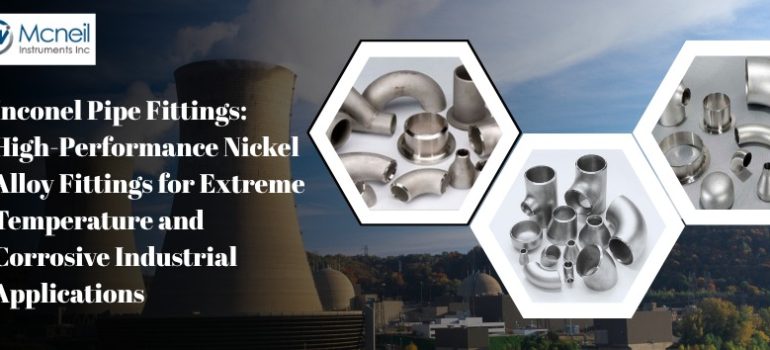
Mcneil Instruments banner showcasing Inconel pipe fittings, including elbows, tees, reducers, and end caps, designed for high-temperature and corrosive industrial applications.

Inconel Pipe Fittings: High-Performance Nickel Alloy Fittings for Extreme Temperature and Corrosive Industrial Applications

Introduction


Industrial piping systems used in oil & gas, petrochemical processing, offshore platforms, power generation, marine engineering, aerospace, and chemical manufacturing often operate under harsh conditions where high temperatures, corrosive media, and extreme pressure are constant challenges. Selecting the right pipe fittings is essential for ensuring safety, minimizing maintenance, and achieving long-term operational reliability.
Inconel Pipe Fittings are among the most dependable solutions for these demanding applications. Manufactured from nickel-chromium-based superalloys, they provide outstanding resistance to oxidation, carburization, pitting, crevice corrosion, chloride attack, and thermal fatigue while maintaining exceptional mechanical strength at elevated temperatures.
Mcneil Instruments is a trusted manufacturer, supplier, exporter, and stockist of Inconel Pipe Fittings, offering precision-engineered fittings manufactured to ASTM, ASME, ANSI, MSS, and DIN standards. With decades of manufacturing expertise and a strong global supply network, Mcneil Instruments delivers reliable piping solutions for critical industrial applications worldwide.

What Are Inconel Pipe Fittings?


Inconel Pipe Fittings are nickel alloy piping components designed to connect, redirect, branch, reduce, or terminate pipelines carrying corrosive chemicals, steam, hydrocarbons, process gases, and high-temperature fluids.
These fittings maintain their structural integrity even under continuous exposure to:

  • High temperatures
  • Aggressive chemicals
  • Oxidizing atmospheres
  • Marine environments
  • High-pressure systems
  • Thermal cycling
    Their excellent corrosion resistance and superior mechanical properties make them the preferred choice for mission-critical piping systems.

Benefits of Inconel Pipe Fittings


Industries worldwide choose Inconel Pipe Fittings because they provide:

  • Exceptional corrosion resistance
  • Excellent oxidation resistance
  • Outstanding creep resistance
  • High tensile and yield strength
  • Superior fatigue resistance
  • Excellent weldability
  • Long service life
  • Low maintenance requirements
    These properties improve plant reliability while reducing downtime and lifecycle costs.

Mcneil Instruments – Leading Manufacturer of Inconel Pipe Fittings


Mcneil Instruments manufactures and supplies a complete range of Inconel Pipe Fittings for high-performance industrial piping systems.
The product portfolio includes:

  • Inconel 600 Pipe Fittings
  • Inconel 601 Pipe Fittings
  • Inconel 625 Pipe Fittings
  • Inconel 718 Pipe Fittings
  • Inconel 725 Pipe Fittings
  • Inconel X750 Pipe Fittings
  • Inconel 800 Pipe Fittings
  • Inconel 800H Pipe Fittings
  • Inconel 800HT Pipe Fittings
  • Inconel Buttweld Pipe Fittings
  • Inconel Socket Weld Pipe Fittings
  • Inconel Threaded Pipe Fittings
  • Custom Inconel Pipe Fittings
    Mcneil Instruments manufactures fittings with precision machining, excellent dimensional accuracy, and strict quality control to ensure leak-free performance in demanding industrial environments.

Inconel 600 Pipe Fittings


Excellent Resistance to Heat and Corrosion


Inconel 600 is widely used where excellent oxidation resistance and high-temperature performance are required.
Applications

  • Chemical Processing
  • Heat Treatment Equipment
  • Nuclear Plants
  • Furnace Components
    Key Benefits
  • Excellent oxidation resistance
  • High-temperature stability
  • Good weldability
  • Long operating life

Inconel 625 Pipe Fittings


Outstanding Performance in Marine and Offshore Applications


Inconel 625 contains molybdenum and niobium, providing superior resistance to seawater corrosion and aggressive chemicals.
Applications

  • Offshore Platforms
  • Marine Systems
  • Petrochemical Plants
  • LNG Facilities
    Advantages
  • Excellent chloride resistance
  • High fatigue strength
  • Outstanding corrosion resistance

Inconel 718 Pipe Fittings


Exceptional Strength for Critical Pressure Systems


Inconel 718 is engineered for applications involving high pressure, elevated temperatures, and cyclic loading.
Applications

  • Aerospace
  • Gas Turbines
  • Power Plants
  • High-Pressure Process Lines
    Features
  • Excellent creep resistance
  • High tensile strength
  • Superior fatigue performance

Inconel 725 Pipe Fittings


Ideal for Sour Oil & Gas Service


Inconel 725 offers excellent resistance to stress corrosion cracking and harsh offshore environments.
Applications

  • Offshore Oil & Gas
  • Subsea Equipment
  • Chemical Injection Systems

Inconel 800, 800H & 800HT Pipe Fittings


Reliable Long-Term High-Temperature Performance


These grades are designed for prolonged service under elevated temperatures.
Benefits

  • Excellent oxidation resistance
  • Outstanding creep strength
  • Superior structural stability
    Applications
  • Boilers
  • Steam Pipelines
  • Heat Exchangers
  • Petrochemical Plants

Types of Inconel Pipe Fittings


Mcneil Instruments manufactures a comprehensive range of industrial pipe fittings.


Elbows


Available in:

  • 45° Elbows
  • 90° Elbows
  • 180° Return Bends

Tees

  • Equal Tees
  • Reducing Tees

Reducers

  • Concentric Reducers
  • Eccentric Reducers

End Caps
Used for safely terminating pipeline ends.

Stub Ends
Designed for use with lap joint flange assemblies.

Couplings & Unions
Provide secure and leak-free pipe connections.

Socket Weld Pipe Fittings
Recommended for compact, high-pressure piping systems.

Threaded Pipe Fittings
Suitable where welding is not practical.

Buttweld Pipe Fittings
Preferred for large-diameter pipelines requiring permanent welded joints.

Technical Specifications


Parameter Specification
Product Inconel Pipe Fittings
Standards ASTM B366 / ASME SB366
Grades 600, 601, 625, 718, 725, X750, 800, 800H, 800HT
Types Elbows, Tees, Reducers, Caps, Stub Ends, Couplings, Unions
Construction Buttweld, Socket Weld, Threaded
End Connections Beveled, Threaded, Socket Weld
Applications Oil & Gas, Marine, Chemical, Aerospace, Power

Industrial Applications


Mcneil Instruments Inconel Pipe Fittings are widely used in:


Oil & Gas

  • Refineries
  • Offshore Platforms
  • LNG Plants

Petrochemical Industry

  • Process Units
  • Reactor Systems
  • High-Temperature Pipelines

Chemical Processing

  • Acid Handling Systems
  • Corrosive Fluid Transfer
  • Heat Exchanger Networks

Marine Industry

  • Shipbuilding
  • Seawater Cooling Systems
  • Offshore Structures

Aerospace

  • Engine Components
  • Fuel Systems
  • Exhaust Assemblies

Power Generation

  • Boilers
  • Steam Pipelines
  • Turbine Installations

Quality Assurance


Every Inconel Pipe Fitting manufactured by Mcneil Instruments undergoes rigorous quality inspections, including:

  • PMI Testing
  • Hydrostatic Testing
  • Mechanical Testing
  • Chemical Analysis
  • Ultrasonic Testing
  • Dimensional Inspection
  • Hardness Testing
  • Visual Inspection
  • Material Traceability Verification
  • Third-Party Inspection
    These inspection procedures ensure compliance with international quality standards before every shipment.

Why Choose Mcneil Instruments?


Customers worldwide rely on Mcneil Instruments because of:

  • Complete range of Inconel grades
  • ASTM and ASME compliant manufacturing
  • Advanced production facilities
  • Premium-quality raw materials
  • Strict quality assurance
  • Customized engineering solutions
  • Ready stock for fast deliveries
  • Global export capability
  • Dedicated technical support
    With nearly four decades of engineering expertise, Mcneil Instruments continues to supply high-performance piping solutions that meet the requirements of critical industrial projects worldwide.

Conclusion


For applications involving extreme temperatures, aggressive chemicals, high pressure, and corrosive process environments, Inconel Pipe Fittings provide unmatched durability, mechanical strength, and corrosion resistance. Their outstanding performance makes them indispensable for industries where reliability and safety cannot be compromised.
Whether your project requires Inconel 600 Pipe Fittings, Inconel 601 Pipe Fittings, Inconel 625 Pipe Fittings, Inconel 718 Pipe Fittings, Inconel 725 Pipe Fittings, Inconel X750 Pipe Fittings, Inconel 800 Pipe Fittings, Inconel 800H Pipe Fittings, Inconel 800HT Pipe Fittings, Elbows, Tees, Reducers, End Caps, Stub Ends, Socket Weld Pipe Fittings, Threaded Pipe Fittings, or Buttweld Pipe Fittings, Mcneil Instruments delivers precision-engineered products manufactured to international standards for dependable performance across the world’s most demanding industrial applications.

Read More
Stainless Steel ASTM A403 WP Tube Fittings banner by Mcneil Instruments featuring stainless steel elbows, reducers, caps, and fittings in grades 304, 316, 304L, 316L, 321, and 347.

Stainless Steel ASTM A403 WP Tube Fittings: Guide to 304, 316, 304L, 316L, 321 & 347 Grades

Introduction


Stainless Steel ASTM A403 WP Tube Fittings are widely used in piping systems across industries such as oil & gas, petrochemical, chemical processing, power generation, food processing, pharmaceuticals, and marine applications. These fittings are manufactured according to ASTM A403 standards and are designed to provide secure, leak-proof connections while maintaining excellent corrosion resistance, durability, and strength under demanding operating conditions.
Available in various grades including Stainless Steel ASTM A403 WP 304 Tube Fittings, Stainless Steel ASTM A403 WP 316 Tube Fittings, Stainless Steel ASTM A403 WP 304L Tube Fittings, Stainless Steel ASTM A403 WP 316L Tube Fittings, Stainless Steel ASTM A403 WP 321 Tube Fittings, and Stainless-Steel ASTM A403 WP 347 Tube Fittings, these fittings meet diverse industrial requirements and operating environments.


What Are ASTM A403 WP Tube Fittings?


ASTM A403 is a standard specification covering wrought austenitic stainless-steel fittings intended for pressure piping applications. The designation “WP” indicates that the fittings are suitable for pressure service and are manufactured through forging, machining, or forming processes.
These fittings include:
⦁ Elbows
⦁ Tees
⦁ Reducers
⦁ Crosses
⦁ Couplings
⦁ Stub Ends
⦁ Caps
⦁ Unions
⦁ Nipples
They are available in seamless and welded constructions, ensuring flexibility for different industrial applications.


Stainless Steel ASTM A403 WP 304 Tube Fittings


Stainless Steel ASTM A403 WP 304 Tube Fittings are among the most commonly used stainless steel fittings due to their excellent corrosion resistance, high strength, and cost-effectiveness. Grade 304 contains approximately 18% chromium and 8% nickel, providing superior resistance against oxidation and atmospheric corrosion.
Key Features
⦁ Excellent corrosion resistance
⦁ High mechanical strength
⦁ Easy fabrication and welding
⦁ Suitable for food processing applications
⦁ Good performance at elevated temperatures
Applications
⦁ Food and beverage industries
⦁ Chemical processing plants
⦁ Water treatment systems
⦁ Architectural piping systems


Stainless Steel ASTM A403 WP 316 Tube Fittings


Stainless Steel ASTM A403 WP 316 Tube Fittings contain molybdenum, which enhances resistance to chlorides and corrosive chemicals. These fittings are ideal for harsh industrial and marine environments.
Key Features
⦁ Superior pitting resistance
⦁ Enhanced corrosion protection
⦁ Excellent weldability
⦁ High-temperature performance
⦁ Suitable for aggressive media
Applications
⦁ Marine equipment
⦁ Petrochemical plants
⦁ Offshore platforms
⦁ Pharmaceutical industries
⦁ Chemical processing units


Stainless Steel ASTM A403 WP 304L Tube Fittings


Stainless Steel ASTM A403 WP 304L Tube Fittings are low-carbon variants of grade 304, designed to minimize carbide precipitation during welding. They offer improved corrosion resistance in welded structures.
Benefits
⦁ Reduced risk of intergranular corrosion
⦁ Excellent weldability
⦁ High durability
⦁ Good formability
Industries Served
⦁ Food processing
⦁ Dairy plants
⦁ Water treatment facilities
⦁ Process piping systems


Stainless Steel ASTM A403 WP 316L Tube Fittings


Stainless Steel ASTM A403 WP 316L Tube Fittings provide superior corrosion resistance combined with low carbon content, making them ideal for highly corrosive environments and extensive welding applications.
Advantages
⦁ Outstanding resistance to chlorides
⦁ Excellent corrosion protection
⦁ Improved weld integrity
⦁ Long service life
Applications
⦁ Pharmaceutical manufacturing
⦁ Biotechnology facilities
⦁ Chemical processing plants
⦁ Marine environments


Stainless Steel ASTM A403 WP 321 Tube Fittings


Stainless Steel ASTM A403 WP 321 Tube Fittings are titanium-stabilized stainless steel fittings designed for high-temperature applications. The addition of titanium prevents carbide precipitation during welding and prolonged exposure to elevated temperatures.
Features
⦁ Excellent heat resistance
⦁ Superior oxidation resistance
⦁ Good mechanical strength
⦁ Enhanced weldability
Applications
⦁ Aerospace industries
⦁ Heat exchangers
⦁ Refinery equipment
⦁ Power generation plants


Stainless Steel ASTM A403 WP 347 Tube Fittings


Stainless Steel ASTM A403 WP 347 Tube Fittings contain niobium (columbium), which enhances resistance to intergranular corrosion and improves performance at elevated temperatures.
Key Benefits
⦁ Excellent high-temperature strength
⦁ Superior corrosion resistance
⦁ Enhanced creep resistance
⦁ Reliable performance under thermal cycling
Applications
⦁ Power plants
⦁ Petrochemical industries
⦁ Heat recovery systems
⦁ Pressure piping systems
Benefits of Stainless Steel ASTM A403 WP Tube Fittings
⦁ Exceptional corrosion resistance
⦁ High pressure handling capability
⦁ Long service life
⦁ Leak-proof connections
⦁ Excellent dimensional accuracy
⦁ Easy installation and maintenance
⦁ Suitable for extreme temperatures
⦁ Compliance with international standards


Industries Using ASTM A403 WP Tube Fittings


These fittings are extensively used in:
⦁ Oil & Gas Industry
⦁ Petrochemical Plants
⦁ Chemical Processing
⦁ Marine Applications
⦁ Pharmaceutical Industry
⦁ Food & Beverage Processing
⦁ Power Generation
⦁ Water Treatment Plants
⦁ Pulp & Paper Industry

Supplying Stainless Steel ASTM A403 Tube Fittings Across Global Markets


Looking for a trusted exporter of Stainless Steel ASTM A403 WP 304, 304L, 316, 316L, 321 & 347 Tube Fittings? Mcneil Instruments delivers high-quality tube fittings to industries across the USA, UAE, Saudi Arabia, Qatar, Oman, Kuwait, South Africa, Nigeria, Egypt, Canada, Australia, Singapore, Malaysia, and many other international markets. Our products are manufactured to ASTM and ASME standards and are trusted in oil & gas, petrochemical, pharmaceutical, marine, and process industries worldwide.

Why Choose Mcneil Instruments?


✔ Global Export Network
✔ ASTM & ASME Compliant Products
✔ Custom Sizes & Configurations Available
✔ Fast Worldwide Shipping
✔ Mill Test Certificates & Quality Documentation
✔ Competitive Export Pricing

Exporting To


USA • Houston • Canada • UAE • Dubai • Abu Dhabi • Saudi Arabia • Qatar • Oman • Kuwait • Bahrain • South Africa • Nigeria • Egypt • Kenya • Australia • Singapore • Malaysia • Indonesia • Vietnam • UK • Europe and many more international destinations.
Conclusion
Stainless Steel ASTM A403 WP Tube Fittings offer unmatched reliability, durability, and corrosion resistance for critical piping applications. Whether you require Stainless Steel ASTM A403 WP 304 Tube Fittings, Stainless Steel ASTM A403 WP 316 Tube Fittings, Stainless Steel ASTM A403 WP 304L Tube Fittings, Stainless Steel ASTM A403 WP 316L Tube Fittings, Stainless Steel ASTM A403 WP 321 Tube Fittings, or Stainless-Steel ASTM A403 WP 347 Tube Fittings, these fittings provide excellent performance across a wide range of industrial environments. Their superior mechanical properties, resistance to corrosion, and compliance with ASTM standards make them a preferred choice for modern piping systems worldwide.


FAQs

  1. What are Stainless Steel ASTM A403 WP Tube Fittings?
    Stainless Steel ASTM A403 WP Tube Fittings are wrought austenitic stainless-steel fittings manufactured according to ASTM A403 standards for pressure piping systems. They are used to connect, redirect, or terminate piping and tubing in various industrial applications.
  2. What grades are available in ASTM A403 WP Tube Fittings?
    Common grades include:
    ⦁ Stainless Steel ASTM A403 WP 304 Tube Fittings
    ⦁ Stainless Steel ASTM A403 WP 316 Tube Fittings
    ⦁ Stainless Steel ASTM A403 WP 304L Tube Fittings
    ⦁ Stainless Steel ASTM A403 WP 316L Tube Fittings
    ⦁ Stainless Steel ASTM A403 WP 321 Tube Fittings
    ⦁ Stainless Steel ASTM A403 WP 347 Tube Fittings
  3. What is the difference between ASTM A403 WP 304 and WP 316 Tube Fittings?
    ASTM A403 WP 316 Tube Fittings contain molybdenum, which provides better resistance to chlorides, chemicals, and marine environments compared to ASTM A403 WP 304 Tube Fittings.
  4. Why choose ASTM A403 WP 304L and 316L Tube Fittings?
    The “L” grades have lower carbon content, reducing the risk of carbide precipitation during welding and improving corrosion resistance in welded applications.
  5. What are the advantages of Stainless Steel ASTM A403 WP 321 Tube Fittings?
    ASTM A403 WP 321 Tube Fittings contain titanium, offering excellent resistance to high temperatures and preventing intergranular corrosion during prolonged heat exposure.
Read More
ASTM A182 is a standard specification covering forged stainless steel and alloy steel pipe fittings, flanges, valves, and high-temperature service components. The grade F304L refers to the low-carbon forged version of Stainless Steel 304.

ASTM A182 F304L Tube Fitting USA

The industrial sector in the United States depends heavily on high-performance piping and instrumentation systems for safe and uninterrupted operations. From oil refineries and chemical plants to pharmaceutical facilities, food processing units, power generation stations, and semiconductor manufacturing plants, every industry requires reliable tube fittings capable of handling pressure, temperature fluctuations, and corrosive environments.

Among the various stainless steel grades used in industrial applications, ASTM A182 F304L Tube Fittings have become one of the most preferred choices because of their excellent corrosion resistance, superior weldability, and long operational life. These forged stainless steel fittings are widely used across the USA for process piping, instrumentation systems, hydraulic lines, and high-purity fluid transfer systems.


Understanding ASTM A182 F304L Tube Fittings

ASTM A182 is a standard specification covering forged stainless steel and alloy steel pipe fittings, flanges, valves, and high-temperature service components. The grade F304L refers to the low-carbon forged version of Stainless Steel 304.

The low carbon content is one of the most important characteristics of F304L. It improves weldability and minimizes the risk of carbide precipitation during welding. This makes ASTM A182 F304L ideal for industrial systems where welding is unavoidable and corrosion resistance around weld zones is critical.

These tube fittings are commonly manufactured in threaded, compression, and socket weld configurations for various industrial applications. Their ability to maintain mechanical strength and corrosion resistance under demanding conditions makes them highly suitable for modern process industries.


Why ASTM A182 F304L Tube Fittings are Widely Used in USA Industries

American industries operate under highly demanding process conditions where even minor leakage or material failure can lead to major operational and financial losses. This is especially true in sectors such as chemical processing, pharmaceuticals, semiconductor manufacturing, and oil & gas processing.

ASTM A182 F304L tube fittings are preferred because they offer excellent resistance against oxidation, corrosion, and chemical attack while maintaining strong mechanical performance. Their low carbon composition allows better resistance against intergranular corrosion after welding, which is one of the most common causes of failure in industrial piping systems.

Another major reason for their popularity is their ability to perform under high-pressure and high-temperature conditions without compromising sealing integrity. Modern industrial systems increasingly involve automation, vibration, thermal cycling, and continuous operation, all of which place significant stress on tube fittings.

F304L forged fittings provide the durability and structural stability necessary for these advanced industrial environments.


The Engineering Challenges

Most online content about ASTM A182 F304L fittings focuses only on material specifications and pressure ratings. However, real-world industrial failures often happen because of engineering factors that are rarely discussed publicly.

In modern industrial plants, tube fittings are exposed to constant vibration, thermal expansion, pulsation, and pressure fluctuations. Over time, poorly engineered fittings may develop micro leakage due to ferrule relaxation, improper surface finishing, or dimensional inconsistency.

These issues may appear minor initially but can eventually cause process instability, contamination, or complete system shutdowns.

Advanced manufacturers now focus heavily on precision machining, controlled hardness, optimized ferrule geometry, and surface finish quality to improve long-term reliability. These advanced engineering factors play a crucial role in the overall performance of ASTM A182 F304L tube fittings.


Corrosion Resistance and Material Stability

One of the biggest advantages of ASTM A182 F304L tube fittings is their excellent corrosion resistance. The chromium content forms a passive oxide layer on the metal surface, protecting it against oxidation and environmental attack.

The nickel content improves toughness, ductility, and structural stability, especially in high-temperature applications. Because of the low carbon composition, F304L also offers improved protection against weld decay and intergranular corrosion.

This combination of properties makes ASTM A182 F304L suitable for industries where moisture, chemicals, steam, or corrosive gases are continuously present.

The material performs particularly well in applications involving clean water systems, food-grade processing, pharmaceutical manufacturing, and moderate chemical exposure.


Importance of Forged Construction

Forged fittings are generally stronger and more reliable than cast fittings because the forging process improves grain structure and reduces internal porosity.

ASTM A182 F304L forged tube fittings offer higher mechanical strength and better fatigue resistance, making them suitable for critical industrial systems where reliability is essential.

Forged fittings are also better at handling dynamic industrial loads such as vibration, pulsation, and repeated thermal expansion cycles. This is one of the main reasons why industries in the USA increasingly prefer forged stainless steel fittings over ordinary cast components.


Applications of ASTM A182 F304L Tube Fittings in USA

ASTM A182 F304L tube fittings are widely used across multiple industrial sectors in the United States.

In the oil and gas industry, they are commonly used in instrumentation lines, process piping, and fluid transfer systems where corrosion resistance and pressure handling are critical.

Chemical processing plants rely on these fittings for transferring chemicals, solvents, and corrosive fluids safely without leakage.

In pharmaceutical manufacturing, ASTM A182 F304L fittings are preferred because of their hygienic surface properties and contamination-free performance.

Food and beverage industries use these fittings in sanitary process systems because stainless steel provides easy cleaning and excellent hygiene standards.

Semiconductor and electronics industries also use F304L fittings for high-purity gas and fluid systems where even microscopic contamination can affect production quality.

Water treatment plants, marine systems, and renewable energy projects also extensively utilize these forged stainless steel tube fittings because of their durability and corrosion resistance.


Why Surface Finish Quality Matters

Surface finish is one of the least understood yet most important factors affecting industrial fitting performance.

Poor surface finishing can lead to turbulence, residue buildup, bacterial growth, and accelerated corrosion. In industries such as pharmaceuticals and food processing, rough internal surfaces can compromise hygiene and cleaning efficiency.

Modern ASTM A182 F304L tube fittings are manufactured with precision surface finishing techniques that improve fluid flow characteristics and reduce contamination risks.

Controlled surface roughness also improves cleanability in CIP and SIP systems, which are widely used in hygienic industries.

As industries move toward ultra-clean processing environments, surface finish quality has become increasingly important.


Mechanical Strength and Pressure Performance

ASTM A182 F304L tube fittings provide strong mechanical performance under demanding operating conditions. Their forged construction improves structural stability and pressure-handling capability.

These fittings are commonly used in systems operating under high pressure and elevated temperatures. Their ability to maintain sealing integrity under vibration and thermal cycling makes them highly reliable for critical applications.

Industrial plants increasingly demand tube fittings capable of operating continuously for long durations without maintenance-related failures. F304L forged fittings help meet these expectations by offering long-term durability and operational stability.


Quality Standards and Testing

Manufacturers like Mcneil Instruments Inc supplying ASTM A182 F304L tube fittings to the USA market typically follow international standards such as ASTM, ASME, ANSI, and ISO.

High-quality fittings undergo strict testing procedures to ensure safety and reliability. Common inspections include hydrostatic testing, pressure testing, PMI testing, hardness testing, dimensional verification, and surface finish inspection.

Material traceability is also becoming increasingly important, especially in industries involving safety-critical operations.

Reliable testing ensures that fittings can perform safely under real industrial conditions.


Future Demand for ASTM A182 F304L Tube Fittings in USA

The future demand for ASTM A182 F304L tube fittings in the United States is expected to grow steadily because of industrial modernization and infrastructure expansion.

Emerging industries such as hydrogen energy, semiconductor manufacturing, biotech processing, and smart manufacturing require highly reliable and contamination-free fluid systems.

Automation is also increasing the importance of leak-proof instrumentation systems capable of operating continuously with minimal maintenance.

Future industrial systems may increasingly integrate predictive maintenance technologies, smart monitoring systems, and automated leak detection. This will further increase the importance of precision-engineered forged tube fittings.

As industrial standards continue becoming stricter, the demand for high-quality ASTM A182 F304L tube fittings will continue rising across the American market.


Conclusion

ASTM A182 F304L Tube Fittings have become one of the most trusted forged stainless steel fitting solutions in the USA because of their excellent corrosion resistance, superior weldability, strong mechanical performance, and long-term reliability.

Modern industrial systems require far more than ordinary fittings. Precision engineering, surface finish quality, vibration resistance, thermal stability, and leak-proof sealing have become critical for safe and efficient operations.

From chemical processing and pharmaceuticals to oil & gas, food processing, semiconductor manufacturing, and renewable energy projects, ASTM A182 F304L forged tube fittings continue playing an essential role in modern industrial infrastructure across the United States.

As industries move toward automation, clean manufacturing, and advanced process control systems, the demand for premium-quality ASTM A182 F304L tube fittings will continue growing rapidly in the years ahead.

FAQS (Frequently Asked Questions)

1. What are ASTM A182 F304L tube fittings used for?

ASTM A182 F304L tube fittings are used in high-pressure piping, instrumentation, and fluid transfer systems across multiple industries.

2. Why is F304L preferred over standard SS304 in welded applications?

F304L has lower carbon content, which improves weldability and reduces the risk of intergranular corrosion.

3. Which industries commonly use ASTM A182 F304L tube fittings in the USA?

These fittings are widely used in oil & gas, chemical processing, pharmaceuticals, food processing, and semiconductor industries.

4. What makes forged ASTM A182 F304L fittings stronger than cast fittings?

Forged fittings offer better grain structure, higher strength, and improved resistance to pressure and vibration.

5. Why is surface finish important in ASTM A182 F304L tube fittings?

A smooth surface finish improves corrosion resistance, hygiene, cleanability, and overall flow efficiency.

Read More

Mcneil Instruments Monel Pipe Fittings – High-Performance Corrosion Resistant Solutions

Introduction

In industries where corrosion resistance and durability are critical, selecting the right material for piping systems becomes essential. Monel, a nickel-copper alloy known for its exceptional resistance to corrosion, is widely used in marine, chemical, and oil & gas applications.

Mcneil Instruments Monel Pipe Fittings are engineered to meet these demanding requirements with precision, strength, and reliability. Designed for high-performance environments, these fittings ensure long-term durability and efficient fluid flow in even the harshest conditions.

If you are looking for premium Monel pipe fittings, Mcneil Instruments offers a trusted solution backed by quality manufacturing and industry expertise.

Why Choose Mcneil Instruments Monel Pipe Fittings

Choosing the right manufacturer plays a crucial role in the performance of your piping system. Mcneil Instruments has established itself as a reliable supplier of high-quality pipe fittings that meet global standards.

Key Highlights

✔ High corrosion resistance for extreme environments
✔ Manufactured using premium Monel alloy
✔ Precision engineering for leak-proof performance
✔ Long service life with minimal maintenance
✔ Suitable for multiple industrial applications

Mcneil Instruments focuses not just on product quality but also on long-term performance and reliability.

What Are Monel Pipe Fittings?

Monel pipe fittings are components used to connect, control, and direct the flow of fluids within piping systems. Made from a nickel-copper alloy, these fittings offer excellent resistance to:

● Seawater corrosion

● Acidic and alkaline environments

● High temperatures

● Stress corrosion cracking

Because of these properties, Monel fittings are widely used in industries where standard materials fail under extreme conditions.

Types of Monel Pipe Fittings Offered by Mcneil Instruments

Mcneil Instruments provides a wide range of Monel pipe fittings designed for various industrial requirements.

1. Elbows

Used to change the direction of flow, elbows are available in different angles such as 45° and 90°. Mcneil Instruments ensures precise curvature for smooth flow and minimal pressure loss.

2. Tees

Tees are used to branch the pipeline into two directions. These fittings are essential in systems where fluid needs to be distributed efficiently.

3. Reducers

Reducers help in connecting pipes of different diameters. Mcneil Instruments manufactures both concentric and eccentric reducers for different flow requirements.

4. Couplings

Couplings are used to join two pipes together securely. They provide strong connections that withstand pressure and temperature variations.

5. Caps and End Closures

These fittings are used to seal the ends of pipes, ensuring safety and preventing leakage in the system.

Applications of Monel Pipe Fittings

Thanks to their exceptional properties, Mcneil Instruments Monel Pipe Fittings are used across multiple industries.

Major Applications

● Oil & Gas Industry

● Chemical Processing Plants

● Marine and Shipbuilding

● Power Generation Plants

● Heat Exchangers

● Offshore Engineering

Their ability to perform under harsh environments makes them a preferred choice for critical applications.

Key Features of Mcneil Instruments Monel Pipe Fittings

Superior Corrosion Resistance

Monel alloy offers outstanding resistance to corrosion, especially in seawater and chemical environments. This ensures longer service life and reduced maintenance costs.

High Strength and Durability

These fittings are designed to withstand high pressure and temperature conditions, making them suitable for demanding industrial operations.

Excellent Fabrication Properties

Monel fittings from Mcneil Instruments are easy to weld, fabricate, and install, ensuring smooth integration into piping systems.

Leak-Proof and Precision Engineered

Each fitting is manufactured with precision to ensure tight connections, preventing leakage and ensuring system efficiency.

Advantages of Using Monel Pipe Fittings

Choosing Monel fittings over other materials provides several advantages:

● ✔ Longer lifespan compared to standard materials

● ✔ Reduced maintenance and replacement costs

● ✔ Excellent resistance to oxidation and corrosion

● ✔ Reliable performance in extreme environments

● ✔ High return on investment

Mcneil Instruments ensures that every product delivers maximum value and performance.

Why Industries Trust Mcneil Instruments

Mcneil Instruments has built a strong reputation in the market due to its commitment to quality and customer satisfaction.

Reasons to Choose Mcneil Instruments

● Proven industry experience

● Strict quality control standards

● Wide product range

● Timely delivery

● Customer-focused approach

Their expertise ensures that clients receive products that meet international standards and industrial requirements.

Results You Can Expect

With Mcneil Instruments Monel Pipe Fittings, industries can achieve:

📊 Improved system efficiency
📉 Reduced downtime and maintenance
💪 Enhanced durability and strength
🌊 Superior corrosion resistance
🚀 Long-term operational reliability

Conclusion

When it comes to high-performance piping solutions, Mcneil Instruments Monel Pipe Fittings stand out as a reliable and durable choice. Designed for extreme conditions and engineered with precision, these fittings ensure safety, efficiency, and long-lasting performance.

If your industry demands corrosion-resistant, high-strength piping components, Mcneil Instruments is the partner you can trust.

FAQ Section

1. What are Monel pipe fittings used for?

They are used in industries requiring corrosion-resistant piping systems such as marine, chemical, and oil & gas.

2. Why choose Monel over stainless steel?

Monel offers better resistance to seawater and chemical corrosion.

3. Are Mcneil Instruments Monel fittings durable?

Yes, they are designed for long-term use in extreme conditions.

4. What industries use Monel pipe fittings?

Oil & gas, marine, chemical, and power industries commonly use them.

5. Do these fittings require maintenance?

They require minimal maintenance due to their corrosion resistance.

6. Why choose Mcneil Instruments?

Because of their quality manufacturing, reliability, and industry expertise.

Read More

Air Header in Thailand: Efficient Compressed Air Distribution for Industrial Systems

Introduction: Why Air Headers Are Critical in Industrial Operations

In any industrial setup where multiple instruments rely on compressed air, consistency and control are everything. Running separate air lines for every instrument isn’t just messy—it leads to pressure drops, leaks, and inefficiencies.

That’s where an air header becomes essential. It acts as a centralized distribution unit that delivers compressed air from a single source to multiple outlets, ensuring smooth and controlled operations.

In Thailand, industries like petrochemicals, food processing, power generation, and manufacturing depend heavily on air headers to maintain efficient and reliable pneumatic systems—especially in large-scale plants where precision and uptime matter.

What Is an Air Header?

An air header is a distribution manifold designed to supply compressed air from one inlet to multiple outlets connected to instruments or equipment.

Think of it as a central pipeline hub that simplifies air distribution across an entire system.

How It Works

• One main inlet receives compressed air
• Multiple outlet valves distribute air to instruments
• Ensures equal pressure and controlled flow
• Includes drain points for moisture removal

Air headers are designed to deliver clean, dry, and regulated air, which is critical for proper functioning of pneumatic systems.

Key Components of an Air Header

An air header isn’t just a pipe—it’s a complete control unit built for efficiency and reliability.

Main Components

• Header Pipe (Manifold) – central distribution body
• Inlet Connection – receives compressed air
• Multiple Outlet Valves – typically 4 to 16 outlets
• Drain Valve – removes moisture or condensate
• Mounting System – for installation in plants

Air headers function as manifolds with multiple outlets and control valves, allowing precise air distribution.

Types of Air Headers

Single Line Air Header

• One main header supplies all instruments
• Suitable for general industrial applications

Dual Line Air Header

• Separate lines for high and low pressure
• Ensures stable performance in complex systems

These configurations help maintain proper pressure balance across different instruments.

Materials Used in Air Headers

Material selection depends on the operating environment and industry requirements.

Common Materials

MaterialApplication
Stainless SteelCorrosive & hygienic environments
Carbon SteelGeneral industrial use
Galvanized SteelCost-effective corrosion resistance

Stainless steel is preferred in industries like food and pharmaceuticals, while carbon steel is commonly used in heavy industries.

Technical Specifications of Air Headers

SpecificationDetails
Inlet Size½″ to 3″
Outlet Connections4 to 16 outlets
Pressure RatingUp to 1000 PSI
Connection TypeThreaded / Flanged
Valve TypeBall Valve / Needle Valve
Pipe Size1″ to 4″

Air headers are available in multiple configurations to match different flow and pressure requirements.

Key Advantages of Air Headers

Centralized Air Distribution

Eliminates the need for multiple pipelines, simplifying system design.

Consistent Pressure Supply

Ensures all instruments receive uniform air pressure.

Reduced Leakage and Pressure Drop

Minimizes inefficiencies caused by long air lines.

Improved Safety and Control

Allows isolation of individual lines for maintenance.

Cost and Space Efficiency

Reduces installation complexity and overall costs.

Air headers improve system efficiency and reduce downtime by delivering reliable compressed air.

Industrial Applications of Air Headers in Thailand

Thailand’s industrial growth across manufacturing, energy, and processing sectors has increased the demand for efficient pneumatic systems.

Oil and Gas Industry

Used in refineries and offshore operations for instrument air supply.

Chemical and Petrochemical Plants

Supports pneumatic control valves and instrumentation.

Power Generation Plants

Used in boilers, turbines, and control systems.

Food and Beverage Industry

Provides clean air for processing and packaging.

Pharmaceutical Industry

Ensures contamination-free air supply for sensitive processes.

Air headers are widely used in industries where multiple instruments require controlled compressed air distribution.

How to Choose the Right Air Header

Here’s what actually matters when selecting an air header:

• Material – depends on corrosion and environment
• Number of outlets – based on system complexity
• Pressure rating – must match system requirements
• Connection type – threaded or flanged
• Valve type – for precise control

Choosing the right configuration ensures long-term performance and minimal maintenance.

Quality Testing of Air Headers

To ensure reliability and safety, air headers go through strict testing processes:

• Hydrostatic pressure testing
• Leak testing
• Dimensional inspection
• Material verification (PMI)
• Functional testing of valves

These tests ensure the system performs safely under industrial conditions.

Conclusion

Air headers are a fundamental part of industrial pneumatic systems, offering a reliable and efficient way to distribute compressed air across multiple instruments.

In Thailand, where industries like petrochemicals, manufacturing, and food processing demand precision and reliability, air headers play a key role in maintaining smooth operations.

With their ability to provide controlled air distribution, consistent pressure, and reduced system complexity, air headers remain an essential component in modern industrial infrastructure.

Read More

Carbon Steel Tubes Manufacturer, Supplier, and Exporter in Mexico – Reliable Solutions for Industrial Applications

Introduction: Supporting Mexico’s Industrial Growth with High-Performance Carbon Steel Tubes

Mexico has emerged as one of the most important industrial hubs in North America, driven by its strong presence in oil & gas, petrochemical refining, power generation, automotive manufacturing, and infrastructure development. From refinery pipelines in Veracruz to power plants in Monterrey and offshore platforms in the Gulf of Mexico, industries rely on materials that can withstand high pressure, temperature, and mechanical stress. Among these materials, carbon steel tubes play a critical role in ensuring safe and efficient fluid, gas, and steam transportation.

Carbon steel tubes are widely preferred because they offer an ideal balance of strength, durability, affordability, and versatility. Their ability to perform under demanding conditions makes them essential for structural and process piping systems. As a trusted manufacturer, supplier, and exporter of carbon steel tubes in Mexico, Mcneil Instruments provides ASTM and ASME-compliant tubes designed to meet international quality standards and project-specific requirements.

This blog provides a comprehensive overview of carbon steel tubes, their grades, technical specifications, mechanical properties, applications, and why they are essential for Mexico’s industrial sectors.

What Are Carbon Steel Tubes?

Carbon steel tubes are cylindrical hollow sections made primarily from iron and carbon, with controlled levels of manganese, silicon, and other elements to enhance mechanical strength and performance. These tubes are widely used in industrial piping, structural applications, heat exchangers, boilers, and pressure systems.

Unlike stainless steel tubes, carbon steel tubes offer higher load-bearing capacity and cost efficiency while maintaining excellent weldability and machinability. Their composition allows them to perform reliably in high-pressure and high-temperature environments, making them ideal for Mexico’s heavy industries.

Carbon steel tubes are available in multiple manufacturing types:

  • Seamless tubes for high-pressure applications
  • Welded tubes for structural and general industrial use
  • Cold drawn tubes for precision applications
  • Hot finished tubes for strength and durability

Key Grades of Carbon Steel Tubes Supplied in Mexico

Different grades of carbon steel tubes are used depending on pressure, temperature, and service environment.

ASTM A106 Carbon Steel Tubes

ASTM A106 tubes are seamless carbon steel tubes designed for high-temperature and high-pressure service. These tubes are widely used in refineries, power plants, and process piping systems across Mexico.

They offer excellent strength and resistance to thermal stress, making them ideal for transporting steam, oil, and gases.

Common applications in Mexico include:

  • Oil refineries in Veracruz
  • Petrochemical plants in Coatzacoalcos
  • Power generation facilities

ASTM A53 Carbon Steel Tubes

ASTM A53 tubes are commonly used for structural and low-pressure applications. They offer good mechanical strength and weldability, making them suitable for construction, water pipelines, and mechanical systems.

These tubes are widely used in Mexico’s infrastructure projects, industrial plants, and manufacturing facilities.

ASTM A179 Carbon Steel Tubes

ASTM A179 tubes are designed for heat exchangers and condensers. They provide excellent thermal conductivity and strength, making them ideal for energy systems and heat transfer applications.

Industries in Mexico rely on these tubes in:

  • Heat exchangers
  • Condensers
  • Power generation systems

ASTM A192 Carbon Steel Tubes

ASTM A192 tubes are specifically designed for high-pressure boilers and steam systems. These tubes offer superior strength and temperature resistance.

They are commonly used in Mexico’s thermal power plants and industrial steam systems.

Technical Specifications of Carbon Steel Tubes

Carbon steel tubes supplied by Mcneil Instruments meet strict ASTM and ASME standards, ensuring reliability and compatibility.

SpecificationDetails
StandardsASTM A106, ASTM A53, ASTM A179, ASTM A192
Manufacturing TypeSeamless, Welded, Cold Drawn
Size Range1/8″ OD to 24″ OD
ThicknessSCH 10 to SCH XXS
LengthSingle random, double random, custom lengths
Pressure RatingSuitable for low to high pressure systems
Temperature Range-20°C to 650°C
Surface FinishBlack, pickled, polished

Mechanical Properties of Carbon Steel Tubes

Carbon steel tubes provide excellent mechanical strength required for industrial systems.

PropertyTypical Value
Tensile Strength≥ 415 MPa
Yield Strength≥ 240 MPa
Elongation≥ 20%
Hardness≤ 197 HB
Thermal ResistanceExcellent
WeldabilityExcellent

These properties ensure reliable performance under mechanical stress and pressure conditions.

Advantages of Carbon Steel Tubes for Mexico’s Industrial Sector

Carbon steel tubes offer several key advantages that make them ideal for Mexico’s industrial infrastructure.

High Strength and Durability

Carbon steel tubes can withstand high pressure and mechanical stress, making them suitable for critical industrial systems.

Cost-Effective Solution

Compared to exotic alloys, carbon steel tubes provide excellent performance at a lower cost.

Excellent Weldability

These tubes can be easily welded, allowing flexible installation and system integration.

Temperature Resistance

Carbon steel tubes perform reliably in both high-temperature and low-temperature environments.

Long Service Life

Properly manufactured carbon steel tubes offer extended operational life with minimal maintenance.

Applications of Carbon Steel Tubes in Mexico

Carbon steel tubes are widely used across multiple industries in Mexico.

Oil and Gas Industry

Used in pipelines, refineries, offshore platforms, and petrochemical facilities.

Power Generation

Essential for boilers, heat exchangers, condensers, and steam pipelines.

Petrochemical Plants

Used in fluid transport, processing systems, and pressure vessels.

Construction and Infrastructure

Used in structural applications, bridges, and industrial construction.

Automotive and Manufacturing

Used in machinery, hydraulic systems, and structural components.

Marine and Offshore Engineering

Used in offshore platforms and marine piping systems.

Quality Testing and Certification

Carbon steel tubes supplied by Mcneil Instruments undergo rigorous testing to ensure reliability and compliance.

Testing includes:

  • Chemical composition analysis
  • Mechanical strength testing
  • Hydrostatic pressure testing
  • Ultrasonic and radiographic testing
  • Dimensional inspection
  • PMI testing

Certifications include:

  • ASTM and ASME compliance
  • EN 10204 3.1 / 3.2 certification
  • ISO 9001:2015 certification

These quality checks ensure safe and reliable operation in Mexico’s industrial projects.

Manufacturer, Supplier, and Exporter of Carbon Steel Tubes in Mexico

Mcneil Instruments is a trusted manufacturer, supplier, and exporter of carbon steel tubes in Mexico, supporting industrial projects with reliable and high-performance tubing solutions.

The company supplies carbon steel tubes to major industrial regions including:

  • Veracruz – oil refineries and petrochemical plants
  • Monterrey – power generation and manufacturing
  • Mexico City – infrastructure and industrial projects
  • Tampico – offshore and marine applications
  • Guadalajara – engineering and industrial manufacturing

With a strong export network, Mcneil Instruments ensures timely delivery, technical compliance, and full documentation support.

Why Choose Mcneil Instruments for Carbon Steel Tubes in Mexico?

Mcneil Instruments offers several advantages as a trusted industrial supplier.

  • ASTM and ASME compliant manufacturing
  • Wide range of carbon steel grades
  • Custom sizes and specifications
  • Global export capability
  • Strict quality control and testing
  • Competitive pricing and reliable delivery

These advantages make Mcneil Instruments a preferred choice for carbon steel tube supply in Mexico.

Conclusion: Reliable Carbon Steel Tubes for Mexico’s Industrial Infrastructure

Carbon steel tubes are essential for building safe, efficient, and durable piping systems in Mexico’s growing industrial sector. Their strength, reliability, and cost efficiency make them ideal for oil & gas, power generation, petrochemical, and infrastructure applications.

As a trusted manufacturer, supplier, and exporter of carbon steel tubes in Mexico, Mcneil Instruments provides high-quality ASTM-compliant tubes engineered to perform in demanding environments. With advanced manufacturing, strict quality control, and global supply capability, Mcneil Instruments continues to support Mexico’s industrial growth with reliable tubing solutions.

Read More
Understanding the Condensate Pot Working Principle

Understanding the Condensate Pot Working Principle

In various industrial systems, managing steam and high-temperature fluids efficiently is crucial. One key component that helps in this management is the condensate pot. Also known as a condensate seal pot or steam condensate pot, this device plays an essential role in protecting pressure transmitters and other instruments from the effects of steam. In this article, we will explore the condensate pot working principle in detail, its design, applications, and why it is important for industrial operations.

What is a Condensate Pot?

A condensate pot is a device used to collect and manage condensate – the liquid formed when steam or vapor cools down and condenses. This device is crucial in many industrial processes where steam is used. By isolating sensitive equipment from high temperatures and steam, the condensate pot ensures accurate readings and protects valuable instrumentation from damage.

How Does a Condensate Pot Work?

Understanding the condensate pot working principle involves looking at how it functions in an industrial system. Here’s a step-by-step breakdown:

  1. Steam Flow and Condensation: When steam flows through a pipeline and reaches the condensate pot, it encounters a cooler environment within the pot. As the steam cools, it turns into water (condensate). This liquid accumulates at the bottom of the pot.
  2. Formation of a Seal: The condensate collected at the bottom of the pot creates a seal. This seal prevents steam from reaching the pressure transmitter or other sensitive equipment directly. The seal ensures that only the pressure of the process fluid (not steam) is measured, which is crucial for accurate readings.
  3. Draining Condensate: To maintain the efficiency of the system, the accumulated condensate needs to be periodically drained. This is usually done through a drain valve that allows the liquid to be removed without disrupting the operation of the system. Proper drainage ensures that the condensate pot remains functional and continues to provide accurate measurements.

Key Components of a Condensate Pot

A typical condensate pot consists of several key components:

  • Body: The main container that holds the condensate. It is usually made of durable materials that can withstand high temperatures and pressures.
  • Inlet and Outlet: Pipes that allow steam to enter and exit the pot. The design of these pipes can affect the efficiency of condensate collection.
  • Drain Valve: A valve used to remove the accumulated condensate. Regular draining is necessary to maintain the pot’s effectiveness.
  • Pressure Connection: This is where the pressure transmitter connects to the pot, ensuring that only the pressure of the process fluid is measured.

Different Designs of Condensate Pots

Condensate pots come in various designs to suit different applications. Here are a few examples:

  • Condensate Pot Parker: Parker is a well-known brand in the industry, offering condensate pots that are reliable and precise. Their design ensures durability and effectiveness in various industrial applications.
  • Condensate Pot Swagelok: Swagelok’s condensate pots are known for their high quality and robust construction. These pots are designed to handle demanding environments and provide reliable performance.

Applications of Condensate Pots

Condensate pots are used in various industrial sectors, including:

  • Oil and Gas: In the oil and gas industry, condensate pots help in managing steam and protecting pressure transmitters. This ensures accurate pressure readings and protects equipment from damage.
  • Chemical Processing: Chemical plants use condensate pots to handle high-temperature fluids and protect sensitive instruments. This helps in maintaining process accuracy and equipment longevity.
  • Power Generation: In power plants, condensate pots are crucial for managing steam and ensuring the proper functioning of pressure transmitters and other equipment.

Advantages of Using a Condensate Pot

There are several benefits to using a condensate pot in industrial systems:

  • Protects Equipment: By isolating sensitive instruments from high-temperature steam, a condensate pot helps in extending the life of pressure transmitters and other equipment.
  • Ensures Accuracy: The condensate pot ensures that pressure measurements are accurate by preventing steam from affecting the pressure transmitter.
  • Improves System Efficiency: Properly designed and maintained condensate pots enhance the efficiency of industrial systems by ensuring accurate pressure readings and protecting equipment.

Condensate Pot Design Considerations

When selecting or designing a condensate pot, several factors need to be considered:

  • Material: The pot should be made from materials that can withstand high temperatures and pressures. Common materials include stainless steel and other alloys.
  • Size and Capacity: The size of the condensate pot should match the requirements of the system. It should be large enough to collect the expected amount of condensate but not so large that it becomes inefficient.
  • Drainage System: The design should include an effective drainage system to remove condensate without disrupting the system.

Condensate Pot Manufacturers and Suppliers

There are many manufacturers and suppliers of condensate pots, each offering different designs and specifications. Some notable ones include:

  • Condensate Pot Manufacturers in India: India has several manufacturers that provide a range of condensate pots for different industrial applications. These manufacturers offer various designs and customizations to meet specific needs.
  • Condensate Pot Supplier in India: Suppliers in India offer condensate pots from various manufacturers, ensuring that businesses have access to high-quality components.
  • Condensate Pot Exporter in India: Indian exporters play a significant role in supplying condensate pots to international markets. We ensure that high-quality components reach global customers.

The condensate pot working principle is vital for managing steam and protecting sensitive instrumentation in industrial systems. By collecting and managing condensate, these pots ensure accurate pressure readings and enhance system efficiency. Understanding how a condensate pot works, its design considerations, and its applications can help in selecting the right pot for your needs and maintaining it properly.

For those in need of high-quality condensate pots, there are numerous manufacturers and suppliers, especially in India, who offer a range of options. Whether you are looking for a condensate pot from Parker, Swagelok, or another reputable brand, it is crucial to choose a design that fits your specific requirements.

For more information or to find a suitable condensate pot for your application, reach out to Mcneil Instruments a leading condensate pot manufacturers and suppliers. We can provide expert guidance and ensure that you get the best component for your industrial system.

Read More
Types of Pipe Fittings Materials, Application, and Maintenance

Types of Pipe Fittings Materials, Application, and Maintenance 

Pipe fittings are crucial components in various systems, connecting pipes and enabling the smooth flow of fluids and gases. The choice of material for pipe fittings can greatly affect the durability, performance, and cost of the entire system. In this guide, we’ll explore different types of pipe fitting materials, their applications, and key considerations to help you make informed decisions.

What Are Pipe Fittings?

Pipe fittings are used to connect, redirect, and control the flow of fluids and gases within piping systems. They come in various shapes and sizes, including elbows, tees, reducers, and couplings. Each type of fitting serves a specific purpose, and the material used can impact its performance and suitability for particular applications.

Types of Pipe Fitting Materials

1. Metallic Materials

1.1. Stainless Steel

Stainless steel is a popular choice for pipe fittings due to its excellent corrosion resistance, strength, and aesthetic appeal. It is often used in industries where hygiene and corrosion resistance are critical, such as food processing, pharmaceuticals, and chemical processing.

  • Advantages:
    • Corrosion Resistance: Stainless steel resists rust and corrosion, making it ideal for harsh environments.
    • Strength: It offers high tensile strength and can handle high pressure and temperature.
    • Durability: Stainless steel fittings have a long lifespan and require minimal maintenance.
  • Applications:
    • Food and beverage processing
    • Pharmaceutical manufacturing
    • Chemical industries
    • Marine applications

1.2. Carbon Steel

Carbon steel is another common metallic material used for pipe fittings. It is known for its strength and affordability, making it suitable for many industrial applications. Carbon steel fittings are often used in construction, oil and gas, and water supply systems.

  • Advantages:
    • Strength: Carbon steel is known for its strength and ability to withstand high pressures.
    • Cost-Effective: It is generally less expensive than stainless steel.
    • Versatility: Suitable for various applications, including high-temperature and high-pressure environments.
  • Applications:
    • Construction and infrastructure
    • Oil and gas pipelines
    • Water and sewage systems
    • Power generation

1.3. Brass

Brass is an alloy of copper and zinc, offering good corrosion resistance and machinability. It is commonly used for fittings in residential and commercial plumbing systems.

  • Advantages:
    • Corrosion Resistance: Brass fittings resist corrosion and are suitable for use in water systems.
    • Machinability: Easy to machine and shape, making it suitable for complex designs.
    • Aesthetic Appeal: Brass fittings have a polished, attractive appearance.
  • Applications:
    • Residential and commercial plumbing
    • HVAC systems
    • Decorative applications

2. Non-Metallic Materials

2.1. PVC (Polyvinyl Chloride)

PVC is a type of plastic commonly used for pipe fittings in water and drainage systems. It is lightweight, durable, and resistant to corrosion and chemicals. Pipe fitting material for PVC is ideal for a range of applications due to its affordability and performance.

  • Advantages:
    • Lightweight: Easy to handle and install due to its low weight.
    • Corrosion Resistance: Resistant to corrosion and chemical damage.
    • Cost-Effective: Generally less expensive than metal fittings.
  • Applications:
    • Water supply and drainage systems
    • Irrigation systems
    • Chemical processing

2.2. CPVC (Chlorinated Polyvinyl Chloride)

CPVC is a modified form of PVC that can handle higher temperatures. It is often used in hot water systems and applications requiring greater temperature resistance.

  • Advantages:
    • Temperature Resistance: Can withstand higher temperatures compared to standard PVC.
    • Corrosion Resistance: Resists corrosion and chemical damage.
    • Ease of Installation: Lightweight and easy to cut and join.
  • Applications:
    • Hot water supply systems
    • Industrial and chemical processing
    • Residential plumbing

2.3. PEX (Cross-Linked Polyethylene)

PEX is a flexible plastic material used for pipe fittings in water supply systems. It is known for its flexibility, ease of installation, and resistance to freezing.

  • Advantages:
    • Flexibility: Can be bent and shaped easily, reducing the need for fittings.
    • Resistance to Freezing: Less likely to burst in freezing conditions compared to rigid pipes.
    • Durability: Resistant to scale and chlorine, which extends its lifespan.
  • Applications:
    • Residential water supply systems
    • Radiant heating systems
    • Plumbing repairs and renovations

Pipe Fitting Material Options

When choosing pipe fitting materials, it’s essential to consider the specific requirements of your application. Here’s a breakdown of various options:

  • Stainless Steel: Best for environments requiring high corrosion resistance and strength.
  • Carbon Steel: Suitable for high-pressure and high-temperature applications at a lower cost.
  • Brass: Ideal for residential plumbing with good machinability and aesthetic appeal.
  • PVC: Affordable and versatile, perfect for water supply and drainage.
  • CPVC: Handles higher temperatures, making it suitable for hot water systems.
  • PEX: Flexible and durable, great for residential plumbing and heating systems.

Pipe Fitting Materials List

Here is a list of common pipe fitting materials:

  • Stainless Steel
  • Carbon Steel
  • Brass
  • PVC (Polyvinyl Chloride)
  • CPVC (Chlorinated Polyvinyl Chloride)
  • PEX (Cross-Linked Polyethylene)

Best Pipe Fitting Materials

The best pipe fitting materials depend on your application’s specific needs. For instance:

  • For high-pressure applications: Stainless steel and carbon steel are preferred due to their strength and durability.
  • For corrosive environments: Stainless steel and PVC offer excellent corrosion resistance.
  • For residential plumbing: Brass, PVC, and PEX are commonly used due to their ease of installation and cost-effectiveness.

Pipe Fitting Materials for High Pressure

In high-pressure applications, the choice of pipe fitting material is critical to ensure safety and performance. Stainless steel and carbon steel are often chosen for their ability to withstand high pressure and extreme conditions. Pipe fitting material specifications for high-pressure systems include factors like tensile strength, yield strength, and pressure rating.

Pipe Fitting Material Specifications

When selecting pipe fitting materials, consider the following specifications:

  • Pressure Rating: The maximum pressure the fitting can handle.
  • Temperature Rating: The temperature range the material can withstand.
  • Corrosion Resistance: The material’s ability to resist chemical and environmental damage.
  • Durability: The material’s longevity and maintenance requirements.

Durable Pipe Fitting Materials

Durable pipe fitting materials are essential for long-lasting performance and reliability. Metals like stainless steel and carbon steel offer high durability, while PVC and CPVC provide durability in specific conditions. Choosing a material with a proven track record of durability can help minimize maintenance and replacement costs.

Pipe Fitting Material Comparison

Here’s a brief comparison of various pipe fitting materials:

  • Stainless Steel: Excellent corrosion resistance, high strength, and durability.
  • Carbon Steel: Strong and cost-effective but prone to corrosion.
  • Brass: Good corrosion resistance and machinability; ideal for plumbing.
  • PVC: Lightweight, affordable, and resistant to corrosion.
  • CPVC: Handles higher temperatures than PVC; suitable for hot water.
  • PEX: Flexible, durable, and resistant to freezing.

How to Maintain Pipe Fittings in a Piping Network

To keep pipe fittings in good shape and ensure they work properly, follow these simple maintenance tips:

  1. Inspect Regularly: Check your fittings often. Look for any signs of damage or leaks, especially where fittings connect to other parts. Catching small issues early can prevent bigger problems later.
  2. Tighten and Seal: Occasionally, tighten bolts, apply sealants, and replace gaskets to prevent leaks and keep connections secure.
  3. Protect from Corrosion: Use materials or coatings that resist rust and corrosion to protect your fittings.
  4. Keep Clean: Regularly clean fittings to remove dirt and debris.
  5. Flush the System: Periodically flush the piping system to prevent clogs and ensure smooth flow. This helps reduce stress and pressure on the fittings.
  6. Lubricate When Needed: Some fittings require lubrication. Follow expert advice or the manufacturer’s instructions to know how often to lubricate.
  7. Don’t Delay Repairs: Address any repairs or replacements as soon as possible to avoid bigger issues.
  8. Document Everything: For large networks, keep records of installation dates, maintenance, cleaning, repairs, and replacements. This helps track and resolve recurring problems.

Regular monitoring and maintenance of your fittings and piping system will extend their lifespan and keep the system safe and reliable.

Pipe Fitting Material Properties

Understanding pipe fitting material properties helps in selecting the right material for your needs. Key properties to consider include:

  • Strength: The material’s ability to withstand internal and external forces.
  • Corrosion Resistance: The material’s resistance to chemical and environmental damage.
  • Flexibility: How easily the material can be shaped or bent.
  • Temperature Tolerance: The range of temperatures the material can handle.

Pipe Fitting Materials in Construction

In construction, pipe fitting materials are chosen for their strength, durability, and ability to withstand environmental conditions. Carbon steel and stainless steel are commonly used for structural applications, while PVC and CPVC are used in plumbing and drainage systems.

Pipe Fitting Materials Guide

This pipe fitting materials guide covers the essential aspects of selecting materials for various applications. Whether you need fittings for high-pressure systems, plumbing, or industrial use, understanding the characteristics and advantages of each material will help you make the best choice.

Instrumental Pipe Fitting Material

When dealing with specialized applications, such as instrumentation and control systems, the choice of instrumental pipe fitting material becomes critical. Materials like stainless steel and brass are often used due to their precision, durability, and ability to handle high-pressure and temperature conditions.

Pipe Fitting Material for PVC

Pipe fitting material for PVC is widely used in water supply, drainage, and chemical processing due to its affordability and resistance to corrosion. PVC fittings are lightweight, easy to install, and offer good performance for a variety of applications.

Choosing the right pipe fitting material is essential for the performance, durability, and cost-effectiveness of your piping system. By understanding the various materials available, their advantages, and their applications, you can make informed decisions that meet your specific needs. Whether you’re working on a residential plumbing project, industrial system, or specialized application, selecting the appropriate materials will help ensure a reliable and efficient system.

For more information on pipe fittings and materials, or to get expert advice tailored to your specific needs, feel free to reach out to industry professionals who can guide you through the selection process.

Read More
  • 1
  • 2