ASTM A182 F304L Tube Fitting USA
The industrial sector in the United States depends heavily on high-performance piping and instrumentation systems for safe and uninterrupted operations. From oil refineries and chemical plants to pharmaceutical facilities, food processing units, power generation stations, and semiconductor manufacturing plants, every industry requires reliable tube fittings capable of handling pressure, temperature fluctuations, and corrosive environments.
Among the various stainless steel grades used in industrial applications, ASTM A182 F304L Tube Fittings have become one of the most preferred choices because of their excellent corrosion resistance, superior weldability, and long operational life. These forged stainless steel fittings are widely used across the USA for process piping, instrumentation systems, hydraulic lines, and high-purity fluid transfer systems.
Understanding ASTM A182 F304L Tube Fittings
ASTM A182 is a standard specification covering forged stainless steel and alloy steel pipe fittings, flanges, valves, and high-temperature service components. The grade F304L refers to the low-carbon forged version of Stainless Steel 304.
The low carbon content is one of the most important characteristics of F304L. It improves weldability and minimizes the risk of carbide precipitation during welding. This makes ASTM A182 F304L ideal for industrial systems where welding is unavoidable and corrosion resistance around weld zones is critical.
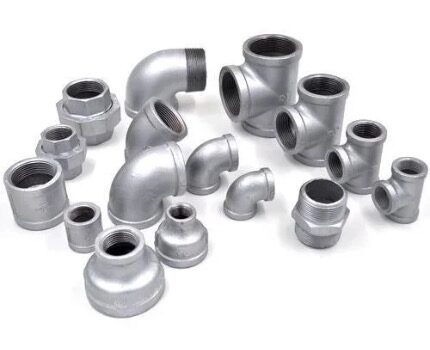
These tube fittings are commonly manufactured in threaded, compression, and socket weld configurations for various industrial applications. Their ability to maintain mechanical strength and corrosion resistance under demanding conditions makes them highly suitable for modern process industries.
Why ASTM A182 F304L Tube Fittings are Widely Used in USA Industries
American industries operate under highly demanding process conditions where even minor leakage or material failure can lead to major operational and financial losses. This is especially true in sectors such as chemical processing, pharmaceuticals, semiconductor manufacturing, and oil & gas processing.
ASTM A182 F304L tube fittings are preferred because they offer excellent resistance against oxidation, corrosion, and chemical attack while maintaining strong mechanical performance. Their low carbon composition allows better resistance against intergranular corrosion after welding, which is one of the most common causes of failure in industrial piping systems.
Another major reason for their popularity is their ability to perform under high-pressure and high-temperature conditions without compromising sealing integrity. Modern industrial systems increasingly involve automation, vibration, thermal cycling, and continuous operation, all of which place significant stress on tube fittings.
F304L forged fittings provide the durability and structural stability necessary for these advanced industrial environments.
The Engineering Challenges
Most online content about ASTM A182 F304L fittings focuses only on material specifications and pressure ratings. However, real-world industrial failures often happen because of engineering factors that are rarely discussed publicly.
In modern industrial plants, tube fittings are exposed to constant vibration, thermal expansion, pulsation, and pressure fluctuations. Over time, poorly engineered fittings may develop micro leakage due to ferrule relaxation, improper surface finishing, or dimensional inconsistency.
These issues may appear minor initially but can eventually cause process instability, contamination, or complete system shutdowns.
Advanced manufacturers now focus heavily on precision machining, controlled hardness, optimized ferrule geometry, and surface finish quality to improve long-term reliability. These advanced engineering factors play a crucial role in the overall performance of ASTM A182 F304L tube fittings.
Corrosion Resistance and Material Stability
One of the biggest advantages of ASTM A182 F304L tube fittings is their excellent corrosion resistance. The chromium content forms a passive oxide layer on the metal surface, protecting it against oxidation and environmental attack.
The nickel content improves toughness, ductility, and structural stability, especially in high-temperature applications. Because of the low carbon composition, F304L also offers improved protection against weld decay and intergranular corrosion.
This combination of properties makes ASTM A182 F304L suitable for industries where moisture, chemicals, steam, or corrosive gases are continuously present.
The material performs particularly well in applications involving clean water systems, food-grade processing, pharmaceutical manufacturing, and moderate chemical exposure.
Importance of Forged Construction
Forged fittings are generally stronger and more reliable than cast fittings because the forging process improves grain structure and reduces internal porosity.
ASTM A182 F304L forged tube fittings offer higher mechanical strength and better fatigue resistance, making them suitable for critical industrial systems where reliability is essential.
Forged fittings are also better at handling dynamic industrial loads such as vibration, pulsation, and repeated thermal expansion cycles. This is one of the main reasons why industries in the USA increasingly prefer forged stainless steel fittings over ordinary cast components.
Applications of ASTM A182 F304L Tube Fittings in USA
ASTM A182 F304L tube fittings are widely used across multiple industrial sectors in the United States.
In the oil and gas industry, they are commonly used in instrumentation lines, process piping, and fluid transfer systems where corrosion resistance and pressure handling are critical.
Chemical processing plants rely on these fittings for transferring chemicals, solvents, and corrosive fluids safely without leakage.
In pharmaceutical manufacturing, ASTM A182 F304L fittings are preferred because of their hygienic surface properties and contamination-free performance.
Food and beverage industries use these fittings in sanitary process systems because stainless steel provides easy cleaning and excellent hygiene standards.
Semiconductor and electronics industries also use F304L fittings for high-purity gas and fluid systems where even microscopic contamination can affect production quality.
Water treatment plants, marine systems, and renewable energy projects also extensively utilize these forged stainless steel tube fittings because of their durability and corrosion resistance.
Why Surface Finish Quality Matters
Surface finish is one of the least understood yet most important factors affecting industrial fitting performance.
Poor surface finishing can lead to turbulence, residue buildup, bacterial growth, and accelerated corrosion. In industries such as pharmaceuticals and food processing, rough internal surfaces can compromise hygiene and cleaning efficiency.
Modern ASTM A182 F304L tube fittings are manufactured with precision surface finishing techniques that improve fluid flow characteristics and reduce contamination risks.
Controlled surface roughness also improves cleanability in CIP and SIP systems, which are widely used in hygienic industries.
As industries move toward ultra-clean processing environments, surface finish quality has become increasingly important.
Mechanical Strength and Pressure Performance
ASTM A182 F304L tube fittings provide strong mechanical performance under demanding operating conditions. Their forged construction improves structural stability and pressure-handling capability.
These fittings are commonly used in systems operating under high pressure and elevated temperatures. Their ability to maintain sealing integrity under vibration and thermal cycling makes them highly reliable for critical applications.
Industrial plants increasingly demand tube fittings capable of operating continuously for long durations without maintenance-related failures. F304L forged fittings help meet these expectations by offering long-term durability and operational stability.
Quality Standards and Testing
Manufacturers like Mcneil Instruments Inc supplying ASTM A182 F304L tube fittings to the USA market typically follow international standards such as ASTM, ASME, ANSI, and ISO.
High-quality fittings undergo strict testing procedures to ensure safety and reliability. Common inspections include hydrostatic testing, pressure testing, PMI testing, hardness testing, dimensional verification, and surface finish inspection.
Material traceability is also becoming increasingly important, especially in industries involving safety-critical operations.
Reliable testing ensures that fittings can perform safely under real industrial conditions.
Future Demand for ASTM A182 F304L Tube Fittings in USA
The future demand for ASTM A182 F304L tube fittings in the United States is expected to grow steadily because of industrial modernization and infrastructure expansion.
Emerging industries such as hydrogen energy, semiconductor manufacturing, biotech processing, and smart manufacturing require highly reliable and contamination-free fluid systems.
Automation is also increasing the importance of leak-proof instrumentation systems capable of operating continuously with minimal maintenance.
Future industrial systems may increasingly integrate predictive maintenance technologies, smart monitoring systems, and automated leak detection. This will further increase the importance of precision-engineered forged tube fittings.
As industrial standards continue becoming stricter, the demand for high-quality ASTM A182 F304L tube fittings will continue rising across the American market.
Conclusion
ASTM A182 F304L Tube Fittings have become one of the most trusted forged stainless steel fitting solutions in the USA because of their excellent corrosion resistance, superior weldability, strong mechanical performance, and long-term reliability.
Modern industrial systems require far more than ordinary fittings. Precision engineering, surface finish quality, vibration resistance, thermal stability, and leak-proof sealing have become critical for safe and efficient operations.
From chemical processing and pharmaceuticals to oil & gas, food processing, semiconductor manufacturing, and renewable energy projects, ASTM A182 F304L forged tube fittings continue playing an essential role in modern industrial infrastructure across the United States.
As industries move toward automation, clean manufacturing, and advanced process control systems, the demand for premium-quality ASTM A182 F304L tube fittings will continue growing rapidly in the years ahead.
FAQS (Frequently Asked Questions)
1. What are ASTM A182 F304L tube fittings used for?
ASTM A182 F304L tube fittings are used in high-pressure piping, instrumentation, and fluid transfer systems across multiple industries.
2. Why is F304L preferred over standard SS304 in welded applications?
F304L has lower carbon content, which improves weldability and reduces the risk of intergranular corrosion.
3. Which industries commonly use ASTM A182 F304L tube fittings in the USA?
These fittings are widely used in oil & gas, chemical processing, pharmaceuticals, food processing, and semiconductor industries.
4. What makes forged ASTM A182 F304L fittings stronger than cast fittings?
Forged fittings offer better grain structure, higher strength, and improved resistance to pressure and vibration.
5. Why is surface finish important in ASTM A182 F304L tube fittings?
A smooth surface finish improves corrosion resistance, hygiene, cleanability, and overall flow efficiency.