ASTM A234 WP11 alloy steel tube fittings including elbows, tees, reducers and caps for oil and gas, petrochemical and power generation industries by Mcneil Instruments Inc.

ASTM A234 WP11 Tube Fittings for Oil & Gas, Petrochemical, and Power Generation Industries

Introduction

Industrial piping systems operating under high temperatures and pressures require materials that can deliver strength, durability, and reliable performance. In industries such as oil and gas, petrochemical processing, and power generation, selecting the right pipe fittings is essential for maintaining operational efficiency and minimizing the risk of equipment failure.

ASTM A234 WP11 is a chromium-molybdenum alloy steel grade widely used for manufacturing wrought pipe fittings designed for elevated-temperature service. These fittings are suitable for applications where conventional carbon steel may not provide the required high-temperature strength and resistance to oxidation.

Mcneil Instruments supplies industrial alloy products for demanding applications, helping businesses identify suitable materials for their piping system requirements.

What Are ASTM A234 WP11 Tube Fittings?

ASTM A234 WP11 is a specification covering wrought carbon steel and alloy steel pipe fittings intended for moderate and high-temperature service.

WP11 is a chromium-molybdenum alloy steel grade containing approximately 1.0–1.5% chromium and 0.44–0.65% molybdenum, depending on the applicable product specification and class.

The chromium content improves oxidation resistance, while molybdenum contributes to high-temperature strength and resistance to creep deformation.

ASTM A234 WP11 fittings are commonly manufactured in different configurations, including elbows, tees, reducers, and caps. They are designed to connect piping sections, change flow direction, and accommodate variations in pipe diameter.

These fittings are commonly used in piping systems that transport steam, hydrocarbons, and other fluids under demanding operating conditions.

Key Features of ASTM A234 WP11 Pipe Fittings

  1. Excellent High-Temperature Strength
    ASTM A234 WP11 fittings are designed for applications involving elevated temperatures. Their chromium-molybdenum composition helps maintain mechanical strength and structural stability during high-temperature service.

This makes them suitable for industrial piping systems where temperature fluctuations and continuous operation are common.

  1. Improved Oxidation Resistance
    The chromium content in WP11 alloy steel provides improved resistance to oxidation compared with conventional carbon steel.

This characteristic is particularly important in applications involving hot gases, steam, and elevated operating temperatures.

  1. Reliable Mechanical Properties
    ASTM A234 WP11 fittings offer a combination of tensile strength, yield strength, and toughness suitable for demanding industrial environments.

These properties help support piping system integrity under specified operating conditions.

  1. Suitable for High-Pressure Piping Systems
    When manufactured and selected according to applicable design requirements, WP11 fittings can be used in high-pressure industrial piping systems.

Their suitability depends on factors such as wall thickness, temperature, pressure, material class, and applicable piping codes.

  1. Compatibility With Alloy Steel Piping
    ASTM A234 WP11 fittings are commonly used with compatible chromium-molybdenum alloy steel pipes, including ASTM A335 P11.

This compatibility makes them suitable for piping systems designed for high-temperature service.

Applications of ASTM A234 WP11 Tube Fittings

Oil and Gas Industry
The oil and gas industry requires piping components capable of handling demanding operating temperatures, pressures, and fluid conditions.
ASTM A234 WP11 fittings are used in applications such as:
Refinery piping systems
Hydrocarbon processing units
High-temperature process lines
Steam piping systems
Industrial heating equipment
Their high-temperature mechanical properties make them suitable for selected applications in oil and gas processing facilities.
Petrochemical Industry
Petrochemical plants operate with complex processes involving high temperatures, pressure variations, and potentially corrosive fluids.
ASTM A234 WP11 fittings are used in:
Petrochemical processing units
Heat exchanger piping systems
Process heating systems
High-temperature transfer lines
Industrial steam distribution networks
Selecting the appropriate fitting material helps maintain piping system reliability and supports safe plant operations.
Power Generation Industry
Power generation facilities rely on piping systems that can withstand elevated temperatures and pressure during continuous operation.
ASTM A234 WP11 fittings are commonly used in:
Steam distribution systems
Boiler piping applications
Thermal power plants
High-temperature feedwater systems
Industrial turbine piping
Their chromium-molybdenum composition makes them suitable for selected high-temperature power generation applications.

Common Types of ASTM A234 WP11 Pipe Fittings

ASTM A234 WP11 fittings are available in different configurations to meet industrial piping requirements.

WP11 Elbows: Used to change the direction of fluid flow, commonly at 45° and 90° angles.
WP11 Tees: Used to create branch connections in piping systems.
WP11 Reducers: Used to connect pipes of different diameters while maintaining appropriate flow conditions.
WP11 Caps: Used to close the end of a piping section.

The selection of a fitting depends on piping layout, operating conditions, and applicable engineering specifications.

ASTM A234 WP11 Material Classes

ASTM A234 WP11 fittings are available in different material classes, including Class 1, Class 2, and Class 3.

These classes have different chemical composition and mechanical property requirements.

The appropriate class should be selected according to the applicable material specification, piping design requirements, and service conditions.

It is important to verify the material grade and class before purchasing fittings for critical industrial applications.

Quality Standards and Inspection Requirements

Quality assurance is essential when selecting ASTM A234 WP11 fittings for industrial piping systems.

The fittings should comply with the applicable ASTM A234 material requirements and relevant piping design codes.

Important quality checks include:
Chemical Composition Analysis: Confirms that the material meets the required chromium, molybdenum, and other alloying element specifications.
Mechanical Testing: Verifies tensile strength, yield strength, and other required mechanical properties.
Dimensional Inspection: Ensures that fitting dimensions, wall thickness, and tolerances meet the applicable standards.
Heat Treatment Verification: Confirms that the required heat treatment has been performed according to the applicable specification.
Material Traceability: Ensures that material identification and documentation are available for verification.

For critical applications, buyers should confirm the required inspection documentation, including material test certificates and any additional testing specified by the project.

Why Choose Mcneil Instruments for ASTM A234 WP11 Tube Fittings?

Mcneil Instruments provides industrial alloy products for applications across oil and gas, petrochemical, and power generation industries.

Selecting the right alloy steel fittings is essential for maintaining piping system performance under demanding operating conditions.

When sourcing ASTM A234 WP11 fittings, buyers should consider material specifications, dimensional requirements, pressure ratings, and quality documentation.

Mcneil Instruments can help customers identify suitable products based on their project requirements and applicable industry standards.

Conclusion

ASTM A234 WP11 tube fittings play an important role in industrial piping systems that operate under elevated temperatures and demanding pressure conditions.

Their chromium-molybdenum composition provides useful high-temperature strength and oxidation resistance, making them suitable for selected applications in oil and gas, petrochemical processing, and power generation.

Looking for reliable ASTM A234 WP11 tube fittings for oil and gas, petrochemical, or power generation applications?
Contact Mcneil Instruments to discuss your material specifications, dimensions, and project requirements.
Choose quality alloy steel fittings designed to support dependable performance in demanding industrial environments.

Frequently Asked Questions (FAQs)

  1. What are ASTM A234 WP11 tube fittings?
    ASTM A234 WP11 fittings are wrought chromium-molybdenum alloy steel pipe fittings designed for moderate and high-temperature service in industrial piping systems.
  2. What are ASTM A234 WP11 fittings used for?
    They are commonly used in oil and gas refineries, petrochemical plants, power generation facilities, steam piping systems, and other high-temperature industrial applications.
  3. What is the chemical composition of ASTM A234 WP11?
    ASTM A234 WP11 typically contains approximately 1.0–1.5% chromium and 0.44–0.65% molybdenum. The exact composition depends on the applicable material class and specification requirements.
  4. What is the difference between ASTM A234 WP11 and ASTM A234 WP22?
    Both are chromium-molybdenum alloy steel grades. WP11 generally contains lower chromium and molybdenum levels than WP22, making them suitable for different operating conditions and design requirements.
  5. Are ASTM A234 WP11 fittings suitable for high-pressure applications?
    Yes. They can be used in high-pressure piping systems when the fitting dimensions, material class, temperature, and pressure ratings meet the applicable design requirements.
  6. What types of ASTM A234 WP11 fittings are available?
    Common types include elbows, tees, reducers, and caps. These fittings are available in different dimensions and configurations to meet industrial piping requirements.
  7. Which pipe grade is commonly used with ASTM A234 WP11 fittings?
    ASTM A335 P11 alloy steel pipe is commonly used with ASTM A234 WP11 fittings in compatible high-temperature piping systems.
  8. What inspection documents should be requested when purchasing WP11 fittings?
    Buyers should verify material test certificates, chemical composition reports, mechanical test results, dimensional inspection records, and heat treatment documentation as required by the project specification.
Read More

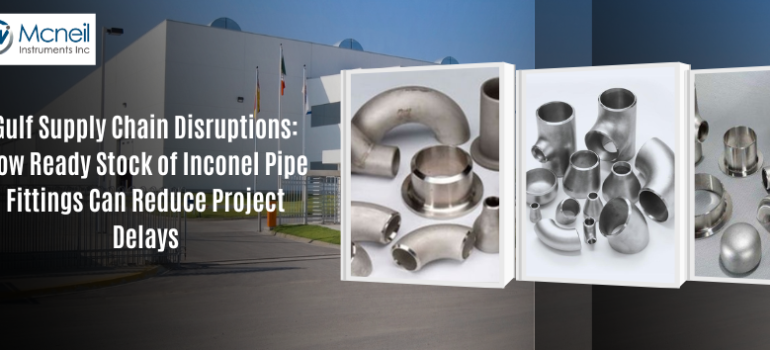
Gulf Supply Chain Disruptions: How Ready Stock of Inconel Pipe Fittings Can Reduce Project Delays

Introduction

Industrial projects across the Gulf region depend on a steady flow of specialized piping components, instrumentation materials, valves, fittings, and other critical equipment. In sectors such as oil and gas, petrochemicals, refineries, power generation, desalination, and chemical processing, even a small delay in receiving one essential component can affect installation schedules and commissioning timelines.

The current disruption to shipping routes in and around the Gulf has made this challenge more significant. Recent reports indicate that vessel traffic through the Strait of Hormuz has fallen substantially below normal pre-war levels, creating additional uncertainty for maritime logistics, delivery schedules, and freight movement.

For projects requiring specialized materials such as Inconel Pipe Fittings, relying entirely on just-in-time procurement can therefore create unnecessary exposure to logistics delays.

Maintaining ready stock of Inconel Pipe Fittings can provide an important buffer. Instead of waiting for a new manufacturing cycle and international shipment, project teams can source critical fittings from available inventory and keep installation work moving.


Why Gulf Supply Chains Are Facing Greater Pressure

The Gulf is a major center for energy, petrochemical, refining, marine, and industrial activity. A large proportion of industrial equipment and raw materials used in these projects moves through international shipping networks.

When conflict or geopolitical instability affects important maritime routes, several parts of the procurement process can be affected simultaneously.

Longer Transit Times

Ships may be forced to alter routes or wait for safer operating conditions, increasing transportation times.

Freight Uncertainty

Changes in vessel availability, routing, insurance requirements, and operating risks can affect transportation costs and delivery schedules.

Procurement Delays

A component that would normally arrive within a predictable lead time may suddenly require significantly more time.

Manufacturing Dependencies

If the required fitting is not already available, the buyer may need to wait for material procurement, manufacturing, inspection, certification, and shipment.

Project Schedule Impact

A missing piping component can prevent a particular section of a pipeline or process system from being completed, potentially affecting downstream installation and commissioning activities.

UNCTAD has highlighted the importance of the Strait of Hormuz to global maritime trade, while recent shipping developments demonstrate how geopolitical disruptions can quickly affect vessel movements.


Why Inconel Pipe Fittings Require Careful Procurement Planning

Inconel Pipe Fittings are nickel-based alloy components used in applications where high-temperature strength and corrosion resistance are important.

They are commonly considered for demanding environments involving:

  • High temperatures
  • Aggressive chemicals
  • Chloride exposure
  • Oxidizing conditions
  • Thermal cycling
  • High-pressure process systems

Nickel alloys are specifically used in applications where ordinary materials may not provide the required combination of corrosion resistance and high-temperature performance. ASTM’s current B462 specification, for example, covers nickel-alloy forged fittings and related components intended for corrosive, high-temperature service.

Because these are specialized engineering components, procurement cannot always be treated like buying a standard commodity fitting.

The required grade, dimensions, schedule, pressure class, connection type, specification, and certification must match the project requirement.


How Ready Stock Helps Reduce Project Delays

Maintaining ready inventory does not eliminate every supply-chain risk, but it can significantly reduce dependence on new production and long-distance transportation for urgent requirements.

1. Shorter Procurement Lead Times

If the required Inconel Pipe Fitting is already available in stock, the project does not necessarily need to wait for the complete manufacturing cycle.

The procurement process can move directly toward inspection, documentation, dispatch, and delivery.

This can be particularly valuable when a project is approaching a scheduled installation or commissioning milestone.


2. Protection Against Manufacturing Delays

Without ready stock, a new order may involve multiple stages:

Raw material → Manufacturing → Heat treatment → Machining → Inspection → Certification → Packing → Shipping → Delivery

Any disruption at one stage can affect the final delivery date.

Ready stock reduces the number of stages that need to be completed after the order is placed.


3. Reduced Exposure to Shipping Disruptions

The Gulf’s dependence on maritime logistics means international shipping disruptions can have consequences for industrial procurement.

Current conditions around the Strait of Hormuz demonstrate how quickly vessel movements can change during geopolitical disruptions. Reuters reported on August 11, 2026 that only six vessels passed through the strait on the previous day, compared with a pre-war norm of roughly 130 to 140 vessels.

Having critical fittings available before a disruption becomes a procurement emergency can reduce dependence on uncertain shipping windows.


4. Better Support for Shutdown and Maintenance Projects

Refinery and petrochemical maintenance projects often operate within tightly controlled shutdown windows.

When equipment is taken offline, installation teams may have a limited period to complete piping modifications, replacements, and repairs.

A missing fitting can create a disproportionate problem.

For example:

Planned maintenance → Component unavailable → Installation delayed → Testing delayed → Commissioning delayed

Ready stock can help reduce the possibility of this chain reaction.


5. Faster Response to Emergency Requirements

Industrial facilities can experience unexpected requirements due to:

  • Damaged fittings
  • Maintenance work
  • Corrosion-related replacement
  • Design modifications
  • Construction changes
  • Expansion projects
  • Commissioning requirements

If suitable Inconel fittings are already available, procurement teams have an immediate sourcing option instead of starting the entire purchasing cycle from the beginning.


6. Improved Project Procurement Planning

Ready stock can also be used as part of a broader inventory strategy.

Project teams can identify components that are:

Critical

A missing component can stop installation or commissioning.

Long Lead

The component requires significant time to manufacture and deliver.

Specialized

The component is manufactured from an uncommon material or requires specific dimensions and certifications.

High Risk

The component is particularly vulnerable to transportation or geopolitical disruptions.

Inconel Pipe Fittings can fall into several of these categories depending on the project specification.


Which Inconel Fittings Should Be Considered for Stock?

The appropriate stock profile depends on the application and project requirements. Common fitting configurations can include:

  • Inconel Elbows
  • Inconel Tees
  • Inconel Crosses
  • Inconel Reducers
  • Inconel Couplings
  • Inconel Unions
  • Inconel Caps
  • Inconel Plugs
  • Inconel Stub Ends
  • Inconel Socket Weld Fittings
  • Inconel Threaded Fittings
  • Inconel Butt Weld Fittings

For specialized projects, the inventory strategy should be based on historical consumption, project drawings, maintenance requirements, and expected replacement demand rather than simply stocking every possible configuration.


Choosing the Right Inconel Grade

Ready stock is only useful if the material actually matches the application.

Different Inconel grades provide different combinations of strength, corrosion resistance, temperature performance, and fabrication characteristics.

Inconel 600

Known for its resistance to oxidation and corrosion and used in applications involving elevated temperatures and aggressive environments.

Inconel 625

Offers a combination of high strength and corrosion resistance and is widely used in demanding chemical, marine, offshore, and process applications.

Inconel 718

Known for high mechanical strength and creep resistance, making it suitable for specialized high-performance applications.

The final grade should always be selected according to the project’s technical specification and operating conditions.


Ready Stock vs Just-in-Time Procurement

FactorReady StockJust-in-Time Procurement
Immediate availabilityHigh, if the required item is stockedLow
Exposure to shipping delaysLowerHigher
Manufacturing lead timeOften avoided for stocked itemsUsually required
Emergency requirementsEasier to addressMore difficult
Inventory costHigherLower
Project schedule protectionStrongerMore dependent on logistics
Best suited forCritical and long-lead componentsPredictable routine requirements

The objective is not necessarily to replace just-in-time procurement completely.

A better strategy can be to maintain strategic stock for critical components while continuing planned procurement for routine requirements.


How EPC Contractors Can Build a Strategic Inconel Inventory

A practical approach starts with identifying the components that could create the greatest project impact if unavailable.

Step 1: Identify Critical Components

Review piping drawings, bill of materials, maintenance records, and project schedules.

Step 2: Identify Long-Lead Materials

Highlight materials that require specialized manufacturing or international sourcing.

Step 3: Analyze Historical Consumption

Look at previous maintenance and replacement requirements to determine which fittings are regularly needed.

Step 4: Define Minimum Stock Levels

Establish minimum quantities for critical grades, sizes, and configurations.

Step 5: Verify Material Documentation

Stock should be accompanied by appropriate material identification and project-required documentation.

Step 6: Review Inventory Regularly

Avoid holding obsolete or project-specific fittings indefinitely. Inventory should be reviewed as project requirements change.


The Importance of Material Traceability

For specialized alloy fittings, having the physical component available is only part of the procurement requirement.

Project teams may also require documentation such as:

  • Material Test Certificates
  • Heat Number Traceability
  • Chemical Composition
  • Mechanical Test Results
  • Dimensional Inspection Reports
  • PMI Reports
  • Hydrostatic Test Reports where applicable
  • Third-Party Inspection Documentation where specified

For critical applications, procurement teams should confirm documentation requirements before accepting stock.

This helps prevent a situation where a fitting is physically available but cannot be released for installation because its material documentation does not satisfy the project specification.


Why Gulf Projects Should Consider Strategic Stock

The recent disruption to Gulf shipping illustrates an important procurement lesson: availability itself has become a risk-management consideration.

Shipping disruptions do not necessarily mean that every industrial component will become unavailable. However, uncertainty can make traditional lead-time assumptions less reliable.

Maritime risk around the Strait of Hormuz and Red Sea has already become an important consideration for supply-chain resilience planning.

For critical industrial components, strategic inventory can therefore act as a buffer between the project schedule and external logistics conditions.


Mcneil Instruments and Inconel Pipe Fittings

Mcneil Instruments supplies Inconel Pipe Fittings for demanding industrial applications where corrosion resistance, high-temperature performance, and reliable mechanical properties are important.

Its Inconel product range is positioned for applications across industries such as:

  • Oil & Gas
  • Petrochemical
  • Chemical Processing
  • Power Generation
  • Marine
  • Offshore
  • Refineries
  • Industrial Process Systems

For Gulf projects, sourcing specialized fittings from an experienced manufacturer and supplier can help procurement teams evaluate material grades, fitting configurations, specifications, documentation, and availability before placing an order.


Conclusion

Gulf industrial projects operate in an environment where supply-chain reliability can directly affect project schedules. Recent disruptions around major maritime routes have demonstrated how quickly geopolitical developments can affect shipping activity and create uncertainty for international procurement.

For specialized components such as Inconel Pipe Fittings, maintaining strategic ready stock can reduce dependence on new manufacturing cycles and uncertain transportation schedules.

The most effective approach is not simply to stock large quantities. It is to identify critical, specialized, and long-lead components, maintain appropriate inventory levels, verify material traceability, and establish dependable supplier relationships.

For EPC contractors, refineries, petrochemical plants, oil & gas companies, and other industrial facilities across the Gulf, this approach can provide an additional layer of protection against unexpected procurement delays and help keep critical project activities moving.

Frequently Asked Questions

Why are Inconel Pipe Fittings important for Gulf industries?

They are used in demanding industrial environments where corrosion resistance, high-temperature performance, and mechanical reliability are important.

How can ready stock reduce project delays?

Ready stock can eliminate or reduce the need to wait for a new manufacturing cycle and can provide an alternative when international shipping schedules become uncertain.

Should every Inconel fitting be kept in stock?

No. Strategic stock should focus on critical, frequently required, specialized, or long-lead components relevant to the facility or project.

What should buyers verify before purchasing stocked Inconel fittings?

Buyers should verify the alloy grade, dimensions, schedule or pressure class, fitting configuration, applicable ASTM/ASME specification, material traceability, inspection requirements, and required certification.

Is ready stock a replacement for normal procurement?

Not necessarily. A combination of planned procurement and strategic inventory is generally more practical than relying exclusively on either approach.

Read More