Introduction: Why Industrial Tubes Are Essential for Nigeria’s Growing Economy
Nigeria is rapidly expanding its industrial capabilities across sectors such as oil & gas, petrochemicals, power generation, marine engineering, manufacturing, and infrastructure development.
As industrial investments continue to grow across Lagos, Abuja, Port Harcourt, Warri, Kano, and Kaduna, the demand for durable and high-performance tubing solutions has increased significantly.
Modern industries require tubes capable of handling:
• High-pressure operations
• Corrosive environments
• Offshore conditions
• Chemical processing systems
• Heat transfer applications
• Continuous industrial operations
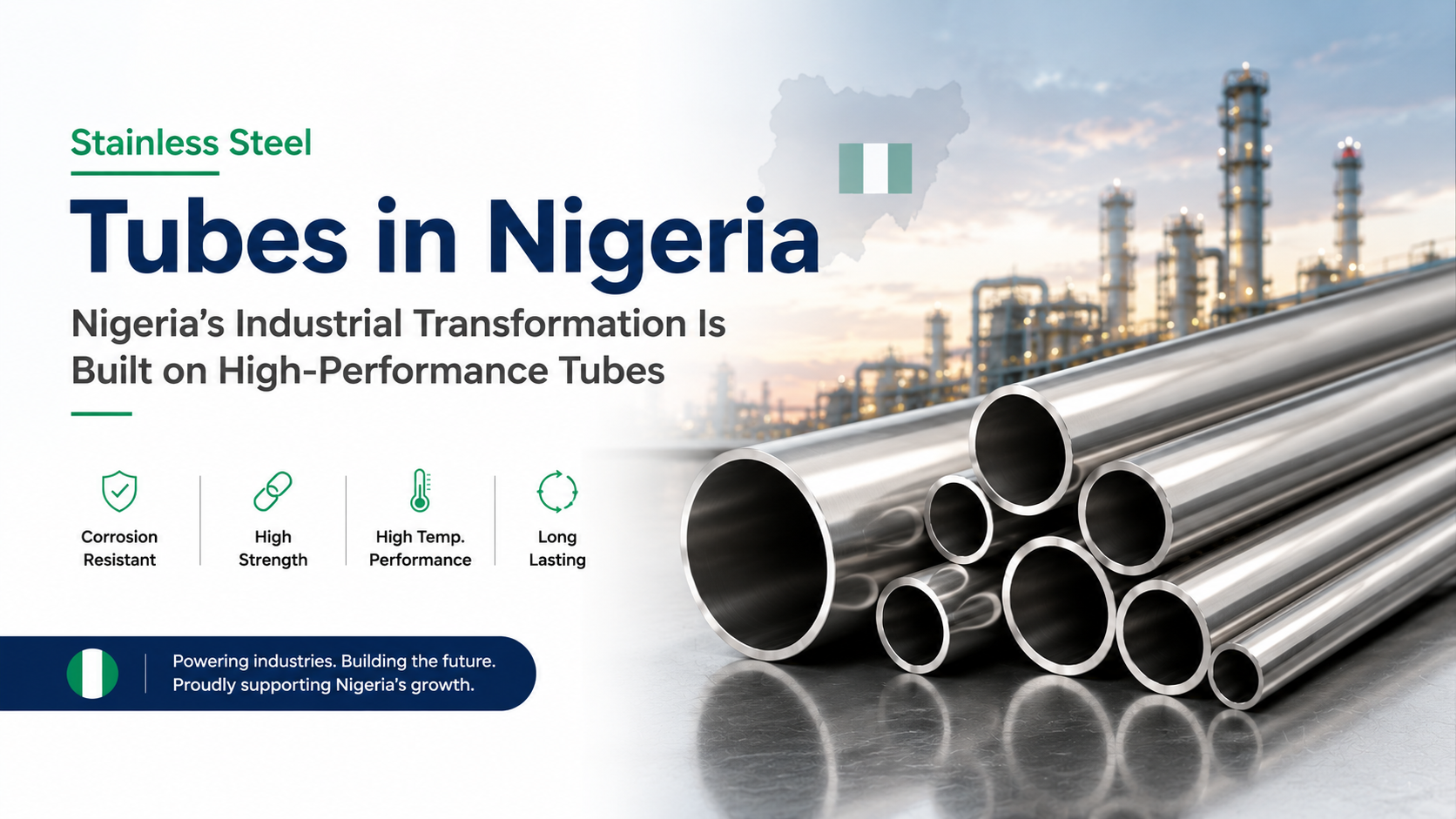
This is exactly why Industrial Tubes have become one of the most important components in Nigeria’s industrial infrastructure.
From transporting critical fluids to supporting heat exchangers and instrumentation systems, industrial tubes play a vital role in ensuring operational efficiency and reliability.
What Are Industrial Tubes?
Industrial tubes are hollow cylindrical products manufactured for transporting fluids, gases, steam, chemicals, and other industrial media.
Unlike conventional piping systems, tubes are often used where:
• Precision is required
• Higher pressure handling is needed
• Heat transfer efficiency is critical
• Compact system design is preferred
Industrial tubes are widely used across:
• Refineries
• Power plants
• Petrochemical facilities
• Offshore platforms
• Manufacturing industries
• Water treatment plants
Why Nigeria’s Industries Depend on Industrial Tubes
Industrial operations throughout Nigeria frequently operate under demanding environmental conditions including:
• High humidity
• Coastal salt exposure
• Chemical processing environments
• Elevated temperatures
• Heavy industrial workloads
To ensure uninterrupted performance, industries require tubing systems that provide:
• Corrosion resistance
• Mechanical strength
• Thermal stability
• Pressure reliability
• Long operational life
Industrial tubes are specifically engineered to meet these requirements.
Key Benefits of Industrial Tubes
Excellent Corrosion Resistance
High-quality industrial tubes resist:
• Rust formation
• Chemical attack
• Oxidation
• Chloride corrosion
• Moisture-related deterioration
This makes them particularly valuable for Nigeria’s offshore and coastal industries.
Superior Pressure Capability
Industrial tubes are designed to withstand demanding pressure conditions.
Applications include:
• Hydraulic systems
• Steam systems
• Instrumentation systems
• Chemical processing operations
Reliable pressure handling improves operational safety and efficiency.
Outstanding Heat Resistance
Many industrial processes involve elevated temperatures.
Industrial tubes maintain structural stability in:
• Boilers
• Heat exchangers
• Thermal processing units
• Refinery systems
This ensures long-term performance under demanding thermal conditions.
Reduced Maintenance Costs
Durable tubing systems help reduce:
• Plant downtime
• Maintenance expenses
• Component failures
• Replacement frequency
This improves overall productivity and profitability.
Major Types of Tubes Used in Nigeria
Stainless Steel Tubes
Stainless steel tubes are widely used because of their excellent corrosion resistance and durability.
Features
• High corrosion resistance
• Hygienic surface finish
• Excellent strength
• Long service life
Applications
• Food processing plants
• Pharmaceutical facilities
• Water treatment plants
• Chemical industries
Carbon Steel Tubes
Carbon steel tubes are known for their strength and economical performance.
Benefits
• High mechanical strength
• Good weldability
• Cost-effective solution
• Excellent pressure capability
Applications
• Structural projects
• Utility systems
• Industrial piping networks
• Construction sectors
Alloy Steel Tubes
Alloy steel tubes contain chromium and molybdenum that improve performance under high temperatures.
Advantages
• Superior heat resistance
• Excellent creep strength
• High-pressure capability
• Long operational reliability
Applications
• Power plants
• Boilers
• Refineries
• Petrochemical facilities
Heat Exchanger Tubes
Heat exchanger tubes are designed for efficient thermal transfer.
Features
• High thermal conductivity
• Corrosion resistance
• Pressure stability
• Long service life
Applications
• Refineries
• Chemical plants
• Cooling systems
• Power generation facilities
Instrumentation Tubes
Instrumentation tubes provide precision flow control and measurement.
Benefits
• High dimensional accuracy
• Smooth internal finish
• Leak-proof performance
• Reliable pressure handling
Applications
• Instrument panels
• Hydraulic systems
• Pneumatic systems
• Process control systems
Technical Specifications
| Parameter | Specification |
| Product | Industrial Tubes |
| Types | Seamless & Welded |
| Materials | Stainless Steel, Carbon Steel, Alloy Steel |
| Standards | ASTM / ASME |
| Size Range | 1/8″ to 24″ |
| Thickness | SCH 10 to SCH XXS |
| Applications | Oil & Gas, Marine, Chemical & Power Industries |
Seamless Tubes vs Welded Tubes
| Feature | Seamless Tubes | Welded Tubes |
| Strength | Excellent | Good |
| Pressure Capability | Superior | Moderate |
| Structural Integrity | Excellent | Good |
| Cost | Higher | Economical |
| Preferred Application | Critical Systems | General Industrial Use |
Seamless tubes are generally preferred for high-pressure and high-temperature applications.
Why Tubes Are Essential for Nigeria’s Oil & Gas Industry
Nigeria remains one of Africa’s leading oil and gas producers.
The industry requires tubing systems capable of handling:
• Offshore operations
• Refinery processing
• Gas transmission
• High-pressure environments
• Corrosive fluids
Industrial tubes provide the reliability needed to maintain safe and efficient operations.
Major Industries Using Industrial Tubes in Nigeria
Oil & Gas Industry
Used in:
• Offshore platforms
• Refineries
• Gas processing plants
• Production facilities
Petrochemical Industry
Support chemical transfer and process systems.
Power Generation Sector
Used in:
• Boilers
• Steam systems
• Heat exchangers
• Thermal plants
Marine Industry
Provide corrosion-resistant performance in offshore and coastal environments.
Water Treatment Facilities
Support efficient and contamination-free water processing operations.
Manufacturing Industry
Used in utility systems, production equipment, and industrial process lines.
Quality Testing & Inspection
Industrial tubes undergo rigorous testing including:
• Hydrostatic testing
• Ultrasonic testing
• PMI testing
• Mechanical testing
• Dimensional inspection
• Corrosion resistance testing
These procedures ensure compliance with international quality standards.
The Future of Industrial Tubes in Nigeria
As Nigeria continues investing in:
• Energy infrastructure
• Industrial development
• Refinery modernization
• Manufacturing growth
• Marine projects
the demand for high-performance tubing solutions will continue to increase.
Industrial tubes will remain a critical component supporting the country’s long-term industrial expansion.
Conclusion
Industrial tubes are essential for maintaining efficiency, safety, and reliability across Nigeria’s most important industries.
From offshore oil platforms and petrochemical plants to power stations and manufacturing facilities, industrial tubes provide the strength, corrosion resistance, and durability required for modern operations.
Their ability to withstand pressure, heat, and harsh environmental conditions makes them one of the most valuable components in Nigeria’s growing industrial infrastructure.