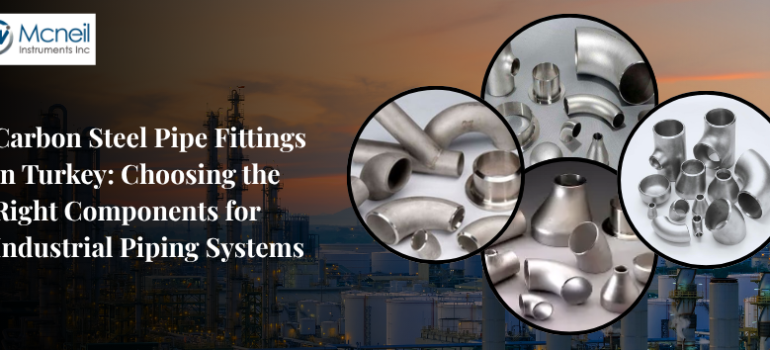
Carbon Steel Pipe Fittings in Turkey: Choosing the Right Components for Industrial Piping Systems
Introduction
Turkey has a diverse industrial base spanning energy, petrochemicals, manufacturing, construction, power generation, marine industries, and water infrastructure. As these sectors continue to develop and modernize, reliable piping systems remain essential for transporting liquids, gases, steam, and other process media.
At the connection points of these systems, Carbon Steel Pipe Fittings play an important role. Elbows, tees, reducers, caps, couplings, unions, and other fittings help create complete piping networks while maintaining mechanical strength and pressure integrity.
Turkey’s carbon steel pipe fittings market serves applications across oil & gas, chemicals and petrochemicals, construction and infrastructure, and general industrial operations.
For EPC contractors, plant operators, engineering companies, and industrial distributors in Turkey, selecting the right Carbon Steel Pipe Fittings Supplier is therefore an important part of project planning.
What Are Carbon Steel Pipe Fittings?
Carbon steel pipe fittings are components used to connect, redirect, reduce, terminate, or extend sections of carbon steel piping.
They are manufactured in different configurations depending on the requirements of the piping system.
Common examples include:
- Elbows
- Tees
- Reducers
- Caps
- Couplings
- Unions
- Crosses
- Adapters
- Nipples
- Stub ends
- Forged fittings
- Butt weld fittings
The selection depends on pipe size, pressure, temperature, connection method, material specification, and application.
Why Carbon Steel Pipe Fittings Are Important for Turkish Industries
Carbon steel remains an important engineering material because it provides a practical combination of strength, machinability, weldability, and cost efficiency.
In Turkey, industrial demand for pipe fittings is connected to several sectors, including:
Oil & Gas
Carbon steel fittings can be used in pipelines, processing facilities, storage systems, and associated infrastructure where the material is appropriate for the service conditions.
Chemical and Petrochemical Industries
Processing plants require piping systems capable of handling fluids under controlled temperature and pressure conditions.
Power Generation
Carbon steel fittings are used in various utility and process piping systems within power-generation facilities.
Construction and Infrastructure
Industrial and infrastructure projects use pipe fittings in water, heating, utility, fire-protection, and other piping networks.
Marine and Shipbuilding
Turkey’s shipbuilding sector also creates demand for engineered piping components for marine systems.
Water Treatment
Carbon steel fittings can be used in suitable water and utility applications where corrosion protection and material compatibility are adequately addressed.
Mcneil Instruments’ published Turkey-focused pipe fitting information identifies oil & gas, petrochemical, power generation, chemical processing, construction, marine, and water treatment among relevant industrial sectors.
Common Types of Carbon Steel Pipe Fittings
Carbon Steel Elbows
Elbows are used to change the direction of a piping system.
Common configurations include:
- 45-degree elbows
- 90-degree elbows
- Long-radius elbows
- Short-radius elbows
The appropriate elbow depends on the piping layout, flow requirements, pressure conditions, and applicable specifications.
Carbon Steel Tees
A tee creates a branch connection within a piping network.
They are commonly available as:
- Equal tees
- Reducing tees
Tees are used where process flow needs to be divided or combined.
Carbon Steel Reducers
Reducers connect pipes with different diameters.
Two common types are:
- Concentric reducers
- Eccentric reducers
The selection depends on the piping arrangement and flow requirements.
Carbon Steel Caps
Caps are used to close the end of a pipe or piping section.
They can be useful during:
- Pipeline construction
- Equipment connections
- Maintenance
- Temporary isolation
- Permanent piping termination
Carbon Steel Couplings
Couplings connect two sections of pipe or tubing.
They are commonly used in applications where a straight connection is required.
Butt Weld vs Forged Carbon Steel Fittings
One of the important decisions when purchasing carbon steel fittings is selecting the appropriate fitting manufacturing and connection type.
Butt Weld Fittings
Butt weld fittings are welded directly to the pipe.
Typical examples include:
- Elbows
- Tees
- Reducers
- Caps
- Stub ends
They are commonly used in process and industrial piping systems where permanent welded connections are required.
Forged Fittings
Forged fittings are manufactured through a forging process and are available in configurations such as:
- Socket weld fittings
- Threaded fittings
- Couplings
- Unions
- Adapters
- Nipples
The appropriate type depends on the system design, pressure requirements, pipe dimensions, and applicable engineering standards.
Mcneil Instruments identifies both butt weld and forged fitting categories within its industrial pipe fitting range.
How to Select Carbon Steel Pipe Fittings for a Turkish Industrial Project
Buying fittings based only on nominal pipe size is not enough.
Several technical factors should be evaluated.
1. Material Specification
Confirm the required carbon steel grade and applicable ASTM, ASME, or project-specific specification.
Material selection should be based on operating conditions rather than simply choosing the lowest-cost option.
2. Pipe Size
The fitting must correspond to the outside diameter and nominal pipe size of the connecting pipe.
Incorrect sizing can create installation problems and compromise the piping system.
3. Wall Thickness and Schedule
The fitting should be compatible with the pipe wall thickness and system design.
Schedule requirements may vary according to:
- Operating pressure
- Temperature
- Pipe size
- Design code
- Application
4. Pressure Rating
The fitting must be capable of handling the design and operating pressure of the system.
For high-pressure applications, the pressure class and applicable standards should be confirmed before procurement.
5. Operating Temperature
Temperature can influence material strength and long-term performance.
Fittings should therefore be selected according to the maximum and minimum operating temperatures specified by the engineering team.
6. Connection Type
Determine whether the project requires:
- Butt weld
- Socket weld
- Threaded
- Flanged
- Other specified connections
The connection must correspond to the piping design.
7. Corrosion Conditions
Carbon steel is not universally suitable for every corrosive environment.
Where the process medium or external environment presents a significant corrosion risk, engineers may specify stainless steel, alloy steel, or another corrosion-resistant material.
Protective coatings or other corrosion-control measures may also be required depending on the application.
Why Quality Matters in Carbon Steel Fittings
Pipe fittings are small compared with many pieces of industrial equipment, but they are critical pressure-bearing components within piping networks.
Poor-quality or incorrectly specified fittings can contribute to:
- Leakage
- Premature failure
- Installation problems
- Increased maintenance
- Unplanned downtime
- Safety concerns
Modern industrial procurement therefore places increasing emphasis on pressure integrity, standards compliance, inspection, and system reliability.
A reliable supplier should be able to provide fittings that meet the required technical specification rather than simply supplying a visually similar component.
Material Documentation and Traceability
For industrial projects, documentation can be just as important as the physical product.
Depending on the project requirements, buyers may need:
- Material Test Certificates
- Heat number traceability
- Chemical composition
- Mechanical test results
- Dimensional inspection
- Pressure testing
- PMI where specified
- Third-party inspection
- Certificate of conformity
Documentation requirements should be agreed upon before the purchase order is finalized.
This is especially important for EPC projects where materials may need to pass formal inspection and approval before installation.
Why Supplier Reliability Matters in Turkey
Turkey’s position between Europe, Asia, and the Middle East makes it an important industrial and logistics market. Its steel pipe and tube sector serves applications ranging from oil & gas and petrochemicals to power generation, mechanical engineering, transportation, and construction.
For Turkish buyers, choosing a supplier should therefore involve more than comparing prices.
Important supplier-selection factors include:
Manufacturing Capability
Can the supplier provide the required fitting type and material grade?
Product Range
Can one supplier support multiple fitting configurations?
Quality Control
Does the supplier have appropriate inspection and testing procedures?
Documentation
Can the required certificates and traceability records be provided?
Export Experience
Can the supplier manage international packaging, documentation, and shipment requirements?
Custom Requirements
Can the supplier accommodate project-specific dimensions or configurations where required?
Carbon Steel Fittings for Oil & Gas Applications
Oil & gas remains one of the major application areas for carbon steel pipe fittings.
Piping systems in this sector may transport:
- Crude oil
- Natural gas
- Refined products
- Water
- Steam
- Process fluids
Fittings must be selected according to the actual service conditions, applicable codes, pressure requirements, temperature, and fluid compatibility.
Because oil & gas projects typically involve strict engineering specifications, procurement teams should confirm all requirements before placing an order.
Carbon Steel Fittings for Petrochemical Plants
Petrochemical facilities contain extensive piping networks connecting:
- Process equipment
- Storage systems
- Heat exchangers
- Reactors
- Pumps
- Compressors
- Utility systems
Carbon steel fittings can be suitable for many applications when their material and design are compatible with the process conditions.
The fitting specification should always be determined by the engineering requirements of the individual system.
Carbon Steel Fittings for Power Plants
Power plants use interconnected piping networks for:
- Water
- Steam
- Fuel
- Cooling systems
- Compressed air
- Utility services
Carbon steel fittings may be specified for suitable systems depending on temperature, pressure, and fluid conditions.
For high-temperature steam applications, however, engineers may specify alloy steel or other materials where required.
Carbon Steel Fittings for Water Infrastructure
Turkey’s ongoing infrastructure development also creates demand for piping components used in water and utility systems. Market research identifies construction and infrastructure as one of the application segments for carbon steel pipe fittings in Turkey.
The suitability of carbon steel depends on the water chemistry, corrosion protection, pressure, and design requirements.
Benefits of Carbon Steel Pipe Fittings
When correctly specified, carbon steel fittings offer several practical advantages.
Strength
Carbon steel provides good mechanical strength for many industrial piping applications.
Cost Efficiency
Compared with many specialty alloys, carbon steel can provide an economical solution for suitable service environments.
Fabrication
Carbon steel can be fabricated and welded using established industrial processes.
Availability
Standard carbon steel fittings are widely used across industrial piping applications.
Versatility
They can be used across multiple sectors when the material is appropriate for the operating conditions.
Why Turkish Buyers Should Consider Long-Term Supplier Relationships
Industrial piping projects rarely involve a single purchase.
A contractor or plant operator may require fittings for:
- New construction
- Expansion projects
- Plant modifications
- Maintenance
- Shutdowns
- Replacement
- Emergency repairs
Working with a dependable supplier can simplify repeat procurement because specifications, documentation requirements, and quality expectations are already established.
This can help reduce the time spent qualifying a new supplier for every project.
Mcneil Instruments Carbon Steel Pipe Fittings
Mcneil Instruments manufactures and supplies industrial pipe fittings for applications requiring strength, dimensional accuracy, pressure resistance, and dependable service.
Its published Turkey-focused information covers pipe fittings for sectors including oil & gas, petrochemical, power generation, chemical processing, construction, marine, and water treatment.
The company’s fitting range includes:
- Butt weld fittings
- Forged fittings
- Socket weld fittings
- Threaded fittings
- Couplings
- Unions
- Adapters
- Nipples
- Stub ends
- Custom-designed fittings
For Turkish industrial buyers, the ability to source multiple fitting configurations from one experienced supplier can simplify procurement for complex piping projects.
Building Reliable Piping Systems in Turkey
A successful piping project depends on more than selecting a pipe.
The complete system requires compatible:
Pipes + Fittings + Valves + Flanges + Instruments + Supporting Components
Each component must work together according to the project’s engineering requirements.
For this reason, carbon steel pipe fittings should be selected based on:
- Material
- Size
- Schedule
- Pressure
- Temperature
- Connection type
- Applicable standards
- Process conditions
- Inspection requirements
Getting these factors right from the beginning can help reduce installation issues and future maintenance problems.
Conclusion
Turkey’s growing industrial, energy, infrastructure, marine, and manufacturing sectors continue to create demand for reliable piping components. Carbon steel pipe fittings remain an important choice for many applications because of their combination of strength, versatility, fabrication characteristics, and cost efficiency.
However, the right fitting is not simply the cheapest or most readily available option.
For industrial projects, buyers need to consider material specification, dimensions, pressure rating, temperature, connection type, standards, testing, and traceability.
Choosing a dependable Carbon Steel Pipe Fittings Supplier in Turkey can make procurement more predictable and help EPC contractors, distributors, and plant operators maintain the quality and reliability expected from modern industrial piping systems.
Mcneil Instruments provides carbon steel and other industrial pipe fittings for demanding applications, with a product range covering butt weld, forged, socket weld, threaded, and other fitting configurations.
Frequently Asked Questions
What are carbon steel pipe fittings used for?
Carbon steel pipe fittings are used to connect, redirect, reduce, extend, and terminate piping systems. They are widely used in oil & gas, petrochemical, power, construction, water, marine, and general industrial applications.
Which carbon steel fittings are commonly used?
Common types include elbows, tees, reducers, caps, couplings, unions, adapters, nipples, crosses, and stub ends.
How do I choose the right carbon steel fitting?
Consider the material grade, pipe size, wall thickness, pressure rating, operating temperature, connection type, process medium, applicable standards, and inspection requirements.
Are carbon steel fittings suitable for all applications?
No. Material suitability depends on the operating environment. Highly corrosive or extreme-temperature applications may require stainless steel, alloy steel, or specialty alloys.
Why is documentation important when buying industrial fittings?
Material certificates, traceability, inspection records, and other documentation help verify that the supplied fittings comply with project and engineering requirements.
Why choose Mcneil Instruments for Turkey?
Mcneil Instruments offers a broad range of industrial pipe fittings and supports applications across oil & gas, petrochemical, power, chemical processing, construction, marine, and water-treatment sectors.