Stainless steel tube fittings by Mcneil Instruments Inc., manufacturer, supplier and exporter of industrial instrumentation fittings in Nigeria.

Stainless Steel Tube Fittings Manufacturer, Supplier & Exporter in Nigeria

Stainless Steel Tube Fittings are essential components in industrial instrumentation, hydraulic, pneumatic, and fluid-handling systems. Designed to connect tubing securely, these fittings help maintain reliable flow paths for liquids and gases across demanding industrial applications. Their corrosion resistance, mechanical strength, and precision-engineered connections make them suitable for environments where dependable performance and leak prevention are important.


Mcneil Instruments offers Stainless Steel Tube Fittings in multiple grades, including SS 304, SS 304L, SS 316, SS 316L, SS 321, SS 347, Duplex 2205, Super Duplex 2507, 17-4PH, and 15-5PH. These fittings support industrial requirements across oil and gas, petrochemical processing, marine engineering, pharmaceuticals, food processing, power generation, and instrumentation systems.
For Nigerian industries, choosing the appropriate tube fitting requires careful consideration of material grade, tube dimensions, connection type, pressure requirements, and operating conditions. Mcneil Instruments supplies tube fitting solutions for projects requiring precision, durability, and compliance with applicable technical specifications.

What Are Stainless Steel Tube Fittings?

Stainless Steel Tube Fittings are precision-engineered connectors used to join, redirect, branch, or terminate tubing in industrial systems. They are commonly installed in instrumentation panels, hydraulic circuits, pneumatic systems, process control equipment, and fluid distribution networks.


Depending on the design, tube fittings may use compression ferrules, threaded connections, or other specified connection arrangements. Compression fittings are particularly useful in instrumentation systems because they can provide secure tubing connections without requiring the tube to be welded directly to the fitting.


Stainless steel construction offers a combination of mechanical strength and corrosion resistance. The suitability of a fitting depends on the grade, pressure rating, tube material, fluid compatibility, temperature, and installation procedure.

Key Functions of Stainless Steel Tube Fittings

Connect stainless steel tubing to instruments, valves, and other equipment.
Provide connections for liquid and gas transmission systems.
Support pressure-containing instrumentation applications.
Enable branching, direction changes, and transitions between connection types.
Simplify installation and maintenance of tubing networks.
Help reduce leakage risks when correctly selected and installed.

Stainless Steel Tube Fitting Grades Available

Mcneil Instruments lists several stainless steel and specialty alloy options for industrial tube fitting applications. Each grade has different properties, making material selection dependent on the intended service environment.

  1. Stainless Steel 304 Tube Fittings
    SS 304 is a widely used austenitic stainless steel grade that offers good general corrosion resistance, strength, and fabrication characteristics.
    Typical applications:
    General industrial instrumentation
    Manufacturing equipment
    Food and beverage processing systems
    Utility lines
    Suitable fluid and gas handling applications
    SS 304 is a practical option for many general-purpose applications where the environment does not require the additional corrosion resistance of a higher-alloy grade.
  2. Stainless Steel 304L Tube Fittings
    SS 304L is the low-carbon version of SS 304. Its lower carbon content helps reduce the risk of sensitization during welding under appropriate fabrication conditions.
    Typical applications:
    Fabricated instrumentation assemblies
    Industrial process equipment
    Chemical processing systems
    Applications requiring welded stainless steel components
    The choice between SS 304 and SS 304L should reflect the fabrication method, service environment, and applicable material specification.
  3. Stainless Steel 316 Tube Fittings
    SS 316 contains molybdenum, which improves resistance to pitting and crevice corrosion in many chloride-containing environments compared with SS 304.
    Typical applications:
    Marine and offshore equipment
    Oil and gas instrumentation
    Chemical processing plants
    Petrochemical facilities
    Water treatment systems
    SS 316 is commonly considered for applications where moisture, chlorides, or corrosive process conditions make enhanced corrosion resistance important.
  4. Stainless Steel 316L Tube Fittings
    SS 316L combines the corrosion-resistance characteristics of SS 316 with a lower carbon content. It is frequently selected for applications involving welded assemblies and demanding industrial environments.
    Typical applications:
    Offshore instrumentation systems
    Chemical processing equipment
    Pharmaceutical production systems
    Marine installations
    Selected water treatment applications
  5. Stainless Steel 321 Tube Fittings
    SS 321 is a titanium-stabilized austenitic stainless steel grade. It is used in selected applications where elevated-temperature service and resistance to intergranular corrosion are relevant considerations.
    Typical applications:
    Industrial heating systems
    Selected high-temperature process equipment
    Thermal processing installations
    Applications specified for stabilized stainless steel
  6. Stainless Steel 347 Tube Fittings
    SS 347 is a niobium-stabilized stainless steel grade used in applications where elevated-temperature properties and resistance to intergranular corrosion are important.
    Typical applications:
    Selected high-temperature process systems
    Power generation equipment
    Industrial thermal systems
    Applications requiring a stabilized stainless steel grade
  7. Duplex 2205 Tube Fittings
    Duplex 2205 combines austenitic and ferritic microstructures. It offers higher strength than many conventional austenitic stainless steels and enhanced resistance to several forms of corrosion.
    Typical applications:
    Oil and gas processing
    Offshore installations
    Chemical processing systems
    Water treatment facilities
    Selected marine applications
  8. Super Duplex 2507 Tube Fittings
    Super Duplex 2507 is a high-alloy duplex stainless steel developed for demanding environments requiring high strength and enhanced corrosion resistance, particularly in suitable chloride-containing services.
    Typical applications:
    Offshore oil and gas systems
    Seawater handling equipment
    Desalination installations
    Marine engineering
    Aggressive industrial process environments
  9. 17-4PH and 15-5PH Tube Fittings
    These precipitation-hardening stainless steel grades are associated with applications requiring high strength and specific mechanical properties. Their suitability depends on the required material condition, corrosion exposure, and engineering specification.

  10. For all grades, the final selection should be based on actual operating conditions rather than the grade name alone.

Types of Stainless Steel Tube Fittings

Different fitting configurations support different tubing layouts and equipment connections.
Stainless Steel Compression Tube Fittings
Compression fittings use components such as a fitting body, nut, and ferrule system to create a connection around the tube. Correct tube preparation, dimensional compatibility, and installation procedure are essential to achieve reliable sealing.
They are widely used in instrumentation, pneumatic, and fluid handling systems.
Stainless Steel Double Ferrule Tube Fittings
Double ferrule fittings use two ferrules designed to perform different functions within the connection assembly. The front ferrule helps establish the seal, while the back ferrule provides gripping and support according to the fitting design.
These fittings are commonly selected for instrumentation applications that require dependable tube connections. Their performance depends on compatibility between the fitting, tubing dimensions, material, and installation method.
Stainless Steel Male Connectors
Male connectors connect tubing to female-threaded ports on valves, instruments, manifolds, and other equipment.
Connection options may include NPT, BSPT, BSPP, or metric threads, depending on the specified configuration.
Stainless Steel Male Elbows
Male elbows allow tubing to connect to threaded ports while changing the direction of the flow path. They can help reduce the space required for tubing arrangements in compact instrumentation installations.
Stainless Steel Tees
Tube fitting tees create branch connections within a tubing network. Different configurations are available according to the required run and branch connections.
Stainless Steel Bulkhead Connectors
Bulkhead connectors provide tubing connections through panels, enclosures, or equipment walls. They are useful in instrumentation cabinets and process control assemblies where tubing must pass through a mounting surface.
Stainless Steel Reducing Connectors
Reducing connectors accommodate specified transitions between different tube sizes or connection dimensions. The fitting must be compatible with both connected components and the intended operating pressure.

Technical Specifications of Stainless Steel Tube Fittings

Mcneil Instruments publishes the following specifications for its tube fitting range. Confirm the exact grade, dimensions, pressure rating, and connection configuration for the specific product before ordering.


Parameter Published details
Product Stainless Steel Tube Fittings
Material grades SS 304, 304L, 316, 316L, 321, 347, Duplex 2205, Super Duplex 2507, 17-4PH and 15-5PH
Tube size range 1/16 inch OD to 2 inches OD, with metric sizes up to 50 mm OD listed for the broader tube fitting range
Stainless steel pressure rating Up to 6,000 PSI for the broader tube fitting range
Thread types NPT/NPTF, BSP, JIS PT, SAE and metric tapered or parallel threads
Fitting configurations Compression fittings, connectors, elbows, tees, bulkhead fittings and adapters
Applications Instrumentation, hydraulic, pneumatic and fluid handling systems
Pressure ratings vary according to the fitting design, material, tube dimensions, temperature, and connection configuration. The published maximum should not be interpreted as the allowable working pressure of every fitting.

Stainless Steel Tube Fittings for Nigerian Industries

Nigeria has industrial requirements across oil and gas, petrochemicals, power generation, marine operations, manufacturing, and water treatment. Stainless Steel Tube Fittings can support these sectors when the selected material and connection are appropriate for the operating environment.


Oil and Gas Industry
Instrumentation tubing systems are used to connect pressure instruments, control equipment, sampling systems, and process monitoring devices. Stainless steel tube fittings may be specified for suitable liquid and gas services in onshore and offshore facilities.
Material selection should account for pressure, temperature, process media, corrosion exposure, and project-specific requirements.


Petrochemical and Chemical Processing
Chemical plants require tubing connections compatible with the fluids and operating conditions involved. SS 316, SS 316L, Duplex 2205, and Super Duplex 2507 may be considered for suitable applications where enhanced corrosion resistance is required.
The process fluid and possible corrosion mechanisms must be evaluated before selecting the material.


Marine and Offshore Engineering
Coastal and offshore facilities may expose fittings to salt-laden atmospheres and chloride-containing environments. SS 316 and suitable duplex grades may provide advantages over general-purpose stainless steel in some applications.
The required grade should be determined by the actual exposure conditions and engineering specification.


Power Generation
Power plants use instrumentation systems to monitor pressure, temperature, and other operating parameters. Stainless steel tube fittings help connect instruments and tubing assemblies used in these systems.
The fitting’s pressure and temperature limits must match the intended service.


Pharmaceutical and Food Processing

Stainless steel components are used in suitable pharmaceutical and food processing systems because of their corrosion resistance and cleanability characteristics. The required grade, surface finish, and cleaning compatibility depend on the particular application.


Water Treatment and Desalination
Water treatment facilities use tubing and instrumentation connections throughout process monitoring and control systems. For seawater and chloride-rich environments, higher-alloy materials may be considered where justified by the service conditions.

Benefits of Stainless Steel Tube Fittings

Corrosion Resistance
Suitable stainless steel grades resist corrosion in a range of industrial environments. Higher-alloy grades may be required where chloride exposure or aggressive process media are present.


Secure Connections
Correctly selected and installed tube fittings provide reliable connections for instrumentation and fluid handling systems. Proper installation is critical to sealing performance.


Mechanical Strength
Stainless steel fittings offer useful strength for industrial service. The allowable pressure depends on the fitting design, material, dimensions, temperature, and connected tubing.


Installation Flexibility
Threaded, compression, and other connection configurations allow tubing to be integrated with instruments, valves, manifolds, and equipment ports.


Maintenance Convenience
Suitable fitting designs can simplify tubing assembly, inspection, and replacement during planned maintenance.


Material Versatility
The availability of multiple stainless steel and duplex grades allows engineers to select materials according to corrosion exposure, mechanical requirements, and operating conditions.

How to Select the Right Stainless Steel Tube Fittings

Selecting the correct fitting is essential for maintaining the integrity of an instrumentation or fluid handling system.

  1. Confirm the tube outside diameter
    Specify the tube outside diameter accurately. A fitting designed for a different tube dimension may not seal or grip correctly.
  2. Select the material grade
    Choose SS 304, SS 316, a suitable stabilized grade, or a duplex alloy according to corrosion conditions, process media, and mechanical requirements.
  3. Determine operating pressure and temperature
    Confirm normal and maximum design conditions. Check the fitting’s allowable pressure at the intended operating temperature.
  4. Specify the connection type
    Identify the required thread standard, compression connection, adapter, or other configuration. Do not assume that different thread standards are interchangeable.
  5. Check fluid compatibility
    Consider the chemical composition, concentration, temperature, and other characteristics of the process fluid or gas.
  6. Confirm tubing compatibility
    The tubing material, hardness, wall thickness, outside diameter, and surface condition must be compatible with the fitting design.
  7. Review testing and documentation
    Define material certification, inspection, traceability, and any required pressure or leak testing before placing the order.

Quality Assurance and Inspection

Quality verification helps ensure that Stainless Steel Tube Fittings conform to the specified material and dimensional requirements.


Depending on the product and project specification, relevant checks may include:
Material verification: Confirms the specified grade and material identification.
Dimensional inspection: Verifies tube connection dimensions, thread details, and fitting geometry.
Thread inspection: Checks thread type, dimensions, and conformity with the specified connection standard.
Chemical analysis: Verifies material chemistry where required.
Mechanical testing: Confirms specified mechanical properties where applicable.
Positive Material Identification (PMI): Helps verify alloy composition when required by the project.
Pressure or leak testing: Conducted according to the fitting design and applicable inspection requirements.
Material Test Certificates: Provide relevant material and test information as specified.
Traceability documentation: Helps link supplied products to their material and inspection records.


Not every test applies to every fitting. Testing and acceptance criteria should be agreed upon according to the applicable standard and purchase order.

Why Choose Mcneil Instruments for Stainless Steel Tube Fittings in Nigeria?

Mcneil Instruments offers a range of stainless steel and specialty alloy tube fittings for industrial applications. Its product range includes SS 304, SS 304L, SS 316, SS 316L, SS 321, SS 347, Duplex 2205, Super Duplex 2507, 17-4PH, and 15-5PH.


For Nigerian procurement teams, specifying the complete technical requirements helps identify the appropriate fitting for each application.


When requesting a quotation, provide:
Required material grade
Tube outside diameter and wall thickness
Fitting type and configuration
Thread type and size
Design pressure and operating temperature
Process fluid or gas
Applicable standards
Testing and certification requirements
Required quantity and delivery location


Mcneil Instruments supports industrial supply and export enquiries for customers seeking stainless steel tube fittings for Nigerian projects. Product availability, delivery schedules, and documentation should be confirmed for each order.

Frequently Asked Questions

What are Stainless Steel Tube Fittings used for?
Stainless Steel Tube Fittings connect tubing to other tubes, instruments, valves, manifolds, and equipment. They are used in instrumentation, hydraulic, pneumatic, and industrial fluid handling systems.
Which stainless steel tube fitting grades are available?
Mcneil Instruments lists SS 304, SS 304L, SS 316, SS 316L, SS 321, SS 347, Duplex 2205, Super Duplex 2507, 17-4PH, and 15-5PH for its tube fitting range. Confirm the required grade and product availability when enquiring.
What is the difference between SS 304 and SS 316 tube fittings?
SS 304 is widely used for general industrial applications. SS 316 contains molybdenum, which generally improves resistance to pitting and crevice corrosion in chloride-containing environments. The suitable grade depends on the service conditions.
What are double ferrule tube fittings?
Double ferrule tube fittings use two ferrules within the connection assembly to provide sealing and gripping functions. They are commonly used in instrumentation tubing systems where reliable connections are required.
What sizes are available?
The broader Mcneil Instruments tube fitting range lists sizes from 1/16 inch OD to 2 inches OD, with metric sizes up to 50 mm OD. Confirm availability for the specific fitting design and material.
What pressure rating can Stainless Steel Tube Fittings support?
Mcneil Instruments lists pressure ratings up to 6,000 PSI for its broader stainless steel tube fitting range. The applicable working pressure must be verified for the specific fitting, tube dimensions, temperature, and connection configuration.
Are Stainless Steel Tube Fittings suitable for Nigerian oil and gas projects?
They can be suitable for oil and gas instrumentation systems when the selected grade, connection, pressure rating, and material documentation meet the project’s requirements. Offshore and chloride-rich applications may require more corrosion-resistant materials.
Which thread types can be specified?
The broader tube fitting range lists NPT/NPTF, BSP, JIS PT, SAE, and metric tapered or parallel threads. Confirm the exact thread standard and dimensions before ordering.
What information is required to order tube fittings?
Provide the material grade, tube outside diameter, wall thickness, fitting configuration, thread type, pressure and temperature requirements, process medium, inspection requirements, quantity, and delivery location.

Conclusion

Stainless Steel Tube Fittings are important components in industrial instrumentation and fluid handling systems, where secure connections, material compatibility, and dependable performance are essential. Grades such as SS 304, SS 316, SS 316L, Duplex 2205, and Super Duplex 2507 serve different operating environments and should be selected according to the project’s technical requirements.


Mcneil Instruments offers stainless steel tube fitting options for industrial buyers seeking a Stainless Steel Tube Fittings Manufacturer, Supplier & Exporter in Nigeria. By confirming tube dimensions, material grade, connection type, pressure rating, and inspection requirements, procurement teams can make more informed decisions for their industrial projects.

Read More
Stainless steel instrumentation tube fittings for high-pressure industrial systems

How to Prevent Instrumentation Tube Fitting Failures in High-Pressure Systems

Instrumentation tube fittings are small components, but they perform a critical function in high-pressure fluid and gas systems. A fitting must maintain a secure mechanical grip and leak-tight connection while handling pressure, temperature changes, vibration, corrosion, and repeated maintenance.


Failure of an instrumentation tube fitting can result in leakage, pressure loss, inaccurate instrument readings, contamination, equipment damage, production downtime, and serious safety risks. In high-pressure applications, even a small installation error can become a significant reliability issue.


The good news is that many tube fitting failures can be prevented through correct tube selection, fitting selection, preparation, installation, system design, inspection, and maintenance.


Mcneil Instruments manufactures and supplies instrumentation tube fittings in materials including stainless steel, alloy steel, Monel, Inconel, Hastelloy, brass, titanium and other engineering alloys. Its instrumentation tube fitting range covers applications involving high-pressure gases, liquids and vacuum systems.

What Causes Instrumentation Tube Fitting Failures?

Tube fitting failures rarely occur because of one factor alone. The most common causes include:
Incorrect tube material or wall thickness
Improper tube preparation
Incorrect fitting size
Under-tightening
Over-tightening
Poor tube alignment
Excessive vibration
Incorrect pressure or temperature selection
Corrosion or material incompatibility
Damaged tube surfaces
Improper thread assembly
Mixing components from different manufacturers
Insufficient inspection and maintenance
Improper installation and poor tubing selection are widely identified as major causes of leakage in industrial fluid systems.

  1. Select the Correct Tube for the Application
    The fitting cannot compensate for an incorrectly selected tube.
    Before installing an instrumentation fitting, evaluate:
    Tube outside diameter
    Wall thickness
    Tube material
    Hardness
    Pressure rating
    Temperature range
    Corrosion resistance
    Fluid compatibility
    Surface finish
    Application environment
    Tubing must have the appropriate mechanical properties for the fitting to grip it correctly. Surface defects such as scratches, dents, raised sections or ovality can interfere with sealing and gripping, particularly in gas applications.
    For high-pressure systems, tube wall thickness is particularly important because the tube itself must safely withstand the system pressure.
    Why Tube Hardness Matters
    The relationship between tube and ferrule hardness affects the ability of the fitting to create a reliable mechanical connection.
    If the tube is unsuitable for the fitting design, the ferrule may not grip the tube correctly. Therefore, tubing should always be selected according to the fitting manufacturer’s technical requirements and the application’s pressure and temperature conditions.
  2. Match the Fitting Size to the Tube
    A surprisingly common source of failure is incorrect sizing.
    The fitting and tube should match in:
    Outside diameter
    Thread configuration
    Connection type
    Material
    Pressure class
    Application requirements
    Mcneil Instruments lists instrumentation tube fittings from 1/16-inch OD to 2-inch OD, with metric sizes available up to 50 mm OD. Its published pressure range includes 300, 1000 and 3000 psi ratings for brass configurations and up to 6000 psi for stainless-steel configurations.
    The actual pressure rating should always be verified against the specific fitting, tube, material, temperature and configuration being used.
  3. Prepare the Tube Correctly Before Installation
    A high-quality fitting can still fail if the tube is poorly prepared.
    Before assembly:
    Measure and cut the tube accurately.
    Make a clean, square cut.
    Remove burrs from the tube end.
    Clean the tube thoroughly.
    Inspect the outside surface.
    Check for dents, scratches and ovality.
    Ensure the tube is free from contamination.
    Burrs can interfere with fitting assembly and may also enter the fluid system, potentially damaging sensitive components such as valve seats or seals.
    Avoid Damaged Tube Ends
    Never install a fitting over a tube end that has:
    Deep scratches
    Severe dents
    Cracks
    Excessive corrosion
    Distortion
    Heavy burrs
    The sealing and gripping surfaces need to be in suitable condition before assembly.
  4. Avoid Under-Tightening
    Under-tightening is one of the most common installation problems.
    If the fitting nut is not tightened according to the manufacturer’s specified procedure, the ferrules may not properly grip and seal against the tubing.
    Potential consequences include:
    Leakage
    Tube pullout
    Pressure loss
    Vibration-related loosening
    Gas leakage
    Reduced service life
    Installers should not rely only on “feel” when tightening a fitting. Tube diameter, wall thickness, material and hardness can change how a fitting feels during assembly.
    Always follow the installation procedure supplied by the fitting manufacturer.
  5. Avoid Over-Tightening
    More tightening does not necessarily mean a better connection.
    Excessive tightening can damage:
    Tube walls
    Ferrules
    Threads
    Fitting bodies
    Sealing surfaces
    It can also make future maintenance difficult.
    For this reason, manufacturers provide specific installation procedures rather than recommending unlimited tightening. Installation instructions may specify a defined number of turns, a torque value, a gap measurement or another controlled assembly method.
    For example, Swagelok’s published installation guidance uses a defined nut rotation and a gap inspection method rather than relying solely on installer judgment.
    Important: Installation procedures are manufacturer-specific. Do not apply the installation turns or torque of one manufacturer’s fitting to another manufacturer’s fitting.
  6. Use the Correct Double-Ferrule Configuration
    Double-ferrule instrumentation fittings are widely used where reliable gripping and sealing are required.
    Mcneil Instruments specifically lists double-ferrule tube fittings as a product feature for demanding applications involving impulse, vibration, high-pressure gases and vacuum service.
    A properly engineered double-ferrule design can provide:
    Mechanical tube grip
    Leak-tight sealing
    Vibration resistance
    Reliable connection integrity
    Easier assembly compared with welded connections
    However, the benefits depend on using the correct fitting, compatible tubing and proper installation.
  7. Never Mix Tube Fitting Components From Different Manufacturers
    Intermixing and interchange can create an untested connection.
    For example, combining:
    Body from Manufacturer A
    Nut from Manufacturer B
    Ferrules from Manufacturer C
    may produce a connection that was never designed or validated as a complete assembly.
    Tube fitting geometries, tolerances, ferrule designs and materials can vary between manufacturers. Swagelok similarly cautions that interchange and intermixing can result in unpredictable performance because there is no universal commercial design standard covering these components.
    For critical high-pressure applications, use the complete fitting assembly from one approved manufacturer.
  8. Control Vibration in High-Pressure Systems
    Vibration can gradually affect tubing and fittings, particularly in:
    Compressors
    Pumps
    Gas systems
    Hydraulic systems
    Offshore equipment
    Process machinery
    Power-generation equipment
    Poorly supported tubing can experience repeated mechanical movement at the fitting connection.
    To reduce vibration-related failures:
    Support long tubing runs.
    Avoid unnecessary unsupported spans.
    Keep tubing properly aligned.
    Avoid forcing tubing into position.
    Provide suitable support near connections.
    Consider vibration-resistant fitting designs for severe service.
    Proper tubing support is an important part of system design because it can reduce vibration and help extend tubing and fitting service life.
  9. Maintain Proper Tube Alignment
    Never use the fitting to correct badly misaligned tubing.
    Forcing a tube into alignment can place unnecessary mechanical stress on the fitting and connection.
    A reliable installation should allow the tube to enter the fitting naturally without:
    Bending the tube excessively
    Applying side loads
    Twisting the fitting
    Pulling the tube into position
    Creating permanent stress at the connection
    The tube should be properly routed and supported before the final fitting connection is made.
  10. Consider Pressure and Temperature Together
    Pressure rating cannot always be considered independently from temperature.
    Material strength, sealing performance and component ratings can change as operating temperature changes.
    When selecting instrumentation tube fittings, verify:
    Parameter What to Check
    Pressure Normal and maximum system pressure
    Temperature Minimum and maximum operating temperature
    Tube OD Exact outside diameter
    Wall thickness Suitable for pressure service
    Material Tube and fitting compatibility
    Fluid Gas, liquid, steam or chemical media
    Connection NPT, BSP, metric or other specified thread
    Environment Indoor, offshore, marine, corrosive, etc.
    Vibration Static or dynamic service
    Safety factor Project or engineering requirements
    The fitting should be selected based on the complete operating envelope rather than pressure alone.
  11. Select Materials for Corrosion Resistance
    Material compatibility is especially important in chemical, marine, offshore and oil & gas applications.
    Mcneil Instruments offers instrumentation tube fittings in several material families, including:
    Stainless Steel
    Alloy Steel
    Monel
    Inconel
    Hastelloy
    Nickel
    Titanium
    Brass
    Bronze
    Carbon Steel
    Stainless Steel
    Stainless steel fittings such as 304 and 316/316L are commonly selected for corrosion-resistant instrumentation systems.
    Monel
    Monel can be considered where nickel-copper alloy performance is required, particularly in demanding marine and chemical environments.
    Inconel
    Inconel grades can be selected for applications requiring high-temperature strength and corrosion resistance.
    Hastelloy
    Hastelloy is used where highly aggressive chemical environments demand specialized corrosion resistance.
    The correct material should always be selected according to the actual process medium, temperature, pressure and environmental conditions.
  12. Choose the Correct Thread Type
    Thread configuration is another important factor in preventing leaks.
    Mcneil Instruments lists several thread options for its instrumentation tube fittings, including:
    NPT
    NPTF
    BSP
    JIS PT
    SAE
    Metric tapered
    Metric parallel
    Do not assume that visually similar threads are interchangeable.
    Before assembly, confirm:
    Thread standard
    Thread size
    Male/female configuration
    Taper or parallel geometry
    Sealing method
    Required thread sealant, where applicable
    Incorrect thread selection can result in leakage, thread damage or connection failure.
  13. Protect the Fitting From External Corrosion
    Even corrosion-resistant fittings can be affected by the surrounding environment.
    External corrosion can become a concern in:
    Coastal installations
    Offshore platforms
    Marine environments
    Chemical plants
    Humid locations
    Outdoor process systems
    Regular inspection should look for:
    Surface corrosion
    Pitting
    Discoloration
    Thread deterioration
    Mechanical damage
    Evidence of leakage
    Mcneil Instruments also emphasizes appropriate protection, inspection and maintenance practices for tube fitting systems.
  14. Inspect the System Before Pressurization
    Never assume that a newly assembled connection is automatically ready for full operating pressure.
    Before commissioning:
    Inspect all connections visually.
    Confirm tube insertion and alignment.
    Verify fitting assembly.
    Check the correct components were used.
    Confirm pressure and temperature ratings.
    Conduct the specified leak or pressure test.
    Correct any detected problems before putting the system into service.
    Testing requirements should be established according to the project specification, applicable standards and the fitting manufacturer’s recommendations.
  15. Never Tighten a Pressurized Fitting
    A fitting should not be tightened, loosened or adjusted while the system is pressurized.
    Before performing maintenance:
    Isolate the section.
    Depressurize the system.
    Confirm zero pressure.
    Follow the site’s lockout/tagout and safety procedures.
    Only then perform fitting maintenance.
    Swagelok’s installation guidance specifically warns against loosening fittings to bleed system pressure and against tightening fittings while the system is pressurized.

Common Instrumentation Tube Fitting Failures and Their Prevention

Failure Likely Cause Prevention
Leakage at fitting Incorrect assembly Follow manufacturer procedure
Tube pullout Insufficient gripping Correct installation and tube selection
Ferrule damage Over-tightening or incorrect assembly Use specified installation method
Thread leakage Wrong thread or sealing method Verify thread standard
Vibration failure Poor tube support Support tubing correctly
Corrosion Material incompatibility Select suitable alloy
Gas leakage Tube surface defects Inspect and prepare tubing
Tube cracking Excessive bending or stress Maintain proper routing
Pressure failure Incorrect rating Verify complete pressure envelope
Repeated maintenance leaks Damaged components Replace damaged fittings/components
Assembly problems Mixed components Use complete compatible assemblies
Premature wear Poor environmental protection Inspect and protect system

How Mcneil Instruments Helps Prevent Tube Fitting Failures

Choosing the right fitting is the first step toward creating a reliable instrumentation system.


Mcneil Instruments manufactures and supplies instrumentation tube fittings designed for applications involving high-pressure gases, liquids and vacuum systems. Its product range includes stainless steel, alloy steel, Monel, Inconel, Hastelloy, titanium, brass and other materials.


The company lists instrumentation tube fittings in sizes from 1/16-inch OD to 2-inch OD, with metric options up to 50 mm OD and pressure ratings extending to 6000 psi for stainless-steel configurations. Available thread options include NPT/NPTF, BSP, JIS PT, SAE and metric connections.


For demanding applications, proper product selection should be combined with correct tubing, installation procedures, inspection and maintenance.

Best Practices Checklist for High-Pressure Instrumentation Fittings

Before commissioning a high-pressure instrumentation tubing system, verify:
Tube Selection
Correct material selected
Correct outside diameter
Appropriate wall thickness
Pressure rating verified
Temperature rating verified
Tube surface inspected
Fitting Selection
Correct fitting type
Correct material
Correct size
Correct pressure rating
Correct thread type
Compatible tube and fitting combination
Installation
Tube cut square
Burrs removed
Tube cleaned
Tube fully inserted
Correct tightening procedure followed
Fitting body held correctly during assembly
No excessive tube stress or misalignment
Commissioning
Connections visually inspected
Pressure/leak testing completed as specified
No visible leakage
Tubing adequately supported
System safely pressurized
Maintenance
Regular inspection performed
Corrosion monitored
Vibration checked
Damaged components replaced
System depressurized before maintenance

Frequently Asked Questions

What causes high-pressure tube fitting failure?
Common causes include incorrect tubing selection, improper installation, inadequate tightening, excessive tightening, damaged tube surfaces, vibration, corrosion, incorrect pressure ratings and incompatible components.
How can tube fitting leaks be prevented?
Use compatible tubing and fittings, prepare the tube correctly, follow the manufacturer’s installation procedure, maintain proper alignment and support, and inspect and test the completed connection before operation.
Are double-ferrule fittings suitable for high-pressure applications?
Double-ferrule instrumentation fittings are commonly used for demanding fluid and gas applications because their design provides mechanical gripping and sealing. The suitability of a particular fitting depends on its specific pressure rating, material, size, temperature and installation requirements.
Why does tube surface condition matter?
Scratches, dents, ovality and other surface defects can interfere with ferrule gripping and sealing. This is particularly important in gas service, where even small imperfections can contribute to leakage.
Can tube fitting components from different manufacturers be mixed?
Mixing components is generally not recommended unless the combination has been specifically validated by the responsible manufacturer or engineering authority. Different manufacturers can use different geometries, tolerances and ferrule designs, making intermixed assemblies unpredictable.
What pressure range is available for Mcneil Instruments tube fittings?
Mcneil Instruments publishes instrumentation tube fittings in pressure ratings including 300, 1000 and 3000 psi for brass configurations and up to 6000 psi for stainless-steel configurations. The exact rating depends on the fitting, material, size and configuration.

Conclusion

Preventing instrumentation tube fitting failures in high-pressure systems requires more than selecting a high-quality fitting. Reliable performance depends on the complete connection, including the tube material, tube dimensions, fitting design, pressure and temperature ratings, installation procedure, system alignment, vibration control and maintenance practices.
Proper tube preparation and controlled installation are particularly important because leakage is frequently associated with incorrect installation or unsuitable tubing.


For demanding industrial applications, Mcneil Instruments provides instrumentation tube fittings in a broad range of materials, sizes, connection types and pressure ratings for applications involving high-pressure gases, liquids and vacuum systems.
Selecting the right fitting and following a controlled installation and maintenance procedure can significantly improve connection reliability and help reduce leakage, downtime and premature component replacement.

Read More

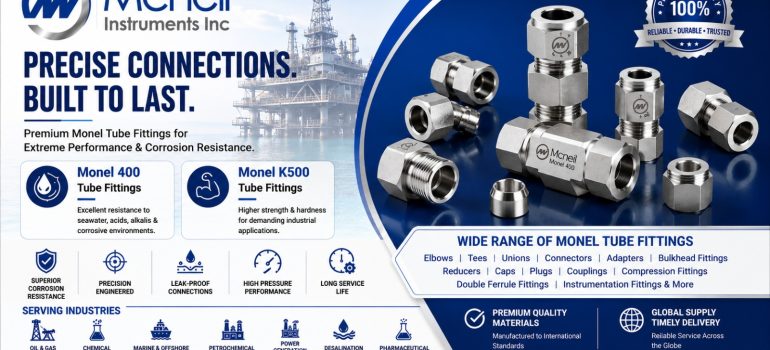
Monel 400 & Monel K500 Tube Fittings Manufacturer & Supplier – Mcneil Instruments

Premium Nickel Alloy Tube Fittings for Corrosion-Resistant Instrumentation Systems

Industrial instrumentation systems operating in corrosive environments demand tube fittings that offer exceptional sealing performance, superior mechanical strength, and long-term durability. Monel tube fittings are widely recognized for their outstanding resistance to seawater, chemicals, alkalis, and harsh industrial conditions, making them the preferred choice across numerous industries.

Mcneil Instruments is a trusted manufacturer and supplier of Monel 400 Tube Fittings and Monel K500 Tube Fittings, offering precision-engineered compression fittings for instrumentation, hydraulic, pneumatic, and process control applications. Manufactured using premium nickel-copper alloys, our fittings ensure reliable performance even under extreme pressure and challenging operating conditions.


Why Choose Mcneil Instruments?

Selecting premium tube fittings is essential for maintaining leak-free systems, reducing maintenance costs, and maximizing operational efficiency. Mcneil Instruments combines advanced manufacturing technology with stringent quality standards to deliver products that exceed customer expectations.

Why Industries Trust Us

✔ Precision-machined Monel tube fittings

✔ High corrosion and erosion resistance

✔ Excellent dimensional accuracy

✔ Leak-proof double ferrule design

✔ Superior pressure handling capability

✔ International quality standards

✔ Fast production and delivery

✔ Worldwide export support

Our products are engineered to provide dependable performance in the most demanding industrial environments.


Our Monel Tube Fittings Range

Monel 400 Tube Fittings

Monel 400 is a solid-solution nickel-copper alloy known for its remarkable resistance to seawater, acids, alkalis, and reducing environments.

Key Features

  • Excellent corrosion resistance
  • Outstanding seawater resistance
  • High mechanical strength
  • Superior thermal conductivity
  • Excellent weldability
  • Long service life

Applications

  • Marine Engineering
  • Offshore Platforms
  • Chemical Processing Plants
  • Desalination Systems
  • Heat Exchangers
  • Oil & Gas Pipelines

Monel K500 Tube Fittings

Monel K500 enhances the properties of Monel 400 by providing greater strength, hardness, and wear resistance while maintaining excellent corrosion resistance.

Advantages

  • Higher tensile strength
  • Exceptional wear resistance
  • Excellent fatigue performance
  • Improved hardness
  • Outstanding corrosion protection
  • Reliable long-term durability

Common Applications

  • Pump Shafts
  • Marine Equipment
  • Chemical Processing
  • Oilfield Equipment
  • Instrumentation Systems
  • High-Pressure Hydraulic Lines

Types of Monel Tube Fittings We Manufacture

Mcneil Instruments manufactures an extensive selection of Monel tube fittings suitable for instrumentation and fluid control systems.

Our product range includes:

  • Compression Tube Fittings
  • Double Ferrule Tube Fittings
  • Tube Unions
  • Union Elbows
  • Male Elbows
  • Female Elbows
  • Equal Tees
  • Branch Tees
  • Bulkhead Unions
  • Tube Connectors
  • Male Connectors
  • Female Connectors
  • Tube Adapters
  • Reducers
  • Tube Caps
  • Tube Plugs
  • Couplings
  • Instrumentation Tube Fittings

Each fitting is manufactured to provide secure, vibration-resistant, and leak-proof connections.


Key Features of Monel Tube Fittings

Mcneil Instruments designs Monel tube fittings to meet the highest industrial performance standards.

Product Highlights

✔ Exceptional corrosion resistance

✔ High-pressure capability

✔ Excellent mechanical strength

✔ Precision-machined components

✔ Leak-free sealing performance

✔ Excellent resistance to seawater

✔ Long operational life

✔ Easy installation

✔ Low maintenance requirements

✔ Suitable for critical instrumentation systems


Available Sizes & Configurations

Our Monel tube fittings are available in a wide variety of configurations to suit different industrial applications.

Available in:

  • 1/8″ to 2″ Tube Sizes
  • Metric Sizes
  • BSP Threads
  • NPT Threads
  • Socket Weld Connections
  • Custom Configurations

Custom dimensions are also available as per customer specifications.


Industries We Serve

Mcneil Instruments supplies Monel tube fittings to industries where corrosion resistance and reliability are critical.

Major Industries

  • Oil & Gas
  • Petrochemical Plants
  • Marine & Offshore
  • Shipbuilding
  • Chemical Processing
  • Power Generation
  • Pharmaceutical Industry
  • Water Treatment Plants
  • Desalination Facilities
  • Instrumentation Systems
  • Hydraulic Equipment
  • Food Processing
  • Fertilizer Plants
  • LNG Projects

International Standards

All Monel tube fittings are manufactured according to globally accepted quality specifications.

Standards

  • ASTM Standards
  • ASME Standards
  • ANSI Standards
  • DIN Standards
  • ISO Standards
  • BS Standards

Every fitting is produced with strict dimensional accuracy and quality assurance.


Advantages of Using Monel Tube Fittings

Compared to conventional stainless steel fittings, Monel alloys provide significantly better performance in corrosive and marine environments.

Business Benefits

🌊 Outstanding seawater resistance

⚙ Superior mechanical strength

🛡 Excellent corrosion protection

📈 Longer equipment life

💰 Reduced maintenance costs

🚀 Improved operational efficiency

🌍 Reliable performance in harsh environments


Quality Assurance at Mcneil Instruments

Quality is the foundation of every product manufactured by Mcneil Instruments.

Each Monel tube fitting undergoes rigorous inspection before dispatch.

Quality Tests Include

  • Raw Material Inspection
  • PMI Testing
  • Hydrostatic Testing
  • Dimensional Inspection
  • Pressure Testing
  • Chemical Analysis
  • Mechanical Testing
  • Surface Finish Inspection
  • Visual Examination

Material Test Certificates (MTC) are supplied upon customer request.


Why Customers Choose Mcneil Instruments

Thousands of customers rely on Mcneil Instruments for premium-quality Monel tube fittings because of our commitment to quality and customer satisfaction.

Our Strengths

✔ Premium-grade raw materials

✔ Modern manufacturing facility

✔ Experienced engineering team

✔ Competitive pricing

✔ Large inventory

✔ Quick delivery

✔ Customized solutions

✔ Technical support


Benefits of Choosing Our Monel Tube Fittings

When you choose Mcneil Instruments, you receive products designed for maximum efficiency and long-term performance.

Customer Benefits

📊 Leak-proof connections

⚙ Reliable instrumentation systems

🌍 Worldwide export capability

🛠 Durable nickel alloy fittings

📈 Improved plant productivity

💼 Trusted manufacturing expertise


Applications of Monel Tube Fittings

Our tube fittings are extensively used in:

  • Instrumentation Panels
  • Hydraulic Systems
  • Pneumatic Systems
  • Process Control Equipment
  • Gas Distribution Networks
  • Chemical Transfer Lines
  • Offshore Platforms
  • Heat Exchangers
  • Marine Pipelines
  • Laboratory Systems
  • High-Pressure Fluid Systems
  • Industrial Automation

📞 Contact Mcneil Instruments Today

Looking for premium Monel 400 Tube Fittings or Monel K500 Tube Fittings for your industrial project?

Mcneil Instruments

📧 info@mcneilinstruments.com

📞 +91 9870883613

Our experts are ready to assist you with product specifications, pricing, technical support, and bulk order requirements.


Frequently Asked Questions (FAQs)

1. What is the difference between Monel 400 and Monel K500 tube fittings?

Monel 400 offers excellent corrosion resistance, while Monel K500 provides higher strength, improved hardness, and better wear resistance, making it ideal for more demanding applications.

2. Where are Monel tube fittings commonly used?

Monel tube fittings are widely used in marine, offshore, chemical processing, oil & gas, desalination, hydraulic systems, and instrumentation industries.

3. What types of Monel tube fittings does Mcneil Instruments manufacture?

We manufacture compression tube fittings, double ferrule fittings, elbows, tees, unions, connectors, adapters, reducers, plugs, caps, couplings, and customized instrumentation fittings.

4. Are Monel tube fittings suitable for high-pressure applications?

Yes. Our Monel tube fittings are designed to withstand high-pressure fluid and gas systems while providing secure and leak-proof performance.

5. Can Mcneil Instruments manufacture customized Monel tube fittings?

Yes. We offer custom manufacturing based on customer drawings, specifications, tube sizes, and thread configurations.

6. Why choose Mcneil Instruments for Monel tube fittings?

Mcneil Instruments is known for precision manufacturing, premium quality materials, strict quality testing, competitive pricing, timely delivery, and reliable customer support.

Read More

How to Choose the Right Instrumentation Tube Fittings for Industrial Applications: A Complete Guide by Mcneil Instruments

Introduction

Every industrial process depends on precision. Whether it’s controlling fluid flow in an oil refinery, maintaining pressure in a petrochemical plant, or ensuring accurate measurements in pharmaceutical manufacturing, the smallest component can significantly impact the performance of an entire system.

One such component is the Instrumentation Tube Fitting.

Although often overlooked, tube fittings are responsible for creating secure, leak-free connections between tubing, valves, gauges, analyzers, and instrumentation equipment. Choosing the wrong fitting can result in leakage, pressure loss, equipment damage, production downtime, and even safety hazards.

This is why selecting the right Instrumentation Tube Fittings is essential for every industrial application.

At Mcneil Instruments, we manufacture and supply premium-quality Instrumentation Tube Fittings engineered for high-pressure, high-temperature, and corrosive industrial environments. This guide explains everything engineers, procurement professionals, and plant operators should consider before selecting tube fittings for their projects.

What Are Instrumentation Tube Fittings?

Instrumentation Tube Fittings are precision-engineered connectors used to join tubing systems in process control and instrumentation applications.

They create leak-tight connections capable of handling:

• High Pressure

• High Temperature

• Hydraulic Fluids

• Pneumatic Systems

• Process Chemicals

• Industrial Gases

Unlike ordinary pipe fittings, instrumentation tube fittings are designed for precision, vibration resistance, and long-term reliability.

Why Choosing the Right Tube Fitting Matters

Industrial systems operate continuously under demanding conditions.

Using the wrong tube fitting may result in:

• Fluid leakage

• Pressure loss

• Equipment failure

• Frequent maintenance

• Safety risks

• Increased operating costs

Properly selected tube fittings provide:

• Leak-free performance

• Reliable sealing

• Longer service life

• Improved plant safety

• Reduced downtime

• Better process efficiency

Step 1 – Understand Your Operating Conditions

Before selecting any fitting, evaluate your process requirements.

Important factors include:

Operating Pressure

Determine the maximum working pressure of the system.

High-pressure applications require precision-engineered compression fittings capable of maintaining seal integrity.

Operating Temperature

Temperature directly affects material performance.

Applications involving:

• Steam

• Heat Transfer

• Petrochemicals

• Furnaces

often require specialty alloy fittings.

Fluid Type

The transported media determines the material selection.

Examples include:

• Water

• Steam

• Hydraulic Oil

• Natural Gas

• Hydrogen

• Acids

• Solvents

• LNG

Environmental Conditions

Consider exposure to:

• Moisture

• Saltwater

• Corrosive chemicals

• Offshore atmosphere

• UV exposure

• Dust

These conditions influence the choice of corrosion-resistant materials.

Step 2 – Select the Correct Tube Fitting Material

Material selection is one of the most important decisions.

Stainless Steel Tube Fittings

Ideal for:

• General Process Industries

• Pharmaceutical Plants

• Food Processing

• Chemical Plants

• Water Treatment

Popular Grades:

• Stainless Steel 304 Tube Fittings

• Stainless Steel 304L Tube Fittings

• Stainless Steel 316 Tube Fittings

• Stainless Steel 316L Tube Fittings

• Stainless Steel 321 Tube Fittings

• Stainless Steel 347 Tube Fittings

Advantages:

• Excellent corrosion resistance

• High strength

• Long service life

Duplex & Super Duplex Tube Fittings

Suitable for:

• Offshore Platforms

• Marine Industries

• Desalination Plants

Advantages:

• Higher mechanical strength

• Excellent chloride resistance

• Outstanding corrosion protection

Inconel Tube Fittings

Recommended for:

• High Temperature Plants

• LNG Facilities

• Aerospace

• Power Generation

Available Grades:

• Inconel 600 Tube Fittings

• Inconel 625 Tube Fittings

• Inconel 718 Tube Fittings

• Inconel 725 Tube Fittings

• Inconel 800 Tube Fittings

• Inconel 800H Tube Fittings

Benefits:

• Excellent heat resistance

• Superior oxidation resistance

• High-pressure capability

Hastelloy Tube Fittings

Ideal for:

• Acid Processing

• Chemical Plants

• Fertilizer Industries

Available Grades:

• Hastelloy C276 Tube Fittings

• Hastelloy C22 Tube Fittings

• Hastelloy B2 Tube Fittings

• Hastelloy B3 Tube Fittings

• Hastelloy X Tube Fittings

Advantages:

• Outstanding chemical resistance

• Excellent corrosion protection

• Long operational life

Monel Tube Fittings

Best suited for:

• Marine Applications

• Offshore Systems

• Seawater Pipelines

Popular Grades:

• Monel 400 Tube Fittings

• Monel K500 Tube Fittings

Incoloy Tube Fittings

Recommended for:

• Petrochemical Plants

• Heat Exchangers

• Boilers

• Chemical Industries

Available Grades:

• Incoloy 800 Tube Fittings

• Incoloy 800H Tube Fittings

• Incoloy 825 Tube Fittings

Titanium Tube Fittings

Ideal for:

• Aerospace

• Marine Engineering

• Offshore Installations

• Chemical Processing

Grades Available:

• Titanium Grade 1 Tube Fittings

• Titanium Grade 2 Tube Fittings

• Titanium Grade 3 Tube Fittings

• Titanium Grade 4 Tube Fittings

Step 3 – Choose the Right Tube Fitting Configuration

Different applications require different fitting types.

Mcneil Instruments manufactures:

Tube Union Fittings

Connect two tubes together securely.

Male Connector Fittings

Join tubing to threaded equipment.

Female Connector Fittings

Connect tubing to female threaded components.

Tube Elbows

Available in:

• 45°

• 90°

• Male Elbows

• Female Elbows

Tube Tees

Create branch connections.

Cross Tube Fittings

Distribute flow in four directions.

Reducer Tube Fittings

Connect different tubing sizes.

Bulkhead Tube Fittings

Ideal for panel-mounted installations.

Double Ferrule Tube Fittings

Most widely used in instrumentation systems.

Advantages:

• Superior sealing

• Excellent vibration resistance

• Leak-proof performance

Single Ferrule Tube Fittings

Suitable for standard industrial applications.

Step 4 – Verify Pressure Ratings

Always ensure that:

• Tube size

• Wall thickness

• Material grade

• Pressure rating

match the system requirements.

Selecting an underrated fitting can compromise both performance and safety.

Step 5 – Consider Installation Conditions

Ask yourself:

• Is vibration present?

• Will the system undergo thermal expansion?

• Is frequent maintenance expected?

• Will fittings require repeated assembly?

These factors influence fitting design and sealing requirements.

Step 6 – Check Compliance with International Standards

Reliable instrumentation fittings should comply with internationally recognized standards.

Common standards include:

• ASTM

• ASME

• ISO

• DIN

• MSS

Choosing certified products ensures compatibility, traceability, and dependable performance.

Industries Using Instrumentation Tube Fittings

Mcneil Instruments supplies tube fittings to industries including:

Oil & Gas

• Refineries

• Offshore Platforms

• Pipeline Systems

Petrochemical

• Chemical Plants

• Reactor Systems

• Process Equipment

Power Generation

• Steam Systems

• Boilers

• Turbines

Pharmaceutical

• Clean Process Systems

• Sterile Manufacturing

Food & Beverage

• Hygienic Fluid Systems

Marine Industry

• Shipbuilding

• Offshore Installations

LNG Industry

• Cryogenic Systems

• Gas Processing

Aerospace

• Precision Fluid Systems

• Hydraulic Equipment

Why Choose Mcneil Instruments?

Mcneil Instruments is recognized as a trusted manufacturer, supplier, exporter, and stockist of premium Instrumentation Tube Fittings.

Customers benefit from:

• Wide range of material grades

• Precision engineering

• Leak-proof designs

• International quality standards

• High-pressure performance

• Custom manufacturing

• Fast global delivery

• Technical support

Our fittings are manufactured for reliability, durability, and long-term performance across demanding industrial environments.

Quality Assurance

Every tube fitting undergoes rigorous testing including:

• Hydrostatic Testing

• Pneumatic Testing

• PMI Testing

• Dimensional Inspection

• Hardness Testing

• Material Traceability

• Leak Testing

• Visual Inspection

These inspections ensure every product meets international quality standards.

Conclusion

Choosing the correct instrumentation tube fitting is not simply about selecting a connector—it is about ensuring the safety, efficiency, and reliability of an entire industrial process.

By evaluating operating conditions, selecting the right material grade, choosing the correct fitting configuration, and verifying pressure ratings and quality standards, industries can significantly improve system performance while reducing maintenance costs.

Whether your project requires Stainless Steel Tube Fittings, Inconel Tube Fittings, Hastelloy Tube Fittings, Monel Tube Fittings, Incoloy Tube Fittings, Duplex Tube Fittings, Super Duplex Tube Fittings, Titanium Tube Fittings, Double Ferrule Tube Fittings, or Compression Tube Fittings, Mcneil Instruments provides precision-engineered solutions trusted by industries worldwide.

Read More

Precision Connections for Mexico’s Critical Industries: Why Mcneil Instruments Incoloy Tube Fittings Deliver Unmatched Performance

Introduction

Mexico has become one of North America’s fastest-growing manufacturing and industrial hubs. With continuous investments in oil & gas, petrochemical processing, aerospace manufacturing, power generation, pharmaceutical production, LNG infrastructure, and automotive engineering, the demand for high-performance instrumentation components has increased significantly.

Industrial plants operating under high temperatures, corrosive chemicals, and high-pressure conditions require tubing systems that guarantee leak-free performance and long service life. Conventional stainless steel fittings often struggle in such demanding environments, making advanced nickel alloy solutions the preferred choice.

This is where Mcneil Instruments Incoloy Tube Fittings provide a reliable solution.

Manufactured using premium nickel-iron-chromium alloys, Incoloy Tube Fittings offer exceptional resistance to oxidation, carburization, corrosion, and elevated temperatures. They are widely used in instrumentation systems, hydraulic systems, process pipelines, chemical plants, offshore platforms, and power generation facilities where reliability cannot be compromised. Mcneil Instruments manufactures precision tube fittings in multiple Incoloy grades for demanding industrial applications.

Why Mexico’s Industries Choose Incoloy Tube Fittings

Modern industrial facilities require tubing systems capable of performing under:

• High operating temperatures

• High-pressure process lines

• Corrosive chemicals

• Offshore environments

• LNG processing

• Continuous industrial operations

Mcneil Instruments Incoloy Tube Fittings provide:

• Exceptional corrosion resistance

• Superior oxidation resistance

• Excellent mechanical strength

• High-temperature stability

• Leak-proof sealing

• Outstanding pressure performance

• Long service life

These advantages make Incoloy one of the most dependable materials for critical instrumentation and process tubing systems.

Mcneil Instruments – Trusted Supplier of Incoloy Tube Fittings in Mexico

Mcneil Instruments is a leading manufacturer, supplier, exporter, and stockist of premium Incoloy Tube Fittings for customers across Mexico and international industrial markets.

The product range includes:

• Incoloy 800 Tube Fittings

• Incoloy 800H Tube Fittings

• Incoloy 825 Tube Fittings

• Double Ferrule Tube Fittings

• Single Ferrule Tube Fittings

• Male Connector Tube Fittings

• Female Connector Tube Fittings

• Union Tube Fittings

• Bulkhead Tube Fittings

• Elbow Tube Fittings

• Tee Tube Fittings

• Cross Tube Fittings

• Reducer Tube Fittings

Every fitting is manufactured with precision to ensure leak-free performance in demanding industrial environments.

Incoloy 800 Tube Fittings

Reliable Performance for High-Temperature Applications

Incoloy 800 Tube Fittings are engineered for applications involving elevated temperatures and oxidizing atmospheres.

Key Features

• Excellent oxidation resistance

• Superior carburization resistance

• Outstanding thermal stability

• High mechanical strength

Applications

• Industrial Furnaces

• Heat Exchangers

• Petrochemical Plants

• Chemical Processing Facilities

Incoloy 800H Tube Fittings

Enhanced Strength for Long-Term Thermal Service

Incoloy 800H Tube Fittings feature controlled carbon content, offering improved creep and rupture strength at elevated temperatures.

Benefits

• Excellent creep resistance

• Outstanding thermal stability

• Superior pressure performance

• Long operational life

Applications

• Power Plants

• Steam Systems

• Heat Recovery Units

• Refinery Equipment

Incoloy 825 Tube Fittings

Exceptional Corrosion Protection for Chemical Industries

Incoloy 825 Tube Fittings provide outstanding resistance to sulfuric acid, phosphoric acid, seawater, and chloride-containing environments.

Advantages

• Excellent chemical resistance

• Superior chloride protection

• Outstanding pitting resistance

• Reliable long-term durability

Applications

• Chemical Plants

• Offshore Platforms

• Marine Systems

• Acid Processing Facilities

Types of Incoloy Tube Fittings Available

Mcneil Instruments supplies a complete range of instrumentation tube fittings for industrial applications.

Double Ferrule Tube Fittings

Designed for vibration-resistant and leak-proof tube connections.

Applications

• Instrumentation Systems

• Process Control Equipment

• Hydraulic Networks

Union Tube Fittings

Used to connect two tubing sections securely.

Benefits

• Easy installation

• Reliable sealing

• High-pressure capability

Elbow Tube Fittings

Allow smooth directional changes while maintaining flow efficiency.

Available Configurations

• 45° Elbows

• 90° Elbows

• Male Elbows

• Female Elbows

Tee Tube Fittings

Designed for branching fluid and gas lines.

Applications

• Instrumentation Panels

• Process Systems

• Chemical Plants

Bulkhead Tube Fittings

Provide secure connections through walls, cabinets, and control panels.

Benefits

• Leak-proof installation

• High structural integrity

• Space-efficient design

Reducer Tube Fittings

Connect tubing of different diameters while maintaining efficient flow characteristics.

Why Incoloy Tube Fittings Outperform Conventional Materials

PropertyIncoloy Tube FittingsStainless Steel Tube Fittings
Corrosion ResistanceExcellentGood
Oxidation ResistanceSuperiorModerate
High Temperature StrengthOutstandingGood
Pressure CapabilityExcellentGood
Service LifeVery LongStandard

These characteristics make Incoloy Tube Fittings ideal for industries operating under severe service conditions.

Industries Using Incoloy Tube Fittings in Mexico

Oil & Gas Industry

Used in:

• Refineries

• Pipeline Systems

• Offshore Platforms

• LNG Facilities

Petrochemical Industry

Supports:

• Chemical Transfer Systems

• Instrumentation Networks

• High-Temperature Processing Units

Power Generation Industry

Used in:

• Boilers

• Steam Pipelines

• Heat Recovery Systems

• Turbine Installations

Aerospace Industry

Provides high-strength tubing connections for precision engineering applications.

Pharmaceutical Industry

Supports contamination-free process systems.

Automotive Manufacturing

Used in advanced manufacturing equipment and precision hydraulic systems.

Technical Specifications

ParameterSpecification
ProductIncoloy Tube Fittings
GradesIncoloy 800, 800H, 825
TypesDouble Ferrule, Union, Tee, Elbow, Reducer, Bulkhead
StandardsASTM / ASME
Connection TypeCompression Tube Fittings
ApplicationsOil & Gas, Petrochemical, Power, Chemical, Aerospace

Quality Assurance at Mcneil Instruments

Every Incoloy Tube Fitting undergoes strict quality inspections including:

• PMI Testing

• Hydrostatic Testing

• Pressure Testing

• Dimensional Inspection

• Mechanical Testing

• Material Traceability Verification

• Leak Testing

These quality procedures ensure compliance with international standards and dependable performance in critical industrial applications.

Why Mexico Continues to Invest in Premium Tube Fittings

Mexico’s industrial growth in sectors such as:

• Oil & Gas

• Petrochemical Manufacturing

• Aerospace

• LNG Infrastructure

• Pharmaceutical Manufacturing

• Renewable Energy

• Automotive Production

continues driving demand for premium instrumentation components capable of operating safely under demanding process conditions.

Mcneil Instruments supports these industries with internationally recognized Incoloy Tube Fittings that deliver superior reliability, safety, and long-term performance.

Conclusion

As Mexico continues expanding its industrial and energy infrastructure, the need for dependable instrumentation tubing solutions continues to grow.

Whether it is Incoloy 800 Tube Fittings, Incoloy 800H Tube Fittings, Incoloy 825 Tube Fittings, Double Ferrule Tube Fittings, Union Tube Fittings, Elbow Tube Fittings, Tee Tube Fittings, or Bulkhead Tube Fittings, Mcneil Instruments provides precision-engineered products designed to perform in the world’s most demanding industrial environments.

From petrochemical plants and refineries to aerospace facilities and power stations, Mcneil Instruments Incoloy Tube Fittings in Mexico continue to deliver exceptional corrosion resistance, leak-proof performance, and long-term operational reliability.

Read More

Why Stainless Steel ASTM A403 WP Tube Fittings Are the Preferred Choice for High-Performance Instrumentation and Process Systems

Introduction

In today’s industrial environment, precision, reliability, and corrosion resistance are essential for maintaining efficient process operations. Industries such as oil & gas, petrochemicals, power generation, pharmaceuticals, food processing, marine engineering, LNG facilities, and chemical manufacturing depend heavily on tubing systems for fluid transfer, instrumentation, and process control.

The performance of these systems is largely determined by the quality of their fittings.

This is where Stainless Steel ASTM A403 WP Tube Fittings have become one of the most trusted solutions worldwide.

Designed to provide leak-proof connections, exceptional corrosion resistance, and long-term durability, ASTM A403 WP Tube Fittings are widely used in high-pressure and critical process applications. Their ability to perform under demanding operating conditions makes them an essential component of modern industrial infrastructure.

Today, ASTM A403 WP304 Tube Fittings, ASTM A403 WP304L Tube Fittings, ASTM A403 WP316 Tube Fittings, ASTM A403 WP316L Tube Fittings, ASTM A403 WP321 Tube Fittings, ASTM A403 WP347 Tube Fittings, ASTM A403 WP310 Tube Fittings, ASTM A403 WP317 Tube Fittings, and ASTM A403 WP904L Tube Fittings are extensively used across industries worldwide.

Understanding ASTM A403 WP Tube Fittings

ASTM A403 is the standard specification covering wrought austenitic stainless steel fittings used in pressure piping systems.

These fittings are manufactured to provide:

• Excellent corrosion resistance
• Superior mechanical strength
• Leak-proof performance
• High-pressure capability
• Long operational life
• Easy installation and maintenance

Common fitting configurations include:

• Tube Union Fittings
• Tube Elbow Fittings
• Tube Tee Fittings
• Tube Connector Fittings
• Tube Reducer Fittings
• Bulkhead Tube Fittings
• Male Connector Fittings
• Female Connector Fittings
• Double Ferrule Tube Fittings
• Single Ferrule Tube Fittings

Why Industries Choose ASTM A403 WP Tube Fittings

Industrial process systems demand fittings capable of maintaining performance under severe operating conditions.

Key benefits include:

• Excellent corrosion resistance
• High-pressure capability
• Superior temperature resistance
• Outstanding durability
• Reduced maintenance costs
• Long service life
• Reliable leak-free connections

These characteristics make ASTM A403 WP Tube Fittings a preferred solution for critical industrial applications.

ASTM A403 WP304 Tube Fittings

The Most Versatile Stainless Steel Tube Fitting Grade

ASTM A403 WP304 Tube Fittings are among the most widely used fittings in industrial applications.

Key Features

• Excellent corrosion resistance
• Good formability
• High durability
• Cost-effective performance

Applications

• Water Treatment Plants
• Food Processing Facilities
• Industrial Manufacturing Plants
• Instrumentation Systems

ASTM A403 WP304L Tube Fittings

Enhanced Weldability for Fabricated Systems

ASTM A403 WP304L Tube Fittings contain lower carbon content, improving welding performance.

Benefits

• Reduced carbide precipitation
• Improved weld integrity
• Enhanced corrosion resistance

Applications

• Pharmaceutical Facilities
• Chemical Processing Plants
• Fabricated Tubing Systems

ASTM A403 WP316 Tube Fittings

Superior Resistance in Corrosive Environments

ASTM A403 WP316 Tube Fittings contain molybdenum for improved corrosion resistance.

Advantages

• Excellent chloride resistance
• Enhanced pitting resistance
• Superior durability

Applications

• Offshore Platforms
• Marine Systems
• Petrochemical Facilities
• Desalination Plants

ASTM A403 WP316L Tube Fittings

Preferred Choice for Aggressive Process Conditions

Benefits

• Outstanding corrosion resistance
• Excellent weldability
• Long service life

Applications

• LNG Facilities
• Chemical Plants
• Pharmaceutical Industries

ASTM A403 WP321 Tube Fittings

Designed for Elevated Temperature Applications

Titanium stabilization makes WP321 ideal for heat-intensive environments.

Features

• Excellent oxidation resistance
• Superior thermal stability
• Enhanced high-temperature strength

Applications

• Heat Exchangers
• Refineries
• Power Plants
• Furnace Systems

ASTM A403 WP347 Tube Fittings

Reliable Performance Under Thermal Stress

Niobium stabilization provides improved resistance to intergranular corrosion.

Benefits

• Excellent creep resistance
• Superior heat resistance
• Long operational life

Applications

• Steam Systems
• Petrochemical Facilities
• Thermal Processing Plants

ASTM A403 WP310 Tube Fittings

Exceptional High-Temperature Capability

Advantages

• Outstanding oxidation resistance
• Excellent heat resistance
• Superior thermal stability

Applications

• Industrial Furnaces
• Heat Treatment Plants
• Thermal Processing Systems

ASTM A403 WP317 Tube Fittings

Enhanced Corrosion Resistance for Chemical Processing

Benefits

• Higher molybdenum content
• Excellent resistance to aggressive chemicals
• Improved pitting resistance

Applications

• Chemical Plants
• Petrochemical Facilities
• Process Industries

ASTM A403 WP904L Tube Fittings

Premium Grade for Severe Corrosion Conditions

Features

• Exceptional corrosion resistance
• Excellent resistance to sulfuric acid
• Outstanding durability

Applications

• Offshore Installations
• Chemical Processing Plants
• Marine Applications

Types of ASTM A403 WP Tube Fittings

Industrial instrumentation systems utilize various fitting designs including:

Tube Union Fittings

Secure tube-to-tube connections.

Tube Elbow Fittings

Allow directional changes in tubing systems.

Tube Tee Fittings

Enable branch connections.

Bulkhead Tube Fittings

Support panel-mounted installations.

Male Connector Fittings

Connect tubing to threaded equipment.

Female Connector Fittings

Provide reliable threaded connections.

Double Ferrule Tube Fittings

Deliver superior vibration resistance and leak-proof sealing.

Single Ferrule Tube Fittings

Provide economical and reliable performance.

Industries Using ASTM A403 WP Tube Fittings

Oil & Gas Industry

Used in:

• Refineries
• Offshore Platforms
• Gas Processing Facilities
• Pipeline Instrumentation Systems

Petrochemical Industry

Supports:

• Process Control Systems
• Chemical Transfer Networks
• Instrumentation Installations

LNG Industry

Provides reliable connections for:

• Cryogenic Systems
• LNG Processing Facilities
• Storage Terminals

Pharmaceutical Industry

Supports:

• High-Purity Processing Systems
• Sterile Manufacturing Facilities

Food & Beverage Industry

Ensures hygienic and corrosion-resistant fluid handling.

Power Generation Industry

Used in:

• Steam Systems
• Turbine Installations
• Boiler Instrumentation Networks

Marine Industry

Offers excellent resistance against seawater corrosion.

Why ASTM A403 WP Tube Fittings Outperform Conventional Materials

PropertyASTM A403 WP Tube FittingsCarbon Steel Fittings
Corrosion ResistanceExcellentModerate
Service LifeLongMedium
Maintenance CostLowerHigher
Chemical ResistanceSuperiorStandard
Temperature CapabilityExcellentModerate

Quality Assurance and Testing

Every ASTM A403 WP Tube Fitting undergoes:

• Hydrostatic Testing
• Pressure Testing
• PMI Testing
• Mechanical Testing
• Dimensional Inspection
• Material Traceability Verification
• Quality Certification

These procedures ensure compliance with international standards and dependable performance.

Future Demand for ASTM A403 WP Tube Fittings

Growing investments in:

• LNG Infrastructure
• Petrochemical Facilities
• Offshore Projects
• Pharmaceutical Manufacturing
• Water Treatment Systems
• Industrial Automation

continue driving demand for high-performance stainless steel tube fittings.

Conclusion

As industrial systems become increasingly sophisticated, the need for reliable and corrosion-resistant tubing connections continues to grow.

Stainless Steel ASTM A403 WP Tube Fittings provide the strength, durability, leak-proof performance, and corrosion resistance required for critical applications across multiple industries.

Whether it is ASTM A403 WP304 Tube Fittings, ASTM A403 WP304L Tube Fittings, ASTM A403 WP316 Tube Fittings, ASTM A403 WP316L Tube Fittings, ASTM A403 WP321 Tube Fittings, ASTM A403 WP347 Tube Fittings, ASTM A403 WP310 Tube Fittings, ASTM A403 WP317 Tube Fittings, or ASTM A403 WP904L Tube Fittings, these products continue to be the preferred choice for modern industrial instrumentation and process systems.

Read More
• Excellent corrosion resistance • High tensile strength • Oxidation resistance • Durability • Easy fabrication • Hygienic surface properties SS304 tube fittings are widely used in: • Instrumentation systems • Hydraulic systems • Pneumatic systems • Chemical processing plants • Pharmaceutical manufacturing • Food & beverage processing • Semiconductor industries • Water treatment plants

Top SS304 Tube Fittings Exporter In USA

The United States is one of the world’s most advanced industrial economies, with massive demand for precision-engineered instrumentation and fluid control systems. Industries such as oil & gas, chemical processing, pharmaceuticals, food processing, power generation, semiconductor manufacturing, marine engineering, and renewable energy all depend heavily on high-quality stainless steel tube fittings for safe and reliable operations.

Mcneil Instruments Inc has established itself as a trusted manufacturer, supplier, and exporter of premium-quality SS304 tube fittings for industrial applications worldwide. The company supplies precision-engineered instrumentation fittings, compression fittings, ferrule fittings, and process piping components designed to meet modern industrial performance standards.

Unlike ordinary suppliers that focus only on standard products, Mcneil Instruments emphasizes advanced engineering reliability, dimensional precision, vibration resistance, and long-term leak-proof performance — critical requirements for modern industrial plants in the USA.


What are SS304 Tube Fittings?

SS304 tube fittings are stainless steel piping and instrumentation components manufactured using Stainless Steel 304 alloy. These fittings are used to connect, regulate, and direct the flow of liquids, gases, chemicals, steam, and process fluids within industrial piping systems.

SS304 is an austenitic stainless steel alloy containing chromium and nickel, which provide:

  • Excellent corrosion resistance
  • High tensile strength
  • Oxidation resistance
  • Durability
  • Easy fabrication
  • Hygienic surface properties

SS304 tube fittings are widely used in:

  • Instrumentation systems
  • Hydraulic systems
  • Pneumatic systems
  • Chemical processing plants
  • Pharmaceutical manufacturing
  • Food & beverage processing
  • Semiconductor industries
  • Water treatment plants

Their versatility and affordability make them one of the most preferred stainless steel fitting solutions globally.


Why SS304 Tube Fittings are Highly Popular in USA Industries

American industries operate under demanding conditions involving:

  • High pressure
  • Continuous vibration
  • Thermal cycling
  • Corrosive environments
  • Automation systems
  • Strict safety standards

Industrial plants require fittings capable of maintaining long-term sealing integrity while reducing maintenance costs and operational downtime.

SS304 tube fittings are highly preferred because they provide:

  • Excellent corrosion resistance
  • Reliable leak-proof performance
  • High-pressure capability
  • Long service life
  • Strong mechanical properties
  • Easy maintenance
  • Cost-effective industrial performance

This makes SS304 one of the most practical stainless steel grades for industrial process systems across the USA.


Mcneil Instruments Inc – Trusted SS304 Tube Fittings Exporter in USA

Mcneil Instruments Inc is recognized globally for manufacturing and exporting premium-quality stainless steel instrumentation fittings and process piping components.

The company supplies:

  • Compression Tube Fittings
  • Instrumentation Tube Fittings
  • Double Ferrule Fittings
  • Male Connector Fittings
  • Female Connector Fittings
  • Elbow Tube Fittings
  • Tee Tube Fittings
  • Reducer Tube Fittings
  • Bulkhead Tube Fittings
  • Union Tube Fittings

Mcneil Instruments focuses on precision engineering, advanced metallurgy, and strict quality control to ensure reliable industrial performance under demanding conditions.

The company exports SS304 tube fittings to industries across the USA, Europe, Middle East, Asia, and Africa.


The Hidden Engineering Problems Most Tube Fittings Blogs Ignore

Most online articles discuss only material composition and pressure ratings. However, real-world industrial failures often happen because of deeper engineering issues rarely discussed publicly.

These include:

  • Ferrule relaxation
  • Surface roughness defects
  • Improper tube grip
  • Thermal expansion mismatch
  • Dynamic vibration fatigue
  • Pressure pulsation instability
  • Micro leakage
  • Incorrect hardness balance

Modern industrial plants in the USA increasingly operate with:

  • Automated production systems
  • High-frequency vibration equipment
  • Robotic process lines
  • High-purity gas systems
  • Continuous operation cycles

Under such conditions, even microscopic fitting imperfections can cause:

  • Process contamination
  • Production downtime
  • Pressure instability
  • Hazardous leakage
  • Equipment failure

Mcneil Instruments designs SS304 tube fittings with precision-engineered ferrule geometry and strict dimensional tolerances to improve long-term sealing performance.

This advanced engineering approach separates premium exporters from ordinary industrial fitting suppliers.


Why Precision Surface Finish Matters in SS304 Tube Fittings

One of the most overlooked aspects of tube fitting performance is internal surface finish quality.

Poor surface roughness can cause:

  • Flow turbulence
  • Chemical residue accumulation
  • Product contamination
  • Bacterial growth
  • Reduced corrosion resistance

Mcneil Instruments manufactures SS304 tube fittings with controlled surface finishing to improve:

  • Laminar flow performance
  • Process hygiene
  • Chemical purity
  • CIP/SIP cleaning efficiency
  • Corrosion resistance

This becomes especially important in:

  • Pharmaceutical plants
  • Food processing systems
  • Semiconductor manufacturing
  • High-purity gas systems
  • Beverage industries

Modern USA industries increasingly prioritize ultra-clean process systems where even microscopic contamination can compromise production quality.


Why SS304 is Ideal for Instrumentation Systems

Instrumentation systems require extremely reliable tube fittings because they handle:

  • Pressure measurement
  • Flow monitoring
  • Gas distribution
  • Process control
  • Analytical systems

SS304 tube fittings are ideal because they offer:

  • Excellent dimensional stability
  • Reliable sealing performance
  • Corrosion resistance
  • High vibration tolerance
  • Long-term operational durability

Precision-engineered instrumentation fittings help maintain accurate process control and reduce system failures.


Types of SS304 Tube Fittings Manufactured by Mcneil Instruments

Compression Tube Fittings

Provide secure and leak-proof sealing in high-pressure systems.

Double Ferrule Tube Fittings

Offer superior vibration resistance and stronger tube grip.

Union Tube Fittings

Allow easy maintenance and tube replacement.

Male Connector Fittings

Used for threaded process connections.

Female Connector Fittings

Ensure secure fluid transfer systems.

Elbow Tube Fittings

Enable directional flow control.

Tee Tube Fittings

Used for branching piping systems.

Reducer Tube Fittings

Connect tubing systems of different sizes.

Bulkhead Tube Fittings

Designed for panel-mounted applications.

Instrumentation Tube Fittings

Widely used in analytical and industrial control systems.


Chemical Composition of SS304

ElementComposition
Chromium (Cr)18 – 20%
Nickel (Ni)8 – 10.5%
Carbon (C)0.08% Max
Manganese (Mn)2.00% Max
Silicon (Si)1.00% Max
Phosphorus (P)0.045% Max
Sulfur (S)0.03% Max

The chromium-rich passive layer improves corrosion resistance while nickel enhances toughness and durability.


Mechanical Properties of SS304 Tube Fittings

PropertyValue
Tensile Strength515 MPa Min
Yield Strength205 MPa Min
Elongation40%
Hardness201 HB Max
Density8.0 g/cm³

These properties make SS304 suitable for demanding industrial applications.


Technical Specifications of SS304 Tube Fittings

ParameterSpecification
Material GradeStainless Steel 304
UNS NumberS30400
DIN Grade1.4301
Pressure RatingUp to 10,000 PSI
Size Range1/16” to 2”
Connection TypesCompression, Threaded, Welded
Thread StandardsNPT, BSPT, BSPP
Surface FinishAnnealed, Pickled, Polished
StandardsASTM A182 / ASTM A276

Industries Using SS304 Tube Fittings in USA

Oil & Gas Industry

Used in refineries, instrumentation systems, and process pipelines.

Chemical Processing Industry

Provide corrosion resistance in chemical transfer systems.

Pharmaceutical Industry

Suitable for hygienic and contamination-free operations.

Food & Beverage Industry

Widely used in sanitary processing systems.

Semiconductor Manufacturing

Used in high-purity gas and fluid systems.

Water Treatment Plants

Provide reliable corrosion-resistant performance.

Marine Industry

Offer durability in humid and saline environments.

Renewable Energy Industry

Used in hydrogen, biofuel, and advanced energy systems.


Why USA Buyers Prefer Mcneil Instruments Inc

Industrial buyers increasingly prefer suppliers capable of delivering:

  • International quality standards
  • Material traceability
  • Precision manufacturing
  • Reliable export logistics
  • Competitive pricing
  • Technical support
  • Consistent product quality

Mcneil Instruments follows international standards such as:

  • ASTM
  • ASME
  • ISO
  • DIN
  • ANSI

The company also performs strict quality inspections to ensure reliable industrial performance.


Quality Testing for SS304 Tube Fittings

Mcneil Instruments performs multiple quality inspections including:

  • Hydrostatic Testing
  • Pressure Testing
  • PMI Testing
  • Surface Finish Inspection
  • Dimensional Verification
  • Hardness Testing
  • Material Traceability Verification

These tests ensure high-performance reliability under demanding industrial conditions.


Why Leak-Proof Tube Fittings are Critical

Industrial leakage can result in:

  • Chemical hazards
  • Fire risks
  • Environmental damage
  • Product contamination
  • Pressure instability
  • Expensive downtime

High-quality SS304 tube fittings reduce these risks through:

  • Precision ferrule engineering
  • Controlled dimensional tolerances
  • Optimized sealing geometry
  • Superior tube grip performance

Modern USA industries increasingly prioritize leak-free systems to improve safety and operational efficiency.


Future Trends in SS304 Tube Fittings Industry

The industrial fittings industry is evolving rapidly with technologies such as:

  • Smart leak detection
  • Predictive maintenance
  • AI-based process monitoring
  • Hydrogen infrastructure
  • Automated fluid systems
  • High-purity manufacturing

Future tube fittings may integrate:

  • Embedded sensors
  • Thermal fatigue monitoring
  • Pressure analytics
  • Maintenance alerts

As industrial automation expands across the USA, demand for precision-engineered SS304 tube fittings will continue increasing.


Export Capabilities of Mcneil Instruments

Mcneil Instruments exports SS304 tube fittings globally with:

  • Export-grade packaging
  • Material test certificates
  • Fast logistics support
  • Bulk supply capability
  • International shipping documentation

The company serves industries across:

  • USA
  • Europe
  • Middle East
  • Asia
  • Africa

Conclusion

The USA remains one of the world’s largest markets for SS304 tube fittings because of increasing industrial automation, infrastructure development, and demand for reliable fluid control systems.

SS304 tube fittings continue to be highly preferred because they offer excellent corrosion resistance, affordability, durability, and long-term industrial performance.

However, modern industrial systems require far more than ordinary fittings. Precision engineering, vibration resistance, thermal stability, advanced surface finishing, and leak-proof reliability have become essential for safe and efficient industrial operations.

Mcneil Instruments Inc has emerged as a trusted SS304 tube fittings exporter in the USA by focusing on advanced engineering reliability, precision manufacturing, and strict international quality standards.

As industries continue evolving toward automation, hydrogen infrastructure, smart manufacturing, and sustainable industrial systems, the demand for premium-quality SS304 tube fittings from trusted exporters like Mcneil Instruments will continue growing across the American industrial market.


FAQs (Frequently Asked Questions)

1. What are SS304 tube fittings used for?

SS304 tube fittings are used to connect and control the flow of liquids and gases in industrial piping and instrumentation systems.
They are widely used in chemical, pharmaceutical, food processing, oil & gas, and water treatment industries.


2. Why are SS304 tube fittings preferred in industrial applications?

SS304 tube fittings offer excellent corrosion resistance, durability, hygienic properties, and cost-effective performance.
They also provide reliable leak-proof sealing in high-pressure industrial systems.


3. What types of SS304 tube fittings does Mcneil Instruments manufacture?

Mcneil Instruments manufactures compression fittings, ferrule fittings, union fittings, elbow fittings, tee fittings, reducer fittings, and instrumentation tube fittings.
These fittings are designed for high-performance industrial applications.


4. Why is precision manufacturing important in tube fittings?

Precision manufacturing ensures proper sealing, dimensional accuracy, and vibration resistance.
Poorly manufactured fittings can cause leakage, pressure instability, and operational failures.


5. Can Mcneil Instruments export SS304 tube fittings to the USA?

Yes. Mcneil Instruments Inc exports SS304 tube fittings globally, including the USA, with proper documentation, export packaging, and international quality certifications.

Read More

Best SS 316 Tube Fittings Manufacturer Germany

Germany has long been recognized as one of the world’s strongest industrial economies, driven by precision engineering, advanced manufacturing, chemical processing, renewable energy, pharmaceuticals, automotive technology, and heavy industrial infrastructure. In such demanding industrial environments, fluid transfer systems and instrumentation networks require components capable of operating under extreme pressure, temperature, and corrosion conditions.

This is why Stainless Steel 316 Tube Fittings have become the preferred choice for industrial systems across Germany.

Among global suppliers serving the German industrial market, Mcneil Instruments Inc has emerged as a trusted manufacturer and exporter of premium-quality SS 316 tube fittings engineered for high-performance industrial applications. The company supplies advanced instrumentation fittings, compression tube fittings, and process piping components designed to meet international standards while addressing modern industrial challenges.

Unlike conventional manufacturers that focus only on standard pressure ratings and corrosion resistance, Mcneil Instruments applies a systems-engineering approach to tube fitting manufacturing — optimizing metallurgy, vibration resistance, thermal cycling durability, sealing geometry, and long-term leak integrity for modern industrial plants.


Why Germany Demands Advanced SS 316 Tube Fittings

Germany’s industrial sector operates under some of the world’s strictest engineering and environmental standards. Industries require instrumentation systems that deliver:

  • Zero-leak performance
  • Long operational lifespan
  • Resistance to chloride attack
  • High-temperature stability
  • Low maintenance requirements
  • Compatibility with automation systems
  • Vibration resistance
  • Thermal fatigue protection

Traditional fittings often fail due to micro-leakage, ferrule deformation, thermal expansion mismatch, or stress corrosion cracking.

Modern German industries now prioritize “life-cycle reliability engineering” instead of merely purchasing low-cost fittings.

This shift has significantly increased demand for advanced SS 316 instrumentation tube fittings from globally trusted suppliers like Mcneil Instruments Inc.


What Makes SS 316 Different from Conventional Stainless Steel

Stainless Steel 316 (UNS S31600 / DIN 1.4401) is an austenitic chromium-nickel-molybdenum stainless steel alloy specifically designed for aggressive industrial environments.

The addition of molybdenum dramatically improves resistance to:

  • Pitting corrosion
  • Crevice corrosion
  • Chloride attack
  • Acidic chemicals
  • Marine environments
  • High-temperature oxidation

The advanced metallurgy of SS 316 allows fittings to maintain sealing integrity even under cyclic pressure loading and thermal expansion conditions.

This is particularly critical in German industries such as:

  • Hydrogen energy systems
  • LNG processing
  • Semiconductor manufacturing
  • Pharmaceutical plants
  • Offshore engineering
  • Chemical reactors
  • Cleanroom process systems
  • High-purity instrumentation networks

The Hidden Engineering Problem Most Tube Fittings Manufacturers Ignore

One major issue rarely discussed online is “vibration-induced ferrule relaxation.”

In high-pressure industrial systems, repeated vibration cycles can gradually reduce ferrule compression force, leading to:

  • Micro leakage
  • Pressure instability
  • Gas escape
  • Instrument drift
  • System contamination

Most standard tube fittings are designed only for static pressure ratings.

However, modern German manufacturing environments involve:

  • Robotic automation
  • High-frequency compressors
  • Pulsation systems
  • Thermal cycling
  • Dynamic flow conditions

Mcneil Instruments Inc manufactures SS 316 tube fittings with optimized ferrule geometry and controlled surface finish tolerances to reduce vibration-induced loosening.

This advanced engineering approach significantly improves long-term sealing performance under dynamic industrial conditions.

This level of design optimization is still missing from most publicly available online discussions regarding SS 316 fittings.


Advanced Surface Finish Technology in SS 316 Tube Fittings

One of the least understood aspects of instrumentation fitting performance is internal surface roughness.

Most manufacturers focus only on material grade while ignoring internal flow dynamics.

Mcneil Instruments engineers SS 316 fittings with controlled surface finishing that improves:

  • Laminar flow stability
  • Reduced turbulence
  • Lower contamination risk
  • Improved CIP/SIP performance
  • Reduced bacterial adhesion
  • Better chemical flow efficiency

This becomes critically important in:

  • Semiconductor plants
  • Pharmaceutical industries
  • Hydrogen systems
  • Ultra-high purity gas systems
  • Food processing industries

German industries increasingly require ultra-clean process systems where microscopic surface irregularities can compromise entire production lines.


Why German Hydrogen Projects Prefer SS 316 Tube Fittings

Germany is investing heavily in hydrogen infrastructure and green energy systems.

Hydrogen creates unique engineering challenges because hydrogen molecules are extremely small and can penetrate weak sealing systems.

Conventional fittings may experience:

  • Hydrogen embrittlement
  • Leakage
  • Pressure instability
  • Seal degradation

SS 316 offers superior hydrogen compatibility because of:

  • Austenitic microstructure stability
  • Better crack resistance
  • Excellent cryogenic performance
  • Improved sealing retention

Mcneil Instruments Inc designs instrumentation fittings suitable for advanced hydrogen applications where sealing integrity is critical under both cryogenic and high-pressure environments.

This emerging industrial trend is still not fully covered across most online fitting supplier websites.


Types of SS 316 Tube Fittings Manufactured by Mcneil Instruments

Compression Tube Fittings

Engineered for leak-proof sealing in high-pressure instrumentation systems.

Double Ferrule Tube Fittings

Provide superior grip strength and vibration resistance.

Male Connector Fittings

Used for threaded industrial connections.

Female Connector Fittings

Designed for secure process integration.

Union Tube Fittings

Allow easy maintenance and tube replacement.

Elbow Tube Fittings

Optimize directional flow control.

Tee Tube Fittings

Used in branching process systems.

Reducer Tube Fittings

Enable smooth transition between tube sizes.

Bulkhead Tube Fittings

Designed for panel-mounted applications.

Instrumentation Tube Fittings

Used in analytical, chemical, and process instrumentation systems.


Technical Specifications of SS 316 Tube Fittings

ParameterSpecification
Material GradeStainless Steel 316
UNS NumberS31600
DIN Grade1.4401
Pressure RatingUp to 10,000 PSI
Size Range1/16” to 2”
Connection TypeCompression, Threaded, Welded
Thread StandardsNPT, BSPT, BSPP
Operating TemperatureUp to 870°C
StandardsASTM A276 / ASTM A182
Surface FinishPolished, Annealed, Pickled

Chemical Composition of SS 316

ElementComposition
Chromium (Cr)16 – 18%
Nickel (Ni)10 – 14%
Molybdenum (Mo)2 – 3%
Carbon (C)0.08% Max
Manganese (Mn)2.00% Max
Silicon (Si)1.00% Max
Phosphorus (P)0.045% Max
Sulfur (S)0.03% Max

Mechanical Properties of SS 316 Tube Fittings

PropertyValue
Tensile Strength515 MPa Min
Yield Strength205 MPa Min
Elongation40%
Hardness217 HB Max
Density8.0 g/cm³

The Future of Smart Tube Fittings in Germany

A major industrial trend now emerging in Germany is “predictive maintenance integration.”

Future instrumentation systems will increasingly use:

  • Leak detection analytics
  • Pressure monitoring AI
  • Smart flow diagnostics
  • Thermal fatigue prediction
  • Sensor-integrated process fittings

Tube fittings are evolving from passive connectors into active reliability components within industrial automation ecosystems.

Mcneil Instruments Inc is positioned for this next-generation industrial transformation by focusing on dimensional precision, sealing consistency, and advanced manufacturing tolerances required for automated systems.

This future-oriented engineering perspective is rarely discussed within traditional fitting industry content online.


Why SS 316 Tube Fittings Fail in Coastal Industrial Environments

Germany’s marine and offshore industries increasingly face chloride-induced corrosion challenges.

Standard fittings may fail due to:

  • Salt-induced pitting
  • Crevice corrosion
  • Moisture penetration
  • Galvanic corrosion
  • Thermal condensation

Mcneil Instruments manufactures SS 316 fittings with enhanced corrosion-resistant finishing and strict metallurgical controls to improve resistance against aggressive marine conditions.

This is especially important for:

  • LNG terminals
  • Shipbuilding systems
  • Offshore instrumentation
  • Desalination plants
  • Coastal energy facilities

Industries Using Mcneil Instruments SS 316 Tube Fittings in Germany

Chemical Processing Industry

Used in highly corrosive fluid systems.

Pharmaceutical Manufacturing

Required for hygienic and contamination-free operations.

Semiconductor Industry

Critical for ultra-high purity gas delivery systems.

Hydrogen Energy Projects

Used in high-pressure hydrogen transport systems.

Marine & Offshore Engineering

Provide resistance against chloride-rich environments.

Oil & Gas Industry

Used in refineries, offshore rigs, and instrumentation systems.

Food Processing Industry

Ideal for hygienic process piping.

Renewable Energy Sector

Used in hydrogen, biofuel, and advanced energy systems.


Why German Buyers Prefer Global Suppliers Like Mcneil Instruments

German industries increasingly source globally when suppliers can deliver:

  • International certifications
  • Reliable metallurgy
  • Dimensional precision
  • Competitive pricing
  • Faster delivery
  • Advanced engineering support
  • Export documentation
  • Material traceability

Mcneil Instruments Inc supplies industrial fittings globally while maintaining compliance with ASTM, ASME, DIN, ISO, and international process standards.


Comparison: Standard Tube Fittings vs Advanced SS 316 Tube Fittings

FeatureStandard FittingsMcneil SS 316 Fittings
Corrosion ResistanceModerateExcellent
Vibration ResistanceStandardAdvanced
Thermal Fatigue ResistanceModerateHigh
Chloride ResistanceLimitedSuperior
Surface Finish ControlBasicPrecision Engineered
Leak IntegrityStandardEnhanced
High Pressure StabilityModerateExcellent
Hydrogen CompatibilityLimitedAdvanced

Export Capabilities for Germany

Mcneil Instruments Inc exports SS 316 tube fittings to Germany with:

  • International export packaging
  • Material test certificates
  • Custom documentation
  • Fast logistics support
  • Bulk industrial supply capability

The company serves industrial buyers across Europe, the Middle East, Asia, and Africa.


Conclusion

Germany’s industrial future depends heavily on precision-engineered fluid systems capable of operating safely under increasingly complex conditions.

Traditional fittings are no longer enough for modern industries involving hydrogen energy, semiconductor manufacturing, pharmaceutical automation, offshore engineering, and ultra-high purity systems.

This is why advanced SS 316 tube fittings from Mcneil Instruments Inc are becoming a preferred choice for industries demanding superior corrosion resistance, vibration durability, thermal stability, and long-term leak integrity.

By combining advanced metallurgy, precision machining, optimized ferrule engineering, and modern industrial reliability concepts, Mcneil Instruments delivers next-generation SS 316 tube fittings designed for the future of German industry.

For companies seeking high-performance stainless steel instrumentation fittings with global export capability and advanced engineering reliability, Mcneil Instruments Inc continues to stand among the most trusted names in the industrial fittings market.

FAQS (Frequently Asked Questions)

1. Why are SS 316 tube fittings widely used in Germany’s industrial sector?

SS 316 tube fittings are highly preferred in Germany because they offer excellent corrosion resistance, high mechanical strength, and superior performance in aggressive industrial environments. They are widely used in industries such as chemical processing, pharmaceuticals, hydrogen energy, marine engineering, oil & gas, and food processing.


2. What makes Mcneil Instruments Inc a trusted SS 316 tube fittings manufacturer?

Mcneil Instruments Inc is known for manufacturing precision-engineered SS 316 tube fittings with advanced sealing technology, optimized ferrule design, excellent vibration resistance, and strict quality control. The company supplies high-performance fittings that meet international ASTM, ASME, DIN, and ISO standards.


3. What are the advantages of SS 316 tube fittings over standard Stainless Steel fittings?

SS 316 tube fittings contain molybdenum, which improves resistance to pitting, crevice corrosion, and chloride attack. Compared to standard Stainless steel grades, SS 316 fittings provide better durability, longer service life, superior leak-proof performance, and enhanced resistance in marine and chemical environments.


4. Which industries commonly use SS 316 tube fittings from Mcneil Instruments?

SS 316 tube fittings from Mcneil Instruments are widely used in:

  • Oil & Gas Industry
  • Chemical Processing Plants
  • Pharmaceutical Manufacturing
  • Hydrogen and Renewable Energy Projects
  • Marine and Offshore Applications
  • Semiconductor Industry
  • Food & Beverage Processing

These fittings are ideal for high-pressure and corrosive industrial applications.


5. Can Mcneil Instruments Inc export SS 316 tube fittings to Germany?

Yes. Mcneil Instruments Inc exports SS 316 tube fittings to Germany and other global markets with proper export packaging, material test certificates, quality documentation, and international shipping support for industrial projects.

Read More
What are SS 316L Tube Fittings? SS 316L tube fittings are stainless steel piping and instrumentation components manufactured using low-carbon Stainless Steel 316L alloy. These fittings are designed to connect, regulate, and control the flow of liquids, gases, chemicals, and process fluids within industrial systems. The “L” in 316L stands for “Low Carbon.” The reduced carbon content significantly improves resistance to carbide precipitation during welding, making SS 316L ideal for welded systems exposed to corrosive chemicals and high temperatures.

SS 316L Tube Fittings for Chemical Industry

Introduction

The chemical industry operates under some of the harshest industrial conditions in the world. Processing plants constantly handle aggressive chemicals, corrosive fluids, high-pressure systems, and elevated temperatures that can quickly damage standard piping components. In such demanding environments, selecting the right tube fittings becomes critical for operational safety, efficiency, and long-term reliability.

Among all Stainless Steel grades used in industrial piping systems, SS 316L Tube Fittings have become one of the most preferred choices for the chemical industry due to their exceptional corrosion resistance, superior weldability, hygienic properties, and durability under aggressive processing conditions.

Industries involved in chemical manufacturing, petrochemical processing, acid handling, specialty chemicals, fertilizers, pharmaceuticals, and process automation rely heavily on SS 316L instrumentation tube fittings for leak-proof and corrosion-resistant performance.


What are SS 316L Tube Fittings?

SS 316L tube fittings are stainless steel piping and instrumentation components manufactured using low-carbon Stainless Steel 316L alloy. These fittings are designed to connect, regulate, and control the flow of liquids, gases, chemicals, and process fluids within industrial systems.

The “L” in 316L stands for “Low Carbon.” The reduced carbon content significantly improves resistance to carbide precipitation during welding, making SS 316L ideal for welded systems exposed to corrosive chemicals and high temperatures.

SS 316L tube fittings are commonly used in:

  • Chemical processing plants
  • Petrochemical facilities
  • Pharmaceutical manufacturing
  • Acid processing systems
  • Fertilizer plants
  • Specialty chemical industries
  • Offshore chemical transport systems
  • Industrial automation systems

The alloy contains chromium, nickel, and molybdenum, which together provide excellent resistance against pitting corrosion, crevice corrosion, chloride attack, and chemical degradation.


Why the Chemical Industry Prefers SS 316L Tube Fittings

Chemical processing environments expose piping systems to extremely aggressive conditions. Standard steel fittings often fail due to:

  • Chemical attack
  • Chloride corrosion
  • Stress corrosion cracking
  • Acid exposure
  • High-temperature oxidation
  • Weld failure
  • Pressure cycling
  • Leakage

SS 316L tube fittings are specifically preferred because they provide superior resistance against these industrial challenges.

Key reasons why chemical industries use SS 316L fittings include:

  • Excellent corrosion resistance
  • Better weldability
  • Low carbon composition
  • Long service life
  • Reduced contamination risk
  • High-pressure capability
  • Thermal stability
  • Leak-proof sealing performance

The use of SS 316L significantly reduces maintenance costs, downtime, and operational risks in critical chemical systems.


Advanced Corrosion Resistance in Chemical Applications

One of the biggest advantages of SS 316L tube fittings is their ability to resist multiple forms of corrosion simultaneously.

Unlike ordinary stainless steel grades, SS 316L offers protection against:

Pitting Corrosion

Pitting occurs when chlorides attack localized areas on the metal surface. The molybdenum content in SS 316L improves resistance against chloride-induced pitting.

Crevice Corrosion

Chemical deposits and stagnant fluids can create highly corrosive micro-environments inside small gaps. SS 316L minimizes crevice corrosion in process systems.

Intergranular Corrosion

Low carbon content prevents carbide precipitation during welding, protecting the material from intergranular attack.

Stress Corrosion Cracking

SS 316L performs better under combined stress and corrosive environments compared to standard stainless steel grades.

Chemical Oxidation

The chromium-rich passive layer protects the surface against oxidation and chemical degradation.

These properties make SS 316L ideal for highly corrosive chemical processing systems.


Hidden Failure Problems in Chemical Industry Tube Fittings

Most online discussions about tube fittings focus only on material grade and pressure ratings. However, real-world chemical plant failures often occur because of deeper engineering issues rarely discussed publicly.

These include:

  • Ferrule relaxation
  • Surface contamination
  • Improper grain structure
  • Thermal expansion mismatch
  • Vibration fatigue
  • Micro-leakage
  • Weld sensitization
  • Chloride concentration attack

In modern chemical plants, even microscopic leakage can cause:

  • Production losses
  • Safety hazards
  • Chemical contamination
  • Environmental violations
  • Fire risks
  • Equipment damage

High-quality SS 316L tube fittings are engineered to minimize these advanced industrial risks through precision manufacturing and optimized sealing geometry.


Importance of Low Carbon Content in SS 316L

The low carbon content is one of the most critical reasons chemical industries prefer SS 316L over standard SS 316.

During welding, conventional stainless steel can experience carbide precipitation at grain boundaries. This reduces corrosion resistance and weakens the material around welded joints.

SS 316L minimizes this problem by reducing carbon content, which helps:

This makes SS 316L especially suitable for large chemical plants with extensive welded process piping systems.


Types of SS 316L Tube Fittings Used in Chemical Industry

Compression Tube Fittings

Used for leak-proof fluid transfer in instrumentation systems.

Double Ferrule Tube Fittings

Provide enhanced vibration resistance and superior tube grip.

Union Tube Fittings

Allow easy maintenance and tube replacement.

Male Connector Fittings

Used for threaded process connections.

Female Connector Fittings

Ensure secure chemical flow systems.

Elbow Tube Fittings

Change flow direction in process pipelines.

Tee Tube Fittings

Used for branching fluid distribution systems.

Reducer Tube Fittings

Connect different tube sizes efficiently.

Bulkhead Tube Fittings

Designed for panel-mounted industrial systems.

Instrumentation Tube Fittings

Widely used in analytical and process control applications.


Technical Specifications of SS 316L Tube Fittings

ParameterSpecification
Material GradeStainless Steel 316L
UNS NumberS31603
DIN Grade1.4404
Pressure RatingUp to 10,000 PSI
Size Range1/16” to 2”
Temperature RangeUp to 870°C
Connection TypesCompression, Threaded, Welded
Thread StandardsNPT, BSPT, BSPP
Surface FinishAnnealed, Pickled, Polished
StandardsASTM A182 / ASTM A276

Chemical Composition of SS 316L

ElementComposition
Chromium (Cr)16 – 18%
Nickel (Ni)10 – 14%
Molybdenum (Mo)2 – 3%
Carbon (C)0.03% Max
Manganese (Mn)2.00% Max
Silicon (Si)1.00% Max
Phosphorus (P)0.045% Max
Sulfur (S)0.03% Max

Mechanical Properties of SS 316L Tube Fittings

PropertyValue
Tensile Strength485 MPa Min
Yield Strength170 MPa Min
Elongation40%
Hardness217 HB Max
Density8.0 g/cm³

Why Surface Finish Matters in Chemical Processing

One of the least understood but highly important aspects of chemical industry fittings is internal surface finish.

Poor surface quality can lead to:

  • Chemical residue buildup
  • Bacterial contamination
  • Flow turbulence
  • Product contamination
  • Reduced cleanability
  • Accelerated corrosion

Advanced SS 316L tube fittings are manufactured with controlled surface roughness to improve:

  • Flow efficiency
  • CIP/SIP cleaning performance
  • Chemical purity
  • Process hygiene
  • Corrosion resistance

This becomes especially important in pharmaceutical chemicals, specialty chemicals, and high-purity processing systems.


Thermal Stability in Chemical Plants

Chemical plants often operate under fluctuating temperatures and thermal cycling conditions.

SS 316L offers excellent thermal stability because it:

  • Maintains structural integrity
  • Resists thermal fatigue
  • Minimizes expansion-related leakage
  • Performs under continuous heat exposure

This makes it suitable for:

  • Heat exchangers
  • Reactor systems
  • Steam lines
  • Chemical heaters
  • Thermal processing units

Why Leak-Proof Sealing is Critical in Chemical Industry

Chemical plants cannot tolerate leakage due to the hazardous nature of many process fluids.

Leakage may result in:

  • Toxic gas release
  • Chemical burns
  • Fire hazards
  • Environmental damage
  • Process contamination
  • Equipment shutdowns

Modern SS 316L tube fittings are engineered for zero-leak performance under high pressure and aggressive chemical conditions.

Advanced ferrule designs improve:

  • Tube grip strength
  • Pressure retention
  • Vibration resistance
  • Seal reliability

Industries Using SS 316L Tube Fittings

Chemical Manufacturing

Used in corrosive fluid transfer systems.

Petrochemical Industry

Suitable for high-temperature hydrocarbon processing.

Pharmaceutical Industry

Ideal for sterile and hygienic processing environments.

Fertilizer Plants

Provide resistance against aggressive chemicals and acids.

Specialty Chemicals

Used in ultra-pure chemical production systems.

Food & Beverage Chemicals

Suitable for sanitary process systems.

Marine Chemical Transport

Provide chloride-resistant performance in offshore environments.


Advantages of SS 316L Tube Fittings

AdvantageBenefit
Low Carbon ContentImproved weldability
Molybdenum AdditionBetter corrosion resistance
High StrengthHandles high pressure
Excellent DuctilityEasier fabrication
Thermal StabilityReliable under heat
Hygienic SurfaceIdeal for clean industries
Long Service LifeReduced maintenance costs

Future Trends in Chemical Industry Tube Fittings

The future of chemical processing is moving toward:

  • Smart process monitoring
  • Automated fluid systems
  • Hydrogen-based chemicals
  • Ultra-high purity production
  • Predictive maintenance
  • Sustainable manufacturing

As chemical plants become more technologically advanced, demand for precision-engineered SS 316L tube fittings will continue growing.

Future fittings may integrate:

  • Leak detection sensors
  • AI-based maintenance systems
  • Pressure analytics
  • Smart monitoring technology

This evolution will further increase the importance of high-performance stainless steel fittings in modern industrial infrastructure.


Quality Standards for Chemical Industry Tube Fittings

High-quality SS 316L fittings are manufactured according to:

  • ASTM Standards
  • ASME Standards
  • DIN Standards
  • ISO Standards
  • ANSI Standards

Strict quality testing may include:

  • Hydrostatic Testing
  • Pressure Testing
  • PMI Testing
  • Dimensional Inspection
  • Surface Finish Testing
  • Corrosion Resistance Verification

Conclusion

SS 316L Tube Fittings have become one of the most important components in the chemical industry due to their exceptional corrosion resistance, low carbon composition, superior weldability, and long-term operational reliability.

Modern chemical plants require far more than ordinary fittings. Today’s facilities demand advanced engineering performance capable of handling aggressive chemicals, thermal cycling, pressure fluctuations, and contamination-sensitive environments.

From corrosion resistance and vibration durability to precision sealing and process hygiene, SS 316L tube fittings provide the reliability necessary for safe and efficient chemical processing operations.

As the chemical industry continues advancing toward automation, sustainability, and high-purity manufacturing, the demand for premium-quality SS 316L tube fittings will continue increasing across global industrial markets.

FAQS (Frequently Asked Questions)

1. Why are SS 316L tube fittings preferred in the chemical industry?

SS 316L tube fittings offer superior corrosion resistance and excellent weldability, making them ideal for handling aggressive chemicals and high-pressure systems.
Their low carbon content also helps prevent intergranular corrosion in welded applications.


2. What is the difference between SS 316 and SS 316L tube fittings?

SS 316L contains lower carbon content compared to SS 316, which improves resistance to weld corrosion and enhances durability.
This makes SS 316L more suitable for chemical processing and highly corrosive environments.


3. Which industries commonly use SS 316L tube fittings?

SS 316L tube fittings are widely used in chemical processing, petrochemical plants, pharmaceuticals, food processing, and marine industries.
They are preferred where corrosion resistance, hygiene, and leak-proof performance are critical.


4. Are SS 316L tube fittings suitable for high-temperature applications?

Yes, SS 316L tube fittings can withstand elevated temperatures while maintaining strength and corrosion resistance.
They are commonly used in heat exchangers, reactors, and thermal processing systems.


5. What are the main advantages of SS 316L tube fittings?

SS 316L tube fittings provide excellent corrosion resistance, long service life, high pressure handling, and superior sealing performance.
They also reduce maintenance costs and improve operational safety in chemical plants.

Read More